Spring Onion Repotting Guide: Containers & Timing
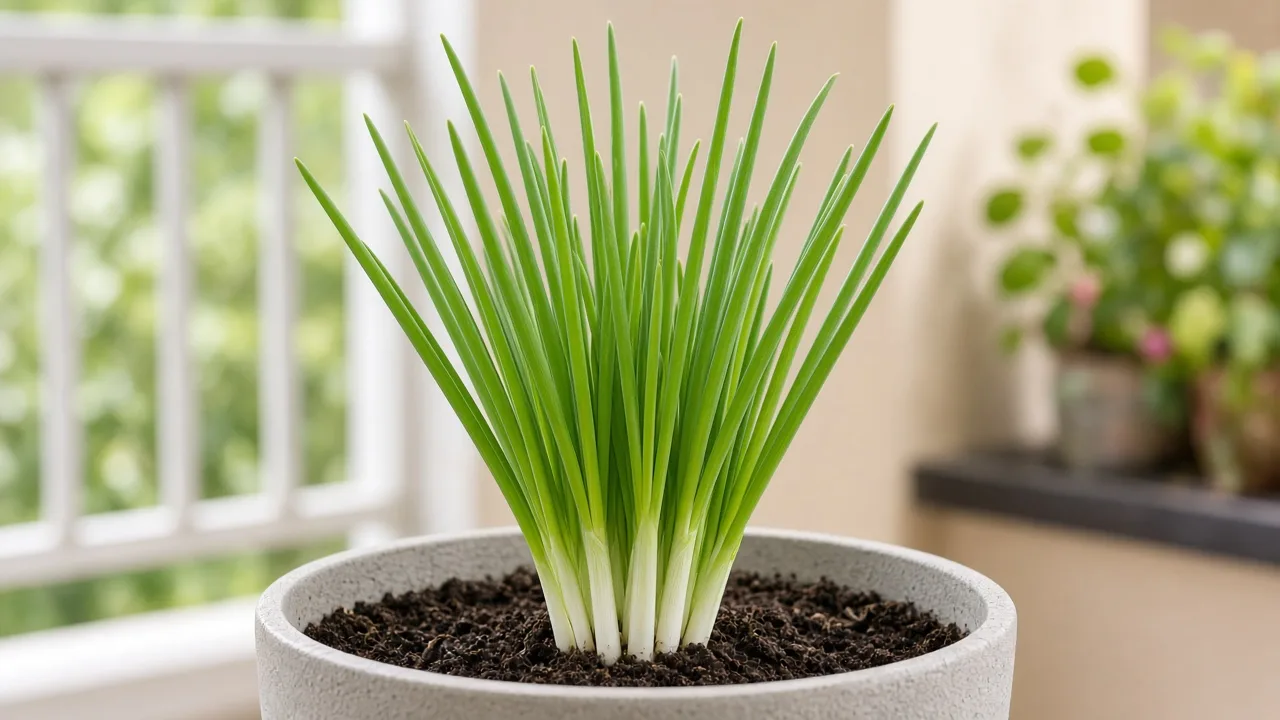
Spring Onion Repotting Guide: Containers & Timing
Spring Onion Repotting Guide: Containers & Timing
If you searched for spring onion repotting after lifting crowded scallions into a bigger pot, you are already close to the real rule for Allium fistulosum: this is a fast kitchen crop with shallow roots and a short harvest window, not a perennial you step up every spring like a peace lily. The RHS profile for Welsh onion describes a clump-forming edible allium that wants full sun and moist but well-drained fertile soil—conditions you set when you choose the final container, not after plants are already competing for water.
This guide reframes repotting for hari pyaz and scallions as planning the trough at sowing, thinning or dividing crowded clumps, and replacing mix between heavy harvest cycles—especially on hot Indian terraces where small pots dry twice a day. You will see when a module transplant makes sense, how grocery regrowth fits in, and when leaving plants alone is the better call.
The quick answer for terrace scallions
Routine mid-season upsizing is not part of spring onion care. Sow seed, plant divisions, or set regrown bases in a wide planter at least about 15 cm deep with open drainage, space plants so shanks can thicken, and when a crop cycle ends empty, clean, and refill the container instead of disturbing shallow roots while you are still cutting leaves. Gardening Know How’s scallion guide notes shallow root systems that need constant moisture and benefit from tight plantings plus mulch to limit weeds—crowding is managed by spacing at sowing, not by repotting every few weeks.
If seedlings are jammed together, thin in place or sow a second trough on a staggered schedule rather than lifting established clumps mid-season. Perennial Welsh onion clumps in mild climates can be lifted and divided every few years; on warm lowland terraces, treat scallions as a cool-season annual and refresh pots each cycle.
Why spring onion is not on a houseplant repotting schedule
Houseplant repotting assumes roots will circle for months and recover slowly. Spring onion tops are harvested young—often within about 60–80 days from seed depending on season—and every unnecessary root disturbance costs tender leaf regrowth you were counting on for stir-fries. Containers also dry faster than in-ground beds, so the real problem is usually mix volume and even moisture, not “root bound” bulbs swelling in a decorative pot.
Bunching habit vs bulb onion (Allium cepa)
Allium fistulosum forms slender white shanks and hollow leaves without sizing up into a large storage bulb the way Allium cepa does. That means you are not matching daylength to latitude for bulbing; you are managing spacing, sun, and water for continuous leaf production. The RHS Welsh onion entry lists a clump-forming habit that can persist for years in favourable climates, but terrace growers in hot regions more often resow in cool weather than nurse one clump indefinitely.
Shallow roots still need horizontal room
Roots stay relatively shallow, yet scallions fail when a pot is too narrow or too shallow for the number of plants you squeezed in. Gardening Know How recommends shallow watering through the short growing season because the root zone is near the surface—lifting plants to upsize dries that zone and breaks the steady moisture rhythm described in the Spring Onion watering guide.
Signs the container or mix—not the plant—needs fixing
Repotting language still helps when the vessel or medium is wrong, even if individual scallions should stay put.
- Mix dries before noon on a sunny balcony—often too little volume or collapsed peat-free structure; pair fixes with watering checks, not bigger foliage.
- Water channels down the sides without wetting roots, common when mix shrank away from the rim after a hot week.
- Drainage is blocked or missing, leaving sour-smelling mix while leaves fold—bunching onions rot quickly in soggy media, as noted in the Spring Onion soil guide.
- Crowded leaves with pencil-thin shanks usually mean density at sowing, not a need for a taller pot—thin or divide instead of transplanting mature plants.
- Regrown grocery bases that stall after two or three cuts often need fresh mix, not a larger decorative outer pot.
If wilting appears while mix stays wet, fix drainage before assuming plants need more root room.
Choose the final pot before you sow or plant divisions
Depth, width, and spacing for pencil-thick shanks
Plan horizontal space first. LeafyPixels grower data for this species targets planters at least about 15 cm deep and wide enough for a row or grid, with seedlings thinned to roughly 2–3 cm apart once they have a few leaves—tighter than Gardening Know How’s transplant spacing of 2–3 inches (5–8 cm) for sets, but appropriate when you harvest young and cut-and-come-again. For thicker shanks, lean toward the wider spacing and accept fewer plants per trough.
Match depth to habit: Plants For A Future describes Welsh onion as a fast-growing bulb that still demands well-drained soil and does not grow in shade—a deep cachepot without holes will not substitute for a drained growing container.
Drainage holes and usable mix volume
Use multiple drainage holes and empty saucers after watering. On Indian terraces, a long window box or trough holds moisture more evenly than a tiny cup you intended to “repot later.” Fill with the loose blend from the Spring Onion soil page—quality vegetable mix, mature compost, and perlite or grit—not heavy garden clay that compacts in pots.
Direct sow, transplant, and grocery-base regrowth
The dependable path is sow in the final container once your local cool window opens. Gardening Know How suggests sowing seed about ¼ inch (6 mm) deep and thinning as plants grow; that matches the 6 mm sowing depth used on the Spring Onion propagation page for seed-started trays you might slide into a trough while seedlings are still small.
Seed depth and moving small seedlings
If you started modules indoors, transplant the whole plug into the final mix with minimal root tearing, set about 2.5 cm deep, and water immediately—same depth guidance as division planting on the propagation guide. Avoid teasing apart tangled roots on warm afternoons; disturbed scallions pause leaf growth while mix dries at the surface.
When to shift regrown scraps into fresh mix
Kitchen regrowth projects plant trimmed bases with roots in moist mix. That is not traditional repotting, but the same rule applies: use a clean container with drainage and fresh medium when regrowth slows or bases soften. Expect only a few harvest cycles before flavour fades; starting a new sowing in a refreshed trough often outperforms nursing exhausted scraps.
Dividing perennial clumps in mild climates
Where winters are mild enough to overwinter Allium fistulosum, clumps can persist as semi-perennial bundles. Every two to three years, lift the clump in cool weather, split into smaller sections with roots attached, and replant into refreshed mix at the same depth—this is the closest analogue to “repotting” for long-lived Welsh onions. PFAF notes the species is hardy and fast-growing in sun with moist, drained soil; division rejuvenates tired centres that stopped producing thick shanks.
On hot lowland terraces, division is less common than succession sowing new troughs each cool season—align timing with the Spring Onion light page so new pots sit in strong sun during mild weather, not peak summer heat.
Best season to set up or refresh a scallion pot in India
Scrub pots and refill mix at the start of your local cool sowing window—often autumn through winter in northern India and winter into early spring on many balconies—rather than during heat waves when disturbed roots and dry foliage recover slowly. The RHS Welsh onion profile assumes sheltered full sun; on terraces that means choosing season so containers are not baking when you must open drainage holes and handle delicate seedlings.
Stagger sowings every few weeks for continuous harvest as multiple troughs, not one endlessly upsized planter. Hold nitrogen-heavy feeding until new transplants resume growth; see the Spring Onion fertilizer guide before loading fresh compost with extra nitrogen into a refreshed pot.
How to refresh a container between harvest cycles
Between heavy cut-and-come-again cycles or when regrowth stalls, full mix replacement is the practical “repot.” Empty the planter, brush away old roots, wash with mild soap, rinse, and dry. Refill with new, free-draining blend before the next sowing or division planting. Reusing collapsed, sour mix invites crown rot—the same failure mode as overwatering in the Spring Onion overview hub.
Do not simply top-dress exhausted mix and expect grocery bases or tired clumps to rebound; shallow roots exhaust the upper layer first.
Aftercare when you had to move young plants
If you transplanted modules or divided a clump, water with room-temperature water, firm mix gently without burying the crown, and shelter plants from harsh midday sun for several days. Hold fertilizer until new leaves unfold steadily. Expect a short pause in regrowth; if the season is already warming, a fresh direct sowing in a refreshed trough may outperform nursing stressed plants.
Common balcony mistakes that look like repotting problems
Starting in tiny cups “to repot later” lets roots intertwine before you move them, even though scallions tolerate careful shifts when young. Pulling thinnings instead of snipping disturbs neighbours’ shallow roots. Upsizing during peak heat pairs disturbed roots with fast-drying leaves. Using a tall narrow pot without width produces thin shanks that compete for water. Decorative outer pots without holes trap runoff—use them as cachepots only, sliding the drained inner planter out when you water.
When to use this page vs other Spring Onion guides
Use this page when the question is container choice, overcrowding, division, module transplants, mix refresh, or post-move wilting—not daily watering or feeding. Use Spring Onion watering for moisture checks and seasonal adjustments. Use Spring Onion soil for mix ratios, pH, and drainage. Use Spring Onion light for sun, shade, and bolting pressure. Use Spring Onion propagation for seed, division, and regrowth detail. Start at the Spring Onion overview if you have not yet matched pot size to harvest style.
Related Spring Onion guides
- Spring Onion overview — identity, harvest timing, and terrace fit
- Spring Onion watering — even moisture for shallow roots
- Spring Onion soil — loose, drained mixes for troughs
- Spring Onion light — full sun and heat management
- Spring Onion fertilizer — steady feeding without lush flop
- Spring Onion propagation — seed, divisions, and grocery regrowth
Conclusion
Spring onion repotting is container planning, spacing, division, and soil renewal for a shallow-rooted bunching crop—not periodic upsizing of a long-lived houseplant. Choose a wide, drained trough before you sow, keep seedlings and divisions moving only while they are small, and refresh the entire mix between harvest cycles or when regrowth fades. Divide perennial clumps in cool weather where winters are mild; elsewhere, succession-sow new pots during your local cool window. That approach matches how Allium fistulosum actually grows on Indian balconies and keeps scallion shanks tender without the wilt-and-stall cycle that follows mid-season moves.