How to Use Baking Soda as a Weed Killer
Baking soda can brown young weeds, but it is non-selective. Get the safest spot-treatment method, timing, limits, and alternatives for lawns and beds.
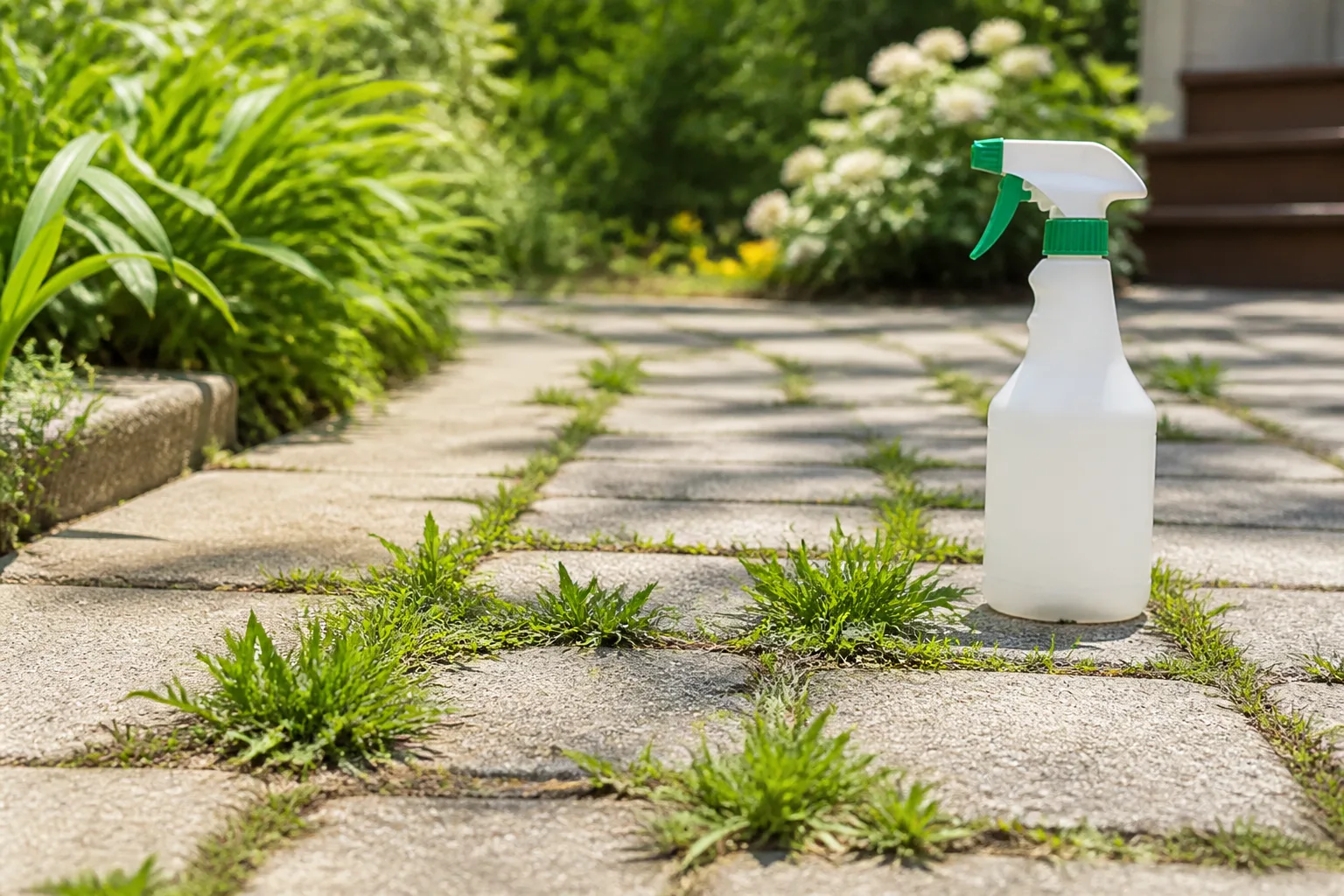
Baking soda can damage small weeds, but it is best treated as a narrow, non-selective spot treatment—not a lawn product, soil sterilizer, or permanent cure. Its most sensible use is on isolated weeds growing in paver joints, sidewalk cracks, driveway seams, or bare gravel where no desirable plant roots occupy the treated soil.
The important question is not simply whether baking soda kills weeds. It is whether the weed is small enough to respond, whether the surrounding surface can tolerate sodium, and whether a nearby lawn, flower, vegetable, or tree could receive the powder or runoff. Get those three decisions right and baking soda can be a convenient cleanup tool. Get them wrong and a quick weed fix can become a damaged planting area.
The Short Answer: Use It Only on Isolated Hardscape Weeds
Use baking soda on a dry, calm day for a small weed that is growing alone in a hardscape crack. Lightly dampen the weed’s foliage so the powder adheres, then apply a thin coating over the leaves and crown. Keep the treatment off nearby grass and soil, and do not spread it broadly as a preventative layer.
| Weed location | Baking soda decision | Better first choice when it does not fit |
|---|---|---|
| Isolated paver or sidewalk crack | Reasonable for a small, exposed weed | Scrape out the crown if it is easy to reach |
| Driveway edge beside lawn | Use only with a physical shield and no runoff path | Hand-pull or repair the joint |
| Lawn or turf | Skip it; grass can be injured | Identify the weed and use turf-safe control |
| Vegetable bed or perennial border | Skip it; soil and roots are at risk | Hand-pull, hoe, mulch, or use a bed-appropriate plan |
| Persistent perennial anywhere | Expect regrowth if you use it | Remove the root, rhizome, or crown when possible |
This quick map prevents the most expensive mistake: choosing a product because it is nearby in the pantry rather than because the site can tolerate it. The same powder that is acceptable on a single unwanted plant in a mortar seam becomes a liability when it is scattered across living soil.
This method is most reasonable when pulling is difficult because the weed is rooted deep in a narrow joint. It is a poor fit for a lawn, a vegetable bed, a perennial border, a tree’s root zone, or any place where rainwater will carry the residue into soil you want to keep productive.
Baking soda may brown or kill the foliage it contacts, especially on young, shallow-rooted annual weeds. That visible collapse can be satisfying, but it does not prove the root system is dead. Established perennial weeds can replace damaged leaves from a taproot, crown, rhizome, or stolon.
What Baking Soda Does to a Weed
Baking soda is sodium bicarbonate, a salt with an alkaline reaction. On exposed foliage, a concentrated residue can disturb the leaf’s moisture balance and injure the tissue it touches. Practical gardening guidance from Martha Stewart describes the method as a contact treatment that is most useful for young weeds in patios, walkways, and paver gaps.
That description matters because “natural” and “selective” are not synonyms. Baking soda does not know the difference between a weed and a desirable plant. If powder reaches a flower, seedling, grass blade, or low shrub, that tissue can be injured too.
The second issue is what happens after the leaves die. Sodium left in soil can make water harder for roots to use and can interfere with nutrient balance. Extension sources discussing salt injury—not a universal baking-soda herbicide rate—describe the same warning gardeners need here: salt exposure can cause water stress, scorch, stunting, nutrient problems, and decline when it accumulates around roots. Rutgers Cooperative Extension and the University of Connecticut both emphasize that foliage contact and root-zone exposure are separate routes of injury.
It Is a Contact Treatment, Not a Root Killer
A contact treatment injures the green tissue it touches. A systemic herbicide is designed to move within a plant and may reach growing points or roots. Baking soda should be approached as the first category: if it works, it usually works by drying or damaging the exposed top growth, not by reliably traveling down and eliminating an established root system.
That distinction explains the common “it worked, then the weed returned” experience. A dandelion may lose its leaves while its taproot remains alive. Bindweed can send another shoot from underground stems. Nutsedge and running grasses can recover from structures below the soil surface even when the first leaves look completely dead.
Treat the visible browning as a top-growth result, not a guarantee of permanent control. If the root is accessible in moist soil, removing it may be more effective than applying more powder. If the weed is trapped in a hardscape joint, plan to inspect the spot again rather than assuming one treatment closes the job.
The Best Place for Baking Soda Weed Killer
The safest use is defined by what you are willing to lose. In a paver joint or an isolated driveway seam, the goal is bare space and a small amount of collateral damage is manageable. In a mixed planting bed, the soil and roots are part of the garden, so a non-selective sodium treatment is a poor trade.
Hardscape Cracks Are the Narrow Use Case
Target weeds in sidewalk cracks, patio joints, driveway seams, gravel paths, and other small hardscape gaps where there are no wanted plants. These locations are also easier to treat precisely because the weed is separated from valuable foliage and you can use a small amount rather than broadcasting across a surface.
Before applying, look beyond the crack itself. Check whether the joint drains toward a flower bed, lawn edge, storm drain, or tree planting. A treatment that looks isolated on a dry day can move with the next rain. Keep the application especially small on sloped paving or porous gravel where water travels into adjoining soil.
Baking soda can also be useful for a few weeds in an otherwise bare, non-planted strip, but only if you accept that the area may be less suitable for immediate replanting. If you want to use the strip for flowers or vegetables later, hand removal and mulch are better long-term choices.
Keep It Out of Lawns, Beds, and Drainage Paths
Do not use baking soda as a broadcast lawn weed killer. Grass is a plant, and a non-selective contact treatment can create pale or dead patches wherever the powder lands. It also does not solve the lawn problem that allowed weeds to establish, such as thin turf, compacted soil, poor mowing height, or exposed soil.
Keep it out of vegetable and herb beds, perennial borders, seed-starting areas, and the soil beneath shrubs and trees. Even if the target weed is isolated, powder can settle on wanted leaves or be washed into the root zone. The Southern Living gardening guide specifically cautions that baking soda can be non-selective and that repeated use can create salt buildup that harms plants and soil.
Avoid drainage channels and places where water pools. Salt-related injury is more likely when soil drains poorly because residue remains in the root zone instead of moving downward and away. The Missouri Botanical Garden notes that leaching can help on well-drained soil but is ineffective when compacted, fine-textured soil does not drain readily.
Which Weeds Respond Best
Baking soda is most useful when the target is small, exposed, and isolated. Weed size, age, leaf texture, root system, weather, and coverage all matter more than the fact that the product came from the pantry.
Young Annual Weeds Are the Practical Targets
Young annual weeds are the best candidates because they have a small amount of foliage and have not invested in a large underground reserve. Small chickweed, lambsquarters, pigweed, and similar seedlings can be easier to coat completely than a mature plant with a thick crown and many overlapping leaves.
Look for a weed with a few leaves, a shallow-looking base, and no runners extending into surrounding soil. If the plant comes out easily after rain, pull it instead; baking soda is most useful when the crack, surface, or root position makes hand removal awkward.
Coverage must be complete enough to matter, but “complete” does not mean a thick pile. A heavy layer increases the amount that can be blown or washed away without reliably improving root control. A thin coating on the target is the better balance.
Established Perennials Usually Need a Different Plan
Be cautious with dandelion, plantain, bindweed, nutsedge, Bermuda grass, quackgrass, and other persistent weeds. Some have taproots, crowns, rhizomes, or stolons that store energy below the treated foliage. Baking soda may make them look finished while leaving the part that drives regrowth untouched.
For a perennial in a garden bed, dig when the soil is moist and remove as much of the root or underground stem as practical. For a perennial in a hardscape crack, scrape out the crown, brush away loose soil, and monitor for new growth. Repeatedly adding baking soda to the same joint is not a substitute for removing the root or repairing the gap.
If you cannot identify the weed, do not escalate the treatment simply because the first application failed. A local extension office can help identify difficult grasses and sedges, and identification may change the correct control method entirely.
How to Apply Baking Soda Without Spreading the Problem
There is no single pantry measurement that works equally on every weed, surface, climate, and soil. Published how-to advice ranges from a light dry dusting to water-based mixtures, while extension guidance is stronger on the risks of salt exposure than on a universal baking-soda weed-control rate. A conservative dry spot treatment keeps the quantity and drift easier to control.
Dry Spot Treatment
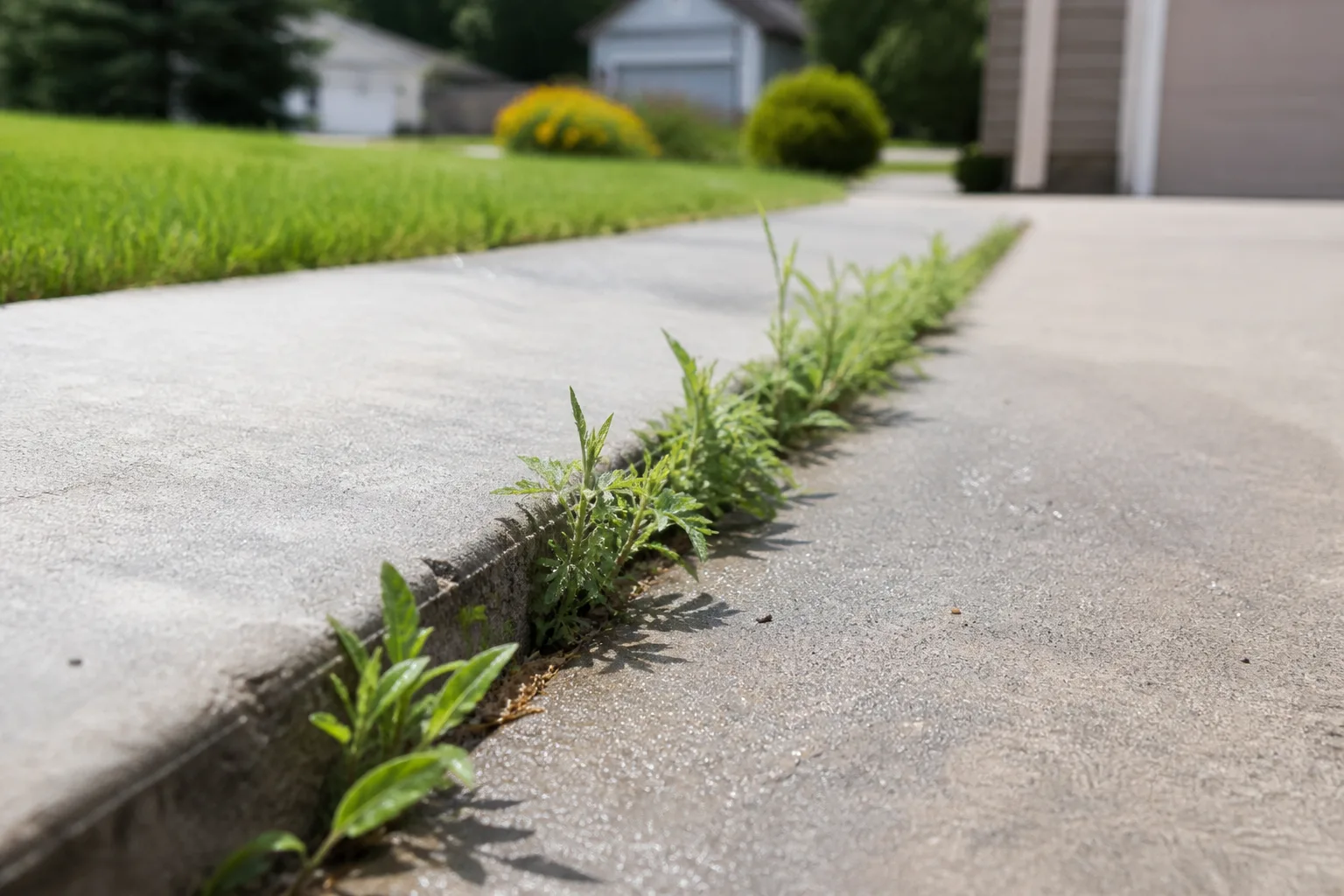
Start with plain baking soda and a small spoon or shaker that you use only for garden work. Lightly mist the target weed’s leaves with water—not the surrounding soil—so the powder sticks to the foliage instead of blowing away.
Apply a thin layer over the green leaves and the crown at soil level. Do not make a mound around the base, sweep excess powder into the joint, or dust the surrounding pavement “for prevention.” The goal is contact with the weed, not a sodium border.
If the weed is beside a wanted plant, cover the wanted foliage with a piece of cardboard while applying, then remove the cover immediately. A narrow spoon or pinch is more precise than a wide broadcast shaker, especially on breezy sites.
Why a Spray Solution Needs Extra Caution
A water-based solution can make coverage easier, but it also makes it easier to wet nearby plants and move baking soda into soil. Do not treat a homemade spray as a selective herbicide just because it is diluted. The liquid can still injure any green tissue it reaches, and repeated applications can increase salt and alkalinity in the treated area.
If you choose a spray for a few isolated hardscape weeds, test a small spot first, use a dedicated labeled bottle, select a coarse stream rather than a mist, and keep the application off wanted plants and drainage paths. Avoid improvised high-strength recipes and never increase the concentration simply because a mature perennial resprouted.
Do not add vinegar to make the mixture seem stronger. Vinegar and baking soda react immediately, producing fizz as the acid and alkaline powder neutralize one another; that reaction is not a bonus weed-killing mechanism. A sealed bottle can also build pressure, so keep household chemistry experiments out of a sprayer and use one clearly labeled product at a time.
A Step-by-Step Application Sequence
- Choose the site before the product. Confirm that the weed is in a hardscape crack, bare gravel, or another non-planted location. If the site drains into a bed or lawn, choose hand removal instead.
- Check the weed’s size and biology. Small annual weeds are reasonable targets. Deep-rooted, running, or unidentified weeds deserve mechanical removal or a more specific plan.
- Wait for a dry, calm weather window. You need enough dry time for the powder to remain on the foliage. Wind increases drift, and rain can wash the material away before it has an effect.
- Protect neighboring plants. Use cardboard as a temporary shield, and work from the wanted plant toward the weed so your hand and tool do not brush treated powder into the planting bed.
- Dampen only the target foliage. A light touch of water helps dry baking soda adhere. Avoid soaking the joint or creating runoff.
- Apply a thin coating. Cover the leaves and crown without piling powder on the soil. Stop as soon as the green surfaces are dusted.
- Leave the area alone while it dries. Keep children and pets away from the treated spot until loose material is no longer present on the surface, and do not sweep it toward a drain or garden bed.
- Inspect instead of automatically repeating. After several dry days, check whether the foliage has collapsed and whether the crown is producing new leaves. Pull dead material and remove the root when practical.
This sequence is deliberately modest. The most common mistake is trying to make a weak contact treatment behave like a permanent, systemic herbicide by adding more product. More powder mainly increases the amount available for drift and runoff.
Timing, Weather, and Follow-Up
Apply when the weed is actively growing and its foliage is visible. A small plant with fresh leaves is easier to coat than a drought-stressed plant with tough, waxy, or dusty foliage. Choose a sunny, dry, calm period, but do not spray during gusts or directly before a storm.
Dry weather improves the odds that the material will stay in place. Rain can dilute and move it, while heavy dew may turn a dry dusting into a runoff path before the treatment has done anything useful. If the forecast changes, postpone the application rather than compensating with a heavier dose.
Local climate changes the risk calculation. In a rainy, well-drained site, an accidental small spill may move away faster than it would in compacted soil. In a hot, dry, poorly drained, or irrigated landscape, sodium residues can remain concentrated longer because there is less effective leaching. That is one reason the University of Nevada Reno Extension treats salinity as a soil-management problem rather than something to solve by simply adding more water.
Follow-up is part of the treatment, not an admission that it failed. Inspect in about a week, then again after another week if the plant was large or perennial. The exact pace varies with weather and weed biology, so use new green growth as the signal to change tactics.
Watch nearby plants for symptoms such as marginal browning, scorch, wilting, or stunted new growth. Salt injury can resemble drought stress, and the University of Nevada Reno Extension explains that high soil salinity can make it difficult for plants to take up water even when the soil appears moist.
What to Do If the Weed Comes Back
Regrowth usually means one of four things: the original coverage was incomplete, the weed was too mature, the plant has an underground storage organ, or the treatment was washed away. Diagnose the pattern before reaching for another handful of baking soda.
If the weed is small and still isolated in a dry paver joint, remove the dead top growth and scrape out the crown before considering another very small spot treatment. If new shoots appear from the same root, dig or pry out the root system when possible. Repeating a sodium treatment on a persistent root is more likely to contaminate the joint’s surrounding soil than to deliver reliable control.
If weeds keep appearing along an entire seam, fix the condition that keeps supplying them. Brush out accumulated soil, repair a wide joint with an appropriate hardscape material, improve edging, or use a physical maintenance routine. For a gravel path, remove existing weeds first and replenish the gravel so fewer seeds find bare, moist pockets.
After a spill or visible powder drift into a planting area, stop applying more. On well-drained soil, fresh water can help move soluble salts below the root zone, but do not flood compacted soil or send contaminated runoff toward another bed. UConn recommends leaching salts with fresh water when the ground is not frozen, and Rutgers likewise stresses that drainage and water volume affect whether salt remains around roots; these recommendations are for salt injury management generally, so use them cautiously rather than as permission to apply baking soda broadly.
Better Options for Lawns and Garden Beds
For lawns, start with identification and turf management. A non-selective contact treatment is the wrong tool when you want to preserve grass. Hand-pull isolated broadleaf weeds after rain, improve turf density and mowing practices, and use a product labeled for the specific grass and weed when chemical control is necessary.
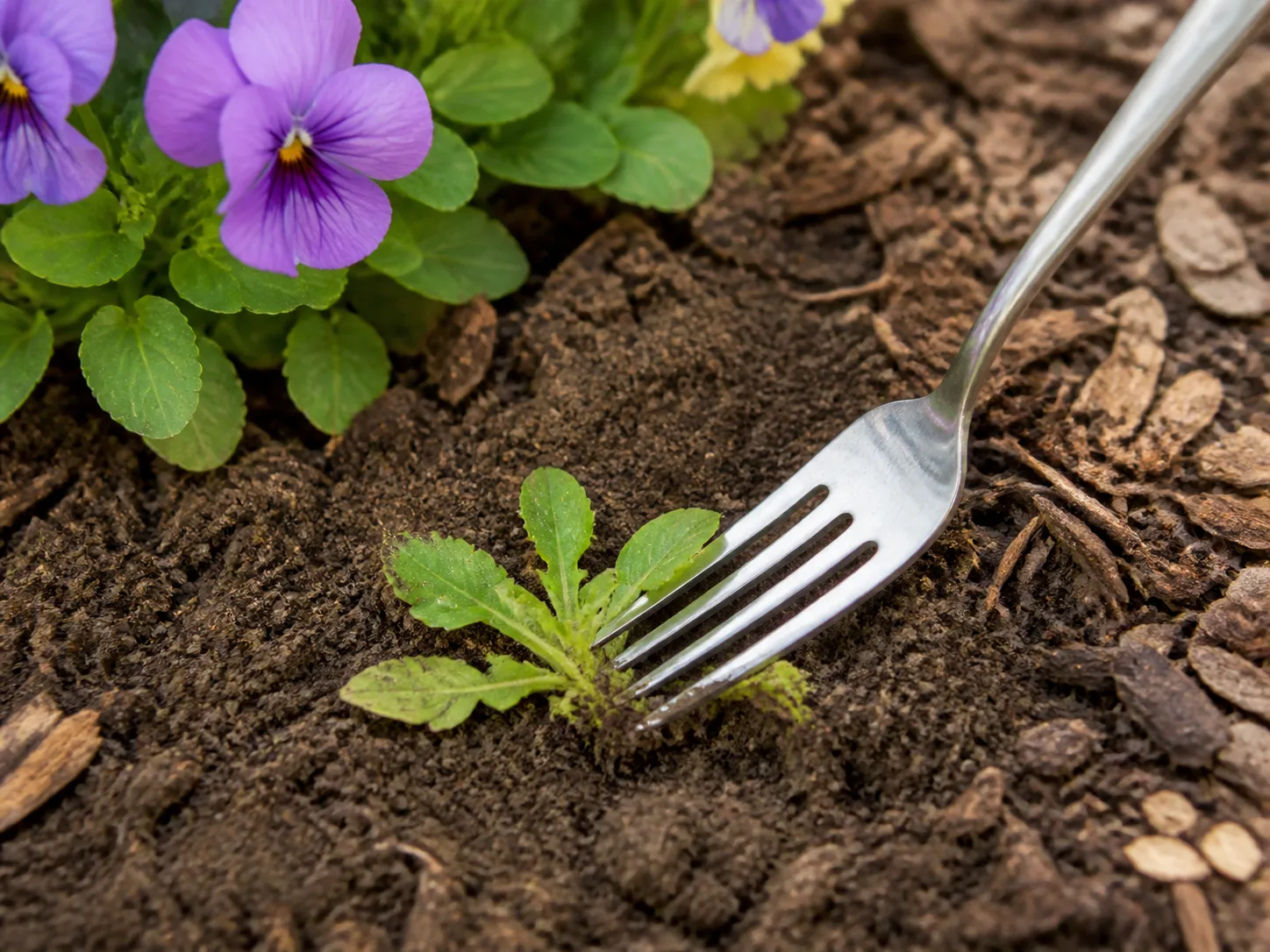
For vegetable gardens and ornamental beds, pull weeds while they are small, then cover exposed soil with an appropriate mulch. The Martha Stewart gardening guide points to hand-pulling after rain, a roughly 2- to 4-inch mulch layer, cardboard with mulch where appropriate, and ground covers as alternatives that address the bed rather than salting it.
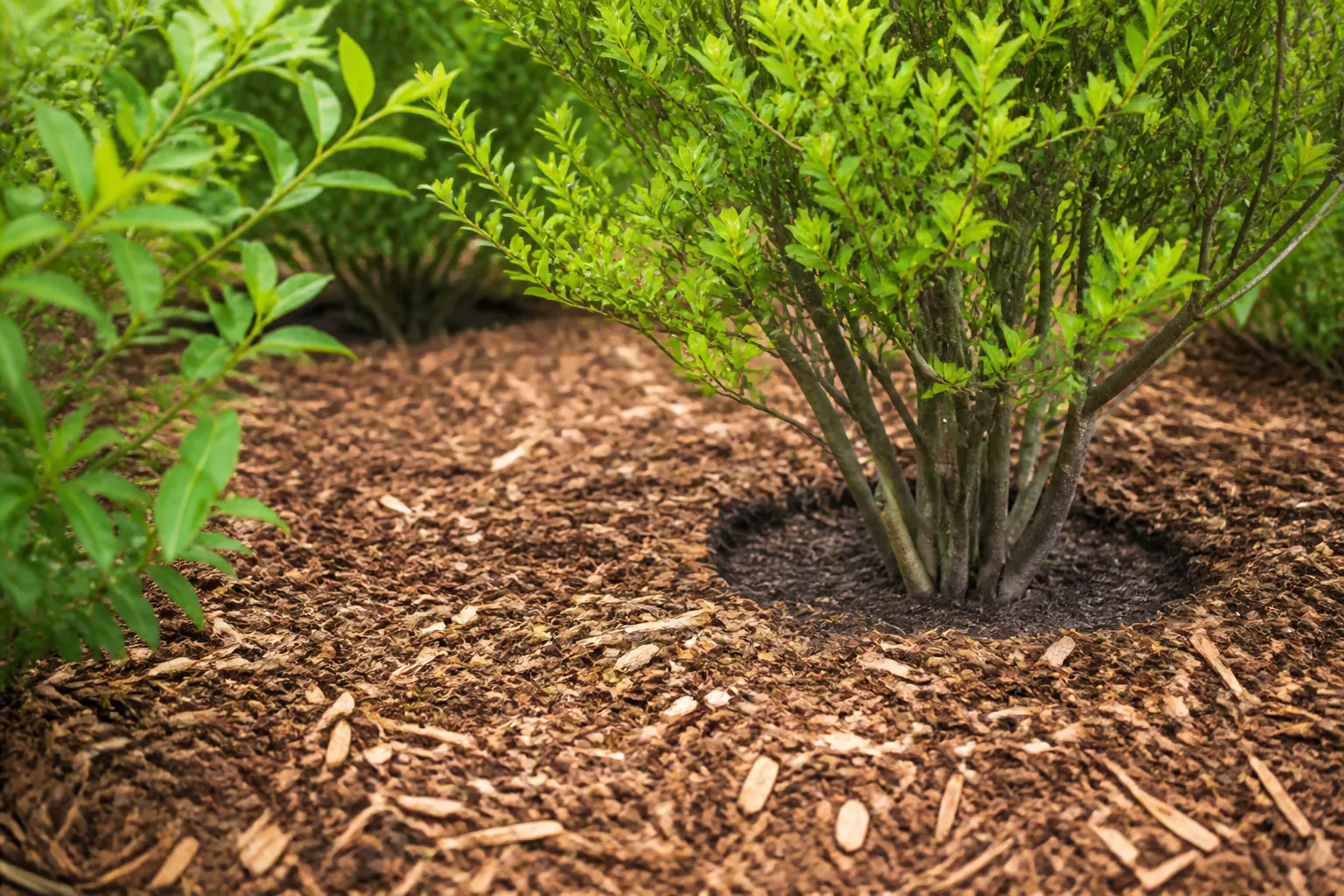
For one or two weeds in a hardscape joint, boiling water can be a simple contact option if you can pour precisely without splashing wanted plants or damaging yourself. For larger or recurring problems, use an herbicide that is labeled for the site and target weed, follow the label exactly, and respect restrictions around gardens, water, replanting, and protective equipment.
The broader principle is integrated weed management: remove existing plants, reduce bare soil, block new germination, and reserve non-selective contact treatments for places where collateral damage is acceptable. Baking soda can fit one small corner of that plan, but it should not carry the whole job.
Conclusion
Baking soda weed killer is a limited tool for small, isolated weeds in hardscape cracks. Apply a thin dry coating to dampened foliage on a calm, dry day, keep it away from grass and garden soil, and treat visible browning as contact damage—not proof that a perennial root is gone.
If the weed is in a lawn, planting bed, tree root zone, or drainage path, choose hand-pulling, mulch, better site maintenance, or a labeled treatment matched to the weed. The safest baking-soda application is the one that solves a narrow crack problem without turning your surrounding soil into the next problem.