9 Best Garden Sprayers for Lawns and Gardens
Compare nine garden sprayers by tank size, power type, and reach. Learn which fits weeds, fertilizer, and pest jobs—plus cleaning and safety rules.
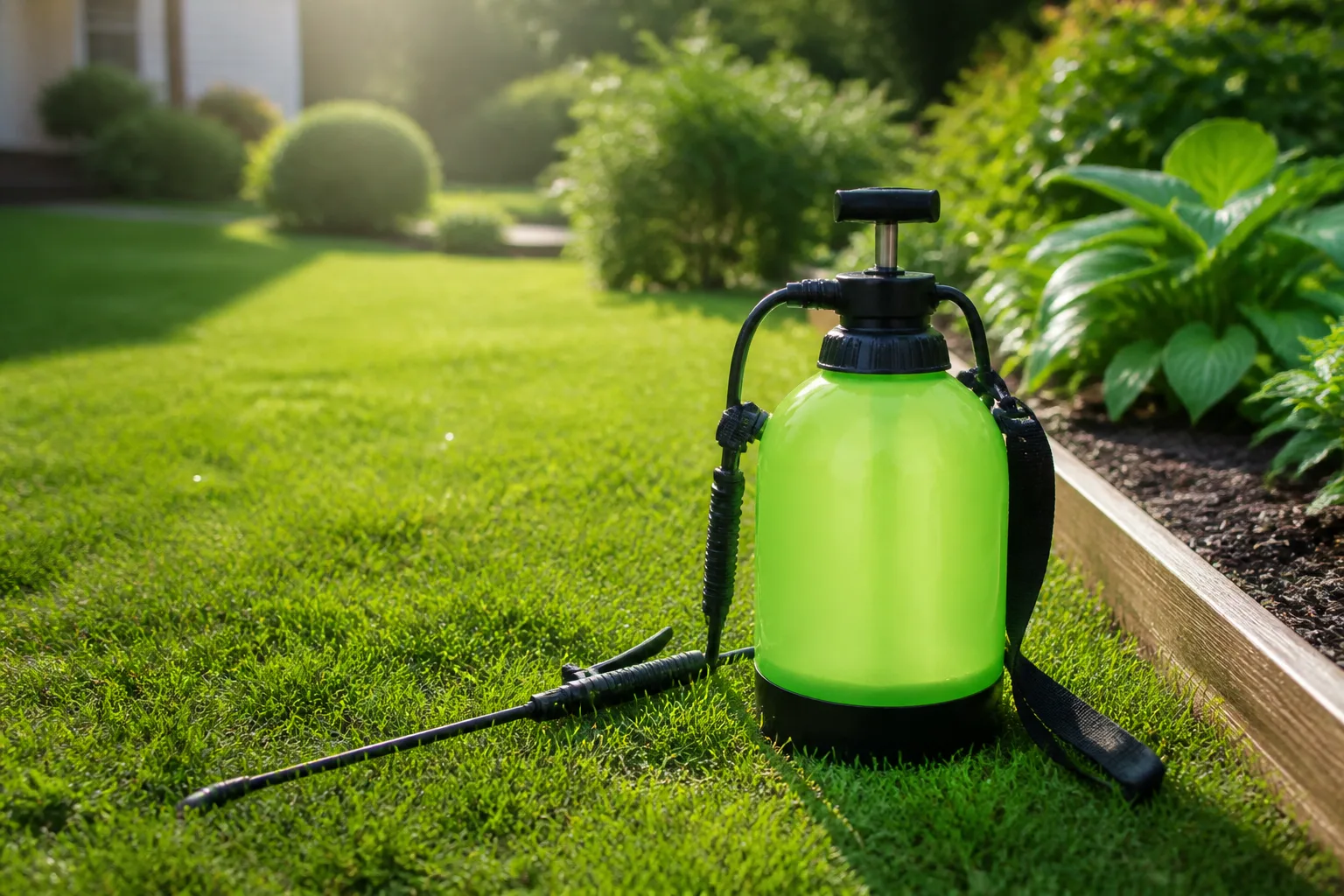
A garden sprayer is a pressurized tank that meters liquid treatments—herbicides, insecticides, fungicides, foliar feeds, and diluted soaps—through a wand and nozzle so you can coat leaves, stems, or soil evenly without dumping concentrate from a measuring cup. It is not a substitute for reading the product label, and it is not always the right tool when a hose-end applicator or granular spreader would be safer or more precise.
That distinction matters because most roundup pages stop at “buy a 3-gallon tank.” The nine sprayers below cover handheld jobs on a townhouse patio through battery-assisted passes on a half-acre lot, but only after you match tank capacity, carry style, and chemical type to the work you actually do. A.M. Leonard’s sprayer buying guide notes that broadleaf herbicide residue can linger in plastic tanks even after rinsing—so serious gardeners often keep separate sprayers for weed killers and for everything else. Plan for that before you click buy.
Do You Actually Need a Garden Sprayer?
Buy a dedicated sprayer when you routinely apply diluted liquids beyond what a trigger bottle can handle: broadcasting pre-emergent along a gravel drive, coating boxwood understories with neem, foliar-feeding tomatoes, or spot-spraying dandelions in turf without soaking the whole lawn. Skip it—or delay the purchase—when your only task is watering; a hose, watering can, or soaker hose does that job with less chemical risk.
Jobs a Sprayer Handles Well
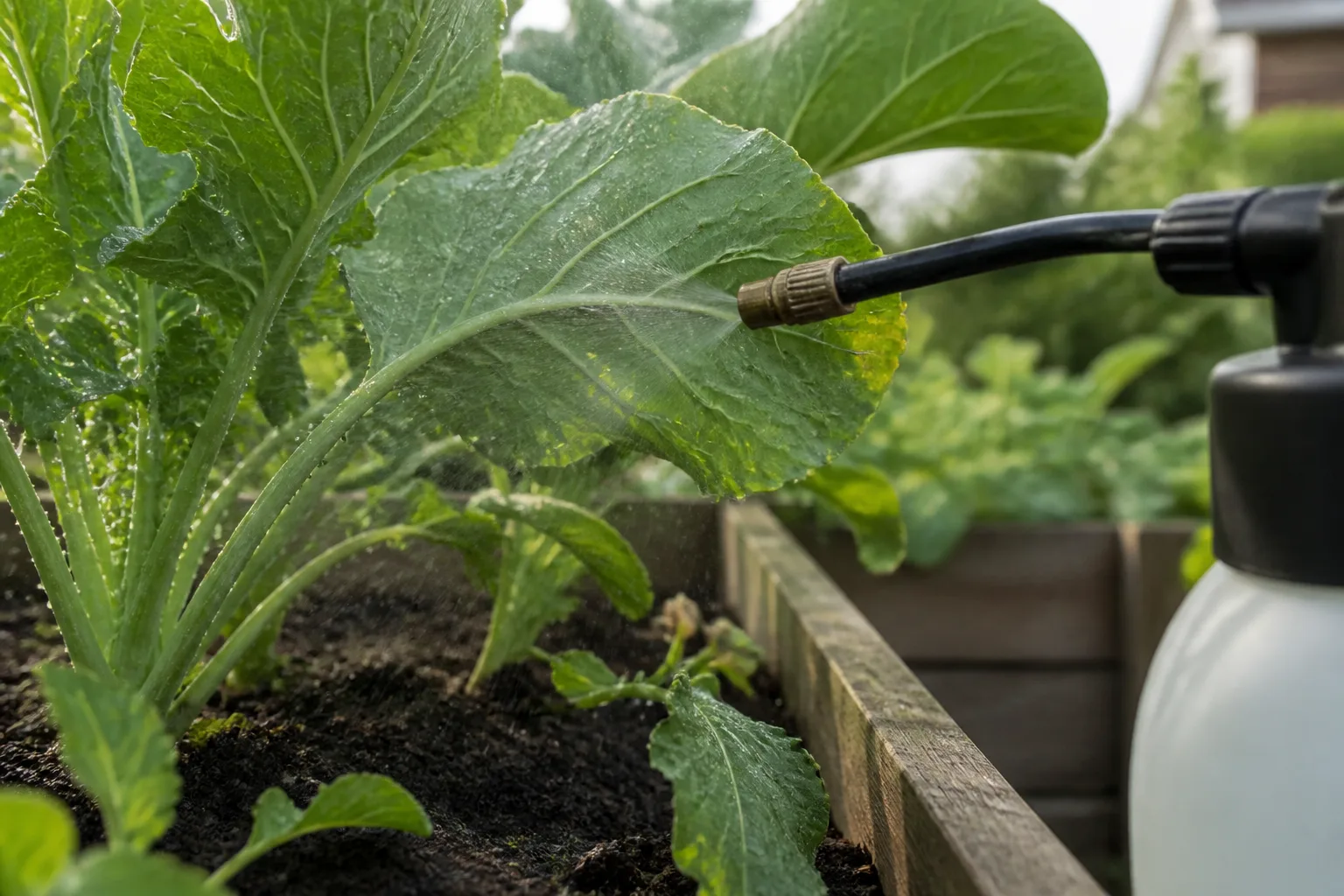
Sprayers excel at targeted liquid application where coverage and reach matter. Typical wins include selective lawn herbicides mixed to label rate, fungicide passes on hydrangeas or roses, insecticidal soap on vegetable foliage, dormant oil on fruit trees, and iron or kelp foliar feeds that need fine droplets on leaf surfaces. Solo’s sprayer guide groups these as small-to-medium tank jobs—roughly 0.5 to 4 gallons per fill—where you walk the property with a wand rather than drag a hose-end dial across an entire lawn.
When Another Tool Is the Better Fit
Choose something else when the product is granular (use a broadcast or hand spreader), when the label specifies hose-end application only, or when you are treating a tiny windowsill collection (a plant mister or 16-ounce trigger bottle is lighter and easier to rinse). Wheeled and high-capacity backpack sprayers are poor fits for tight spot work between pavers; a quart handheld is poor fit for a 200-foot fence line of brush. If wind is gusting above about 10 mph, postpone any foliar spray—drift hurts neighboring plants and violates most label wind-speed limits regardless of tank quality.
How We Chose These Sprayers
We compared tank materials, pump type, hose and wand length, nozzle count, pressure behavior, and real-world carry comfort across the category leaders homeowners actually buy. Selection criteria follow what professional buyers emphasize: setup time, re-pressurization frequency, seal and gasket quality, visibility of fill lines, and ease of disassembly for cleaning. Where manufacturer specs conflict with field reports—Chapin’s 3-gallon listing versus its compact footprint—we call that out instead of copying a spec table blindly.
Prices shift by retailer and season; capacities and dimensions below come from current manufacturer and retailer listings referenced in our sources. This guide synthesizes published specifications and long-term use patterns reported in category testing—it is not an independent lab shootout.
Quick Picks at a Glance
| Best for | Pick | Capacity | Power | Why it fits |
|---|---|---|---|---|
| Overall versatility | Smith Performance 3-Gal Contractor | 3 gal | Manual pump | Clear tank, long hose, seven nozzles, shoulder strap |
| Large weed passes | Scotts Pump Zero Wheeled | 3 gal | Lithium-ion | Self-pressurizing, 10+ ft reach, rolls instead of lifts |
| Budget 3-gallon tank | Chapin 20003 | 3 gal | Manual pump | Consistent pressure, visible marks, under $35 class |
| Acreage and slopes | D.B. Smith Field King | 4 gal | Manual backpack | Locking trigger, filter insert, comfortable straps |
| Townhouse spot jobs | VIVOSUN Handheld | 0.4 gal | Manual pump | Sink-fillable, lightweight, under $25 class |
| Containers and seedlings | Chapin Multi-Purpose | 48 oz | Manual pump | Tiny, marked tank, gentle mist |
| No-pump convenience | Scotts 190567 | 2 gal | Lithium-ion | 12-tank battery life, adjustable nozzle |
| Rolling manual tank | VIVOSUN Wheeled | 3.2 gal | Manual pump | Wheels reduce lift strain on long paths |
| Battery quart bottle | Centurion Portable Quart | 1 qt | AA battery | Rotating nozzle, one-hand operation |
Best Overall: Smith Performance 3-Gallon Contractor Sprayer
The Smith Performance Sprayers 3-Gallon Contractor Sprayer (Smith Performance / D.B. Smith model 190217) is the most balanced pick for homeowners who want one tank that handles weeds, shrub treatments, and occasional fence-line work without upgrading every season. The translucent tank shows fill level at a glance, measurement marks simplify dilution, and the included seven nozzles—poly, brass, dual flat fans, and a foaming tip—let you switch between coarse droplets on soil and finer mist on ornamentals without buying accessories later.
Assembly is straightforward: attach the hose, prime with clean water, pump until resistance firms, and spray. The shoulder strap matters more than it sounds on a 3-gallon fill; water alone weighs about 25 pounds, and herbicide solution is not lighter. The pressure relief valve is a safety plus when you leave a tank in a hot garage. Trade-offs: no built-in pressure gauge (you learn readiness by pump feel), and the premium price over budget Chapin tanks only pays off if you spray monthly through the growing season.
Specs snapshot: ~21 × 9 × 9 inches; 3-gallon capacity; seven nozzles; manual piston pump; shoulder strap included.
Best for Weeds: Scotts Pump Zero Wheeled Sprayer
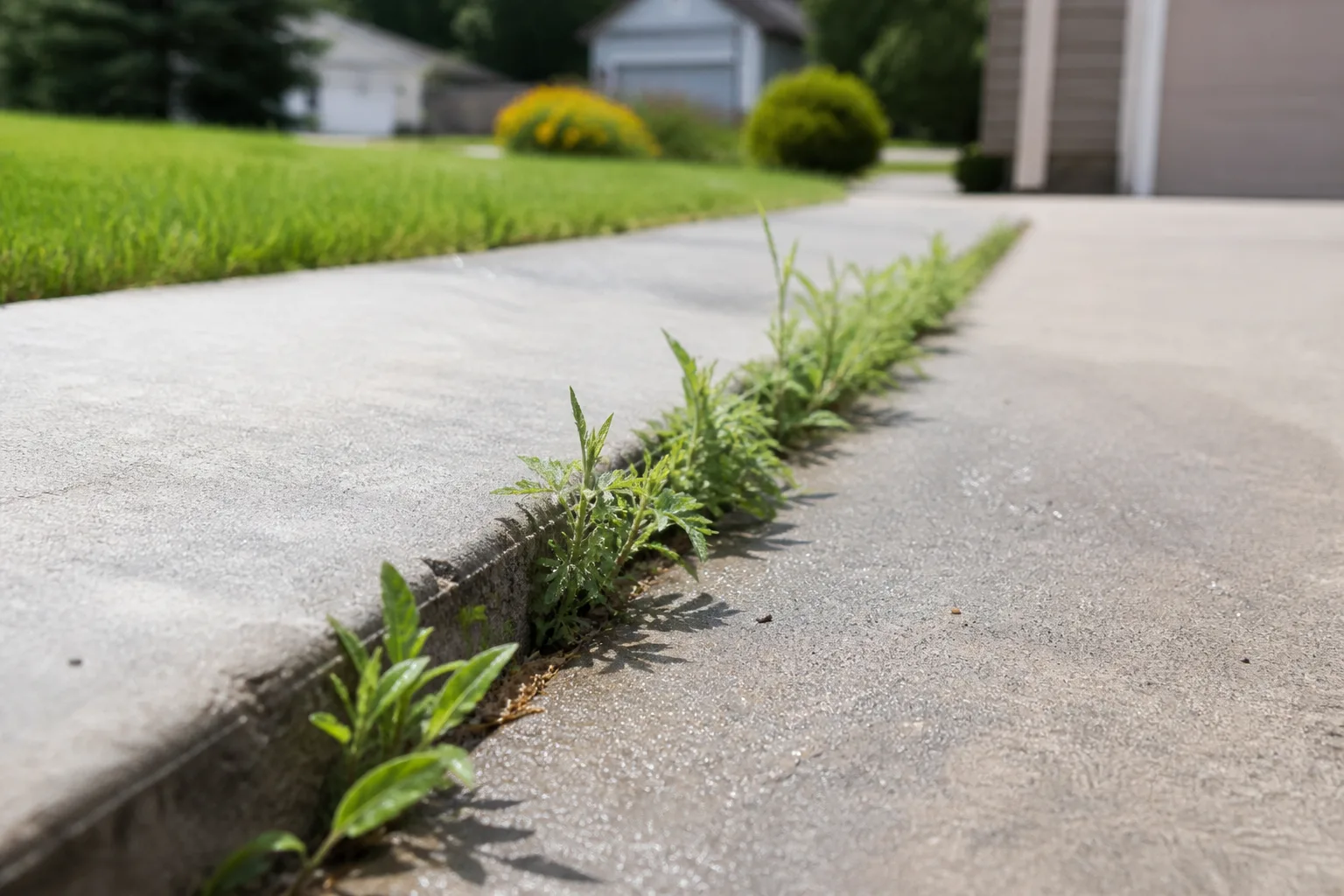
The Scotts 190617 Lithium-Ion Pump Zero Wheeled Sprayer targets the job that breaks backs: long, repetitive weed passes along driveways, fence lines, and open turf edges. The battery maintains pressure without manual pumping, and testers consistently report 10-foot-plus stream reach with even fan patterns—useful when you want distance from glyphosate or soap-based mixes. The three-gallon tank and wheeled chassis mean you pull instead of carry, which matters on hour-long spring cleanup sessions.
After pressurizing (about two minutes from empty), the trigger feels light and the three-in-one nozzle head covers mist, fan, and stream settings. Downsides: assembly takes some force, packaging plastic under the handle panels is annoying to remove, and wheeled sprayers are awkward in tight beds—this is a broadcast and border tool, not a precision perennial sprayer. Rinse thoroughly after herbicides; battery models still hold residue in hoses.
Specs snapshot: ~12.5 × 26 inches; 3-gallon capacity; lithium-ion; wheeled frame; 3-in-1 nozzle.
Best Value: Chapin 3-Gallon Pump Sprayer
The Chapin 20003 3-Gallon Pump Sprayer delivers the category’s best dollars-per-gallon ratio for gardeners who need capacity without backpack straps or batteries. The tank arrives mostly assembled, pumps to consistent pressure with a few strokes, and includes visible fill markings that make label-rate math harder to mess up. For weekly fungicide on hydrangeas or front-shrub maintenance, it covers three large shrubs per pressurization cycle in typical use.
Limitations are real: the hose is short relative to premium contractor tanks, so you may lift the wand instead of walking freely, and there is no carry strap—plan two-handed carries when full. It is a strong value for medium beds and foundation plantings; for acreage or tall hornbeam hedges, step up to the Smith contractor or a backpack. Note: some retailers list conflicting capacity numbers; the 20003 line is the 3-gallon homeowner model—verify the SKU before checkout.
Specs snapshot: ~8 × 8 × 15 inches listed; 3-gallon capacity; single adjustable nozzle; manual pump.
Best Backpack: D.B. Smith Field King 190328
The D.B. Smith Field King 190328 Professional No-Leak Backpack Sprayer is the right upgrade when a handheld tank forces too many refill stops or shoulder-crushing carries. The 4-gallon capacity, padded straps, and waist belt distribute weight across your back instead of one arm, and the locking trigger enables continuous spray without cramping your hand—testers with large properties report using it for driveway weeds, young tree lines, and gravel paths in a single session.
Inside the cap, a filter insert reduces grit clogs when you draw from well water or mixed wettable powders. Four included nozzles and roughly 9 feet of effective wand reach cover tall shrubs and fence lines. Expect a learning curve on strap adjustment for smaller frames, and remember that 4 gallons of liquid feels like carrying a toddler—take breaks on slopes. Solo’s pump guidance rates diaphragm backpack pumps for abrasive or powder formulations; the Field King line is widely used with standard herbicide and pesticide solutions—match pump type to your most aggressive chemical.
Specs snapshot: ~15 × 22.5 × 9.5 inches; 4-gallon capacity; four nozzles; manual backpack pump; trigger lock.
Best Handheld: VIVOSUN Garden Pump Sprayer
The VIVOSUN 0.4-Gallon Handheld Garden Pump Sprayer (~50 oz / 1.5 L) is the patio gardener’s workhorse: small enough to fill in a kitchen sink, light enough to carry in one hand, and cheap enough to dedicate to insecticide while a larger tank handles weeds. Pump the top plunger until the tank feels tight, then hold the trigger for a continuous fine mist. Reach is short—about a foot—so you work close to lettuce, peppers, and container herbs.
After a season outdoors, the polyethylene tank holds up to winter storage better than ultracheap no-name bottles, though there is no fill window—you judge volume by weight and sound. Manual pumping tires quickly on large yards; treat this as a raised-bed and shrub-spot tool. For the price, it beats reusing an old cleaner bottle that lacks pressure seals.
Specs snapshot: ~6 × 6 × 14 inches; 0.39-gallon capacity; single nozzle; top-pump pressurization.
Best for Small Gardens: Chapin Multi-Purpose Pump Sprayer
The Chapin 48-Ounce Multi-Purpose Hand Sprayer (model 1002 class) is the starter tank for container tomatoes, seedling trays, and balcony pollinator pots. It ships ready to fill, weighs almost nothing when full, and produces a gentle mist that will not knock over tender starts. Measurement graduations on the bottle help with small-batch fertilizer dilution where a 3-gallon tank would force you to mix far more than you need.
Wind is the enemy: fine droplets on a breezy balcony drift off-target. Capacity tops out at 48 ounces, so anything beyond a dozen pots means refilling. At under $20, it is an easy second tank to keep for food crops only while a separate sprayer handles ornamentals or weeds—following the dedicated-tank rule without a big spend.
Specs snapshot: ~11.5 × 4.5 × 4.5 inches; 48-ounce capacity; single nozzle; handheld pump.
Best Battery-Powered: Scotts 190567 Battery-Powered Sprayer
The Scotts 190567 2-Gallon Lithium-Ion Professional Sprayer removes pumping from the equation while staying portable enough for spot weed control and pest passes around hardscape. The battery lasts through roughly 12 full tank cycles per charge in manufacturer testing—enough for a season of edge treatments if you are not blanketing acres. Adjustable nozzle patterns run from mist to a 10–12-foot jet, and the trigger lock supports continuous spray along foundation lines.
Weight is noticeable because of the battery pack, and the cell is not user-replaceable—treat longevity as a multi-year bet, not forever. Store out of direct summer shed heat to preserve lithium-ion health. This shines on river-rock weed patches and bug-prone entry plantings where you want consistent pressure without arm fatigue; for all-day farm rows, look at backpack battery units or wheeled Pump Zero instead.
Specs snapshot: ~12.5 × 12.5 × 26 inches; 2-gallon capacity; lithium-ion; adjustable nozzle; trigger lock.
Best on Wheels: VIVOSUN 3.2-Gallon Wheeled Sprayer
The VIVOSUN 3.2-Gallon Lawn and Garden Wheeled Pump Sprayer splits the difference between a luggable tank and the premium Scotts wheeled battery unit. You still pump manually, but the two-wheel trolley lets you roll solution across lawns and paths instead of dead-lifting 27 pounds of liquid. Tank capacity sits between 3 and 3.2 gallons depending on listing—large enough for front-yard weed passes before a refill.
It is a strong pick when you want wheeled ergonomics without lithium-ion price, and when your terrain is mostly flat. Steep grades and narrow side yards expose the trolley’s turning radius; spot work between perennials still favors a backpack or handheld. Pair with a longer wand extension if your model ships with a short hose.
Specs snapshot: ~3.2-gallon capacity; wheeled manual pump; compression-pressure design per manufacturer.
Best Battery-Powered Handheld: Centurion Portable Quart Battery Sprayer
The Centurion 1575 Portable Quart Battery Sprayer is the one-hand option for quick jobs: a quart tank, AA battery drive (not lithium-ion integrated), and a rotating nozzle that hits undersides of leaves without wrist gymnastics. Fill, press the button, and walk patio containers or a single shrub row without pumping. Centurion Brands positions this class for homeowners who want battery convenience in a package smaller than a 2-gallon Scotts.
You supply and replace AA batteries yourself—budget for rechargeables if you spray weekly. Capacity is intentionally tiny; this is not your lawn weed tank. Use it when a VIVOSUN handheld still fatigues your pumping hand or when arthritis makes top-pressurizing awkward. Keep herbicides out of this tank if you also use it near edibles unless you follow a strict triple-rinse protocol.
Specs snapshot: 1-quart capacity; AA battery powered; adjustable rotating nozzle; lightweight body.
How to Choose the Right Garden Sprayer Type
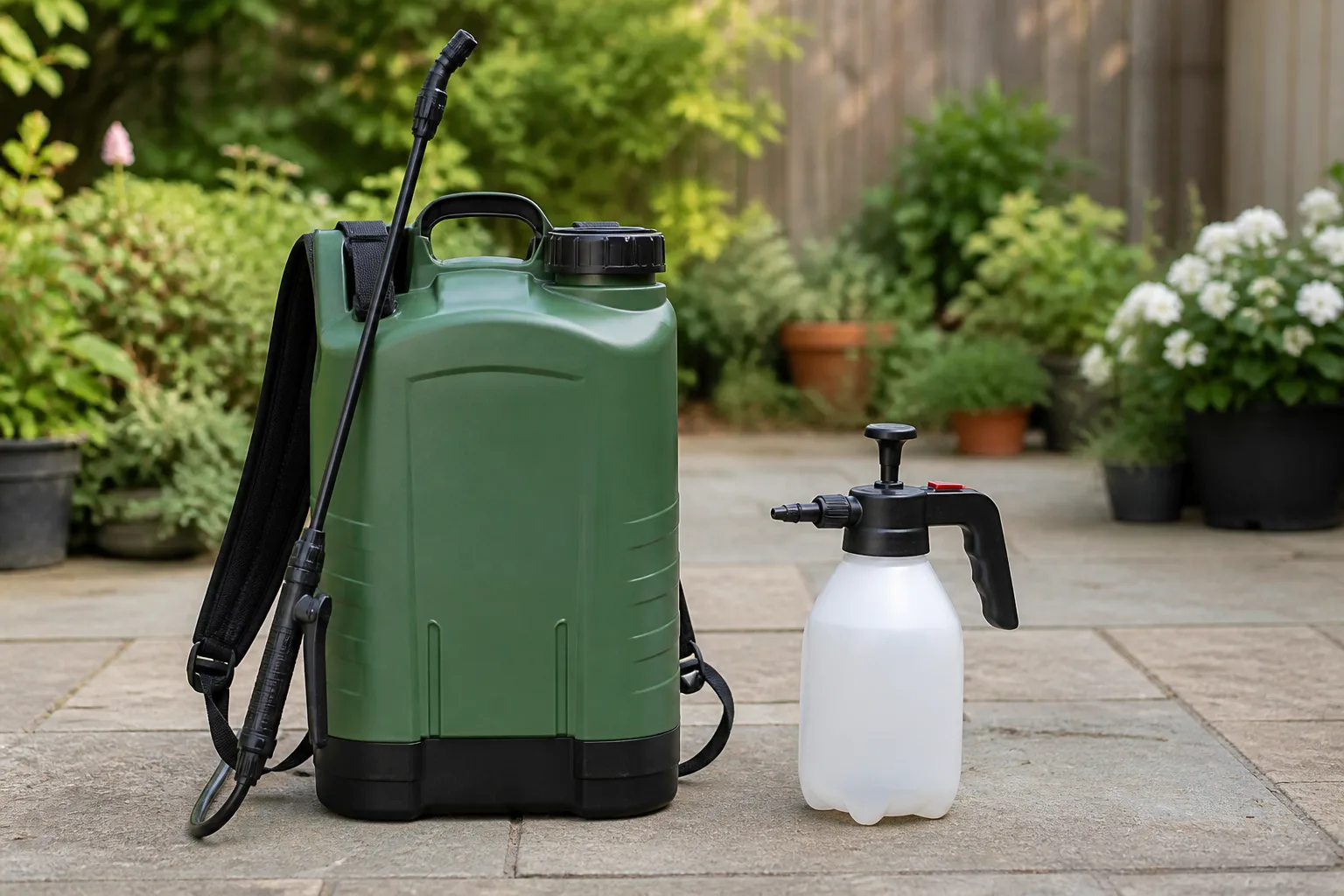
Match sprayer geometry to how far you walk, how much liquid you mix per job, and what your body can carry when the tank is full. A buying mistake is almost always capacity or carry style—not brand logo.
Capacity, Weight, and Spray Sessions
Handheld and one-hand sprayers run from about 0.33 to 2 gallons. They suit spot work, containers, and short sessions under 20 minutes. Backpack and wheeled tanks typically hold 3–6 gallons and make sense when you spray more than 30 minutes at a stretch or cover large non-selective areas. A.M. Leonard recommends backpack styles for weekly or daily spray routines; wheeled models excel on large flat broadcasts but are clumsy for spot spraying between ornamentals.
Water weighs 8.3 pounds per gallon; product concentrate adds more. A 4-gallon backpack can exceed 35 pounds on your shoulders—test strap fit before committing. Plan refill stops: it is better to mix twice than to haul unused chemical you must later dispose of properly.
Manual Pump vs Battery vs Wheeled
Manual pump sprayers cost less, never need charging, and fail less electronically—but your spraying pace is tied to how often you re-pump. LawnStarter’s backpack sprayer testing notes put typical manual stream reach around 10 feet with strong pumps, while weak handhelds may only reach a foot. Battery sprayers maintain pressure automatically; choose them when hand fatigue or arthritis is real, or when consistent droplet size matters across a long row. Wheeled manual or battery units trade lifting for pulling—ideal on driveways and turf edges, poor in stair-stepped yards.
Nozzles, Wand Reach, and Spray Pattern
The nozzle controls droplet size and drift risk. Fan nozzles spread herbicide or fertilizer in a swath; cone mist suits insecticides and fungicides on leaves; stream jets reach high hedges or distant fence weeds. Multiple included tips—like the Smith contractor’s seven—save trips to the hardware store. Wand length keeps chemicals away from gloves and skin; longer wands matter when spraying shrub interiors or groundcover without crouching.
Adjustable single nozzles are fine for homeowners who mostly do one job type; swappable tips pay off when you alternate weed killer, iron feed, and insecticidal soap in the same season—still using separate tanks when labels demand it.
Piston vs Diaphragm Pumps
Piston pumps create higher pressure (up to roughly 90 psi in Solo’s manual backpack line) and suit clear liquid herbicides and pesticides. They are common on handheld contractor tanks. Diaphragm pumps tolerate wettable powders, bleach solutions, and gritty water better because the flexing chamber is less damaged by abrasives. If you mix powder fungicides or spray from pond water with fine sediment, diaphragm-style backpacks are the durable choice. Piston pumps are easier to service; diaphragm rebuilds take more time—pick based on your chemistry, not forum hype.
Mixing, Label Rules, and Dedicated Tanks
Every pesticide and fertilizer is different; the label is the law for application rate, PPE, re-entry interval, and approved crops. Mix only in the tank after you have calculated the total volume you will actually spray—partial tanks of mixed herbicide are a disposal headache and a safety risk.
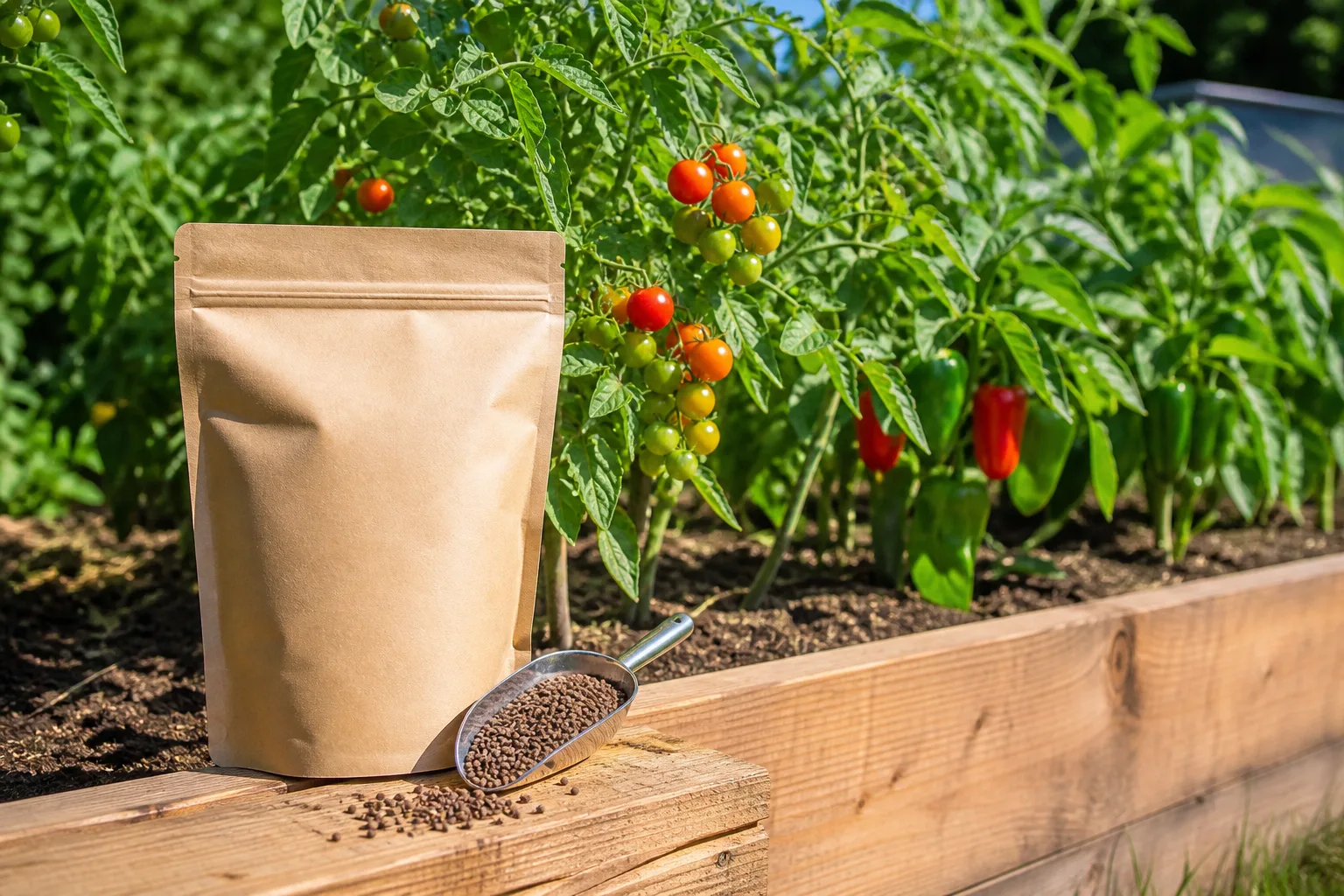
Own separate sprayers when products must not cross-contaminate. A.M. Leonard’s guide warns that broadleaf herbicide residues are especially hard to rinse from plastic; using that tank later on tomatoes can cause catastrophic off-target injury. A practical minimum is one tank labeled for herbicides and one for insecticides/fungicides/fertilizer, plus a cheap handheld for food crops if you grow vegetables. Colorado State University Extension also cautions against using grass-clipping mulch from herbicide-treated lawns in vegetable beds—sprayer discipline starts at mixing and ends at where clippings land.
Wear gloves, eye protection, long pants, and closed shoes when labels require them. Spray on calm mornings, keep kids and pets off treated areas until the label’s dry time passes, and never eat or smoke while handling concentrate.
Cleaning, Calibration, and Off-Season Storage
Rinse immediately after use—dried residue ruins seals and clogs check valves. Empty the tank, add clean water to one-quarter full, re-pressurize, spray through the wand into a lawn area allowed to receive rinseate (check local rules), and repeat three times after herbicides.
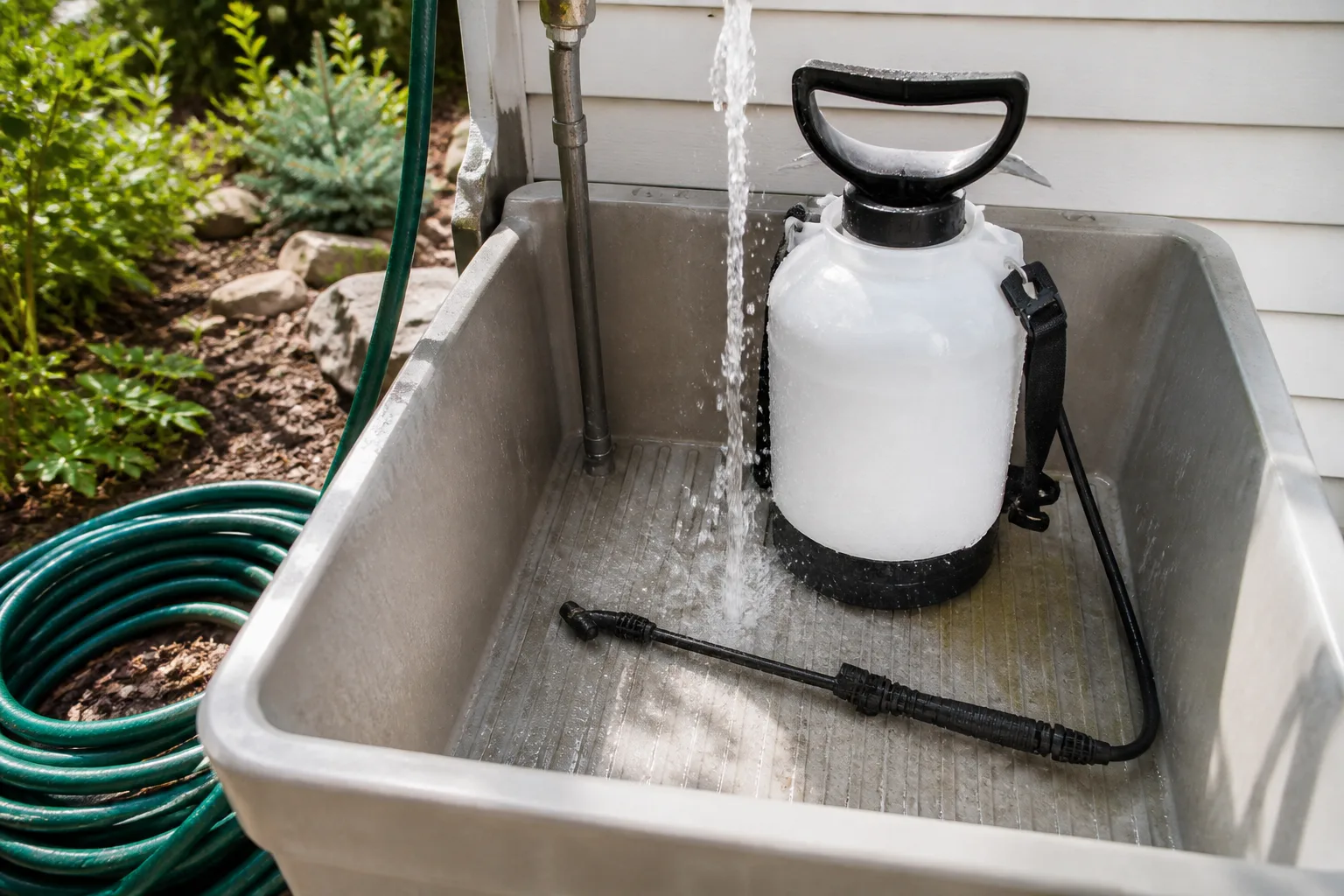 Remove the nozzle and soak it in soapy water if droplets skew sideways. Hang hoses without kinks; store upside down with the cap loose so moisture does not trap mold.
Calibration means verifying that you apply the label rate over a measured area. For backpack and handheld sprayers, mark a 10 × 10 foot test plot, spray with your normal walking speed and nozzle height, then measure how much liquid you used. Adjust pressure or nozzle until output matches label gallons-per-thousand-square-feet guidance. Skip calibration and you either waste product or under-treat weeds—both expensive.
Before winter, triple-rinse, dry components, and store batteries at partial charge in a cool indoor space. Replace cracked O-rings in spring; a $5 gasket kit beats a season of dribbling 2,4-D.
Conclusion
The Smith Performance 3-Gallon Contractor Sprayer is the best single-tank answer for most homeowners who split time between weed spots, shrub treatments, and occasional foliar feeds—if you will rinse it religiously and respect dedicated-tank rules for herbicides. Match narrower jobs to smaller tools: Chapin’s 48-ounce for containers, VIVOSUN handheld for raised beds, Scotts Pump Zero or VIVOSUN wheeled when rolling beats lifting, and D.B. Smith Field King when you need four gallons on your back instead of in your arms.
Buy capacity and carry style first, pump type second, and brand third. Add a second tank before you add a second chemical to one tank. Clean the same day you spray, calibrate once per season, and the right garden sprayer becomes a decade-long tool instead of a leaky garage liability.