30 Indoor Plants That Like Direct Sunlight
Find 30 indoor plants for direct sunlight, from aloe and jade to citrus and hibiscus, with window-placement, acclimation, watering, and scorch tips.
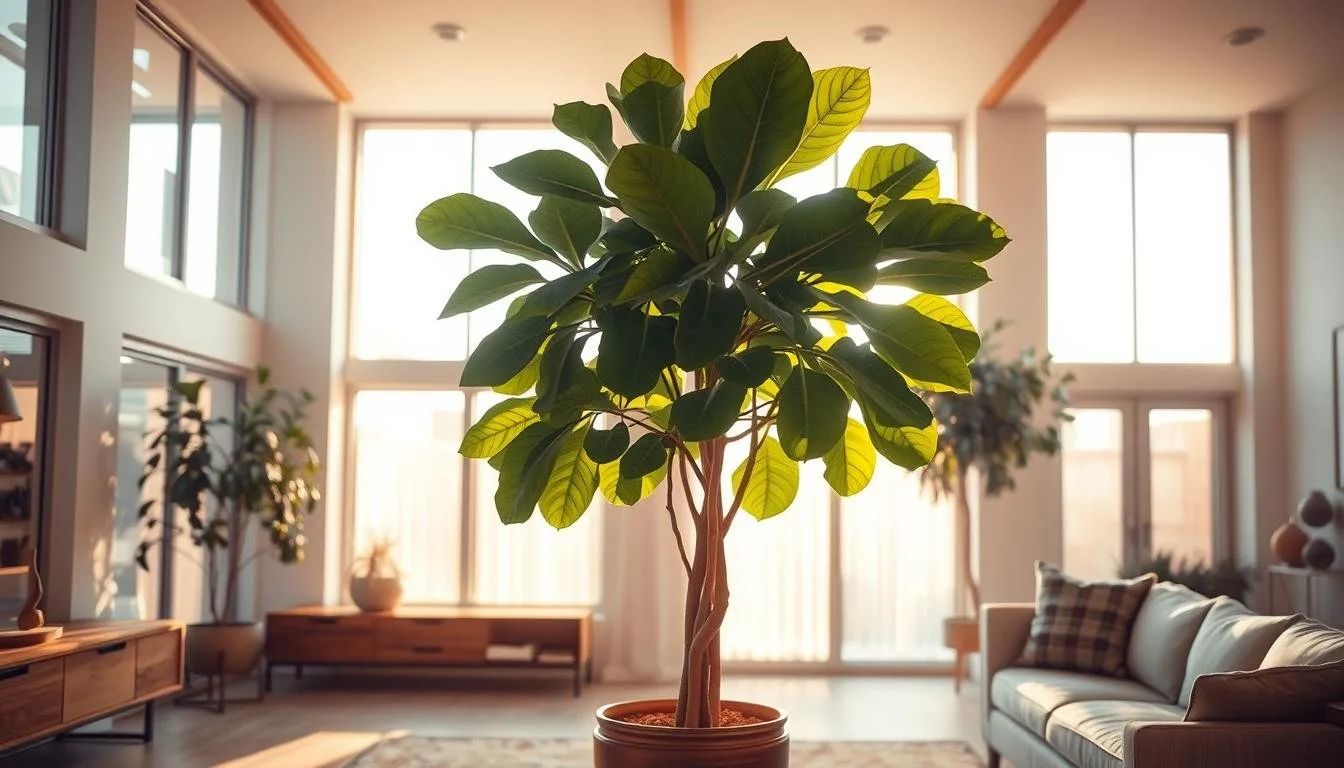
A bright window is not a problem to solve; it is a growing resource. The catch is that indoor direct sun is not one uniform condition. A plant pressed against south-facing glass in July can face stronger heat than the same plant receives in a winter east window, and a nursery-grown specimen may scorch when moved straight into rays it has never had to handle.
The 30 plants below are organized by how they use that light. Some genuinely want several hours of direct sun, some are sun-tolerant plants that prefer morning or filtered afternoon light, and a few are bright-window exceptions included because they are useful in a sunny room when given a little distance from the glass. The Royal Horticultural Society’s guidance on choosing houseplants makes the same essential point: light, temperature, humidity, and window direction are conditions to match, not labels to ignore.
What Direct Sun Means Indoors
Direct sunlight means the sun’s beam reaches the leaves without a curtain, blind, shade cloth, or other plant between the glass and the foliage. Bright indirect light can still be intense, but the beam is diffused or reflected. A room can be bright to your eyes while providing much less usable light at a shelf several feet from the window.
Read the Window Before Buying
An east window gives gentler morning sun. A west window delivers warmer, stronger afternoon rays, especially when heat is trapped between the glass and a leaf. A south window usually offers the longest daily exposure in the Northern Hemisphere, but nearby buildings, trees, overhangs, tinted glass, and seasonal sun angle can change the result. The RHS notes that a spot that scorches plants in summer can become an excellent winter location when the sun is weaker.
Use the plant’s shadow as a quick test. A crisp, well-defined shadow for part of the day means the plant is receiving direct light; a faint shadow suggests filtered or indirect light. If the window is sunny but the room is hot, leave a few inches of air around the foliage and use a sheer curtain during the most intense part of the afternoon.
Acclimate a New Plant
Acclimation is the step that prevents many “sun-loving plant” failures. Start a new plant in bright light with only a short period of direct morning sun, then add exposure gradually over roughly one to two weeks. A plant that has already been grown in a greenhouse or sunny nursery may adjust faster, but its leaves—not the calendar—should set the pace. Epic Gardening’s direct-sun list also recommends moving plants slowly into a new light level to reduce shock.
Pale tan patches, bleached areas, or crisp spots on the window-facing side mean the increase was too fast. Move the plant back to bright filtered light and try again more slowly. Do not “treat” scorch by watering every day; damaged leaf tissue will not turn green again, and wet soil can create a second problem.
30 Plants at a Glance
The light column describes the best starting point for an established, healthy plant. “Direct” means several hours of sun can be appropriate after acclimation; “morning or filtered” means the plant likes bright light but needs relief from the hottest rays; “bright window” means keep it close to the light while protecting thin foliage from prolonged afternoon exposure.
| Plant | Best light starting point | Watering cue | Best reason to choose it |
|---|---|---|---|
| Aloe vera | Direct to bright | Mix mostly dry | Fleshy, architectural rosette |
| Jade plant | Direct | Dry before soaking | Long-lived tree-like succulent |
| Ponytail palm | Direct to bright | Dry deeply | Sculptural caudex and leaves |
| String of pearls | Gentle direct | Dry almost fully | Trailing texture |
| Golden barrel cactus | Direct | Dry fully | Slow, spiny focal point |
| Moon cactus | A few direct hours | Dry fully | Colorful grafted form |
| Snake plant | Bright to direct | Dry well | Upright, forgiving structure |
| African milk tree | Bright to direct | Dry between watering | Candelabra stems |
| Yucca | Direct to bright | Dry before watering | Tall, sword-leaf silhouette |
| Sago palm | Filtered to bright | Dry slightly | Cycad texture; toxic to pets |
| Papyrus | Direct | Keep consistently wet | Fine, fountain-like top |
| Croton | Bright to direct | Evenly moist | Bold foliage color |
| Meyer lemon | Direct, 6+ hours | Do not bone-dry | Fragrant blooms and fruit |
| Tropical hibiscus | Bright direct | Even moisture | Large, vivid flowers |
| Gardenia | Very bright | Do not let dry | Fragrant white flowers |
| Jasmine | Bright, some sun | Even moisture | Fragrant vine |
| Basil | Direct | Water when surface dries | Harvestable kitchen herb |
| Bird of paradise | Bright to direct | Water in active growth | Large tropical leaves |
| Areca palm | Bright, filtered | Evenly moist | Full, feathery fronds |
| China doll plant | Bright window | Moderate dry-down | Fine-leaved small tree |
| Ti plant | Bright filtered | Moist but draining | Pink, red, or green leaves |
| Dragon tree | Bright window | Dry slightly | Upright, narrow form |
| Fiddle-leaf fig | Bright, morning sun | Water when partly dry | Large statement leaves |
| Norfolk Island pine | Bright to direct | Even moisture | Conifer-like form |
| Echeveria | Direct | Dry fully | Compact geometric rosette |
| Hens and chicks | Direct | Dry fully | Offsets and hardy rosettes |
| Tree aeonium | Direct to bright | Dry partly | Tall rosette branches |
| Zebra haworthia | Bright to gentle sun | Dry mostly | Striped compact leaves |
| Burro’s tail | Bright to gentle sun | Dry between watering | Cascading blue-green stems |
| Coral cactus | Bright to direct | Dry between watering | Unusual grafted silhouette |
True Full-Sun Succulents and Cacti
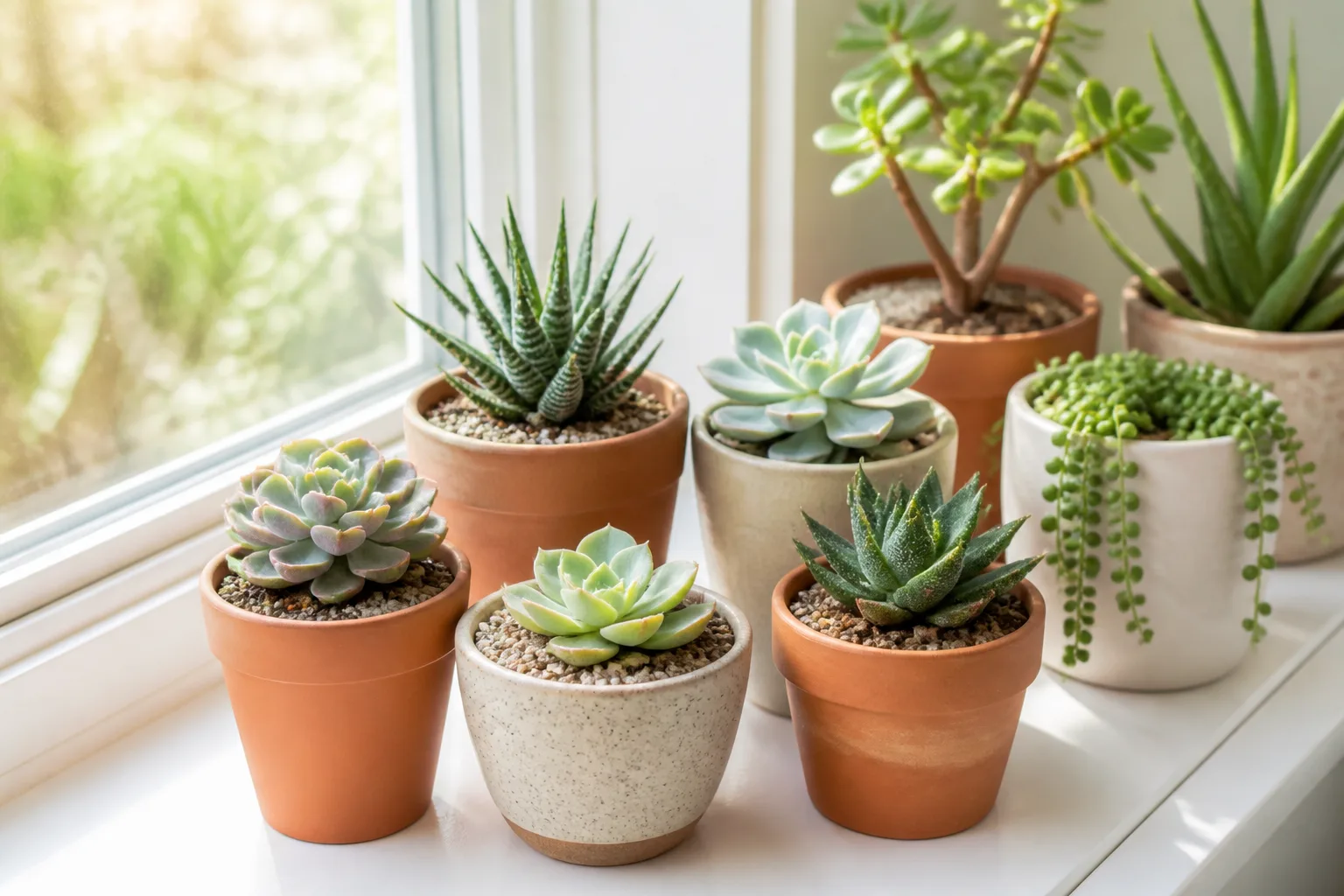
The strongest candidates for a hot, sunny sill are plants with fleshy leaves, stems, or roots that store water. Even these are not immune to a sudden change. The Penn State Extension guide to aloe recommends full to partial sun indoors, a coarse mix, large drainage holes, and thorough watering followed by a dry period; that combination—light plus fast drainage—is the pattern to copy.
1. Aloe vera (Aloe vera) — direct to bright. Aloe is a practical windowsill rosette with thick, toothed leaves and offsets that can be separated when they crowd the pot. Give it the brightest window available, but let the mix dry well before watering; a glazed pot can be more forgiving than porous terracotta in a very hot, dry room because it does not dry the root ball quite as abruptly.
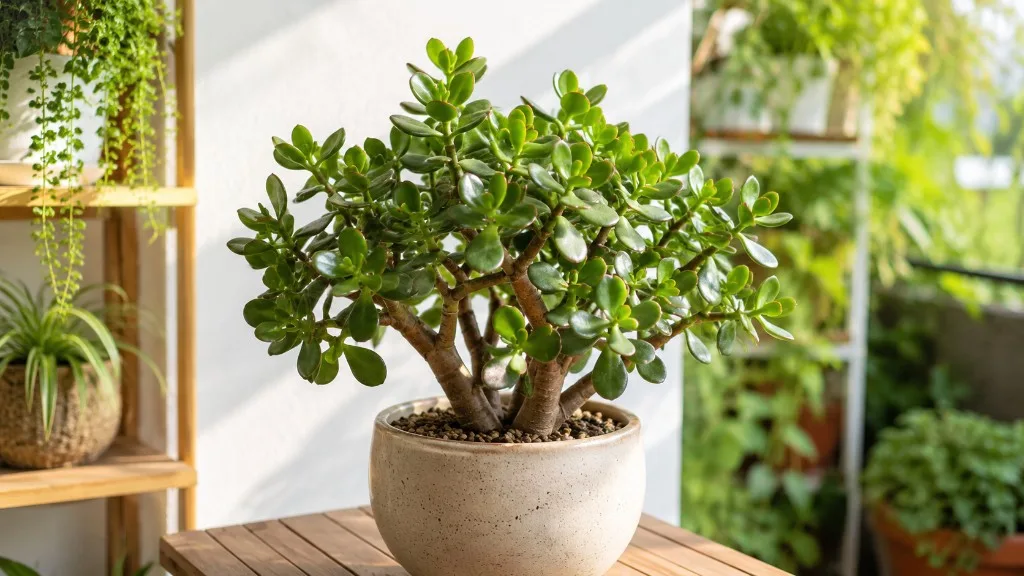
2. Jade plant (Crassula ovata) — direct. Jade becomes sturdier and more branched with strong light, and its rounded leaves can develop red margins when conditions are bright. Use a heavy pot for the top-heavy stems, water only after the soil has dried, and rotate the container occasionally so growth does not lean toward the glass. The RHS plant profile lists jade for full sun and well-drained conditions.
3. Ponytail palm (Beaucarnea recurvata) — direct to bright. This is not a true palm but a drought-adapted plant with a swollen water-storing base and long, curly leaves. It is a good choice for a bright floor-level corner, provided you use a container that will not tip and resist the urge to water the caudex on a weekly schedule. Let the pot dry deeply, then soak and drain it.
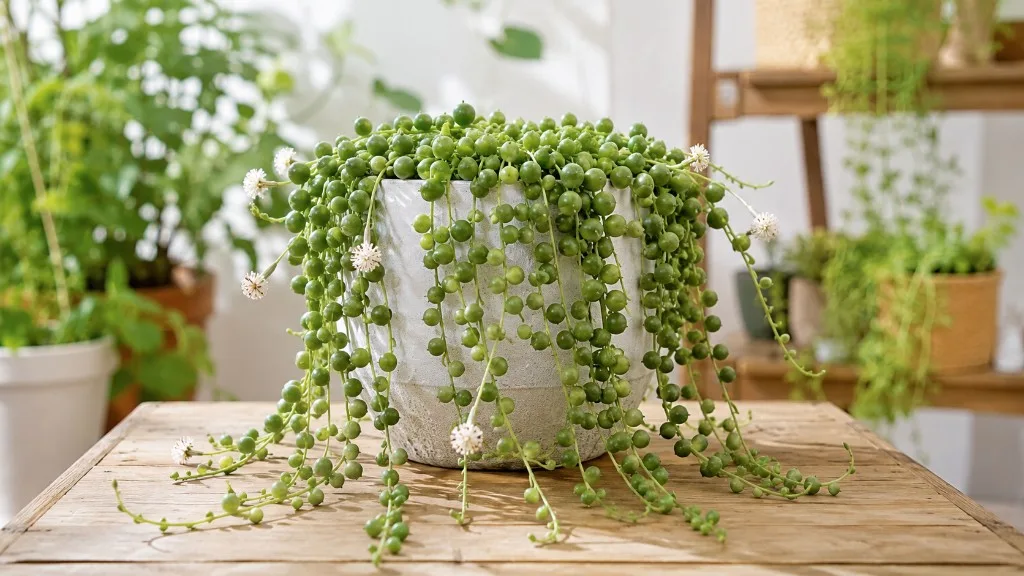
4. String of pearls (Curio rowleyanus, formerly Senecio rowleyanus) — gentle direct. The beadlike leaves stay plump and close together when the plant gets plenty of light, but intense hot glass can dry or scorch exposed strands. A hanging pot near an east window or a south window behind a sheer curtain is safer than a dark room followed by sudden midday sun. Water only when the mix is nearly dry and keep water out of the beads and stems.
5. Golden barrel cactus (Echinocactus grusonii) — direct. Golden spines and a rounded ribbed body make this a slow-growing focal point for a sunny sill. Its main failure mode is not too little water but a potting mix that stays wet around the roots. Choose a drainage hole, a gritty cactus mix, and enough warmth to keep the window from becoming a cold, wet trap in winter.
6. Moon cactus (Gymnocalycium mihanovichii grafted on a cactus rootstock) — a few direct hours. The brightly colored grafted top is more sun-sensitive than a desert cactus, so it can fade or scorch under relentless afternoon rays. Give it strong light with morning sun or filtered midday exposure, let the mix dry fully, and check the graft union for softness. It is a novelty plant with a limited lifespan, not a plant to rescue with extra watering when the colored top declines.
Sun-Tolerant Structural Plants
These plants give a sunny room height, shape, or unusual texture, but several are better described as adaptable than as full-sun specialists. Place them according to the leaves they produce now. Thin, pale new growth means the site is too dim; bleached or crisp tissue means the increase in sun or heat was too abrupt.
7. Snake plant (Dracaena trifasciata, formerly Sansevieria trifasciata) — bright to direct. Snake plants can live in lower light, but the strongest growth and best variegation usually come from brighter conditions. A specimen moved from a dim hallway to a sunny pane may scorch, so acclimate it and water sparingly only after the mix dries. The Missouri Botanical Garden’s houseplant guide lists snake plants from full sun to part shade, which explains their useful range without making them a no-light plant.
8. African milk tree (Euphorbia trigona) — bright to direct after acclimation. Its triangular, ridged stems make a tall candelabra shape that benefits from strong light, though sudden outdoor or glass-front exposure can mark the skin. Wear gloves when handling it because the milky latex is irritating, keep it away from children and pets, and use a gritty mix that dries between thorough waterings. Do not mistake this succulent euphorb for a true cactus when deciding how to handle cut stems.
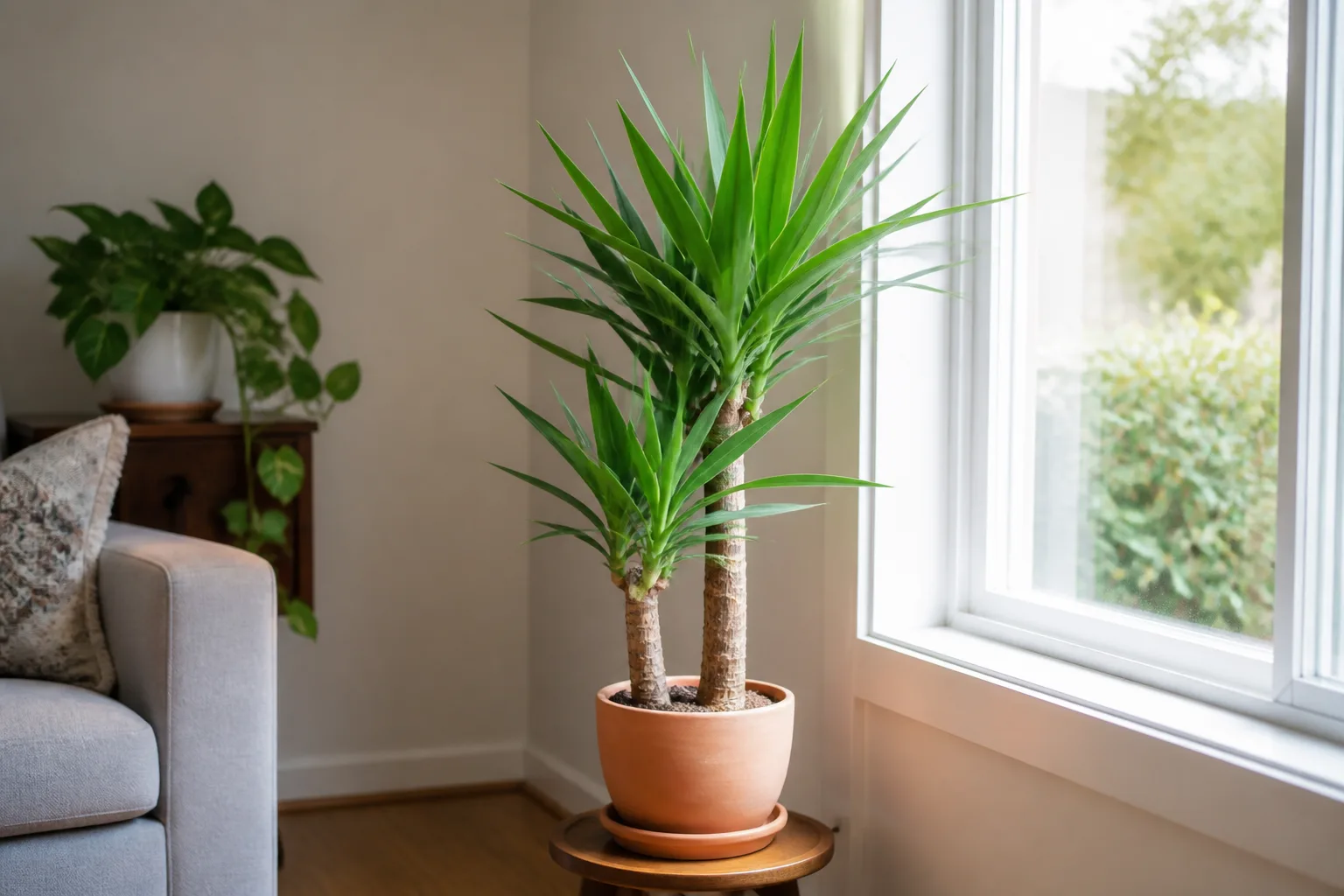
9. Yucca (Yucca gigantea or Yucca aloifolia) — direct. Yucca is one of the best choices for a bright floor plant if you have room for stiff, sword-shaped leaves. The RHS profile for spineless yucca places it in full sun and well-drained soil, with reduced winter watering. Keep the pot stable, avoid burying the trunk deeper during repotting, and protect the leaf tips from a narrow walkway.
10. Sago palm (Cycas revoluta) — filtered to bright. A sago palm can handle a bright room and some gentle direct light, but it is a poor choice for a household where pets can reach it. The ASPCA lists sago palm as toxic to dogs and cats, and veterinary guidance notes that all parts are poisonous, with seeds especially dangerous. Choose it only when you can prevent access; if a pet chews it, call a veterinarian or animal poison service immediately rather than waiting for symptoms.
11. Papyrus (Cyperus papyrus) — direct and wet. Papyrus is the outlier in a list dominated by dry-growing plants. It likes strong light, but its root environment should remain consistently moist because it naturally grows at water’s edge. Set the nursery pot in a water-holding saucer if needed, refresh stagnant water, and do not place it in the same dry cactus mix or watering routine as aloe and jade.
12. Croton (Codiaeum variegatum) — bright to direct. Croton needs enough light to hold its red, orange, yellow, or green leaf color, yet a recently purchased plant may still scorch in a hot west window. Give it bright light first, then increase direct exposure; keep the root ball evenly but not constantly soggy, and avoid cold drafts. Its vivid foliage makes it worth the extra observation, especially in a warm room with steady humidity.
Flowering, Edible, and Fragrant Sun Lovers
Sunlight does more than keep foliage compact. It can be the difference between a plant that merely survives and one that produces flowers, fragrance, or harvestable leaves. Flowering and edible plants also tend to use water faster when they are actively growing, so their pots need closer attention than a dormant succulent.
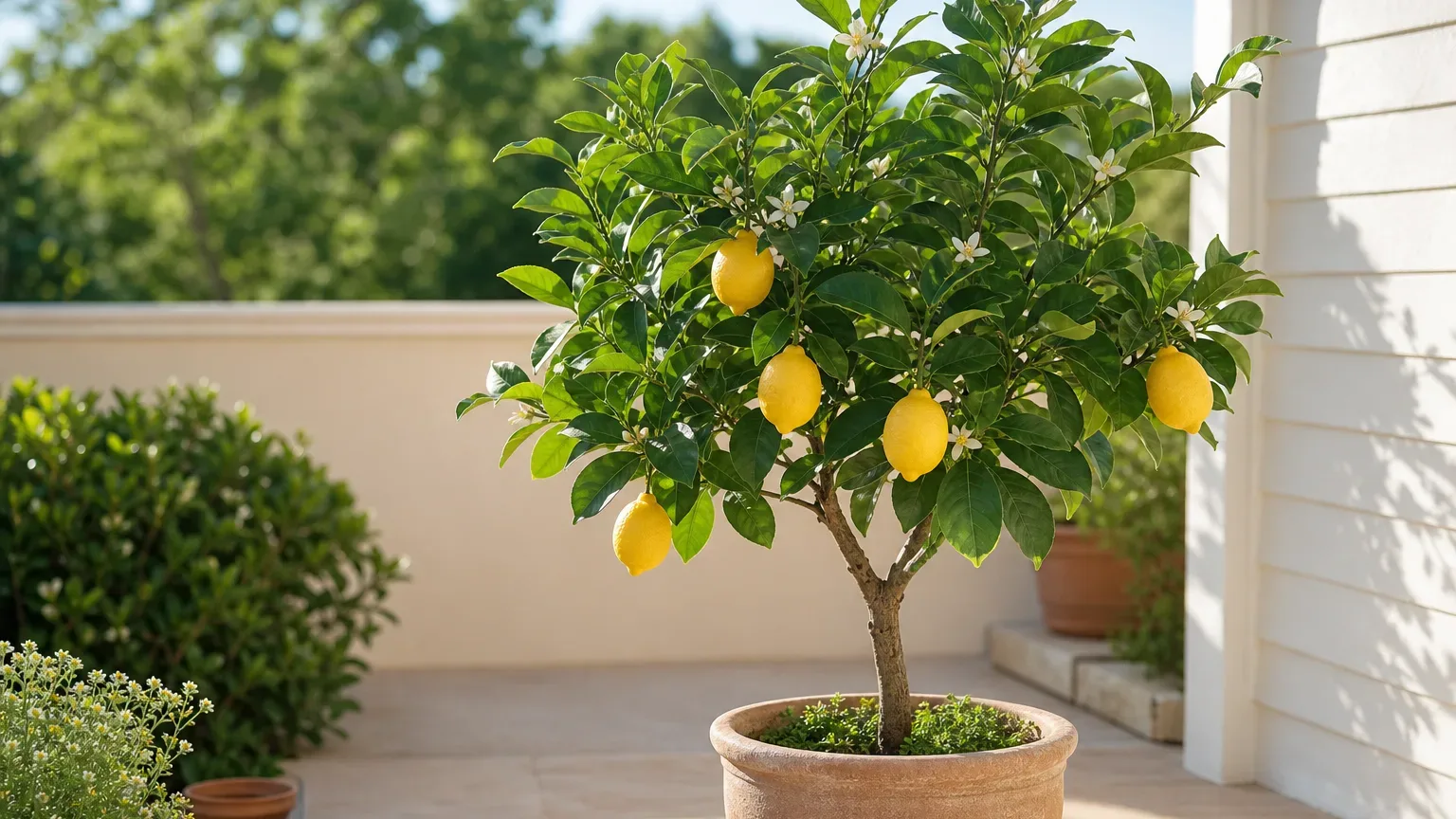
13. Meyer lemon (Citrus × meyeri) — direct, ideally six or more hours. A dwarf Meyer lemon needs the brightest window you have if you want flowers and fruit, and it may still produce only a modest crop indoors. Penn State Extension’s container-growing account recommends a sunny south-facing window and describes the need to move the tree gradually indoors; it also notes that indoor flowers may need gentle hand-pollination. Keep the mix evenly moist but never waterlogged, and expect a large, thirsty plant rather than a low-maintenance succulent.
14. Tropical hibiscus (Hibiscus rosa-sinensis) — bright direct. Hibiscus rewards a warm, bright window with large flowers, but it is not a dry plant. Water when the upper mix begins to dry, feed only while it is actively growing, and prune lightly to encourage branching. A hot glass pane can scorch leaves if airflow is poor, so move it a little back or use a sheer curtain during the strongest afternoon period.
15. Gardenia (Gardenia jasminoides) — very bright with protection from harsh heat. Gardenia wants strong light to form buds, plus consistent moisture, acidic-leaning container media, and humidity that does not swing wildly. It is a high-reward, high-attention choice: a sunny window can encourage fragrance, while a dry root ball, cold draft, or sudden move can trigger bud drop. Choose it when you are willing to monitor the pot instead of relying on a calendar.
16. Jasmine (Jasminum polyanthum or another indoor-suitable jasmine) — bright with some direct sun. Jasmine needs strong light to flower, but the best placement is often morning sun followed by bright filtered light rather than a sealed, hot west-facing pane. Give the vine a small trellis, keep the mix from swinging between bone dry and saturated, and prune after a bloom flush. Check the plant tag because “jasmine” covers species with different growth habits and winter needs.
17. Basil (Ocimum basilicum) — direct. Basil is one of the easiest edible plants for a sunny kitchen windowsill, as long as the pot has drainage and the plant is harvested regularly. Pinch stem tips before flowers dominate, water when the surface begins to dry, and rotate the pot so the stems do not lean. If new growth is thin and widely spaced, the answer is usually more light rather than more fertilizer.
18. Bird of paradise (Strelitzia reginae) — bright to direct. Bird of paradise brings broad tropical leaves and, on a mature plant, the possibility of dramatic flowers. It needs room, warmth, regular water during active growth, and enough light to support large leaves; protect newly purchased plants from immediate all-day midday sun. Wipe dust from the leaves and leave space between the plant and glass so heat does not build at the leaf surface.
Bright-Window Tropical Foliage
These choices are useful when your room is bright but the window’s direct beam is too hot for delicate foliage. Put them close enough to receive real daylight, not in the back of the room, and give them a few feet of distance or a sheer curtain if the leaves heat up. The RHS sunny-room guide specifically separates true sun lovers from plants that prefer bright spots without all-day sun.
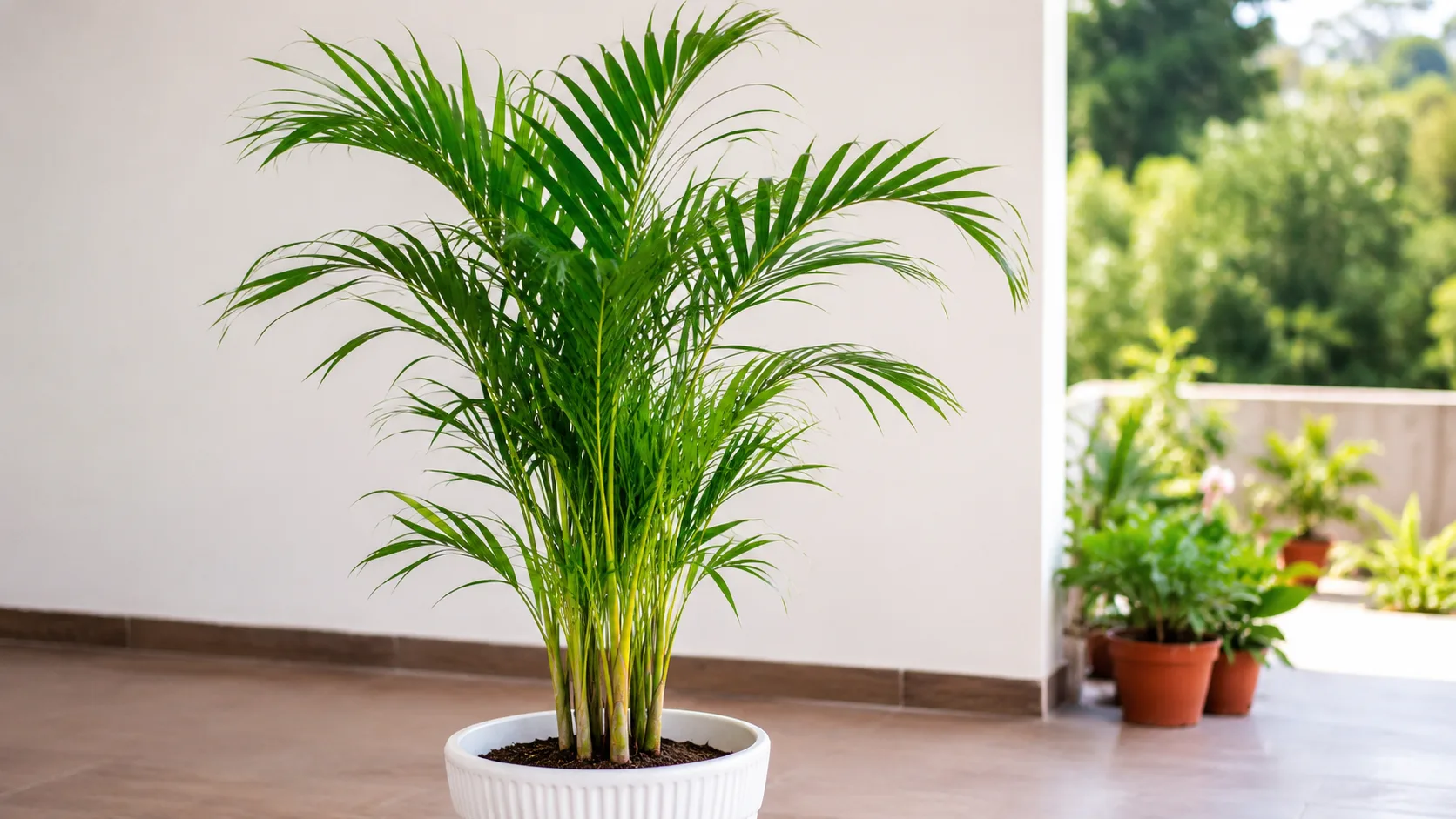
19. Areca palm (Dypsis lutescens) — bright filtered light. Areca palm makes a full, feathery screen for a bright living room, but it is not a cactus that wants to be pressed against hot glass. Give it bright filtered light, evenly moist soil with good drainage, and higher humidity when the air is very dry. Brown tips are more often a water, salt, dry-air, or heat signal than an invitation to place it in harsher sun.
20. China doll plant (Radermachera sinica) — bright window, limited direct sun. Its fine leaves create a delicate tree-like shape, and it responds well to strong, steady light. Keep it slightly back from a south or west window, water after the top layer dries, and avoid moving it repeatedly once it has settled. It is a good choice for a sunny room where the plant receives reflected light but not a full blast through the glass.
21. Ti plant (Cordyline fruticosa) — bright filtered light. Ti plants bring pink, red, purple, or variegated foliage to a bright room, but thin leaves can scorch when afternoon sun is concentrated through a pane. Use a draining pot, keep the mix moderately moist while it grows, and raise humidity only if the room is genuinely dry; a constantly wet cachepot is not a humidity solution. Rotate the plant for even color and growth.
22. Dragon tree (Dracaena marginata) — bright window with afternoon protection. Dragon tree is tolerant of different indoor light levels, but its narrow leaves look best with strong daylight and some relief from relentless direct sun. Keep it a few feet from hot glass, let the pot dry partly between waterings, and check for spider mites if the room is hot and dry. More fertilizer will not correct a plant that is stretching because the window is too far away.
23. Fiddle-leaf fig (Ficus lyrata) — bright light with gentle morning sun. Fiddle-leaf fig can use several hours of direct morning light, especially when it has been acclimated, but leaves can scorch in hot afternoon exposure. Give it a stable location, rotate it occasionally, and water deeply when the upper portion of the mix has dried. The tree’s large leaves collect dust and show stress clearly, making it a useful “thermometer” for whether your window is too intense.
24. Norfolk Island pine (Araucaria heterophylla) — bright to direct. Its layered, symmetrical branches make it one of the few houseplants that looks like a small indoor conifer. Give it bright light and consistent moisture without leaving it in standing water; a dry, heated room can cause needle drop, while a cold, wet window corner can damage roots. Turn the pot every few weeks so the tree does not grow one-sided.
Trailing, Rosette, and Odd-Form Picks
The final six are visually distinctive and range from plants that truly want sun to plants that need a softer interpretation of it. Grouping them together is a reminder that leaf shape and water storage are clues, not a substitute for observing the individual plant.
25. Echeveria (Echeveria spp.) — direct. Echeveria rosettes need intense light to stay compact; too little light stretches the stem and opens the leaves, a condition called etiolation. Keep it in a gritty mix, water only after it dries fully, and provide the brightest safe location you have. The RHS lists echeverias among the succulents suited to sunny rooms, and Epic Gardening’s practical guide emphasizes that weak light quickly changes their shape.
26. Hens and chicks (Sempervivum tectorum) — direct. These hardy rosettes produce offsets around the mother plant and can tolerate stronger light than many indoor succulents. They need a shallow pot with excellent drainage and a dry period between deep waterings. Indoors, the challenge is often not sun but stagnant, damp soil, so do not crowd them into a decorative bowl without a drainage hole.
27. Tree aeonium (Aeonium arboreum) — direct to bright. Tree aeonium forms rosettes on branching stems, giving a sunny collection height without the bulk of a large tree. Let the mix dry between waterings, but expect it to use somewhat more moisture than a barrel cactus, particularly while it is actively growing. If the rosettes close or the stems stretch, reassess light and season before adding water.
28. Zebra haworthia (Haworthiopsis fasciata) — bright to gentle sun. The striped, pointed leaves are compact and forgiving, but harsh afternoon sun can redden, bleach, or stress them. Start with bright filtered light or morning sun, use a gritty mix, and water only after the pot has dried. It is a better choice than echeveria for a bright sill where the direct beam is shorter or softened by a curtain.
29. Burro’s tail (Sedum morganianum) — bright to gentle direct. Its blue-green leaves line trailing stems that look fullest when light is strong and watering is restrained. Place it where the stems will not be brushed because leaves drop easily, give it morning or filtered afternoon sun, and let the mix dry before watering. Increase light gradually; a plant that has been grown in shade can burn even when the species ultimately prefers bright conditions.
30. Coral cactus (Euphorbia lactea ‘Cristata’ grafted on a succulent rootstock) — bright to direct after acclimation. This unusual plant is a grafted euphorb, not a single cactus species, so the colored crest and green base can respond differently to heat and light. Give it a bright window, protect a new purchase from a sudden full-sun jump, and let the soil dry between waterings. Handle it carefully because euphorb sap can irritate skin and eyes.
How to Keep Sunny Houseplants Healthy
Light changes the plant’s water use, but it does not erase the plant’s biology. A papyrus in direct sun can need constant moisture while a golden barrel cactus in the same window may rot if watered on that schedule. Use the plant’s leaf and root type as the starting point, then adjust for pot size, temperature, airflow, and season.
Water by Root-Zone Dryness
Water slowly until excess runs from the drainage hole, then empty the saucer or outer pot. For succulents and cacti, wait until the mix has dried through most or all of the root zone; for basil, hibiscus, gardenia, and papyrus, allow only the amount of dry-down their category can tolerate. A finger test at the surface is unreliable in a large pot, so check deeper with a wooden skewer or compare the pot’s weight before and after watering.
Expect a sunny, warm, breezy windowsill to dry faster than a cool room with the same plant. In winter, the sun may still shine through the glass while growth, evaporation, and root uptake slow down. That is why a summer schedule carried unchanged into winter causes so many yellow leaves and soft roots.
Use a Pot and Mix That Can Drain
Every plant in this list needs a container with a real drainage hole, including plants that like consistently moist soil. Use a coarse, airy mix for succulents, cacti, euphorbs, and haworthias; use a quality houseplant mix for foliage plants; and choose a moisture-retentive but oxygenated medium for papyrus or thirsty flowering plants. Do not put a gravel layer in the bottom of a pot as a substitute for drainage.
Pot size matters as much as the soil label. A large pot stays wet longer after a sunny day because the root system cannot use all the mix, while a tiny pot near hot glass may dry before you notice. Repot one size up when roots are crowded or water runs straight through, and refresh the watering routine after every change in container.
Watch for Scorch, Stretch, and Heat
Sun scorch appears as pale, tan, or crisp patches on the side facing the window, often after a move or a sudden bright season. Stretching appears as long gaps between leaves, leaning stems, or new growth reaching toward the pane. The first calls for less intensity and slower acclimation; the second calls for more usable light.
Heat can complicate both symptoms. A plant may receive enough light but still suffer when leaves touch hot glass, an air conditioner blows across the pot, or a radiator dries the root ball from below. Leave clearance around leaves, rotate the container, use a curtain during the hottest hours when appropriate, and change one variable at a time so you can see what actually helped.
Choose by Window, Time, and Goal
Best for a Hot South or West Window
Start with aloe, jade, ponytail palm, golden barrel cactus, echeveria, yucca, basil, and—after acclimation—African milk tree or coral cactus. Meyer lemon and hibiscus can use the exposure but demand more regular water and more room. If the window becomes oven-like in summer, even these plants may need a sheer curtain or a small step back from the glass.
Best for Morning Sun or Filtered Afternoon Light
Choose string of pearls, moon cactus, zebra haworthia, burro’s tail, snake plant, fiddle-leaf fig, jasmine, gardenia, and Norfolk Island pine when the room is bright but the afternoon beam is harsh. Areca palm, China doll, ti plant, and dragon tree belong farther back or behind a curtain. These placements preserve bright light while reducing the heat load that causes leaf scorch.
Best if You Want Blooms or Food
Choose basil for quick harvests, Meyer lemon for a long-term citrus project, hibiscus for large seasonal flowers, gardenia for fragrance, jasmine for a trained vine, and bird of paradise for a mature tropical statement. Be realistic about the trade: fruit and flowers require more consistent light, water, feeding, and patience than a foliage plant. A sunny window improves the odds; it does not guarantee indoor blooms or a heavy crop.
Conclusion
The best indoor plant for direct sunlight is the one that matches your actual window and your willingness to watch it. Start with a sun-loving succulent, cactus, yucca, or herb for a hot pane; choose a tropical or flowering plant when you can provide steadier moisture and protection from afternoon heat; and use a curtain or a little distance for thin-leaved exceptions.
Give every new plant time to acclimate, water according to the root zone rather than the calendar, and treat scorch or stretch as information. With those three habits, a south- or west-facing window becomes a reliable growing space instead of a source of repeated plant loss.