7 Easy-Care Drought-Tolerant Perennials
Meet seven drought-tolerant perennials that need little care after the first season—plus planting rules, zone ranges, watering schedules, and common mistakes to avoid.
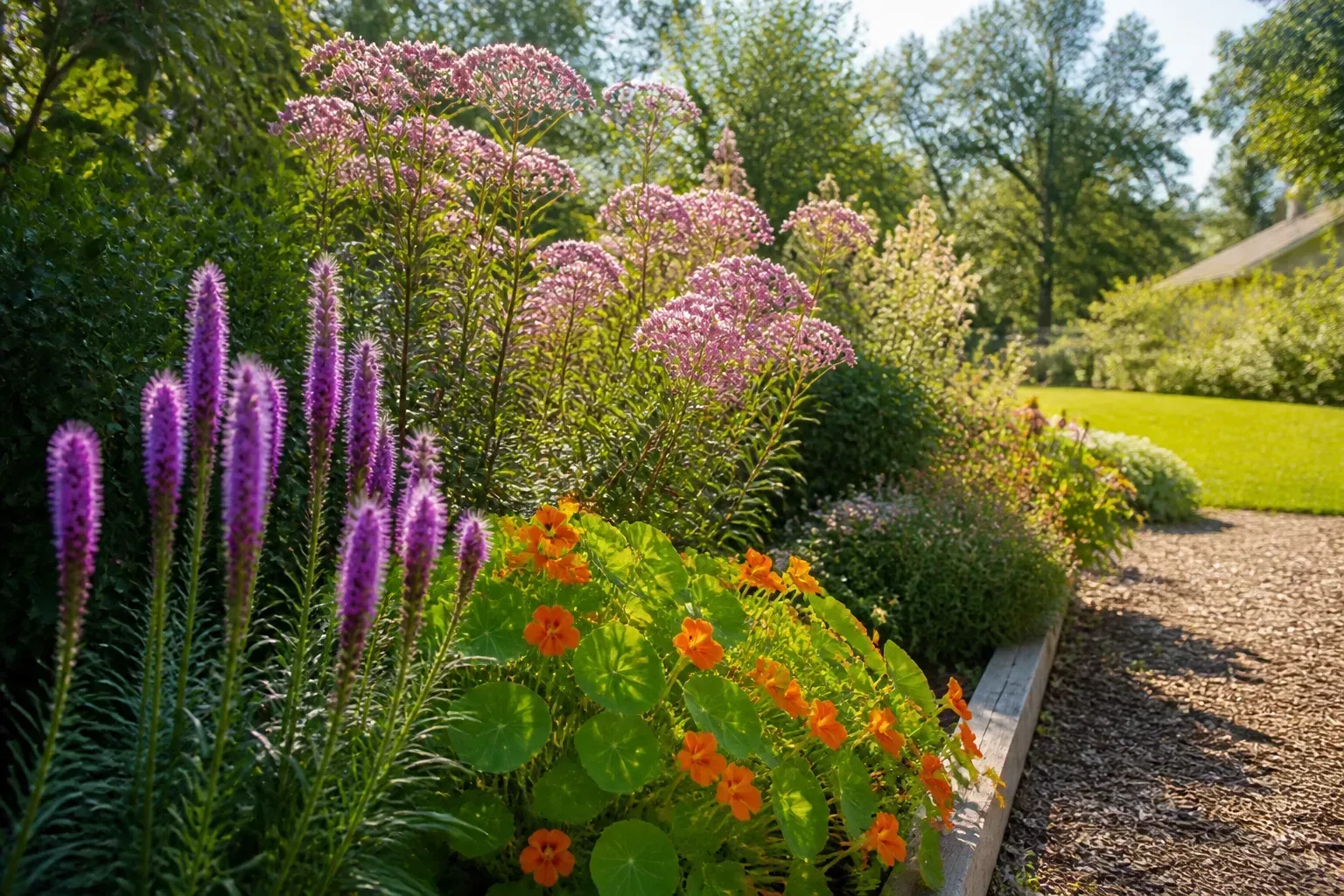
A dry garden fails for one predictable reason: people treat drought tolerant perennials like they are drought tolerant on day one. They are not. Every plant on this list can shrug off summer heat and skip frequent watering after roots reach depth—usually after one full growing season, sometimes two. Until then, they need the same thoughtful watering any new transplant does.
These seven are not the only tough perennials on earth. They are the combination gardeners keep coming back to because they bloom reliably, handle full sun, and ask for little once established. What follows is not a catalog blurbs rerun. It is a practical shortlist with planting rules, spread warnings, and honest “skip this if…” notes so you pick plants that fit your yard—not a Pinterest board.
What “Low Maintenance” Actually Means for Dry-Garden Perennials
Low maintenance here means: no constant deadheading schedule, no heavy feeding, no daily watering in mature beds, and no replacing plants every year because heat fried them. It does not mean never touching the garden again. You will still cut back spent stems, divide aggressive spreaders, and pull weeds while plants are small.
Drought-Tolerant Does Not Mean Zero Water the First Year
Drought tolerance describes mature plants with deep or efficient root systems that can access stored soil moisture and tolerate dry surface conditions. New nursery transplants have compact root balls. They cannot search for water yet. NC State Extension notes that purple coneflower, for example, is drought tolerant once established—but that establishment phase matters.
The biggest mistake on dry-garden lists is jumping from “water daily while planting” to “rain will handle it” without explaining the middle months. Underwater a new coneflower or liatris through its first hot summer and you will conclude the plant “doesn’t like your yard” when the real issue was root depth.
Plant Them Once, Water Them Smart: The Establishment Rule
For all seven plants below, use this baseline through the first growing season (and into year two for taprooted species like liatris):
Aim for about one inch of water per week—rain plus irrigation combined. Deep, less frequent watering beats light sprinkles. Morning irrigation reduces evaporation. Mulch two to three inches deep, keeping mulch off crowns, to hold moisture while roots expand.
Fall planting in warm soil can shorten establishment if you still have six to eight weeks before hard frost. Spring planting before heat arrives is safer in hot climates. If you are planting in midsummer, shade the transplants briefly, check soil moisture twice a week, and accept that bloom may wait until next year while roots catch up. For seasonal timing context, see our guide to perennials to plant in August.
A drip irrigation line or soaker hose makes the first year easier because water reaches the root zone without wetting foliage every day. That matters for powdery-mildew-prone plants like bee balm neighbors and keeps you from guessing whether a quick sprinkle did any good. Check your local extension office for evapotranspiration or rainfall data if you want to fine-tune weekly totals, but the one-inch baseline is a reliable starting point in most temperate gardens.
Signs a New Perennial Is Still Thirsty
Wilting in afternoon sun alone is not always thirst—many full-sun plants temporarily flag on hot days and recover by evening. Worry when leaves stay limp after sunset, edges brown and crisp progressively, or growth stalls for weeks. Stick a finger three inches into soil near the root zone. If it is powder dry and the plant looks stressed, water deeply. If it is cool and damp but stems rot at the base, you have a drainage problem, not a drought problem—and no drought-tolerant label fixes soggy soil.
Purple Coneflower (Echinacea purpurea)
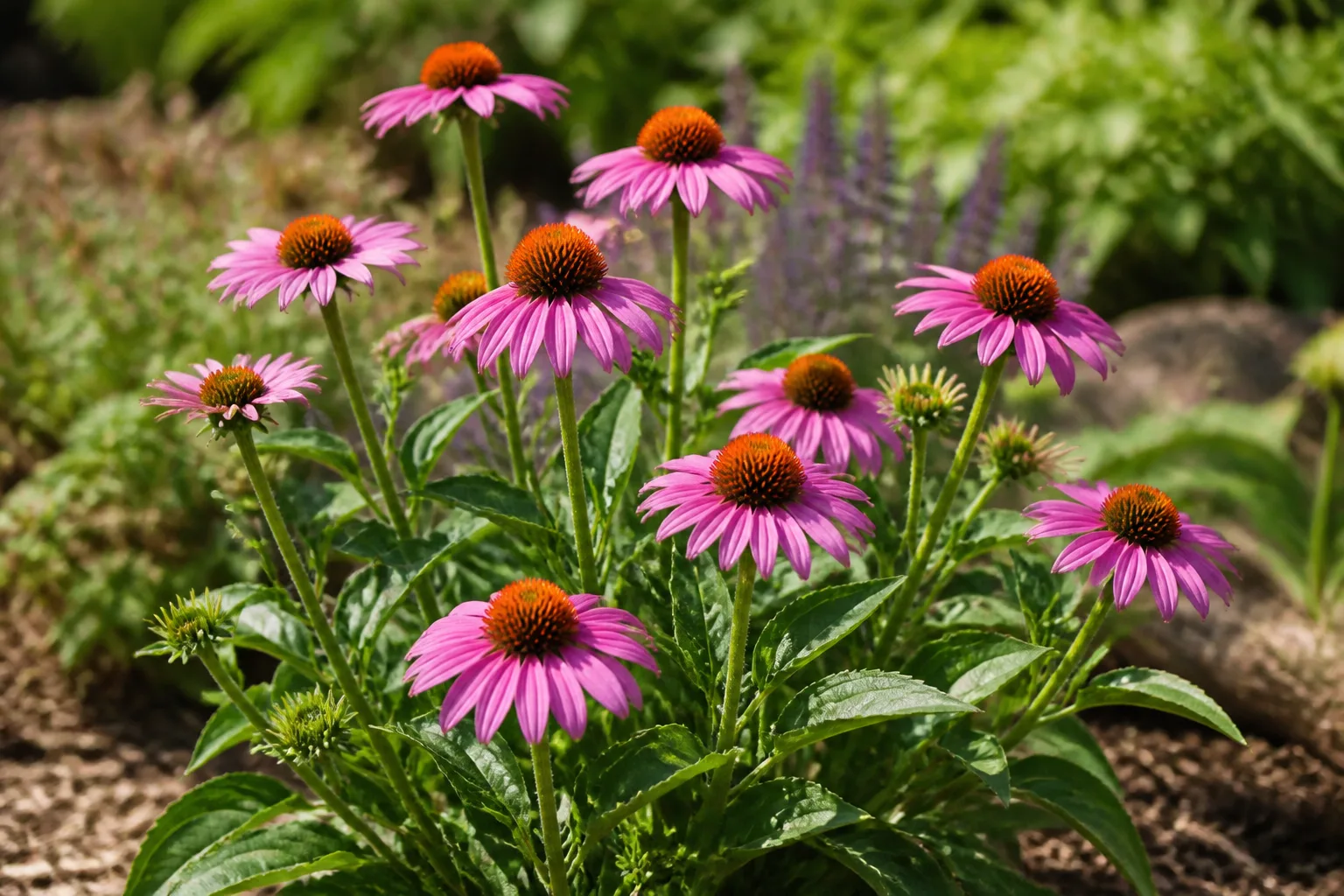
Purple coneflower is the native backbone of sunny pollinator borders across much of the U.S. Pink-purple ray petals surround a spiny orange-brown cone, blooming from early summer into fall. Mature plants reach roughly three to four feet tall in USDA zones 3–8, tolerate heat and humidity, and attract butterflies and bees. Seedheads feed goldfinches if you leave some standing.
Give coneflowers full sun—at least six hours—and neutral, well-drained soil. They adapt to clay in drier climates but rot in constantly wet beds. Once roots are deep, rainfall usually suffices outside prolonged drought. NC State Extension lists coneflower as deer resistant, salt tolerant, and a strong pollinator plant.
Where Coneflower Excels—and Where It Struggles
Choose coneflower for open borders, meadow edges, and rain gardens with good drainage. Cultivars like ‘Magnus’ or the PowWow series stay tidier in formal beds than species plants with drooping petals. Skip or rethink coneflower in low, soggy pockets, deep shade, or if aster yellows has hit your neighborhood—distorted green flowers mean removing infected plants promptly. Hybrid coneflowers vary in long-term vigor; straight Echinacea purpurea and tested cultivars like ‘Magnus’ often outlive flashy doubles that peter out after a few seasons.
For stem-nesting native bees, leave eighteen to twenty-four inches of hollow stems standing through winter before cutting back in spring. Goldfinches will pick at seedheads through fall if you resist the urge to deadhead everything.
Yarrow (Achillea millefolium)
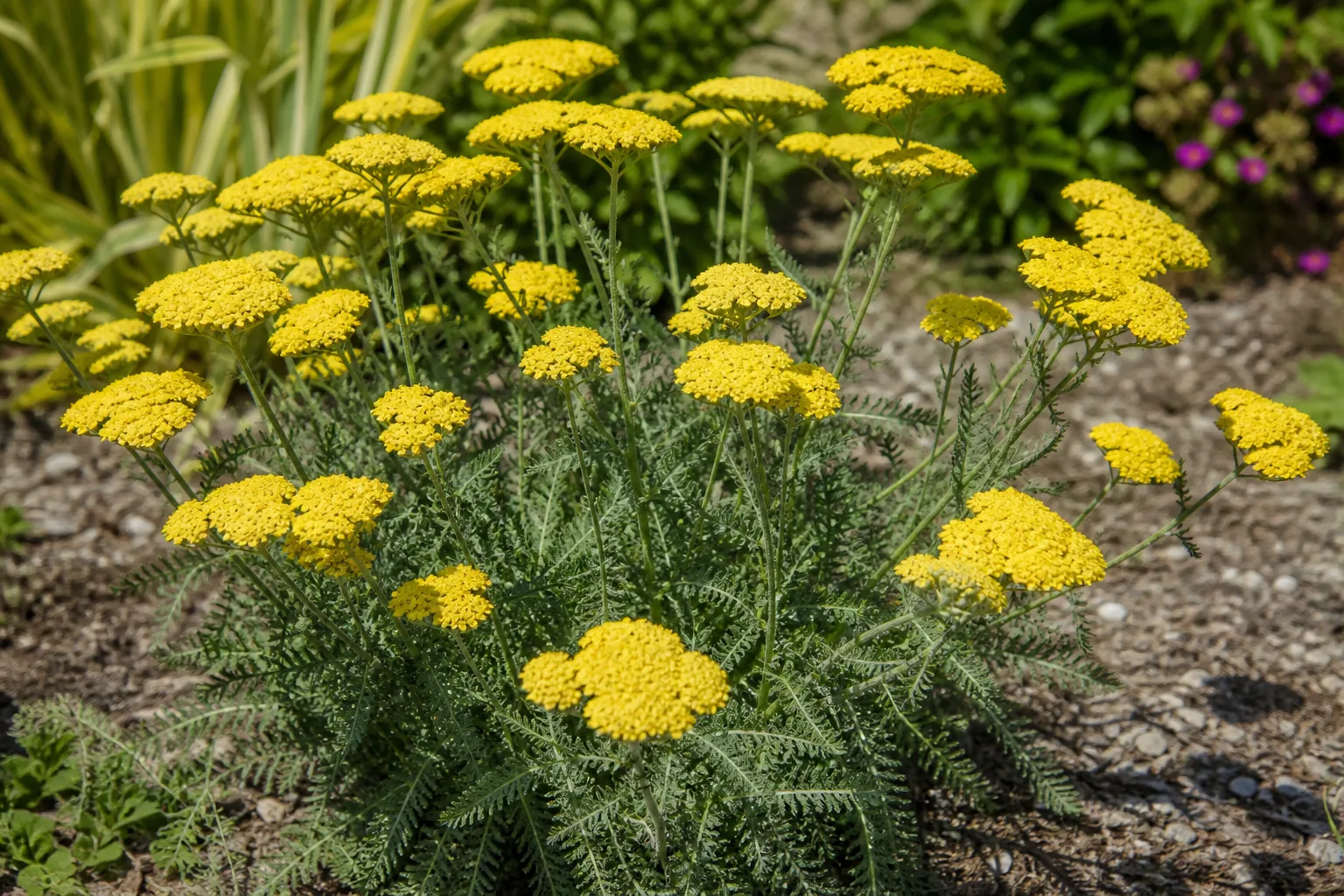
Yarrow brings feathery foliage and flat clusters of tiny flowers in white, yellow, pink, or red on plants typically one to three feet tall. It thrives in USDA zones 3–9 with full sun and sandy, well-drained soil. NC State Extension calls common yarrow drought tolerant, salt tolerant, and excellent for naturalized plantings— but warns it spreads aggressively by rhizomes and seed.
That spread is the trade-off. Yarrow fills dry, poor-soil areas where little else survives. It can bully refined borders. Named cultivars such as ‘Moonshine’ or ‘Paprika’ behave more politely than the species. Deadhead spent flowers to extend bloom and reduce seeding. Gardening Know How recommends dividing clumps every three to five years to refresh vigor.
Controlling Yarrow Before It Takes Over
Plant yarrow where a little roaming helps—hell strips, dry slopes, cottage gardens with room to breathe. Avoid tight foundation beds unless you chose a clumping cultivar and stay on top of deadheading. Pet owners should note: NC State advises avoiding yarrow where pets roam and wearing gloves because foliage can cause contact dermatitis. Yarrow is not a pet-safe groundcover.
Liatris / Blazing Star (Liatris spicata)
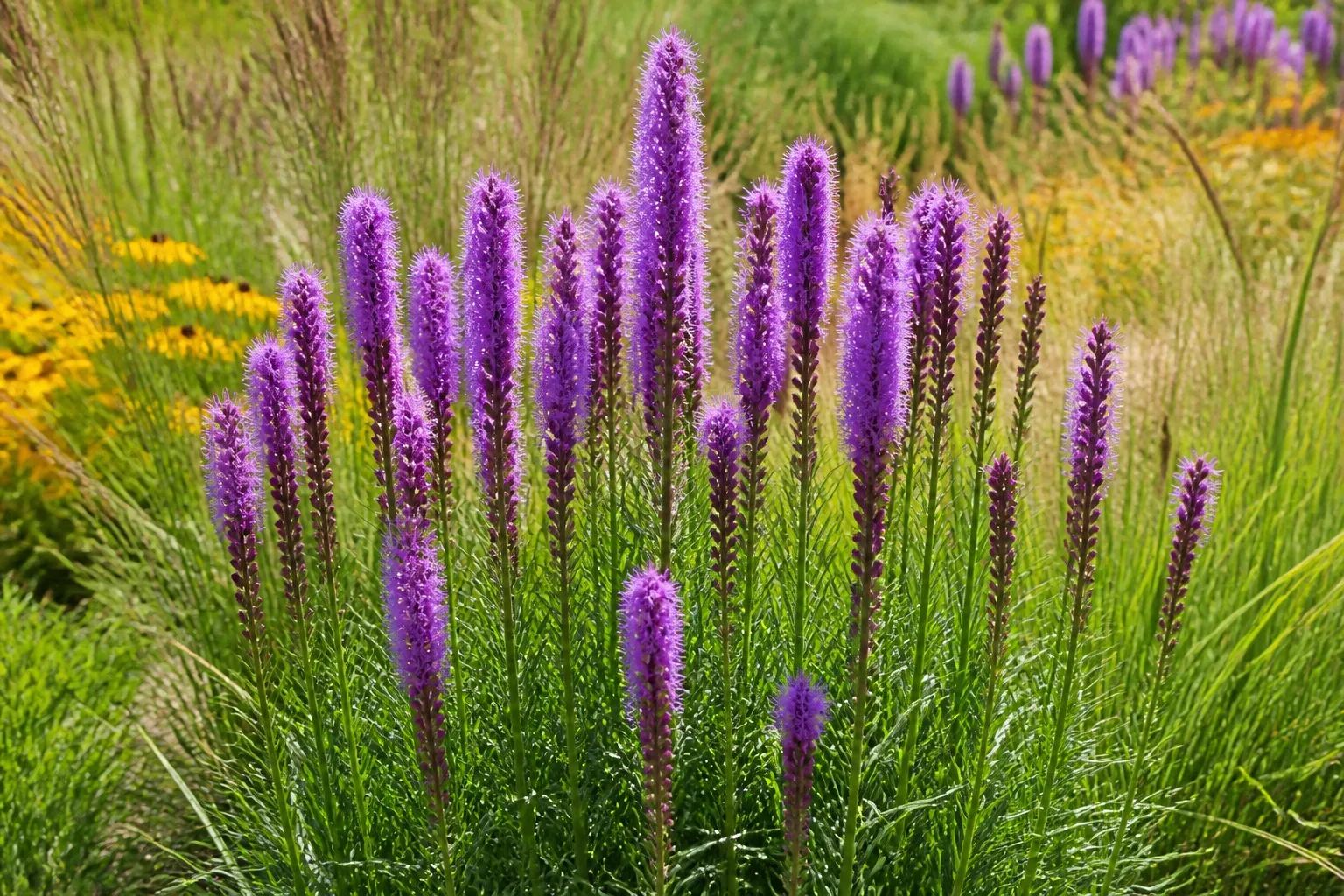
Liatris sends up vertical spikes of fuzzy purple (sometimes white) flowers that open top to bottom—a shape unlike almost anything else in the sunny border. It grows in USDA zones 3–9, prefers slightly acidic, well-drained soil, and looks best in groups of five or more for a bottlebrush effect. Fall foliage often turns bronze, adding late-season interest.
Plant corms or bareroot plants in spring, or potted specimens any time the soil is workable. Space plants about twelve to fifteen inches apart so air can move between spikes. Liatris builds drought resistance as its corm-like root system deepens. First-year plants appreciate steady moisture; mature clumps tolerate dry stretches well. Too much fertility produces floppy stems, so skip heavy nitrogen and rich manure top-dressings.
Wet winter soil is liatris’s enemy—raise beds or amend drainage if your site puddles. Unlike spreading yarrow, liatris stays in distinct clumps you can divide every three to four years if the center dies out.
Black-Eyed Susan (Rudbeckia hirta)
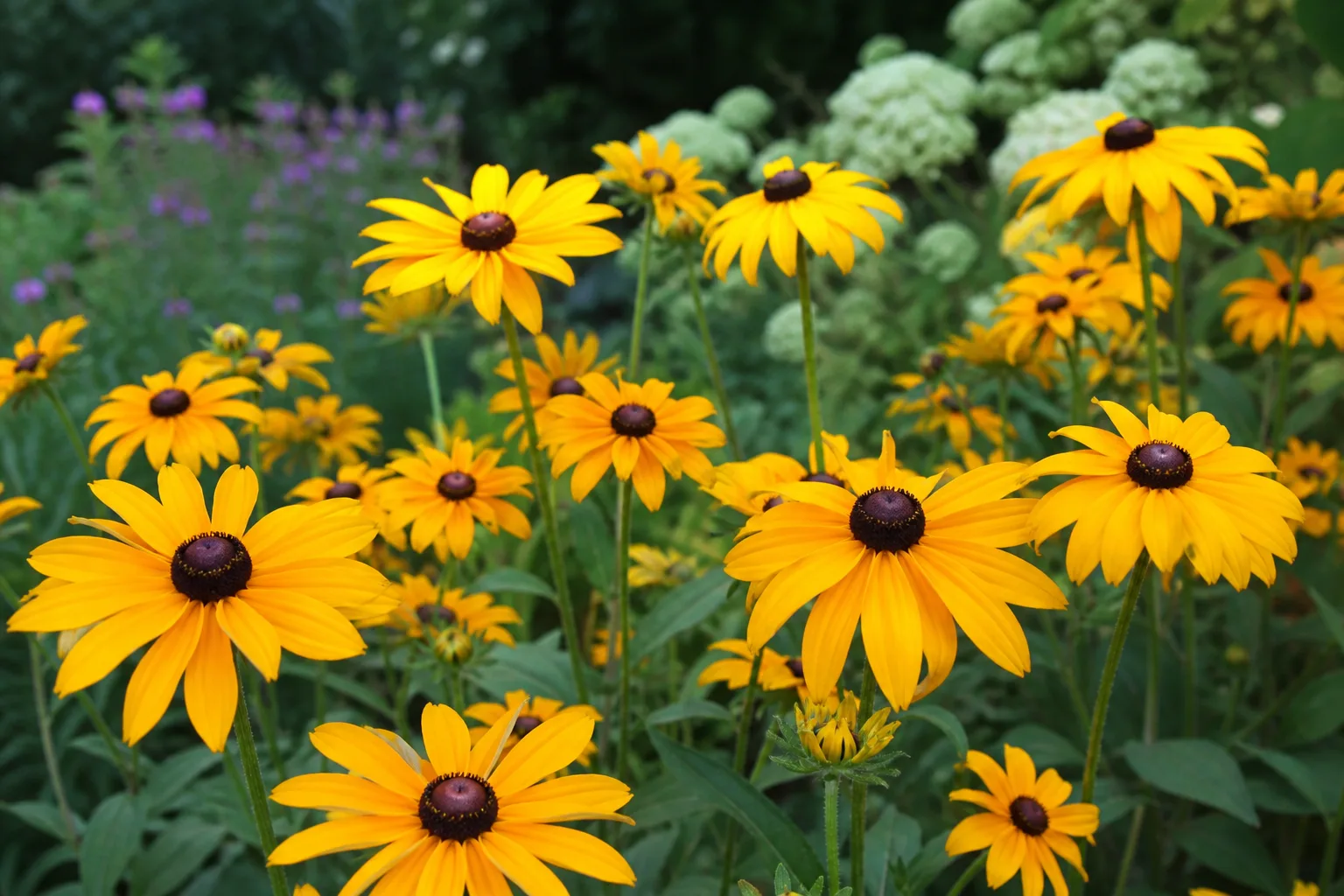
Black-eyed Susan is the golden daisy with a dark brown center that reads “summer meadow” instantly. The species Rudbeckia hirta is native, reseeds freely, and is often grown as a short-lived perennial or biennial in some climates, while perennial selections and the closely related Rudbeckia fulgida ‘Goldsturm’ behave longer in the garden. Expect two to three feet of height in USDA zones 4–9 with full sun and moist, well-drained soil—note that “moist but drained” beats baked hardpan or swampy clay.
Water weekly through the first season. After roots establish, black-eyed Susan handles dry spells better than most daisy-family flowers. Leave seedheads for birds or deadhead if you do not want volunteers. If plants die out after a few years, that may be natural for the species—not a sign you failed. Replenish with seed or division.
For longer-lived gold in a border, compare the biennial-leaning Rudbeckia hirta with Rudbeckia fulgida ‘Goldsturm’, which clumps more reliably and blooms heavily from midsummer into fall. Both attract pollinators; ‘Goldsturm’ is the safer pick if you want a predictable perennial anchor rather than a meadow that reseeds itself.
Russian Sage (Perovskia atriplicifolia)
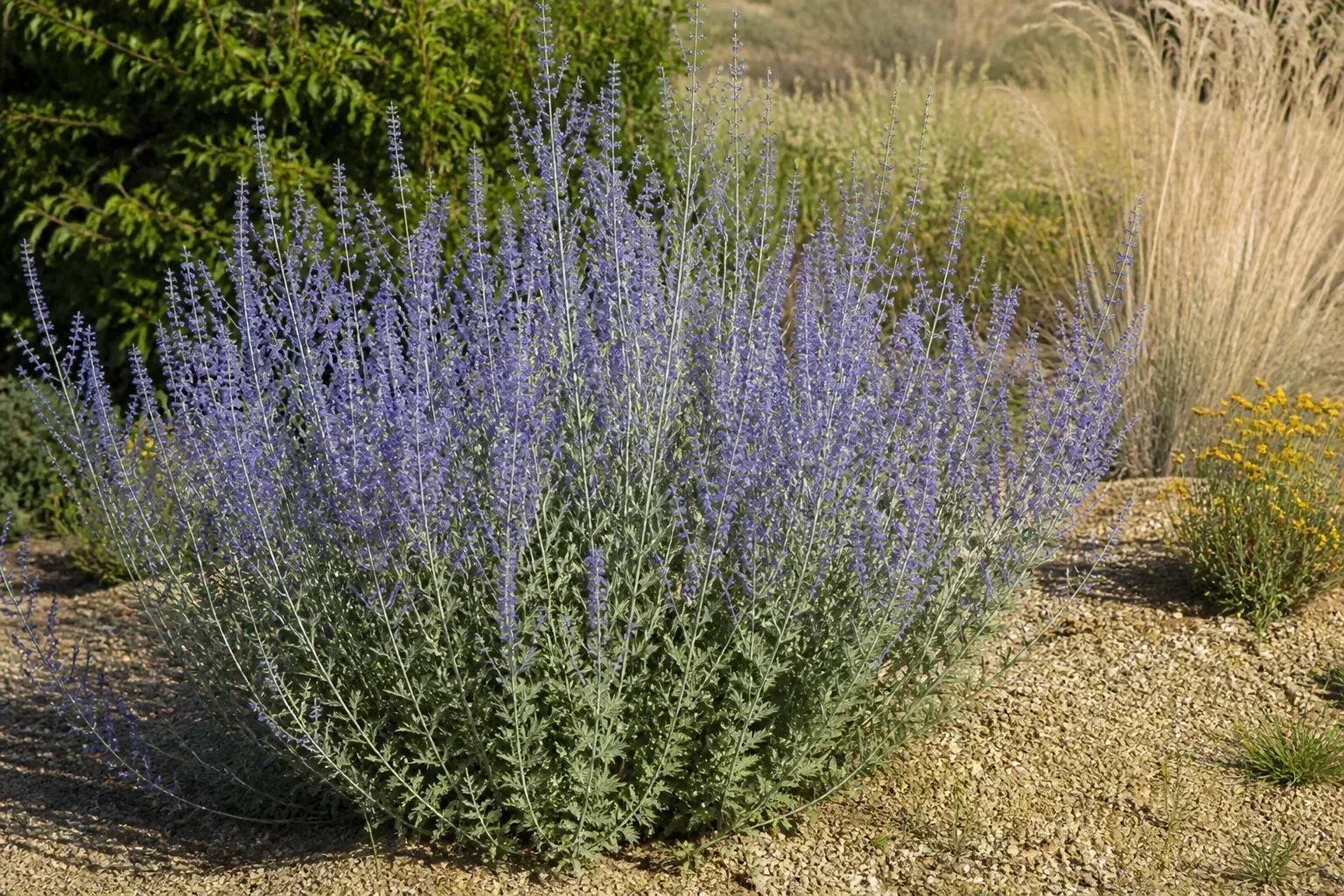
Russian sage is the silvery, airy shrub-like perennial with lavender-blue spikes from midsummer into fall. It smells pleasantly of sage when brushed, tolerates heat, and thrives in USDA zones 5–9 (sometimes zone 4 with winter protection and sharp drainage). NC State Extension describes it as drought tolerant, deer resistant, and suited to alkaline, well-drained soils—including clay that drains.
Plant Russian sage where you want height at the back of a border or along a path that catches sun all day. It hates wet feet in winter. Prune stems back to about twelve inches in late winter or early spring before new growth—this keeps the mound from splitting open in the middle. Do not overwater; established plants prefer lean, dry conditions.
Butterfly Stonecrop (Hylotelephium spectabile)
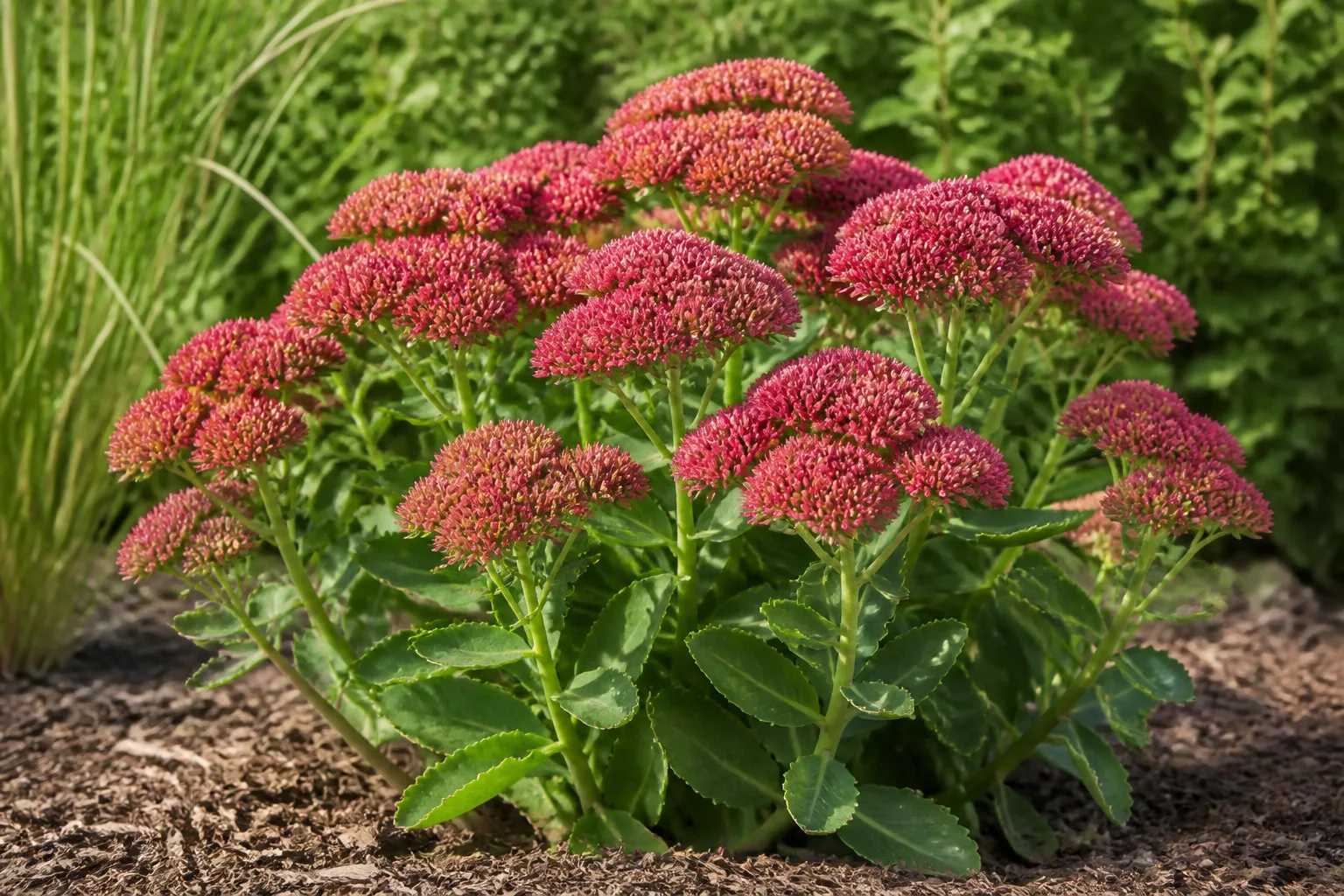
Formerly classified as Sedum spectabile, showy stonecrop or butterfly stonecrop is a succulent-leaved perennial that stores water in fleshy leaves and thrives in USDA zones 3–10. Flat pink flower heads arrive late summer, darken in fall, and dry into winter interest. Pollinators cover the blooms; the plant truly earns its “butterfly” name.
Give stonecrop full sun and gravelly or sandy soil with excellent drainage. In hot southern zones, a little afternoon shade prevents scorch. The best watering approach for established plants is soak-and-dry: saturate soil, then let it go completely dry before watering again. Overwatering causes soft, collapsing stems—far more common than underwatering. NC State Extension notes stonecrop tolerates clay only when drainage is sharp. Cut tall varieties like ‘Autumn Joy’ by half in late spring if you want sturdier stems.
Catmint (Nepeta racemosa and Hybrids)
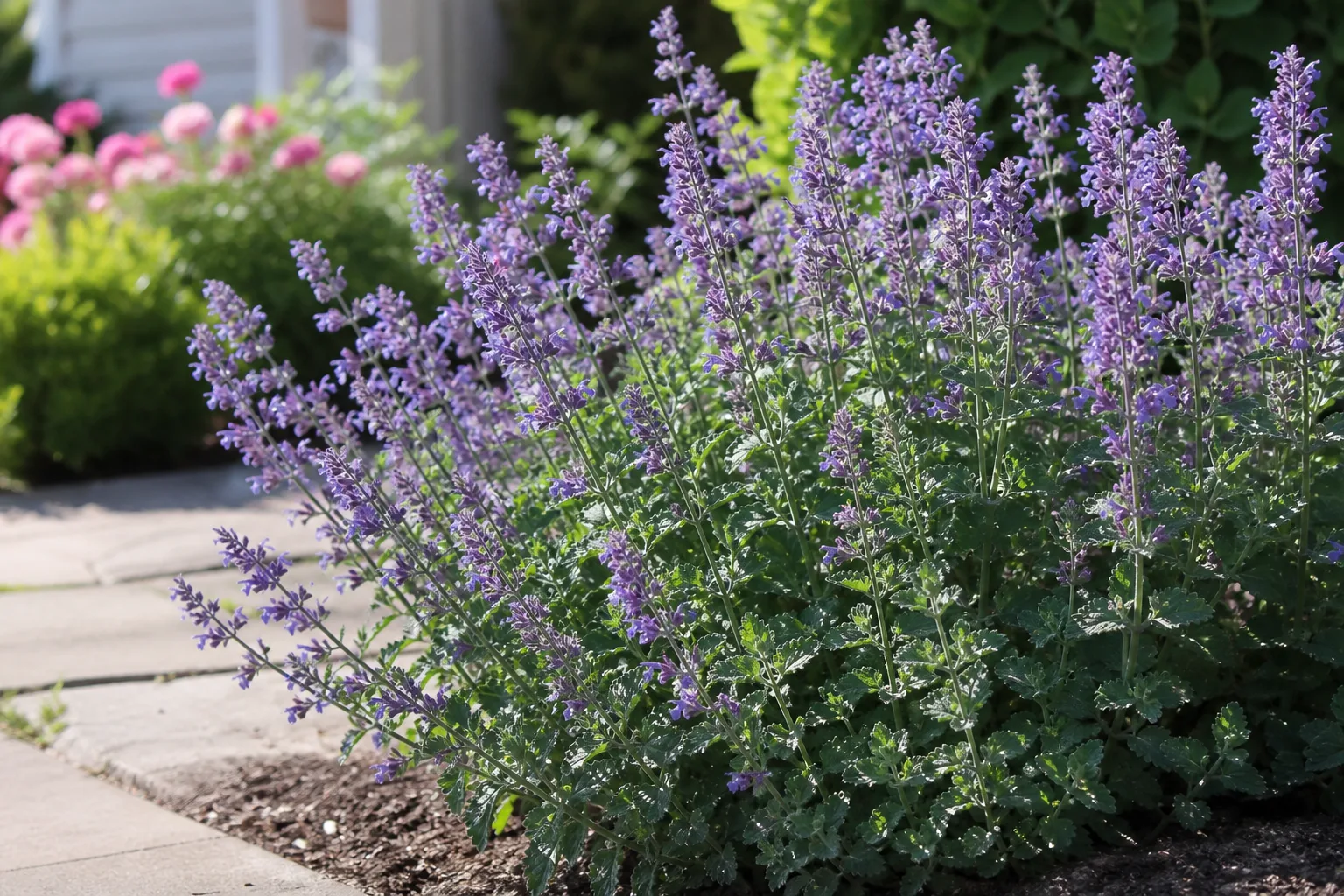
Catmint—not to be confused with catnip (Nepeta cataria)—forms mounds of gray-green aromatic foliage covered in lavender-blue spikes that bees love. Nepeta racemosa and hybrids like ‘Walker’s Low’ suit USDA zones 4–8, take full sun, and become genuinely drought tolerant after the first few months. Deer and rabbits usually pass it by.
Plant in well-drained soil and shear plants back by one-third after the first flush of bloom fades—catmint often flowers again lightly. NC State Extension lists catmint as drought tolerant and low maintenance. Avoid rich, wet beds where catmint sprawls and flops. It pairs beautifully with stonecrop and Russian sage in a dry border.
Match These Seven Plants to Your Yard
Before you buy six flats of everything, run your site against this matrix:
| Plant | Best sun | Soil | Zones | Spread risk | Pet note |
|---|---|---|---|---|---|
| Purple coneflower | Full sun | Well-drained; tolerates clay if dry | 3–8 | Moderate self-seeding | Generally safe; verify cultivars |
| Yarrow | Full sun | Sandy, poor, dry | 3–9 | High (rhizomes + seed) | Toxic; avoid pet areas |
| Liatris | Full sun | Well-drained, slightly acid | 3–9 | Low clumps | Generally safe |
| Black-eyed Susan | Full sun | Moist, well-drained | 4–9 | Self-seeds freely | Generally safe |
| Russian sage | Full sun | Alkaline, well-drained | 5–9 (4 w/ protection) | Wide mound | Generally safe |
| Butterfly stonecrop | Full to part sun | Sandy/gravel, sharp drainage | 3–10 | Clumps widen slowly | Generally safe |
| Catmint | Full sun | Well-drained, lean | 4–8 | Moderate spread | Cat attractant; usually safe |
Quick Sun, Soil, and Drainage Checklist
Full sun means six or more hours of direct light on the planting area, not “bright shade on the label.” Well-drained soil means water soaks in within an hour after a rain—not a puddle that stays all day. If your bed holds water, fix drainage before shopping for drought plants. If you have deep sand that dries in a day, these seven will love you after establishment.
Group plants with similar needs: coneflower, black-eyed Susan, and liatris for a native-leaning pollinator strip; Russian sage, catmint, and stonecrop for a lean, silvery border; yarrow only where you welcome spread. For more long-flowering options to mix in, see long-blooming perennials and perennials that bloom in fall and spring.
If you are starting from an empty bed, loosen soil twelve inches deep, remove perennial weeds, and test drainage before you shop. A simple percolation test—dig a hole, fill with water, see how fast it drains—saves more plants than any “drought proof” marketing label. Mulch keeps weeds down while roots establish; just keep mulch pulled back from crowns so stems do not rot.
Conclusion
These seven easy-care drought-tolerant perennials earn their reputation after—not before—they settle in. Water steadily through the first season, match each plant to sun and drainage, and respect spread and pet-safety differences. Do that, and coneflower, yarrow, liatris, black-eyed Susan, Russian sage, butterfly stonecrop, and catmint will give you color, pollinators, and far less hose time for years. The goal is not a garden that never needs you. It is a garden that does not punish you every time the forecast says “no rain for two weeks.”



