Long-Blooming Perennials: 18 Flowers for Every Season
These 18 perennial flowers extend color from spring into fall. See bloom windows, care habits, and which picks fit your sun, soil, and hardiness zone.
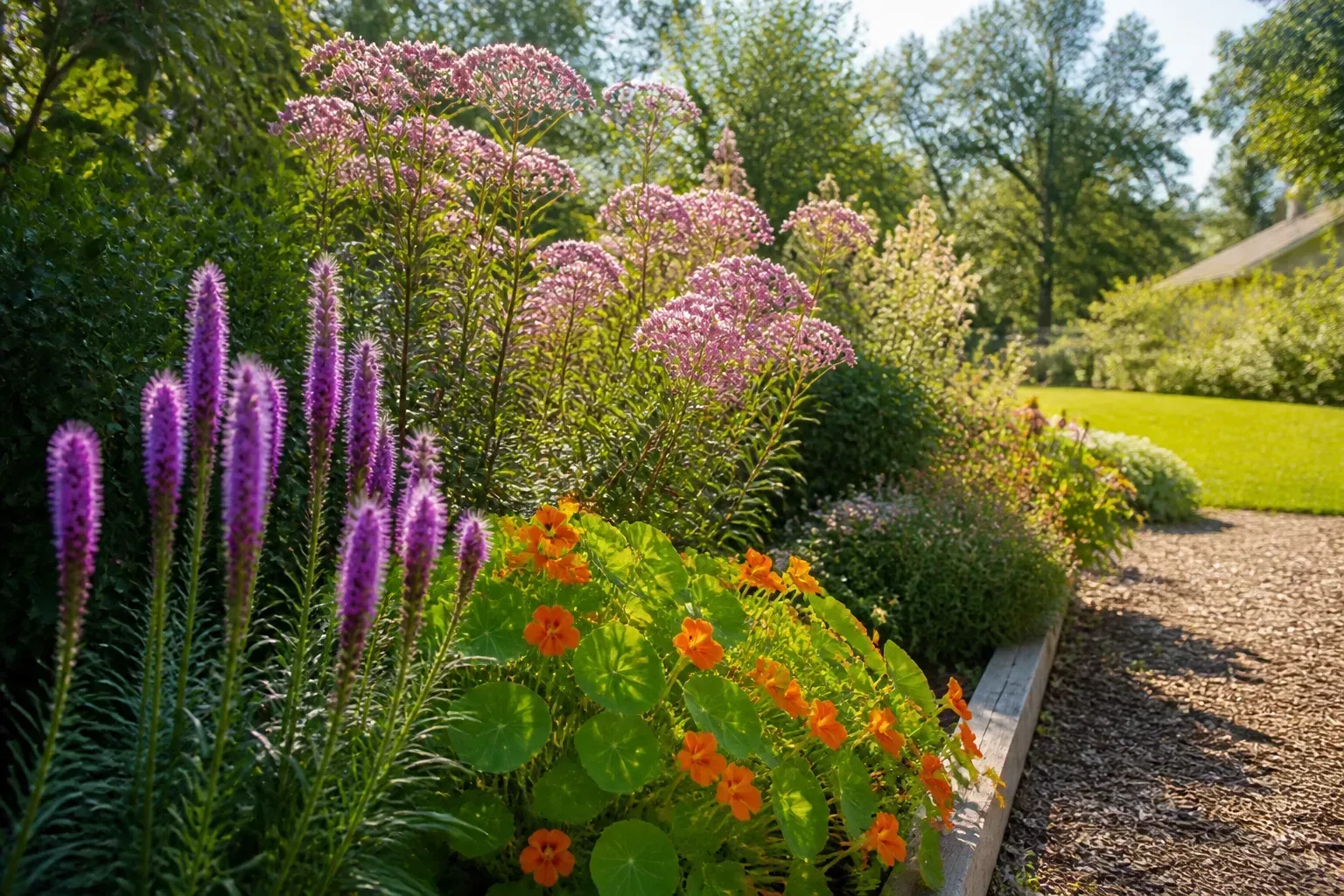
Most perennial beds look brilliant for three weeks and tired for the rest of the year—not because perennials are weak performers, but because gardeners shop for flower color without sequencing bloom windows. The eighteen plants below are proven long performers in U.S. gardens when you match them to sun, drainage, and your USDA zone, then use simple deadheading or shearing habits to stretch the show. None of them blooms nonstop like a summer annual, but together they can carry a border from late spring well into fall.
What Long-Blooming Really Means for Perennials
A long-blooming perennial keeps visible flowers or colorful flower heads for many weeks—sometimes two or three months—within one growing season. That is different from an annual marigold that flowers until frost, or from a daylily whose individual blossoms open for a single day while the scape keeps producing buds for weeks.
Peak Weeks Versus Months of Color
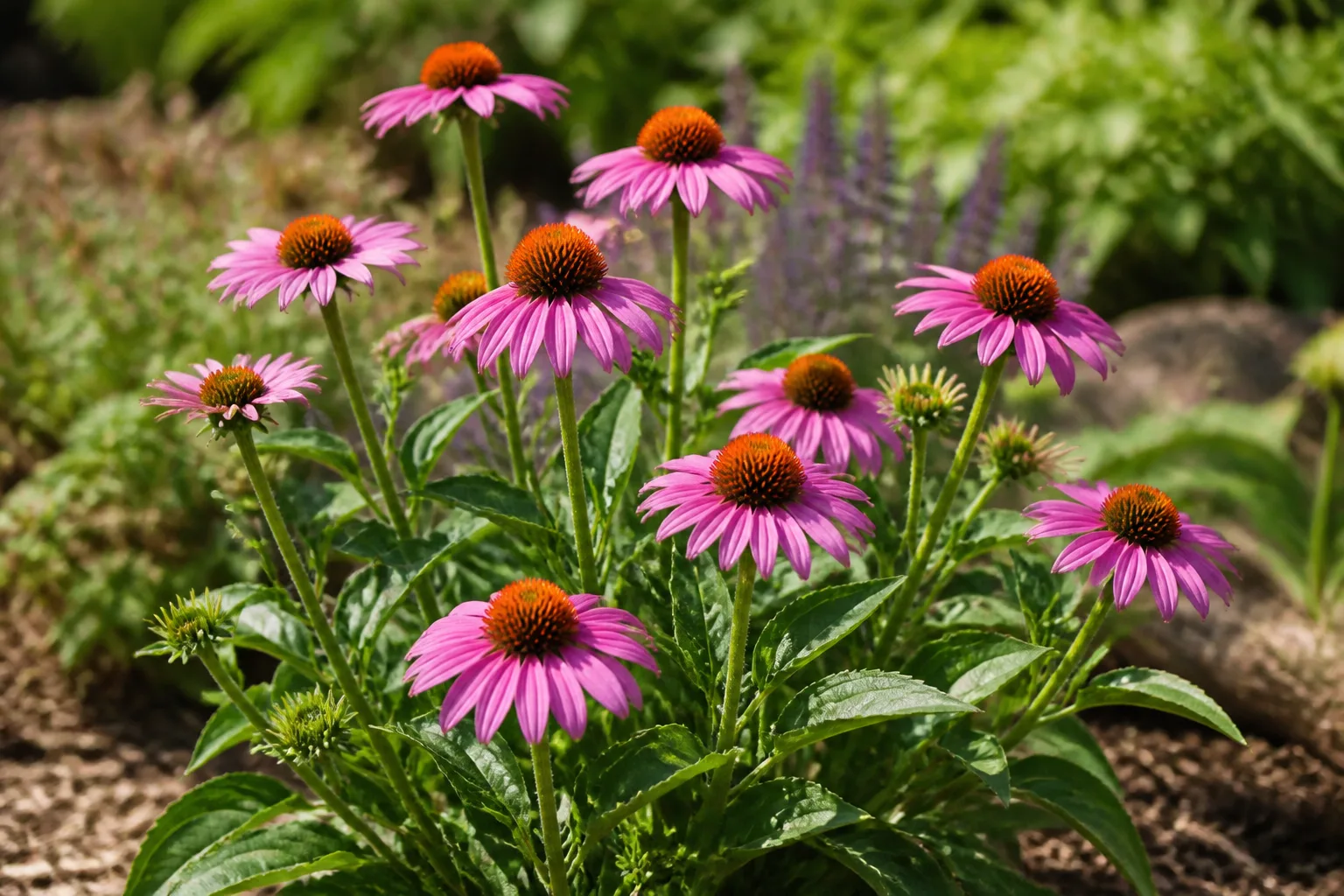
Read plant labels and nursery tags carefully. “Blooms all summer” usually means continuous bud production through June, July, and August, not that every flower stays perfect that entire time. Coneflower (Echinacea purpurea) pushes daisy-like blooms from roughly June through August on stiff stems, with new flowers replacing older ones as the season progresses. NC State Extension describes it as a popular long-blooming border plant that reseeds easily and attracts butterflies when you leave some seed heads for birds. (NC State Extension)
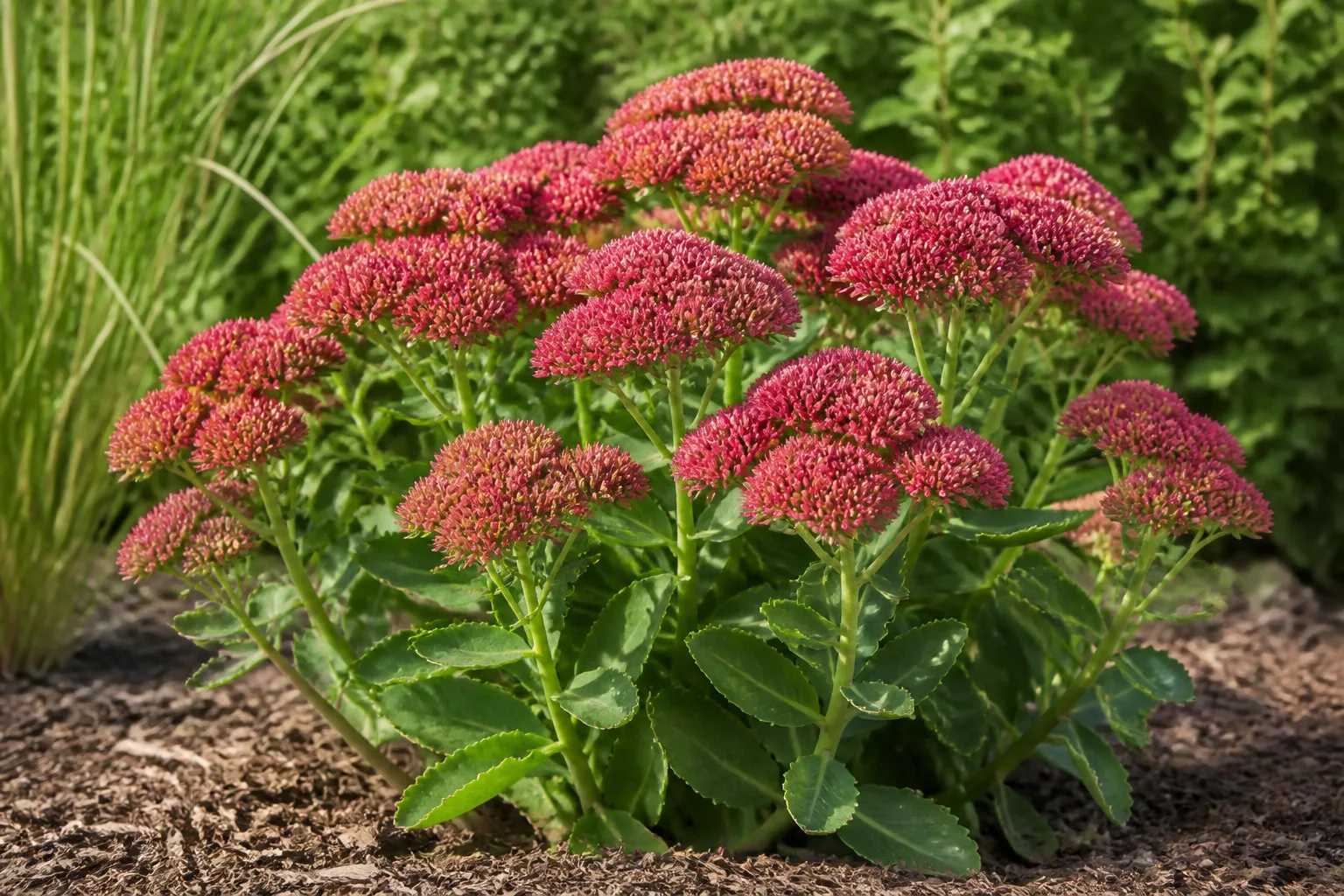
Threadleaf coreopsis (Coreopsis verticillata cultivars such as ‘Moonbeam’) is often cited for one of the longest display periods in this group—starting in early summer and continuing with shearing into fall. Autumn Joy stonecrop (Hylotelephium ‘Autumn Joy’) works differently: its value is late-season color, with rosy buds deepening to rust-red through fall rather than peak bloom in June. Annuals complete their life cycle in one season—you buy, plant, bloom, and replace—while perennials return from roots or crowns for years when sited correctly. Colorado State University Extension notes that herbaceous perennials die back to the ground each winter in cold climates but regrow from persistent root systems, which is why they are the backbone of low-maintenance borders once established. (Colorado State University Extension) The trade-off is shorter peak bloom on many species compared with heavy-feeding annuals; the win is structure, foliage, and repeat performance without repurchasing flats every May.
How to Build a Three-Season Perennial Border
A border that “blooms spring through fall” is really three overlapping layers: early starters, midsummer anchors, and late-season extenders. You do not need all eighteen plants—six to ten well-chosen species often cover the calendar better than a crowded mix.
Layer Early, Mid, and Late Bloomers
Early layer (late spring–early summer): fringed bleeding heart (Dicentra eximia), Dalmatian bellflower (Campanula portenschlagiana), Stella de Oro daylily (Hemerocallis ‘Stella de Oro’), and catmint (Nepeta racemosa ‘Walker’s Low’) kick off color while taller midsummer plants are still filling in.
Midsummer layer (June–August): coneflower, garden phlox, black-eyed Susan, perennial salvia, English lavender, yarrow, ice plant, and spiked speedwell carry the hot months.
Late layer (August–fall): Russian sage, threadleaf coreopsis (especially after a summer shear), Autumn Joy sedum, sterile butterfly bush cultivars, and red hot poker extend the display as nights cool.
Place taller plants—phlox, Russian sage, red hot poker—toward the back or center of island beds. Keep low spreaders—ice plant, bellflower, catmint—at edges where they can trail without smothering neighbors.
Match Sun, Drainage, and Hardiness Before Color
Group plants by light and soil, not by flower color alone. Most picks on this list want full sun and well-drained soil. Fringed bleeding heart is the major shade exception here—it flowers for months in partial to full shade where midsummer sun lovers would fry.
Drainage matters as much as sun. Autumn Joy sedum and English lavender rot in wet winter soil. NC State Extension warns that showy stonecrop suffers in overly moist or fertile beds and needs sharp drainage to stay bushy. (NC State Extension) Yarrow (Achillea millefolium) tolerates poor, dry soil but spreads aggressively by rhizomes and seed—better in naturalized areas than tight formal borders unless you choose clumping cultivars and deadhead faithfully. (NC State Extension)
Always cross-check cultivar hardiness with your zone. Ice plant (Delosperma cooperi) is borderline north of zone 6 and may need winter mulch in zone 5.
Maintenance That Extends the Bloom Window
Long bloom is as much habit as genetics. Three tools cover most of this list: deadheading spent flowers, shearing tired stems, and dividing overcrowded clumps before they weaken.
Deadheading, Shearing, and When to Divide
Deadheading removes faded flowers before seed forms, redirecting energy into new buds. It works well on black-eyed Susan, salvia, speedwell, Shasta daisy, and coneflower if you want tidier beds and less self-seeding. Epic Gardening’s deadheading overview emphasizes cutting back to a healthy leaf joint or side bud rather than leaving bare stubs that look ragged and invite disease. (Epic Gardening)
Shearing means cutting back a whole plant or flower spike by one-third to one-half after the first flush fades. Catmint, threadleaf coreopsis, and perennial salvia often push a strong second wave after shearing in midsummer. Russian sage and speedwell respond similarly when you trim spent spikes promptly.
Division renews vigor. Divide yarrow, Shasta daisy, bellflower, and overcrowded daylily clumps every three to five years—Gardening Know How notes daylilies are easy to split whenever you want more plants, though spring or fall is gentler on bloom. (Gardening Know How) Leave Autumn Joy sedum alone unless the crown outgrows its space; it is long-lived and slow-growing.
Skip heavy nitrogen fertilizer on drought-tolerant species. Extra fertility produces leafy growth at the expense of flowers on lavender, Russian sage, and sedum.
All 18 Long-Blooming Perennials at a Glance
Use this table to shortlist candidates, then read the sections below for cultivar and placement nuance.
| Plant | Typical bloom window | Zones | Sun | Standout trait |
|---|---|---|---|---|
| Ice plant (Delosperma cooperi) | June–September | 5–10 | Full sun | Low ground-hugging mat; drought-tolerant |
| Garden phlox (Phlox paniculata) | Midsummer–fall | 4–8 | Full sun–part shade | Choose mildew-resistant ‘David’ in humid climates |
| Stella de Oro daylily | May–July | 3–10 | Full sun–part shade | Compact; reblooming scapes; each flower lasts one day |
| Becky Shasta daisy | July–September | 5–9 | Full sun | Tall, tough white daisies |
| Perennial salvia | Late spring–summer | 4–10 | Full sun | Deadhead for repeat bloom; many blue cultivars |
| Russian sage | July–October | 4–9 | Full sun | Airy lavender-blue spikes; drought-tolerant |
| Yarrow | June–September | 3–8 | Full sun | Many colors; spreads—deadhead to limit seed |
| English lavender | June–August | 4–9 | Full sun | Fragrance plus bees; needs dry soil |
| Coneflower | June–August+ | 3–9 | Full sun–part shade | Native pollinator magnet; many cultivar colors |
| Threadleaf coreopsis | Summer–fall | 3–9 | Full sun | Shear after first flush for fall rebloom |
| Blue Chip butterfly bush | Midsummer–October | 5–9 | Full sun | Sterile cultivar—non-invasive alternative |
| Black-eyed Susan | June–September | 3–7 | Full sun | Cheerful gold; short-lived but self-seeds |
| Autumn Joy sedum | Late summer–fall | 3–9 | Full sun | Succulent foliage; rust-toned fall heads |
| Catmint | Spring–early fall | 4–8 | Full sun–part shade | Shear spikes for rebloom; pollinator favorite |
| Spiked speedwell | June–August | 3–8 | Full sun | ’Royal Candles’ stays compact; shear to extend |
| Red hot poker | Late spring–midsummer | 5–9 | Full sun | Bold torch spikes; remove spent heads promptly |
| Dalmatian bellflower | Late spring–early summer (~8 weeks) | 3–8 | Full sun–part shade | Edge/trailing blue-violet bells |
| Fringed bleeding heart | Late spring–late summer | 3–9 | Shade–part shade | Long shade bloom; ferny foliage |
Consult your local cooperative extension for cultivars proven in your region before buying in bulk.
Spring-Starting and Early-Summer Stars
These plants bridge the gap between spring bulbs fading and July heat lovers hitting stride.
Bleeding Heart, Bellflower, and Daylily
Fringed bleeding heart (Dicentra eximia) is the shade garden’s best long performer on this list. Unlike common bleeding heart (D. spectabilis), which goes dormant by midsummer, the fringed species can flower for roughly three months in cool shade with consistent moisture. Expect pink to reddish-purple heart-shaped blooms on 12–18 inch plants with attractive fern-like leaves that stay present after flowers finish.
Dalmatian bellflower (Campanula portenschlagiana) covers edges, rock pockets, and wall crevices with violet-blue bells for about two months in late spring and early summer. It spreads steadily but is easier to control than yarrow. Divide every three to four years to keep clumps vigorous.
Stella de Oro daylily is the compact rebloomer many borders rely on from May through July. Individual golden flowers last only a day—normal for daylilies—but the scape keeps producing buds for weeks. It is drought-tolerant once established, divides easily, and works in front-of-border slots where taller daylilies would block sight lines.
Midsummer Workhorses for Full Sun
When June heat arrives, these species carry the bed. Group them where drainage is good and air moves freely.
Coneflower, Black-Eyed Susan, Phlox, and Salvia
Purple coneflower and its cultivars bloom from late spring or early summer into mid-fall in favorable sites, with domed centers and drooping rays up to five inches across. NC State Extension lists June through August as the core window, notes drought tolerance once established, and recommends leaving some seed heads for birds if you are not deadheading everything. (NC State Extension)
Black-eyed Susan (Rudbeckia hirta) delivers gold-to-orange daisies from June through September with minimal care. It is somewhat short-lived but self-seeds freely—deadhead if you want fewer volunteers, or let it colonize a meadow-style area. Full sun and medium moisture suit it best.
Garden phlox (Phlox paniculata) is a midsummer-to-fall classic with fragrant clusters, but powdery mildew disfigures many older varieties in humid summers. Plant mildew-resistant ‘David’ (white) or similarly bred cultivars, space plants for airflow, and avoid overhead watering. Deadhead to limit self-seeding and keep plants looking fresh.
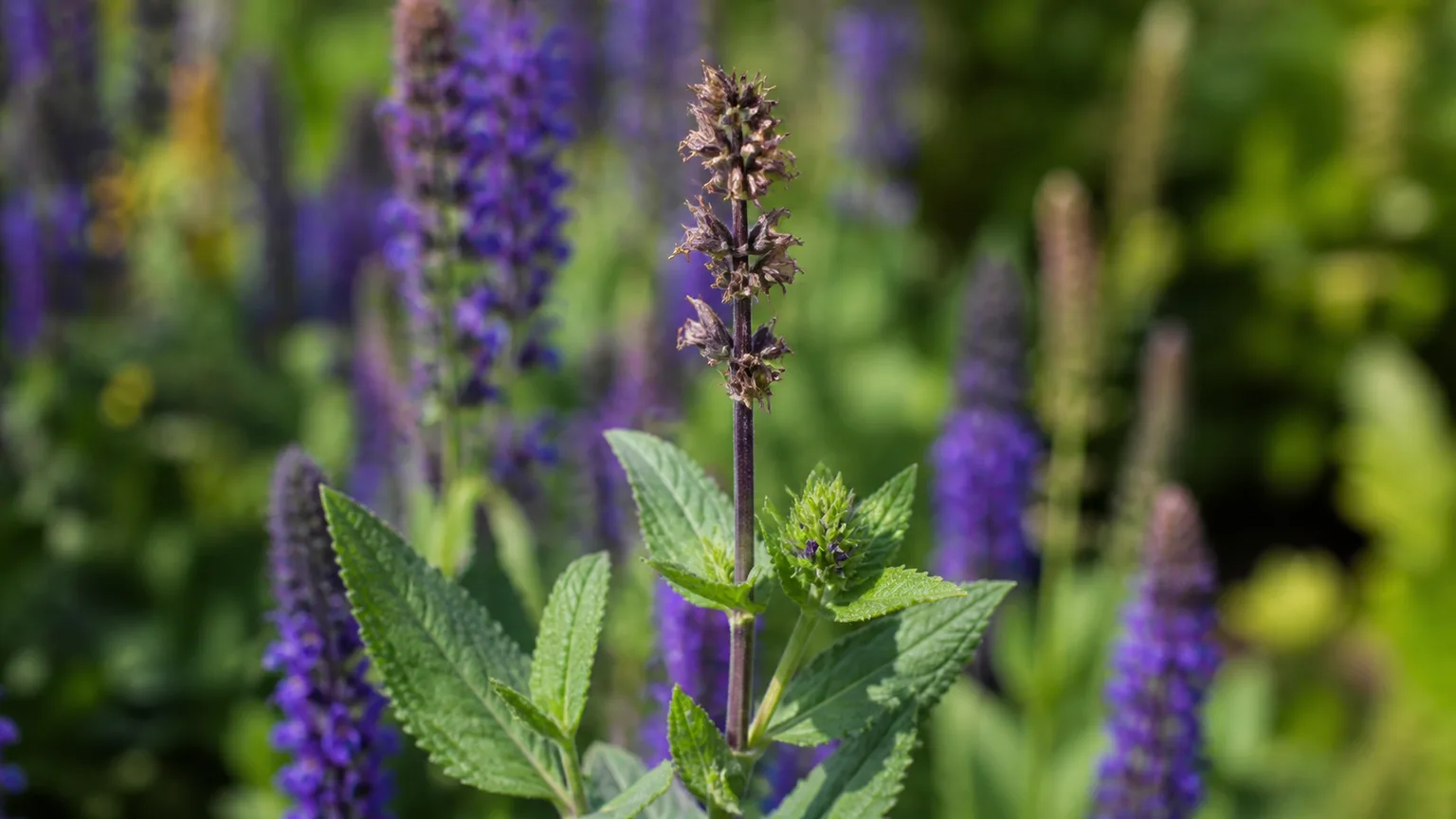
Perennial salvia—including Salvia × sylvestris ‘May Night’ and S. nemorosa ‘Caradonna’—flowers for months in full sun when you remove spent spikes. Blue to violet spikes pair well with yellow coreopsis or orange coneflower cultivars for contrast without clash.
Lavender, Yarrow, and Ice Plant
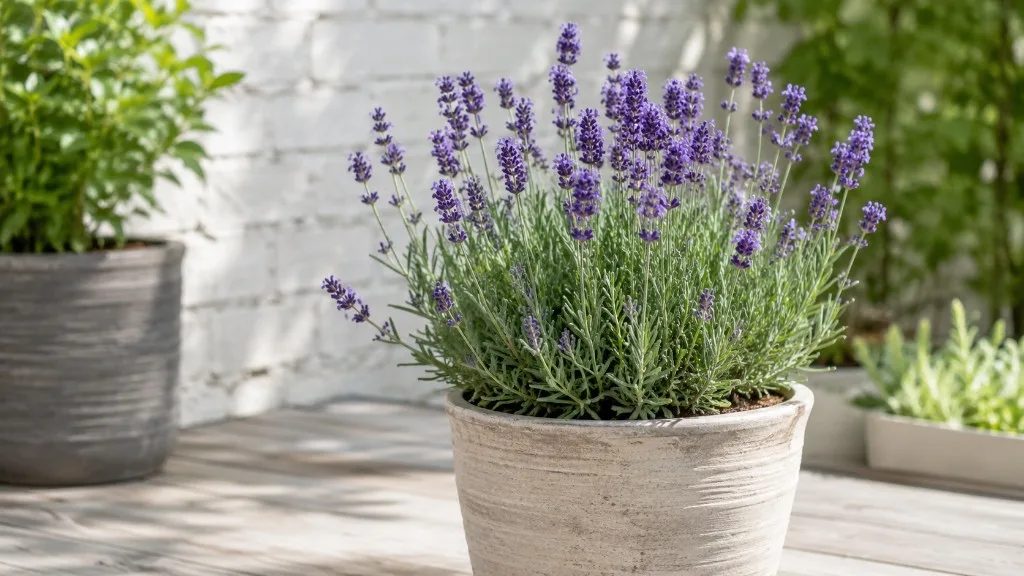
English lavender (Lavandula angustifolia) blooms June through August on two- to three-foot plants when given full sun and lean, well-drained soil. Wet feet in winter kill lavender faster than cold. Harvest stems for drying at peak bloom and lightly shear after flowering to maintain a compact mound.
Yarrow flowers June through September with flat-topped clusters in white, yellow, red, or pink depending on cultivar. NC State Extension tags the species with “long bloom season” and warns it spreads aggressively—choose named cultivars like ‘Paprika’ for tighter borders and deadhead to reduce seed scatter. (NC State Extension)
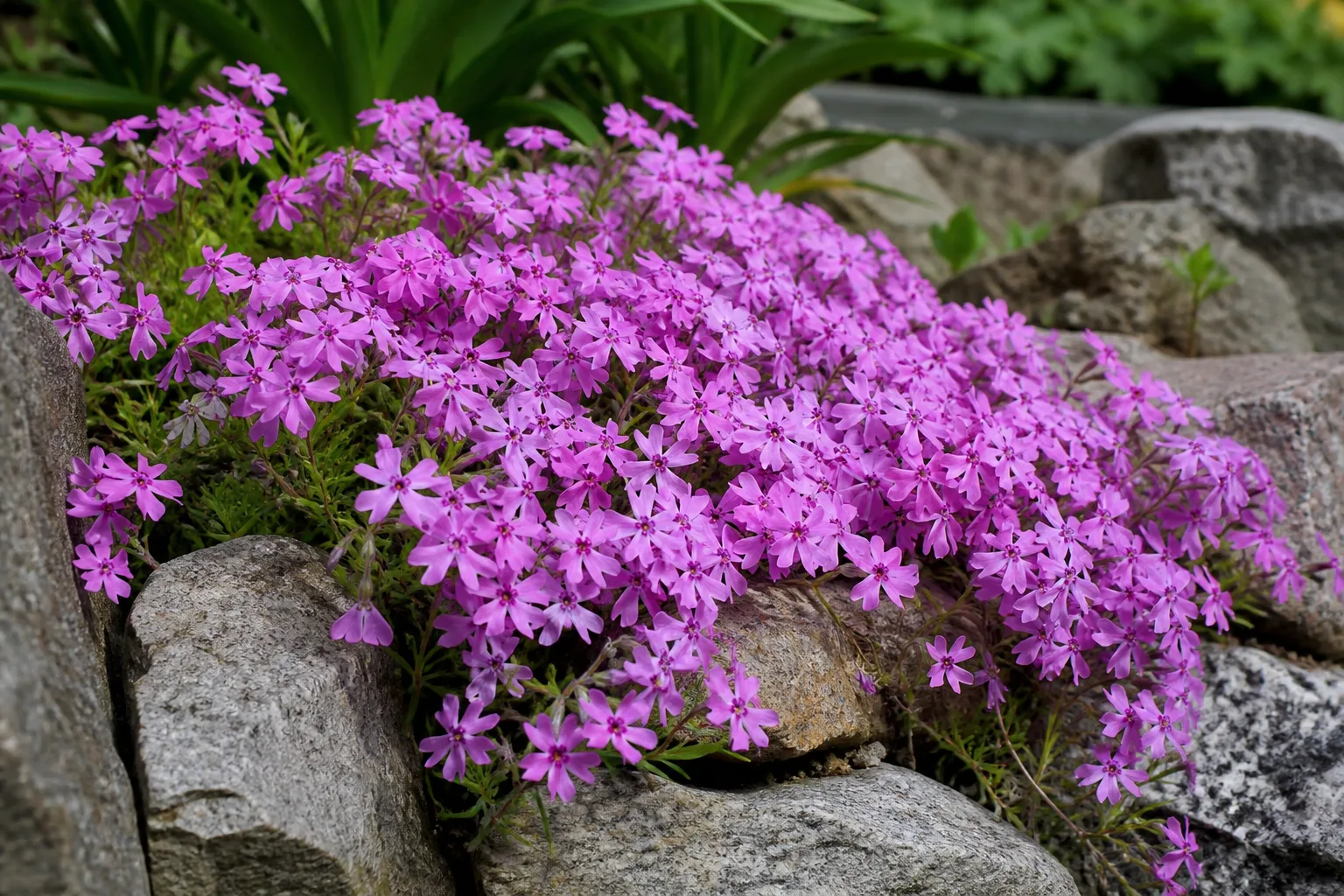
Ice plant is the low carpet for hot, dry edges—only three to six inches tall with vivid magenta flowers from June through September. It excels in rock gardens and sunny slopes where taller perennials would struggle. Protect northern plantings with gravel mulch through winter if you are testing it at the cold edge of its range.
Late-Summer and Fall Extenders
These picks prevent the August “green wall” when early summer stars finish.
Coreopsis, Russian Sage, and Autumn Joy Sedum
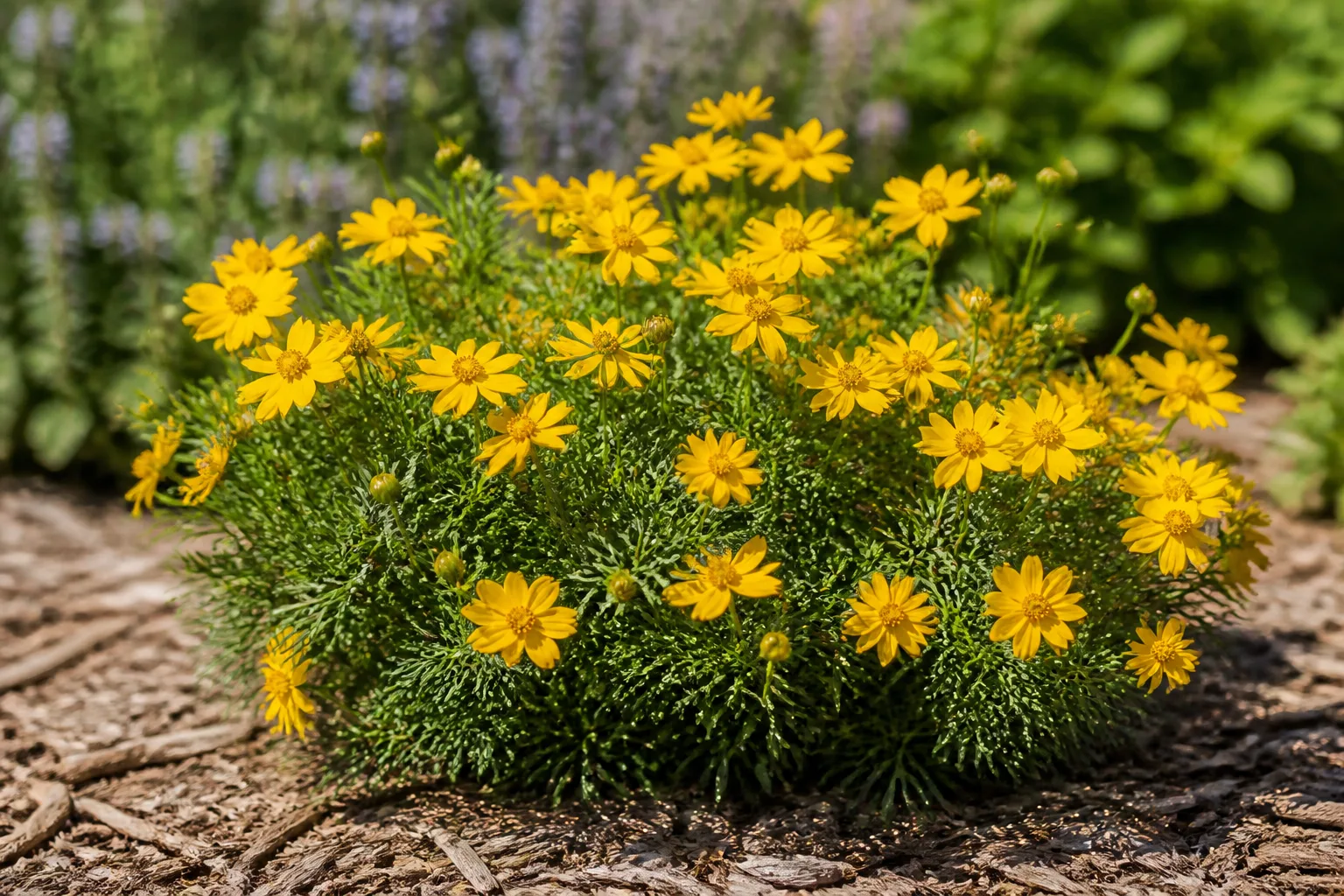
Threadleaf coreopsis (Coreopsis verticillata) produces fine-textured foliage and small yellow daisies. Cultivars ‘Moonbeam,’ ‘Zagreb,’ and ‘Grandiflora’ stay bushy in full sun. After the first heavy flush, shear plants back by about one-third in late summer to stimulate a second fall wave—one of the most reliable rebloom tricks in this list. NC State Extension profiles the species for dry, well-drained sites. (NC State Extension)
Russian sage (Perovskia atriplicifolia) carries airy lavender-blue spikes from July through October on stems up to five feet. Individual flowers are small, but massed wands read as a soft haze from a distance. It tolerates drought and poor soil; avoid rich, wet beds that cause flop.
Autumn Joy sedum opens rosy-pink flower masses in late summer that deepen to rust-red or purple into fall—structural color when many daisies are done. Missouri Botanical Garden notes the cultivar’s popularity for late-season interest and long garden life. (Missouri Botanical Garden) Cut stems to ground level after frost. Do not overwater; NC State Extension lists rot in wet soil as the primary problem. (NC State Extension)
Catmint, Speedwell, and Shasta Daisy
Catmint (Nepeta racemosa, especially ‘Walker’s Low’) blooms from spring through early fall on two-foot spikes if you shear after each flush. NC State Extension values it for drought tolerance and pollinator use—distinct from catnip (Nepeta cataria), which is the feline herb. (NC State Extension)
Spiked speedwell (Veronica spicata ‘Royal Candles’) keeps a compact nine- to twelve-inch habit with true blue spikes from June through August. Shear faded spikes to encourage side shoots. Taller veronica cultivars exist if you need vertical contrast behind sedum.
Becky Shasta daisy (Leucanthemum × superbum ‘Becky’) is the tall, indestructible white daisy for July through September—three to four feet with strong stems that rarely need staking in full sun. Deadhead for longer bloom and divide every few years when the center weakens.
Taller Accents and Pollinator Magnets
Finish the list with vertical drama and pollinator value—plus one important invasive-species caveat.
Red Hot Poker and Sterile Butterfly Bush
Red hot poker (Kniphofia uvaria and hybrids such as the Popsicle series) sends torch-like red-and-yellow spikes from late spring through midsummer on one- to four-foot plants depending on cultivar. Remove spent heads promptly to keep the clump tidy; division is rarely necessary. Full sun and medium moisture suit most hybrids.
Butterfly bush deserves a careful distinction. Standard Buddleja davidii is invasive in many parts of North America and is restricted in some states—the Invasive Plant Atlas of the United States documents its spread beyond cultivation. (Invasive Plant Atlas) Do not plant wild-type butterfly bush near natural areas.
The ‘Blue Chip’ series and other sterile, seedless cultivars were bred specifically to provide butterfly nectar without setting viable seed. They stay compact (one to two feet) and flower from midsummer into October. They are the responsible choice if you want butterfly bush form without the ecological risk—still full sun and well-drained soil.
Conclusion
Eighteen long-blooming perennials can cover spring, summer, and fall if you treat bloom time as a design problem, not a single-plant promise. Start with six to eight species split across early, midsummer, and late layers; match sun and drainage; then use deadheading and shearing where the table above calls for it. Fringed bleeding heart and catmint handle shade; coneflower, sedum, and coreopsis anchor sunny borders; sterile butterfly bush and red hot poker add late vertical interest without replanting annuals every year.
Avoid the habits that silently shorten the show: shopping for color without a bloom calendar, overwatering lavender and sedum, planting non-resistant phlox in humid sites, using invasive butterfly bush instead of sterile cultivars, skipping midsummer shears on catmint and coreopsis, and pushing heavy nitrogen on lean-soil species. Check your extension office for regional cultivar lists, plant once with intention, and your border can look deliberate long after the first flush fades.