How to Grow Luffa: Planting, Care, and Harvesting
Learn how to grow luffa from seed, build the right trellis, hand-pollinate flowers, and harvest young squash or mature gourds for sponges.
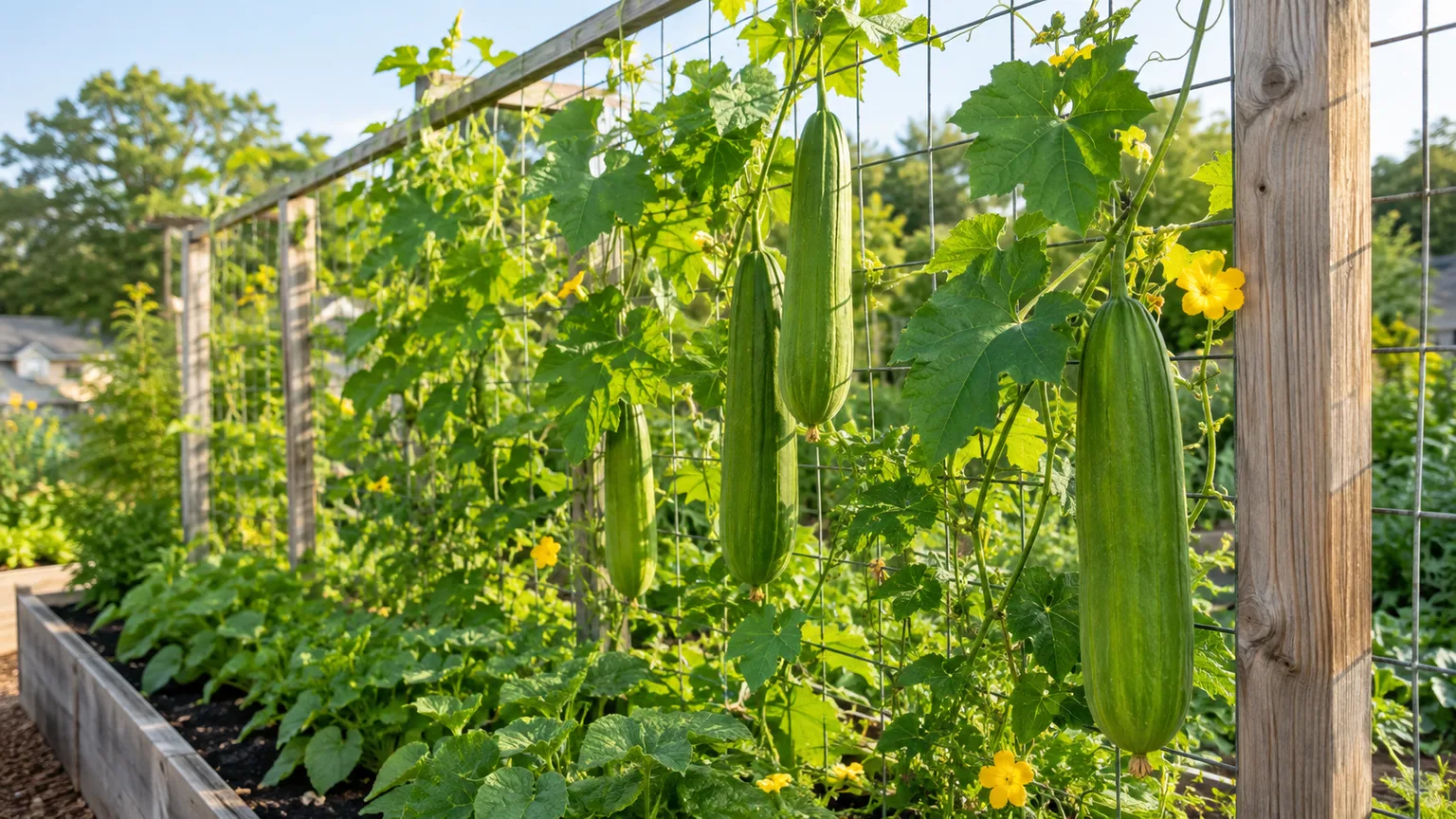
Luffa is a warm-season vine, not a tree sponge that grows underground. Give it full sun, warm soil, steady moisture, and a strong trellis, and the same plant can provide tender squash in summer or a fibrous sponge after a long, frost-free autumn. The important decision comes first: fruit you plan to eat must be picked young, while fruit for a sponge must stay on the vine long enough for the soft interior to become a dense network of fibers.
Luffa is usually sold as smooth luffa, sponge gourd, or loofah. Smooth types are commonly identified as Luffa aegyptiaca (older seed packets may say Luffa cylindrica), while angled luffa is Luffa acutangula. Both are vigorous annual cucurbits, but seed packets vary in maturity time and fruit shape, so use the packet’s days-to-maturity as a planning clue rather than assuming every luffa behaves identically.
Know Which Luffa Harvest You Want
If you want to eat luffa, harvest the fruit while it is still slender, tender, and cucumber-like. The UF/IFAS luffa guide recommends picking edible fruit at less than about 6 inches, while some varieties can remain tender at a different size; the reliable test is a young fruit with soft skin and no tough, stringy interior.
For a sponge, you are growing for the opposite texture. Leave selected fruits attached until the skin dries and the interior hardens, then peel away the husk and shake out the seeds. You cannot turn an immature edible luffa into a full, durable sponge by drying it after an early harvest—the fiber skeleton must develop on the plant first.
This choice affects the whole season. Gardeners growing edible fruit can harvest frequently and leave many young fruits on the vine; gardeners growing sponges should select only the healthiest fruits and remove late flowers or tiny fruits when the season is running short, so the vine’s remaining energy goes into maturity.
Understand the Luffa Timeline
Luffa needs more heat and time than a cucumber. In a favorable garden, young fruit may form in summer, but a sponge-quality gourd often needs roughly 120 to 200 warm, frost-free days from seed to finished dry fruit, depending on variety, temperature, and how much drying happens before frost. NC State Extension’s production guide describes luffa as tropical and long-season, while N.C. Cooperative Extension’s 2024 guide uses about 120 days for fruit to mature for sponges.
Use your local frost calendar backward. Count from the first likely autumn frost to the seed packet’s maturity estimate, then add time for slow germination, cool spring nights, and drying. If that calculation does not leave a generous margin, start indoors or grow luffa in the warmest protected site available; a late-sown plant may make flowers and green fruit but still fail to cure a usable sponge before cold weather.
| Your goal | Harvest signal | Best strategy |
|---|---|---|
| Eating | Small, tender fruit with soft skin and no fibrous texture | Sow or transplant after the soil warms; pick often |
| Green sponge processing | Skin loosens from the fiber and the fruit is mature but not fully dry | Inspect frequently and peel promptly after harvest |
| Dry sponge | Tan or brown, lightweight, hard-skinned fruit with rattling seeds | Leave on the vine as long as weather stays dry, then finish curing under cover |
Choose a Site That Can Carry a Vine
Choose the sunniest spot you have: at least six hours of direct sun, with more afternoon light preferred. Luffa makes large leaves and long stems, so a site that seems spacious in May can become a shaded wall of foliage by midsummer. Keep it away from short crops that need full sun, and leave a walking lane so you can inspect the fruit without stepping on the vines.
The soil should drain quickly after rain but hold enough moisture for steady growth. A soil test is more useful than guessing at pH; extension guidance places luffa comfortably around mildly acidic to neutral soil, approximately pH 6.0 to 7.0. Work finished compost into poor soil, but do not create a rich, waterlogged pocket that keeps the roots wet after irrigation.
Good air movement matters even though luffa likes humidity. Set plants where leaves can dry after rain, water at the root zone, and use a light mulch layer to slow evaporation without piling mulch against the stem. A trellis also keeps fruit off wet soil, which reduces the chance of rot and misshapen sponges.
Build the Trellis Before Planting
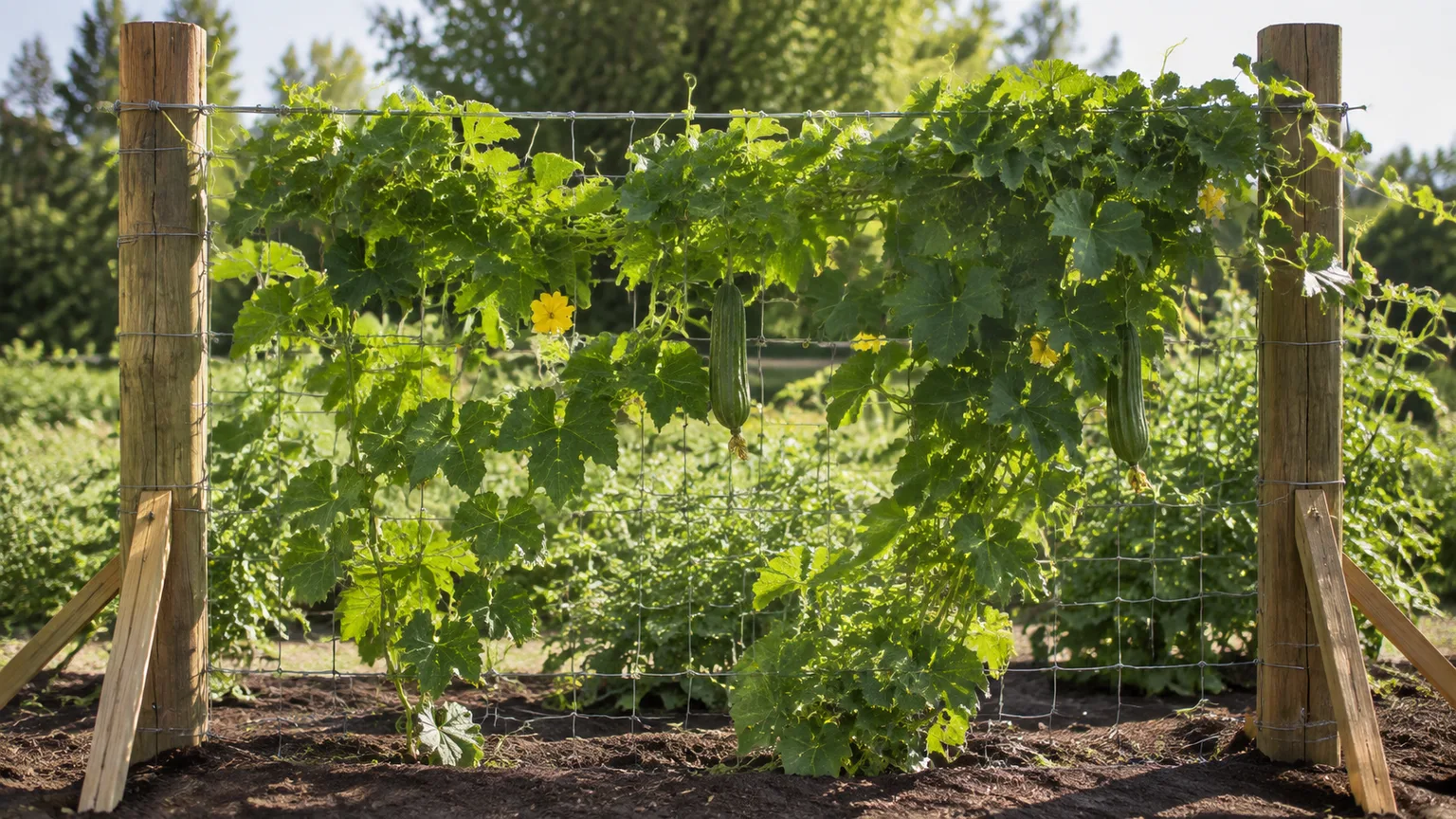
Luffa support is structural, not decorative. A mature vine can reach roughly 25 to 30 feet, and each sponge gourd becomes surprisingly heavy as it fills with water and fibers. UF/IFAS recommends a vertical support at least 6 feet tall, while NC State Extension describes heavy posts, horizontal wire, and mesh or V-shaped string for commercial-style training.
Install the trellis before sowing so you do not drive posts through tender roots later. A cattle panel, strong garden arch, or fence can work if it is firmly anchored and has openings large enough for tendrils. For a permanent row, use stout posts and galvanized wire; for a temporary bed, brace a tall panel so wind cannot pull the entire vine down.
Plan about 3 feet between plants in a home garden when you want room to work, even though tighter commercial in-row spacing can produce high yields under intensive training. Keep the vine and its fruit on the support rather than allowing gourds to rest on the ground or become trapped behind wire. Tie stems loosely with soft ties until tendrils take hold.
Start Luffa From Seed
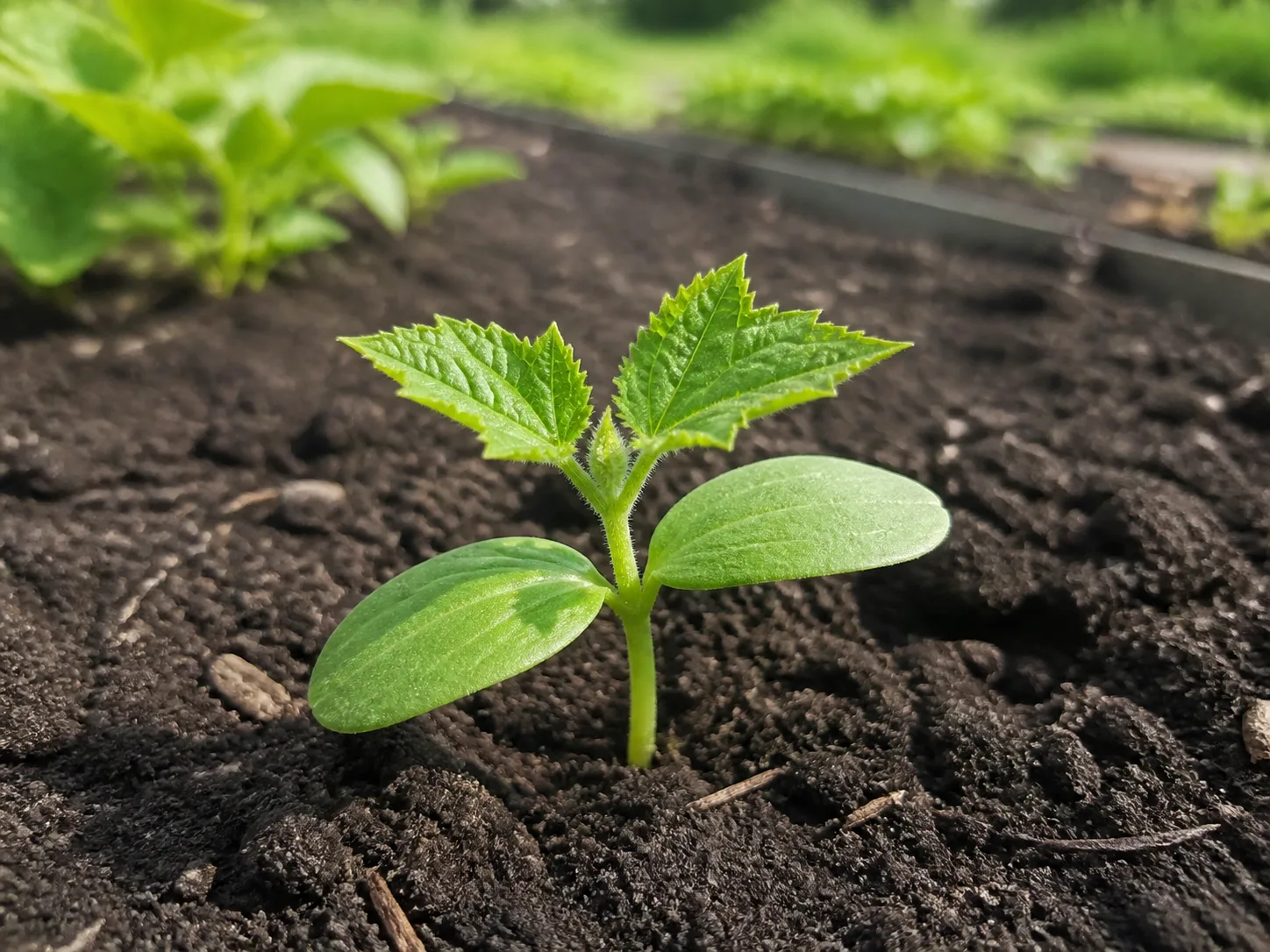
Luffa is most often grown from seed, and thick-coated seeds can germinate slowly or unevenly. Soak them in warm water for about 24 hours, or lightly nick the edge of the seed coat with a file; the goal is to help water enter, not to scrape into the embryo. Gardening Know How also recommends soaking or scarifying because impatient gardeners often discard viable seeds too soon.
Direct-sow in warm ground
Direct sow only after frost danger has passed and the soil is genuinely warm—around 70°F is a useful target for reliable emergence. Plant two or three seeds about 1/2 to 1 inch deep near the trellis, keep the seedbed evenly moist, and thin to the strongest seedling after true leaves appear. Avoid planting luffa where another cucurbit recently grew if disease pressure is high; rotating away from cucumber, melon, squash, and related crops helps break recurring pest and disease cycles.
Direct sowing is simplest in a long, hot season, but it gives the plant no time to recover from a cool spring. If your summers are short, your first frost arrives early, or you are growing specifically for dry sponges, transplanting a carefully raised seedling is usually the safer bet.
Start seedlings indoors for a head start
Start seeds indoors about four to six weeks before your local transplant date, not automatically on a fixed calendar month. Sow one seed per deep cell or small pot after soaking, provide warmth and bright light, and transplant before the roots circle the container. Luffa dislikes root disturbance, so handle the root ball rather than pulling the seedling by its stem.
Move plants outdoors only after the soil has warmed and nights are reliably above frost risk. Harden them off over 7 to 14 days by increasing outdoor exposure gradually, protecting them from harsh midday sun and wind at first. A seedling that looks large indoors but has not been hardened can stall after transplant, erasing much of the head start.
Plant and Train the Vines
Plant at the same depth the seedling grew in its pot, water the root zone thoroughly, and guide the first stems toward the trellis as soon as they are long enough to reach it. Do not wait until the vine has formed a tangled mat on the ground; untangling mature tendrils can snap stems and leave developing fruit unsupported.
Check the structure weekly. Separate crowded stems, redirect fruit that is wedged against a wire, and keep leaves from forming a dense wet curtain against a wall. If a fruit begins to hang outside the support, cradle it with a soft sling or train the stem before its weight increases.
Manage Water, Soil, and Fertilizer
Keep the root zone consistently moist, especially during flowering and fruit expansion, but let excess water drain away. Water deeply at the base when the upper soil begins to dry, and increase the frequency during heat waves rather than giving a shallow sprinkle that wets the surface only. Drip irrigation or a hose directed below the leaves is preferable to repeated overhead watering.
Mulch helps smooth the moisture cycle, but leave a small gap around the stem so the crown can breathe. Sudden drought followed by heavy irrigation can stress a fast-growing vine and contribute to flower drop or fruit problems. The right check is the soil several inches down, not a calendar rule.
Start with a soil test and add compost or a balanced fertilizer only when the soil and plant indicate a need. Too much nitrogen can produce a spectacular canopy with fewer useful fruits, while a pale, slow-growing plant may need more than water alone. Follow the label for any fertilizer used on an edible crop and do not correct a suspected nutrient problem with a random dose of phosphorus or nitrogen before testing.
Feed for fruit, not just foliage
Once the vine is established, a modest side-dressing or balanced, slow-release feeding can support growth. As flowering begins, avoid pushing lush leaves at the expense of fruit; some gardeners use a lower-nitrogen, higher-potassium feed, and BBC Gardeners’ World Magazine recommends regular high-potash feeding for fruit production in its protected-climate guidance.
That advice is not a license to fertilize weekly in every soil. A luffa growing in compost-rich ground may need little extra food, while a container plant can exhaust nutrients faster. If the plant is green and growing strongly, solve poor fruit set by checking pollination and weather before adding fertilizer.
Solve Pollination and Fruit Set Problems
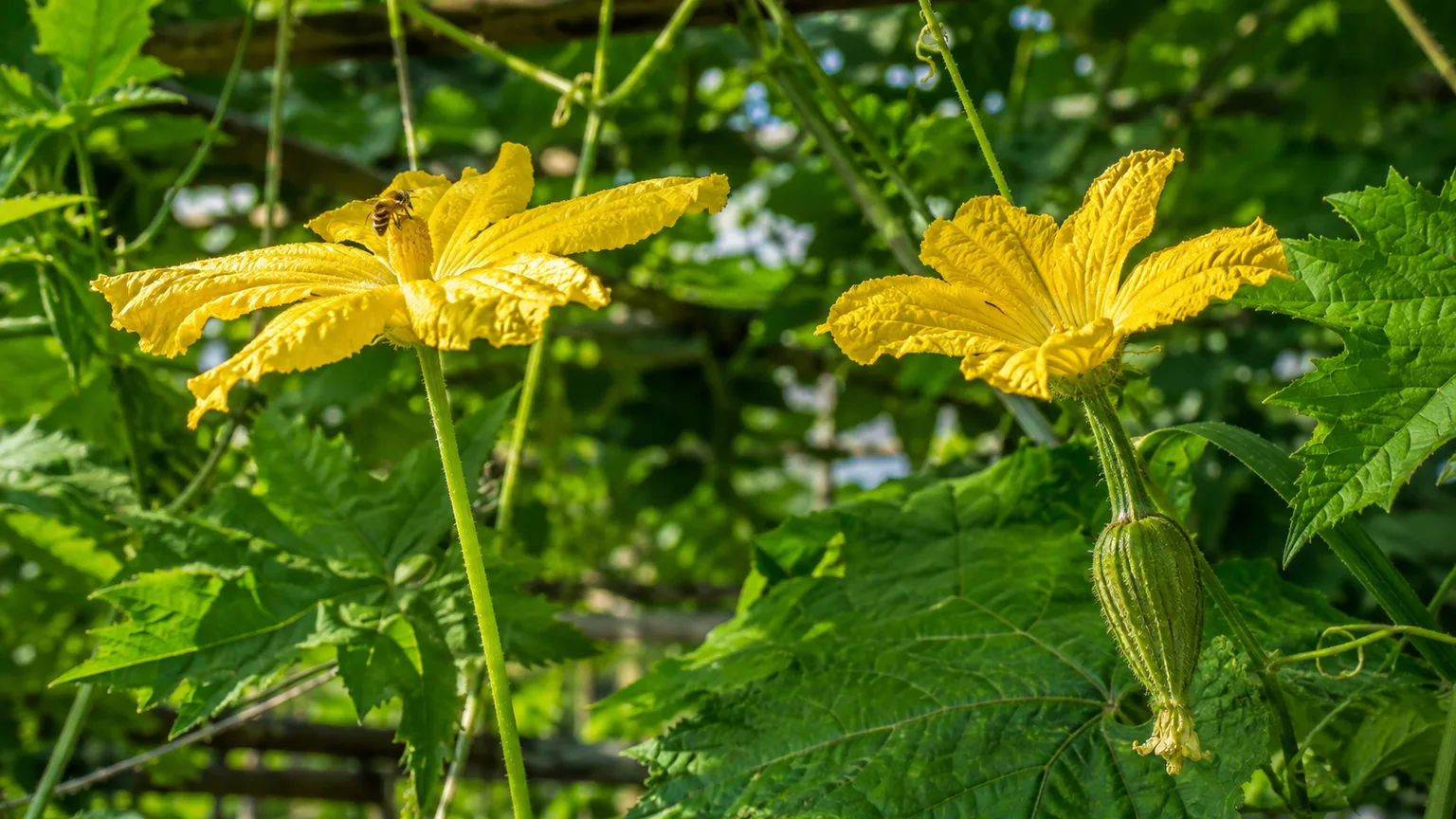
Luffa produces separate male and female flowers on the same plant. Male flowers usually appear first in clusters on longer stalks; female flowers have a small, unmistakable luffa-shaped ovary behind the bloom. A male flower dropping after one day is normal, but a female flower with an ovary that yellows, shrivels, and drops usually points to failed pollination or severe plant stress.
Look for bees in the flowers during the morning. If pollinators are scarce, use a small paintbrush or cotton swab to move pollen from a freshly opened male flower to the center of a female flower, then repeat with another male flower. Hand-pollinate over two or three mornings when flowers are available, and avoid spraying any product on open blooms.
If a plant produces only male flowers early, do not assume the soil needs a heavy phosphorus dose. Young cucurbits often make male flowers first, and heat, day length, plant maturity, water stress, and genetics can all influence flowering. Give the plant steady care, and diagnose a pattern of fruit loss rather than reacting to one fallen bloom.
Prune Only When It Helps
Pruning is optional. If you have room and can train the stems, luffa can produce without aggressive cutting. Pruning becomes useful when the vine is crowding its support, hiding fruit, or putting energy into a tangle of basal shoots that blocks airflow.
With clean, sharp pruners, remove the first few lateral shoots near the base if they are creating a dense, ground-level mass. Gardening Know How’s luffa pruning guidance emphasizes early training and airflow, but the exact number of shoots should match your trellis and the fruit you are keeping.
Do not strip healthy leaves just to make the plant look tidy. Leaves power the fruit, and over-pruning exposes gourds to sunscald and leaves the plant with less capacity to finish late in the season. When growing for sponges, remove new flowers and very small fruit late in the season if they cannot mature before frost; keep the established fruit that has the best shape, support, and exposure.
Grow Luffa in a Container
You can grow luffa in a container, but a pot does not make this large vine small. Choose the largest stable container you can place safely—UF/IFAS lists 2 to 5 gallons as possible, but a bigger vessel gives a full-season sponge crop more root volume and reduces the speed of moisture swings. One plant per container is enough, and the pot must have several drainage holes.
Put the trellis in place before the vine becomes top-heavy. Containers dry faster than beds, especially against a sunny wall, so check moisture often during flowering and fruiting. A small pot that needs repeated emergency watering may support leaves and a few edible fruits but is a poor setup for curing multiple large gourds.
Use fresh potting mix rather than garden soil in a container, and fertilize according to the product label. Move the container to the warmest bright spot you can manage, but do not bring an outdoor vine indoors late in the season expecting it to continue fruiting under weak winter light; luffa is an annual and cold eventually ends the crop.
Harvest Young Luffa to Eat
Inspect edible fruit every day or two once the vine begins producing. Pick when the fruit is small, firm, and tender, cutting it with pruners and leaving a short stem. If the skin feels hard, the fruit has enlarged quickly, or the interior has become stringy, it has moved beyond the best eating stage and can be left for sponge production instead.
Young luffa can be cooked like summer squash or used in soups, stir-fries, and curries. Rinse it, trim the ends, and slice it; if the interior already shows tough fibers, discard that fruit from the edible batch rather than trying to disguise the texture with longer cooking.
Harvest and Cure Luffa for Sponges
For a dry sponge, let the selected gourds remain on the vine as long as the weather stays warm and dry. A ready fruit turns tan or brown, feels light for its size, and has a hard, dry shell; when shaken, the seeds rattle inside. N.C. Cooperative Extension and Gardeners’ World both emphasize leaving fruit to mature and moving it to a sunny, airy place if cool, wet weather threatens.
Cut the dried gourd from the vine with 1 to 2 inches of stem. Do not leave completely dry fruits hanging through repeated rain: the shell may stay intact while moisture stains or molds the fiber inside. If frost is approaching and the gourd is mature but still green, harvest it and finish curing on a rack or in a mesh bag in a warm, ventilated area.
There is also a green-fruit processing route when the skin has begun to loosen from the fibers. This requires close inspection: the fruit may be mature enough to peel, but it contains much more moisture and plant juice, so rinse the exposed sponge promptly and dry it completely. The dry-on-the-vine method is more forgiving for a home gardener because the rattling-seed test gives a clearer readiness signal.
Turn a Mature Gourd Into a Sponge
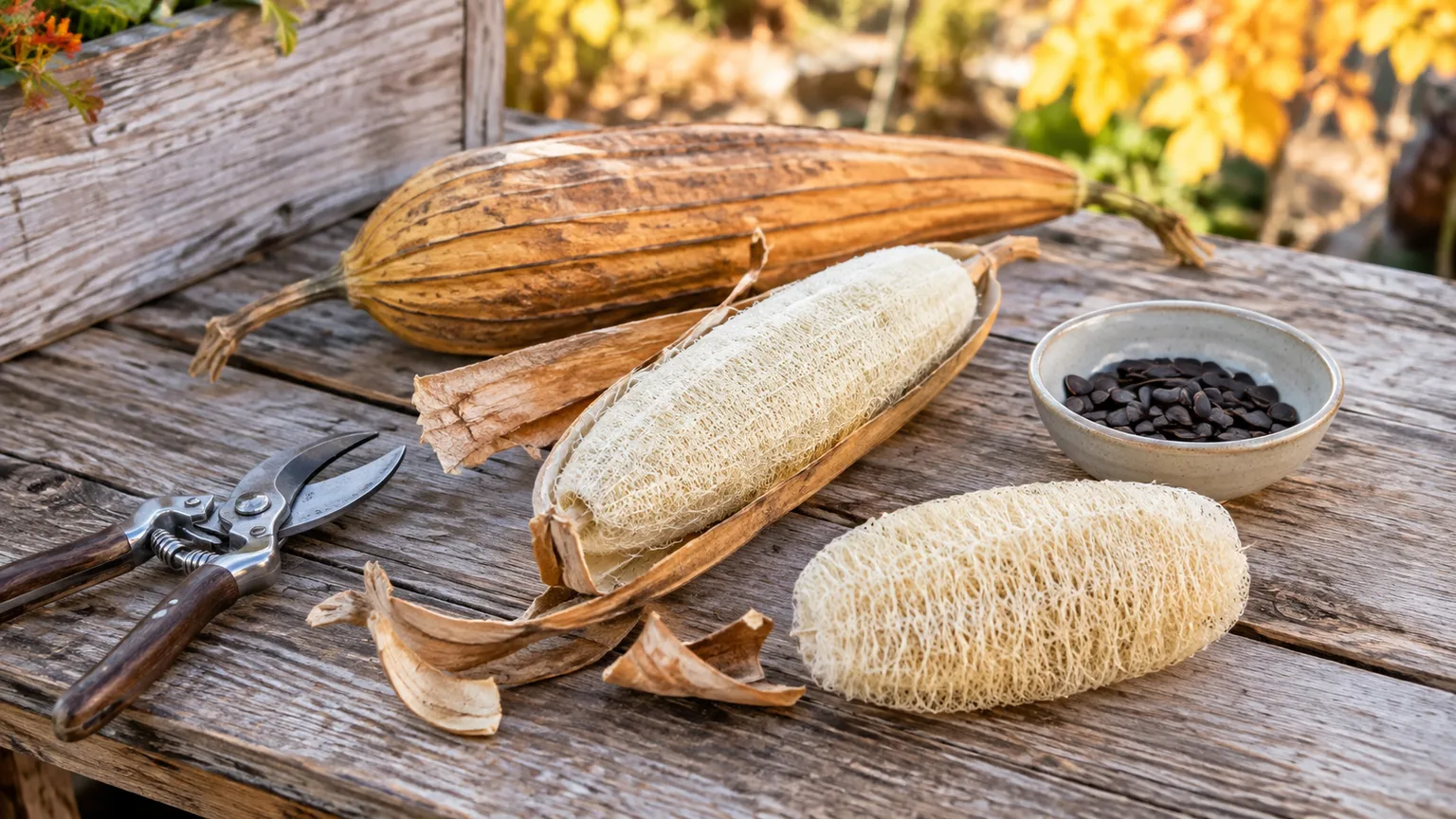
Process one gourd at a time so you can adjust the soak to its shell. Soak the dry fruit in warm water for 5 to 20 minutes, or longer if the husk is stubborn, until the skin softens; UF/IFAS notes that a heavily dried gourd may need several hours or even longer soaking. Cut or crack the ends, peel away the shell, and pull out the central pulp.
Tap the sponge over a bowl to release the flat, dark seeds. Rinse repeatedly until loose pulp and plant residue are gone, then squeeze out excess water without crushing the fiber. Spread the sponge on a rack or hang it in a warm, well-ventilated place until the center is dry, not merely the outside.
Before using it for bathing or dishes, rinse the finished sponge again and allow it to dry fully between uses. If you choose a bleach rinse to lighten or sanitize it, use only a properly labeled household product, follow its current label directions, ventilate the area, never mix bleach with other cleaners, and rinse thoroughly; the simpler low-risk option is clean water plus complete drying.
Troubleshoot Common Luffa Problems
Start with the symptom’s location and timing instead of treating the whole vine at once.
- Leaves wilt in the afternoon but recover at night: Check soil moisture several inches down and inspect for root-zone drainage. Water deeply if the soil is dry; if it is wet, improve drainage rather than watering more.
- Flowers fall before fruit forms: Male flowers naturally drop. If female flowers also drop, look for bees, hand-pollinate in the morning, and correct drought stress before changing fertilizer.
- Fruit turns soft or dark where it touches soil: Lift it onto the trellis, use mulch as a barrier, and remove badly rotted fruit. Wet foliage and poor airflow raise disease pressure.
- White powder coats leaves: Powdery mildew is more likely when foliage is stressed, crowded, or kept too dry at the roots. Improve airflow, water the soil consistently, and remove badly affected leaves; do not spray an unlabeled home remedy on edible plants.
- Tiny insects or stippled leaves appear: Check leaf undersides for cucumber beetles, mites, or other pests. Hand removal, exclusion, and local extension identification are safer starting points than a broad pesticide; if a product is needed, the label must list the crop and use.
- The vine is huge but fruit is scarce: Check nitrogen excess, pollination, and the age of the plant before pruning harder. A vigorous leaf canopy is not proof that the flower was pollinated.
Luffa diseases and pests are often manageable with crop rotation, clean-up, root-zone irrigation, and a trellis that keeps fruit and leaves from staying wet. If symptoms spread rapidly or you cannot identify the pest, take a clear photo and contact your county Extension office rather than guessing at a treatment.
Save Seeds and Clean Up for Next Season
Save seed from a fully mature, dry gourd—not from a small edible fruit. Choose a healthy fruit with the shape and fiber quality you want, remove the dark seeds, and dry them on a paper surface until they are thoroughly dry before storing them in a labeled envelope in a cool, dark place.
Luffa can cross-pollinate with other luffa varieties, so saved seed may not come true if different types flower nearby. For a home garden, that may be an acceptable surprise; if you need a predictable variety, buy fresh seed or isolate flowering plants as much as practical.
After frost kills the vine, remove plant debris and any diseased material from the bed. Do not compost badly diseased leaves unless your compost reaches and holds a reliably hot temperature. Rotate the next cucurbit crop away from the same spot when possible, inspect the trellis for damage, and plan next year’s seed date before spring arrives.
Conclusion
The reliable way to grow luffa is to treat it as a long-season crop with a job to finish, not as a quick cucumber substitute. Decide whether you want tender fruit or dry sponges, start early enough for your climate, build a trellis that can carry the mature gourds, water the root zone consistently, and watch the flowers closely when fruit set begins.
If you are starting today, do one thing before sowing: measure the warm growing season between your last spring frost and first autumn frost. That number tells you whether to direct-sow for edible luffa, start plants indoors for a head start, or choose a protected site where selected gourds can dry before wet weather and frost end the vine.



