How to Grow Ridge Gourd (Luffa acutangula) — Complete
Luffa acutangula
Grow ridge gourd (turai) with full sun, a sturdy trellis, even moisture, and young 15–25 cm harvests. Includes sowing seasons, pollination, and luffa-sponge tips.
How to Grow Ridge Gourd (Luffa acutangula) — Complete Overview
Start with wateringThe most common care mistake for Ridge GourdWatering guide → →Ridge Gourd care essentials
Light
Water
Keep the root zone evenly moist while vines are growing and setting fruit. Water deeply when the top 2–3 cm feels dry, then let excess drain. Drought during flowering can drop buds and reduce yield.
Soil
Fertile, well-drained loam or potting mix enriched with mature compost. Ridge gourd tolerates average garden soil when drainage is good; aim for pH 6.0–7.5.
Humidity
Temperature
Fertilizer
About Ridge Gourd
Ridge Gourd is native to South Asia and tropical Asia; long cultivated across India and Southeast Asia, typically reaches Climbing vines commonly reach 3–5 m on a trellis; individual fruits are harvested young at 15–25 cm indoors, with fast - first tender fruits often ready about 50–60 days after sowing in warm soil growth. Ridge Gourd has a annual climbing vine (cucurbit) growth habit and part of the Cucurbitaceae family. It is also known as Turai, Torai, Jhinga, Chinese okra, Angled luffa, Ribbed loofah, and Ridged gourd.
| Detail | Information |
|---|---|
| Also known as | Turai, Torai, Jhinga, Chinese okra, Angled luffa, Ribbed loofah, Ridged gourd |
| Native region | South Asia and tropical Asia; long cultivated across India and Southeast Asia |
| Mature size | Climbing vines commonly reach 3–5 m on a trellis; individual fruits are harvested young at 15–25 cm |
| Growth rate | Fast - first tender fruits often ready about 50–60 days after sowing in warm soil |
| Growth habit | Annual Climbing Vine (Cucurbit) |
| Scientific name | Luffa acutangula |
| Family | Cucurbitaceae |
How to Grow Ridge Gourd (Luffa acutangula) — Complete Overview
Ridge gourd care starts with vertical space and warm sun—not a compact windowsill herb. Luffa acutangula is a fast annual climbing vine in the cucumber family, grown across South Asia as turai, torai, or jhinga and in many markets as Chinese okra or angled luffa. Young fruits are tender vegetables; fully mature, dried fruits can be processed into natural luffa fibre. This overview covers identity, size, light/water/soil basics, India-friendly sowing, trellis and pollination, harvest stage, common mistakes, and where to go next in the Ridge Gourd plant hub.
What Is Ridge Gourd?
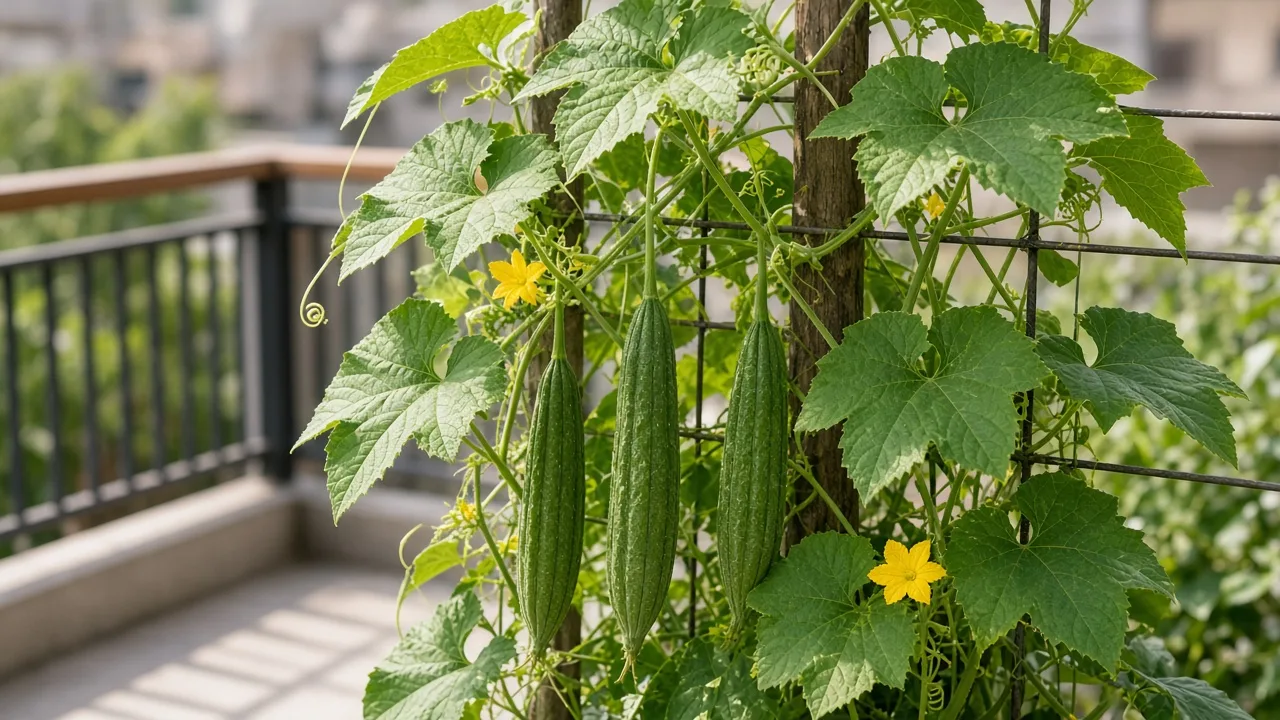
Ridge gourd is a tendril-climbing cucurbit with large, rough leaves and ridged, cylindrical fruits. RHS describes a tender vine with bright yellow male flowers in clusters and female flowers singly, followed by dark green, ridged fruits that are edible when unripe. Botanists place the species in Cucurbitaceae; Plants of the World Online treats Luffa acutangula as a widely cultivated Asian vegetable and fibre crop.
Botanical identity and regional names
The accepted scientific name is Luffa acutangula. Seed packets and nursery tags may also say ridged gourd, sing-kwa, or strainer vine. In Indian kitchens, turai and torai usually mean this ridged type, not the smooth sponge gourd (Luffa aegyptiaca). Keeping the Latin name straight matters when you buy seed or compare growing advice online.
Ridge gourd versus smooth sponge luffa
Both species are called “luffa,” but the fruit tells them apart. Ridge gourd has sharp longitudinal ribs and is the standard turai vegetable in much of India. Smooth L. aegyptiaca is the bath-sponge luffa most often pictured in Western seed catalogs. NC State Extension profiles sponge gourd as a related climber with similar cultural needs—full sun, rich loam, and a sturdy trellis—though ridge gourd fruits are harvested much younger for cooking.
Growth Habit and Mature Size
Ridge gourd behaves like other heat-loving cucurbits: one season of aggressive vine growth, then decline after heavy fruiting or cool weather.
Vine length and where fruit forms
RHS lists mature height around 1.5–2.5 m on a support, with a climbing, tendril-bearing habit. In warm Indian terraces, growers commonly train vines 3–5 m along a mesh panel or railing when the season is long. Most harvestable gourds form on lateral branches after the main stem reaches the trellis; fruits that rest on wet soil often curve, scar, or rot.
Kitchen harvest size versus sponge stage
For cooking, pick fruits while skin is still tender and flesh is soft—typically about 15–25 cm long, when a fingernail can dent the skin. Over-mature gourds turn fibrous and lose kitchen quality. If you want a luffa sponge, leave selected fruits on the vine until they brown and dry; the interior skeleton becomes fibrous once the skin is stripped—same dual-use logic described for Luffa species in NC State’s sponge gourd profile, applied here at the ridged species.
LeafyPixels hub data notes first tender fruits often 50–60 days after sowing in warm soil—a realistic planning number for summer plantings, though your pot volume and heat will shift timing.
Why Ridge Gourd Is a Warm-Season Crop
Ridge gourd is not a winter leafy green like spinach or kale. It needs sustained warmth from germination through fruit set.
Germination and active growth temperatures
RHS cultivation guidance recommends sowing seed at about 21–24 °C. The LeafyPixels hub matches practical experience on Indian plains: germination in roughly 5–8 days when soil stays above about 20 °C, with best performance roughly 25–38 °C during active growth. Cold, wet seedbeds rot seed; chilly nights after transplant stall vines.
Frost and cool-night limits
Like other luffas, ridge gourd expects a frost-free growing window. NC State notes that related sponge gourd needs a frost-free season of at least four months and warm temperatures for flowering—use that as a minimum season length when planning terrace crops in hills or late monsoon sowings.
Sowing Windows for Indian Plains and Monsoon
Calendar dates shift by city, but two sowing peaks dominate North and Central Indian kitchen gardens.
February–March summer crop
Sow when days are warming and nights are no longer cool enough to chill cucurbit seed. The hub recommends February–March on most plains for a summer harvest chain. Use large grow bags or beds, pre-install the trellis, and direct-sow about 2 cm deep once soil is warm—details in the Ridge Gourd propagation guide.
June–July monsoon extension
A June–July sowing can extend production where monsoon nights stay warm and airflow is good. Drainage matters more in wet months: saturated mix invites stem rot at the crown. Pair monsoon sowings with elevated pots, open mesh trellises, and the finger-check rhythm in the Ridge Gourd watering guide.
Light Needs in Brief
Ridge gourd wants full sun—at least six hours of direct light daily on most days. NC State states that related luffa vines need at least six hours of full sun to thrive; ridge gourd on a shaded balcony will produce leaves but few fruits. RHS also lists full sun and a sheltered, south- or west-facing support outdoors.
For orientation, reflectors, and heat-wave shade calls, use the dedicated Ridge Gourd light guide. Rule of thumb here: bright open terrace or garden fence, not a dim indoor corner.
Water and Root-Zone Basics
Even moisture through flowering and fruit set matters more than a rigid calendar.
The hub matches cucurbit logic: keep the root zone evenly moist while vines run and fruit, water deeply when the top 2–3 cm begins to dry, and never leave pots in standing water. Drought during bloom can drop flowers and yield small or misshapen gourds; constant sogginess damages roots in hot weather.
NC State emphasizes well-drained, evenly moist, rich loam for related luffa—ridge gourd follows the same pattern in containers. Seasonal checks, saucer habits, and wilt diagnosis live in the Ridge Gourd watering guide.
Soil, pH, and Container Choice
Fertility and drainage decide whether a long vine can support repeated harvests.
Target fertile loam or a compost-enriched potting mix with moist but well-drained conditions. RHS accepts loam or sand with acid to alkaline pH; the LeafyPixels hub narrows practical garden targets to about pH 6.0–7.5. A workable container blend mirrors the plant-detail recipe: roughly 50% quality loam or potting mix, 30% mature compost, and 20% perlite or coarse coco chips.
Match pot size to vine ambition: at least about 40 litres for one strong plant on a terrace, with drainage holes and a trellis anchored before vines lengthen. Seedling pot-up timing is covered in the Ridge Gourd repotting guide and mix tweaks in the Ridge Gourd soil guide.
Trellis Planning From Day One
Ridge gourd is an aggressive climber with tendrils. Without support, you fight tangled stems, dirty fruit, and wasted vertical space.
Install a sturdy 1.8–2.4 m trellis, railing, or mesh panel before vines attach. Train the main stem upward, then let laterals spread—most kitchen fruit forms there. Pinching the main tip after it tops the support can redirect energy into side shoots (see the Ridge Gourd pruning guide). Fruits that hang freely stay straighter and cleaner than those resting on soil.
Flowers, Pollination, and Fruit Set
Plants bear separate male and female yellow flowers on the same vine—typical cucurbit biology. Bees usually move pollen, but balcony growers with poor insect traffic may need hand pollination in the evening when both flower types are open.
Good airflow and prompt removal of damaged fruit also reduce fruit-fly stings on developing gourds. If you see fruits yellowing or rotting at the tip, discard them rather than leaving pest reservoirs on the plant.
Harvest for Kitchen Versus Luffa Sponge
Choose a goal per fruit cluster: tender curry ingredient or dry fibre.
For turai dishes, harvest every few days at the tender stage—about 15–25 cm, soft flesh, skin that yields to pressure. Missed fruits become woody quickly in hot weather. For seed saving or sponges, leave selected fruits to mature and brown on the vine until the shell dries; then peel, shake out seeds, and rinse the fibre skeleton.
Bitter Fruit and Cucurbit Safety
Most young ridge gourds are mild, but cucurbits can occasionally produce bitter fruit high in cucurbitacins. RHS warns that plants are harmful if eaten when bitter, except properly prepared young fruit—and to discard bitter specimens. Slice and taste a small piece raw before cooking, especially with home-saved seed or mixed varieties; never serve bitter gourd to people or pets.
Common Balcony and Terrace Mistakes
Most failures trace to space, season, or water—not mysterious disease.
Skipping the trellis until vines are already sprawling leads to broken stems and soil-contact rot. Sowing in cold soil produces weak stands that never catch up. Small pots dry twice a day on concrete, stressing flowers. Shaded railings yield vines without fruit. Letting over-mature gourds stay on the plant slows new fruit set and invites pests.
Fix the environment first—sun, support, pot volume, even moisture—before reaching for foliar sprays.
Pests and Quick Prevention
Ridge gourd shares cucurbit pests: fruit fly, aphids, and powdery mildew in humid, crowded canopies. RHS notes possible powdery mildew on luffa; spacing, morning irrigation, and open trellis mesh reduce risk. Remove stung or rotting fruit promptly; keep chemically treated plants away from harvest bowls and pet areas.
Balanced feeding during leaf and fruit flush is outlined in the Ridge Gourd fertilizer guide—avoid excess nitrogen that pushes leaves at the expense of fruit.
Pets and Food-Crop Caution
Ridge gourd is grown as human food, not confirmed safe pet forage. LeafyPixels lists caution for common pets until species-specific veterinary listings exist. Prevent dogs and cats from chewing vines or unripe fruit, especially on sprayed plants, and consult a veterinarian after meaningful ingestion. Bitter fruit must never be fed to animals.
When to Use This Page vs Other Ridge Gourd Guides
Stay on this overview when you need the whole picture: crop identity, season, trellis, harvest stage, pollination, and first troubleshooting.
Open a sibling guide when one variable dominates:
- Light — sun hours, balcony orientation, heat stress
- Watering — finger checks, monsoon rhythm, wilt diagnosis
- Soil — mix recipes, pH, compaction
- Fertilizer — compost baseline, bloom and fruit feeding
- Repotting — seedling pot-up before the trellis
- Propagation — sowing depth, soaking seed, success rates
- Pruning — training, tipping, lateral management
Related Ridge Gourd Guides
Build the cluster as your season progresses:
- Hub: Ridge Gourd
- Care: light, watering, soil, fertilizer, repotting, propagation, pruning
Start with light, trellis, and propagation on a new sowing; add watering and soil detail if vines stall despite good sun; open fertilizer and pruning when flowering begins or the canopy crowds the railing.
Conclusion
Ridge gourd rewards growers who treat it like a warm-season climbing vegetable, not a houseplant: full sun, a sturdy trellis from day one, even moisture through fruit set, and young 15–25 cm harvests for tender turai. Sow when soil is genuinely warm—February–March or a warm monsoon window on Indian plains—pollinate on isolated balconies if needed, and taste fruit before cooking to catch occasional bitterness. Nail those decisions here, then use the dedicated guides when light, water, soil, feeding, or training needs a finer adjustment.
How to care for Ridge Gourd?
When should you water Ridge Gourd?
Keep the root zone evenly moist while vines are growing and setting fruit. Water deeply when the top 2–3 cm feels dry, then let excess drain. Drought during flowering can drop buds and reduce yield.
- Feel 2–3 cm below the surface - Water deeply when the top 2–3 cm feels dry, then let excess drain.
- water when that layer is beginning to dry while deeper soil still holds slight moisture - Water deeply when the top 2–3 cm feels dry, then let excess drain.
- Drain excess water - Water deeply when the top 2–3 cm feels dry, then let excess drain.
What soil works best for Ridge Gourd?
Fertile, well-drained loam or potting mix enriched with mature compost. Ridge gourd tolerates average garden soil when drainage is good; aim for pH 6.0–7.5.
- 50% quality potting mix or garden loam - Fertile, well-drained loam or potting mix enriched with mature compost.
- 30% mature compost - Fertile, well-drained loam or potting mix enriched with mature compost.
- 20% perlite, coarse sand, or coco chips - Fertile, well-drained loam or potting mix enriched with mature compost.
Grower notes for Ridge Gourd
Plan for a trellis from day one
Ridge gourd is an aggressive climbing vine with tendrils. In containers, use at least a 40-litre pot and a sturdy 1.8–2.4 m trellis, railing, or mesh panel. Train the main stem upward, then let lateral branches spread—most fruit forms on laterals. Without support, fruits contact soil, stay curved, and rot more easily.
Sow warm and give full sun
Seeds germinate in about 5–8 days when soil stays above roughly 20°C. Direct-sow 2 cm deep or start in trays, then move seedlings before vines tangle. Provide at least six hours of direct sun daily; this heat-loving crop performs best around 25–38°C in Indian summer and monsoon plantings.
Harvest young, not woody
Pick fruits at the tender stage—about 15–25 cm long—when skin yields to a fingernail and flesh is still soft. Check every few days; over-mature gourds turn fibrous and are no longer good kitchen vegetables. Leave a few fruits to brown on the vine if you want to save seed or process natural luffa sponges from the dried skeleton.
Taste before cooking
Most ridge gourds are mild and sweet when young, but occasional bitter fruit can occur in cucurbits. Slice and taste a small piece raw before cooking; discard bitter fruit rather than serving it. This quick check is especially wise with home-saved seed or mixed varieties.
Support pollination and watch fruit fly
Plants produce separate male and female yellow flowers on the same vine. Good airflow, bee activity, and hand-pollination can help when fruit set is poor. Fruit fly can sting developing gourds—remove and destroy damaged fruit promptly and use clean traps or covers where this pest is common.
Keep edible vines pet-aware
Ridge gourd is grown as human food, not as confirmed pet forage. Prevent dogs and cats from chewing vines or unripe fruit, especially if plants were sprayed. Ask a veterinarian before offering any part of the plant to pets, and keep chemically treated crops out of reach.
Is ridge gourd safe around pets?
Ridge gourd is a human food crop, but species-specific pet safety for the vine and fruit was not confirmed in major poison-control databases reviewed. Prevent unsupervised chewing and consult a veterinarian after meaningful ingestion.
Human edibility is not proof of pet safety. Occasional bitter cucurbit fruit should never be fed to people or animals. Keep pesticide-treated plants inaccessible and contact a veterinarian if a pet eats a large amount or develops digestive signs.
Watering Ridge Gourd
For Ridge Gourd, feel 2–3 cm below the surface; water when that layer is beginning to dry while deeper soil still holds slight moisture and water check every 2–3 days in warm containers or beds; in steady summer heat many growers water about every 3–4 days, adjusting for rainfall, pot size, and trellis size. Increase irrigation during dry, windy spells and peak fruiting; reduce slightly as the season winds down, but do not let established vines crash from sudden drought while fruit is forming.
| Detail | Information |
|---|---|
| How often | Check every 2–3 days in warm containers or beds; in steady summer heat many growers water about every 3–4 days, adjusting for rainfall, pot size, and trellis size |
| How to check | Feel 2–3 cm below the surface; water when that layer is beginning to dry while deeper soil still holds slight moisture |
| Seasonal changes | Increase irrigation during dry, windy spells and peak fruiting; reduce slightly as the season winds down, but do not let established vines crash from sudden drought while fruit is forming |
Signs of overwatering
- persistently wet soil with yellowing lower leaves
- soft or darkened stem at soil level
- wilting while the root zone remains wet
Signs of underwatering
- limp leaves and dry, pulling soil
- flower drop with little fruit set
- small, slow-growing gourds on an otherwise healthy vine
Soil & potting for Ridge Gourd
Use a mix of 50% quality potting mix or garden loam, 30% mature compost, 20% perlite, coarse sand, or coco chips for Ridge Gourd. Free drainage is essential—saturated soil invites root disease in warm cucurbit beds and containers. Target soil pH around 6.0–7.5. Repot usually direct-sown or started once in a final large container; pot up only young seedlings before vines attach to a trellis, ideally in sow for summer harvest in February–March in most Indian plains; a monsoon sowing in June–July can extend the season where nights stay warm.
| Detail | Information |
|---|---|
| Recommended mix | 50% quality potting mix or garden loam, 30% mature compost, 20% perlite, coarse sand, or coco chips |
| Drainage | Free drainage is essential—saturated soil invites root disease in warm cucurbit beds and containers |
| Soil pH | 6.0–7.5 |
| Repotting frequency | Usually direct-sown or started once in a final large container; pot up only young seedlings before vines attach to a trellis |
| Best season to repot | Sow for summer harvest in February–March in most Indian plains; a monsoon sowing in June–July can extend the season where nights stay warm |
Signs it needs repotting
- seedlings are root-bound before the trellis is ready
- a container dries out within a day during active growth
- drainage holes are blocked or the mix has collapsed