Ridge Gourd Fertilizer Guide: NPK & Timing
Ridge Gourd Fertilizer Guide: NPK & Timing
Ridge Gourd Fertilizer Guide: NPK & Timing
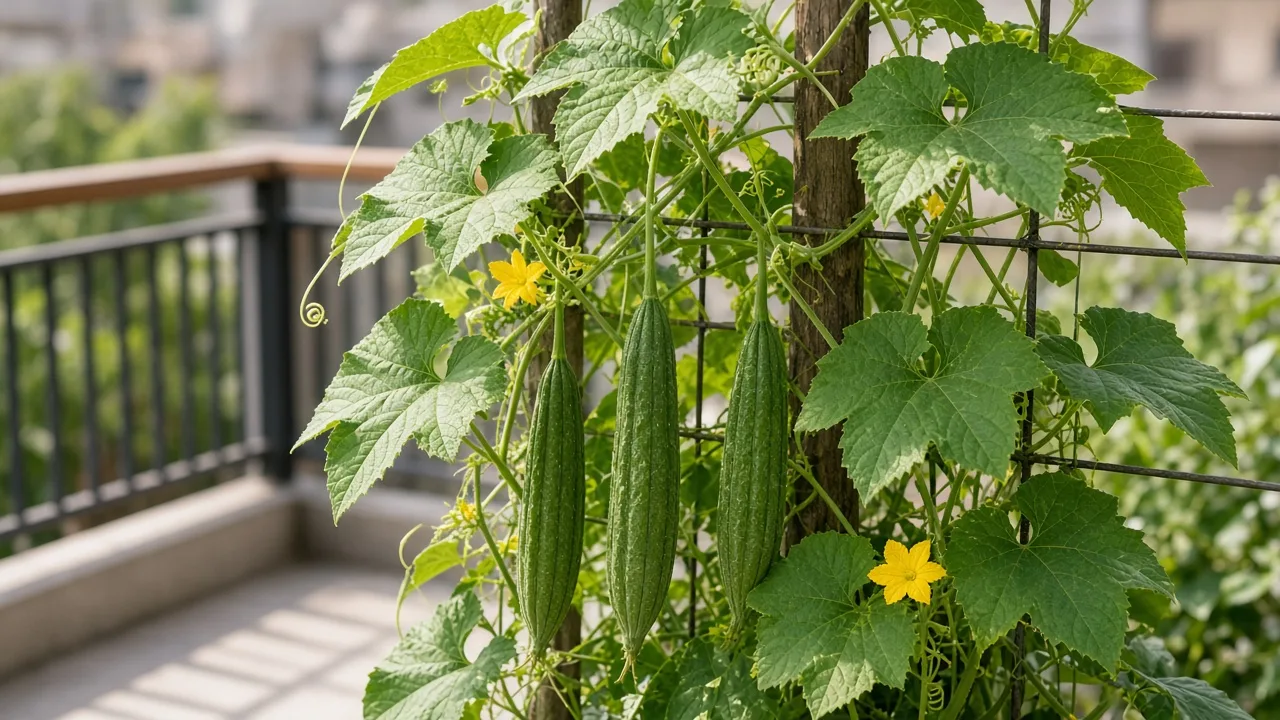
Ridge gourd (Luffa acutangula) is grown for repeated harvests of tender turai on long climbing vines—not for a single decorative flush of foliage. That growth habit should drive every feeding decision. A fast cucurbit can look lush while setting few gourds if nitrogen arrives in the wrong season, if compost was skipped at planting, or if a small terrace pot is fed the same way as a manure-rich kitchen-garden bed.
The practical rule for most growers is build fertility with mature compost and a well-drained mix first, then add bottled fertilizer only to fill a gap you can see or measure. On many Indian plots that already receive well-rotted FYM, extra feeding is lighter; on a 40-litre balcony pot it is usually essential because nutrients leave every time water drains.
This page covers when, what, and how much to feed. For mix recipes and drainage, use the Ridge gourd soil guide. For moisture that moves nutrients into roots, see Ridge gourd watering. For sowing windows and trellis setup, start at the Ridge gourd overview.
Why ridge gourd is a heavy feeder—not a windowsill herb
In warm soil, ridge gourd can move from seed to first tender fruits in roughly 50–60 days—a pace that demands steady nutrition across a long vine run, lateral branching, and continuous fruit set. Unlike slow houseplants, this annual does not “store” a season of food in woody tissue; it pulls nitrogen for leaf and stem expansion, phosphorus for root and flower development, and potassium as fruits swell.
The harvest goal also matters. You are picking immature gourds at about 15–25 cm while the vine is still actively growing. That is closer to cucumber or summer squash nutrition than to root crops or dormant ornamentals. Extension vegetable guides group cucumbers and squash in the same family and recommend broadcast fertilizer before planting plus light follow-up applications during growth rather than one heavy dose at the start (Florida Vegetable Gardening Guide).
Species-specific guidance for Luffa acutangula describes it as a fast-growing, heavy-feeding vine that responds to moderate, consistent nutrition in warm weather—balanced liquid feed at half label strength every two to three weeks once growth is vigorous, with compost worked in before planting (Luffa acutangula care profile).
Start with compost and soil fertility
Long before choosing an NPK ratio, improve the root zone. Ridge gourd tolerates average garden loam when drainage is good, but yields improve on fertile, organic-rich soil in the pH 6.0–7.5 range described in the plant profile. Home-garden writers in India commonly recommend working a 5 cm layer of organic compost into the top 15–20 cm before sowing, with well-rotted cow manure as a standard organic base (ridge gourd home growing notes).
UF/IFAS likewise stresses that Florida’s low-organic soils benefit from compost or aged manure mixed in well before planting, with commercial fertilizer added according to soil needs rather than by habit (Florida Vegetable Gardening Guide). If your bed already received FYM at bed preparation, treat that as your baseline—many terrace growers discover they need less bagged nitrogen than online charts suggest.
Match this step with the Ridge gourd soil guide if you are building a container mix from potting soil, compost, and perlite.
Macronutrients ridge gourd uses through the season
Nitrogen for vine and leaf growth
Nitrogen drives chlorophyll and vegetative expansion—exactly what a climbing turai vine needs early. Pale new leaves, thin stems, and a vine that stalls halfway up the trellis often point to low nitrogen if light and water are already adequate. The mistake is keeping nitrogen high through the entire season; excessive vegetative push can produce more leaves than fruit, and UF/IFAS notes that too much nitrogen can invite aphids and whiteflies on vegetables (Florida Vegetable Gardening Guide).
Phosphorus at establishment and flowering
Phosphorus supports root establishment after germination and energy transfer as flowers form. Ridge gourd does not need a “bloom booster” with extreme middle numbers, but a balanced vegetable formula at planting fits cucurbit biology better than pure nitrogen late in the season. If your soil test shows adequate phosphorus, avoid piling on more—runoff phosphorus is an environmental concern on many soils (Florida Vegetable Gardening Guide).
Potassium during fruit swelling
Potassium helps overall plant vigor and stress tolerance as fruits enlarge. Once gourds are sizing on laterals, a steady, moderate feed—often from a balanced or slightly potassium-forward vegetable product used per label—supports continued harvests better than another nitrogen spike.
The three numbers on a fertilizer bag describe nitrogen, phosphorus, and potassium percentages by weight; the middle value is phosphate and the third is potash, not elemental P and K (NPK fertilizer numbers).
Feeding schedule by growth stage
Think in stages, not a single calendar for every pot size.
Seedling to first true leaves
If you started seeds in trays, they need little beyond a compost-rich medium until roots fill the cell. Avoid strong soluble feeds on tender cotyledons. Transplant into final soil or pots before vines tangle, as noted in the Ridge gourd propagation guide.
Vine run-up the trellis
When the main stem is climbing and laterals begin to form, nutrition should be steady and moderate. Botanapp’s Luffa acutangula guidance—half-strength balanced liquid every two to three weeks once growth is vigorous—is a sensible template for home growers who already composted at planting (Luffa acutangula care profile). USDA nutrient-management guidance also favors split applications when crops need them most, rather than one large pre-season dump (nutrient management timing).
First female flowers and fruit set
Separate male and female yellow flowers on the same vine mean pollination—not fertilizer—limits fruit when bees are scarce. Still, drought or starvation at flowering can drop buds; pairing even moisture from the Ridge gourd watering guide with a light, scheduled feed supports the transition into fruiting. Do not double every product in the same week because flowers appear.
Peak harvest weeks
During heavy picking, the vine is exporting nutrients in every turai you cut. Maintain the same moderate interval you established at vine run, adjusting only if leaves pale or new fruit sizes stall and watering is correct. Check every few days for tender length; heavy harvest is a signal the plant is working hard.
Winding down the season
As nights cool or the vine slows, reduce or stop concentrated soluble feeds. Botanapp suggests tapering to very light monthly feeding or stopping as growth slows in cool weather (Luffa acutangula care profile). Let the plant finish; overfeeding at the end mostly raises salt risk.
Ridge gourd fertilizer in India: summer and monsoon plantings
On most plains, growers sow in February–March for summer harvest or June–July for monsoon production where nights stay warm. Fertilizer timing should follow active growth, not the calendar alone.
For summer sowings, heat and long days push vines quickly—compost at bed prep plus container slow-release (if used) at transplant, then soluble feeds on the vine-run schedule above. For monsoon sowings, leaching from heavy rain can wash nitrogen from raised beds and pots; you may need more frequent light feeds in containers while avoiding application right before forecast downpours (nutrient management timing).
Match sowing and trellis plans with Ridge gourd light needs so pale leaves are not misread as nitrogen deficiency when the real issue is shade.
Terrace containers vs in-ground beds
Containers have a small root volume and no surrounding soil bank to mine for nutrients. Penn State Extension recommends slow-release fertilizer at planting and soluble feed every two to four weeks through the season for container vegetables, with compost improving water-holding and acting like a mild slow nutrient source (container vegetable keys).
In-ground beds with years of compost or FYM may need only the broadcast-plus-side-dress pattern extension guides describe (Florida Vegetable Gardening Guide). The error on terraces is copying field rates into a 40-litre pot.
Organic, slow-release, and soluble feeds
FYM, compost, and neem cake
Well-rotted cow manure and mature compost are the backbone of turai culture in Indian kitchen gardens (ridge gourd home growing notes). Neem cake and similar organic amendments can supplement micronutrients and soil biology when used at modest rates recommended on the package—always fully compost fresh manure before applying near edible vines.
Reading NPK labels safely
Choose products labelled for vegetables, follow dilution and frequency on the label, and measure by pot volume or bed area rather than guessing. A balanced formula such as 10-10-10 used at half strength on a schedule is a common home pattern for this species (Luffa acutangula care profile); field growers may use higher totals, but terrace gardeners should prioritize avoiding salt buildup.
Never apply dry fertilizer to dry, cracked soil; water first, feed second, then water lightly to settle—see Ridge gourd watering.
Pair fertilizer with watering and pollination
Nutrients move with water. A vine that wilts from drought cannot use a recent feed; fix moisture before adding nitrogen. At flowering, hand-pollination can help on wind-exposed balconies, but fertilizer will not replace missing pollen transfer.
Excess nitrogen can also change plant chemistry in ways that favor some pests on leafy crops (impacts of fertilizers on insect pests). Keep growth sturdy rather than overly soft, and remove fruit fly–damaged gourds promptly as described in the overview.
Signs you are under-feeding ridge gourd
Older leaves turning uniformly yellow while new growth is small, a vine that stops running despite full sun and even moisture, and fruits that stay pencil-thin can point to low fertility—after you rule out drought, root rot from soggy soil, and shade. Compost-only pots that were not replenished mid-season are frequent culprits on terraces.
Signs you are over-feeding ridge gourd
Crusty white salts on the soil surface, brown leaf margins, sudden leaf burn after a strong dose, and rampant foliage with few female flowers suggest excess soluble fertilizer or stacked products (slow-release plus weekly full-strength liquid). Pause feeding, flush containers with plain water if drainage is good, and resume at half strength only when new growth looks normal.
Common feeding mistakes on turai vines
Feeding on a rigid weekly calendar regardless of plant size, duplicating nutrients already in a “feeds for 6 months” potting mix, pouring undiluted liquid on seedlings, and applying nitrogen heavily during poor pollination weather are the usual errors. Another is ignoring bitter fruit risk in cucurbits—fertilizer does not fix bitterness; taste-test young fruit as noted in the Ridge gourd overview.
Training and airflow also affect yield; after feeding, manage vine density via the Ridge gourd pruning guide rather than chasing more nitrogen alone.
When to use this page vs other Ridge Gourd guides
Use this fertilizer guide when vines look pale, fruit set is weak despite good pollination, or you are planning a feeding calendar for a new terrace pot. Use Ridge gourd watering when wilting, blossom drop, or soggy soil is the main issue. Use Ridge gourd soil before sowing to fix drainage and compost ratios. Use Ridge gourd light when vines are leggy in shade. Use Ridge gourd repotting only for young seedlings before trellis attachment—not as a mid-season fertility fix.
Related Ridge Gourd guides
- Ridge gourd overview — identity, sowing seasons, trellis, and harvest stage.
- Ridge gourd watering — even moisture through flowering and fruit swell.
- Ridge gourd soil — compost-rich mixes and pH for cucurbit roots.
- Ridge gourd light — full sun needs on terraces and beds.
- Ridge gourd pruning — redirect vigor after the main stem reaches the trellis top.
Conclusion
Good ridge gourd nutrition is compost-first, moderate, and timed to vine growth and harvest. Build fertility before sowing, use balanced vegetable feeds at sensible intervals once vines run, and taper as the season ends. Read the leaves, the pot label, and the weather together—lush turai comes from aligned water, sun, pollination, and measured feeding, not from the strongest nitrogen bottle on the shelf.
Try the Fertilizer Dilution Calculator with ridge gourd pre-selected to check dilution before you feed a terrace pot.