Ridge Gourd Light Needs: Full Sun Hours & Placement
Ridge Gourd Light Needs: Full Sun Hours & Placement
Ridge Gourd Light Needs: Full Sun Hours & Placement
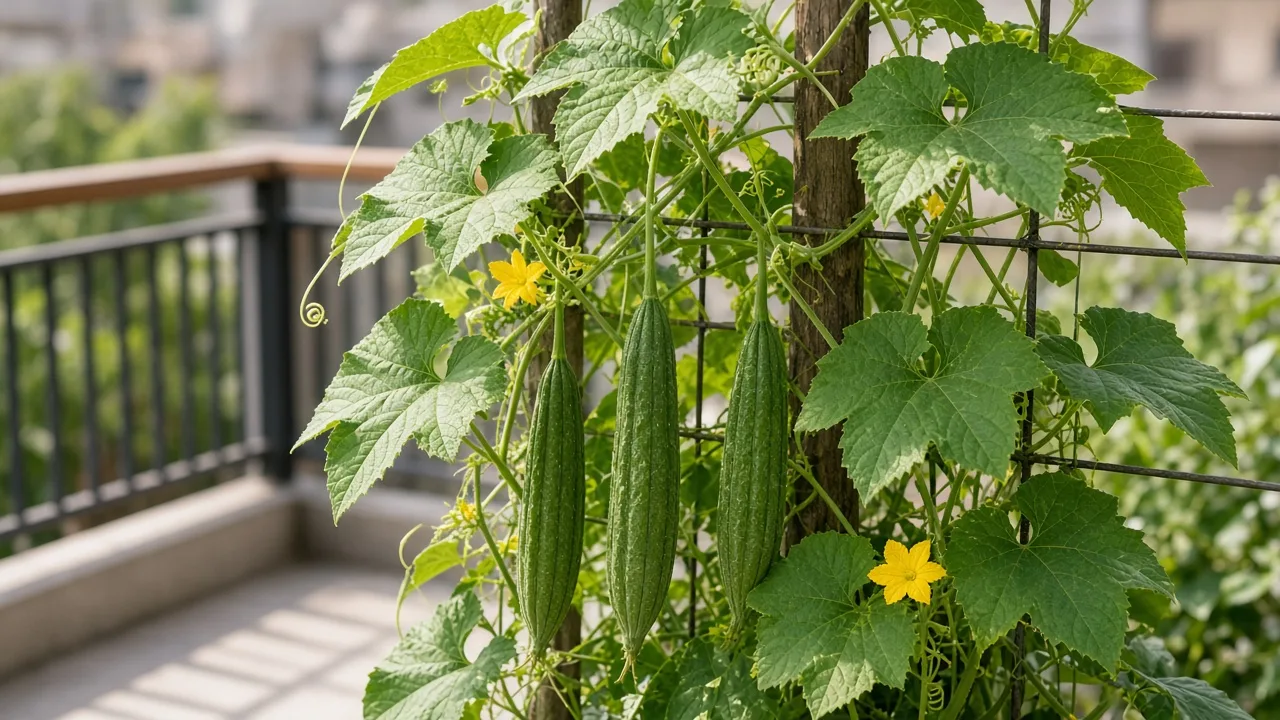
Ridge gourd (Luffa acutangula — turai, torai, jhinga, Chinese okra) behaves like the warm-season cucurbit it is: yield tracks direct sun more honestly than almost any other care input. This is not a low-light houseplant you can park in a bright hallway and still expect weekly harvests. For kitchen use, the vine wants open sky on the leaf canopy for most of the day, warm soil at sowing, and a tall trellis so fruiting laterals stay in the light instead of tangling in shade at your feet.
The practical target for most Indian terrace and kitchen-garden growers is at least six hours of unobstructed direct sun daily, with eight hours when your site allows. RHS lists Luffa acutangula in full sun, south- or west-facing and sheltered, matching how turai is grown across South Asia. Related sponge gourd (L. aegyptiaca) culture at NC State Extension states six or more hours of direct sunlight plus a frost-free season of at least four months—use that as the same light band for ridge gourd planning on a trellis. For crop context beyond light alone, start at the /plants/ridge-gourd/overview/ hub, then return here to fix placement before you blame /plants/ridge-gourd/watering/ or feed schedules.
The quick answer: full sun through the fruiting season
If you remember one number, use six hours of direct sun as the minimum for meaningful turai production in pots or ground beds. Eight hours is better when summer heat is paired with steady moisture and good airflow. Morning sun alone on a east ledge rarely carries a long-season vine through heavy fruiting unless reflected light or afternoon sun joins in.
Direct sun means sunbeams hit leaves without a roof, tree canopy, or tall wall blocking the sky for that part of the day. Bright shade under a mesh roof may keep vines alive but often produces long, thin stems, few female flowers, and small or absent gourds. That pattern is light shortage first—confirm hours before assuming pests or poor /plants/ridge-gourd/soil/.
Six to eight hours of direct sun as a working target
Extension-style cucurbit guidance consistently lands on full sun rather than partial shade. NC State’s luffa profile is explicit: six or more hours of direct sunlight a day NC State Extension for garden performance. In real terraces, count hours between first direct hit on the pot or bed and last direct hit as the sun drops—not how bright the room looks at noon.
On many North Indian plains, a February–March sowing rides naturally into long days and strong sun through fruiting. A June–July monsoon sowing can still work when nights stay warm, but cloud cover and wall shade cut effective light; compensate with the sunniest rail, not the coolest corner.
Why windowsill brightness is usually not enough
Indoor light levels—even at a “sunny” window—are orders of magnitude lower than open terrace sun. Ridge gourd is bred for outdoor vertical culture with large leaves transpiring heavily in heat. A seedling may look fine indoors for a week, then stall when moved or when vines outgrow the pane. If you must start indoors, treat the window as a nursery, then harden off to full outdoor sun before vines attach to a trellis.
Why ridge gourd is a sun-driven crop, not a shade vine
Luffa acutangula is a tender annual climber (RHS hardiness H1C) with rapid stem extension and separate male and female yellow flowers on the same plant. Sun fuels the photosynthate budget that pays for tendril climb, root growth, and fruit swell. Shade shifts that budget toward survival leaves instead of kitchen-sized gourds at 15–25 cm.
Unlike compact herbs, ridge gourd does not “catch up” later if the first month is dim. Early shade produces weak main stems that are hard to train vertically, so you lose trellis height—and the best fruiting zone—before summer peaks.
Cucurbit energy budget and tendril climb
Large cucurbit leaves are solar panels. When light is strong and roots are evenly moist, vines can reach 3–5 m on a mesh panel in a single warm season. When light is weak, the same genetics produce spindly internodes—the botanical version of leggy growth—often misread as nitrogen excess. Check daily sun on the top third of the vine before increasing /plants/ridge-gourd/fertilizer/.
Light, warmth, and flower set
Germination and early growth want warm soil, roughly above 20 °C, with RHS recommending sowing at about 21–24 °C. Light and heat work together: cool, shaded seedbeds rot seed; hot, sunny days with dry roots drop flowers. If blooms fall in full sun with dry soil, water first. If blooms are sparse in bright shade with wet soil, light is the likelier limit.
How much light ridge gourd actually needs
Full sun is the species norm. RHS positions angled loofah in full sun outdoors against a sunny fence with climbing support planted in early summer (in temperate climates). Indian growers mirror that with open terrace tops and south or west railings, adjusting for monsoon cloud and haze rather than switching to shade culture.
Trusted grower guidance on luffa vines notes they tolerate full sun even in hot climates when drainage and water stay steady Growing In The Garden — growing luffa. Ridge gourd for turai is harvested much younger than sponge-stage luffa, but the light demand is the same: open sky on the canopy.
RHS and extension benchmarks
Use this quick comparison when reading mixed advice online:
| Source | Light guidance | Notes for ridge gourd |
|---|---|---|
| RHS L. acutangula | Full sun; south/west, sheltered | Species-specific turai / angled luffa |
| NC State L. aegyptiaca | Full sun (6+ hours) | Close relative; same trellis culture |
| LeafyPixels hub | 6+ hours direct; best ~25–38 °C growth | India sowing windows |
Do not downgrade to “partial shade” because a generic houseplant chart says so. Downgrade only when measured hours fail or heat + drought stress the vine.
Reading light on a terrace or kitchen garden
You do not need expensive gear. On a clear day, note whether shadows are sharp on the soil at 10 a.m., noon, and 3 p.m. Sharp, short shadows on the pot rim mean direct sun. A vine in permanent diffuse shade under a deep overhang may look green while doing little fruiting work.
Walk the space seasonally. Winter sun angle is lower; a spot sunny in March may be walled off by June unless the trellis top clears the parapet. Install the tallest safe trellis (often 1.8–2.4 m) on the sunniest edge, not the shadiest wall for aesthetics.
Best placement for Indian terraces and balconies
Prioritize unblocked sky and air movement together. Ridge gourd tolerates humid monsoon air, but stagnant shade plus wet foliage invites foliar disease. A south- or west-facing railing with mesh or string trellis is the default on many flats. East aspects work if afternoon sun still reaches the upper canopy for several hours.
Avoid placing the root zone in permanent shadow while hoping stems climb into sun—seedlings and young transplants need immediate direct light to build thickness. If only the top of a tall trellis sees sun, lower leaves may yellow; that is acceptable if new growth and fruit nodes stay lit.
South- and west-facing railings with airflow
South exposure delivers the longest duration on northern-hemisphere terraces; west adds intense late-day heat. West is fine when /plants/ridge-gourd/watering/ keeps roots cool and mulch limits soil heat. If western leaves bleach or crisp at edges while soil moisture is good, try a light shade net only for the hottest fortnight—not a permanent roof that turns full sun into all-day shade.
February–March summer sowing vs June–July monsoon crop
February–March sowing on the plains aligns seedling growth with lengthening days—ideal for hitting six to eight hours as vines climb. June–July sowing can succeed where nights stay warm, but cloud and rain reduce light quality; choose the brightest open edge, widen plant spacing for airflow, and accept slightly slower early vine build. Do not sow in cool, shaded winter corners expecting summer recovery—ridge gourd is not a rabi spinach substitute.
Trellis height, spacing, and self-shade
A common light mistake is training all growth on the shady side of a wall while the sunny side sits empty. Run the main stem up the sunlit face of the mesh. After the leader reaches the top, let laterals spread into the brightest plane.
Dense leaf overlap on lower laterals can shade fruiting nodes. Pinching and training are covered in /plants/ridge-gourd/pruning/, but the light principle is simple: fruit set follows the lit wood. If turai forms only at the trellis top, lower the leaf canopy density or re-tie stems outward.
Training the main stem into open sun
From the first true leaves, orient pots so the tendril side faces the trellis and the plant leans slightly into sun—not away from it. Rotate small pots a quarter turn every few days until tendrils grab; large 40-litre tubs are hard to spin, so get orientation right at setup.
When lateral leaves block fruiting wood
If you see healthy leaves but no female flowers mid-season in an otherwise sunny site, look up. Neighbouring plants, clothes lines, or AC units may shade the upper third where cucurbits flower heaviest. Raise or relocate supports before August frustration sets in.
Partial shade and north-facing sites
Ridge gourd may survive partial shade; it does not reliably produce turai there. Expect thin stems, delayed flowering, and fewer 15–25 cm harvests. North-facing balconies with two to three hours of slanted sun are experimental, not dependable kitchen gardens.
If shade is unavoidable, grow leafy greens or shade herbs in that slot instead, and move ridge gourd to the sunniest container you have—even if it means fewer plants.
What you can expect: foliage without turai
Vines can look lush because nitrogen and water still work in shade; photosynthesis limited by photon flux does not. Hand-pollination cannot fix a vine that never formed robust female buds from insufficient energy.
First fixes before giving up on the spot
Move the pot outward to the parapet (safely secured), trim overhanging obstacles, or shift to a grow-light-assisted outdoor alcove only if you can deliver high-intensity light many hours daily—still inferior to open sun. Re-siting in early vine stage beats restarting in August.
Too much sun, heat, and reflected glare
Ridge gourd wants strong sun; it does not want dehydrated roots on reflective heat sinks. Afternoon wilting that recovers by evening on a fully watered vine is often heat flux, not too much light—keep moisture even. Bleached, papery patches on sun-facing leaves, especially after sudden moves from shade nursery to blazing terrace, are scorch—harden off over a week.
Exposed fruits on the outer trellis face can sunscald in extreme heat; harvesting young turai on a short schedule limits damage. RHS glass-house guidance mentions shade from hot summer sun under glass—translate that to polyhouses: ventilate and mist airflow, not permanent deep shade outdoors.
Leaf scorch vs afternoon wilt
Scorch does not recover—damaged tissue stays pale or brown. Wilting from heat recovers when roots rehydrate overnight. If wilting persists with wet soil, suspect root issues, not light overload.
Fruit sunscald on exposed gourds
Young gourds are tender; prolonged exposure on metal railings can heat-skinned fruit. Train fruit to hang inside the leaf canopy or harvest on the smaller side of the 15–25 cm window when heat waves hit.
Greenhouse, polyhouse, and indoor limits
Under glass or poly, ridge gourd still needs high light, but midday temperature spikes demand ventilation. Permanent shading nets sized for lettuce will starve cucurbit fruit. Use short-duration heat relief, not season-long roofs.
Indoors without supplemental light, ridge gourd is a poor bet. For rare experiments, use full-spectrum grow lights positioned 30–45 cm above young leaves for 14–16 hours daily, and hand-pollinate—still treat this as a stopgap, not turai farming.
RHS glass-house shade note
RHS advises high humidity and shade from hot summer sun for glass cultivation of luffas. That is a climate-management tweak inside a greenhouse, not permission to grow turai in a dim flat. Outdoor Indian terraces already have the brightness glasshouses try to maximize.
Grow lights when outdoor sun is unavailable
If you must hold seedlings indoors before transplant, run lights 14–16 hours at high output until true leaves are sturdy, then move outdoors gradually. After vines exceed a foot of growth, lights rarely replace open-sky photosynthesis for fruit volume.
Warning signs your light placement is wrong
Too little light: internodes stretch longer than a handspan; main stem leans toward the brightest gap; few or no female flowers by mid-season; fruit only at the single sunlit tip; lower leaves stay dark green but the vine feels “empty.”
Too much sun without acclimation: sudden bleach patches after moving from nursery shade; crisp leaf margins on the sun-facing side while roots are dry; young fruit scald on exposed faces during heat waves.
Not a light problem: bitter fruit (cucurbit chemistry—discard bitter slices); flower drop on dry soil in full sun (water first); no fruit with ample sun but no pollinators (hand-pollinate per /plants/ridge-gourd/propagation/ timing).
When to use this page vs other Ridge Gourd guides
Use this light guide when choosing where to place pots, how many sun hours you truly get, or why vines are leafy but fruitless. Use /plants/ridge-gourd/watering/ when soil moisture, wilting, or monsoon drainage is the question. Use /plants/ridge-gourd/soil/ for mix, pH, and drainage. Use /plants/ridge-gourd/fertilizer/ only after light and water are credibly adequate—feeding shaded vines rarely creates turai. Use /plants/ridge-gourd/repotting/ for seedling pot-ups before tendrils tangle, and /plants/ridge-gourd/propagation/ for sowing dates and pollination—not for window direction.
Related Ridge Gourd guides
- /plants/ridge-gourd/overview/ — identity, sowing windows, harvest size, and trellis planning.
- /plants/ridge-gourd/watering/ — even moisture through flowering; drought vs waterlogging signs.
- /plants/ridge-gourd/soil/ — fertile, well-drained loam for warm cucurbit roots.
- /plants/ridge-gourd/fertilizer/ — feeding when vines are actively growing in strong light.
- /plants/ridge-gourd/pruning/ — training laterals so fruiting wood stays sunlit.
Conclusion
Ridge gourd rewards honest full sun: count six to eight hours of direct light on the growing canopy, site pots and trellises on the brightest open edge, and train stems where sky—not neighbour walls—fuels flower set. Shade may keep a vine alive; it rarely keeps a kitchen stocked with tender turai. When leaves look strong but gourds do not come, fix placement and trellis exposure before you chase other care tweaks—and pair any change with steady moisture on well-drained soil so heat and light work with you, not against you.