Ridge Gourd Watering Guide for Pots and Trellis Beds
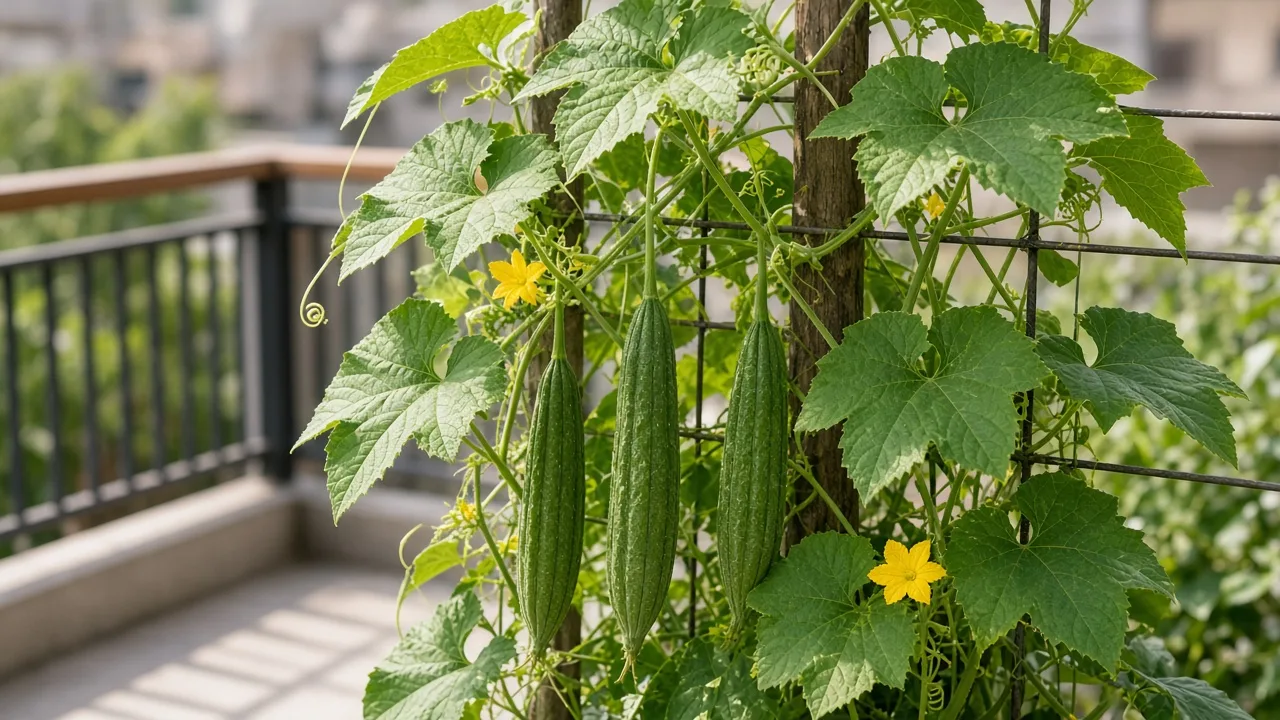
Ridge Gourd Watering Guide for Pots and Trellis Beds
Ridge Gourd Watering Guide for Pots and Trellis Beds
Ridge gourd (Luffa acutangula — turai, torai, jhinga) is a fast annual climbing vine in the cucumber family. It is not a forgiving windowsill succulent. During active growth, flowering, and young fruit swell, the plant wants steady, deep root moisture in well-drained soil — moist below the surface, never sitting in a wet root ball for days.
The practical rule for most growers: check the top 2–3 cm of soil every two to three days in warm weather, and water deeply only when that layer has begun to dry while deeper soil still holds slight moisture. Many terrace containers need a full soak about every three to four days in steady summer heat; in-ground trellis rows with mulch may go longer between irrigations. Drought during flowering can drop buds and leave you with small, slow-growing gourds on an otherwise healthy vine. For the full crop picture, start at the /plants/ridge-gourd/overview/ hub, then use this page for checks, seasonal shifts, and first aid when leaves wilt.
The quick answer: even root moisture through fruiting
Push a finger 2–3 cm into the mix or bed away from the main stem. If that zone feels cool and clings, wait. If it feels lightly damp and is trending dry, it is time to water. If it is crumbly and dusty, water soon — ridge gourd should not ride repeated wilt cycles during fruit set.
Water until excess drains freely from container holes or sinks into the pit around a trellis plant. Then empty saucers so roots are not bathing in stale runoff. The crop will not tolerate waterlogging; saturated warm soil invites stem and root trouble in cucurbit beds. Indian ridge-gourd guides stress regular irrigation especially during flowering and fruiting, with drip or furrow delivery where possible so water reaches roots evenly without wastage Agri Farming — ridge gourd irrigation.
Close relative sponge gourd (Luffa aegyptiaca) is described by NC State Extension as needing well-drained, evenly moist, rich loam in full sun — the same moisture band ridge gourd growers aim for on a trellis NC State Extension — Luffa aegyptiaca. Read that as moist, not marshy.
Why ridge gourd drinks like a cucurbit vine, not a houseplant
Ridge gourd puts on metres of vine, large leaves, and repeated flushes of male and female yellow flowers on the same plant. That biology matches other cucurbits: the Royal Horticultural Society notes squashes are thirsty plants, especially when fruiting, and need regular water in dry spells RHS — Grow your own squash. Ridge gourd is grown for tender 15–25 cm fruits harvested young; the vine keeps producing until heat or season ends. Each new fruit is mostly water — irregular drying makes growth stutter.
Fast growth, flowers, and young gourds all depend on water
Warm soil and long days drive fast vine extension. Agri Farming places ideal ridge-gourd growth roughly between 25°C and 35°C with at least six to eight hours of sun, and ties consistent soil moisture to flowering and fruit development Agri Farming — ridge gourd climate. Skip water at that stage and you often see open flowers with no fruit, or fruits that never reach kitchen size before they toughen. Steady moisture does not replace pollination — bees and hand pollination still matter — but drought removes the plant’s ability to hold fruit once pollen lands.
How to check soil moisture before you water turai
Surface colour misleads on terraces. Mix can look pale on top while staying damp near roots, especially in compost-rich /plants/ridge-gourd/soil/ blends. Use at least one physical check before every soak.
Finger test at 2–3 cm
Press into the soil 2–3 cm deep, a hand-span from the stem. Cool, clinging soil means wait. Slight dryness at 2–3 cm with moisture below means water. Dry, pulling away from pot edges means water promptly. This matches the hub check method for ridge gourd and beats watering every Tuesday because a reminder app fired.
For raised beds or grow bags with a large soil mass, some growers check deeper — roughly 7–10 cm — because the top dries first while the root zone still holds water Real Food Grower — luffa in raised beds. On a small balcony pot, the shallow check is usually enough because the whole volume dries together.
Pot weight and saucer discipline
Lift the container after a thorough drain. When it feels noticeably lighter and the top 2–3 cm is dry, soak again. Ridge gourd in roughly 40-litre pots dries more slowly than cramped containers; if a small pot needs water daily in April sun, that is a sign the vine has outgrown the volume — see /plants/ridge-gourd/repotting/ for when to move seedlings before they tangle on the trellis.
Never leave pots in full saucers of old runoff. Roots re-absorb stagnant water and stay oxygen-starved even when you thought you “watered yesterday.”
How often to water ridge gourd through the season
There is no honest single calendar. Pot volume, trellis size, wind, mulch, and rainfall all change evaporation. Use soil checks as the trigger and the patterns below as planning context.
Summer heat and peak fruiting on Indian terraces
On many Indian plains terraces, February–March sowings hit peak vine and fruit load in April–June heat. Expect to check every two to three days; many 40-litre containers need a deep soak about every three to four days when the top 2–3 cm dries and no rain is forecast. During heavy flowering and fruit swell, increase attention — practical luffa guides suggest more frequent deep soaks when vines wilt by mid-morning despite overnight watering Real Food Grower — luffa watering.
Pair extra water with /plants/ridge-gourd/light/ reality: this crop wants full sun. Shade plus drought produces weak vines; shade plus overwatering produces sick roots.
Monsoon weeks when rain does part of the work
June–July sowings or late-season vines ride monsoon humidity and rain. Pause automatic watering when 2–3 cm stays wet for days from showers. Still check under dense leaf cover — vines on rails can shed rain while the root zone under the canopy dries. Improve drainage in containers if water pools on the surface; ridge gourd tolerates generous rainfall when soil drains, but standing water at the stem is risky in warm weather.
When rain is irregular, resume deep soaks when the finger test says go. Mulch with straw or compost to reduce splash and hold moisture between showers Agri Farming — mulching ridge gourd.
Ground beds vs large containers
In-ground pits or trellis rows with compost-enriched soil hold moisture longer than pots and forgive a missed half-day more often. Containers expose the full soil ball to sun and wind — where most watering mistakes appear first.
Trellis rows, pits, and drip lines
Field guides recommend drip or furrow irrigation for uniform delivery and less waste during flowering and fruiting Agri Farming — drip irrigation. For home beds, a slow soak at the soil line beats overhead spraying. The RHS advises not wetting leaves when possible — water onto soil to reduce foliar disease pressure on cucurbits RHS — watering squash. Sink a small pot beside the stem as a watering collar if that helps direct flow to roots.
40-litre pots that dry in a single sunny day
Terrace growers often use at least ~40 litres for one strong plant with a 1.8–2.4 m trellis. Even then, a windy May week can pull moisture fast. If the pot dries within one sunny day during active growth, the vine is telling you volume or mulch is insufficient — not that you should switch to shallow daily sprinkles. One deep soak that drains fully, then wait until the 2–3 cm check fails, trains roots better than constant light misting that never reaches the bottom of the pot.
Best time and method to water ridge gourd
Morning is the default: roots hydrate before midday heat, and foliage can dry before cool nights — the same logic extension-style cucurbit guides use for squash RHS — squash care. Direct water at the base, not over the leaf canopy, when you can.
Germination and seedlings need steady surface moisture for the first week after sowing — light, frequent passes beat one flood that crusts the soil. Soaking hard seeds overnight before sowing, as many ridge-gourd guides recommend, only helps if the following days stay evenly moist Agri Farming — nursery moisture. Once vines run, shift to thorough soaks spaced by dryness checks.
If you feed heavily during fruiting, pair /plants/ridge-gourd/fertilizer/ with enough water to move nutrients without salt buildup on the root zone.
Overwatering, underwatering, and confusing wilts
Underwatering shows as limp leaves, soil pulling from pot sides, and — critically — flower drop with few fruits. Fruits that do set may stay small or slow while the vine looks otherwise green. Recovery is usually quick after one full soak and drain, then a return to even moisture.
Overwatering shows as yellowing lower leaves, wilting while soil stays wet, a soft or darkened stem at soil level, and sour-smelling mix. That pattern means roots are failing, not that the plant needs another drink. Stop irrigating, improve airflow, confirm /plants/ridge-gourd/soil/ drains freely, and let the top few centimetres dry before any cautious re-watering.
Flower drop and stunted gourds from drought
Separate male flowers (on long stalks) and female flowers (with a tiny gourd behind the bloom) both suffer when the plant cannot move water. Drought during flowering is a common reason home growers see blooms but no turai on the trellis. Fix moisture first, then look at pollination and pests on the /plants/ridge-gourd/overview/ hub.
The classic trap: midday wilt on a hot day with moist soil may be heat stress, not thirst — recheck in the cooler morning before adding water. Wilting with wet soil is an emergency root check, not a cue to soak again.
Mulch and soil partners that make watering predictable
Organic mulch — straw, dried leaves, or fine compost — cuts evaporation and keeps soil temperature steadier around shallow cucurbit roots Agri Farming — mulching. Leave a small gap at the stem so mulch does not hold dampness against the crown.
Rich, compost-heavy mix holds moisture longer but still needs perlite, sand, or coco chips for drainage — details in the soil guide. Mulch does not fix blocked drainage holes or saucers left full.
When to use this page vs other Ridge Gourd guides
- Ridge gourd overview — identity, sowing seasons, trellis setup, harvest stage, and pollination basics. /plants/ridge-gourd/overview/
- Ridge gourd light — full sun needs and heat limits that change how fast soil dries. /plants/ridge-gourd/light/
- Ridge gourd soil — mixes, pH, and drainage that make watering predictable. /plants/ridge-gourd/soil/
- Ridge gourd fertilizer — feeding fruiting vines without salt stress when moisture is steady. /plants/ridge-gourd/fertilizer/
- Ridge gourd propagation — sowing, transplant timing, and seedling moisture. /plants/ridge-gourd/propagation/
- Ridge gourd repotting — moving seedlings before roots bind in undersized pots. /plants/ridge-gourd/repotting/
Related Ridge Gourd guides
- Ridge Gourd Overview — turai identity, Indian sowing windows, trellis and young harvest size
- Ridge Gourd Light Requirements — sun hours, heat, and balcony placement
- Ridge Gourd Soil Guide — compost-rich mix, drainage, and pH
- Ridge Gourd Fertilizer Guide — feeding during vine and fruit flush
- Ridge Gourd Propagation — sowing warm and keeping seedlings evenly moist
Conclusion
Ridge gourd watering is the discipline of keeping a large, fruiting cucurbit vine in the moist-but-aerated band its roots actually use — deep soaks when the top 2–3 cm begins to dry, no standing water at the base, and extra attention during flowering and young fruit swell Agri Farming — irrigation timing NC State Extension — evenly moist loam RHS — thirsty when fruiting. Water in the morning, at the soil line, and drain containers fully. Treat dry wilt as a prompt to soak and wet wilt as a drainage emergency. Pair steady moisture with full sun, a sturdy trellis, and young harvests — no calendar replaces reading the soil in your own pot or pit.
Try the Plant Watering Calculator with your container size and local conditions as a planning aid alongside finger checks.