Sponge Gourd Care Guide: Light, Water & Soil
Luffa cylindrica
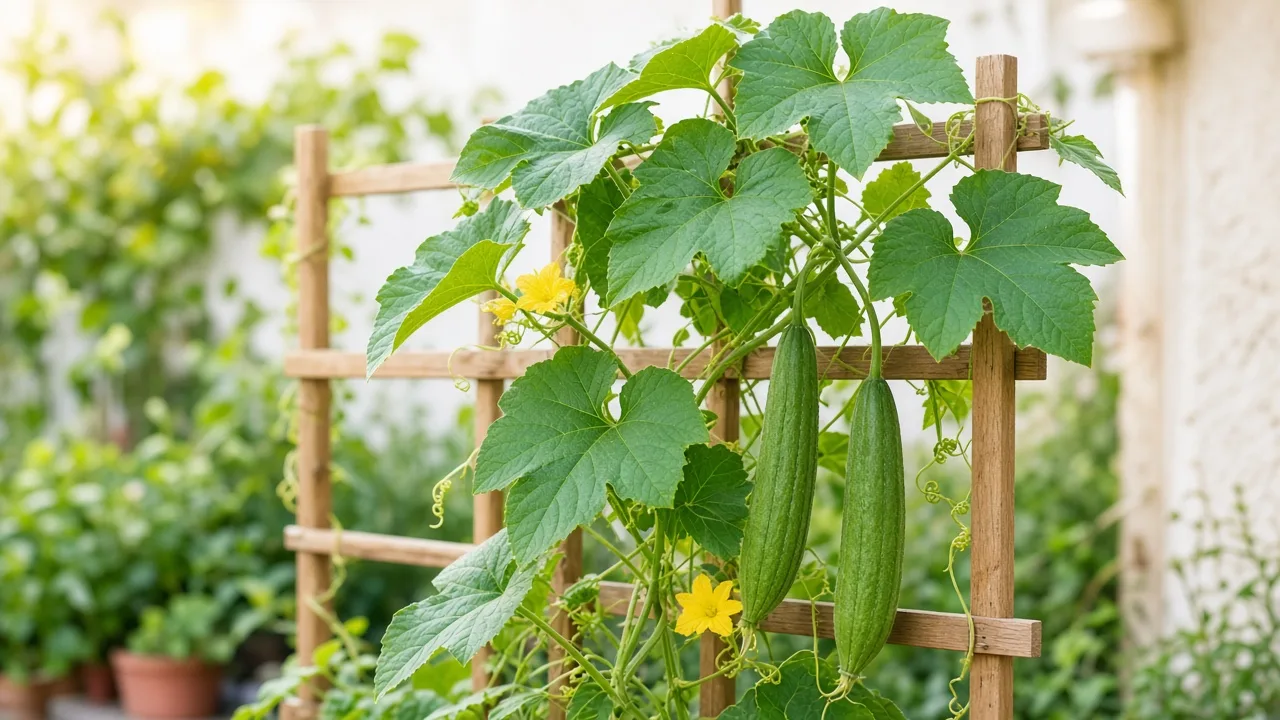
Grow sponge gourd on a sturdy trellis in full sun with steady moisture, fertile well-drained soil, and a long warm season for edible fruit or loofah sponges.
Sponge Gourd Care Guide: Light, Water & Soil
Start with wateringThe most common care mistake for Sponge GourdWatering guide → →Sponge Gourd care essentials
Light
Water
Keep the root zone evenly moist while vines are actively growing and setting fruit, but never waterlogged. Water deeply when the upper 2–3 cm of soil begins to dry, directing water at the soil rather than over the foliage.
Soil
Fertile, moisture-retentive but well-drained loam or container mix rich in organic matter. Cucurbit vines perform best in moist but well-drained soil with pH roughly 6.0–7.0.
Humidity
Temperature
Fertilizer
Feed with a balanced or fruiting-vegetable fertilizer only after light, moisture, and roots are stable—excess nitrogen before flowering can favor leaves over fruit.
About Sponge Gourd
Sponge Gourd is native to Southern and tropical Asia, typically reaches 2.5–6 m climbing length and 0.5–1 m spread with support indoors, with fast during warm weather; fruits need a long warm season to mature growth. Sponge Gourd has a annual climbing vine growth habit and part of the Cucurbitaceae family. It is also known as Nenua, Galka, Loofah, Smooth luffa, Dishcloth gourd, and Vegetable sponge.
| Detail | Information |
|---|---|
| Also known as | Nenua, Galka, Loofah, Smooth luffa, Dishcloth gourd, Vegetable sponge |
| Native region | Southern and tropical Asia |
| Mature size | 2.5–6 m climbing length and 0.5–1 m spread with support |
| Growth rate | Fast during warm weather; fruits need a long warm season to mature |
| Growth habit | Annual Climbing Vine |
| Scientific name | Luffa cylindrica |
| Family | Cucurbitaceae |
Sponge Gourd Care Guide: Light, Water & Soil
Sponge gourd care starts with a simple decision most seed packets skip: are you growing tender nenua for the kitchen or fibrous loofah sponges for the bathroom? Luffa cylindrica is a fast annual climbing vine in the cucumber family—not a compact houseplant. It climbs by tendrils, opens bright yellow flowers that need pollinators, and can stretch many metres on a sturdy trellis when heat and moisture stay steady through a long warm season.
This overview covers identity, size, light/water/soil basics, India-friendly sowing windows, harvest timing for both goals, early troubleshooting, and where to go next in the Sponge Gourd plant hub. Open sibling guides when one variable—light, water, soil, feed, propagation, repotting, or pruning—needs a deeper fix.
What Is Sponge Gourd?
Sponge gourd—nenua or galka in many Indian kitchens, loofah when grown for fiber—is a warm-season cucurbit. NC State Extension describes it as an annual vine with yellow flowers whose young fruit can be eaten like squash while mature fruit becomes the scrubbing sponge most people buy without realizing it is a plant.
The name Luffa cylindrica is the smooth-fruited sponge gourd growers usually mean; horticultural databases often list the same species under the older name Luffa aegyptiaca. For home gardeners the practical point is habit: coarse leaves, tendril climbing, and cylindrical green fruit that swells quickly once pollinated.
Botanical identity and kitchen names
Accepted name: Luffa cylindrica. You may also see smooth luffa, dishcloth gourd, or vegetable sponge on seed labels. In markets, nenua and turai-style names can blur between ridge gourd and sponge gourd—check the fruit skin: sponge gourd fruit is typically smoother and more uniformly cylindrical than deeply ridged luffa types.
Do not confuse this vine with ornamental gourds or bottle gourds (Lagenaria). Sponge gourd’s rapid summer growth, cucumber-family flowers, and dual harvest (food when young, fiber when old) are the giveaways.
Vegetable harvest versus loofah sponge harvest
The same plant can serve both purposes, but timing diverges:
- Kitchen crop: Pick young, tender fruit while skin is still soft and fruit is relatively small—extension guidance often cites fruit less than about 18 cm (7 inches) long and still green for edible use.
- Sponge crop: Leave selected fruits on the vine until the rind browns, dries, and seeds rattle inside; then peel, shake out seeds, and rinse the fibrous skeleton.
Heavy young picking reduces how many fruits reach sponge quality on one vine. Decide your priority per plant or per row, or grow extra vines so one trellis feeds the kitchen and another finishes sponges.
Light, water, and soil at a glance
Light: Sponge gourd wants full sun—at least six hours of direct light daily. On a terrace, fence, or south- or west-facing bed, give the brightest open station you have and install climbing support before vines lengthen. Deep shade produces leggy growth and few usable gourds. See the Sponge Gourd light guide for orientation, heat-wave stress, and leggy-growth fixes.
Water: During active growth and fruit swell, keep the root zone evenly moist but never saturated. Check 2–3 cm below the surface and water deeply when that layer dries; morning irrigation at the soil line keeps large leaves drier than overhead spraying. Mulch open beds to slow drying, and sling developing fruit off damp soil. The Sponge Gourd watering guide covers finger checks, monsoon wet spells, and wilt diagnosis.
Soil: Target fertile, well-drained loam rich in organic matter—roughly pH 6.0–7.0 suits most kitchen gardens. NC State notes the vine can tolerate lean soil but rewards high-organic, moist yet well-drained conditions. Details live in the Sponge Gourd soil guide.
Full sun and trellis placement
RHS lists mature sponge gourd at about 2.5–4 m on support in typical garden conditions, while NC State warns vines may reach 30–50 feet in a long season—plan height and anchor points accordingly. A pergola, fence wire grid, or tripod in a large container works; the trellis should be in place at planting so you are not wrestling tendrils later.
Shelter from cold wind helps on cooler margins of the range, but do not trade sun for shade. Good airflow between leaves limits the damp, crowded conditions that favor cucurbit powdery mildew.
Moisture checks during fruit swell
These vines move a lot of water when fruit is sizing. Roots that cycle between bone-dry and waterlogged produce midday wilt, blossom drop, and small or slow fruit. If lower leaves yellow while soil stays wet, suspect drainage problems before adding more irrigation—see watering and soil guides for mix and pot-hole checks.
Fertile loam basics
Incorporate mature compost or well-rotted manure before planting. For containers, use a large pot (this is not a 20 cm herb pot) with drainage holes and a compost-heavy mix amended for drainage. Refresh fertility after the crop; sponge gourd is grown as an annual, not a permanent perennial bed filler.
Growing sponge gourd in India and tropical climates
Sponge gourd is widely grown across the Indian subcontinent in hot, humid conditions where frost is absent or brief. It fits zaid (summer) kitchen gardens between main-season crops and monsoon planning, provided you can supply trellis space, pollinators, and steady moisture through fruit set.
Where winters are mild, sow when nights stay warm and days are bright. Where springs are short, start seed indoors at about 21–24°C several weeks before transplanting after frost risk passes—RHS advises planting out in early summer against a sunny fence with support. Editorial loofah guides often cite 25–30°C for germination over roughly two to three weeks at warm temperatures.
Monsoon breaks and zaid season timing
Match sowing to local rain and heat, not a single calendar date. Practical triggers: soil that drains after heavy rain, a trellis already erected, and bees active in the garden. Sowing into cold, waterlogged soil invites seedling collapse; sowing at peak scorch without irrigation rhythm stresses vines during first flower.
In many plains climates, a post-monsoon or early-summer sowing with reliable watering beats attempting to establish tender seedlings in the wettest, most fungal weeks unless you have excellent drainage and airflow.
Terrace beds and large containers
Terrace growers should prioritize volume and stability: wide beds or deep tubs anchored against wind, with fruit slings where gourds hang over railing edges. Grouping pots slightly can reduce edge-drying, but do not crowd foliage—mildew risk rises when vines interlace without sun penetration.
Planting, trellis support, and pollination
Sponge gourd is propagated from seed. In short-season areas, soak seed about 24 hours before sowing to soften hard coats, then start indoors 6–8 weeks before the last frost date if you must gain time. Use biodegradable pots or sow directly into the final large bed where frost-free weather allows.
NC State recommends a frost-free growing season of at least four months for proper flowering and fruiting; sponge-quality fiber often needs closer to five months of warm weather in cooler zones—plan backward from your first expected cool night.
Why install support before vines run
Tendrils grab quickly. Late trellising breaks stems and wastes the first metre of growth. Set posts, wires, or netting before seedlings root in, and train leaders upward early so fruit hangs vertically with airflow around it.
Bee pollination and fruit set
Separate male and female yellow flowers mean fruit will not form without pollination. Encourage bees, avoid broad-spectrum sprays during bloom, and hand-pollinate with a small brush if terrace isolation limits insects. Blossom drop with otherwise healthy vines often traces to heat stress, drought, or poor pollination—fix water and flowers before assuming disease.
Harvest timelines you should plan for
Timing separates tender curry gourd from usable loofah. Young picks are frequent; sponge harvest is a one-time end-of-season event per fruit.
Picking tender nenua for the kitchen
Harvest young fruit while skin is still tender and seeds are small—think summer squash, not hard gourd. Slice and cook promptly; oversize fruit becomes fibrous and less pleasant even if still green. Taste a tiny piece if you are unsure; discard bitter fruit entirely.
Cucurbits can accumulate bitter compounds that are unsafe; RHS states sponge gourd is harmful if eaten except young fruit and warns not to eat if bitter.
Drying gourds on the vine for loofah
For sponges, leave fruit until the shell browns and dries on the vine when possible. NC State suggests harvesting sponge-stage gourds when they are tan, light, dry, and seeds rattle inside—often after the first light frost nips foliage in temperate gardens. In frost-free India, watch for dry brown skin and lightweight fruit rather than calendar alone.
Soak mature fruit in warm water to loosen skin, peel, remove seeds and pulp, rinse the fiber, and dry fully before storage. Save seed from non-bitter, fully mature fruit for next season.
Feeding, airflow, and cucurbit health
Compost at planting usually carries sponge gourd through early vine growth. After flowers appear, a balanced or fruiting-vegetable feed at label dilution supports fruit swell—avoid heavy nitrogen once blooming starts if you want fruit over foliage. The Sponge Gourd fertilizer guide covers organic options and excess-nitrogen signs.
NC State lists powdery mildew, downy mildew, and cucurbit insect pests as common issues. Spacing, morning watering, and removing badly infected leaves early are the first defenses on home trellises. The Sponge Gourd pruning guide explains how to thin crowded shoots without stripping the plant during peak growth.
Early troubleshooting and warning signs
Most home failures are environmental:
- Midday wilt that recovers overnight: Often heat plus uneven moisture—deepen watering when the upper 2–3 cm dries; confirm mulch and sling support.
- Wilting with wet soil: Drainage or root stress—check bed slope, pot holes, and pause irrigation until the root zone breathes.
- Vines run, few fruit: Shade, poor pollination, or nitrogen-heavy feeding—add sun, assist pollination, and review fertilizer timing.
- White powder on leaves: Improve airflow and avoid late-day leaf wetting; treat early if spread threatens the whole trellis.
- Bitter taste in young fruit: Do not eat; remove affected fruit and avoid saving seed from bitter lines.
Pets, children, and food-crop caution
Young sponge gourd is a human food crop, but the vine is not a safe chew toy. RHS classifies Luffa as harmful if eaten except young fruit, with the same caution for dogs and cats, and repeats the bitter-fruit warning. Keep pets away from vines, fallen gourds, and mature fibrous fruit; seek veterinary advice if bitter or mature plant parts are swallowed.
This page is not medical or veterinary advice.
When to use this page vs other Sponge Gourd guides
Stay here when you need the whole picture: harvest goal, season length, trellis planning, and first troubleshooting.
Open a sibling guide when one topic dominates:
- Light — sun hours, terrace orientation, leggy growth
- Watering — dryness checks, monsoon rhythm, wilt diagnosis
- Soil — mix recipes, pH, drainage
- Fertilizer — fruit-stage feeding, organic options
- Propagation — seed prep, sowing depth, transplant timing
- Repotting — direct-sow vs one move into the final large pot
- Pruning — thinning vines, airflow, harvest cuts
Related Sponge Gourd guides
Build the cluster as your season progresses:
- Hub: Sponge Gourd
- Care: light, watering, soil, fertilizer, repotting, propagation, pruning
Start with light and watering on a new sowing; add soil and fertilizer if growth stalls despite good sun; open propagation when you need seed-start specifics.
Conclusion
Sponge gourd rewards growers who respect its vine scale and warm-season clock: pick kitchen or sponge harvest first, give full sun plus a trellis installed early, and keep moisture steady at the roots through flowering and fruit swell. Never eat bitter fruit, and treat mature gourds and vines as off-limits for pets. Nail those decisions here, then use the dedicated guides when light, water, soil, or feeding needs a finer adjustment.
How to care for Sponge Gourd?
When should you water Sponge Gourd?
Keep the root zone evenly moist while vines are actively growing and setting fruit, but never waterlogged. Water deeply when the upper 2–3 cm of soil begins to dry, directing water at the soil rather than over the foliage.
- Press a finger 2–3 cm into the mix - Water deeply when the upper 2–3 cm of soil begins to dry, directing water at the soil rather than over the foliage.
- water deeply if it feels dry rather than cool and damp - Water deeply when the upper 2–3 cm of soil begins to dry, directing water at the soil rather than over the foliage.
- Drain excess water - Keep the root zone evenly moist while vines are actively growing and setting fruit, but never waterlogged.
What soil works best for Sponge Gourd?
Fertile, moisture-retentive but well-drained loam or container mix rich in organic matter. Cucurbit vines perform best in moist but well-drained soil with pH roughly 6.0–7.0.
- 50% quality potting mix or loam - Fertile, moisture-retentive but well-drained loam or container mix rich in organic matter.
- 30% mature compost or well-rotted manure - Fertile, moisture-retentive but well-drained loam or container mix rich in organic matter.
- 20% perlite, coarse sand, or pumice for drainage - Cucurbit vines perform best in moist but well-drained soil with pH roughly 6.0–7.0.
Grower notes for Sponge Gourd
Decide early—vegetable or sponge
Sponge gourd serves two harvest goals. Pick young, tender fruit while still green and relatively small for kitchen use, similar to summer squash. Leave selected fruits on the vine until the skin browns and dries if you want fibrous loofah sponges. Mixing both goals on one plant is possible, but fewer fruits mature fully when many are picked young.
Plan for a climbing vine
Luffa cylindrica is an energetic tendril climber, not a compact bush. RHS lists mature heights of 2.5–4 m on support, and commercial descriptions often allow more length in a long season. Install a sturdy trellis, fence wires, or pergola before or at planting so you are not wrestling heavy vines later. Good airflow around large leaves helps limit powdery mildew.
Give full sun and a long warm season
Provide full sun in a sheltered, south- or west-facing spot where possible. The plant is cold-sensitive and needs roughly five months of warm weather for sponge-quality fruit in many climates. In short-season areas, sow indoors at about 21–24°C in early spring and transplant only after frost danger passes.
Keep moisture steady at the roots
These vines use a lot of water during rapid growth and fruit swell, but roots should not sit in saturated soil. Check below the surface, water deeply when the upper layer dries, and mulch beds to slow moisture swings. Elevate developing fruit off damp soil with slings or mesh to reduce rot and improve quality.
Harvest timing changes the crop
Young fruit is eaten as a vegetable; very immature fruit is most tender. Mother Earth Living notes edible use when fruit is still fairly short, while mature sponges may reach about 60 cm or more on the vine. Discard any fruit that tastes bitter—cucurbits can accumulate bitter compounds that are not safe to eat.
Limit pet access to vines and fruit
The RHS flags sponge gourd as harmful if eaten except young fruit, with the same caution for dogs and cats. That makes unrestricted grazing a poor idea even though people harvest tender young gourds. Keep pets away from vines, fallen fruit, and fibrous mature gourds, and contact a veterinarian if bitter or mature plant parts are ingested.
Caution for cats and dogs
Young sponge gourd fruit is harvested as a human food crop, but the RHS lists Luffa as harmful if eaten except young fruit and warns against bitter fruit. Keep vines and mature gourds away from pets.
RHS guidance classifies Luffa as harmful if eaten except young fruit and notes the same caution for dogs and cats; do not eat bitter fruit. Mature fibrous gourds and unrestricted pet grazing are inappropriate. Seek veterinary advice after suspected ingestion of bitter or mature plant parts.
Watering Sponge Gourd
For Sponge Gourd, press a finger 2–3 cm into the mix; water deeply if it feels dry rather than cool and damp and water check daily in hot weather or fast-draining containers; water when the upper 2–3 cm is dry. Increase frequency during flowering and fruit swell; reduce when growth slows in cool weather.
| Detail | Information |
|---|---|
| How often | Check daily in hot weather or fast-draining containers; water when the upper 2–3 cm is dry |
| How to check | Press a finger 2–3 cm into the mix; water deeply if it feels dry rather than cool and damp |
| Seasonal changes | Increase frequency during flowering and fruit swell; reduce when growth slows in cool weather |
Signs of overwatering
- yellowing lower leaves
- wilting despite wet soil
- soft or darkened roots
Signs of underwatering
- midday wilting that does not recover overnight
- dry soil pulling from the container edge
- blossom drop or small, slow-growing fruit
Soil & potting for Sponge Gourd
Use a mix of 50% quality potting mix or loam, 30% mature compost or well-rotted manure, 20% perlite, coarse sand, or pumice for drainage for Sponge Gourd. Good drainage with steady moisture; avoid standing water around the crown and roots. Target soil pH around 6.0–7.0. Repot usually direct-sown or started in modules, then moved once into a large bed or final container with a trellis; replaced after the crop, ideally in warm season, after frost risk has passed and nights stay mild.
| Detail | Information |
|---|---|
| Recommended mix | 50% quality potting mix or loam, 30% mature compost or well-rotted manure, 20% perlite, coarse sand, or pumice for drainage |
| Drainage | Good drainage with steady moisture; avoid standing water around the crown and roots |
| Soil pH | 6.0–7.0 |
| Repotting frequency | Usually direct-sown or started in modules, then moved once into a large bed or final container with a trellis; replaced after the crop |
| Best season to repot | Warm season, after frost risk has passed and nights stay mild |
Signs it needs repotting
- seedlings outgrow nursery cells before the trellis is ready
- roots circle a small pot while vines elongate
- mix dries out within hours during warm weather
Humidity & temperature for Sponge Gourd
Fertilizer & pruning for Sponge Gourd
Use feed with a balanced or fruiting-vegetable fertilizer only after light, moisture, and roots are stable—excess nitrogen before flowering can favor leaves over fruit. for Sponge Gourd.
| Detail | Information |
|---|---|
| Fertilizer type | Feed with a balanced or fruiting-vegetable fertilizer only after light, moisture, and roots are stable—excess nitrogen before flowering can favor leaves over fruit. |