Sponge Gourd Watering Guide for Vines & Pots
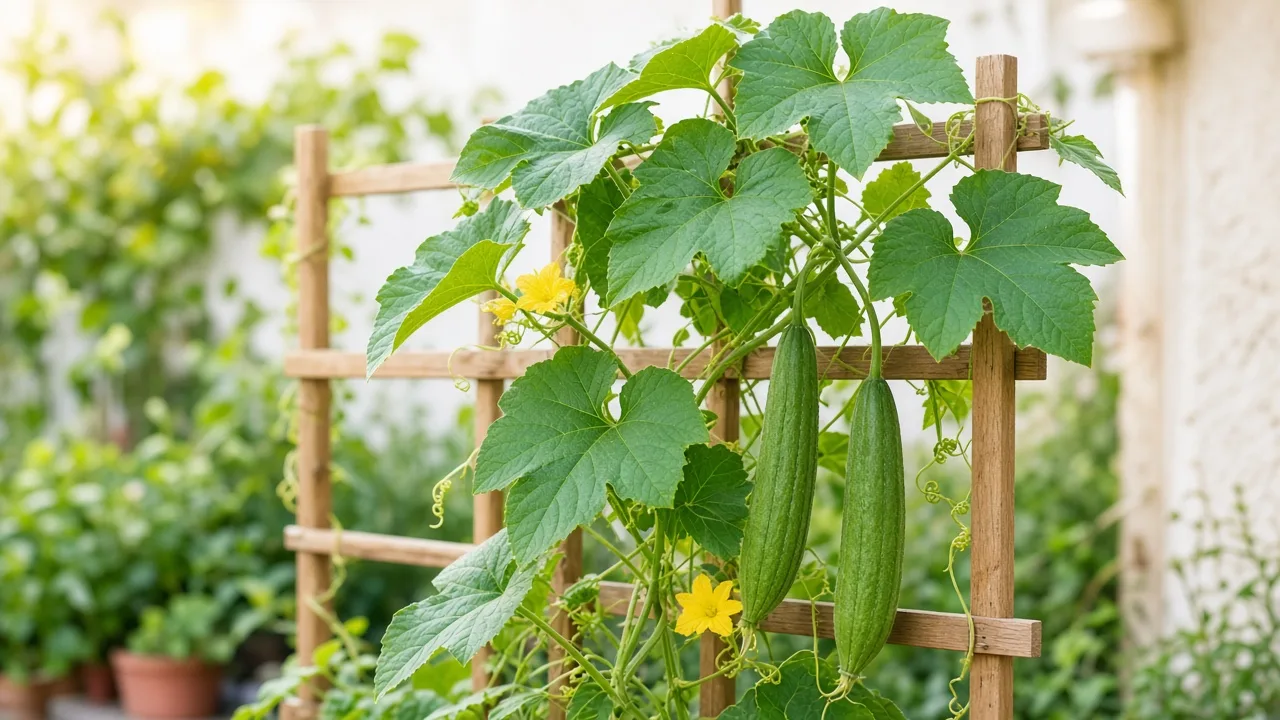
Sponge Gourd Watering Guide for Vines & Pots
Sponge Gourd Watering Guide for Vines & Pots
A sponge gourd vine can look thirsty on a hot afternoon and equally unhappy when its roots have been sitting wet for days. Luffa cylindrica is a warm-season cucurbit climber—nenua or galka in many Indian kitchens, loofah when you grow it for fiber—not a succulent you can neglect through a dry spell. Its large leaves and rapid stem extension move a lot of water during fruit swell, yet saturated soil steals oxygen and invites root problems fast.
The quick answer: moist roots, never a swamp
Treat watering as a soil question, not a weekday habit. Press your finger 2–3 cm into the mix away from the main stem. If that layer feels dry and the soil below is only lightly moist, water the full root zone once until excess drains freely. If the pot feels heavy, the mix below the surface stays cool and wet, or water pools on the surface, wait—another round from the can will not fix oxygen-starved roots.
The Royal Horticultural Society lists sponge gourd culture as moist but well–drained loam or sand in full sun (RHS — Luffa cylindrica). Read that as steady moisture through the active season, not a permanently soggy root ball.
Use the 2–3 cm finger check
Combine the finger test with pot weight on terraces. A noticeable lightening usually means the root ball has lost usable water. For tall grow bags, a dry wooden skewer pushed toward the lower root zone can confirm whether moisture remains deep down—darkening or clinging soil means wait; clean dry wood supports watering.
Why sponge gourd is not a “skip a week” plant
Sponge gourd belongs to the cucumber family. UF/IFAS groups luffa with cucumber and summer squash, noting that related crops share vining growth and similar cultural needs (UF/IFAS — Luffa). Unlike a woody houseplant with a deep taproot, a trellised vine in a container depends entirely on the water held in that pot or bed slice.
Large leaves and fast vine growth
NC State Extension describes sponge gourd as needing evenly moist, rich loam with good drainage and a sturdy trellis (NC State — Luffa aegyptiaca). When the upper root zone swings from dust-dry to sodden and back, you may see midday wilt, slow elongation, or small fruit even though you “water regularly.”
Cucurbit cousins and constant fruit moisture
For edible cucurbits, RHS vegetable guidance puts courgettes in the group that needs constant moisture all the way through to harvest (RHS — Watering vegetables). Sponge gourd is not identical to zucchini, but the parallel matters: flowering, pollination, and young fruit set are sensitive to drought stress. UF/IFAS notes that cucumbers—close relatives—are sensitive to flooding yet still need frequent watering because thin leaves dry quickly (UF/IFAS — Cucumbers). Your goal is the middle path: deep drinks when the root zone begins to dry, never standing water.
How often should you water sponge gourd?
There is no honest universal interval. Pot volume, trellis height, mix composition, wind on a rooftop, mulched beds versus bare soil, and whether you are picking young kitchen fruit or leaving gourds to mature for sponges all change drying speed.
There is no honest fixed calendar
Editorial growing guides often suggest checking every few days during warm weather, but the useful rule is RHS’s broader advice: water thoroughly but not too often, and avoid wetting only the top centimetre (RHS — Garden watering methods). A daily light sprinkle keeps the surface damp while leaving the centre dry, which encourages shallow roots and hides wet conditions lower in the bed where rot starts.
Beds, mulch, and monsoon pauses
In open ground, mature compost or straw mulch slows surface drying and matches NC State’s emphasis on even moisture in fertile loam (NC State — Luffa aegyptiaca). During heavy monsoon weeks on a sheltered terrace, pause irrigation until a root-zone check shows the upper 2–3 cm beginning to dry; roof runoff can saturate a bed that received no hose water. In dry zaid heat, the same vine may need attention every two to three days in a large container.
Watering sponge gourd in containers
UF/IFAS notes that luffa can be grown in two- to five-gallon containers with trellis support, but ideal soil is high moisture with good drainage (UF/IFAS — Luffa). On an Indian terrace, treat anything smaller than a deep 30–40 litre grow bag as a short-term nursery, not a home for a 3–6 m vine.
Large pots, trellis weight, and drying speed
Black plastic heat faster than glazed ceramic. Grouping pots raises humidity slightly but does not replace drainage holes and saucer management. When a mature vine fills a trellis, transpiration rises—check a day sooner during flowering, not automatically double the water volume.
When the mix dries within a day
If a thorough soak is dry again within twenty-four hours, the plant may be root-bound or the mix too gritty for a moisture-loving cucurbit. Review the Sponge Gourd soil guide and Sponge Gourd repotting guide before responding by watering even more aggressively.
How to water deeply without drowning roots
When a check says “water,” apply it once, slowly, at the soil line. Soak until water exits drainage holes, then stop. For in-ground rows, moisten to the depth of the active root zone rather than sprinkling the surface.
Morning soil-line irrigation
Morning irrigation gives large leaves time to dry before cool nights, which helps limit foliar disease pressure on cucurbits—a reason UF/IFAS and many extension guides emphasize steady moisture without leaving foliage dripping in stagnant air (UF/IFAS — Cucumbers). Direct water to the root zone instead of repeatedly showering the canopy.
Mulch, fruit slings, and keeping gourds off wet ground
UF/IFAS warns that fruit rot is common when luffa fruit touches damp soil and recommends mulch around plants (UF/IFAS — Luffa). Use mesh slings or ties for developing gourds on a trellis so irrigation at the soil line does not leave fruit sitting in a wet puddle.
Water needs through the growing season
Match rhythm to growth stage. Young plants need consistency while roots expand; mature vines need steady moisture through pollination and swell; late-season fruits left for loofah fiber still need occasional deep drinks if rains fail.
Seedlings and new transplants
Seedlings in small cells dry within hours in direct sun. Water when the surface lightens, using a gentle stream so you do not wash seed or expose roots. Transplants need steady moisture for the first week after planting while new roots reach outward; wilting here is often genuine thirst.
Flowering, pollination, and fruit swell
This is the window where drought does the most damage to harvest. Blossom drop, slow fruit growth, and tough young gourds often trace back to uneven moisture during flowering. If you are harvesting tender nenua-style fruit often, the vine stays in repeated fruit-set mode and needs reliable checks through hot weeks—see the Sponge Gourd overview for harvest goals.
Late season and loofah maturation
Fruits held for sponges still transpire through attached leaves. Do not abandon irrigation during a dry autumn just because skin is toughening; allow the upper root zone to approach dryness between soaks rather than keeping soil constantly saturated.
Signs sponge gourd needs more water
Dry mix combined with limp leaves that recover after a thorough soak usually means underwatering. You may also see soil pulling away from a container edge, slow vine elongation, blossom drop, or small fruit. Midday wilt on a scorching terrace with moist soil may be heat stress—confirm with a morning finger test before adding more water, and review airflow and sun in the Sponge Gourd light guide.
Signs sponge gourd is getting too much water
Yellowing lower leaves on a plant watered frequently, soft tissue at the soil line, and wilt while mix stays wet are classic overwatering cues. Persistently wet mulch, sour smell from drainage holes, or white mold on the surface point toward a moisture pattern that needs less water and better drainage—not more fertilizer.
Powdery mildew is listed as a possible disease on RHS luffa profiles (RHS — Luffa cylindrica); crowded, damp foliage makes cucurbits more vulnerable, so fix watering and airflow before chasing sprays.
First steps when you are unsure
If you cannot tell whether the problem is too much or too little water, do not guess with another full soak. Push your finger 2–3 cm deep, lift the pot, and smell the drainage area. Wet and heavy means wait and improve airflow; dry and light means one deep watering at soil level.
Empty saucers after each drink. If yellowing or wilt continues after you stabilize moisture for two weeks, compare nutrition in the Sponge Gourd fertilizer guide and support in the Sponge Gourd pruning guide. Severe stem softness with foul-smelling mix may require fresh, drained mix per the Sponge Gourd repotting guide.
When to use this page vs other Sponge Gourd guides
Use this page when the main question is how much water, how often, and how to check dryness for sponge gourd on a trellis, in a bed, or in a large pot. Start with the Sponge Gourd overview if you need identity, sowing windows, or edible versus loofah harvest timing.
If mix stays waterlogged or dries within hours, move to the Sponge Gourd soil guide. For seed starting and transplant timing, see the Sponge Gourd propagation guide. Light stress and leggy vines belong in the Sponge Gourd light guide.
Related Sponge Gourd guides
- Sponge Gourd overview — vine habit, harvest goals, and whole-plant care
- Sponge Gourd light — full sun, heat, and trellis placement
- Sponge Gourd soil — moisture retention, drainage, and pH for cucurbits
- Sponge Gourd fertilizer — feeding after moisture is stable
- Sponge Gourd propagation — seedling moisture from sowing onward
- Sponge Gourd repotting — final container size and transplant handling
- Sponge Gourd pruning — vine management without drought shock
Conclusion
Sponge gourd rewards growers who keep the root zone evenly moist but never waterlogged. Check 2–3 cm deep, water deeply when that layer dries, drain every container completely, and slow down during cool or rainy weeks. Large cucurbit leaves and fruit swell need steady moisture; saturated mix steals oxygen and invites rot. Match your rhythm to pot size, trellis growth, and your harvest goal—tender kitchen gourds or fibrous loofah—and adjust light, soil, and feeding only after the basic wet–dry cycle is stable.