Sponge Gourd Propagation: Luffa Seed Guide
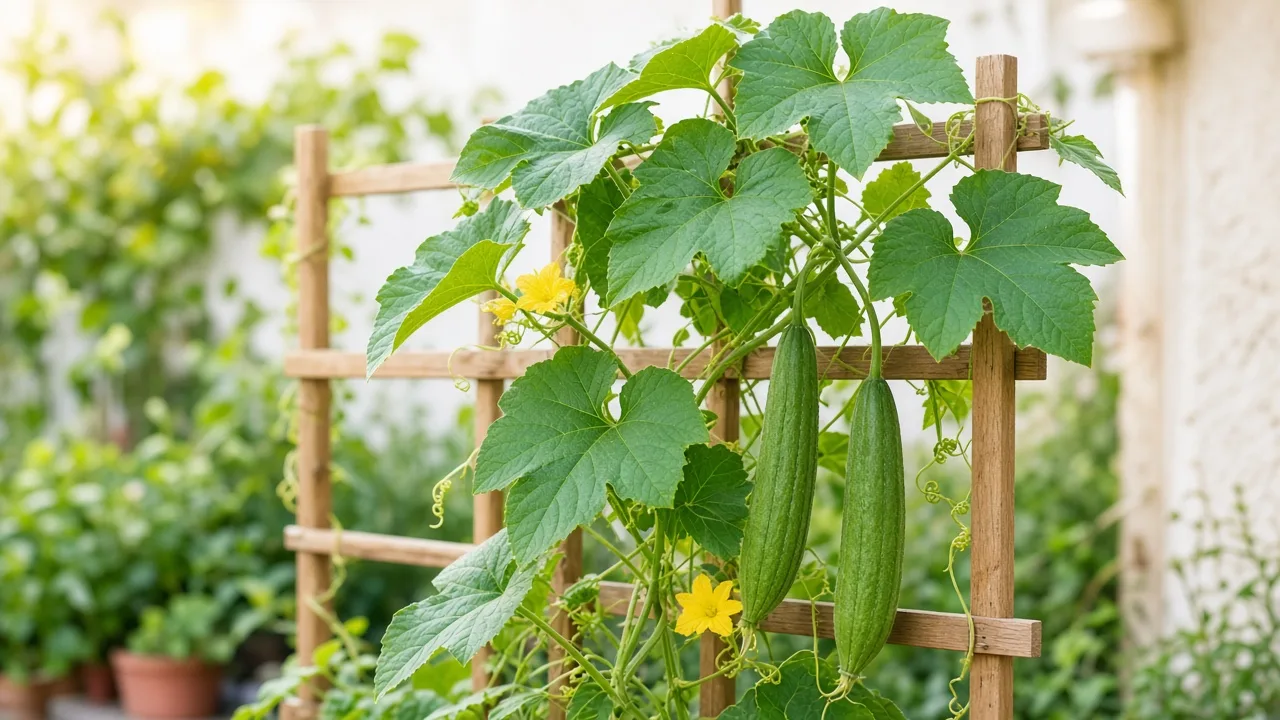
Sponge Gourd Propagation: Luffa Seed Guide
Sponge Gourd Propagation: Luffa Seed Guide
Sponge gourd propagation for Luffa cylindrica—the vine behind nenua, galka, and homegrown loofah—means starting from seed. This fast annual cucurbit does not behave like a perennial herb you can divide or root from a cutting at kitchen scale. The RHS plant profile lists propagation by sow seeds at 21–24°C in early spring, and that warm, seed-first path is what reliable harvests follow on terraces and in warm beds across India and the tropics.
Before you fill a tray, decide what you are propagating toward. Young, tender fruit for cooking needs steady picking through summer. Fibrous sponge fruit needs fruits left on the vine for months. You can mix both goals on one plant, but heavy young harvest leaves fewer gourds to mature into loofah. That choice affects how many seedlings you start and how aggressively you thin—not a separate propagation method, but it shapes spacing and how long each vine must stay healthy.
Best propagation method for sponge gourd
Direct sowing or module sowing followed by one careful transplant is the practical propagation system for sponge gourd. UF/IFAS Gardening Solutions describes luffa as planted through direct seeding or transplanting, with seedlings moved once they carry two to three true leaves. NC State Extension likewise treats related smooth luffa as an annual vine propagated from seed with young fruit eaten and mature fruit dried for fiber.
Why seed beats cuttings for home growers
Stem cuttings appear in botanical notes on some wild sponge-gourd relatives, but they are slow, disease-prone, and unnecessary when seed germinates well in warm mix. Home growers get straighter results from quality seed, warm soil, and a trellis installed before vines elongate. If a video shows “regrowing” luffa in water, it is not building the long, fruiting vine you need for nenua or sponges.
Edible nenua crop vs loofah sponge crop (decide before sowing)
For kitchen nenua, start enough plants to allow frequent picking of young fruit while vines keep flowering. For loofah sponges, you need fewer plants but a longer frost-free run so selected gourds can brown and dry on the vine. Propagation numbers differ even though the sowing steps are the same. See the sponge gourd overview for harvest timing and pet cautions around bitter cucurbit fruit.
When to propagate sponge gourd
Sponge gourd is a warm-season crop. Seeds and seedlings stall in cold, wet mix; mature vines are frost-sensitive. In Florida, UF/IFAS recommends planting luffa seed from March through July in full sun and well-drained soil. Translate that pattern to your calendar: sow when nights stay mild and days are bright, not when soil is still cool from winter.
Warm-season rules and frost sensitivity
Hold off on outdoor sowing until frost risk has passed and soil has warmed. In cooler climates, the RHS advice to sow at 21–24°C points to an indoor or greenhouse start several weeks before you plant out in early summer. Germination often takes two to three weeks at warm temperatures; cold snaps after emergence invite damping-off on cucurbit seedlings, which UF/IFAS EDIS notes can threaten young plants in cold, wet conditions.
Sowing windows in India and tropical terraces
On Indian plains and coastal terraces, sow when you can water consistently through flowering—not necessarily the coolest month. Many growers use zaid or early warm-season windows once night temperatures stay above roughly 15–18°C and containers drain well. Avoid sowing into waterlogged monsoon beds unless you have raised beds or excellent drainage; saturated seed rots before it sprouts. Match timing to your sponge gourd watering plan so seedlings never dry out during the first week after emergence.
Short-season starts indoors
Where the warm season is short, sow indoors in large cells or pots at 21–24°C, then transplant after the last frost into a sunny fence or pergola with support. Luffa needs a long growing season for mature sponges; the RHS notes that fruits need time to mature on the vine. Starting indoors buys calendar length you cannot recover with fertilizer later.
Prepare Luffa cylindrica seed for germination
Sponge gourd seed has a hard coat. Fresh seed from a ripe gourd germinates best; old, dry packets may need extra help.
Soaking, nicking, and viable seed checks
Soak seed several hours in lukewarm water (overnight is common) before sowing. Some growers lightly nick the seed coat opposite the hilum until pale tissue shows, then soak again—similar to other hard cucurbit seeds. Discard floaters that never sink and any seed that smells musty. Mature luffa seed is dark and hard, unlike pale immature seed inside very young fruit, as illustrated in UF/IFAS EDIS HS1285.
Sowing depth, mix, and warmth
Sow 1–2 cm deep in moist, well-drained potting mix or garden loam warmed to about 21–24°C. Cover lightly, firm the surface, and keep humidity steady without waterlogging. A heat mat or warm propagator helps in cool springs; on a hot terrace, shade the tray until cotyledons emerge, then move to full sun per the light guide.
Direct sowing vs starting seedlings indoors
Both routes work; choose based on frost dates, space, and how much root disturbance you can avoid.
Direct seeding into beds or large pots
After soil warms, sow two to three seeds per station at final spacing, then thin to the strongest seedling. UF/IFAS recommends spacing plants about three feet apart with six feet between rows so vines and fruit stay off damp ground. Direct seeding saves transplant shock and suits large beds with trellises already in place. It is slower to emerge than tray sowing in cool soil, so do not mistake delayed germination for dead seed.
Module sowing and transplant timing
For terraces or short seasons, sow one seed per cell in 72-cell trays or small pots—the size UF/IFAS EDIS shows for commercial transplant production. Move plants once they have two to three true leaves, handling the root ball gently. Cucurbit roots resent bare-rooting; if a seedling wilts after transplant, shade it for a few days and keep soil evenly moist. Treat this as one move into the final large pot or bed, not repeated repotting—see repotting guidance for when disturbance is worth it.
Plant out with trellis support ready
Propagation is not finished at germination. Luffa is a tendril climber that can exceed 2.5–4 m on support and much more stem length in a long season. Install trellis, fence wires, or pergola before vines attach randomly to railing gaps.
Spacing, pollinators, and airflow
Space for mature vine size and bee access to yellow flowers. Crowded seedlings compete for light and encourage powdery mildew on large leaves. Open airflow matters more than squeezing extra plants into a corner. If fruit will hang, plan slings or mesh so developing gourds do not rest on wet paving.
Container propagation on a sunny terrace
Use large containers (roughly 20–40 L) with drainage holes and a wall-mounted trellis. UF/IFAS notes luffa can grow in two- to five-gallon containers with support—treat that as a minimum; sponge gourd on a productive terrace usually needs more root volume. One strong vine per pot often outyields two cramped seedlings.
Aftercare for young sponge gourd vines
Water, feed, and first true leaves
Keep the root zone evenly moist while cotyledons and first true leaves expand. Let the upper 2–3 cm of mix dry slightly between waterings once roots establish—details in the watering guide. Hold nitrogen-heavy fertilizer until vines are actively climbing; starving seedlings need moisture and warmth more than feed.
Common propagation failures and fixes
No emergence after three weeks: soil too cold or seed coat still impermeable—re-soak a fresh batch and warm the tray. Seedlings collapse at soil line: damping-off from cold, wet mix—improve drainage, reduce overhead water, and sow a backup flat. Leggy, pale seedlings: low light—move to full sun immediately. Transplant wilt: root damage or dry soil—shade briefly and water at the soil line, not over leaves. Bitter young fruit later: not a propagation issue, but discard bitter cucurbits; do not eat or feed to pets.
Saving seed from your own sponge gourds
Leave selected fruits on the vine until the skin browns and dries, or dry harvested gourds in a ventilated spot. Peel, shake out dark mature seeds, rinse, and dry on paper for several days. Store in a cool, dark, dry jar for next season’s sowing, as UF/IFAS describes for luffa seed. Label with the year and whether the parent fruit was non-bitter. Saving seed from one ripe gourd can supply many plants; a single mature fruit may hold 30 or more seeds per EDIS.
When to use this page vs other Sponge Gourd guides
Use this page when you are starting plants from seed—soaking, sowing, transplant timing, spacing, and saving seed. For day-to-day moisture checks, open watering. For mix and pH, see soil. For window placement and sun stress, see light. For feed after vines run, see fertilizer. For moving a purchased seedling or refreshing mix in a large pot, see repotting. For vine training and harvest cuts after establishment, see pruning.
Related Sponge Gourd guides
- Sponge gourd overview — identity, harvest goals, and pet caution
- Light — full sun and terrace placement
- Watering — moisture through flowering and fruit swell
- Soil — loam, drainage, and container mixes
- Fertilizer — feeding after roots establish
- Repotting — one move into the final support setup
- Pruning — training vines and harvest cuts
Conclusion
Sponge gourd propagates reliably from warm, well-drained seed sowing—not from cuttings. Soak or nick hard seed, germinate near 21–24°C, and plant out with a trellis ready at roughly three-foot spacing. Choose direct sowing when frost is gone and soil is warm; start modules indoors when you need a longer season or terrace control. Decide early whether you are growing tender nenua or drying loofah, save seed from ripe non-bitter fruit, and use sibling guides to keep moisture, light, and feed aligned once vines climb.