Sponge Gourd Fertilizer Guide: When & How to Feed
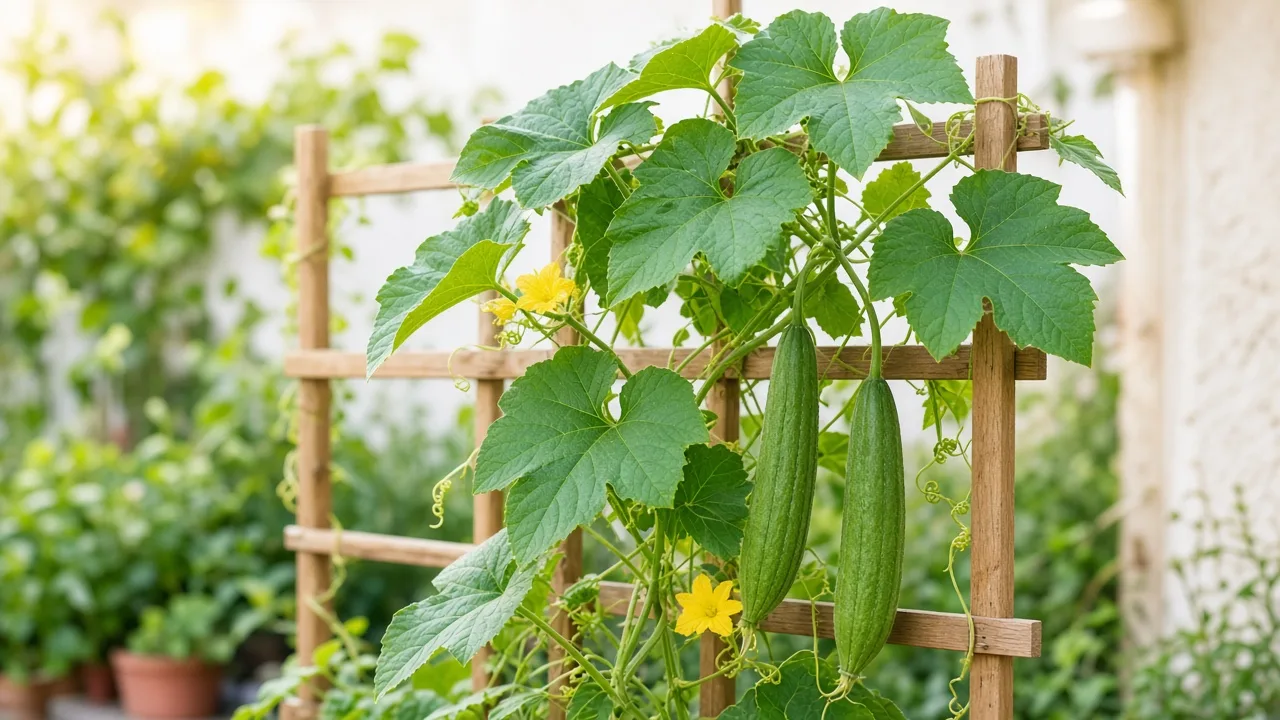
Sponge Gourd Fertilizer Guide: When & How to Feed
Sponge Gourd Fertilizer Guide: When & How to Feed
Sponge gourd fertilizer choices should follow what you are actually growing: a fast, warm-season cucurbit vine that can climb several metres and set long green fruit—not a slow houseplant on a windowsill. Luffa cylindrica (nenua, galka, smooth luffa) pulls water and nutrients hardest while tendrils run, flowers open, and fruit swells. Feed too little and you get thin vines and small gourds; feed too much nitrogen too early and you get leafy jungle with disappointing fruit. The workable home path is compost or well-rotted manure at planting, then measured vegetable fertilizer only while the vine is actively growing in warm weather.
Match nutrition to your harvest plan before you mix the first dose. Young, tender fruit for the kitchen rewards steady moisture plus moderate, even fertility through flowering. Fruit left on the vine for fibrous loofah sponges needs a long warm season; late nitrogen pushes soft growth when the plant should be maturing gourds on the trellis. The Sponge Gourd overview explains both goals; this page covers how feeding supports each without repeating generic “feed monthly” advice.
Why sponge gourd feeding is different from houseplant routines
Fast cucurbit vines and heavy seasonal demand
Sponge gourd belongs to the cucumber family. In full sun it behaves like other cucurbits: large leaves transpire heavily, roots explore wide when planted in ground, and peak demand arrives during flowering and fruit swell. The Royal Horticultural Society describes Luffa cylindrica as a tender tendril climber for moist but well-drained loam in full sun, needing a long growing season for fruits to mature—biology that assumes fertile soil and consistent care, not occasional houseplant drops (RHS sponge gourd profile).
Because the crop is an annual replaced after harvest, you are not maintaining a long-term potted specimen. You have one warm window to build vine structure, set flowers, and fill fruit. Fertilizer supports that sprint; it cannot compensate for deep shade, cold nights, or roots sitting in waterlogged mix. Cross-check Sponge Gourd light and Sponge Gourd watering before increasing feed on a struggling vine.
Kitchen nenua harvests vs loofah sponge goals
If you pick young gourds regularly for curry, the plant keeps producing new fruit when pollination and moisture stay steady. That harvest pattern removes nutrients with every cut, so light, repeated feeding through the active season often makes sense on lean soil or in containers. If you earmark fruits for sponge fibre, those gourds stay on the vine for weeks while skins harden and interiors lignify. Once fruits are sizing for maturity, ease off high-nitrogen products so the vine directs energy into existing gourds rather than endless new shoots. Sponge Gourd pruning can also steer vigour when you need fewer, larger fruits for loofah.
Build fertility before the first feed
Compost, FYM, and pre-plant incorporation
The highest-return “fertilizer” for sponge gourd is usually organic matter worked into the root zone before transplant or direct sowing. Mature compost or well-rotted farmyard manure (FYM) improves moisture retention and supplies slow nitrogen—critical on Indian terrace mixes that dry out in an afternoon. LeafyPixels’ sponge gourd soil guidance targets fertile loam with compost in the blend; if you followed the Sponge Gourd soil guide at planting, much of the season’s baseline nutrition may already be in place.
Work amendments into the top 15–20 cm of bed soil or mix them through container media rather than piling raw manure against the stem. Cucurbit crowns rot easily in wet, concentrated organic pockets. Let transplants settle for a week with even moisture before adding strong soluble feeds.
pH and drainage prerequisites
Sponge gourd performs best near pH 6.0–7.0 in fertile, well-drained soil. When pH drifts far outside that band, leaves can look hungry even when fertilizer bags are full. Fix mix and drainage first—especially in monsoon beds where compaction limits oxygen. The Spruce notes luffa prefers well-drained soil around pH 6.0–6.5 and at least six hours of direct sun (luffa plant profile), matching the fertility picture for other cucurbits.
Macronutrients sponge gourd uses most
Nitrogen for vine and leaf growth
Nitrogen drives leaf and stem expansion. Young vines establishing on a trellis benefit from moderate nitrogen availability after roots take hold, especially if pre-plant compost was light. Excess nitrogen before the vine is well anchored, however, produces dark, overly soft foliage that shades its own flowers and can worsen powdery mildew in humid weather. Think of nitrogen as fuel for the first half of the warm season, not a constant accelerator through autumn sponge maturation.
Phosphorus for roots and flowering
Phosphorus supports root development and energy transfer into reproductive tissue. It rarely needs a dedicated “bloom booster” on every cucurbit, but starved phosphorus can show up as weak flowering when vines otherwise look huge. A balanced vegetable product at planting usually covers this stage if compost was incorporated. If male flowers appear but female flowers with tiny gourds at the base are scarce, review pollination and overall vigour before chasing phosphorus alone.
Potassium during fruit swell
Potassium helps water regulation and overall stress tolerance while fruit cells expand. Kitchen harvests and sponge-stage gourds both benefit from steady potassium during swell—often supplied by compost, wood ash used cautiously, or a complete fertilizer with a respectable third NPK number. Splitting all nutrition as high-urea nitrogen without potassium can yield fast vines and thin, slow-growing fruit.
Choosing fertilizer products
Organic slow release vs soluble feeds
Slow-release granular vegetable fertilizer mixed at transplant suits in-ground beds and large containers, releasing nutrients across weeks of warm weather. Water-soluble or liquid feeds act faster and fit terrace gardeners who can irrigate on a schedule—useful after heavy rain leaches pots. Organic options—compost tea, fish emulsion, neem-enriched organics—release more gradually and forgive small timing errors if diluted. Synthetic soluble feeds demand half-strength or label-low doses on young cucurbit roots.
Avoid feeding dormant or cold-stressed vines. Sponge gourd growth stalls when nights stay cool; fertilizer then accumulates as salts.
Reading NPK labels without over-applying
The three NPK numbers describe nutrient percentages in the bag, not what your soil already holds. For establishment, a balanced analysis (similar middle and third numbers) or a mild nitrogen lean after heavy compost is reasonable. The Spruce recommends incorporating organic matter before planting and applying nitrogen-rich fertilizer two to three times during the growing season, always at label rates (luffa fertilizer guidance).
In practice, “two to three times” is a ceiling for modest home beds with good compost—not a mandate to feed every week. Extend the interval if vines are deep green and fruit set is already strong.
Feeding schedule through the warm season
Seedling and transplant establishment
Do not fertilize dry seedlings with full-strength concentrate. After Sponge Gourd propagation and hardening off, transplant into prepared soil and water deeply. Wait until new growth shows the roots have recovered—often 7–10 days—before the first light liquid feed or side-dress. If you started in rich compost-heavy mix, skip liquids until the first true leaves reach mature size.
Active vine run and first flowers
As tendrils climb and internodes lengthen, vines need consistent nutrition. Side-dress compost or apply diluted complete fertilizer every two to three weeks on sandy or container media; every three to four weeks on compost-rich ground. Keep granules or organics 15–20 cm from the stem and water in. Morning feeding followed by soil-level irrigation limits foliar burn on large leaves.
Fruit development and harvest rhythm
When female flowers set young fruit, maintain even moisture and continue moderate complete feeds for kitchen-harvest plants you pick often. For sponge-mature fruit, taper nitrogen once gourds reach eating size and you have selected which fruits will remain on the vine. Potassium-forward complete feeds or additional compost mulch support long hangs without forcing new vegetative bursts.
Slowdown and end-of-season rules
When monsoon cool snaps or short days slow new flower production, stop soluble feeding. An annual vine nearing frost or dry-season shutdown will not convert late nitrogen into quality gourds. Plan seed saving from mature fruit instead of pushing fertilizer into a finished crop.
Fertilizing sponge gourd in India and monsoon climates
Kharif beds and terrace timing
On the plains, sponge gourd is often sown after frost risk passes or with monsoon warmth—sometimes February–March in the south, later in the north. Align the first serious feed with active monsoon or irrigated summer growth, not with germination in cold soil. Terrace growers in Chennai, Bengaluru, or Pune should account for rapid leaching: rain that drains freely from pots carries nitrates with it, while sealed saucers create salt buildup.
Split doses and runoff caution
Split urea or complete fertilizer into smaller applications rather than one large dump before a storm. Heavy single doses wash into drains, burn roots during the next hot dry spell, and waste money. Pair split feeds with mulch to steady moisture at the root zone described in the watering guide.
Container and large-pot feeding
Slow-release at potting plus liquid top-ups
Containers cannot mine nutrients from surrounding soil. Penn State Extension advises adding slow-release fertilizer at planting and reapplying soluble fertilizer every two to four weeks for productive container vegetables (container vegetable keys). Use the largest practical pot with trellis anchor points, as outlined in Sponge Gourd repotting, and read the bagged mix label—many potting soils already include starter fertilizer.
Salt buildup on hot paving
Fertilizer salts concentrate when evaporation outpaces drainage. Brown leaf margins shortly after feeding, white crust on the medium surface, or wilting despite wet mix point to soluble salt injury, not automatic thirst. Pause feeding, confirm drainage holes are open, and water deeply only when the plant truly needs moisture until new growth looks normal.
Read the vine before the next dose
Deficiency signs on large cucurbit leaves
Pale green or yellow older leaves with weak new growth on an otherwise sunny vine may indicate nitrogen shortage—common in washed-out terrace mixes. Stunted, dark green plants with little new fruit after weeks of heat may indicate phosphorus limitation or root stress from compaction. Always confirm moisture 2–3 cm below the surface before diagnosing hunger.
Overfeeding, salt burn, and pest pressure
Overfed cucurbits show rank, overly soft leaves, delayed fruit set, and marginal scorch. High nitrogen can also favour sap-feeding pests on succulent growth. Back off feeds, improve airflow around the trellis, and avoid foliar nitrogen sprays in humid weather that already favours powdery mildew on cucurbit leaves (RHS powdery mildew guidance).
Fertilizer does not remove bitterness from cucurbit fruit. Discard bitter gourds regardless of feeding history; bitterness signals compounds unsafe to eat.
Pollination, flower balance, and nutrients
Luffa needs insect pollination for fruit. Male flowers often appear before females. The Spruce notes that nitrogen tends to favour male flowers while phosphorus supports female flower production, suggesting a balanced water-soluble feed if one flower type is scarce (luffa flower nutrition note). Hand pollination can rescue isolated terrace plants, but no nutrient formula replaces absent bees on a closed balcony.
When to use this page vs other Sponge Gourd guides
Use this page to decide whether, when, and how much to fertilize sponge gourd through the warm season. Use Sponge Gourd watering when wilting, saucer water, or monsoon saturation dominate—water moves nutrients and oxygen together. Use Sponge Gourd soil for mix recipes, compost ratios, and pH. Use Sponge Gourd light when vines stretch pale toward a wall. Use Sponge Gourd propagation for sowing dates and transplant timing that determine when feeding should begin.
Related Sponge Gourd guides
- Sponge Gourd plant hub — identity, harvest goals, and season length.
- Sponge Gourd watering — even root-zone moisture through fruit swell.
- Sponge Gourd soil — compost-rich mixes and drainage for cucurbit roots.
- Sponge Gourd light — full sun for productive flowering.
- Sponge Gourd pruning — steering vigour when vines outgrow the trellis.
Conclusion
Good sponge gourd nutrition starts in the soil: compost or FYM at planting, then measured vegetable fertilizer only while warm-season vines are actively running, flowering, and swelling fruit. Keep nitrogen generous early but not reckless, maintain complete nutrition through kitchen harvests, and taper pushes when fruits are maturing for loofah fibre.
Read the vine, the mix label, and the monsoon calendar together. When tendrils climb steadily, bees visit yellow flowers, and young nenua swell without rank foliage, you have likely found the balance; when margins burn, mildew spreads on soft leaves, or fruit stalls in shade, the next step is often less fertilizer—not more.