Sponge Gourd Light Needs: Full Sun, Terrace Placement &
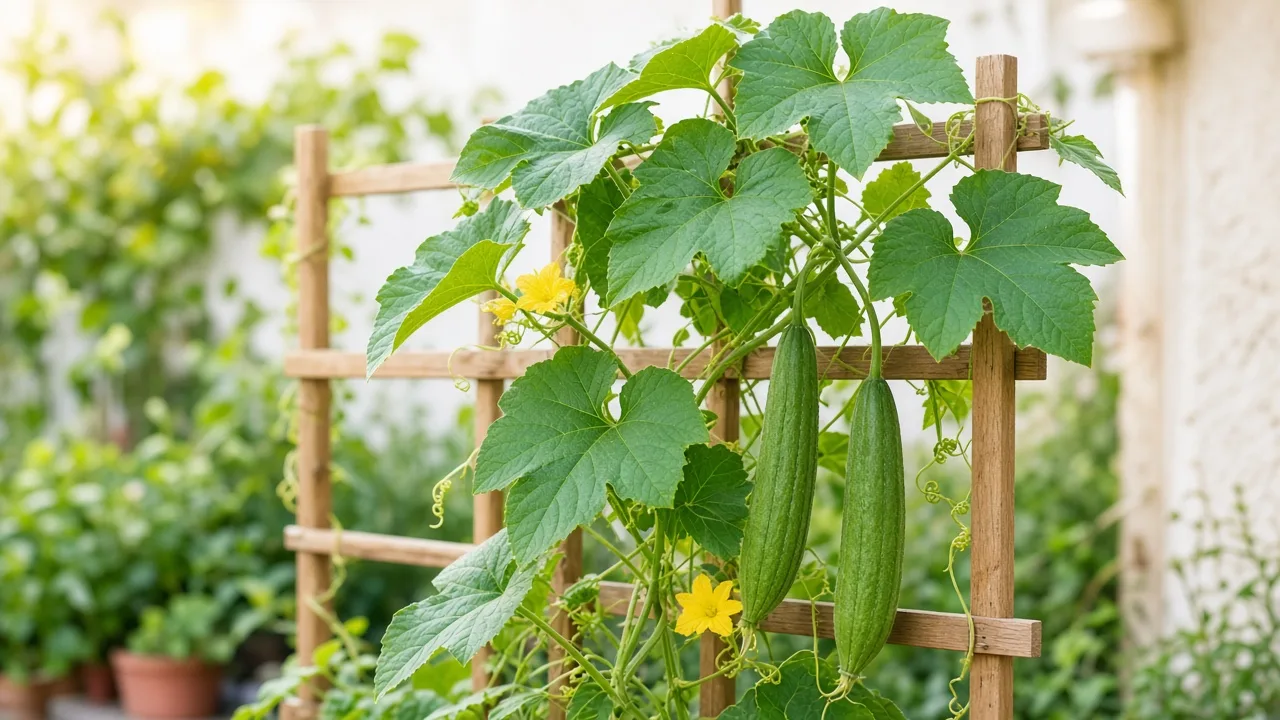
Sponge Gourd Light Needs: Full Sun, Terrace Placement & Warning Signs
Sponge Gourd Light Needs: Full Sun, Terrace Placement & Warning Signs
Sponge gourd (Luffa cylindrica) is a warm-season tendril vine in the cucumber family—not a low-light houseplant you can park on a north windowsill. Whether you grow nenua for the kitchen or loofah fiber for sponges, light fuels leaf area, flower production, and the long fruit swell that both harvest paths need. Weak brightness produces the frustrating pattern every cucurbit grower recognizes: metres of vine, plenty of yellow blooms, and almost nothing worth picking.
This guide answers how much direct sun sponge gourd needs, where to place a trellis on a terrace or fence, how India’s monsoon skies change the equation, and which warning signs mean you should move support—not add fertilizer first.
The Quick Answer for Luffa cylindrica
Treat full sun as the default. NC State Extension lists sponge gourd as needing at least six hours of full sun daily with moist, well-drained, fertile soil and a sturdy trellis (NC State Extension). The RHS positions Luffa cylindrica in full sun, on south- or west-facing, sheltered exposures outdoors (RHS Plants).
For kitchen harvests of tender young fruit, six bright hours often keeps vines productive if heat and water stay steady. For sponge-quality gourds that must dry on the vine, plan closer to eight or more hours of direct light through a long warm season—editorial loofah guides commonly cite six to eight hours as the practical target (The Gardener’s Network). If your brightest station delivers less, expect fewer fruits and slower fiber maturity, not a mystery disease.
Six Hours as the Real Minimum
Six hours is a floor, not a ceiling. Below that, vines elongate between nodes, leaves stay smaller, and female flowers may open without setting fruit because the plant is rationing energy. On a crowded balcony where a parapet or neighbour wall cuts afternoon sun, measure at soil and leaf height, not at standing eye level—shadows climb faster than you expect as the vine grows.
Eight or More Hours When Fruit Must Mature on the Vine
Loofah sponges need fruits to hang on the vine until skins brown and seeds rattle inside—a timeline that demands sustained photosynthesis through summer. Vines that receive only a short sun window often produce edible young gourds early, then stall when fruits should be sizing for fiber. Match light ambition to harvest goal using the Sponge Gourd overview harvest section before you sow.
Why Sponge Gourd Is a Full-Sun Crop, Not a Houseplant
Luffa cylindrica evolved as a tropical and subtropical climber with large leaves and rapid summer extension. It behaves like ridge gourd, cucumber, and bottle gourd: high light drives carbohydrate production that fuels tendril growth and fruit swell. Unlike compact herbs, you cannot compensate for a dim site with a bigger pot—the vine simply runs toward the brightest gap, leaving thin stems and sparse flowers behind.
Cucurbit Flowers and Pollinators Need Bright Stations
Separate male and female yellow flowers mean fruit only forms after pollination. Bees visit sun-warmed blooms more reliably than flowers in cool shade. A dim trellis does not just slow photosynthesis; it can reduce pollinator traffic and leave you with beautiful vines and empty stems. If light is marginal, hand-pollinate—but fix placement first when possible.
How Much Direct Sun Sponge Gourd Needs
Full sun for sponge gourd means unobstructed direct light on the leaf canopy for most of the day, not “the room feels bright.” Horticultural references align on six or more hours of direct sun for garden culture (NC State Extension). Trusted growing guides for loofah often stretch that to six to eight hours for optimum vine and gourd development (The Gardener’s Network).
Partial sun—bright mornings with shaded afternoons—can work for young kitchen harvests in hot plains climates if you keep roots evenly moist through the Sponge Gourd watering guide. It is a poor compromise for a full sponge crop in a short season.
Reading Light on a Terrace or Fence Line
Use a simple shadow test on a clear day at mid-morning and again at mid-afternoon. A sharp, dark hand shadow at vine height signals direct sun. A faint or missing shadow means you are in shade or heavy cloud-filtered light—even if the terrace feels hot. Track the spot across weeks: monsoon haze and shorter winter days change usable hours more than a calendar date alone.
Best Placement: Orientation, Trellis, and Airflow
Install the trellis in the brightest open station before seedlings root in. RHS advises planting outdoors in early summer against a sunny fence with climbing support (RHS Plants). NC State emphasizes good air circulation around large leaves alongside full sun (NC State Extension)—crowding vines in a sunless corner invites powdery mildew even when water is correct.
South- and West-Facing Supports in India
On Indian terraces and compound walls, south- and west-facing fences usually deliver the longest direct-sun windows for sponge gourd. East-facing walls can work when afternoons stay bright and open, but tall neighbouring buildings often steal the hours that determine fruit set. Prioritize height and anchor strength over decorative placement: mature vines can climb 2.5–4 m on support in typical garden conditions (RHS Plants), and NC State notes vines may run much longer in a full season (NC State Extension).
Keep the Trellis in Sun, Not the Pot in Shadow
A classic terrace mistake is a sunlit railing with the container tucked under a bench. Roots in shade and leaves in sun create uneven growth and blossom drop. Set pots so both canopy and root zone sit in the same bright exposure, or use in-ground beds along the sunniest wall. Pair placement with fertile, well-drained mix from the Sponge Gourd soil guide so light converts to fruit instead of yellowing lower leaves from waterlogged shade.
Seasonal Light in India and Humid Tropics
Sponge gourd fits zaid and warm-season kitchen gardens across the subcontinent where frost is rare. Light is rarely the limiting factor in April–June sun; water rhythm and trellis space usually fail first. The harder seasons are monsoon cloud cover and post-monsoon haze, when vines that looked vigorous suddenly stretch and set fewer fruit.
Zaid Sowing and Pre-Monsoon Brightness
Sow when nights are warm and days are bright enough to dry foliage quickly after irrigation. Pre-monsoon sowings benefit from intense sun if you can water consistently—rapid early growth builds leaf area before skies soften. If you start indoors, move seedlings outdoors only after they are hardened to direct sun; see propagation timing in the Sponge Gourd propagation guide.
Monsoon Cloud Cover and Stretching Growth
Weeks of diffused light during heavy rain encourage internode stretch—the same leggy look as true shade. Resist solving stretch with nitrogen; check whether leaves receive direct beams for at least part of the day. Trim overcrowded side shoots only after you confirm light and airflow via the Sponge Gourd pruning guide, not as a substitute for brightness.
Direct Sun Tolerance and Heat Waves
Sponge gourd welcomes strong sun in its preferred warm range. Combined extreme heat, reflected paving, and dry roots produce midday wilt and sun-scorched young leaves even when light levels are “correct.” Established vines with deep, even moisture tolerate harsh terraces better than freshly transplanted seedlings.
Young Transplants vs Established Vines
Harden seedlings gradually: expose them to morning sun for several days before leaving them on an all-day west wall. Sudden moves from a dim nursery bench to bare terrace tile burn leaf edges that never recover. Once tendrils grab a trellis and roots fill moist, compost-rich mix, full sun is an asset—not a risk—for most Indian plains summers.
When Partial Shade Is Acceptable
Partial shade is a tactical tool, not a lifestyle for this species. RHS notes that under glass, growers should provide high humidity and shade from hot summer sun (RHS Plants)—a greenhouse pattern that translates to protecting tender transplants or filtering brutal afternoon heat on reflective terraces, not growing mature vines in permanent shadow.
Use 30–50% shade cloth over midday hours only when leaf surfaces overheat and wilt returns each afternoon despite moist soil. Remove or open shade when monsoon clouds already cut light, or fruit set will suffer.
Low-Light Limits and Shaded Balconies
North-facing courtyards, light wells, and rooms with a single dim window are poor long-term homes for sponge gourd. The vine may survive briefly, but fruit for nenua or loofah is unlikely without relocating to open sun or replacing the crop with a shade-tolerant vegetable. Do not confuse “heat-tolerant tropical vine” with “grows anywhere indoors.”
If you only have three to four hours of direct sun, treat sponge gourd as an experiment: harvest tiny young fruit early or accept failure. For reliable production, borrow rooftop or community-garden sun for one season rather than forcing Luffa into houseplant conditions.
Starting Seedlings Under Grow Lights
Short cool springs outside India often require indoor starts at 21–24°C, as RHS recommends for sowing (RHS Plants). Grow lights are a bridge, not a substitute for terrace sun. Run full-spectrum LEDs 12–14 hours daily while seedlings are indoors, keeping foliage close enough to prevent stretch. Transplant to the brightest outdoor trellis after frost risk passes and nights stay mild—details align with the Sponge Gourd repotting guide for moving into final beds or large containers.
Warning Signs of Too Little or Too Much Light
Adjust placement when new growth after a move tells a clear story. Old leaves at the base naturally age; the top two metres of vine reveal today’s light quality.
Leggy Vines, Empty Flowers, and Slow Fruit
Too little light shows as long gaps between leaves, thin stems, pale foliage, abundant male flowers with few fruit, and gourds that stay small despite good watering. Fix sun first, then revisit feed in the Sponge Gourd fertilizer guide if vines are bright green but unproductive.
Leaf Scorch and Wilt During Heat Spikes
Too much combined heat and sun on unhardened plants shows as crisp brown leaf margins, bleached patches, and wilt that returns every afternoon even when soil is moist. Shift pots slightly east, add brief midday shade, or improve mulch and water timing—do not permanently shade a mature vine unless cloud cover already limits fruit set.
When to Use This Page vs Other Sponge Gourd Guides
Use this light page when you are choosing where to erect a trellis, diagnosing leggy growth or poor fruit set, or deciding whether a terrace is bright enough before sowing. Use watering when wilt tracks soil moisture, not hours of sun. Use soil when drainage or pH is suspect. Use fertilizer only after light and water look right but fruit still stalls. Use overview for harvest goals, pet caution, and the full seasonal picture.
Related Sponge Gourd Guides
- Overview — nenua vs loofah harvest, vine size, and India sowing context.
- Watering — moisture checks during fruit swell in full sun.
- Soil — mixes that hold water without overheating roots on hot tile.
- Fertilizer — feeding after vines receive adequate light.
- Propagation — sowing, soaking seed, and hardening to outdoor sun.
Conclusion
Sponge gourd rewards open, direct sun on a sturdy trellis—not dim corners and not permanent shade. Aim for at least six hours of full sun daily, push toward eight or more when fruits must mature for loofah fiber, and place pots where roots and leaves share the same bright exposure. On Indian terraces, protect young transplants from extreme reflected heat, but keep mature vines in the sunniest station you can offer through flowering and fruit swell. When vines stretch or fruit fails to set, measure light at leaf height and move support before you chase other fixes.