How Christmas Tree Experts Keep Trees Fresh All Season
Learn how Christmas tree growers keep cut trees fresh from the lot through New Year's with fresh cuts, stand sizing, daily water checks, low-heat lights, and smart placement.
A cut Christmas tree is basically a very large cut flower. It has no roots, it is still losing moisture through its needles, and the only way it stays presentable is if you reopen its plumbing, give it enough water to drink, and keep it away from the things that bake it dry. Growers who handle thousands of trees every December are not doing anything mystical. They are ruthless about freshness at purchase, stand capacity, and daily refills—and they treat heat and light as part of the watering equation, not a separate decorating detail.
If your tree looked great on December 10 and sad by December 22, the problem was almost never “the wrong secret ingredient in the stand.” It was usually one of three failures: the trunk sealed before it reached water, the stand ran dry even briefly, or the tree sat in a hot, bright draft while lights ran for hours. This guide walks through the same sequence professionals use—from the lot to New Year’s—so you spend less time chasing Pinterest recipes and more time enjoying a tree that still smells like Christmas when guests arrive.
Why Freshness Is Won or Lost Before the Tree Enters Your Living Room
Every hour a cut trunk sits in warm, dry air, resin begins sealing the xylem—the channels that move water upward. The National Christmas Tree Association notes that a freshly cut tree can still take up water for roughly six to eight hours after harvest, but uptake slows once that cut surface gums over. That is why two trees that look equally green on the lot can perform very differently indoors: one may have been cut recently and kept in shade and water; the other may have traveled dry on a truck for days.
Needle color alone is a weak test. Professionals lift the tree, check the weight, and touch the needles. A relatively heavy tree for its size has retained more internal moisture. Bright, flexible exterior needles that stay attached when you gently run a hand along a branch are good signs. If green needles shower down when you tap the trunk on the ground—or if twigs feel wrinkled and brittle—you are already behind before the stand goes up.
The 60-Second Freshness Test Growers Use at the Lot
Ask when and where the tree was harvested, then perform three quick checks. First, lift the tree if you safely can; heavier is better. Second, bend a few outer twigs slightly—they should flex, not snap like dry kindling. Third, inspect the cut end of the trunk: a pale, moist-looking surface is a better starting point than a dark, cracked one, although you will still make a fresh disk at home if more than half a day has passed since the last cut.
BBC Gardeners’ World also recommends tapping the base lightly to see whether excessive green needles fall. A few older interior needles are normal; a green cascade is not. If the seller cannot tell you when the tree was cut, assume you will need a fresh trunk cut and a bucket of water within the hour.
Local Farm vs Big-Box Lot: What Changes Needle Life
Both channels can sell excellent trees—and both can sell tired ones. The difference is usually handling, not magic. Choose-and-cut farms often harvest the same day you buy, which minimizes dry time. Reputable local lots that store trees upright in shade with trunks in water also perform well. Big-box displays can be fine when turnover is high and trees are protected from wind and sun, but high volume sometimes means early cutting, rough handling, and long periods without water.
What matters is verifiable freshness, not the logo on the tent. If a discounted tree has already lost a lot of exterior moisture, no stand recipe will make it behave like a tree cut this morning. When price and convenience pull you toward a pre-cut lot tree, budget five extra minutes at home for a fresh cut and immediate water—that single step closes much of the gap between farm-fresh and retail.
Pick a Species That Matches Your Room and Timeline
All cut Christmas trees dry out eventually, but species differ in how quickly needles drop once hydration slips. Fraser fir and Nordmann fir are popular when needle retention matters; they hold foliage well when watered correctly, though Nordmann’s scent is milder than old-school spruce. Douglas fir offers a sweet fragrance and good retention for many households. Balsam fir smells classic but can dry faster than some firs if the stand runs low.
Norway spruce is the traditional strong-scent tree many people remember from childhood—and it tends to drop needles faster than many firs, especially in warm rooms. Blue spruce can hold needles reasonably well but is stiff and prickly to decorate. White pine has soft needles and a lighter look; retention is fair with good water but branches are less rigid for heavy ornaments.
The pro move is to match species to your conditions, not to Instagram photos. If the tree will sit near a sunny window with incandescent lights and a heat vent, prioritize a forgiving fir and perfect water discipline. If you love spruce scent and accept more vacuuming, a fresh, well-watered spruce can still look good for the season—species is a tendency, not a guarantee. For a deeper cleanup and species shopping lens, see our guide on keeping your home clean with a real Christmas tree.
The Pro Setup Sequence for Delivery Day
Treat setup as a short checklist you do not improvise. Growers stack these steps in the same order every time because skipping one—especially water before sap seals the trunk—costs days of display life.
Bring the tree home with the cut end protected and the base facing forward if it rides on a roof rack, which reduces wind desiccation on the foliage. Before you carry it through the house, shake or bounce the trunk outdoors to drop loose needles and debris. Keep netting on until the tree is upright if that helps you maneuver, but do not let the trunk end dry out while you fumble with doors.
When to Make a Fresh Trunk Cut (and When You Can Skip It)
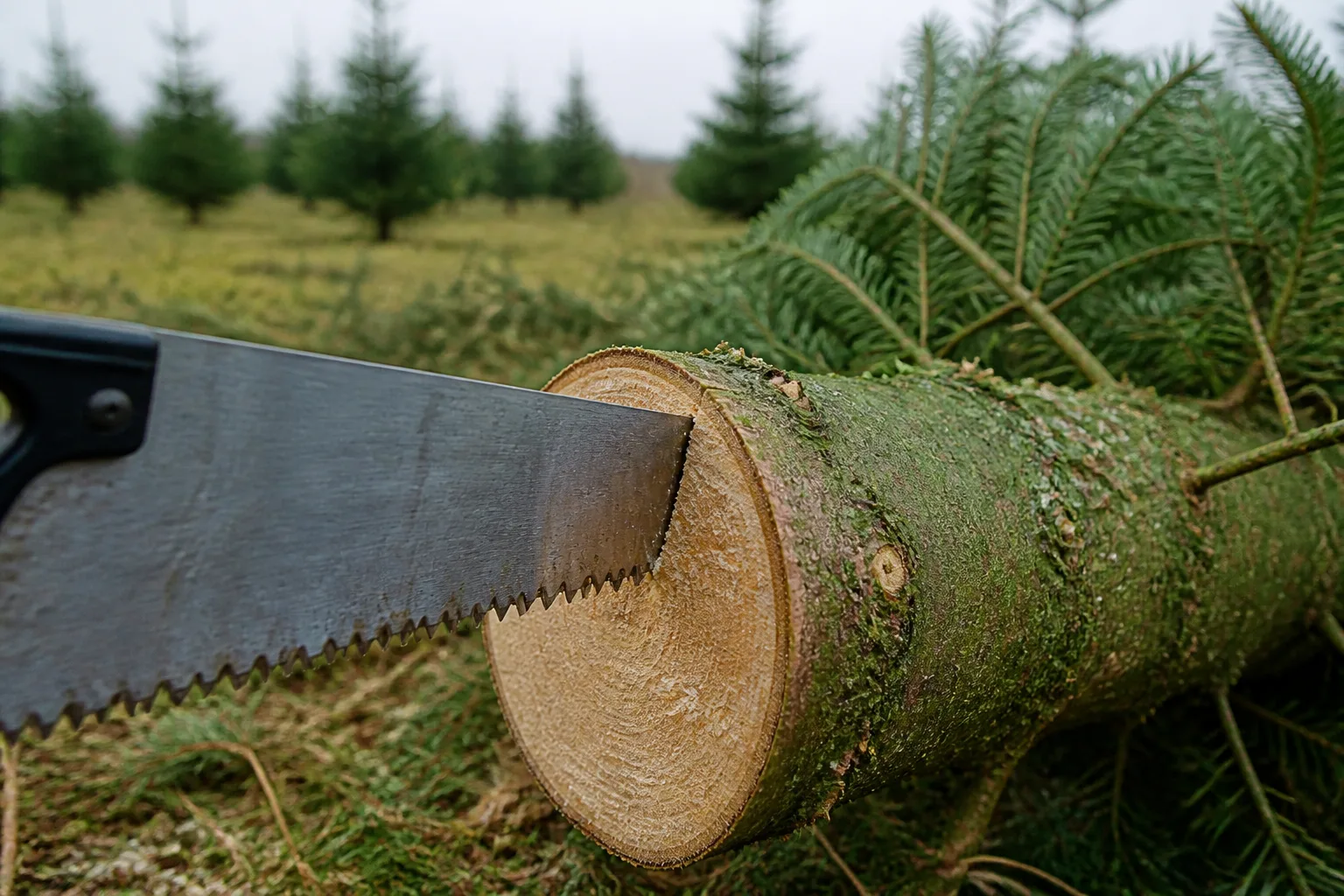
Penn State Extension advises recutting if more than about 12 hours have passed since harvest—or anytime you are unsure. Remove a thin disk, roughly one-quarter to one-half inch, cut straight across the trunk, not at an angle and not in a V-shape. Angled cuts reduce contact with the stand reservoir and make the tree harder to stabilize.
Place the tree in the stand and fill with water immediately after cutting. Do not drill holes in the side of the trunk; extension research shows side holes do not improve uptake compared with a proper reservoir stand. Do not whittle the sides of the trunk to fit a stand ring—that removes the outer sapwood layers that absorb water most efficiently.
If the tree was cut at the lot within the past few hours and went straight into a bucket of water, you may only need a light trim to level the base. When in doubt, make the fresh cut. The cost is thirty seconds; the benefit is open xylem.
Size the Stand to the Trunk, Not the Other Way Around
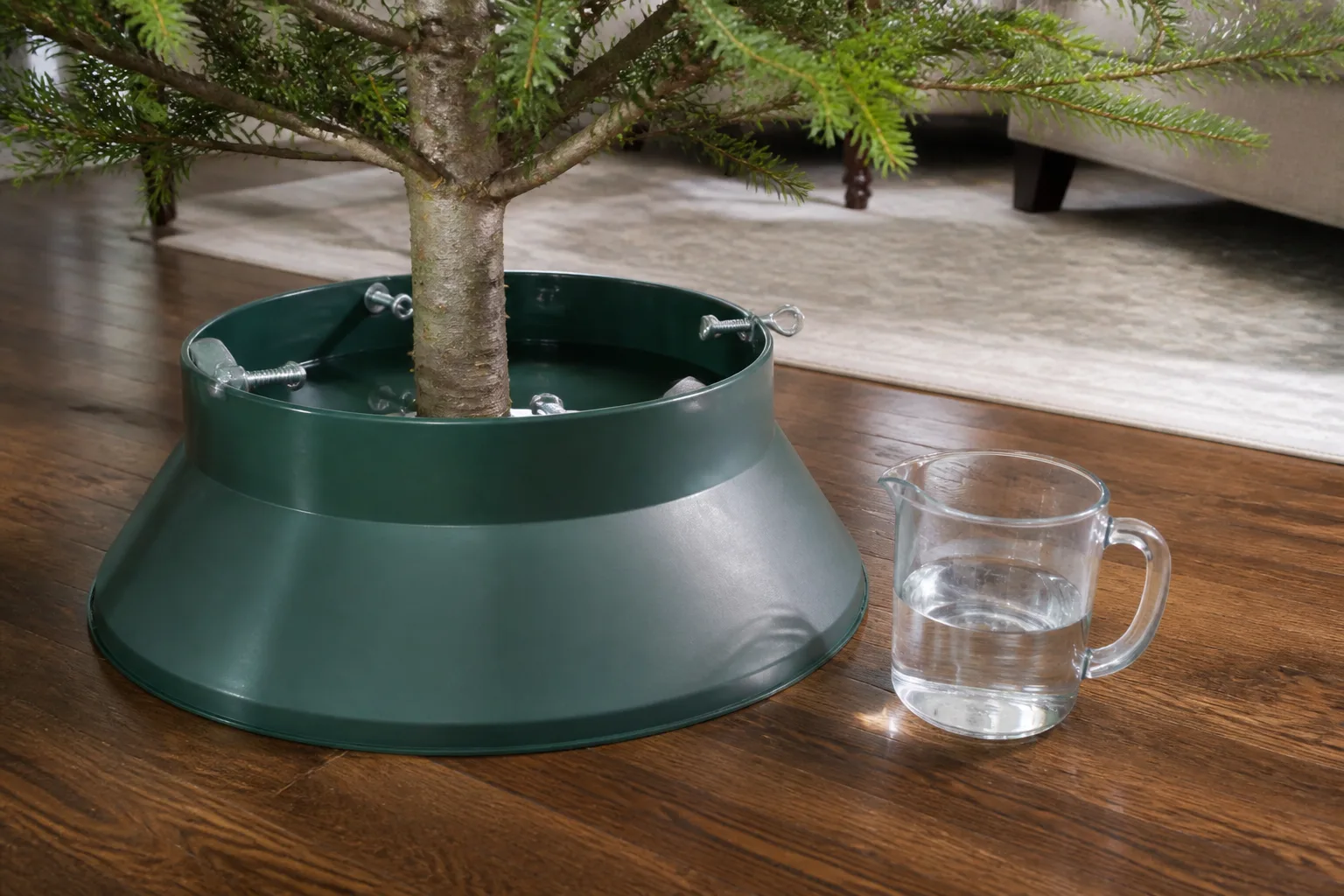
A pro-grade stand is a water tank with a stable clamp, not a decorative ring. Penn State Extension recommends a basin that holds about one quart of water per inch of trunk diameter—and at least one gallon total for most household trees. A four-inch trunk can drink a gallon or more on day one.
The center opening must accept your trunk without carving. Screw-type stands should bite into bark without crushing the cambium unevenly. If you are shopping for a new stand, our best Christmas tree stands guide explains capacity and pedal-lock models that make daily refills easier. Undersized basins are the silent killer of mid-December freshness: the tree drinks heavily early on, the reservoir empties overnight, and by morning the cut end has sealed.
Daily Water Is the Job That Matters Most
Maintaining high moisture inside the tree is the single biggest factor in reducing needle loss, according to Penn State Extension. Everything else—species, lights, room humidity—modifies that core job. Check the stand every day, including weekends and busy mornings. Refill with plain water whenever the level drops.
Never let the water fall below the base of the trunk. Many stands hide the true waterline: you can still see water in the bowl while the cut end sits dry above it. Push aside the skirt, bend down, and confirm the trunk base is submerged. The first week indoors is usually the thirstiest; after that, uptake often slows—but “slows” is not “stops.”
How Much Water a Cut Tree Actually Drinks
There is no single ounce count that fits every home, because room temperature, humidity, tree size, and light heat all change transpiration. Use the trunk-diameter rule to size the reservoir, then let daily refills tell you how fast your tree drinks. It is normal for a fresh tree to take up a surprising volume during days one through three, then taper.
If uptake suddenly stops after steady drinking, suspect a dry spell you did not notice, sap re-sealing, or a clogged cut surface from bacterial slime in the stand. Change the water, scrub the basin if it feels slick, and—if you can manage it before heavy decorating—a fresh trunk cut resets uptake better than any additive. Hot tap water in the stand once to soften sap is a folk workaround some growers try before recutting; return to cool plain water afterward.
Temperature of the refill water does not meaningfully change uptake, despite lukewarm-water myths. Penn State Extension and the National Christmas Tree Association both state that clean water at ordinary tap temperature is fine.
Plain Water Only — Skip the Additive Recipes
Social media revives the same stand cocktails every year: sugar, corn syrup, aspirin, bleach, borax, soda, floral preservative, commercial “tree food.” Growers who handle thousands of trees use plain water because cut trunks are not metabolizing nutrients like rooted plants. Iowa State University Extension is blunt: additives provide no real benefit and can increase needle loss or encourage bacterial growth that clogs the cut surface.
Penn State Extension lists molasses, honey, soft drinks, bleach, and floral preservatives among products that should not go in the stand. Sugar can attract ants and feed microbes in a warm living room. Bleach risks needle damage and is not a substitute for fresh water and fire-safe lighting. For a full additive-by-additive breakdown, read what to put in Christmas tree water—the short answer on this page will not change: plain water, daily, above the cut.
If You Cannot Decorate the Same Day
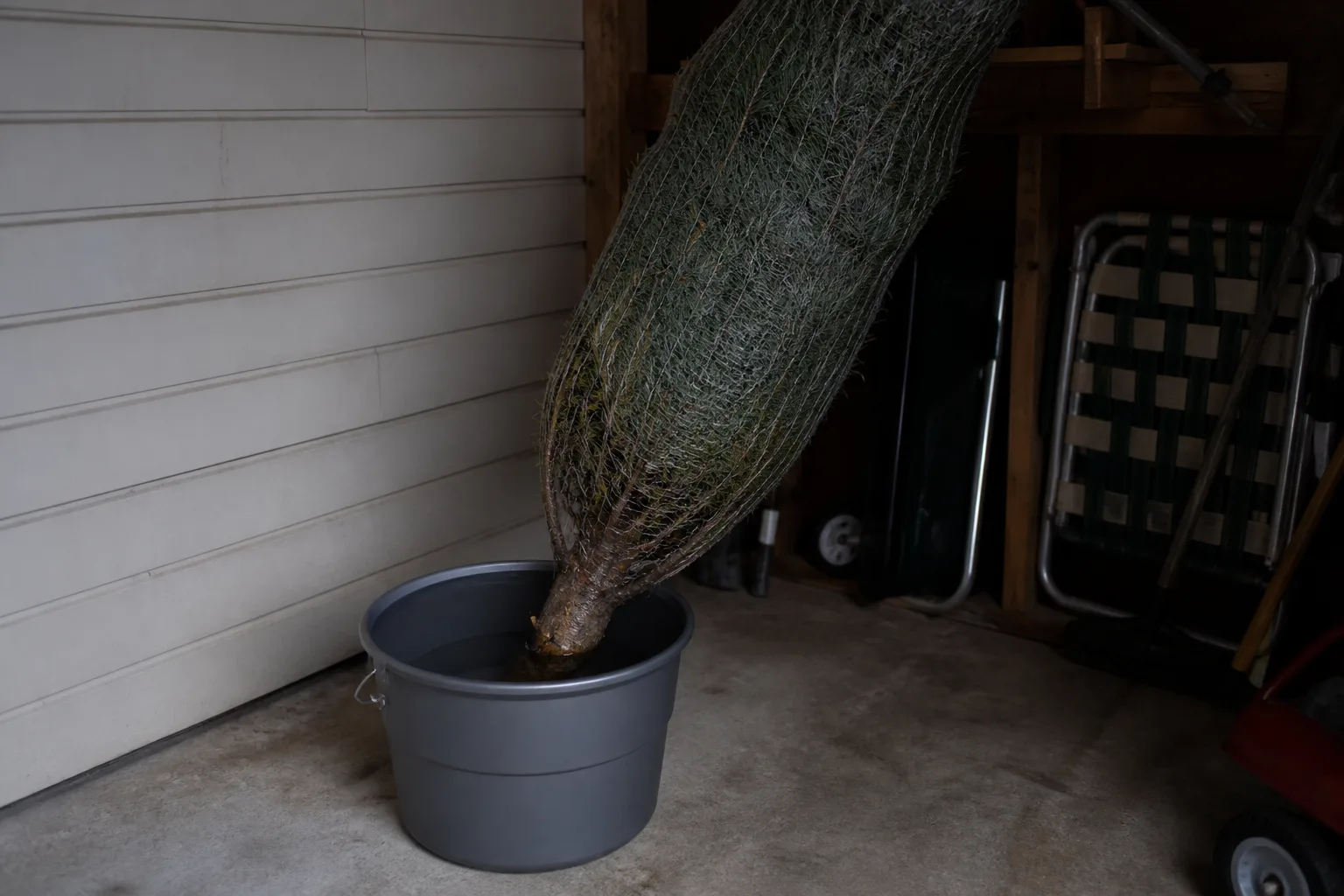
Real life interferes: you buy the tree on a Sunday but want to decorate Wednesday. Store it like a grower would—trunk in water, cool and shaded. Penn State Extension suggests an unheated garage or porch out of wind and sun, with the freshly cut trunk in a bucket kept full. BBC Gardeners’ World recommends letting a recut tree drink outdoors for a day or two before bringing it indoors when possible.
Do not lean the tree against a sunny exterior wall or leave the trunk dry while branches enjoy a drink elsewhere—the cut end matters more than misting the needles. When you move the tree inside, check the water level immediately and expect a heavy drinking day as the room heat hits the foliage.
Heat, Airflow, and Room Placement
Indoor heating pulls moisture from needles faster than the trunk can replace it when the stand slips even slightly. Professionals treat fireplaces, radiators, floor vents, and direct sun as anti-watering machines. Lowering the room temperature a few degrees slows drying and reduces daily water use, according to Penn State Extension.
Leave air space around the tree instead of stuffing it into a corner that traps heat. That also reduces fire risk and makes daily water checks easier. A humidifier can make the room more comfortable for people, but it is not a substitute for stand water—cut trees hydrate primarily through the trunk, not through foliar absorption.
Keep the Tree Clear of Dry-Air Sources
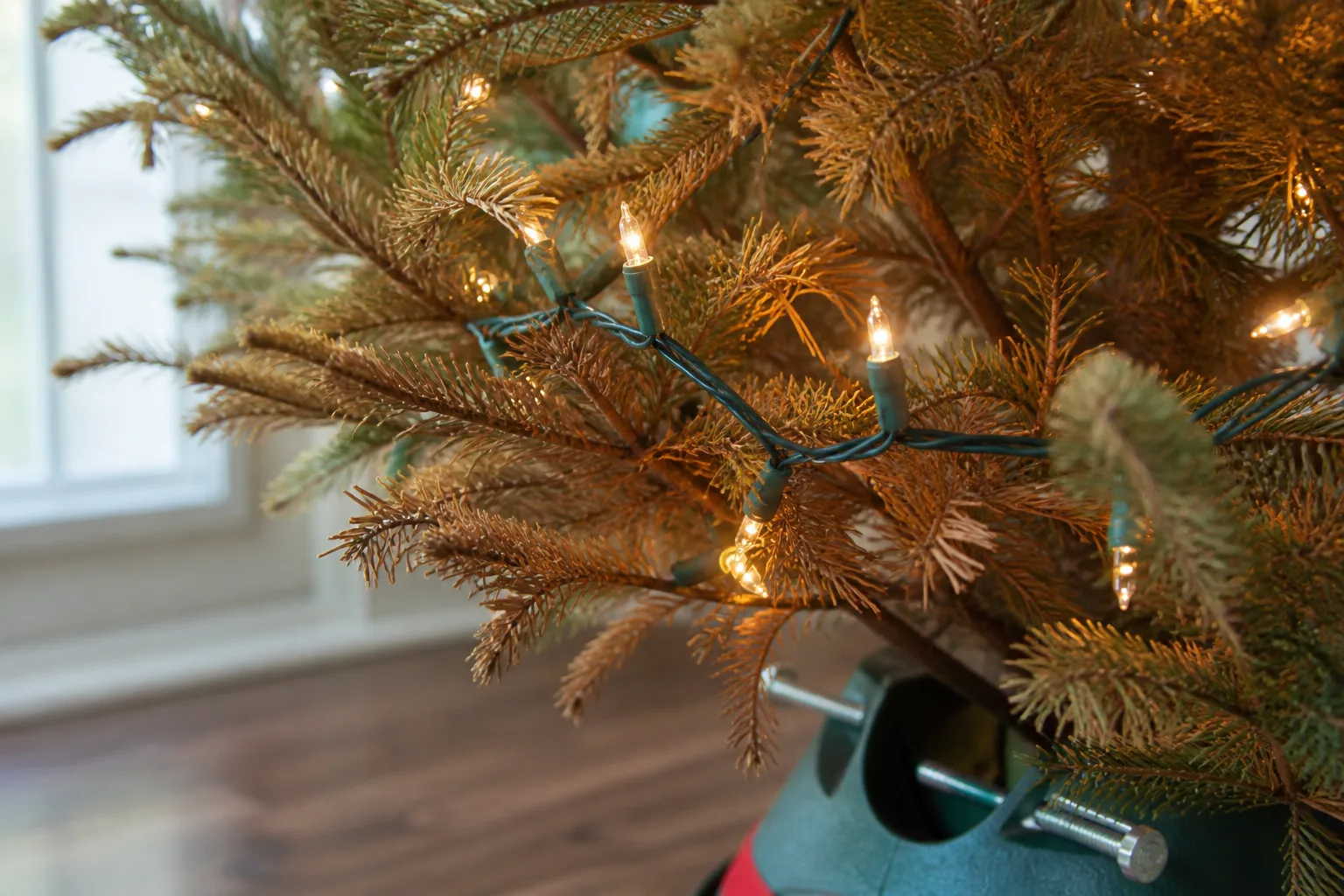
Map your room before you stand the tree up. A spot that looks perfect for photos may be a few feet from a heat register or a south-facing window. Moving the tree after it is wired with lights is a hassle—plan the cool route first. If you must choose between a perfect view and a cooler microclimate, growers choose cooler every time.
Running the fireplace with a live tree nearby is a double hit: radiant heat dries needles, and sparks plus dry foliage are a serious hazard. Many households enjoy candles elsewhere; keep open flames away from branches and dry drop zones on the floor.
LED vs Incandescent Lights: Less Heat, Less Needle Loss
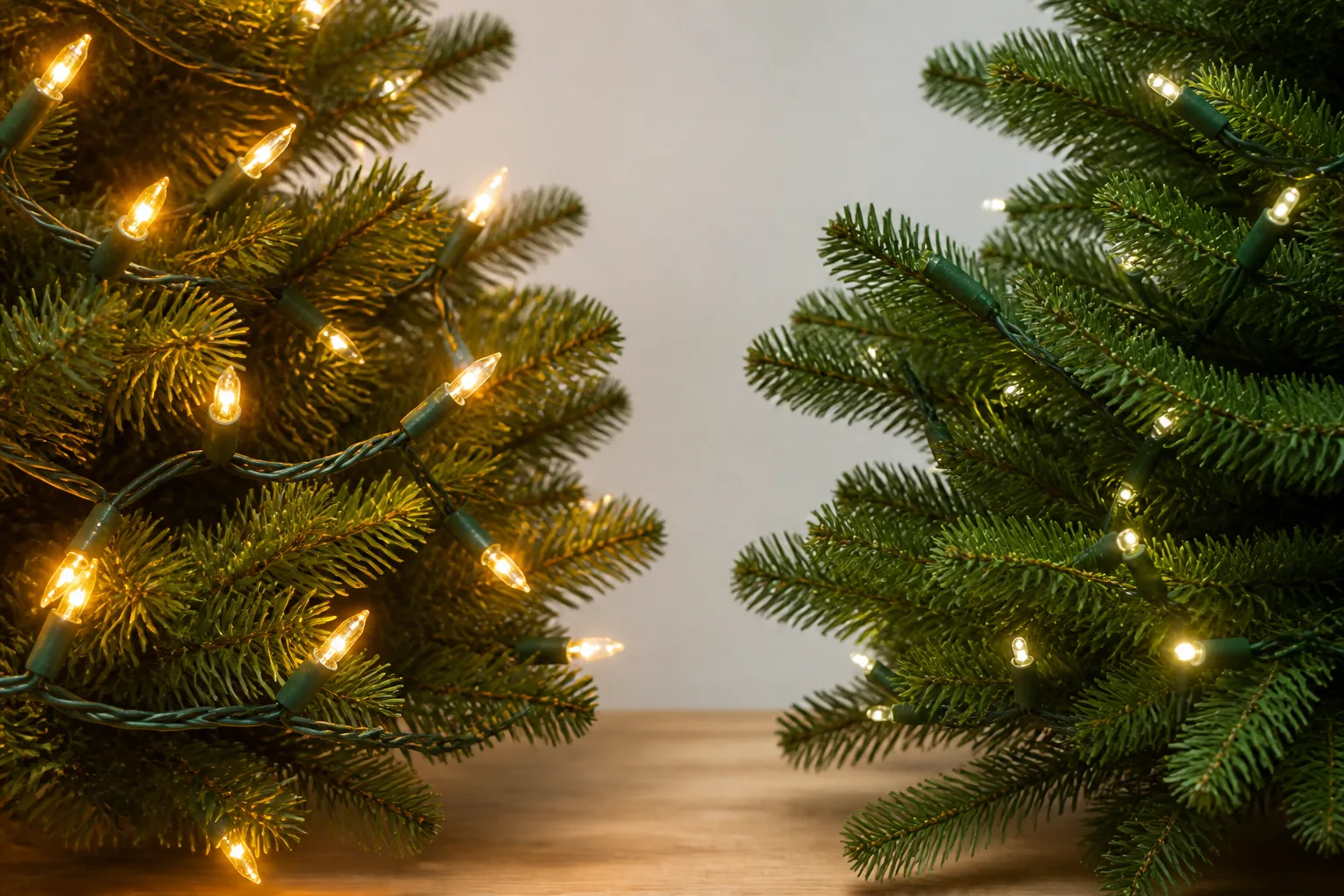
Lights are not neutral decoration—they are tiny heaters wrapped around twigs. The National Christmas Tree Association recommends low-heat lights such as modern LED mini-lights to reduce drying near branches. Older incandescent mini-lights can raise needle temperature enough to accelerate moisture loss on a tree already under indoor heat stress.
Inspect light strings for frayed wires and broken sockets before you wrap the tree. Do not overload circuits, and turn lights off when you leave the house or go to bed—a dry tree plus damaged lights is a well-documented holiday fire risk. Our guide on whether to leave Christmas tree lights on all night covers timers, LED vs incandescent heat, and NFPA safety context in more detail. The freshness takeaway here is simple: cooler lights and scheduled shutoffs preserve needles and reduce hazard.
Myths That Sound Helpful but Waste Your Time
Beyond sugar water, several “pro tips” persist because they feel scientific. Drilling holes in the trunk does not beat a good stand and fresh cut. Anti-transpirant sprays marketed to reduce moisture loss from foliage have little meaningful effect on cut trees displayed indoors, according to Penn State Extension. Water-holding gels in the stand can actually reduce the free water available to the trunk.
Spraying the tree with a garden mister might briefly cool needles but does not replace trunk uptake—and wet needles near hot lights can be unsafe. Flame-retardant sprays are not a freshness strategy; some products can damage needles and increase moisture loss. Displaying the tree in plain water with correct care reduces fire hazard far more reliably than coating branches.
Commercial tree preservatives are often repackaged floral food. Extension trials consistently show no meaningful advantage over clean water when the trunk stays cut fresh and submerged. Save the money for a stand with a larger basin.
Know When the Tree Is Too Dry to Keep
Freshness has a end point. Penn State Extension says to monitor dryness by running your fingers across needles: if they feel brittle and break easily, or fall off in your hand, the tree is dry and should be removed. A tree that stops taking water and sheds green needles rapidly will not return to peak form even if you refill the stand.
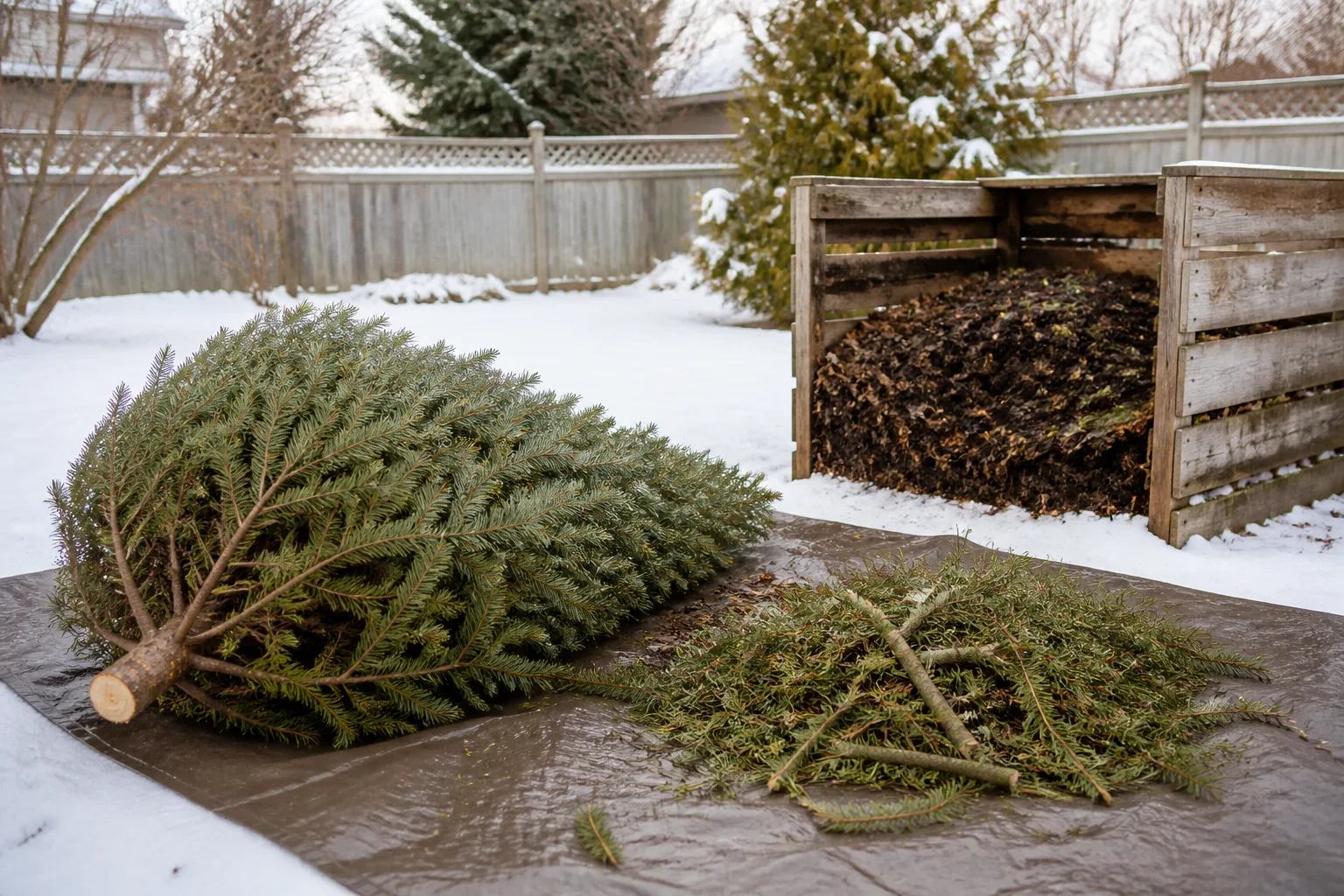
Other warning signs include dull, gray-green color; branches that no longer flex; and a stale, dusty smell instead of resinous fir scent. Once the tree is clearly dry, continuing to run lights on it trades nostalgia for risk. Unplug lights, strip ornaments, and recycle the tree through your local program. Our composting and reuse guide covers mulch, wildlife piles, and municipal pickup options after you take it down.
Conclusion
Christmas tree experts keep trees fresh the same way year after year: they buy recent moisture, reopen the trunk, match the stand to the trunk diameter, refill with plain water daily, and keep heat and hot lights from undoing that work. Species choice and shopping channel matter, but they are secondary to the plumbing-and-heat routine. Skip the stand cocktails, check the hidden waterline instead of guessing, and turn off lights when you cannot watch the tree.
Do those steps and most well-chosen trees will carry you through the holidays with scent, color, and needles still on the branches—not because of a secret ingredient, but because you treated a cut tree like the living tissue it still is for a few more weeks. When the needles finally tell you they are done, take the tree down promptly and recycle it; that last pro habit keeps your home safe and closes the season cleanly.



