How to Keep Your Home Clean With a Real Christmas Tree
Learn how to keep a real Christmas tree clean with a pre-entry shake, correct stand and fresh cut, daily water checks, smart vacuuming, and a low-mess takedown.
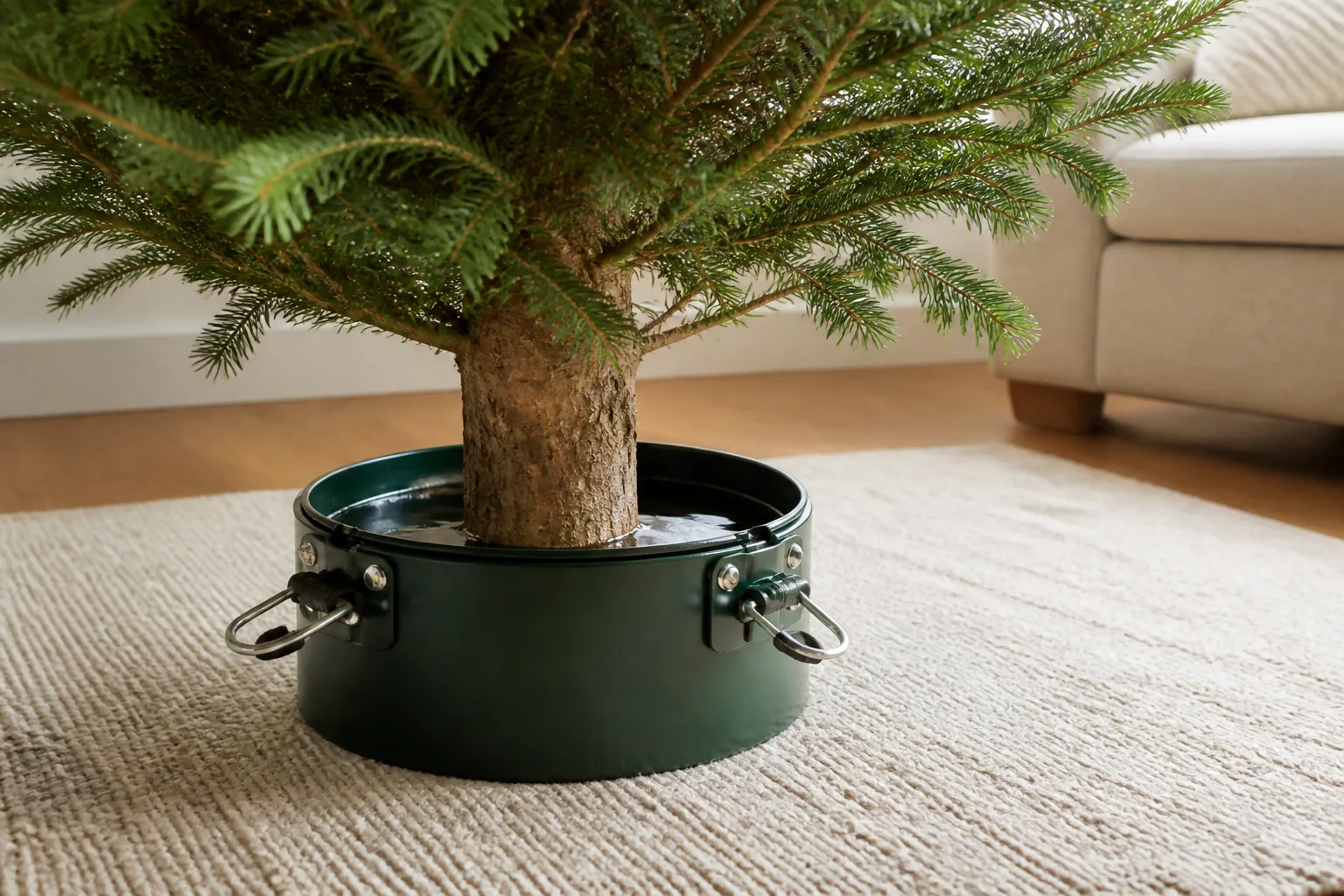
A real Christmas tree does not have to turn your living room into a carpet of needles. You cannot stop every needle from falling—especially as the tree ages—but you can prevent most of the mess by controlling four moments: the tree you choose, the way you bring it in, the way you keep its trunk in water, and the way you take it back out.
The cleanest setup is not a single viral trick. It is a small system that keeps loose debris outside, protects the floor under the stand, makes water checks easy, and gives the tree a direct exit route after the holidays. Here is how to build that system from the tree lot to recycling day.
Choose a tree that can stay fresh
Needle cleanup starts before you buy. A tree that has already lost a great deal of moisture will shed far more readily once it is carried into a warm, dry room, so freshness is a bigger predictor of floor mess than any spray, additive, or elaborate cleaning hack.
Look for bright, flexible exterior needles and branches that feel resilient rather than brittle. The National Christmas Tree Association’s selection guidance distinguishes a little natural shedding of older interior needles from excessive dryness: faded color, wrinkled outer twigs, and green exterior needles that fall with a gentle touch are warning signs. If the tree looks dusty, dull, or sparse because the outside needles are already dropping, choose another tree.
Test needle retention before you pay
Ask the seller whether the tree was recently harvested, then lift it if you safely can. A relatively heavy tree has retained more moisture than one that feels unusually light for its size. You can also tap the base of the trunk lightly on the ground or give a branch a gentle shake; a few old interior needles are not a problem, but a green shower is a reason to keep shopping.
Check the cut end of the trunk. A pale, moist-looking surface is a better starting point than a dark, dry, cracked one, although the seller’s storage and your care after purchase still matter. The BBC Gardeners’ World needle-drop guide also recommends looking for firmly attached needles and choosing a fresh tree rather than trying to rescue one that is already shedding heavily.
Match the species to your mess tolerance
Species change the cleanup burden. Norway spruce is the classic fragrant choice, but it generally loses needles faster than many firs. Nordmann fir and Fraser fir are often chosen when needle retention matters more than the strongest traditional scent; blue spruce can hold needles reasonably well, but its stiff, prickly foliage can be less comfortable to handle.
The Royal Horticultural Society’s comparison of Christmas trees notes that Nordmann fir is slow to drop its needles, while Norway spruce drops them quickly. That is a useful shopping trade-off, not a guarantee: a fresh, well-watered spruce can outperform a neglected fir, and a dry fir will still become a cleanup problem. If you dislike vacuuming, pay a little more for a lower-shed species only if it is also fresh and suits the room you have.
Build a low-mess tree zone before it arrives
Choose the tree’s location before the tree chooses it for you. The easiest home to clean is one where the stand sits on a hard, reachable surface, the tree does not block a doorway, and there is a short path from the front door or garage to the final spot.
Do not make the tree’s footprint so tight that you must scrape branches along a wall, sofa, or console table. Every bump dislodges needles, and a cramped stand is harder to refill without splashing. Leave enough room to walk behind the tree, see the water reservoir, and lift the skirt or collar for a quick check.
Measure the footprint and protect the floor
Measure the height from floor to ceiling, allowing for the stand and topper, but measure width too. A tree that fits vertically can still force furniture into the walking path. The BBC Gardeners’ World care guide specifically recommends deciding where the tree will go and measuring the space before shopping; that simple step also creates a cleaner traffic pattern.
Place a washable waterproof mat, boot tray, or low-profile floor protector under the stand before the tree comes inside. Use a tree collar or skirt over it if you want to hide the stand, but do not let the fabric cover the reservoir so completely that nobody can see whether the trunk is still submerged. A skirt is a debris catcher, not a substitute for a water check.
If the tree will sit on a rug, put the waterproof layer between the rug and the stand. A small spill can travel under a rug before it is noticed, and the first water refill is often the messiest. Keep a narrow towel and a small pitcher nearby so topping up does not require carrying a full watering can across the room.
Prepare the tree outdoors
Do the messy preparation before the tree crosses the threshold. A sheltered porch, garage, driveway, or patio gives you room to shake off loose needles, inspect the trunk, and let branches relax without scattering debris over the living room.
Keep the tree wrapped while you move it into the preparation area if the netting is holding branches close to the trunk. Once it is safely outside, set it upright or lay it on a clean sheet, depending on the size and the help available. Never try to wrestle a large tree alone; a dropped tree can injure you and break ornaments or furniture later.
Remove the netting and shake out loose debris
Remove plastic netting outside, not in the hallway. Netting holds loose needles, dry twig pieces, and sometimes small insects against the branches, so cutting it off indoors defeats the point of choosing a real tree that arrived clean.
With another adult holding the trunk, give the tree several firm, controlled shakes. You are trying to release material that is already detached, not strip healthy branches. A commercial lot may have a mechanical shaker; at home, a careful shake is enough. A leaf blower can work outdoors on its lowest useful setting, but aim it away from doors, cars, pets, and neighboring property, and do not use it to blast the tree once it is decorated.
The BBC Gardeners’ World practical sequence pairs a vigorous outdoor shake with a cool holding place and water before indoor setup. If the tree is large, walk around it and shake the lower, middle, and upper sections separately rather than yanking the top. Let the branches settle while you prepare the stand.
Make the right fresh cut
Make one clean, straight cut across the bottom of the trunk immediately before the tree goes into water. The National Christmas Tree Association recommends removing roughly a half-inch disk and cutting perpendicular to the trunk; the Durham County Extension Master Gardener guidance repeats the same rule and warns against letting the cut end dry out.
You may see advice to remove an inch or even several inches. The amount is less important than exposing fresh wood without turning the trunk into a project. If the seller cut it minutes ago and you are taking the tree directly home, ask whether another cut is needed; if the end has been exposed for hours, a fresh disk is sensible.
Do not cut a V, taper the sides, drill a hole, or whittle the trunk to force it into a small stand. These changes do not create a better water pathway, and shaving away the outer wood removes some of the most efficient water-conducting tissue. The National Christmas Tree Association’s care instructions specifically recommend a perpendicular cut and a stand that fits the trunk as it is.
Put the freshly cut trunk into a bucket of clean water right away if you are not installing it immediately. Keep the cut face clean and unbruised. If the tree must wait outdoors, shelter it from sun and wind; the goal is to slow moisture loss, not to leave it exposed beside a warm wall or in a dry garage.
Choose a stand that prevents leaks and drying
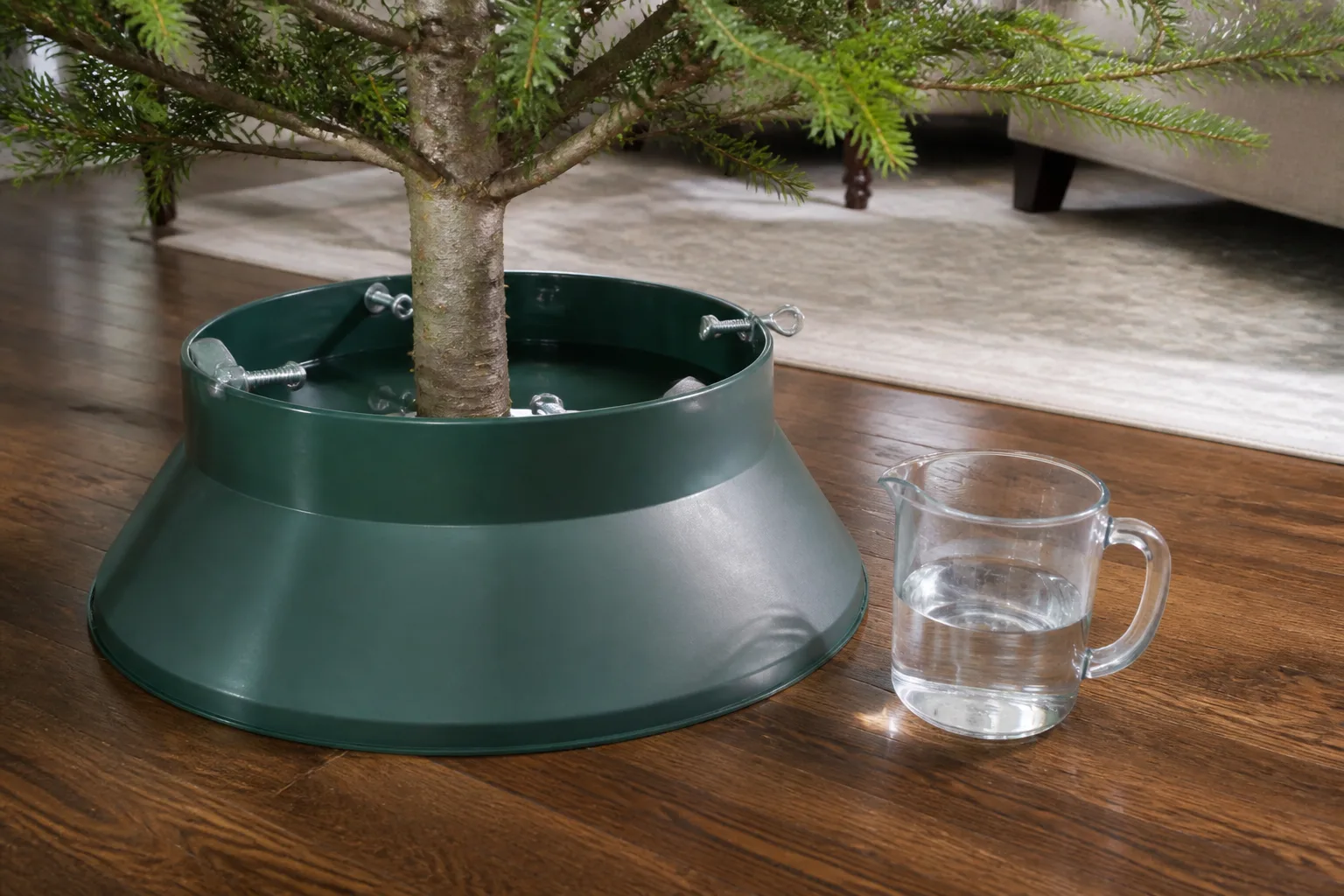
A stable water-holding stand is the centerpiece of a low-mess tree. It has to do two jobs at once: hold the trunk upright when branches are bumped and keep enough water around the base that a busy household cannot accidentally let it dry out.
Buy the stand for the trunk diameter and tree height, not just for the width of the box. The tree should sit naturally in the stand without trimming its sides. Tighten the supports evenly, then test the tree from several directions before decorating. If it sways when someone lightly brushes a branch, fix the stand now rather than after ornaments are hanging.
Size water capacity to trunk diameter
The National Christmas Tree Association uses a practical sizing rule: allow about one quart of water capacity for every inch of trunk diameter. A four-inch trunk therefore calls for a stand that can hold at least four quarts, or one gallon, while the tree is installed. This is capacity guidance, not a promise that every tree will drink exactly that amount each day.
Check the manufacturer’s usable capacity because some stands advertise total volume that is not available once a thick trunk and support hardware are in place. If the reservoir is hidden under a collar, use a water-level indicator or make a small removable opening in the cover. The NCTA FAQ points out that a stand can still contain water even after the trunk base is no longer submerged; look at the waterline, not just the presence of water in the bowl.
Use a watering routine that limits needle drop
The first days matter most. A recently cut tree may take up a substantial amount of water as it adjusts to indoor conditions, and a stand can go dry faster than expected while you are cooking, traveling, or hosting guests.
Check the level every day, preferably at the same time. For the first week, make a quick morning check and another one before bed if the tree is drinking quickly. You do not need to measure every refill; you do need to make sure the cut end never rises above the waterline. Once the intake slows, keep the daily habit because room temperature, tree size, and humidity can change.
Use plain water and check the hidden waterline
Use clean plain tap water unless your local water is not safe for household use. Do not add sugar, bleach, aspirin, fertilizer, soda, flower food, or a homemade preservative in an attempt to prevent needle drop. The NCTA FAQ says plain water is best and that some additives can harm moisture retention or increase needle loss.
Water temperature is not the magic variable. You do not need to carry boiling water, warm water, or an expensive treatment to the stand; reliable water access and a fresh cut do more than a recipe. If you forgot the initial cut, do not panic: keep the stand full, watch the tree itself, and consider making a fresh straight cut if the setup can be safely taken down.
If the waterline fell below the trunk, refill the reservoir immediately. The tree may continue to look green for a while even though uptake has been impaired, so a full bowl is not proof that the tree is rehydrating. Never pour water onto a power strip or light connection, and wipe spills before they reach a cord.
Place and decorate for freshness
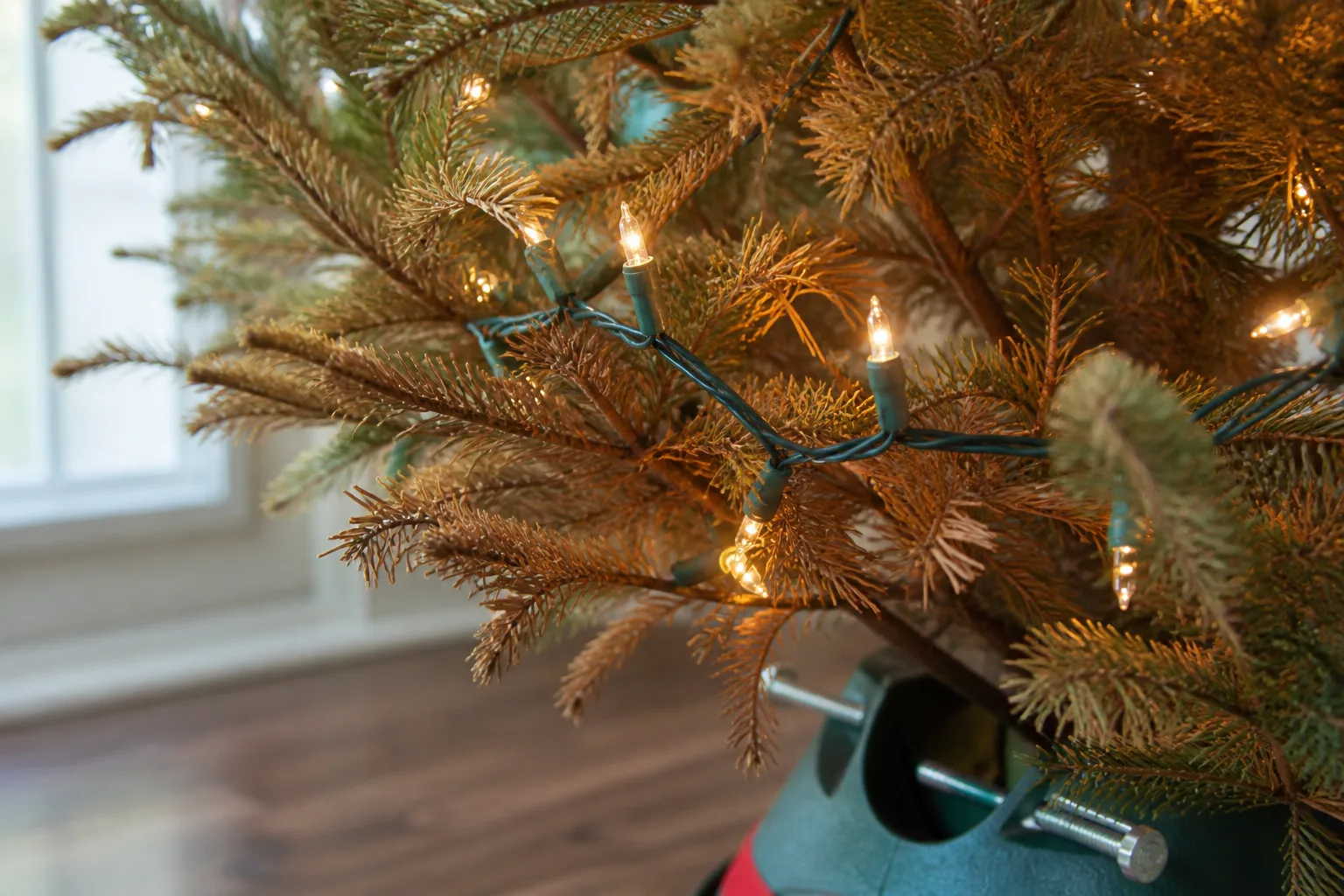
Treat heat as both a freshness problem and a safety problem. A sunny window, fireplace, wood stove, radiator, heat vent, or space heater can dry a tree faster and make its branches more brittle. The RHS advises placing indoor trees away from fires and radiators because excess moisture loss leads to needle drop.
Use low-heat LED or miniature lights that are in good condition, and inspect the wires, plugs, and sockets before installation. Do not overload a circuit, pinch a cord under the stand, or use a light set with cracked insulation. Turn lights off when you leave or go to bed; a timer can make that habit automatic.
Keep heat, sun, and foot traffic away
Leave a buffer between the tree and any heat source, following the appliance and fire-safety guidance for your home. If the only available location is beside a vent, close or redirect the vent if that is safe and permitted, or choose a smaller tree that can move to a cooler spot. Lowering the room temperature a little when the room is empty may reduce drying, but do not create a cold shock or a drafty path that makes the tree unstable.
The NFPA reports that U.S. fire departments responded to an estimated average of 143 home fires that began with Christmas trees each year from 2020 through 2024, and that a heat source too close to the tree caused nearly one in four of those fires. Its holiday guidance also notes that dry trees become increasingly flammable and that these fires can grow quickly NFPA holiday fire-safety guidance. Watering is important, but distance from heat and sound lighting are not optional extras.
Use lighter ornaments near the tips and keep fragile, sharp, or tempting decorations away from toddlers and pets. Arrange the tree so people do not brush past its lowest branches all day. Fewer knocks mean fewer needles, fewer broken ornaments, and less chance that the stand will shift.
Clean around the tree without spreading needles
Aim for small, frequent resets rather than a dramatic weekend cleanup. Once a day, look around the stand, under the lowest branches, and along the route people use to pass the tree. Pick up large twigs by hand or with a dustpan, then vacuum the remaining dry needles on a setting that does not force them deep into the rug.
For hard floors, use a soft brush attachment or a broom and dustpan. For rugs, loosen needles with a rubber broom or gentle sweep before vacuuming if the needles are catching in the pile. Avoid pushing a thick layer of needles through a beater bar; long, resinous needles can wrap around a brush roll, and the agitation can make the mess spread. Empty the canister or bag before it is packed so the vacuum continues to maintain suction.
Keep the tree skirt or collar clean by lifting it from one edge and folding debris toward the middle, not by snapping it in the room. Shake fabric outdoors. If the stand leaks, stop watering long enough to locate the leak, place a basin or towel under the reservoir, and fix the stand before the next refill; a permanently wet mat can damage wood floors and create a larger cleanup than the needles.
Know what to do when needles, sap, or bugs appear
Some interior-needle drop is normal, especially when you handle the tree or brush past older inner branches. The pattern matters: a few dry needles beneath the canopy are expected, while widespread green-needle shedding, faded color, wrinkled twigs, brittle branches, or a tree that feels dry indicate that freshness is failing.
If the tree is shedding heavily, check the waterline first, then check placement. A full stand cannot reverse severe drying, and misting the branches does not replace water at the trunk. Move the tree away from heat, keep the stand full, and shorten the display if the tree has become brittle; a very dry tree belongs out of the house.
Sap is easiest to manage by preventing contact. Keep the waterproof mat in place, avoid dragging the trunk across upholstery, and do not use harsh solvent on a finished floor or fabric without checking the care label. For a small spot, let sap harden and lift it gently with a dull edge before using a material-appropriate cleaner; test in a hidden area first.
Small insects or spiders are uncommon but possible. The outdoor shake and inspection do most of the work, so do not fog or spray a decorated tree as a routine. If you see a persistent pest issue, unplug the lights, identify the insect, and use only a product specifically labeled for the intended indoor ornamental use, following its label; for a few visible insects, vacuuming is the safer first move.
Take down the tree without a needle trail
Do not wait until the tree is extremely dry just because you want to keep it up a few more days. The NFPA’s current holiday information notes that 35 percent of Christmas tree fires occur in January, and the NCTA recommends removing a tree after Christmas or sooner if it has become very dry National Christmas Tree Association care tips. A prompt takedown is cleaner and safer.
Before touching the tree, unplug and remove lights and ornaments, working from the outside toward the trunk. Put ornaments directly into their storage container instead of setting them on the floor, and keep a box or bag at the exit for hooks and broken pieces. Remove the skirt or collar last after you have captured the loose debris around the stand.
Use the sheet-and-branch method
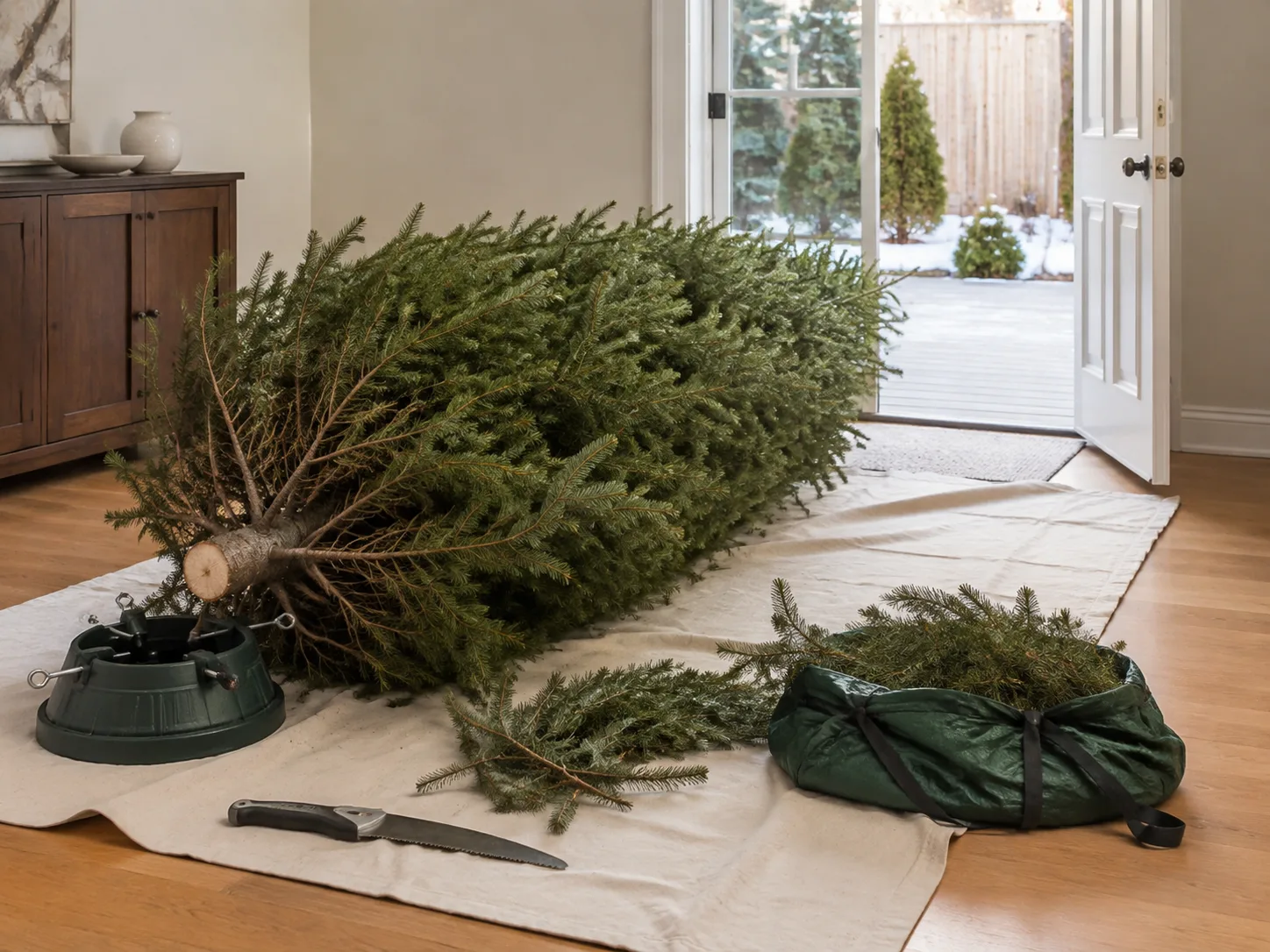
If the tree must travel through a house, lay a large sheet or painter’s drop cloth around the base, with enough extra fabric to fold over the branches. Have one person steady the trunk while another loosens the stand. Once the tree is down, wrap it from the bottom upward and carry the bundle through the shortest route to the door.
For the lowest-needle option, cut the tree into manageable sections while it is on the sheet. Use secateurs for small branches and a pruning saw for thicker limbs, keeping your hands away from the cutting path and wearing sturdy shoes and gloves. Place each branch section directly into a yard-waste bag, a collection bundle, or a garden pile rather than making a second trip through the room.
If your door is close and the tree is still flexible, two adults can carry it out whole with the top pointing toward the exit. Keep the sheet underneath, move slowly, and do not drag the trunk. After the tree is outside, roll the sheet inward, carry it out, then vacuum the now-empty footprint once.
Check the disposal rules before cutting the tree. Many communities collect trees for chipping, mulch, or habitat projects, but dates, bundle lengths, and acceptable drop-off sites differ. Remove every ornament, hook, light, tinsel strand, plastic bag, and stand before putting the tree at the curb; the RHS Christmas tree guide and BBC Gardeners’ World disposal advice both point readers toward local recycling or garden-reuse options.
Never burn a Christmas tree in a fireplace or wood stove. The resinous wood and rapidly drying branches can create a dangerous fire and chimney problem. If you have a garden, chipped branches can be useful as a temporary mulch or wildlife pile when local conditions and your compost system make that appropriate, but do not leave a large dry tree beside the house while deciding.
Conclusion
The best way to keep your home clean with a real Christmas tree is to reduce the mess before it enters the room and keep the tree from drying out once it is there. Choose a fresh, lower-shed tree if that trade-off suits you, shake it outdoors, make a clean perpendicular cut, install it in a stable water-holding stand, and check the waterline every day.
Then make cleanup easy on yourself: protect the floor, keep the tree away from heat and high-traffic paths, use a gentle vacuum routine, and plan the exit before the branches become brittle. A few needles are part of the bargain, but a fresh tree, a reachable reservoir, and a sheet-based takedown keep that bargain comfortably manageable.



