How to Deadhead Hydrangeas Safely
Deadhead hydrangeas with confidence: identify the type, choose the right timing, make the smallest cut, and know when leaving flowers is safer.
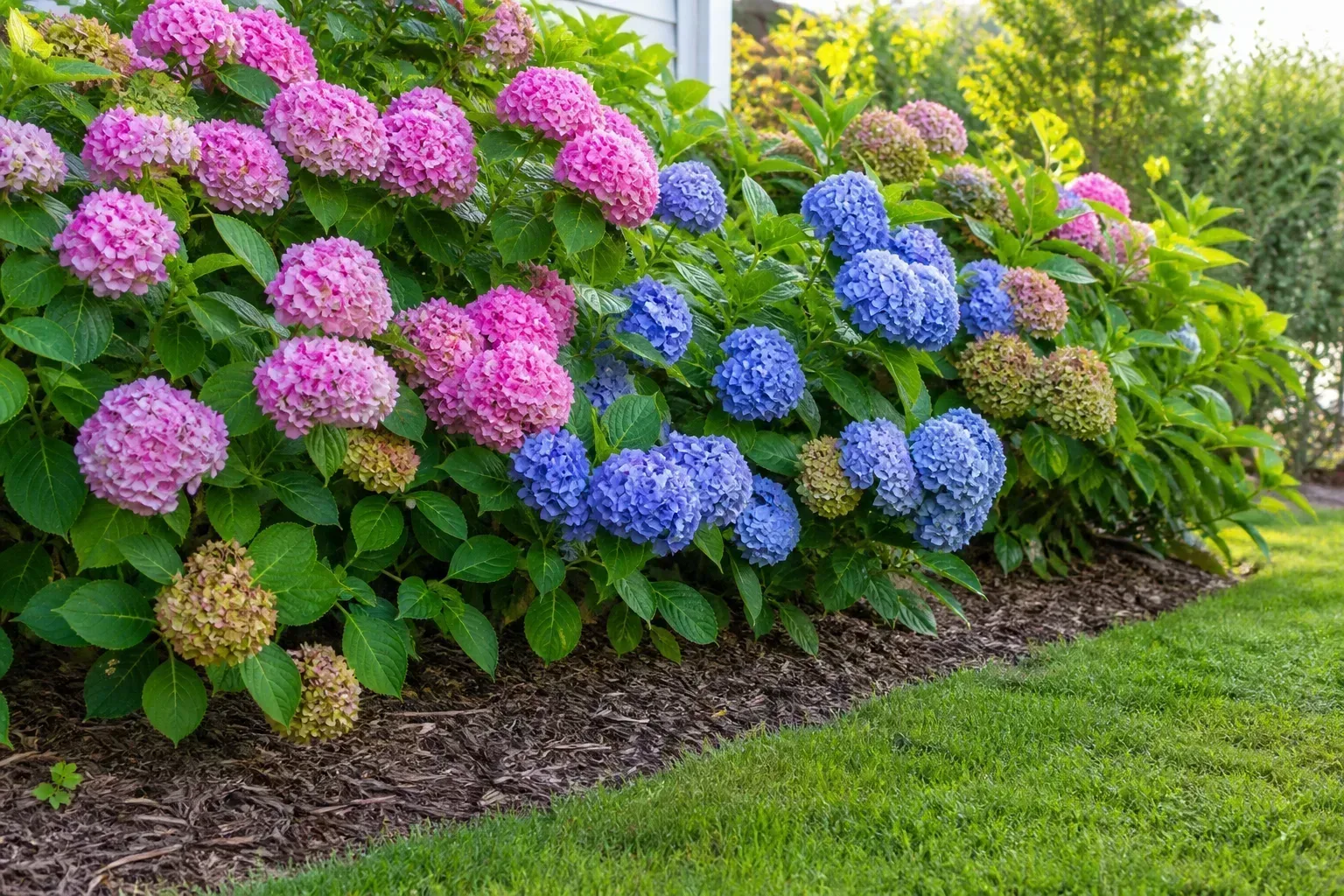
The safest answer is to make the smallest useful cut
You can deadhead hydrangeas, but the safest technique is deliberately modest: remove the faded flowerhead and only enough stem to reach the first healthy leaf pair below it. Do not automatically cut the branch down to the shrub’s framework. On many hydrangeas, that longer section of stem is already carrying next year’s flower buds.
If you do not know the cultivar, or the season is already late, leaving the dried head in place is a valid gardening decision. The plant will not collapse because you skipped one cleanup job. You can enjoy the winter texture and identify the shrub before making a more consequential cut.
The key question is not simply “What month is it?” It is “Where are this plant’s next flowers being made?” Bigleaf, mountain, oakleaf, and climbing hydrangeas generally carry flowers on older stems. Panicle and smooth hydrangeas make flowers on new growth. Reblooming cultivars can use both, so they still deserve a light touch even when they seem forgiving.
Deadheading and pruning are two different jobs
Deadheading removes a spent flowerhead. Pruning shortens, removes, or reshapes stems and branches. A pair of bypass pruners may be used for both jobs, but the intention and the amount of wood removed should be different.
The distinction prevents the most common hydrangea mistake: starting with a brown bloom and ending with a sheared shrub. When you deadhead, follow the flower stem only until you reach a healthy leaf pair or node. When you prune, you are making a structural decision that must be timed to the hydrangea’s bloom habit.
The RHS hydrangea pruning guide treats mophead and lacecap hydrangeas differently from panicle and smooth types because they carry their flower potential in different places. Use that distinction as your safety check before you make a cut.
Deadheading is also optional for many hydrangeas. It can tidy the shrub, remove a storm-battered head, and make it easier to see damaged stems. It is not a guaranteed way to produce another flush of flowers, and it cannot replace adequate water, light, roots, or winter protection.
Identify the hydrangea before you touch the stem
You do not need to know the exact cultivar to make a safer decision, but you should try to identify the plant’s broad type. Use the flower shape, leaf shape, bloom timing, and the plant tag together. A cone-shaped head suggests a panicle hydrangea, while a round mophead or flat lacecap with broad leaves often points to a bigleaf or mountain type.
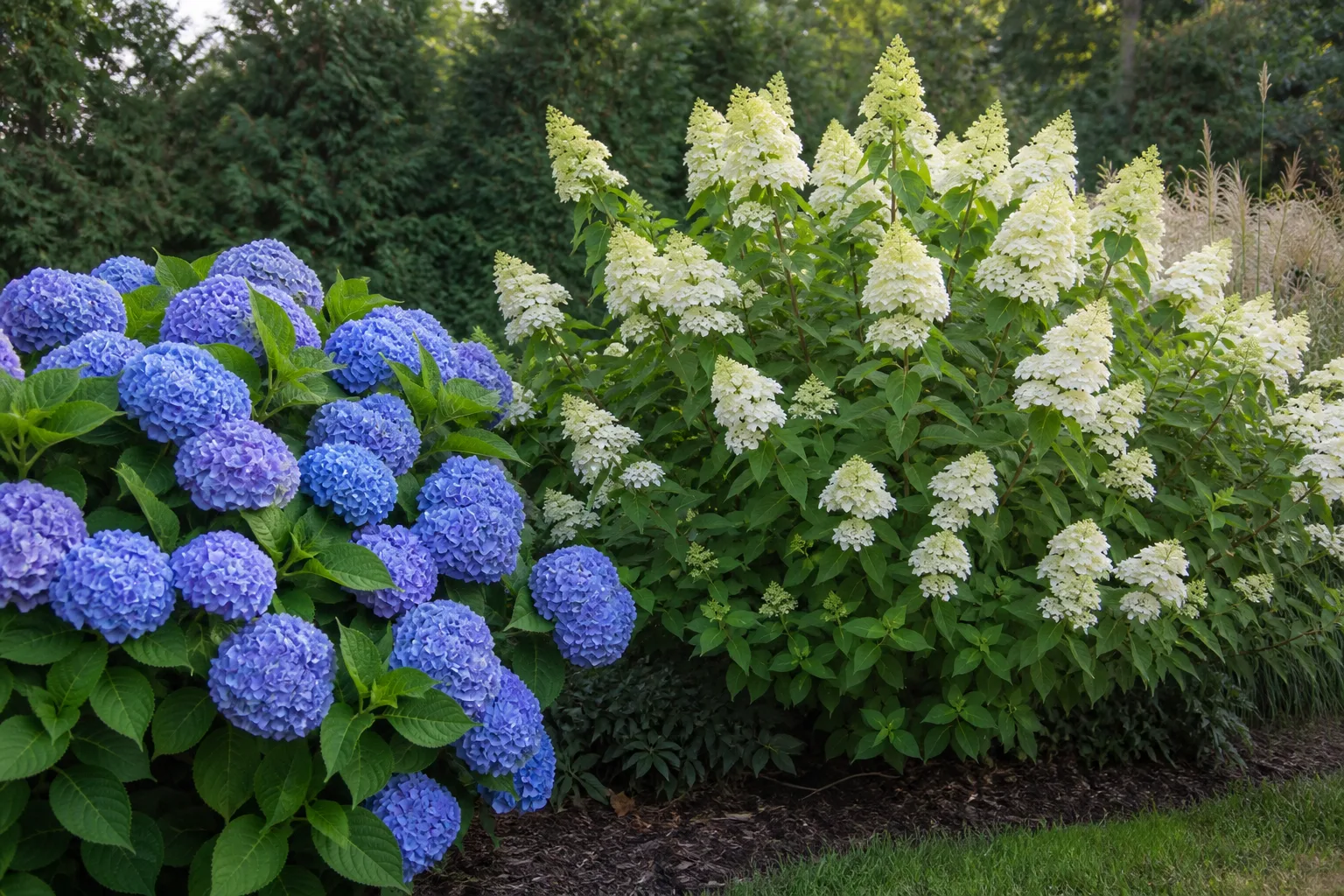
Old-wood types: bigleaf, mountain, oakleaf, and climbing hydrangeas
Old-wood hydrangeas form many of their flower buds on stems that grew during the previous season. The group includes bigleaf hydrangeas (Hydrangea macrophylla), mountain hydrangeas (H. serrata), oakleaf hydrangeas (H. quercifolia), and climbing hydrangeas (H. anomala subsp. petiolaris). Bigleaf types include both familiar mopheads and lacecaps.
The NC State Extension profile of bigleaf hydrangea describes its flower clusters and notes that flowers are borne on the previous season’s growth. That is why an old-wood shrub can look healthy after a fall haircut and still produce very few flowers the following summer: the cut removed the buds before they opened.
For these types, deadhead soon after the flower has finished if you need the shrub tidied. Follow the stem down only to the first strong pair of leaves or a visible healthy node. If late summer is already well underway, or the plant is in a cold, windy site, leave the flowerhead unless it is diseased or broken.
Oakleaf hydrangeas deserve the same restraint even though their cone-shaped flowers can make them look like panicle hydrangeas. The Missouri Botanical Garden’s oakleaf profile records that they bloom on old wood and need little pruning, with substantial bud loss possible after harsh winters. Do not identify a shrub by flower shape alone.
New-wood types: panicle and smooth hydrangeas
Panicle hydrangeas (H. paniculata) and smooth hydrangeas (H. arborescens, including ‘Annabelle’) make their flower buds on new shoots produced in spring. They are usually more tolerant of structural pruning in late winter or early spring, before those flowering stems develop.
That flexibility does not make a late-summer chop necessary. After the flowerheads fade, you can remove them for appearance, but do not use deadheading as an excuse to cut every branch to the same height. Leave the shrub’s leaves and stems to finish the season, then do size reduction or framework pruning in the plant’s proper dormant-season window.
The Fine Gardening hydrangea pruning guide groups panicle and smooth hydrangeas as new-wood bloomers and contrasts them with old-wood types. The practical takeaway is simple: new wood gives you more freedom for the next structural prune, not permission to make every cut whenever the flowers fade.
Reblooming cultivars need a two-season approach
Reblooming bigleaf cultivars can flower on old and new wood. That means they may recover from winter damage or produce a later flush, but it does not mean every stem is expendable. A deep cut can still reduce the first flush, which is often the largest or earliest display.
If you want to encourage another flush on a rebloomer, remove the finished head promptly and lightly. Once the season is moving toward late summer, stop shortening live stems. Keep the plant watered and let it harden growth rather than chasing one more round of flowers with increasingly deep cuts.
Let the bloom and the calendar tell you when to act
Start with the flower, not a date on the calendar. A head that is still attractive, changing color, or providing structure can stay. A head that is brown, papery, collapsed, or damaged can be removed if the cut will not take you deep into live stem.
For an old-wood hydrangea, the lower-risk window is shortly after flowering, before the plant’s next buds become difficult to distinguish from ordinary nodes. In cold or exposed gardens, early spring is often safer for mophead cleanup because the dried heads can help shield tender buds over winter. The RHS hydrangea guidance specifically recommends leaving faded mophead flowers over winter in many situations, then cutting back to the first strong bud pair in early spring.
For a new-wood hydrangea, a faded flower can usually be tidied later without deleting the next year’s flowers, because those flowers will form on spring growth. Even then, a cosmetic deadhead is not the same as late-season size control. Wait for late winter or early spring to reshape the plant.
General deadheading advice often says to remove spent flowers as soon as they look untidy. The RHS deadheading guide gives that useful rule for many garden plants, but hydrangeas add a species-specific exception: preserving old-wood buds and winter protection can matter more than immediate neatness.
When leaving a dried flowerhead is the smarter choice
Leave the head when the shrub is an unidentified old-wood type, the flower is still decorative, winter interest matters to you, or a cold snap is approaching. Dried hydrangea heads can look good through winter, and leaving them buys time to confirm the variety instead of making a guess with pruners.
Remove a head promptly if it is clearly diseased, broken and dragging on the plant, or creating a problem that cannot wait. Put diseased material in the appropriate waste stream rather than adding it to home compost, and disinfect the blade before moving to another shrub.
How to deadhead a hydrangea step by step
Deadheading is a short job when you decide what not to cut. Work one flowerhead at a time so you can read the stem, rather than grabbing a hedge trimmer or making a uniform cut across the entire plant.
Clean the pruners and choose your target
Use sharp, clean bypass pruners or secateurs. Wipe soil and sap from the blades, then disinfect them if you have been cutting diseased material or moving between plants. Gloves are optional, but they help when stems are rough or the shrub is dense.
Choose one flowerhead that is fully spent. Do not cut a head simply because one outer floret looks brown while the rest of the cluster is still opening. Hydrangea clusters age unevenly, so waiting until the overall head has finished prevents needless cuts.
The Ideal Home tool-and-cut walkthrough also recommends sharp, clean tools and locating the first healthy leaves or node below the faded bloom. That is a practical way to make the cut visible and repeatable without turning a deadhead into a branch removal.
Trace the flower stem to the first healthy leaf pair
Start at the flowerhead and follow its stalk down. Look for the first pair of full-sized, healthy leaves or a strong node. On old-wood types, this is your stop point. If the first leaves are damaged, tiny, or already dead, continue only to the next clearly healthy pair; do not keep descending just because the stem is long.
Make sure you are following the flower’s own stem rather than a larger branch that supports several shoots. The larger branch is part of the shrub’s framework. Cutting it is pruning, not deadheading, and it may remove multiple future flowering points.
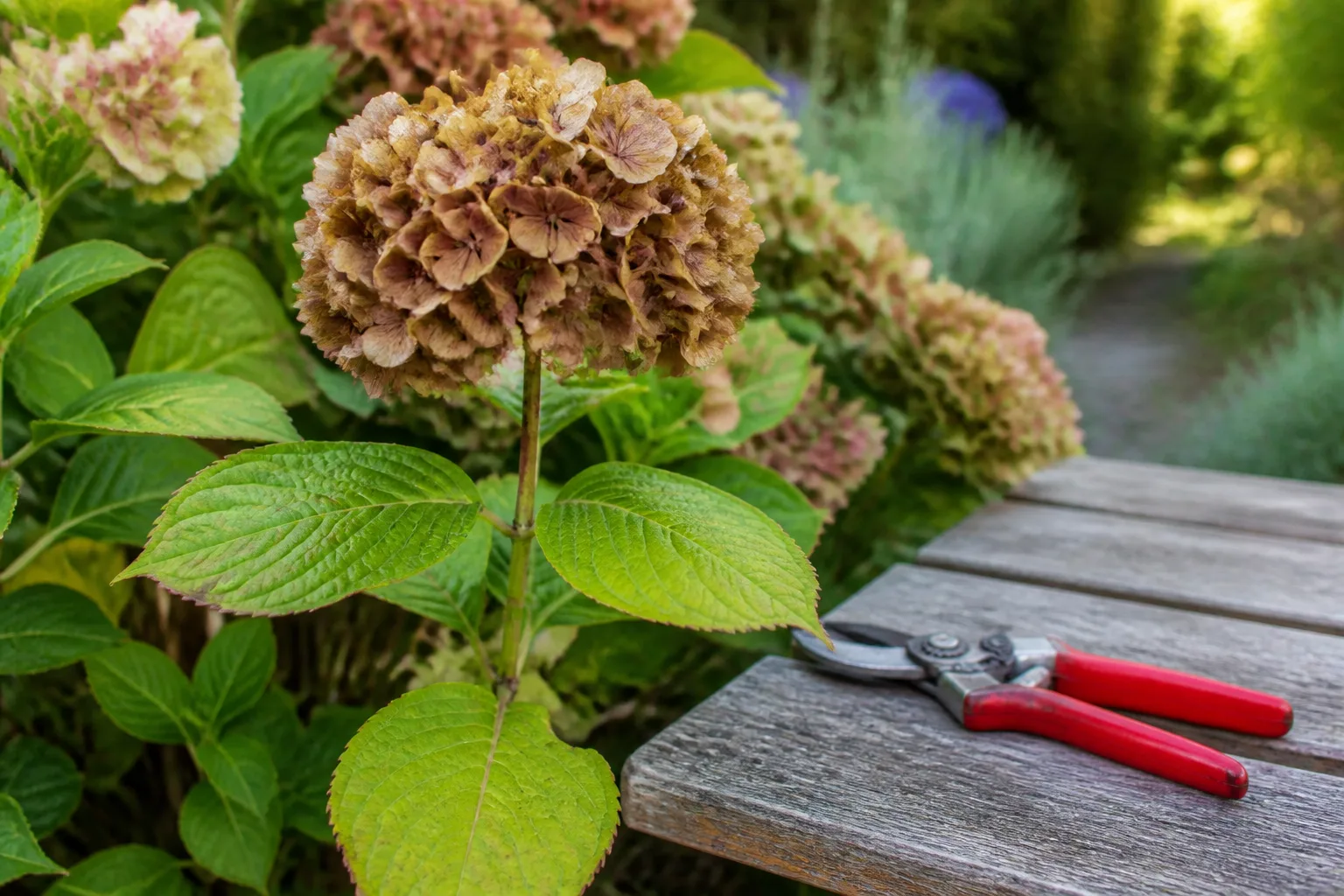
Make a clean cut and stop before it becomes pruning
Position the blades just above the healthy leaf pair or node, leaving a small amount of stem rather than cutting into the node itself. Make one clean cut. An angled cut is fine if it helps water run off, but precision and a clean blade matter more than a dramatic angle.
Drop the spent head into a bucket, then pause and look at the remaining stem. If the next cut would remove a leaf pair, a cluster of live buds, or a substantial branch, stop. The job is finished even if the shrub is not perfectly symmetrical.
Repeat only for heads that meet the same test. A naturally uneven shrub is safer than a uniformly shortened one, especially when the hydrangea is old-wood, reblooming, or unidentified.
Where to cut by hydrangea type
Use this table as a field guide, not as a substitute for the plant tag or local extension advice.
| Hydrangea type | Safer deadheading window | Cut point | What to avoid |
|---|---|---|---|
| Bigleaf mophead or lacecap | Soon after flowering; early spring cleanup is often safer in cold sites | First strong healthy leaf pair below the faded head | Deep late-summer or fall cuts into bare stem |
| Mountain | After flowering, with the same conservative approach as bigleaf | First healthy leaf pair or node | Treating it like a panicle because the head is flat or small |
| Oakleaf | Soon after flowering if needed; otherwise leave heads | Just above a healthy leaf pair | Fall shearing and unnecessary framework pruning |
| Climbing | After flowering for overlong shoots, not routine deep deadheading | Remove the spent head or shorten only an overlong shoot | Cutting the flower-producing upper growth indiscriminately |
| Panicle | When flowers are no longer attractive; structural pruning later | Remove the head without shortening the framework | Late-summer hard pruning for size |
| Smooth | When flowers are spent; structural pruning in late winter or early spring | A shallow cosmetic cut | Removing all live stems after bloom |
| Reblooming bigleaf | Soon after a finished flush, then stop as the season advances | First healthy leaf pair, with minimal stem removal | Assuming reblooming means old-wood buds do not matter |
The chart’s central rule is easy to remember: the less certain you are about the type, the less stem you should remove. If the plant is healthy and the head is merely unattractive, waiting is always available.
What deadheading can improve—and what it cannot
The reliable benefit is appearance. Removing spent heads can make a border look cared for, clear away storm-damaged tissue, and reduce the amount of dead flower material caught inside a dense shrub. It can also make it easier to inspect stems for breakage or winter injury.
Deadheading may reduce the plant’s investment in seed production, but that benefit is easy to overstate for hydrangeas. Many cultivated flowerheads are dominated by showy sterile florets, and a healthy shrub can continue growing well without routine deadheading. Gardening Know How’s hydrangea deadheading guide likewise notes that missing the ideal window is unlikely to cause a short-term decline.
Do not expect a one-time old-wood hydrangea to rebloom just because you removed the brown head. Reblooming depends on cultivar genetics and growing conditions. Deadheading can help a known rebloomer move on after a finished flush, but it cannot create new flower buds where the plant is not capable of making them.
It also cannot repair drought, excessive shade, root damage, winter-killed buds, or a cut made too low on an old-wood stem. If the shrub flowered poorly, diagnose those factors separately instead of repeating the deadhead more aggressively.
Mistakes that remove next year’s flower buds
Using one calendar rule for every hydrangea. “Always deadhead in fall” and “never touch hydrangeas until spring” are both too broad. Bloom habit, climate, winter exposure, and the cultivar’s ability to rebloom all change the safer choice.
Cutting below the first healthy leaf pair. This is the classic accidental prune. Once the spent head is gone, there is no visual reason to keep cutting, and the lower stem may already carry next year’s buds.
Shearing the whole shrub for symmetry. A hedge trimmer removes flower-bearing tips across many stems at once. Hydrangeas are not formal hedges; their natural framework is part of how they flower.
Treating a panicle like a mophead—or vice versa. The flower shape can mislead you, especially with white or aging heads. Check leaf shape, stem habit, plant tag, and the previous season’s bloom timing before making a structural cut.
Removing attractive winter heads too early. Dried flowers can provide winter texture and may help shelter buds on old-wood mopheads. Cleanup is not an emergency when the head is healthy and the plant is entering dormancy.
Calling dormant wood dead. A leafless stem in winter may be alive. Wait for spring growth, inspect for swelling buds, or use a small scratch test before removing an entire branch.
Using dull or dirty tools. A crushed cut heals less cleanly, and contaminated blades can move problems between plants. Clean tools are especially important when removing tissue that might be diseased.
What to do if you already cut too far
First, stop cutting. Do not try to make the shrub “even” by shortening every remaining stem, because that turns one mistake into a full-plant loss of potential buds.
Next, identify the hydrangea. If it is panicle or smooth, the plant may still flower on new growth next season, although a hard cut can affect shape, stem strength, or flower size. If it is bigleaf, mountain, oakleaf, or climbing, expect that some old-wood flowers may be missing; a reblooming cultivar may recover on new wood, but a one-flush cultivar cannot replace buds you removed.
Keep the plant steadily watered during drought, maintain a sensible mulch layer, and avoid a late nitrogen push meant to “make up” for the cut. The goal is to let the remaining leaves and roots finish the season. Do not prune again unless you are removing clear damage or a disease problem.
Mark the plant’s type and the date of the cut. Next season, compare where it flowers and how the buds develop. That observation is more useful than guessing from a nursery photo, and it will tell you whether the shrub should be treated as old-wood, new-wood, or reblooming in the future.
Care for the shrub after deadheading
Deadheading does not require a special recovery treatment. Water deeply when the soil is drying, especially during hot weather, but do not keep the root zone constantly saturated. Hydrangeas prefer even moisture and good drainage rather than a cycle of drought followed by flooding.
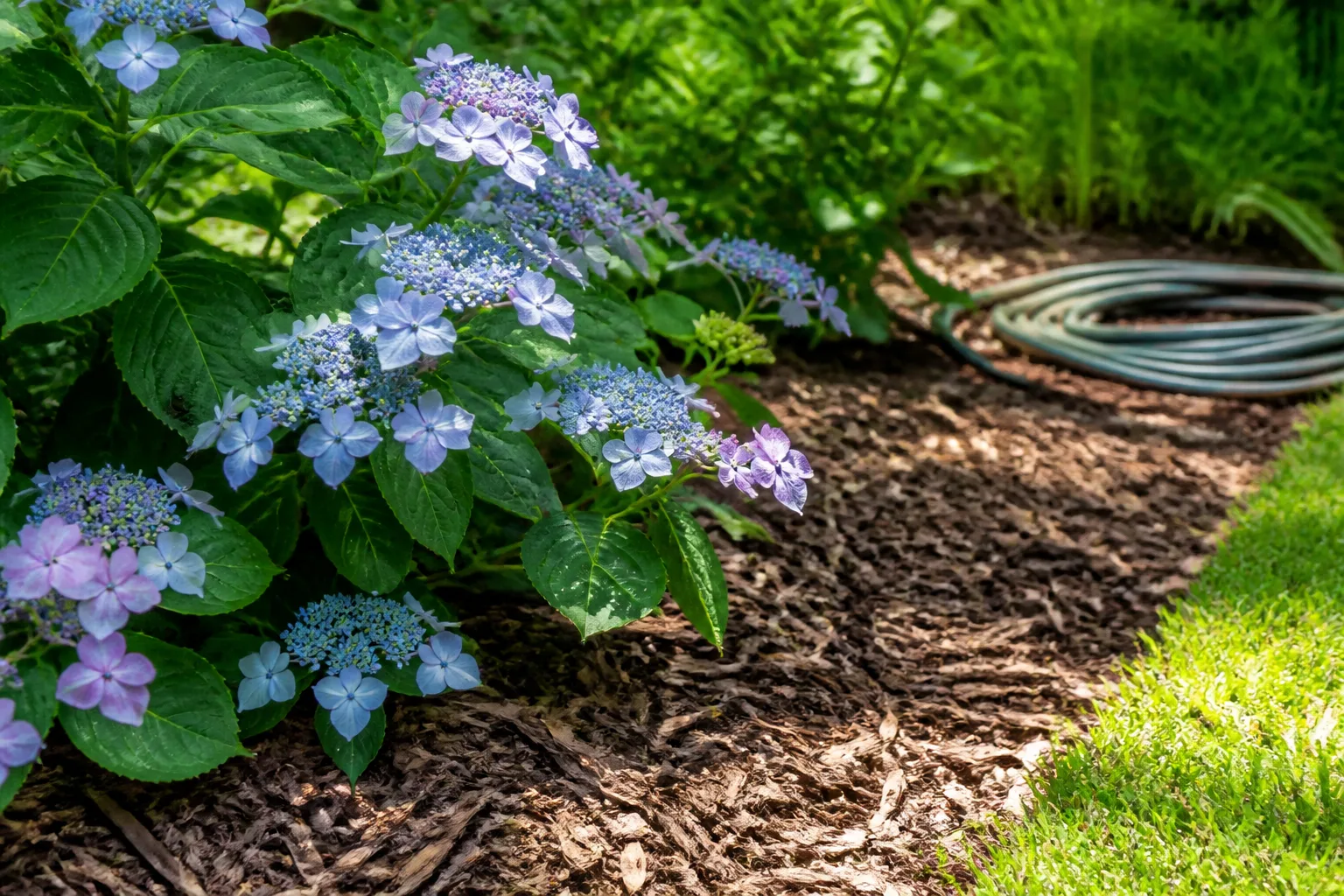
Refresh mulch over the root zone if it has thinned. Keep it a few inches away from the stems so the bark can dry and air can circulate. The photo library’s practical scene below shows the kind of moisture-focused care that matters more than a second round of cutting after the flowers are gone.
Do not fertilize automatically because a flower faded. A healthy shrub usually benefits more from stable moisture, adequate light, and soil tested before amendments are added. If you do feed, follow a product label and the timing recommended for your region and plant type; late lush growth can be more vulnerable to cold.
Save structural pruning for the right season
Structural pruning is the work that removes dead, weak, crossing, or overlong stems and changes the shrub’s size or framework. On old-wood hydrangeas, do it just after flowering when necessary, and keep it light. The RHS guidance recommends removing old stems at the base gradually rather than taking the whole plant down at once.
On panicle and smooth hydrangeas, the main structural window is usually late winter or early spring, before new shoots carry their flower buds. You can remove dead wood then and shorten live stems to healthy bud pairs if the plant needs it. Lower cuts may produce larger heads on stronger stems, while higher cuts can preserve more height and produce more, somewhat smaller heads.
That seasonal separation is the main protection against accidental flower loss. Deadhead now only to solve a spent-flower problem. Put size, shape, rejuvenation, and framework decisions on a separate pruning calendar.
Conclusion: protect the buds you meant to keep
To deadhead hydrangeas safely, wait until the flowerhead is truly spent, identify the shrub if you can, and cut just above the first healthy leaf pair below the bloom. Old-wood types need the most restraint; panicle and smooth types are more forgiving but still do not need a late hard prune; rebloomers benefit from early, light cleanup rather than unlimited cutting.
When the timing is uncertain, leaving the dried flowerhead is not neglect. It protects winter buds, preserves the plant’s shape, and gives you time to make the right decision. The best deadhead is not the deepest or tidiest cut—it is the smallest cut that solves the problem without taking next year’s flowers with it.



