Keep Your Lawn Green During Extreme Summer Heat
Cool-season lawns fade fast in extreme heat. Learn five proven strategies—grass choice, thatch control, deep watering, morning irrigation, and taller mowing—to keep turf green or recover safely.
Extreme summer heat is unfair to cool-season lawns. Kentucky bluegrass, perennial ryegrass, and fine fescue evolved for spring and fall growth; once daytime highs stay above roughly 85°F and nights refuse to cool, those grasses shift from building thick turf to surviving. Warm-season lawns such as bermudagrass and zoysia thrive in that weather, but millions of Northern and transition-zone yards are planted with grasses that simply cannot stay emerald through every heat wave without help.
The five strategies below are the cultural levers that actually move the needle: smarter species choice, thatch management, deep irrigation, morning timing, and taller mowing. None of them require exotic products. Together they keep roots alive, soil moisture where crowns can reach it, and leaf tissue intact enough to green up again when temperatures break. Before you change anything, read the dormancy section—chasing color on a lawn that has already gone safely dormant can waste water and invite disease.
What Extreme Heat Does to Cool-Season Turf
Cool-season grasses perform best between about 60°F and 75°F air temperature. Above that range, photosynthesis slows, root growth stalls, and the plant redirects energy from blade production to crown protection. You see the result as lighter green color, slower mowing intervals, then tan or brown patches along sunny edges, slopes, and compacted paths where roots run out of moisture first.
Heat stress and drought stress overlap but are not identical. A lawn can wilt on a humid 95°F day even when soil moisture is adequate because transpiration outpaces root uptake. Conversely, shallow daily spritzing may keep blades green briefly while roots stay in the top inch of dry soil—then the lawn collapses the first day you skip irrigation. That is why the strategies below target root-zone moisture and crown health, not surface color alone.
When Brown Grass Is Dormant, Not Dead
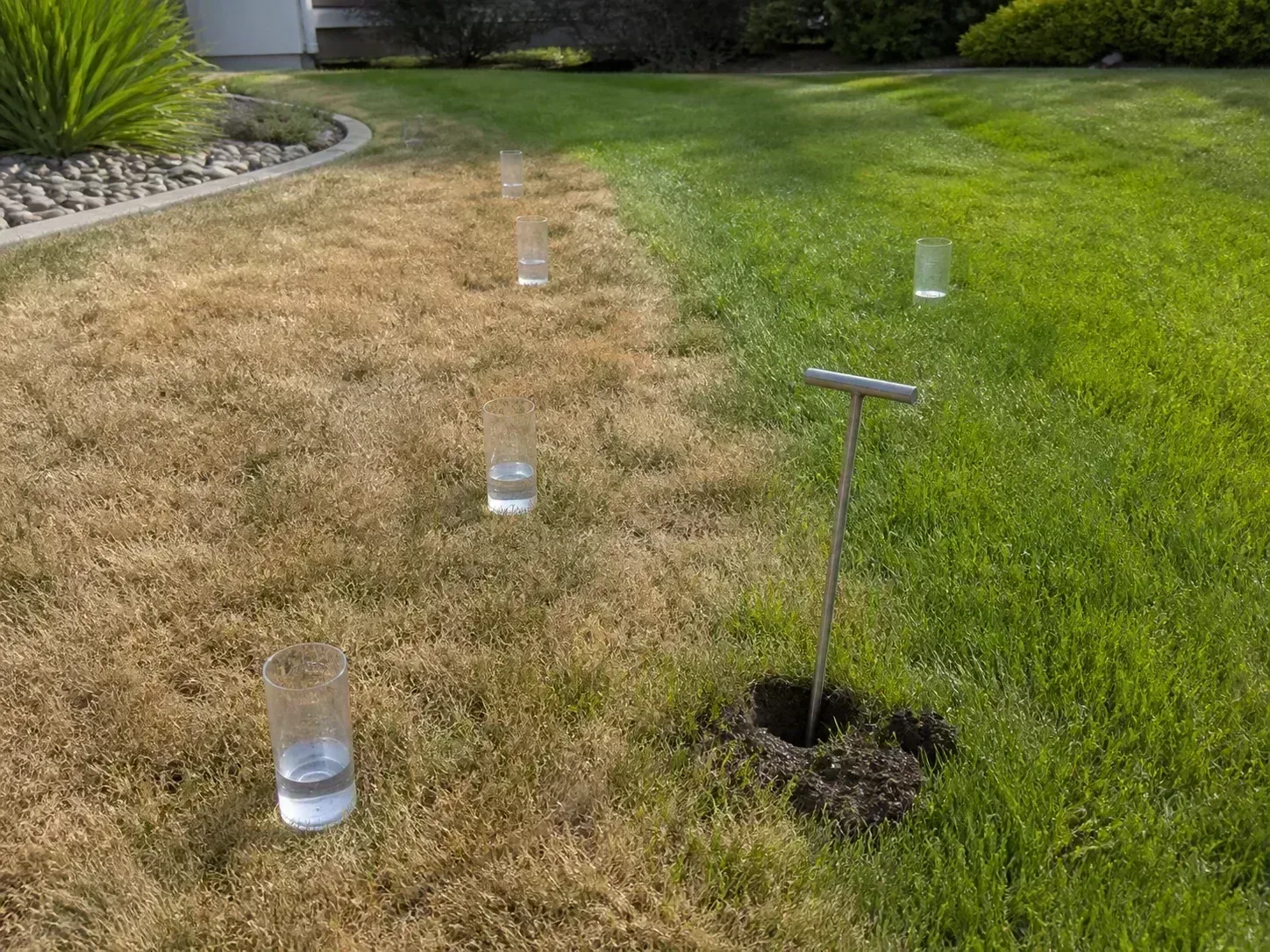
Brown does not automatically mean dead. Cool-season turf often enters heat dormancy—a protective shutdown that limits water loss until cooler, wetter weather returns. Dormant grass looks uniformly straw-colored in large areas, feels brittle, and stops growing, but the crowns at the base of each plant remain alive.
Run a two-minute crown check before you panic or pour fertilizer on tan turf. Choose a brown patch away from sidewalk heat. Grasp a handful of grass and pull gently. If plants uproot easily with rotted crowns, you may have grub damage, disease, or dead turf—not dormancy. If blades pull off but white or green tissue remains at the base, the lawn is dormant and can recover when stress lifts.
Push a screwdriver into the crown area. Firm resistance with moist soil 4 to 6 inches down suggests the lawn can wait for your next deep irrigation cycle. Dry, rock-hard soil at the same depth means drought dormancy triggered by lack of water—not necessarily death. If your lawn stays brown despite heavy watering, read our guide on why your lawn is still brown after watering before you assume heat is the only culprit—misaligned sprinklers, compaction, and fungal diseases mimic drought.
Strategy 1: Choose or Overseed With Heat-Tolerant Grass
The most durable fix for repeated summer burn starts before the next heat wave: plant grass that handles dry, hot weather better. This is a long-game strategy—full renovation or overseeding in early fall—but it prevents the same crisis from returning every July.
In the North and much of the transition zone, turf-type tall fescue is the most practical upgrade from pure Kentucky bluegrass stands. Tall fescue develops deeper roots than many bluegrass cultivars and holds color longer when irrigation is imperfect. Colorado State University Extension notes that tall fescue may perform well with less water than bluegrass when it develops a deep root system, though in practice it still needs consistent moisture to look its best during extreme heat.
Tall Fescue and Other Drought-Hardy Options for Northern Lawns
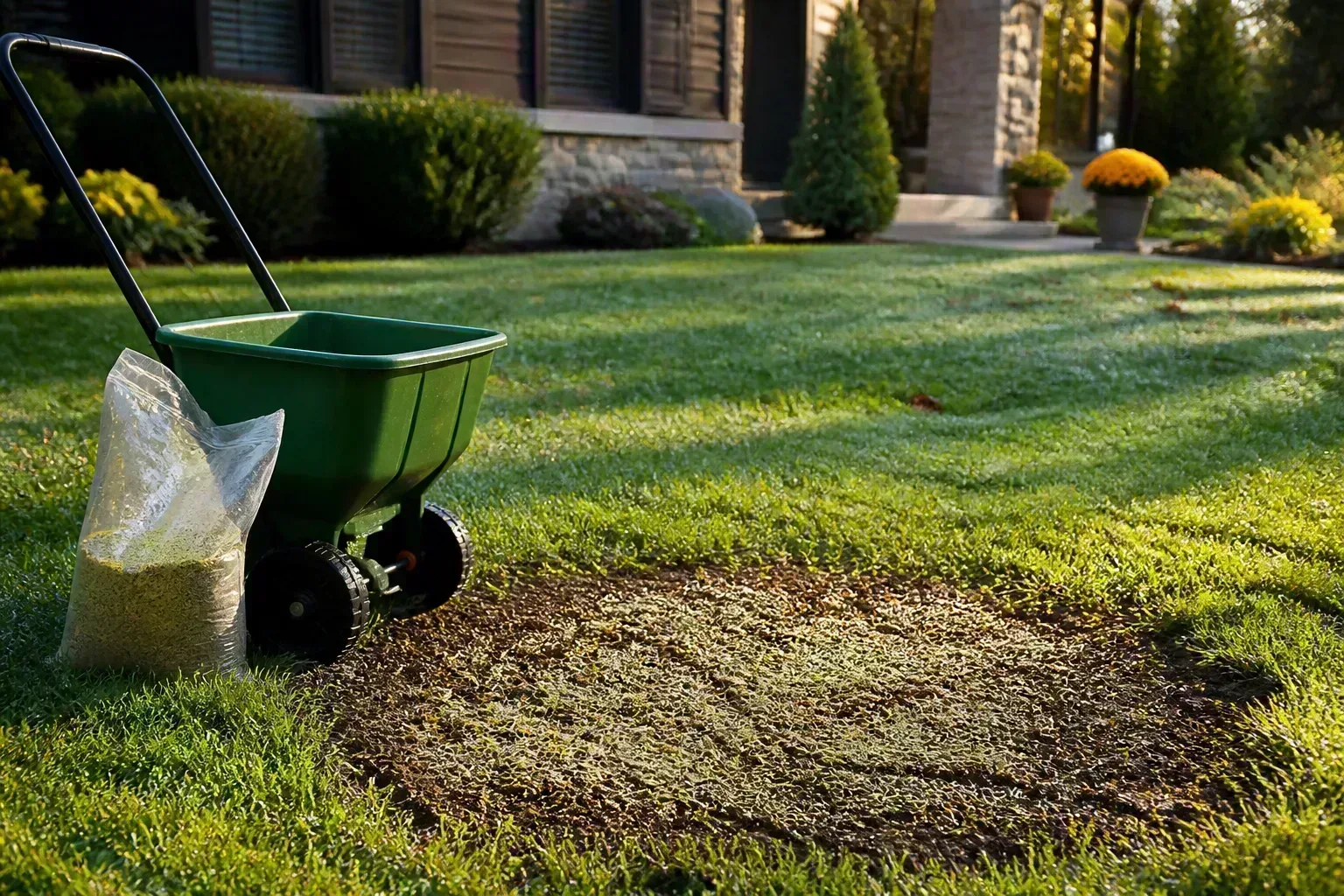
For new lawns or full renovation, consider a blend dominated by tall fescue with a small percentage of improved Kentucky bluegrass for repair density. Fine fescues (hard, chewings, sheep) tolerate shade and low-input sites but wear poorly under soccer and dog traffic. Perennial ryegrass germinates fast for overseeding but is often the first species to fade in sustained heat unless irrigated heavily.
In the warmest parts of the transition zone, a complete switch to warm-season sod or seed—bermudagrass, zoysia, or buffalograss on low-water sites—may be the only path to reliable summer green without constant irrigation. Match species to sun exposure, soil depth, and realistic watering budget, not to the lawn across the street that runs sprinklers all afternoon.
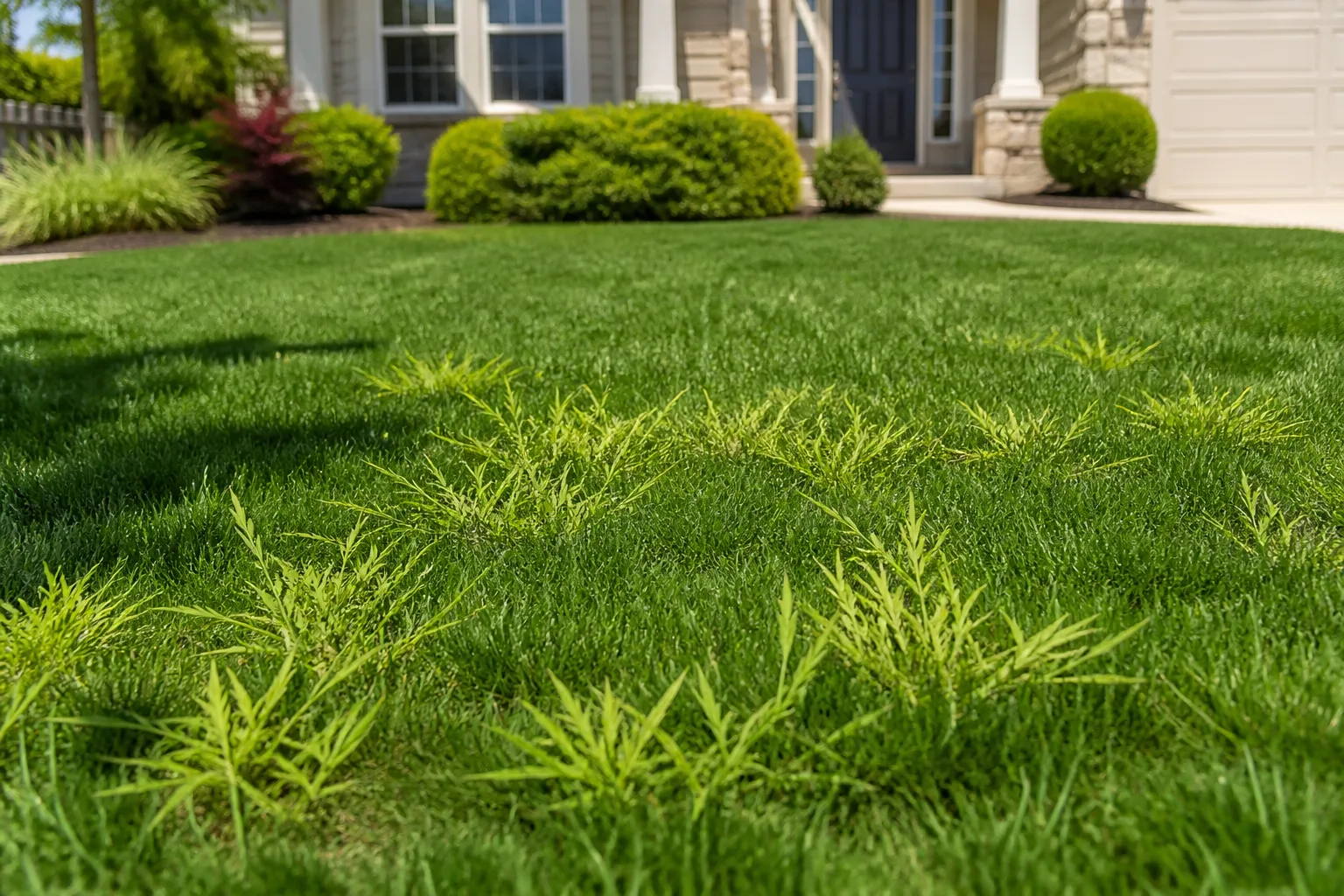
Overseed thin, heat-damaged areas in early fall when soil temperatures favor cool-season germination and weed competition is lower. Spring overseeding can work but fights crabgrass pressure and incoming summer heat before new plants establish deep roots.
Strategy 2: Manage Thatch Before Summer Stress Hits
Thatch is a spongy organic layer of living and dead stems and roots sitting between green blades and soil. A thin layer is normal; beyond about half an inch, water and fertilizer sit in the thatch instead of reaching roots, and summer heat magnifies the problem. Sprinklers can wet the mat while soil below stays dry—exactly the pattern that produces green-then-brown collapse during heat waves.
Colorado State University Extension explains that thatch buildup beyond half an inch predisposes turf to drought stress, winter injury, and poor pesticide response. Kentucky bluegrass and fine fescue lawns accumulate thatch faster than tall fescue. Clippings left on the lawn do not cause thatch; returning clippings recycles nitrogen and organic matter properly.
Fall Raking vs Core Aeration Timing
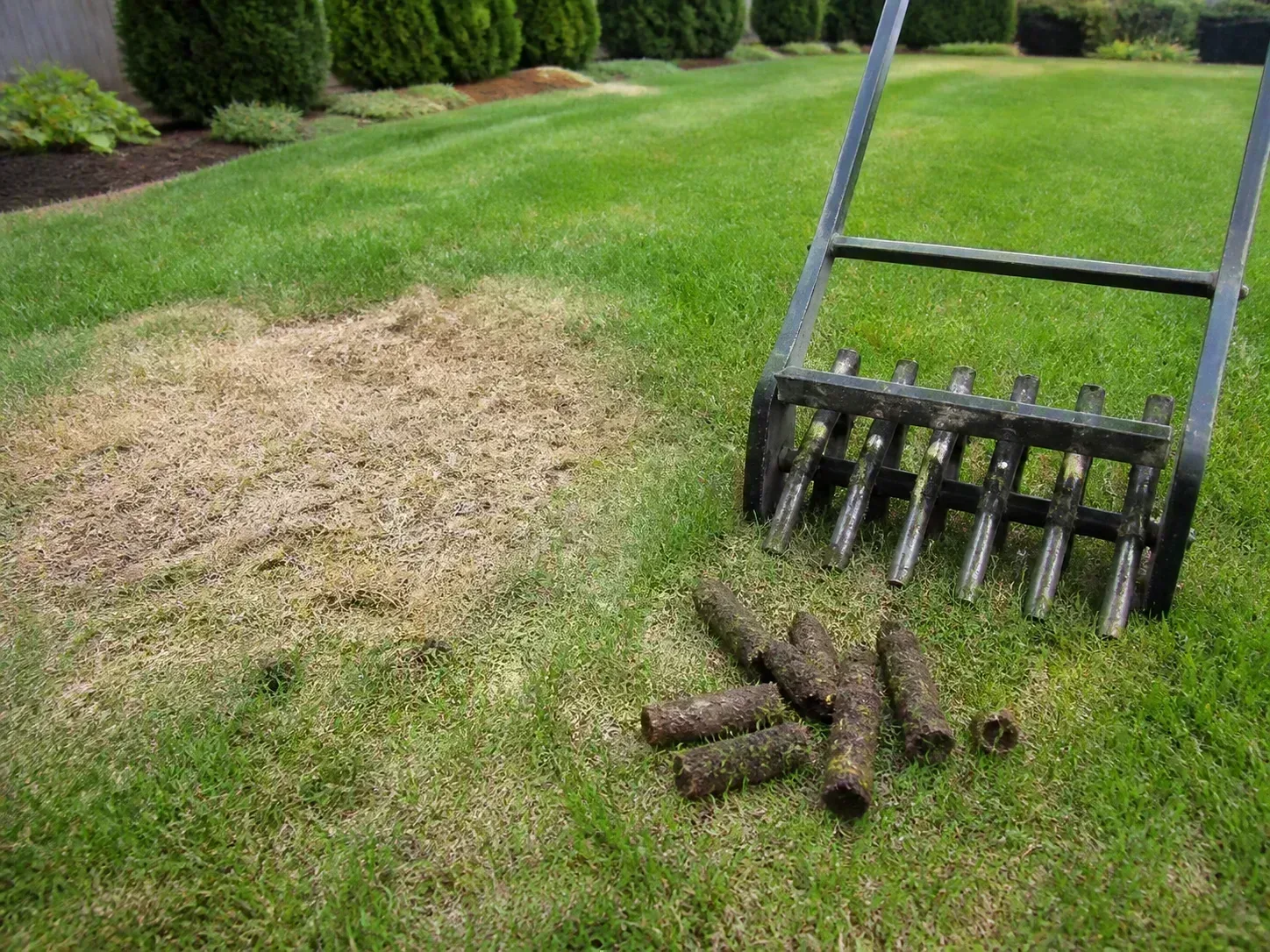
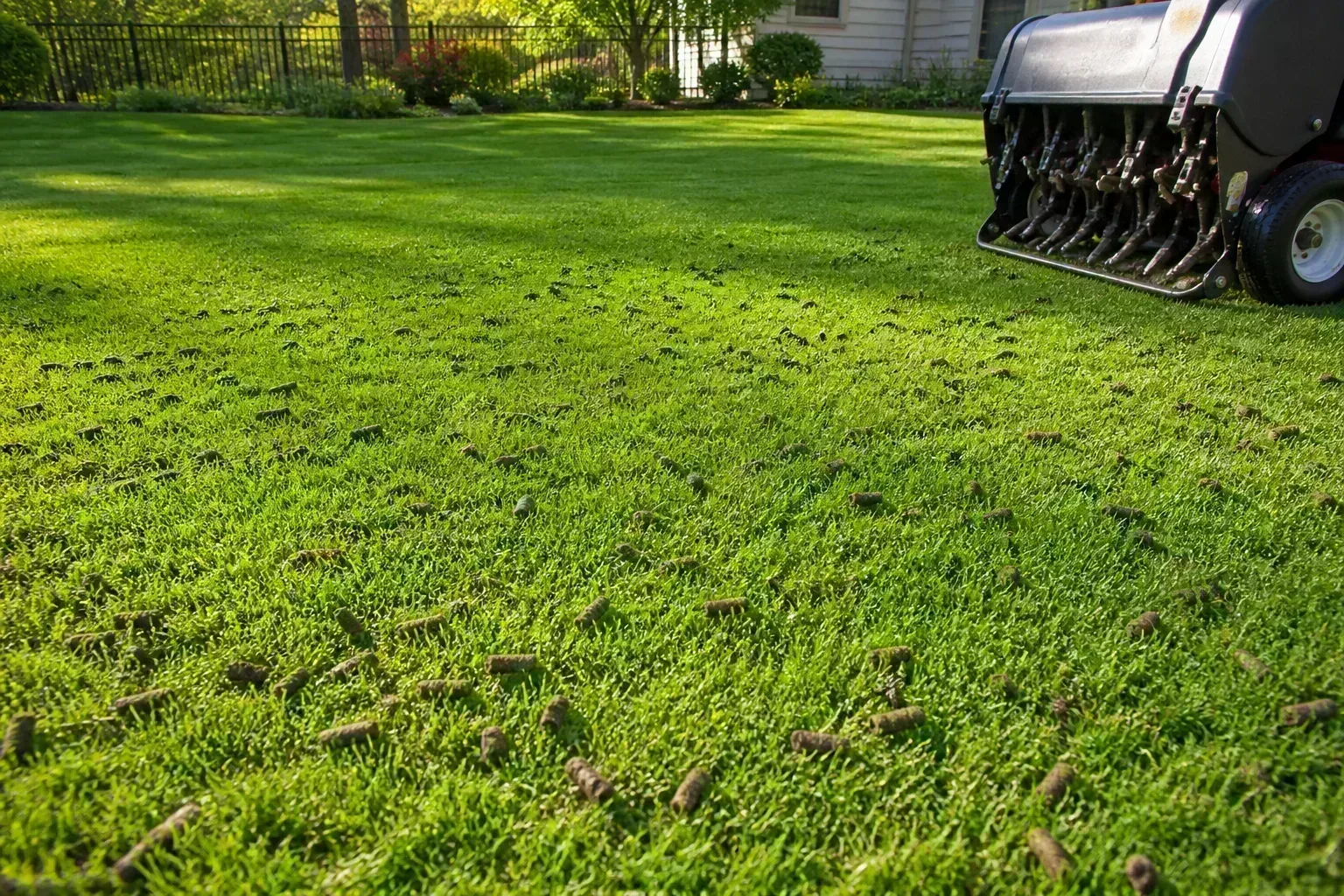
Stay ahead of thatch in fall, not during a heat wave. Light power raking while leaves come down removes debris and breaks surface thatch without the deep scalping that damages crowns. For thicker layers, core aeration pulls soil plugs that speed decomposition and relieve compaction—one of the best ways to improve water infiltration before next summer.
Do not core aerate during extreme summer heat. Opening the soil stresses already-struggling crowns and increases drying on hot, windy days. Extension guidance consistently places aeration in fall or late winter when turf is actively recovering or still dormant but cool. If you skipped spring prep and thatch is choking the lawn mid-July, focus on deep watering and mowing adjustments now; schedule aeration for early fall. Our lawn brown-spot guide covers how compaction and thatch mimic irrigation failure when water never reaches roots.
Strategy 3: Shift to Deep, Infrequent Watering in a Heat Wave
Daily light watering is the fastest way to keep a lawn looking green for a week and fragile for a decade. It wets only the surface, trains roots upward, and evaporates under afternoon sun before heat-stressed plants benefit. During extreme heat, cool-season lawns need fewer, deeper cycles that moisten the full root zone—then a deliberate dry-down that lets oxygen back into soil.
Under normal summer conditions, a common baseline is about one inch of water per week from rainfall plus irrigation combined. During prolonged heat on exposed turf, sandy soil, or high-quality bluegrass, demand can climb toward 1.5 to 2 inches weekly—but only if the root zone actually dries between cycles. Colorado State University Extension notes that a healthy bluegrass lawn may need up to 2.25 inches per week under hot, dry, windy conditions, while shaded or protected areas need less.
Inch-Per-Week Math During Normal vs Extreme Heat
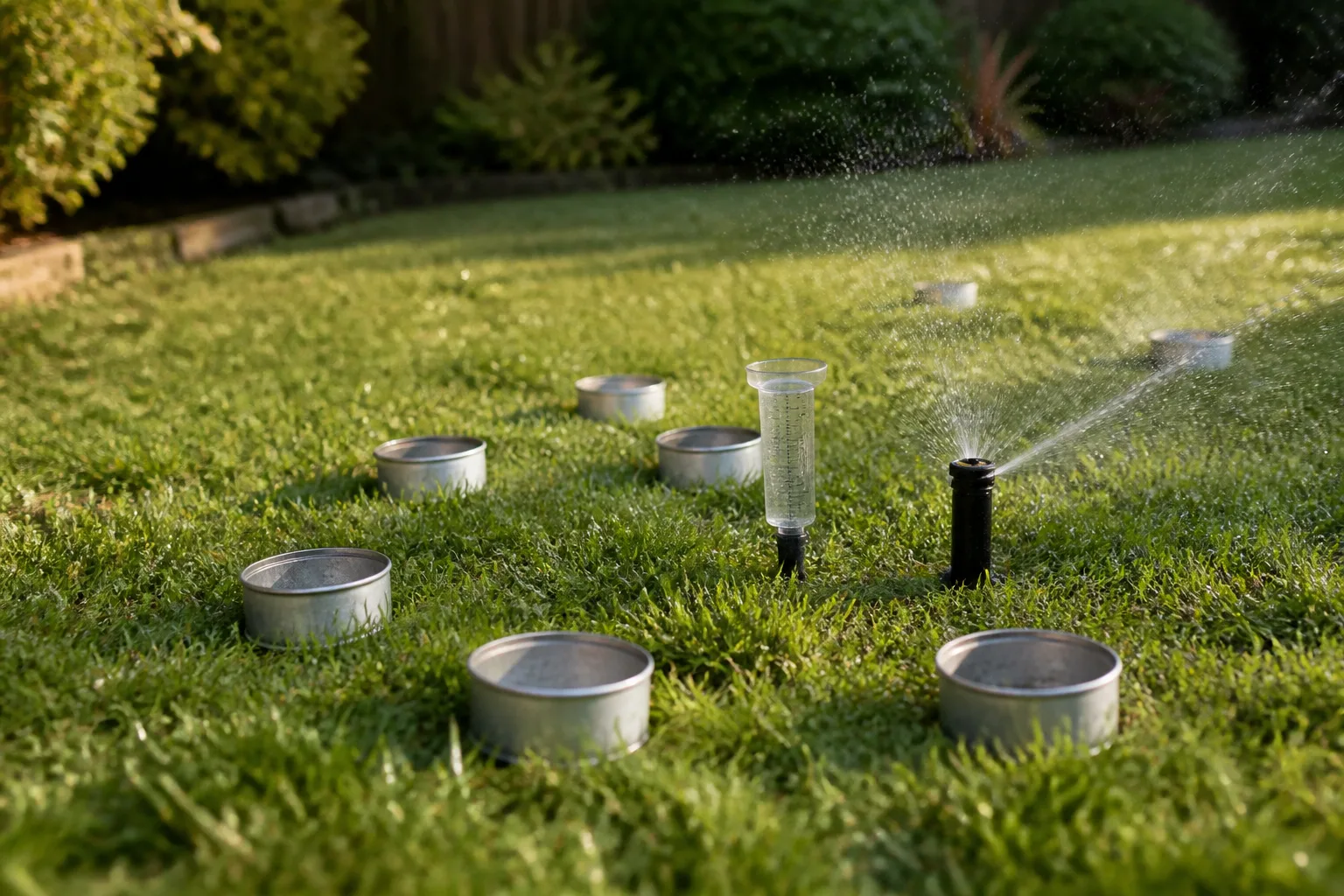
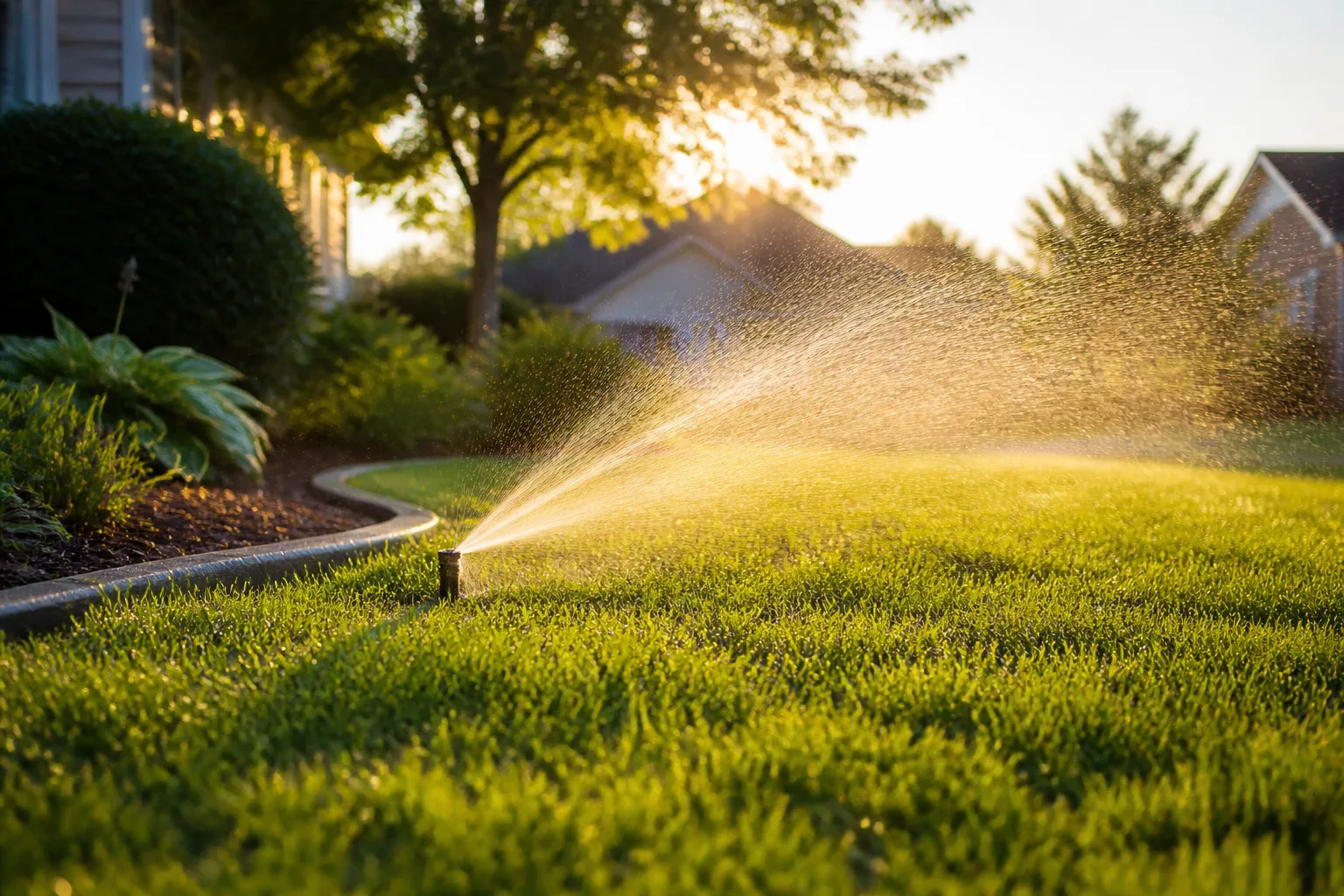
Translate inches into runtime with a simple audit. Place catch cans or straight-sided containers across one sprinkler zone, run the zone for its normal minutes, and measure depth in each can. EPA WaterSense recommends learning how long it takes to apply about half an inch, then adjusting frequency based on weather and how the landscape responds. Repeat on your sunniest zone and your shadiest zone—they rarely match.
Aim to moisten soil to 6 inches deep when roots grow that far. Clay-heavy soil may need 1 to 1.5 inches per cycle to penetrate; sandy soil may need as little as half an inch per application but requires more frequent cycles because sand holds less plant-available water. On slopes and compacted clay, use cycle-and-soak: run the zone until runoff starts, pause an hour, then finish the application so water infiltrates instead of flowing to the storm drain. For hose-and-portable-sprinkler setups, see our guide to running your garden hose without spiking your water bill.
During a heat wave, two deep irrigations per week often outperform seven shallow spritzes—delivering roughly half an inch to an inch per session depending on soil and exposure when probes show the root zone is dry. Adjust after thunderstorms; skipping a scheduled cycle when soil is already wet saves more grass than forcing color with excess water.
Use the Footprint and Soil-Probe Tests Before You Irrigate
Do not water on calendar autopilot. Colorado State University Extension lists footprinting as a reliable indicator: footprints that remain an hour after you walk across the lawn mean turf needs irrigation soon. A gray-green cast and folded blades follow if you wait too long.
Push a screwdriver or soil probe 4 to 6 inches deep in both a stressed patch and a healthy reference area. If the probe slides easily and soil feels cool and moist, delay irrigation even when surface blades look slightly wilted in afternoon sun—afternoon heat makes turf look worse than it is. If the probe stops in dry, powdery soil and footprints linger, run your deep cycle that night or the next morning.
For system tuning and zone layout, pair these tests with the audit steps in how lawn pros save on water in summer and the irrigation setup lawn pros actually use. Fixing dry stripes from misaligned heads beats adding minutes to every zone.
Strategy 4: Irrigate Early in the Morning
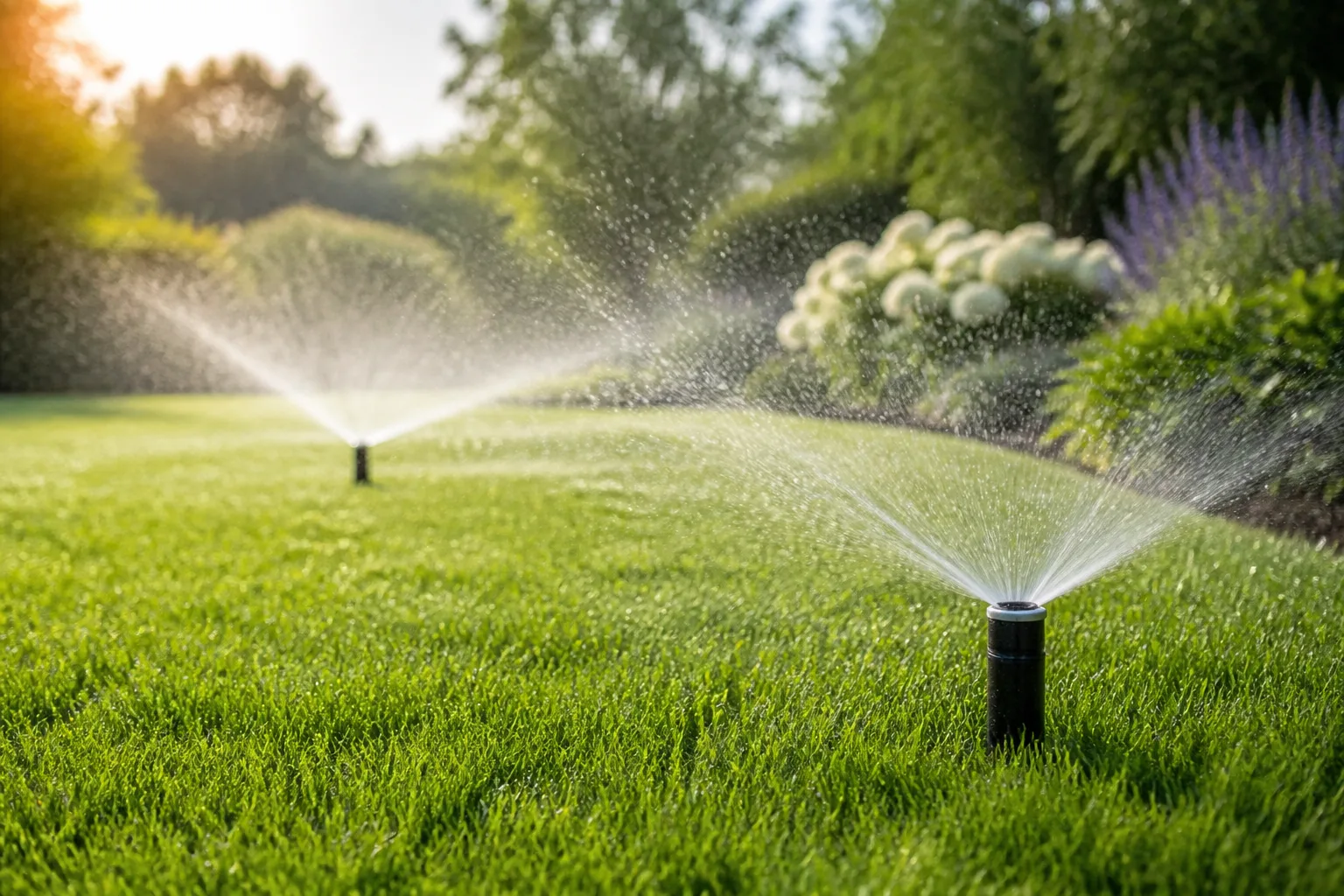
Timing determines how much of each gallon reaches roots versus the atmosphere. Early morning—roughly 4 a.m. to 10 a.m.—is the sweet spot for most homeowners: wind is lower than midday, temperatures are cooler, and grass blades dry as the sun rises, which reduces fungal pressure compared with evening irrigation.
Some extension programs also cite late evening efficiency when wind and evaporation are low, but homeowner schedules and local water restrictions vary. Colorado State lists late evening and early morning as efficient windows while noting that some municipalities restrict overnight irrigation to prevent waste from broken heads running unattended. Check local rules before you program a 2 a.m. start time.
Why Evening Watering Raises Disease Risk on Stressed Turf
Watering at dusk or late evening leaves blades wet through cool, humid nights—ideal conditions for brown patch and other foliar diseases when turf is already heat-weakened. If your only option is evening watering, irrigate early enough that blades dry before nightfall, and avoid daily misting that keeps tissue constantly wet.
Midday irrigation is the worst of both worlds: strong sun and wind evaporate spray before infiltration, and droplets on hot blades can magnify stress. Never run sprinklers during the hottest afternoon hours unless you are performing a brief syringe pass on a sports field—a tactic rarely justified on home lawns.
Strategy 5: Mow High and Cut With Sharp Blades
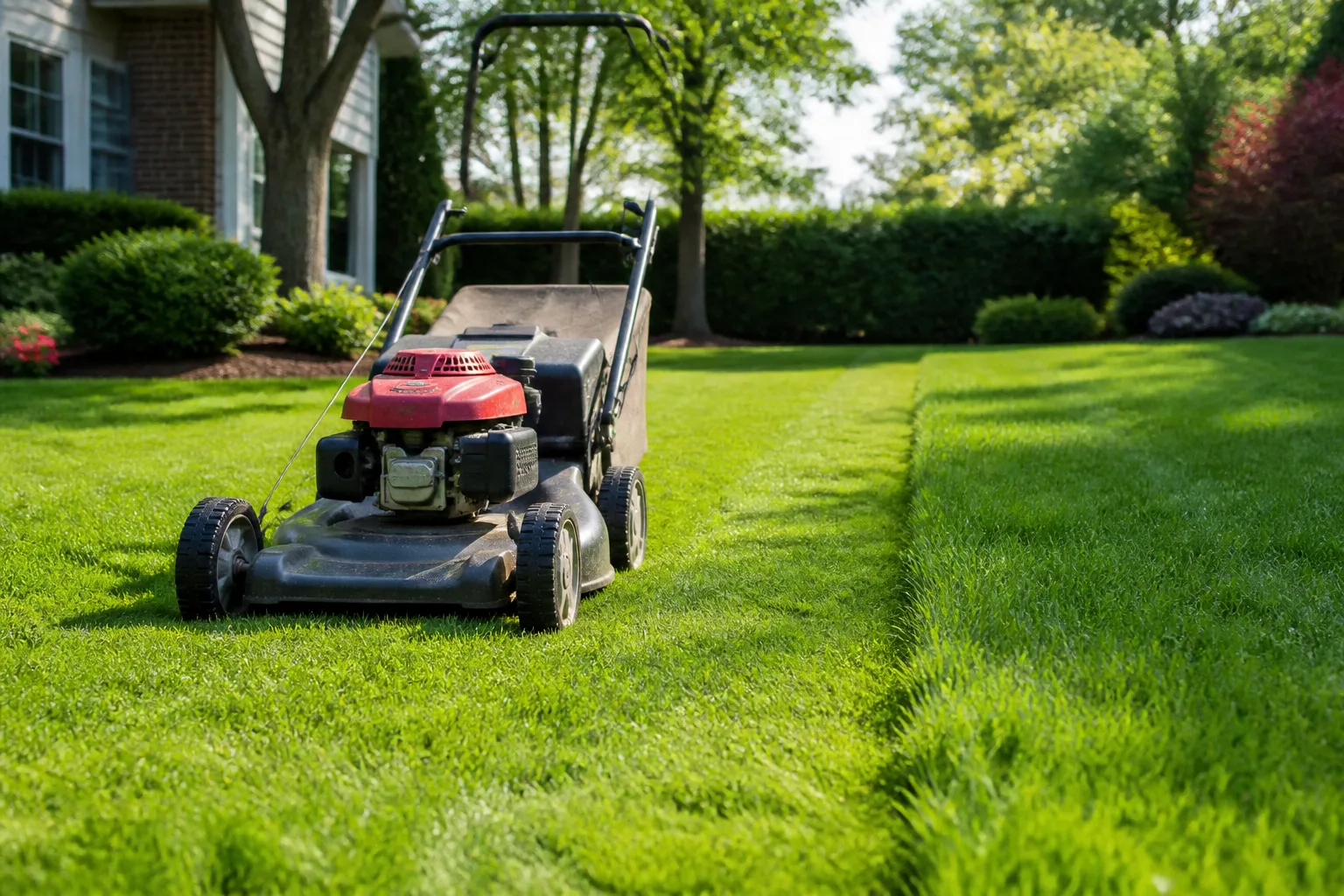
Mowing is a drought tool disguised as a chore. Taller leaf tissue shades soil, slows evaporation, and supports deeper roots that reach moisture between irrigation cycles. Scalping to “reduce mowing frequency” exposes crowns to direct sun and is one of the quickest ways to brown a cool-season lawn in July.
Colorado State University Extension recommends a minimum mowing height of 2 inches for Colorado species, with a preferred range of 2.5 to 3 inches, and warns that mowing below 2 inches reduces drought and heat tolerance. Many Northern lawns perform better toward 3 to 4 inches during summer stress—especially tall fescue and mixed stands on sunny sites.
Recommended Heights for Common Cool-Season Grasses
Raise the deck before heat arrives and keep it there through August. For Kentucky bluegrass and perennial ryegrass blends, maintain 3 to 3.5 inches during extreme heat. Tall fescue lawns can often stay at 3.5 to 4 inches. Fine fescue in shade may tolerate slightly lower heights but still benefits from extra leaf area when heat spikes.
Follow the one-third rule: never remove more than one-third of the blade in a single pass. If the lawn reaches 4.5 inches, mow to about 3 inches—not 2. If you miss a week and grass is too tall, raise the deck for the first cut, then drop to target height a few days later. Gardening Know How’s lawn-watering guidance pairs infrequent deep irrigation with stress-aware mowing—the two habits work together, not in isolation.
Keep blades sharp. Dull rotary blades shred leaf tips, creating a brown cast and faster water loss from ragged tissue. Extension turf programs recommend checking sharpness regularly during active growth, especially on fescue and ryegrass. See when to replace lawn mower blades if tips look frayed after every cut. Return clippings when possible—they recycle moisture and nitrogen without building thatch.
For seasonal frequency and heat-wave mowing calls, read should you mow the lawn in August before you scalp a slow-growing lawn just because the calendar says “mow day.”
Habits That Make Heat Stress Worse in July and August
The five strategies above lose ground quickly when common summer habits work against stressed turf. Knowing what to pause is as important as knowing what to do.
Fertilizing during extreme heat on dormant or nearly dormant cool-season grass wastes product and can burn crowns. Nitrogen pushes blade growth the plant cannot support when roots are shut down. Hold granular or liquid fertilizer until nights cool and grass resumes active growth in late summer or fall—unless a soil test documents a specific deficiency and you apply at reduced, label-safe rates on a still-green, irrigated lawn.
Core aerating, dethatching deeply, or applying herbicides on heat-stressed turf adds injury when recovery reserves are low. Mark these jobs for fall. Heavy foot traffic on brittle dormant grass crushes crowns along paths and play areas—rotate activities when possible.
Midday mowing, scalping, and watering at night on a daily schedule compound stress and disease risk. Running sprinklers during rainstorms saturates soil, compacts wet turf if you walk or mow, and invites fungi—pause automatic systems after storms as noted in what not to do to grass after heavy rain.
If circular brown patches expand despite adequate moisture, suspect brown patch or other pathogens rather than heat alone. Extra water often worsens fungal problems. Our brown patch recovery guide explains when irrigation helps and when it hurts.
Bring Green Color Back When Nighttime Temperatures Drop
When sustained highs fall back into the 70s and nights cool, dormant cool-season lawns with living crowns green from the bottom up—often within two to three weeks of favorable weather plus proper care. Your job after the heat breaks is to ease off survival mode and rebuild root depth before winter.
Resume deep, infrequent irrigation based on probe tests—not guilt over tan color. Raise mowing slowly if you dropped height during stress (you should not have, but if you did, step back toward target over two cuts). Fall is the window for overseeding thin areas, core aeration, and balanced fertilization that refills carbohydrate reserves.
If large dead patches fail the crown test, rake dead material and seed or sod in early fall when soil temperatures favor germination. Do not carpet-bomb the entire yard with herbicide unless you have confirmed species you intend to replace; partial renovation is usually enough after a single brutal summer.
Accept that some years exceed what cool-season turf can sustain at full color without unlimited water. A lawn that enters safe dormancy, protects crowns, and greens in fall is a success—not a failure—compared with a lawn killed by summer scalping, midsummer aeration, or nightly spritzing that looked green until it did not.
Conclusion
Keeping a cool-season lawn green through extreme summer heat is part physiology, part irrigation discipline, and part knowing when brown is a survival strategy—not an emergency. Choose drought-tougher grass before the next crisis, manage thatch in cooler months, water deeply when probes and footprints say the root zone is dry, irrigate in the morning, and mow high with sharp blades. Stop fertilizing dormant turf, avoid summer aeration, and diagnose brown patches before you drown them.
No single tip works in isolation. Tall mowing without deep watering still starves roots; deep watering onto thatch-choked soil still fails; perfect irrigation on scalped, compacted turf still browns along hot edges. Stack the five strategies, use the crown and probe tests to separate dormancy from death, and lean on fall renovation when heat exposes weak species or thin stands. That is how you defend cool-season color through July—and how you still have a lawn worth recovering in September.