How to Save Water on Your Lawn in Summer
Cut summer lawn water bills without brown grass. Learn pro audit steps, catch-can timing, smart irrigation upgrades, and when to skip a cycle.
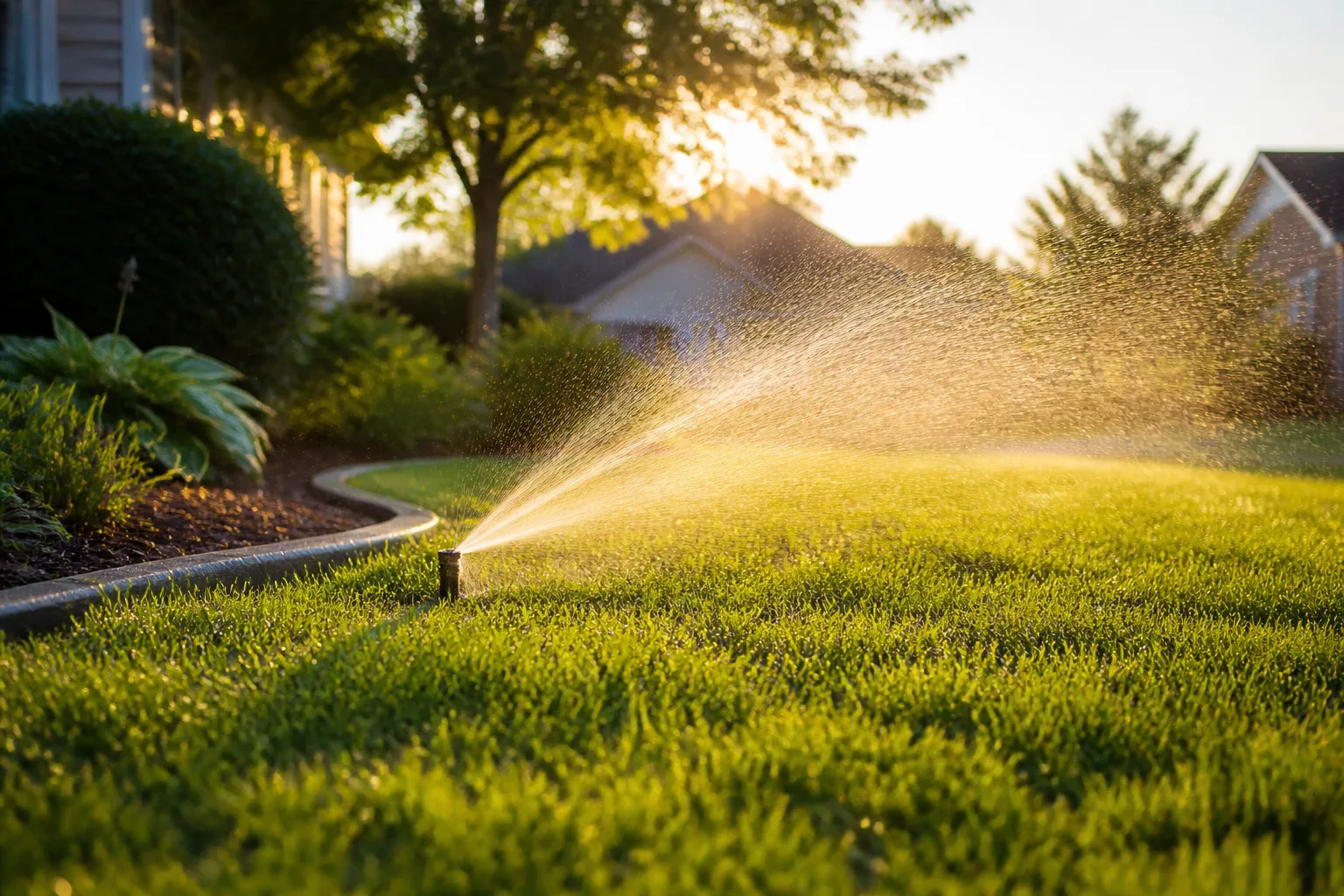
Peak summer is when lawn irrigation systems work hardest—and waste the most. Misaligned heads spray driveways, timers run through rainstorms, and shallow daily spritzes keep grass green while training weak roots that panic the moment you skip a cycle. The fix is not watering less until the turf collapses. It is delivering the right amount of water, to the right place, at the right time, then stacking a few maintenance habits that make each gallon count.
The seven practices below mirror what irrigation specialists and turf managers prioritize on client properties. They are ordered deliberately: audit and repair first, schedule second, hardware upgrades third, cultural habits last. Skip the audit and a smart controller just automates the same waste.
Why Your Water Bill Climbs in July Even When the Lawn Looks “Fine”
Most summer overuse is invisible from the kitchen window. A zone that runs eight minutes too long on compacted clay sends hundreds of gallons down the storm drain every week. A head tilted toward the sidewalk can waste more water in a month than a rain sensor saves in a season if you never fix it.
Evaporation plays a role, but distribution and timing cause more waste than heat alone. Colorado State University Extension notes that healthy turf uses water more efficiently when mowing, fertilizing, and cultivation are balanced—and that no two lawns share the same demand. A shaded cool-season lawn behind a windbreak needs far less than full-sun bermudagrass on a slope next to pavement.
If your lawn browns despite heavy watering, the problem may not be volume at all. Read our guide on why your lawn is still brown after watering before you raise runtimes—disease, compaction, and shallow irrigation mimic drought stress.
Run a 15-Minute Lawn Water Audit Before You Change Anything
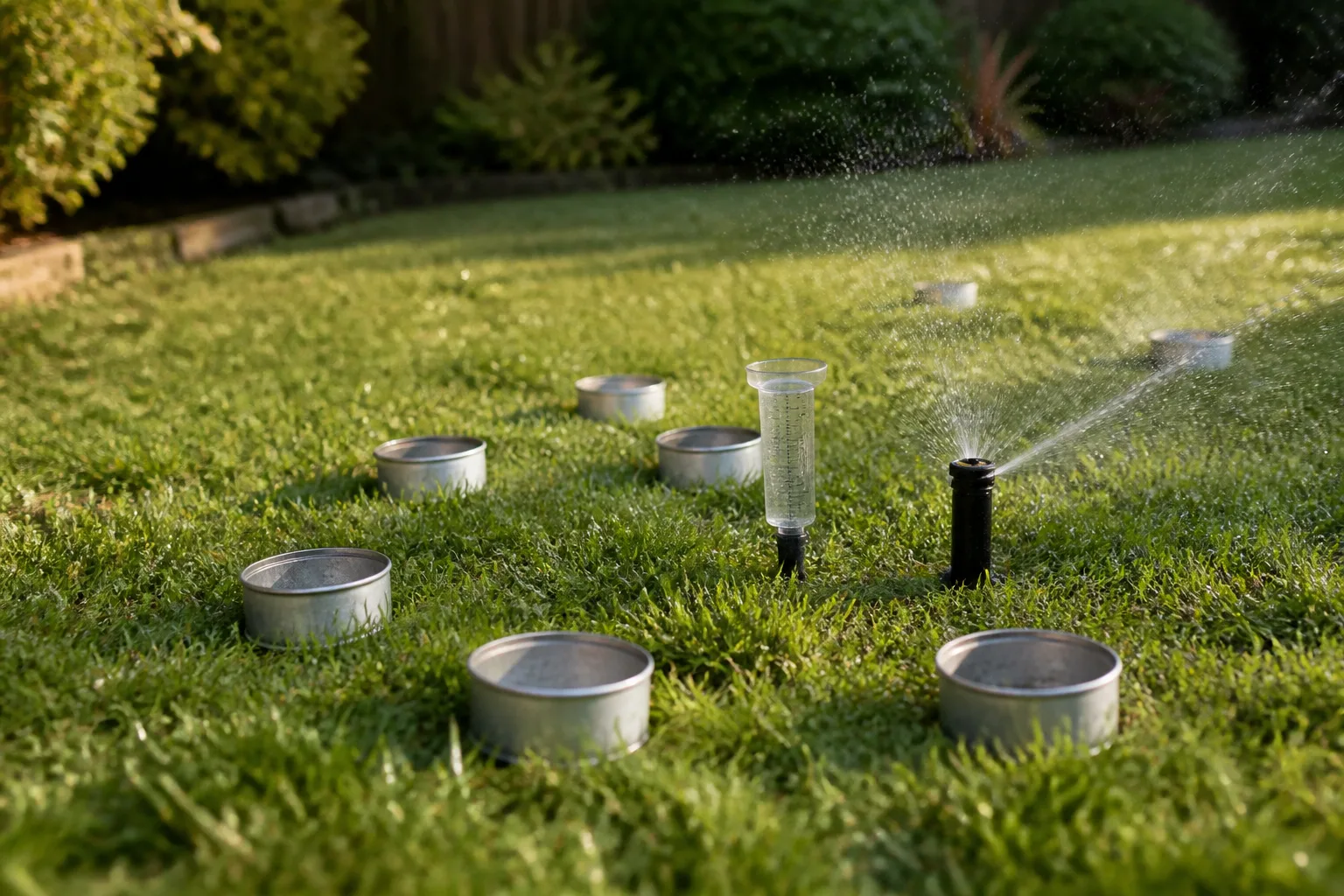
Every pro visit starts with measurement, not guesswork. Before you buy nozzles or reprogram a controller, learn what your system actually puts on the ground and whether the soil beneath the greenest patch is moist where roots live.
Use Catch Cans to Measure What Your Sprinklers Actually Deliver
Place five to ten straight-sided containers—tuna cans, rain gauges, or commercial catch cups—across one irrigation zone. Run that zone for its normal runtime, then measure depth in each can with a ruler. EPA WaterSense recommends using this method to learn how long it takes to apply about half an inch, then adjusting frequency based on weather and how the landscape responds.
Compare cans at the center of the zone with cans near corners and edges. Variation greater than 25 percent means you have a coverage problem to fix before you touch the calendar. Repeat on your thirstiest zone and your shadiest zone; they rarely need the same schedule.
Once you know output, aim for roughly one inch of water per week from irrigation plus rainfall combined during active summer growth—a baseline Gardening Know How’s lawn-watering guidance treats as a starting point you adjust for soil and weather. Hot, windy weeks on sandy soil may need more; mild weeks with thunderstorms need less or none.
Confirm the Root Zone Is Dry Before You Add More Water
Surface color lies in summer. Push a screwdriver or soil probe 4 to 6 inches into turf in both a stressed patch and a healthy patch. If the top inch looks dry but the probe slides easily deeper down, delaying irrigation is the water-smart move.
Gardening Know How recommends watering only when grass shows stress: a slight blue-gray cast, footprints that remain an hour after you walk across the lawn, or a probe that will not penetrate dry soil. Hot afternoons can make turf look wilted while the root zone is still moist—adding water then wastes money and can invite disease when nights stay warm and humid.
Fix Coverage and Leaks First—That Is Where Most Waste Hides
Precision nozzles cannot fix a head spraying the street. Pros spend labor on distribution because uniform coverage beats longer runtimes every time.
Walk the System During a Test Run
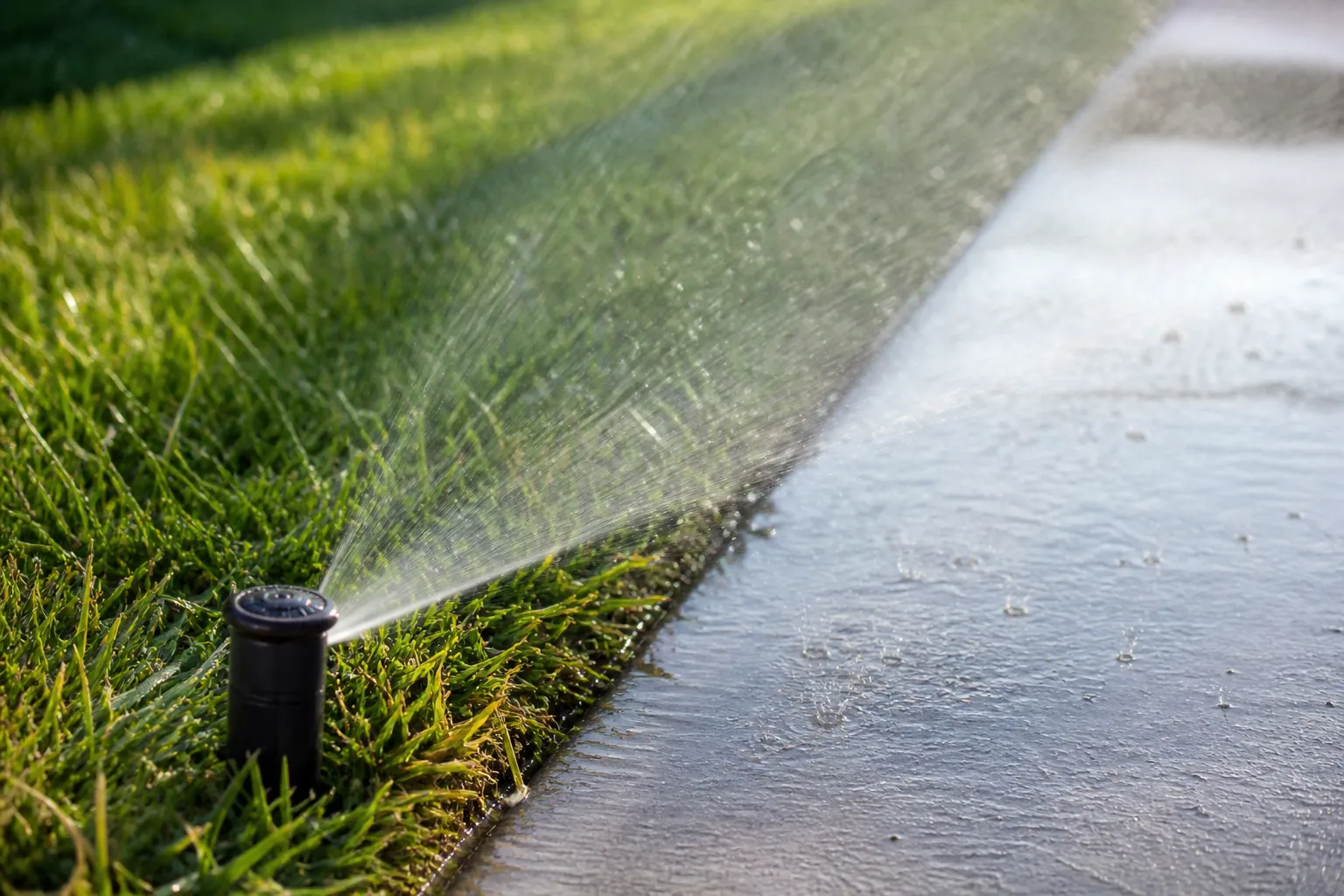
Turn each zone on manually and walk the pattern. Look for clogged or sunken heads, split streams, heads knocked sideways by mowers, and misting fine spray that evaporates before it lands. Clean filters, replace cracked nozzles, and reset head height so spray clears the turf without hitting hardscape.
Note zones where water pools in low spots or runs off before soak-in finishes. Those areas need mechanical fixes—leveling, aeration, or cycle-and-soak scheduling—not more minutes on the clock. For hose-and-sprinkler setups, our best way to run your garden hose without spiking your water bill guide covers overlap and pressure issues portable systems share with in-ground gear.
Stop Watering Pavement, Stripes, and Slopes
Adjust arc and radius so spray stops at the edge of turf, not the sidewalk. On narrow strips between driveways, switch to matched precipitation nozzles or drip conversion rather than overspraying hardscape.
Slopes and clay soils shed water quickly. Colorado State University Extension advises splitting applications when runoff starts: water until runoff begins, stop, let it soak for an hour, then finish the zone. That cycle-and-soak approach puts the same total depth into soil without losing half the cycle to the gutter.
Water at Dawn and Skip Cycles When Rain Already Did the Job
Timing is the cheapest upgrade on most systems because it costs nothing but reprogramming.
Why Early Morning Beats Midday and Late Evening
Colorado State University Extension lists late evening and early morning—roughly 10 p.m. through midnight or 8 to 9 a.m.—as the most efficient windows, when wind and evaporation are lower and distribution patterns stay more even. Jon Sneider’s lawn watering guide narrows the practical homeowner window to about 4 a.m. through 10 a.m., when dew and calm air help water reach the root zone before midday heat.
Midday watering loses much of the spray to evaporation before it infiltrates. Late-evening watering can keep blades wet overnight, which turf managers avoid during humid stretches because fungal problems spread faster on moist leaf tissue. If local rules restrict overnight irrigation, choose the earliest allowed morning start rather than shifting to afternoon.
After heavy rain, pause the schedule entirely. Pinellas County guidance developed with University of Florida IFAS Extension warns against irrigating an already wet lawn—a common post-storm mistake that wastes water and stresses roots. See what not to do to grass after heavy rain for the full recovery sequence.
Add Rain Sensors, Shutoffs, and Weather-Aware Controllers
A wired or wireless rain sensor interrupts the controller when a set amount of precipitation falls, preventing the classic “sprinklers in a downpour” scene. Adjust the shutoff threshold to your climate: a light mist may not require a skip, but a quarter inch should.
Smart controllers that adjust schedules from local weather data, soil type inputs, or evapotranspiration (ET) models go further by shortening runtimes after cool nights or stretching intervals when humidity rises. Monthly ET calculators keyed to ZIP code—such as Irritrol’s historic ET tool—give ballpark run-time adjustments when you manage schedules manually.
Flow sensors belong in the same conversation as rain shutoffs. They alert you to line breaks, stuck valves, or heads knocked off by trucks—events that can dump thousands of gallons before anyone notices on the bill.
Apply Less Total Water, But Wet the Roots Deeply
Daily light watering keeps blades green while roots stay shallow. Shallow roots force you to irrigate more often, which is the opposite of summer efficiency.
Deep, infrequent irrigation encourages roots to follow moisture downward. Gardening Know How recommends waiting until stress signals appear, then applying enough water to moisten 4 to 6 inches of soil—not sprinkling every evening because the calendar says so.
Match Volume to Soil Type and Use Cycle-and-Soak on Clay
Sandy soils hold little plant-available water and may need shorter, more frequent cycles even when total weekly depth stays near one inch. Clay and loam hold moisture longer but accept water slowly. Colorado State University Extension suggests about 1 to 1½ inches per application to moisten six inches of clay-based root zone, versus as little as half an inch on sand.
Measure penetration after a cycle, not just can depth on the surface. If water stops at two inches, split the runtime across two or three soak periods the same morning rather than doubling a single block that runs off.
Retrofit High-Efficiency Nozzles and Watch Zone Flow
Standard spray nozzles throw a lot of water fast—fine for occasional use, expensive for fixed schedules. Matched precipitation rate nozzles (often called MP Rotators or similar multi-stream models) apply water in heavier droplets at lower flow rates, reducing mist loss and improving uniformity on many residential spray heads.
Retrofit is usually a nozzle swap on the same body, which makes it one of the highest-return upgrades after basic repairs. Pair new nozzles with the catch-can test again; lower flow means longer runtimes to reach the same depth, and you want to confirm coverage stayed even.
If your system still includes mixed head types on one zone—rotors and sprays together—pros typically separate them onto different valves because they cannot apply water evenly at the same runtime. Fixing zone design beats chasing green patches with extra minutes.
Mow Taller and Sharper So Grass Needs Less Rescue Water
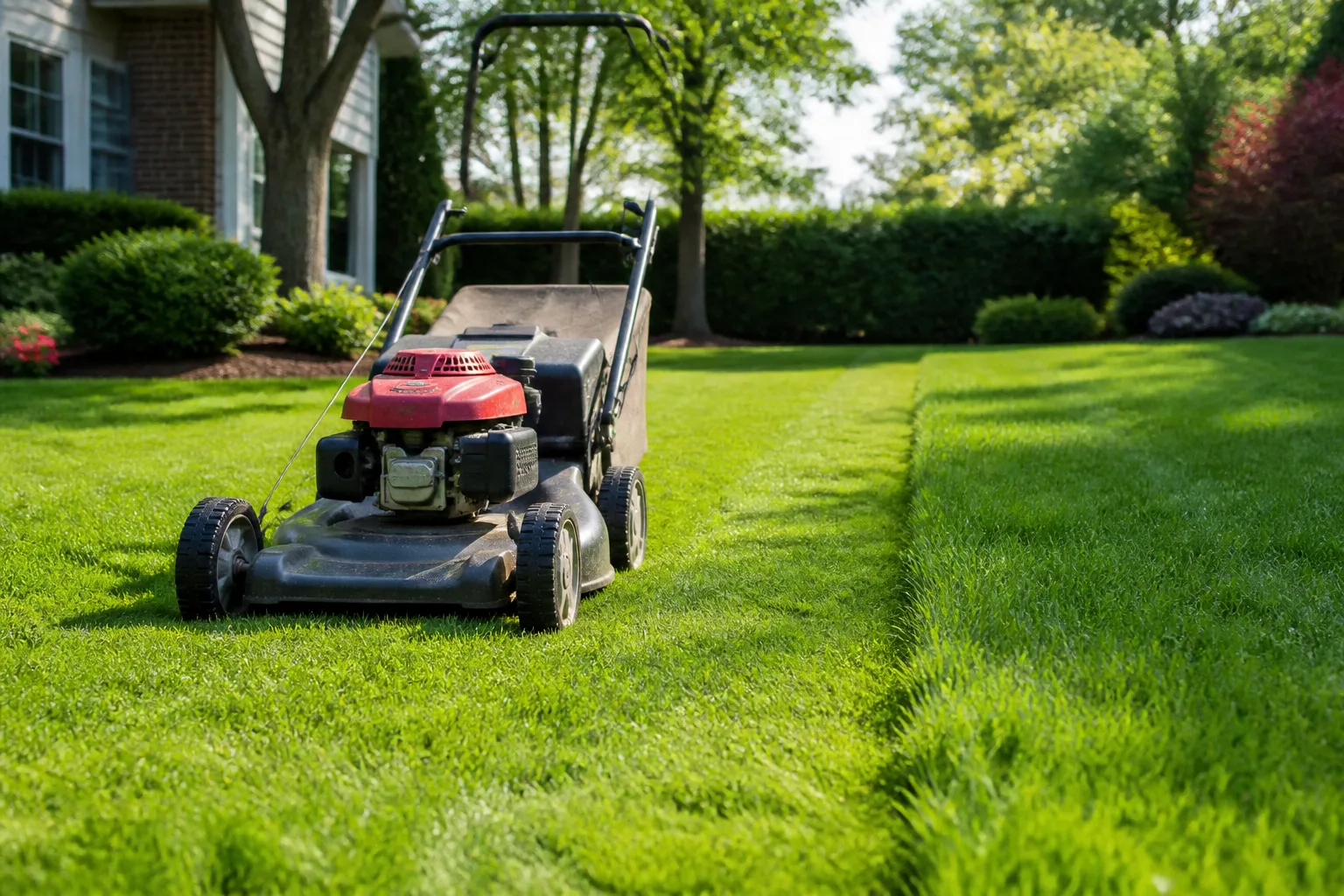
Mowing and watering are linked. Scalped turf loses shade over the soil surface, dries faster, and shows stress days earlier than a taller stand.
For many cool-season lawns, 3 to 4 inches of height after mowing is a practical summer target, with the exact setting depending on species and mower deck accuracy. Colorado State University Extension recommends a minimum of 2 inches and prefers 2.5 to 3 inches for Colorado species—always verify against your grass type and local extension chart rather than copying one national number.
Never remove more than one-third of the blade in a single pass. During fast spring growth that may mean mowing every few days; in heat-stressed summer it may mean mowing less often while keeping height high. Dull blades fray leaf tips and increase water loss through damaged tissue—sharpen rotary blades regularly during the season.
Return clippings when possible. Decomposed clippings recycle nitrogen and organic matter, which supports the healthier turf that Colorado State University Extension notes uses water more efficiently. For August timing and frequency, see should you mow the lawn in August.
Tune Monthly Run Times to Your Climate and Grass Species
A July schedule copied from a neighbor three states away will miss more often than it hits. Cool-season grasses such as Kentucky bluegrass and tall fescue often slow growth and can enter dormancy under extreme heat, while warm-season grasses such as bermudagrass and zoysiagrass may still want steady moisture during their peak growth window.
Use your catch-can data plus weather to adjust month by month. After a cool, rainy week, subtract a cycle before you notice gray-green turf. During a dry, windy heat dome, add depth to the next allowed watering day rather than sprinkling lightly every evening.
Document changes. A photo of the controller screen and a note about can measurements takes thirty seconds and saves you from repeating the same experiment next August.
Know When Brown Grass Is a Water-Saving Strategy, Not a Failure
Letting an established lawn go partially brown during a short drought is sometimes the most responsible choice. Dormant cool-season turf can survive weeks without irrigation if crowns stay alive, then green up when temperatures and rainfall return—though it will not look magazine-ready during the dry spell.
That is different from killing grass through neglect. If crowns pull up easily or brown patches expand in circular patterns despite moisture, you may be dealing with disease or insect damage rather than drought—our brown patch and lawn disease guide covers when water makes fungal problems worse.
New sod, freshly seeded areas, and high-traffic play lawns cannot be managed like mature turf. Save aggressive water cuts for established stands that have had time to build root depth, and spot-water new plantings by hand rather than running whole zones for a small patch.
Conclusion
Saving water on your lawn in summer is a sequence, not a slogan. Measure what your sprinklers deliver, repair coverage and leaks, water deeply at dawn when the root zone is dry, shut off during rain, upgrade nozzles where it pays off, mow tall with sharp blades, and adjust runtimes to your soil and grass type. Do that and you can cut waste sharply while keeping a lawn that recovers from heat instead of living one dry day away from bare soil.
Start this week with a catch-can test on your worst zone and a walk-through while the system runs. Those two steps alone often reveal where the water bill has been leaking for years—and they cost nothing but a rainy morning and a ruler.



