How Silverfish Get Into Your Home and How to Stop Them
Find silverfish entry points, tell them from firebrats, and use a practical sequence to seal cracks, dry damp rooms, protect storage, and monitor.
Silverfish usually do not materialize from nowhere. They enter through a small structural gap, arrive inside a box or used item, or follow a protected route through plumbing and wall voids; then they stay where moisture, food, and darkness overlap.
The most effective early response is not to spray every room. Confirm the insect, place a few traps to learn where activity is concentrated, dry the area, remove the easiest food and shelter, and seal the route once you know what you are closing. That sequence prevents you from caulking over an active leak or mistaking a single outdoor wanderer for a whole-house infestation.
The short answer: silverfish follow moisture, food, and shelter
Silverfish are small, wingless, nocturnal insects that prefer cool, damp places and hide in cracks during the day. They are drawn to paper, book bindings, wallpaper paste, cardboard, dry foods, dust, and other starchy or carbohydrate-rich materials, so a quiet basement, bathroom, laundry room, closet, or storage area can offer everything they need. NC State Extension and NPIC both describe moisture control, cleaning, structural repairs, and storage changes as parts of the same integrated approach.
A single silverfish is not proof that a home is dirty or seriously infested. A pattern is more informative: repeated sightings in one room, shed skins or tiny scales near stored paper, irregular feeding damage, or traps that catch activity in the same edge or corner over several nights. A practical gardening-focused pest guide from Planet Natural makes the same useful distinction: clutter can provide shelter, but the stronger clue is often a damp environment rather than poor housekeeping.
Identify silverfish before you start sealing and spraying
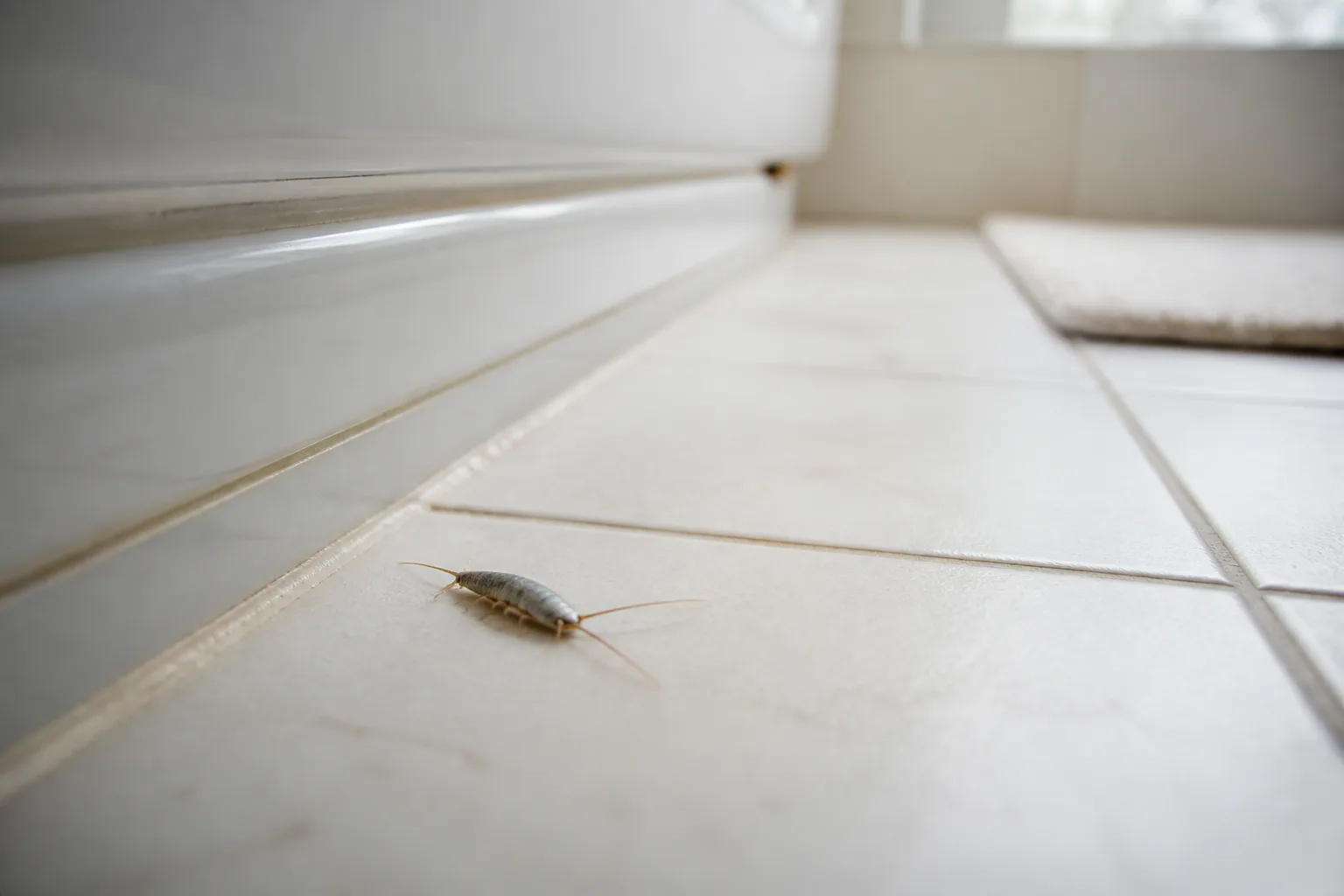
The common silverfish, Lepisma saccharina, is usually shiny silver or pearl gray, about one-half inch long, and tapered from the head toward three tail-like filaments. It has two long antennae, no wings, and a flattened body that lets it disappear into narrow cracks. Because it moves quickly and is most active at night, a phone photograph or a specimen caught in a trap is often more useful than a hurried glance.
Look for the combination of appearance and evidence. Silverfish can scrape irregular holes or notches into paper and bindings, and you may find delicate scales, cast skins, or dark fecal specks nearby; UC IPM explains that the insects have weak jaws and graze surfaces rather than biting through them. If a drawer is producing large rodent-like droppings or chew marks on thick plastic, do not force the silverfish diagnosis—another pest may be responsible.
Silverfish vs. firebrats and look-alikes
Firebrats are close relatives, but they are generally mottled gray or brown and prefer very hot, humid sites around furnaces, ovens, fireplaces, hot-water pipes, and attics. Silverfish are more often silver or pearly gray and are associated with cool, damp places such as basements, bathrooms, closets, and bookshelves. Ohio State University Extension and UC IPM both note that the distinction changes where you should inspect first.
Booklice, carpet beetle larvae, and cockroach nymphs can also turn up around paper or stored items, but they do not share the same long antennae and three tail filaments. If the insect is too damaged to identify, use a sticky trap or ask a county Extension office for help before choosing a pesticide; identification narrows the inspection and reduces unnecessary chemical use.
1. They squeeze through structural gaps
Silverfish have flattened bodies, so a gap that looks too small for a noticeable pest can still connect a home to a sheltered void. Common routes include cracks at the foundation, gaps under doors, openings around windows and trim, breaks at baseboards, vents, and holes where pipes or conduits pass through floors and walls. NPIC specifically recommends sealing spaces around pipes and conduits, while Penn State Extension lists cracks under and behind baseboards, windows, and door trim as harborages and access points.
This route is most likely when sightings cluster along a perimeter rather than around one box or bookcase. A silverfish on a bathroom floor may have emerged from the wall near a pipe, travelled along a baseboard, or entered under a poorly fitted door; the visible insect is not necessarily sitting beside the original exterior opening.
Where to inspect first
Start at the room where you saw the insect and work outward in a tight circle. Use a flashlight to check the underside of door trim, the joint between floor and baseboard, window corners, the cabinet beneath a sink, pipe penetrations, utility closets, and any crack that leads toward a basement, crawl space, attic, or exterior wall.
Do the inspection before caulking. If you find a damp patch, condensation on a pipe, soft drywall, peeling paint, or a musty cabinet, repair or dry that condition first; sealing a wet cavity can leave the habitat intact. Once the area is dry, use an appropriate caulk, spackle, or expandable foam for the size and location of the opening, and replace a damaged door sweep or weather seal where daylight is visible below the door.
2. They travel in boxes, books, and stored materials
Cardboard is both shelter and, when it carries starches, glue, dust, or paper fibers, a possible food source. Silverfish can arrive in moving boxes, storage-unit cartons, old newspapers, book collections, furniture, food containers, and other materials that spent time in a cool or humid place. Ohio State University Extension describes these pests as hitchhikers in food containers, furniture, old books, papers, and starched clothing, while UC IPM notes that lumber, wallboard, and similar products can bring insects into new homes.
The risk is not limited to antique books. A damp shipping carton left beside a basement wall, a stack of magazines stored on a concrete floor, or a folded costume kept in a humid closet can create a small, undisturbed harbor. Silverfish also move away from the original item, so finding one near a box does not prove that the box is the only source.
How to quarantine incoming items
Give used books, secondhand furniture, storage boxes, and long-travelled deliveries a quick inspection before they go into a basement, closet, or crowded shelf. Check the underside, seams, flaps, folded paper, binding edges, and the floor beneath the item; look for scales, cast skins, irregular grazing, dampness, or a musty smell rather than searching only for a live insect.
Keep questionable cardboard on a dry, hard surface while you inspect it, not on a basement floor. For long-term storage, let paper and textiles dry completely, remove loose dust, and use sealable plastic containers or bags; keep the containers off damp concrete and leave enough room to check contents later. If an item is valuable, visibly infested, or difficult to clean, isolate it and consult a conservator or pest professional instead of freezing, heating, or spraying it without checking for material damage.

3. They move along plumbing and wall voids
Pipes and utility openings create a ready-made travel network. Silverfish can move along plumbing lines and through gaps in walls or floors, then appear in a bathroom, kitchen, laundry room, closet, or lower-floor room that seems far from the original source. This is why a clean, dry-looking room can still have a silverfish sighting if an adjacent cavity or utility chase is damp.
Do not assume the insect came up through the drain. Silverfish that fall into a smooth bathtub or sink may be unable to climb out, which makes the sighting look as if it emerged from the plumbing; UC IPM notes that these insects cannot crawl up through a drain but can become trapped after falling in. Treat the fixture as a collection point and inspect the cabinet, wall, floor, and pipe penetrations around it.
The moisture clue that matters
Moisture can be obvious, such as a dripping supply line, wet foundation, or standing water. It can also be quiet: condensation on cold pipes, a bathroom fan that vents poorly, damp cardboard, a musty closet, a slow laundry-room leak, or water wicking through a basement wall.
Run a hand along accessible pipes, look for staining and swollen materials, and check whether the room dries after a shower or load of laundry. A dehumidifier can lower moisture in a closed space, but it cannot repair a leak or stop water entering from outside; NPIC recommends fixing leaks and seeps, improving air circulation, and using a dehumidifier where appropriate.
4. They hitchhike indoors on belongings and deliveries
Some silverfish enter because the home itself is open to them; others enter because the home receives a sheltered item. Boxes from a storage unit, a used book, a rolled rug, a piece of furniture, a bag of dry pet food, or a bundle of old papers can carry an insect or provide enough cover for one to go unnoticed.
This route is especially easy to miss when the item arrives during a move or renovation. Penn State Extension notes that effective management combines sanitation, dehumidification, habitat modification, and—when needed—targeted insecticides; that combination matters because an incoming item can reintroduce the pest after you have already cleaned the room.
What to check on arrival
Unpack paper goods and cardboard promptly instead of leaving them in a closed garage or basement for weeks. Inspect the bottom of a box before carrying it indoors, shake out washable textiles outdoors, and keep new dry foods in their original sealed packaging until you have checked for tears, dampness, or spilled powder.
For a used book or piece of furniture, inspect in daylight and keep it separate from an established collection for a few days if the item came from a damp environment. Do not spray pesticides on books, fabrics, or finished furniture as a first response; residue, staining, and material damage can outlast the pest problem.
Make the first 24-hour prevention pass
When you see a silverfish, use the next day to gather evidence and remove the easiest advantages. This five-part pass gives you a better starting point than spraying randomly:
- Confirm the insect. Photograph it or place it in a small sealed container, and compare the body, scales, antennae, and three tail filaments with a reliable Extension identification guide.
- Place monitors. Put sticky traps along baseboards, near the sighting, under a sink, beside stored books, and along the edge of the basement or closet. Date the traps so you can tell whether the problem is shrinking or simply moving.
- Trace moisture. Check for leaks, condensation, damp walls, wet cardboard, and poor bathroom or laundry ventilation before you start sealing openings.
- Remove easy shelter. Lift cardboard off concrete, consolidate paper, vacuum dust from edges, and move clutter far enough from walls to inspect behind it.
- Close the route after drying. Repair the moisture source, then seal the confirmed crack, pipe gap, door gap, or trim opening with a material suited to that location.
The order is deliberate. A trap tells you where activity is occurring, but it does not tell you why; drying without sealing leaves a route open, while sealing without drying preserves a hidden habitat. NC State Extension recommends directing control efforts toward the areas where insects or feeding evidence are actually present rather than treating an entire home without a diagnosis.
Dry the source, not just the room
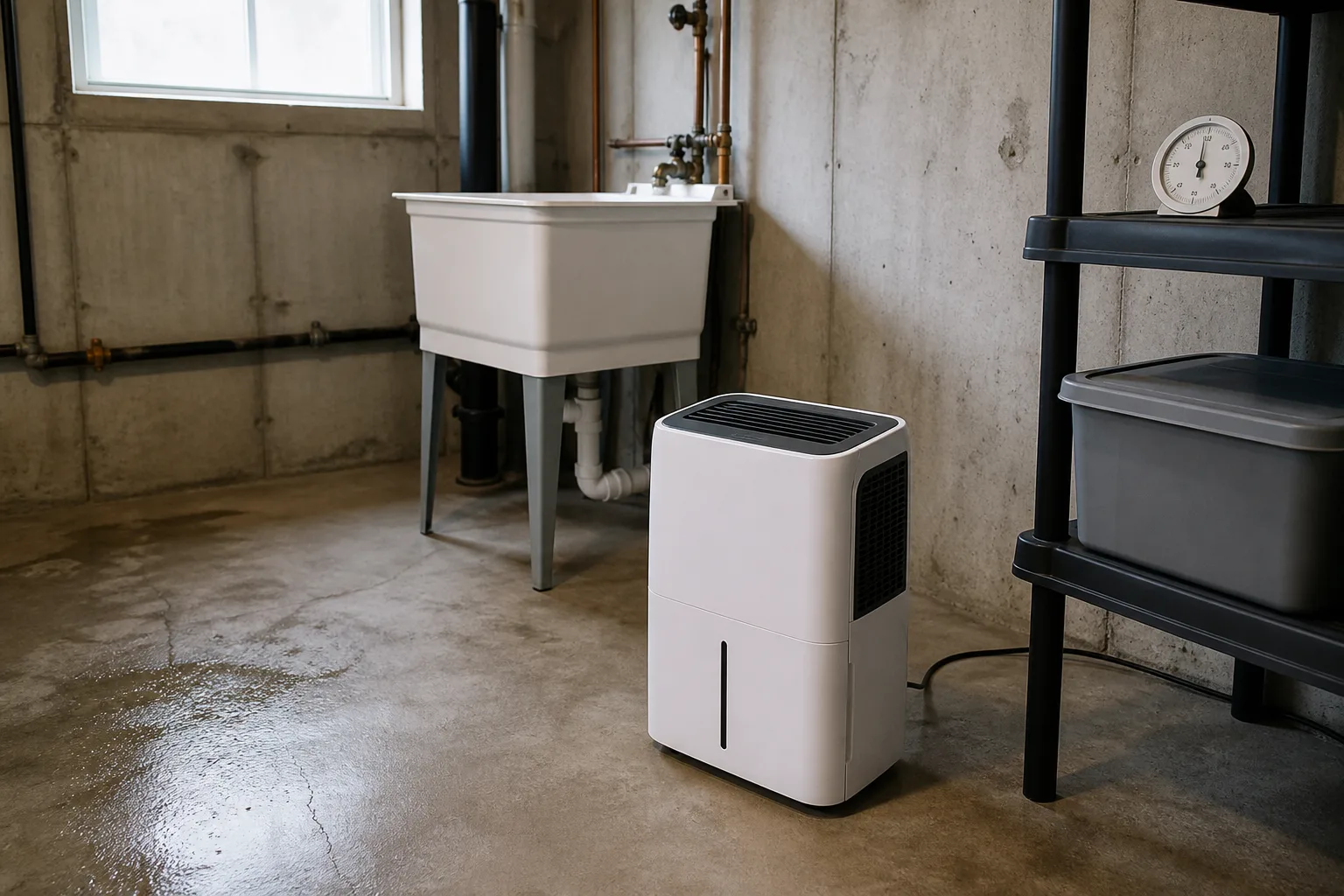
Silverfish prevention improves when you treat water as a building problem rather than a cleaning problem. Repair dripping plumbing, slow leaks beneath sinks, wet laundry-room floors, roof or foundation seepage, and condensation on cold pipes; keep bathroom and laundry fans working, and use a dehumidifier in a closed basement, garage, attic, or storage room when ordinary ventilation is not enough.
Outside the house, check whether clogged gutters, short downspouts, poor grading, or stacked lumber keep water against the foundation. Penn State Extension includes gutters, downspouts, exterior caulking, painting, drainage, and crawl-space measures in a broader moisture-reduction strategy, which is a useful reminder that the source may be outside the room where you find the insect.
Do not try to solve a damp basement by turning up the heat or moving the dehumidifier into a corner where air cannot circulate. Drying works best when the appliance has clearance, doors or vents allow air movement, and the water source has been repaired; otherwise you are paying to chase moisture that keeps returning.
Remove food and hiding places without making a mess
Vacuum along baseboards, under shelving, behind seldom-moved furniture, and around storage edges. Wipe up flour, cereal, pet-food dust, and other dry spills, but do not confuse a spotless floor with a solved infestation: silverfish can persist in wall voids, insulation, bookcases, and protected spaces that a vacuum cannot reach.
Move old newspapers, magazines, damp papers, and unused boxes out of humid rooms. Store cereals, flour, pasta, pet food, and treats in containers with tight lids, and keep books and textiles in a dry, inspectable arrangement instead of pressing them against a cold exterior wall. UC IPM emphasizes that dust, debris, dry food, paper, and book bindings all contribute to the food-and-shelter mix.
Decluttering should be targeted, not punishing. You do not need to empty a whole home because of one sighting; remove materials from the dampest zone, create a gap behind remaining storage, and make the floor and wall edges visible enough to inspect and clean.
Use traps as monitors, not as a substitute for repairs
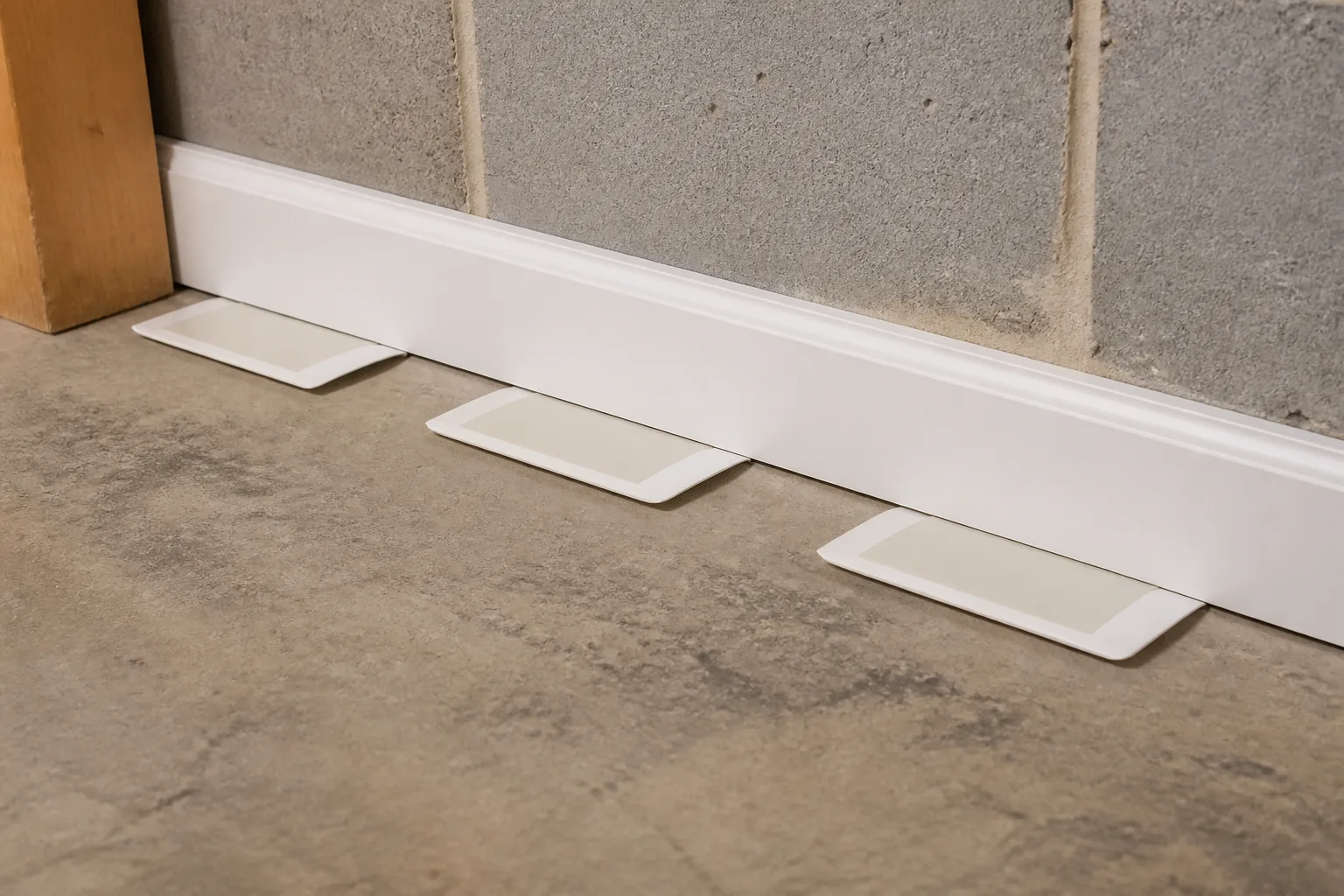
Sticky traps are useful because silverfish travel along edges and are active at night. Place them where a wall meets the floor, beneath a sink, beside a bookcase, or near a pipe opening—not in the middle of a brightly lit room—and check them regularly. UC IPM and NC State Extension describe sticky traps as ways to identify hot spots and help with small populations.
A simple glass-jar monitor can supplement commercial traps. Wrap the outside of a lidless jar with masking tape so the insect can climb up, place a small amount of dry bait inside, and set the jar along an edge; the smooth interior prevents an insect from climbing back out. Replace the bait periodically, because NC State Extension warns that old food left in a trap can attract other stored-product pests.
Skip a wet newspaper trap in a damp room. Although a moist roll may attract silverfish temporarily, it also adds the condition you are trying to remove and gives you little information about whether the building has a continuing moisture problem. A dry, dated monitor paired with moisture repair is the cleaner test.
When pesticides or a professional are justified
An occasional silverfish usually does not justify whole-room insecticide treatment. UC IPM says light infestations can often be managed by reducing water sources and using physical control, while NC State Extension notes that severe infestations may need targeted residual sprays or dusts applied to cracks, crevices, wall voids, attics, basements, or other appropriate sites.
If you use a pesticide, choose only a product whose current label includes silverfish or firebrats and the place you intend to treat. Follow the label for ventilation, protective equipment, children, pets, food, drains, and disposal; never fog an attic or basement as a shortcut, and never assume “natural” means harmless. NPIC provides label-safety guidance, and Gardening Know How notes that airborne diatomaceous-earth dust can irritate the nose and mouth and that pool-filter material is not the same product as food-grade material.
Desiccant dusts can work only when they stay dry, and a thick layer is not automatically better. Penn State Extension explains that products such as diatomaceous earth and silica aerogel lose practical effectiveness when wet, while UC IPM warns that labels limit where some dust products may be used. Keep any pesticide out of reach of children and pets, and use a licensed professional when the treatment area is an inaccessible wall void, a shared building, or a persistent infestation.
Professional help is also sensible when you find extensive paper damage, repeated catches after moisture repairs, signs of a roof or foundation problem, or an insect you cannot identify. A good inspection should look for the source and harborages, not simply apply a perimeter spray and leave the damp condition untouched.
If you still see silverfish after prevention
Expect a short lag after making repairs. Adults and nymphs may remain in protected places, and a trap can catch stragglers after the room becomes less suitable. What matters is the trend: fewer catches, no new damage, and no new damp or sheltered area replacing the old one.
If sightings continue, map every catch by room and date. Move one or two traps toward the newest activity, inspect the wall or ceiling on the other side of the shared plumbing, check storage above and below the original location, and look for a second moisture source such as a condensating pipe or exterior seep.
If there is no improvement after roughly two or three weeks of drying, cleaning, sealing, and monitoring, assume that a hidden or untreated area remains rather than simply buying a stronger spray. UC IPM gives the same diagnostic rule for stalled control: persistent insects often indicate untreated harborages or water sources, and large populations are extremely difficult to control until dripping water and moist surfaces are removed.
Conclusion: stop the route and the conditions that support it
The four common routes are structural gaps, stored boxes and paper, plumbing and wall voids, and hitchhiking belongings. Each one becomes a lasting problem only when it connects with the conditions silverfish prefer: moisture, darkness, food, and undisturbed shelter.
Confirm the insect, monitor the edges, repair the water source, protect paper and dry foods, and seal the access point once the area is dry. That modest sequence is safer and more informative than spraying first—and it gives you a clear escalation path if the traps keep catching silverfish after the home has been made less welcoming.