6 Best Christmas Tree Stands for 2025
Need a Christmas tree stand that will not tip? See six top options for live and artificial trees, plus sizing rules, water math, and setup steps.
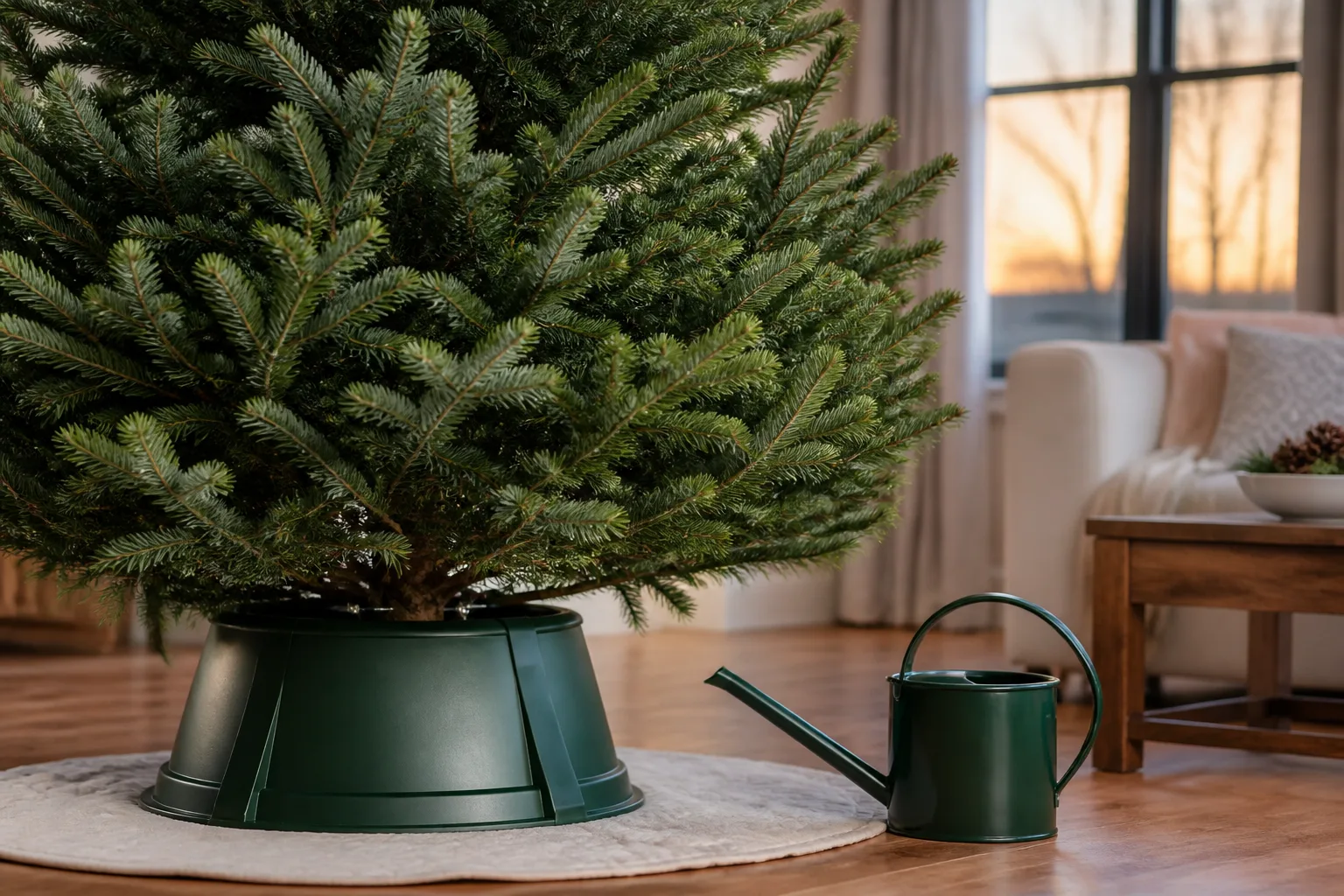
A Christmas tree stand is the piece of holiday gear nobody photographs — until the tree leans three inches and your glass ornaments slide toward the floor. The right stand matches three things at once: your tree’s height, its trunk diameter, and how much water the stand must hold between daily top-offs. Get any one wrong and no amount of tightening screws will save a Saturday afternoon.
This guide compares six stands that cover the most common home setups: large live trees, budget live trees, design-forward live trees, basic skirt-hidden bases, small decorative live trees, and wheeled bases for artificial trees. Dimensions, capacities, and height limits below come from manufacturer listings and published long-term user reports. I have not independently lab-tested these models in the current season; where I reference reported field experience, I label it as such.
Quick Picks at a Glance
Use the table to narrow the field, then read the full write-up for trade-offs that matter in your room.
| Best for | Stand | Listed limits | Water capacity | Why it fits |
|---|---|---|---|---|
| Overall ease and tall live trees | Krinner Tree Genie XXL | Up to 12 ft.; trunk to 7 in. | 2.5 gal. | Foot-pedal claws; no crawling under branches |
| Budget live tree | Northlight Green Metal | Up to 9 ft.; trunk 2–5.5 in. | 3.5 qt. | Low cost, easy fill; plastic eye bolts |
| Modern look, no skirt | Tree Nest Cosmopolitan | Up to 10 ft.; trunk 2.4–5.9 in. | 1.27 gal. | Slim wood-and-steel profile |
| Basic live tree under a skirt | Jack-Post Handythings | Up to 8 ft.; trunk to 6 in. | 1.3 gal. | Center spike, large opening, low price |
| Small decorative live tree | Ferm Living Christmas Tree Foot | Best under ~6 ft.; narrow trunks | Very small basin | Star-shaped metal base, minimal water room |
| Artificial tree, easy decorating | Tree Nest Rolling | Up to 7.5 ft.; trunk 0.7–1.4 in. | None (faux) | Locking casters; spin while you decorate |
If you already know your trunk diameter, skip straight to How to Size a Stand Before You Buy. That section matters more than any “best overall” label.
How We Evaluated These Stands
Capacity, Stability, and Water Math
Live Christmas trees drink surprising amounts of water, especially in the first week indoors. Penn State Extension recommends a stand that provides one quart of water per inch of trunk diameter and holds at least one gallon for most household trees. A 4-inch trunk needs a 1-gallon minimum basin; a 6-inch trunk needs about 1.5 gallons just to meet the rule — before you account for daily refills.
Stability scales with base footprint, stand weight, and whether the fasteners grip the trunk evenly. Screw-type stands are common but often require two people and repeated adjustments to get the tree plumb. Pedal-and-claw systems reduce that wrestling. Lightweight decorative stands can be steady with a small tree yet still need ballast once you hang heavy ornaments or live with curious pets.
What the Specs Do Not Tell You
Manufacturer height ratings assume a fresh, appropriately trimmed tree and a stand used on level flooring. They do not account for:
- Tapered trunks that fit the opening but leave uneven screw contact
- Low branches that block access to the reservoir (common on field-grown trees)
- Carpet vs. hard floor — soft carpet lets a narrow base rock slightly
- Room heat — vents and fireplaces dry needles faster, which increases water demand and shifts weight as branches droop
Treat height and trunk limits as ceilings, not targets. If your tree is at the top of the range, choose the next size up or add anchoring.
Best Overall: Krinner Tree Genie XXL
The Krinner Tree Genie XXL is the stand I recommend when setup frustration is the main problem. Instead of four separate eye bolts you tighten while crouched under branches, five linked claws close with a foot pedal and lock in place. Published long-term testers report setting a 9-foot tree solo in minutes without kneeling.
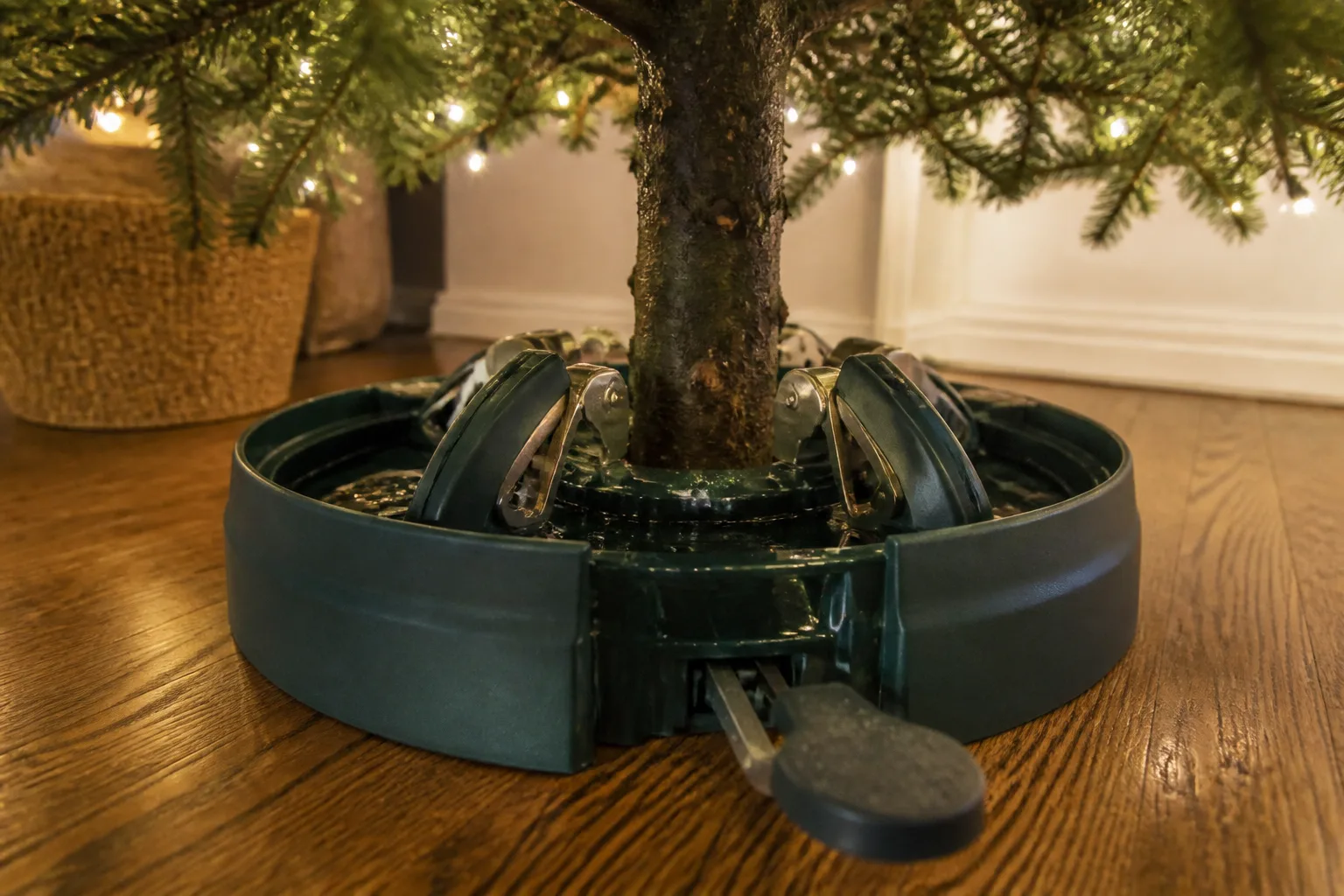
What stands out
- Capacity: 2.5-gallon reservoir with a fill indicator — the largest in this list and enough headroom for a thick trunk under the Penn State quart-per-inch guideline
- Tree range: Listed for trees up to 12 feet with trunks to 7 inches
- Stability: ~18-lb. empty weight and a 20-inch base; multiple reviewers describe the stand snapping back upright after a deliberate tilt test with a large tree installed
- Out-of-box use: Arrives assembled
Trade-offs
- Premium price versus basic screw stands
- Reservoir is easier to fill than to fully drain at takedown
- Still requires a level floor; pedal stands do not fix an undersized trunk opening
Best for: Households with trees 7–12 feet tall, wide trunks, or anyone who has sworn off screw-stand setup fights.
Dimensions (manufacturer): 20 × 6 in. base | Weight: 18 lb. | Material: Plastic basin, metal hardware
Best Value: Northlight Green Live Christmas Tree Stand
The Northlight Green Metal Live Christmas Tree Stand hits the sweet spot for a first live tree or a budget refresh. The bucket-style basin is easy to fill from the side, the green finish looks acceptable without a skirt, and reported home use over a full season shows it can hold a 9-foot tree without repeated re-tightening — provided the trunk stays within the stated diameter range.
What stands out
- Price: Typically under $40 at big-box retailers
- Setup: Four eye bolts; straightforward but usually a two-person job
- Stability: Light empty weight (~3.5 lb.) yet reported steady with a properly centered trunk
Trade-offs
- Water capacity: 3.5 quarts — below the 1-gallon minimum Penn State suggests for many trunks. You must refill daily and monitor closely the first week; do not leave town assuming a full basin
- Plastic eye bolts may fatigue over years; metal fasteners would inspire more confidence
- Sits relatively high; water level is hard to see under a skirt
Best for: Trees up to 9 feet with trunks between 2 and 5.5 inches when you will check water every day and want to spend less on hardware.
Dimensions (manufacturer): 22 × 22 × 8.5 in. | Tree capacity: 9 ft., 2–5.5 in. trunk
Best Modern Design: Tree Nest Cosmopolitan
The Tree Nest Cosmopolitan is for rooms where the stand stays visible. Beech legs support a powder-coated steel cup that reads more furniture than utility bucket. Reported testers like the ~1.27-gallon capacity for once-a-day watering on a 9-foot tree and the slim footprint in tight living rooms.
What stands out
- Aesthetics: No tree skirt required for a clean look
- Water access: Wide opening relative to height; long-spout watering cans work well
- Capacity: About 1.27 gal. — reasonable for mid-size trunks if you refill daily
Trade-offs
- Only ~6 lb. empty; not designed for extra ballast holes — add external weight if pets or kids bump the tree
- Screw fasteners still need a helper to hold the tree plumb
- Taller profile changes how a skirt sits if you use one anyway
Best for: Design-forward spaces, trees to 10 feet, trunks 2.4–5.9 inches, and buyers who will anchor or ballast a lighter base.
Dimensions (manufacturer): 19 × 19 × 9.84 in. | Material: Beechwood legs, steel cup
Best Basic: Jack-Post Handythings Stand
The Jack-Post Handythings Christmas Tree Stand is the utilitarian choice: molded plastic base, steel spike, four eye bolts, and a 1.3-gallon reservoir with a drip lip. It is inexpensive, hides well under a skirt, and reported users praise the wide fill opening.
What stands out
- Center spike helps seat the trunk plumb before you tighten screws — a detail Penn State’s guidance indirectly supports by warning against shaving the trunk sides; the spike engages the center grain
- Capacity: 1.3 gal. meets minimum rules for many 4–5-inch trunks
- Trim-friendly: Low profile leaves room for gifts if you remove lower branches
Trade-offs
- Needs at least 5.5 inches of bare trunk below the lowest branch; skimp on trimming and the screws bite air
- Only 2.5 lb. empty — plan on gravel in the basin cavity or weights on the legs if the tree will take hits
- Not pretty; assume a skirt
Best for: 6–8-foot trees, budget setups, and buyers who already own a tree skirt.
Dimensions (manufacturer): 19.5 × 19.5 × 7.5 in. | Tree capacity: 8 ft., 6 in. trunk (larger size available for 10 ft.)
Best Decorative: Ferm Living Christmas Tree Foot
The Ferm Living Christmas Tree Foot is a five-point star of powder-coated iron with a brass finish. It is gorgeous in a corner or beside a sofa where a plastic basin would ruin the mood. Reported testing with a 6-foot tree showed excellent stability for a small canopy — with one big caveat.
Trade-offs that matter
- Tiny water reservoir — roughly cup-scale, not gallon-scale. Fine for a slim, short tree you hydrate obsessively; wrong for a heavy-drinking fir left alone over a weekend
- No published maximum height; treat 6 feet and under as the practical ceiling
- Filling without splashing requires a long-spout can and patience
Best for: Small live trees, secondary trees, or rooms where the stand is part of the décor and you accept frequent top-offs.
If your primary tree is 7 feet or taller, pick a stand from the table’s first four rows instead.
Best for Artificial Trees: Tree Nest Rolling Stand
Artificial trees use a narrow metal pole, not a sap-drinking trunk. The Tree Nest Rolling Christmas Tree Stand clamps poles from 0.7 to 1.4 inches in diameter and adds locking casters so you can rotate the tree while hanging ornaments or roll it into storage still dressed. That is a different job from any live-tree basin on this list.
What stands out
- Decorating workflow: Spin instead of circling with a step stool
- Adjustable legs for leveling on imperfect floors
- Storage angle: Pairs with upright storage methods covered in our artificial tree storage guide
Trade-offs
- Ugly without a skirt — plan to hide the hardware
- Instructions are mediocre in reported buyer feedback; assembly is still manageable
- 7.5-foot ceiling listed max; do not mount a 9-foot faux tree on it
Never put a fresh-cut trunk in this stand. There is no water reservoir, and the clamp sizes will not grip a 3-inch spruce base.
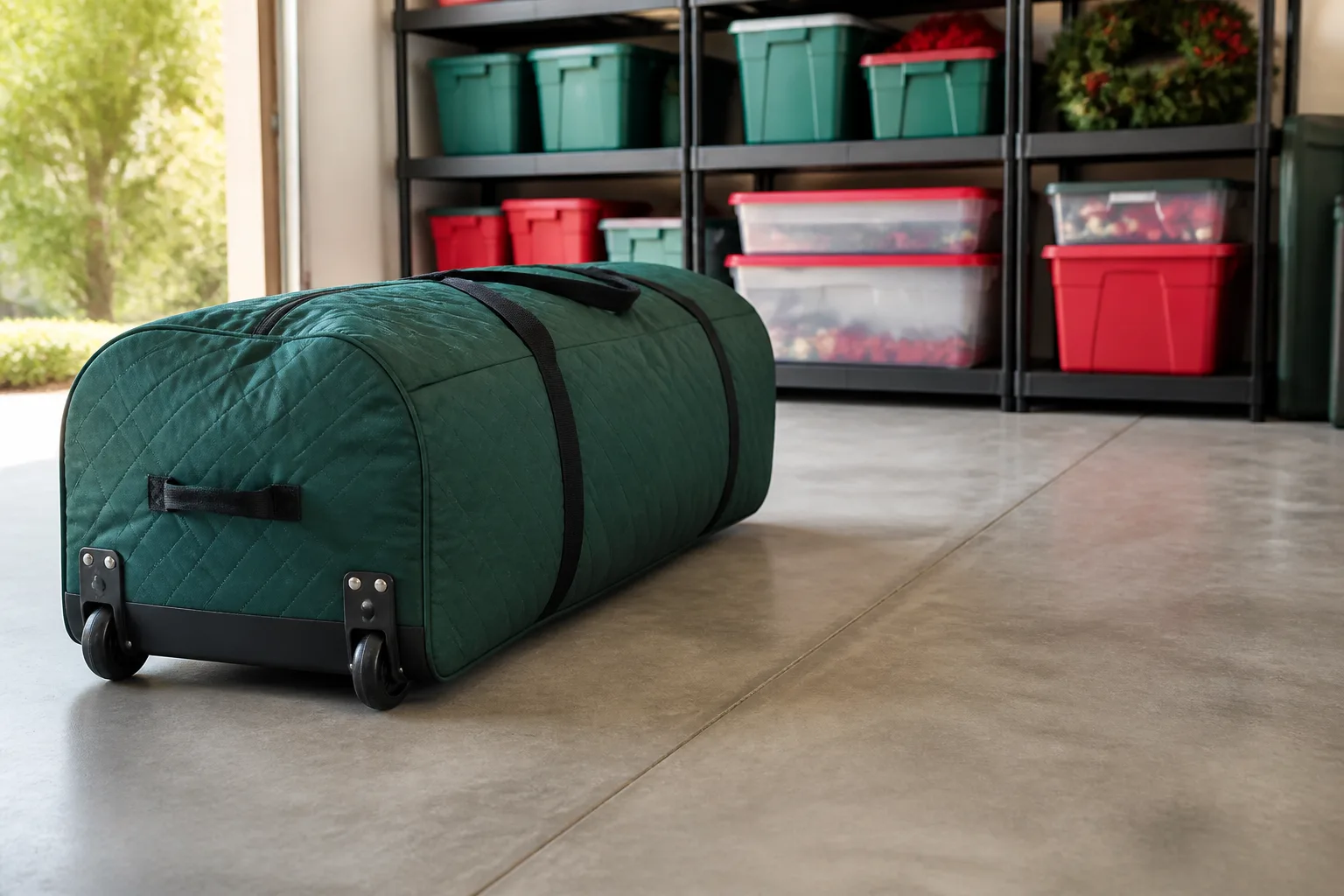
Real vs. Artificial Stands: Do Not Mix Them Up
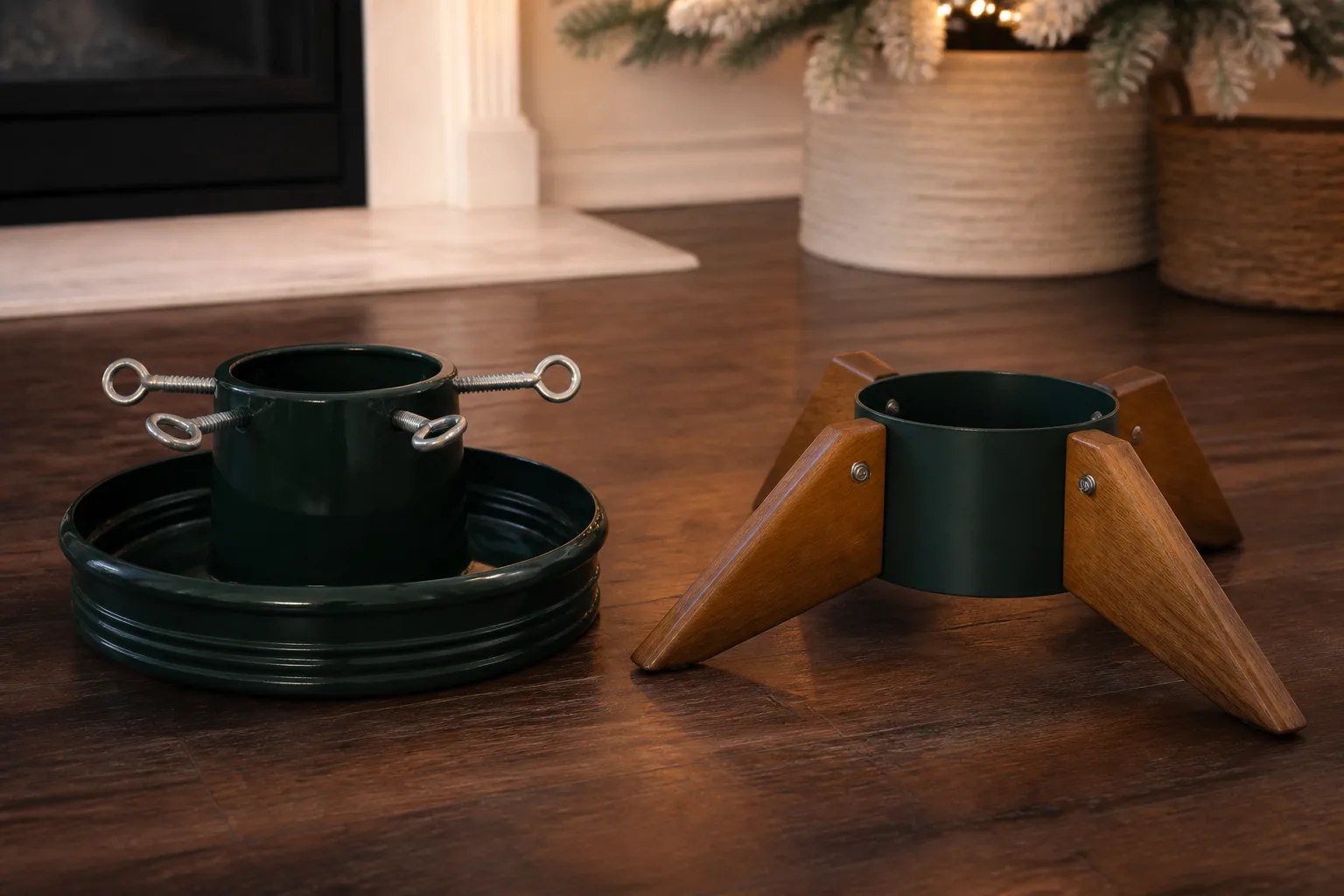
Live-Tree Stands Need Water and Trunk Room
Live stands are built around a water basin and fasteners that spread pressure across real bark. The opening must accept your trunk without whittling — Penn State warns that removing outer wood layers cuts water uptake. You also need vertical clearance to drop the trunk in after a fresh perpendicular cut.
Artificial Stands Trade Water for a Narrow Spindle
Faux stands clamp a skinny pole, often with wheels or a broad low platform for balance. They are lighter, drier, and useless for needle retention. If you switch between real and artificial some years, buy two stands rather than forcing one adapter.
How to Size a Stand Before You Buy
Match Height, Trunk Diameter, and Reservoir Volume
Work in this order every time:
- Measure trunk diameter an inch above where the tree will sit in the stand — not at the cut face if the trunk flares.
- Multiply diameter in inches by 1 quart to get minimum water volume (4-inch trunk → 1 gallon minimum).
- Compare to the stand’s published trunk range — if you are within ½ inch of the max, size up.
- Check height rating — if your tree is within 1 foot of the max, favor a heavier base or plan to anchor.
| Trunk diameter | Minimum reservoir (Penn State rule) | Stands on this list that meet it on paper |
|---|---|---|
| 3 in. | 3 qt. | Northlight (barely), Tree Nest Cosmopolitan, Jack-Post, Krinner |
| 4 in. | 1 gal. | Jack-Post, Tree Nest Cosmopolitan, Krinner |
| 5 in. | 1.25 gal. | Jack-Post, Tree Nest Cosmopolitan, Krinner |
| 6 in. | 1.5 gal. | Krinner (best margin); Jack-Post at stated max |
Height and diameter limits are independent. A stand can accept a fat trunk yet still be a poor match for a 10-foot tree because the leverage multiplies.
Setting Up a Live Tree Without the Wrestling Match
Follow a sequence that prevents the usual redo loop:
- Fresh cut: If more than 12 hours have passed since harvest, slice ¼ inch straight across the base — not at an angle, not in a V-notch (Penn State Extension).
- Dry fit: Lower the trunk into the stand before bringing it indoors if the garage is easier; confirm the opening accepts the trunk without shaving sides.
- Plumb first: With screw stands, lightly tighten all fasteners, then tighten opposing pairs while a helper sights the trunk. With the Krinner, center the trunk before pumping the pedal.
- Water immediately: Fill to the stand’s max before decorating heat sources warm the room.
- Skirt last: Drape the skirt only after you know you can reach the basin with your watering can.
Two people still help on tall trees, but pedal stands remove the crawl-space phase that causes most swearing.
Keeping the Reservoir Full All Season
Check water every day. During the first week indoors, a fresh tree can absorb up to a gallon per day in warm rooms — consistent with reported home observations cited by Gardening Know How. Use plain tap water; Penn State found no benefit from sugar, bleach, aspirin, or commercial additives — and some gels reduce available liquid.
Practical tips:
- Keep a long-spout watering can beside the tree and refill at the same time you turn off lights for the night
- Run fingers along needles weekly; brittle, shedding needles mean the basin went dry even if water remains visible
- Keep the tree away from heat vents and fireplaces; cooler rooms slow drying and reduce fire risk from needle ignition
If crawling under branches is your bottleneck, an automatic top-up system can help — but only after the trunk is secured in a correctly sized stand.
Stability Upgrades for Pets, Kids, and Heavy Ornaments
Even a good stand benefits from backup:
- Anchor the trunk to a wall hook or ceiling with clear fishing line near the top third — especially with cats that treat the tree as a climbing gym. See our full cat-safe Christmas tree guide for placement and ornament strategy
- Add ballast inside the stand cavity or on the base legs if the empty weight is under 5 lb. and you expect bumps
- Place the tree at least 2 feet from launch furniture — sofas and shelves turn mild wobble into a tip
- Hang heavy ornaments on thick inner branches closer to the trunk, not on outer tips
Before you decorate, walk the room’s traffic paths and picture a dog’s tail at stand height.
When to Replace a Stand or Retire the Tree
Replace hardware when eye bolts strip, plastic basins crack, or the pedal mechanism on a Krinner stops locking. Those are mechanical failures.
Retire the tree when needles break easily between your fingers and shower down with a light stroke — Penn State’s dryness test. A dry tree ignites far faster than a hydrated one; disposal should be prompt once that threshold hits, regardless of how much you paid for the stand.
At takedown, empty reservoirs over a bucket — many stands are awkward to pour — and dry the basin before storage so plastic does not crack in the garage.
Conclusion
The Krinner Tree Genie XXL is the stand I would buy for a large live tree if setup ease and reservoir volume matter most. The Northlight Green stand works for budget 9-foot trees only if you commit to daily watering. Tree Nest Cosmopolitan fits design-led rooms; Jack-Post covers basic skirt-hidden setups; Ferm Living suits small decorative trees with eyes on style over capacity; and the Tree Nest Rolling base solves a different problem entirely — decorating and storing artificial trees.
Before you click buy, measure the trunk, run the quart-per-inch math, and decide whether you need water, wheels, or just a pretty metal star. The stand is not the decoration. It is the insurance policy for everything you hang above it.



