Asparagus Companion Plants: 12 Best Pairings
Pair asparagus with tomatoes, strawberries, marigolds, and nine more neighbors that share space without starving a 15-year bed. Layout rules, timing, and plants to avoid.

An asparagus bed is not a tomato row you replant every May. Once crowns go in, that ground belongs to Asparagus officinalis for 15 years or more — which means every companion you add must earn its place without stealing root room, shading spears during harvest, or inviting pests you cannot evict. The right neighbors can suppress weeds, feed beneficial insects, and use the empty weeks after you stop cutting spears. The wrong ones compete for the same deep soil layer and leave you with thin stalks for half a decade.
This guide covers 12 asparagus companion plants that fit a long-lived bed, explains how to place them on the perimeter versus between crowns, and lists the pairings you should keep out of the patch entirely. If you are still establishing crowns, start with our asparagus planting guide before you interplant anything.
Why Asparagus Beds Need a Different Companion Strategy
Asparagus crowns send roots 6 feet down or more over time and produce spears from buds that formed on last summer’s ferns. NC State Extension recommends full sun, deep soil preparation, and crowns spaced 12 inches apart in rows 5 feet apart — a footprint most annual companion charts ignore.
Perennial roots, annual neighbors
Most vegetables finish in one season. Asparagus does the opposite: you skip harvest the first year after planting crowns, take only a short second-year window, and only then build toward six to eight weeks of picking on mature plants. Companions must respect that timeline. A strawberry patch that looks charming in year two can become a mat of runners tangled through crowns by year six if you never renew it.
The useful mental model is hub and edge. Asparagus owns the center. Fast greens, herbs, and flowers occupy the outer 12 to 18 inches of the bed or the footpaths between rows — not the crown zone where spears emerge.
What companion planting can and cannot do here
The RHS companion-planting guidance is worth quoting for asparagus specifically: benefits like pest deterrence and space efficiency exist, but not for every crop in every situation. Mixed plantings can reduce pest pressure compared with monocultures, and flowers can support predators — yet no marigold replaces hand-picking asparagus beetles or protecting ferns from defoliation.
Treat companions as one layer in bed health: correct pH (6.0 to 6.7), deep organic matter, mulch, and disciplined harvest rules from NC State Extension matter more than any single herb. Companions shine when they solve a clear job — ground cover, beetle habitat for predators, or filling the post-harvest gap — without competing for the deep zone asparagus needs.
Map the Bed Before You Choose Plants
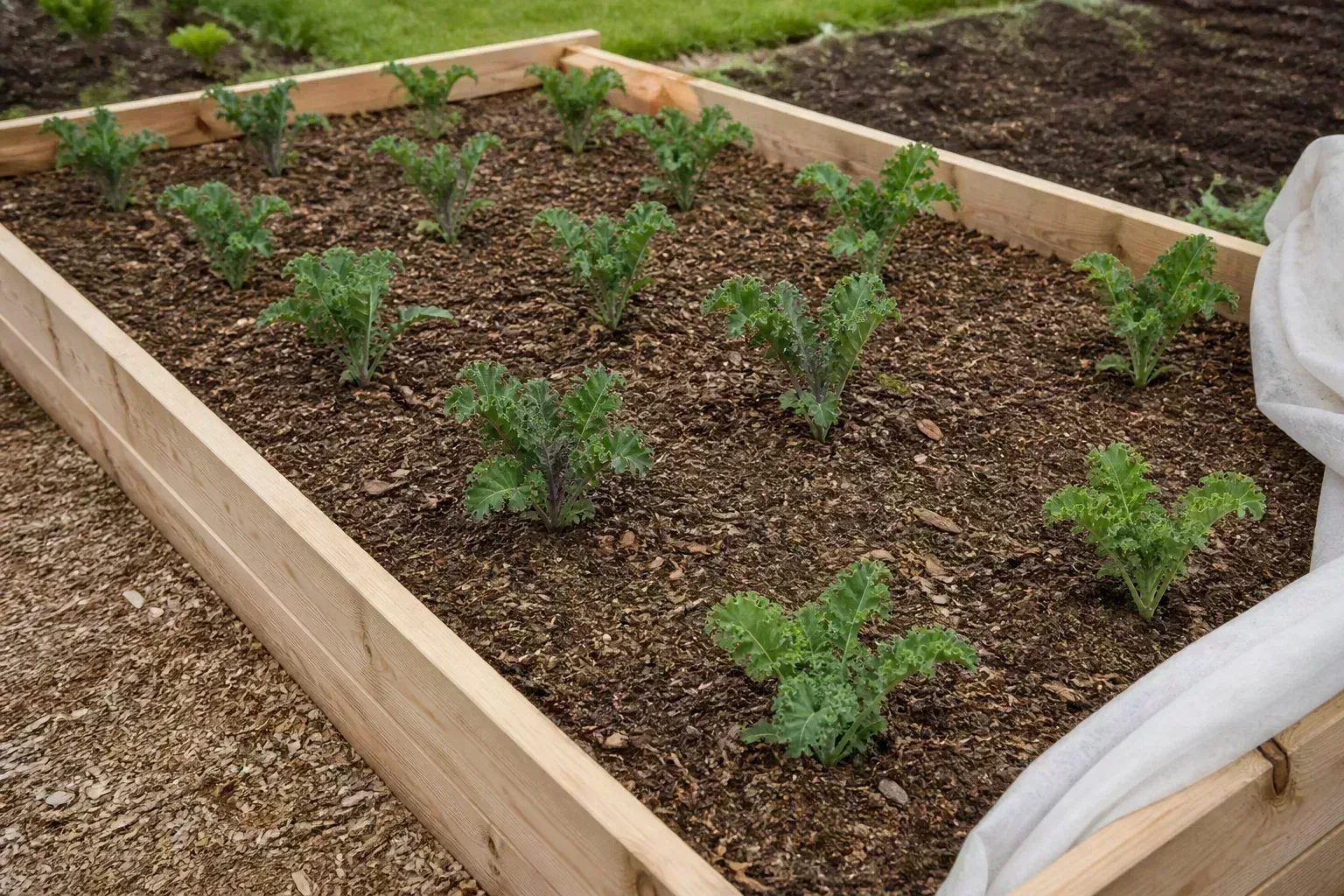
Sketch the bed before you buy extra seed. A 4-by-8-foot raised bed might hold six to eight crowns down the center line, leaving 18-inch borders on the long sides for companions and 24 inches at the head and foot for taller nightshades on trellises.
Crown spacing and the safe edge zone
Keep the 6-inch radius around each emerging spear free of new roots during establishment years. After year four, when crowns are vigorous, you can tuck shallow-rooted cilantro or lettuce farther out — but never bury compost or till through the crown zone to “refresh” soil. Asparagus hates root disturbance.
West Virginia University Extension’s companion-planting guidance (summarized in our companion planting overview) suggests separating incompatible crops by two to three rows. For asparagus, translate that to 2 to 3 feet between allium rows or potato hills and the nearest crown.
North-side tall crops vs south-side low growers
Put tomatoes, eggplant, and pea trellises on the north side of an east–west bed so summer fronds and trellised vines do not steal light from spears in spring. Plant low marigolds, nasturtiums, and strawberries on the south edge where they catch sun without casting afternoon shade on the crown row.
12 Best Asparagus Companion Plants
These twelve pairings cover nightshades for beetle pressure, flowers and herbs for beneficial insects, legumes for early-season soil biology, and shallow greens for weed suppression. None belongs on top of the crowns — placement is the skill.
Nightshades, strawberries, and the classic tomato pairing
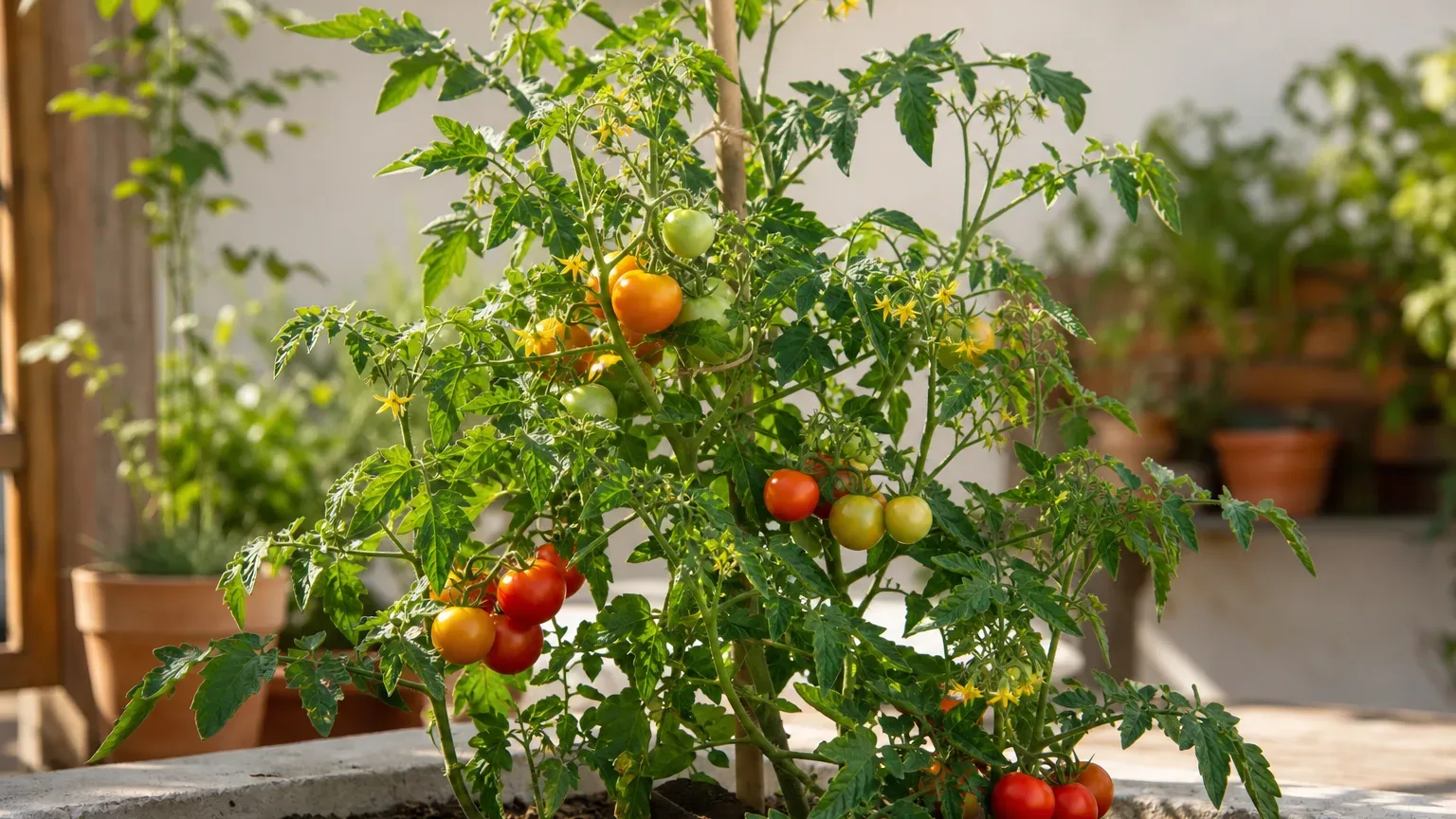
Tomato (Solanum lycopersicum) is the most cited asparagus neighbor in American gardening lore. Nightshades are said to release root-zone compounds including solanine that discourage asparagus beetles, while asparagus roots may suppress root-knot nematodes that weaken tomatoes — a reciprocal story repeated in extension-adjacent guides and Epic Gardening’s asparagus companion overview. Evidence for beetle deterrence is stronger in practice reports than in controlled field trials, so treat tomatoes as a supporting player, not a pesticide. Plant one or two determinate or compact indeterminate tomatoes at the north end of the bed on a sturdy cage, set out right after spring spear harvest.
Eggplant (Solanum melongena) follows the same edge logic and may help with common and spotted asparagus beetles (Crioceris species) that chew spears and defoliate ferns. University of Minnesota Extension’s asparagus beetle page notes that beetle damage on ferns directly reduces next year’s spear size. Set eggplant transplants after your last frost and after asparagus harvest ends, keeping 24 inches between stems and the nearest crown.
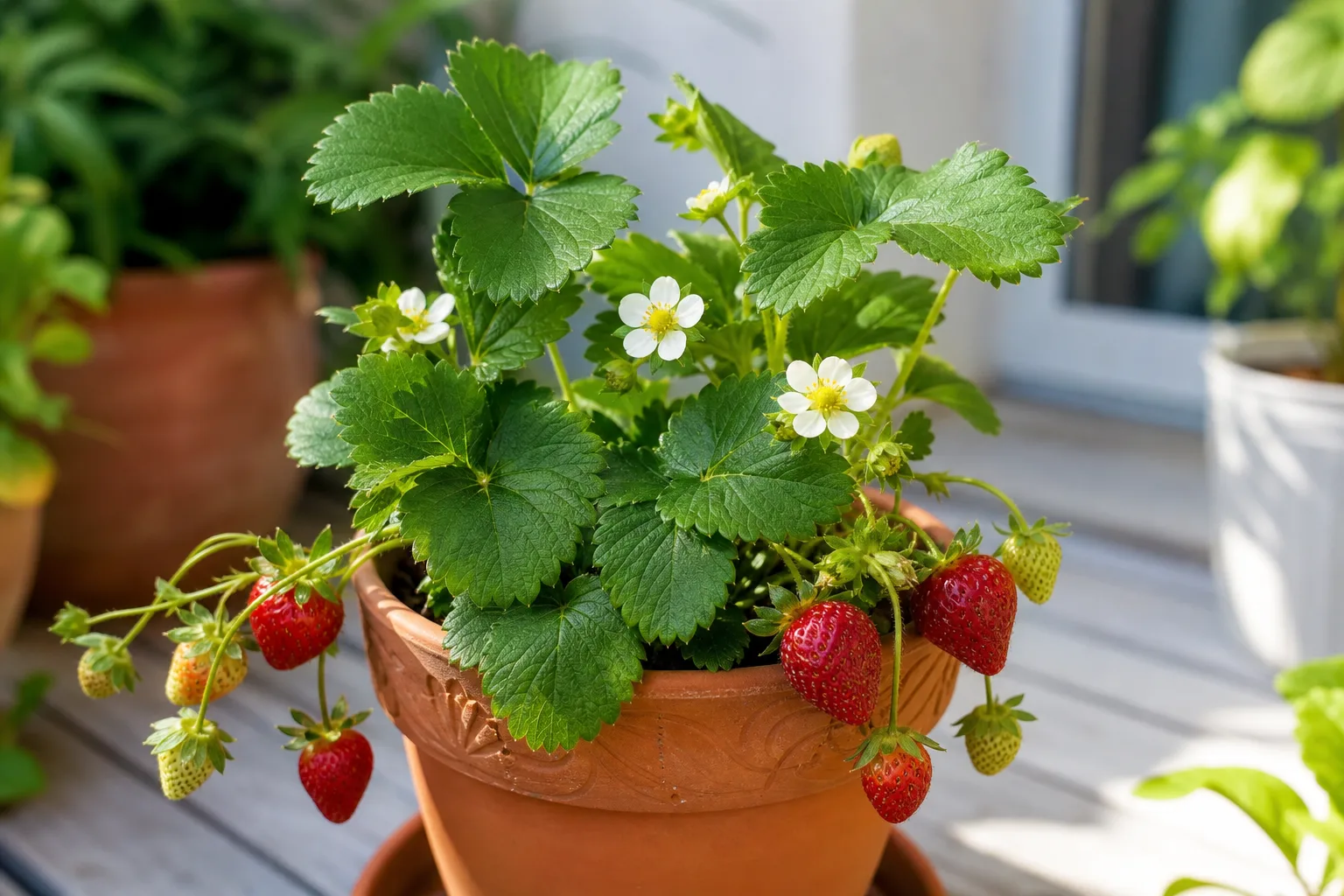
Strawberry (Fragaria × ananassa) shares the bed as a living mulch when crowns are planted 8 to 12 inches deep so strawberry roots stay in the upper 4 to 6 inches. Run strawberries on the south or east edge, renew mats every three to four years, and use separate drip zones so summer water for berries does not waterlog dormant crowns.
Marigolds, nasturtiums, and the insectary edge
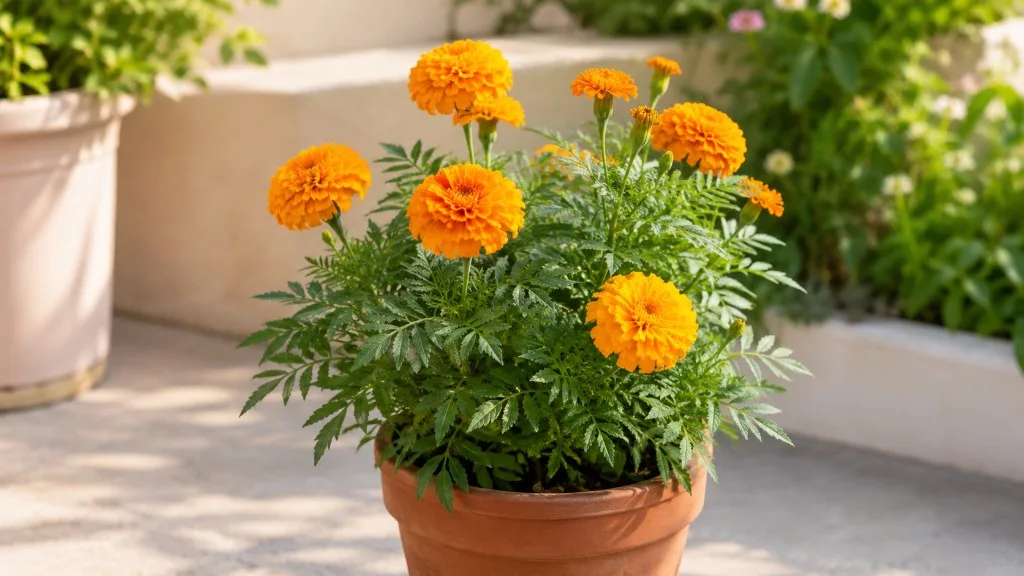
French marigold (Tagetes patula) earns its place for documented chemistry: research published in PLOS ONE found airborne limonene from French marigolds reduced glasshouse whitefly on nearby tomatoes — the same limonene class noted in RHS companion-planting research summaries. Sow in a continuous band 6 inches from the bed lip and deadhead through summer.
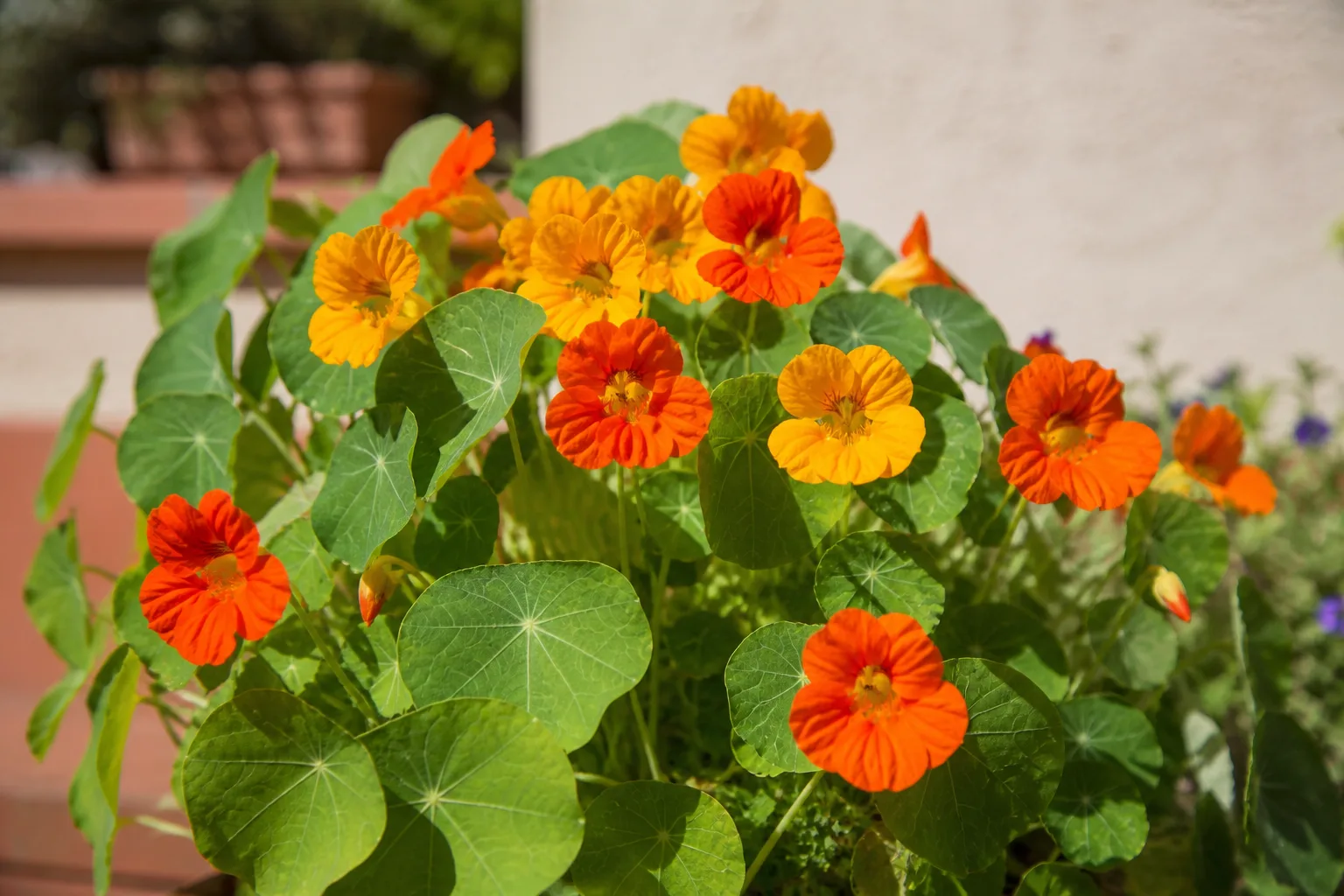
Nasturtium (Tropaeolum majus) works as a sacrificial trap crop at bed corners farthest from kitchen traffic. Group marigolds and nasturtiums into a continuous insectary strip on one long side — beneficial insects move more reliably along a nectar corridor than across open mulch. ATTRA’s companion planting guide emphasizes diversity and habitat over magic pairings. If beetle pressure is high, companions plus afternoon hand-picking beat companions alone.
Basil, dill, parsley, and cilantro
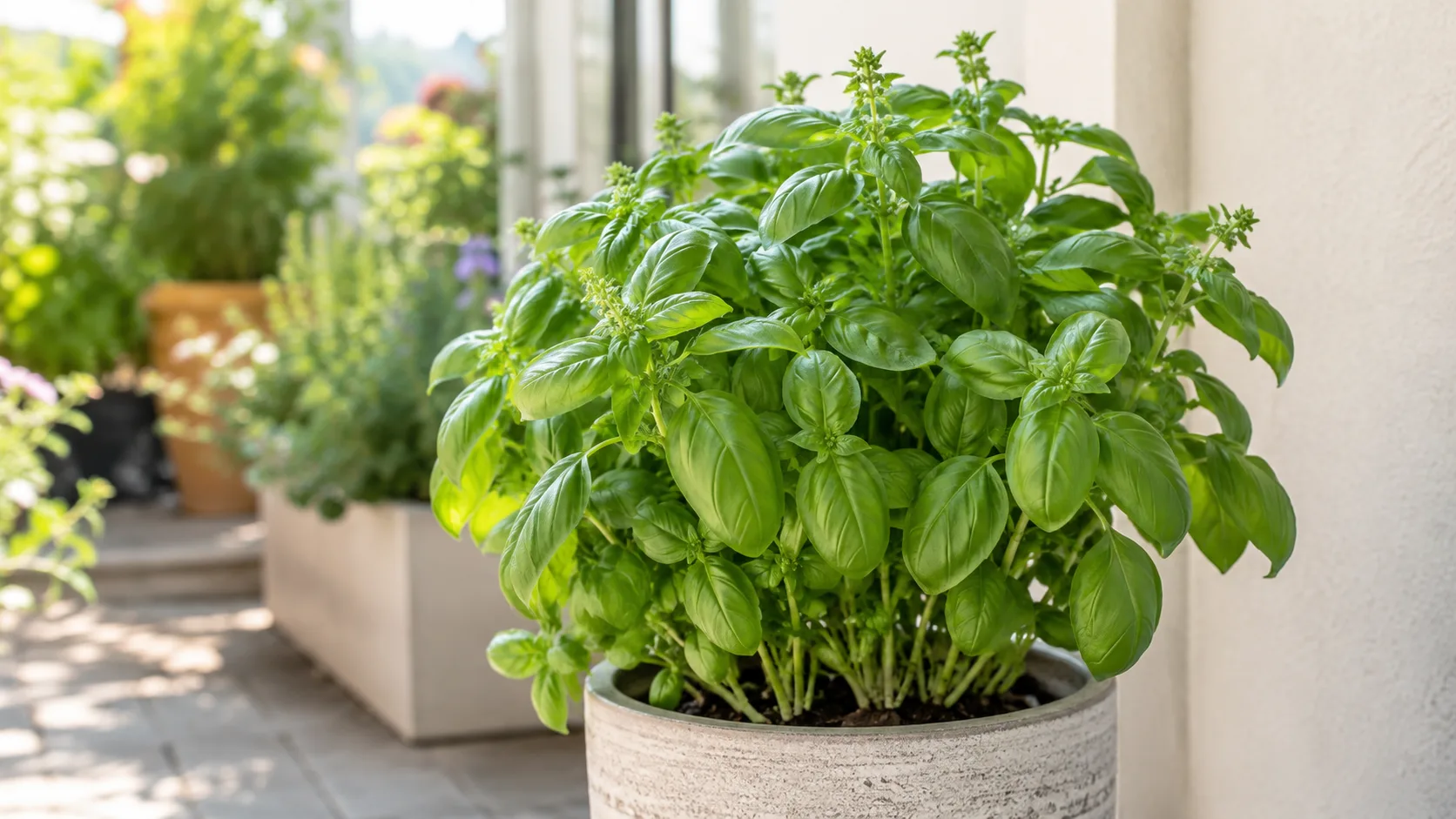
Basil (Ocimum basilicum) feeds parasitoid wasps and other beneficials that attack aphids on young ferns. University of Maryland Extension’s aphid parasitoid resource describes how tiny wasps lay eggs inside aphids; nectar-rich herbs extend their range. Grow basil in pots on the bed corner or the front edge row.
Dill (Anethum graveolens) draws lacewings, syrphid flies, and lady beetles to umbel flowers — succession-sow every three weeks through mid-summer. Parsley (Petroselinum crispum) stays shallow and fills bare edge soil early; it hosts swallowtail caterpillars, so plant an extra clump if you need kitchen leaves. Claims that parsley “improves asparagus flavor” through nitrogen are not well supported. Cilantro (Coriandrum sativum) bolts in heat — sow on the south edge in late March or April, harvest leaves, then let flowers feed beneficials through early summer.
Peas, lettuce, and spinach for cool-season gaps
Pea (Pisum sativum) fixes nitrogen in cool soil on the north edge during establishment years, then finishes before ferns need the full row. Do not assume all legumes behave like peas — green beans (Phaseolus vulgaris) disturb crowns and belong in another bed.
Lettuce (Lactuca sativa) and spinach (Spinacia oleracea) are pure intercrops: sow 2 weeks before spears emerge on the east edge or outer 8 inches, harvest before ferns reach 18 inches, and never leave them into July. Spinach roots stay in the top 6 inches, so competition is minimal when you cut promptly — the same fern photosynthesis timeline covered in our asparagus harvest guide.
Timing: When to Interplant Without Stressing Crowns
Year 1 after planting crowns: No harvest, no new perennial neighbors inside the row. Edge-only marigolds or lettuce are acceptable if you do not disturb roots.
Year 2: Light harvest window only. Add tomatoes or strawberries on the perimeter, not between crowns.
Year 3 onward: Full companion palette, still respecting the hub-and-edge map. Set tomatoes and eggplant the day after your last spear cut — usually mid-June to early July in USDA zones 5–7 — so you are not compacting soil during harvest.
Late summer: Let asparagus ferns dominate. Pull spent lettuce, cilantro, and pea vines; keep marigolds and nasturtiums until frost if they are not diseased. Cut ferns after they brown post-frost, not before, or next year’s yield drops per NC State guidance.
What Not to Plant With Asparagus
Some charts list “bad companions” without explaining mechanism. Here is what actually goes wrong.
Alliums, beans, and potatoes
Alliums — garlic, onion, leek, shallot, chive — share heavy-feeder habits and shallow-to-medium rooting that intersects asparagus crowns. Garden tradition and companion planting references from ATTRA flag alliums as asparagus antagonists; at minimum, they require annual digging and replanting that tears asparagus roots.
Beans (snap, pole, dry) repeat that disturbance and add dense root mats. Keep beans 8 feet away or in the next rotation block.
Potatoes compete for the same deep, loose soil asparagus needs. Hill soil toward potato stems exactly where crowns sit quiescent in summer. Plant potatoes in towers or a separate trench bed.
Other deep-root competitors to skip
Avoid sunchokes, horseradish, rhubarb, and artichoke inside the asparagus row — all are aggressive perennials with different harvest timing but similar long-term root claims. Rhubarb can live on the far side of a path, not in-row.
Carrots and parsnips are poor intercrops despite shallow tops; their taproots penetrate the crown zone when left in ground too long, and they dislike the same repeated herb neighbors asparagus edges use.
Maintain the Bed After Companions Go In
Companions do not reduce spring fertilizer needs. NC State Extension recommends broadcasting 5-10-10 at 2 to 5 pounds per 100 square feet just before spears emerge, with a second light feeding after harvest. Compost mulch in fall supports both asparagus and strawberry edges.
Keep coffee grounds out of direct application on asparagus if your soil already trends acidic; asparagus prefers neutral to slightly alkaline conditions within the 6.0–7.0 band. Mix grounds into compost first.
Water deeply but infrequently in summer — 1 inch per week on ferns — while edge annuals may need more frequent sprinkles. Drip lines with separate emitters prevent overwatering crowns.
Renew the insectary strip yearly; treat marigolds and basil as annuals even if asparagus is not. Audit the bed every third spring: dig no deeper than 2 inches anywhere near crowns, top-dress compost, and split strawberry runners before they cross the line.
Conclusion
The best asparagus companion plants respect a simple rule: protect the crown zone, plant partners on the edge, and match timing to asparagus’s multi-year harvest calendar. Tomatoes and eggplant may buffer beetles; strawberries and greens cover soil without deep roots; marigolds, nasturtiums, and flowering herbs feed the predators that keep aphids in check; peas add spring cover without bean-style root conflict.
Choose three or four functions — pest habitat, ground cover, extra food — rather than all twelve at once. Keep alliums, beans, and potatoes out of the bed, scout beetles even when companions look perfect, and build soil for the long term. Do that, and your companions earn their space in year five and beyond — not just in the first spring you planted them.



