Crepe Myrtle Not Blooming? 5 Causes and Fixes
Crepe myrtle not blooming? Diagnose shade, late pruning, excess nitrogen, drought, weak roots, pests, and cold—then fix the cause without topping the tree.
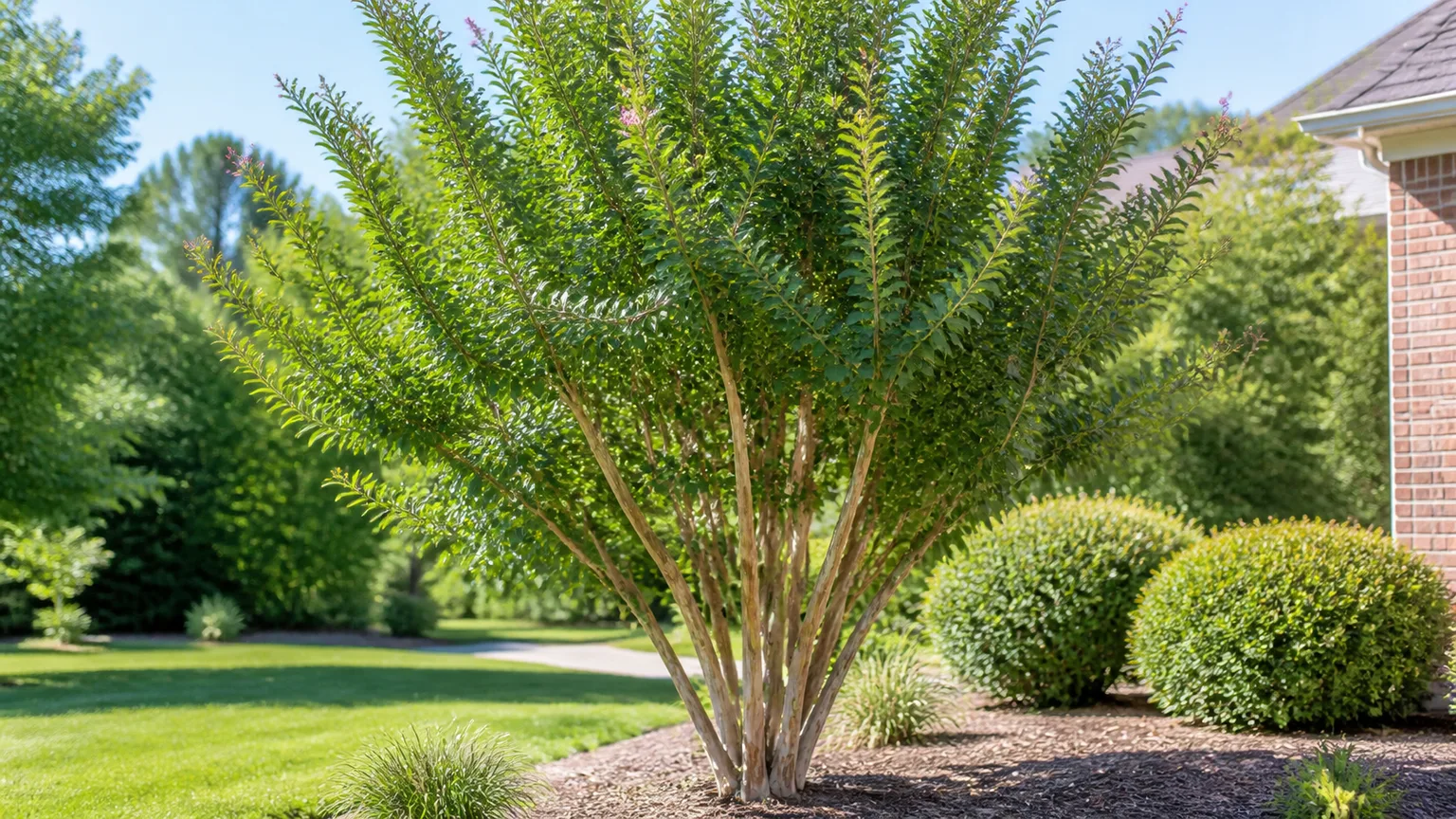
A crepe myrtle that is green but flowerless is usually giving you a useful clue: it has enough life to make leaves, but something is limiting the new shoots where flowers form. Start by reading the growth pattern before you reach for fertilizer or the pruning saw.
The five big causes are too little direct sun, pruning after spring growth began, excess nitrogen, water or root stress, and pests, disease, cold, or normal cultivar timing. The order matters. Sun and pruning history are quick to check; fertilizer is often the thing that makes a leafy, flowerless tree even leafier.
Start With the Blooming Rule: Flowers Need New Growth
Common crape myrtle, Lagerstroemia indica, is a deciduous shrub or small tree whose showy flower clusters appear at the tips of new growth. NC State Extension describes the plant as a full-sun grower that blooms from roughly July through September, although cultivar and climate can shift the window. NC State Extension’s plant profile is a useful reminder that “crape myrtle” is not one fixed size or one fixed bloom date.
That biology explains two apparently opposite failures. If the plant makes almost no new growth, it has too few flowering tips. If you cut off the new shoots after spring growth starts, it has to replace them before it can flower. The goal is not maximum leaf production or a hard annual haircut; it is steady, healthy current-season growth in a sunny, well-drained root zone.
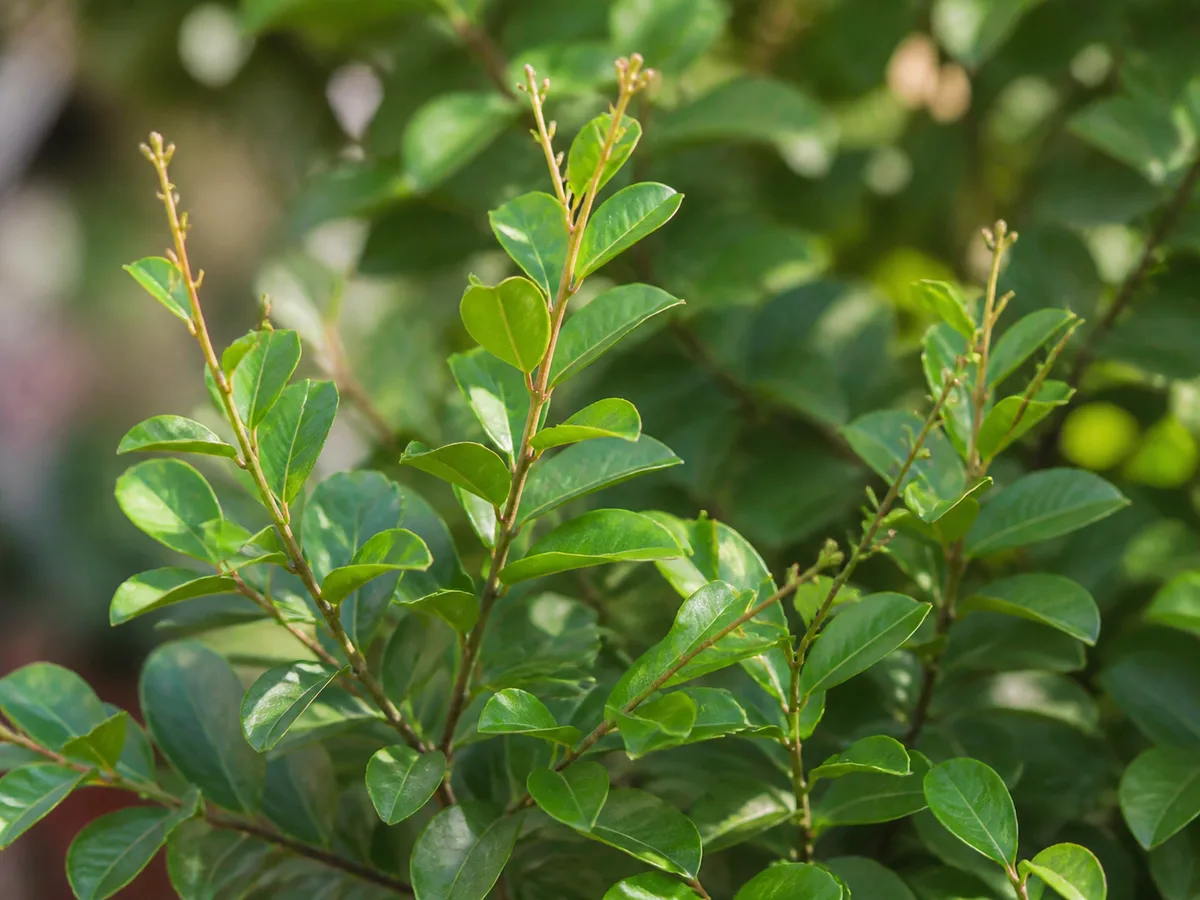
A leafy crepe myrtle with few or no terminal flower panicles calls for a growth-pattern diagnosis before another round of fertilizer or pruning.
Use this quick split before you read the individual causes:
| What the plant is doing | Most likely direction | First check |
|---|---|---|
| Dark-green leaves, long soft shoots, few flowers | Too much nitrogen, shade, or repeated pruning | Sun hours and lawn or fertilizer runoff |
| Short shoots, pale leaves, dieback, or thin canopy | Root stress, drought, compaction, drainage, cold, or true nutrient shortage | Root flare, soil moisture, drainage, and recent weather |
| Healthy leaves but no buds while nearby trees flower | Cultivar timing, cool weather, late pruning, or a shaded canopy | Cultivar name, pruning date, and direct-sun hours |
| Buds are present but stay closed or turn brown | Drought, freeze, insects, or powdery mildew | Buds and young shoots at close range |
1. Too Little Direct Sun
Full sun is the most common missing input when a crepe myrtle grows leaves but refuses to make a good flower display. The University of Georgia’s current Crape Myrtle Culture circular says heavy shade reduces growth and flowering and can increase problems such as sooty mold and powdery mildew. Large trees can also compete for moisture, so the same planting may be short on both light and water.
Treat six hours of direct sun as a practical minimum for satisfactory flowering and eight or more hours as a better target when you want a heavy display. A bright-looking patio is not necessarily a sunny site: filtered light under a mature tree, a winter-sunny wall that becomes shaded in summer, or only early-morning sun may leave the canopy below its bloom potential. Gardenia’s current diagnostic guide makes the same useful distinction between a site that looks bright and one that receives direct summer light.
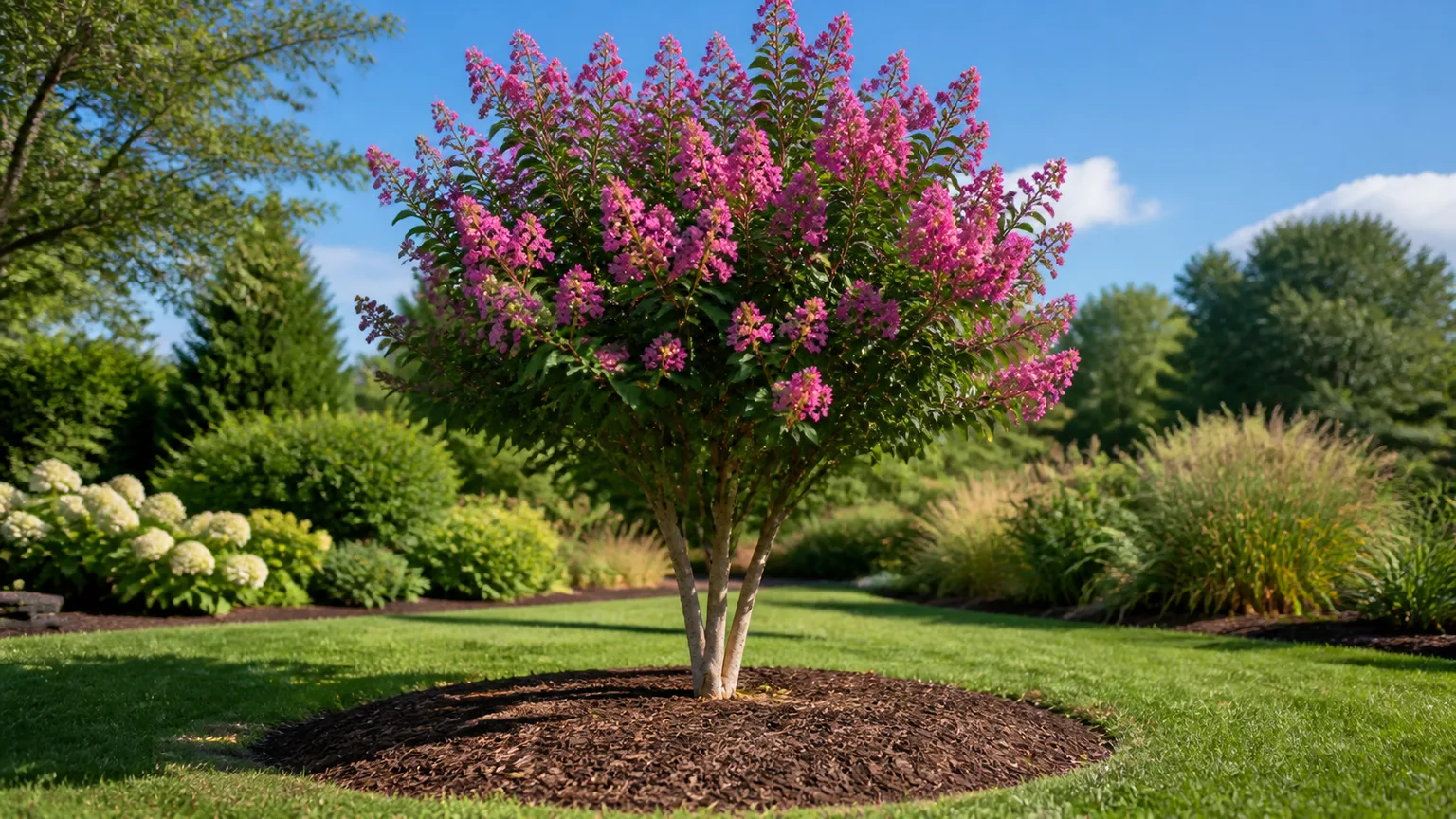
Open sky and a flat, trunk-free mulch ring support the light and root-zone conditions a crepe myrtle needs for dependable flowering.
How to Test a Shaded Site
Watch the canopy, not the ground, for one clear summer day. Note when direct sun first reaches the leaves, when it disappears behind a building or tree, and whether the top half of the plant is shaded even while the base looks bright. Repeat the check after nearby trees leaf out; a crepe myrtle can flower well in early spring and then lose its effective summer sun.
If shade is temporary and comes from a competing branch, selective pruning of the other plant may restore light without disturbing the crepe myrtle’s root system. If the tree is young and the location is permanently shaded, move it during dormancy rather than trying to compensate with fertilizer. A large established tree is rarely a good candidate for casual transplanting; correcting the light around it or accepting a lighter bloom is safer than damaging the root system.
2. Pruning Removed Flowering Wood
Pruning can stop or delay flowering when it removes the season’s new shoots. The safest general window for necessary structural pruning is late winter to early spring, before active growth begins. UGA Extension specifically warns that early-fall pruning can push tender growth that is not fully dormant before a freeze, while late spring or summer cuts can remove the shoots that would have carried flowers.
This does not mean a crepe myrtle needs to be pruned every year to bloom. UGA calls aggressive cutting a misconception and recommends limited or no pruning for the plant’s most natural form. Repeatedly cutting every trunk to the same height—often called “crape murder”—creates a knuckle-like framework and a flush of weak shoots; it is not a bloom requirement and can delay the display.
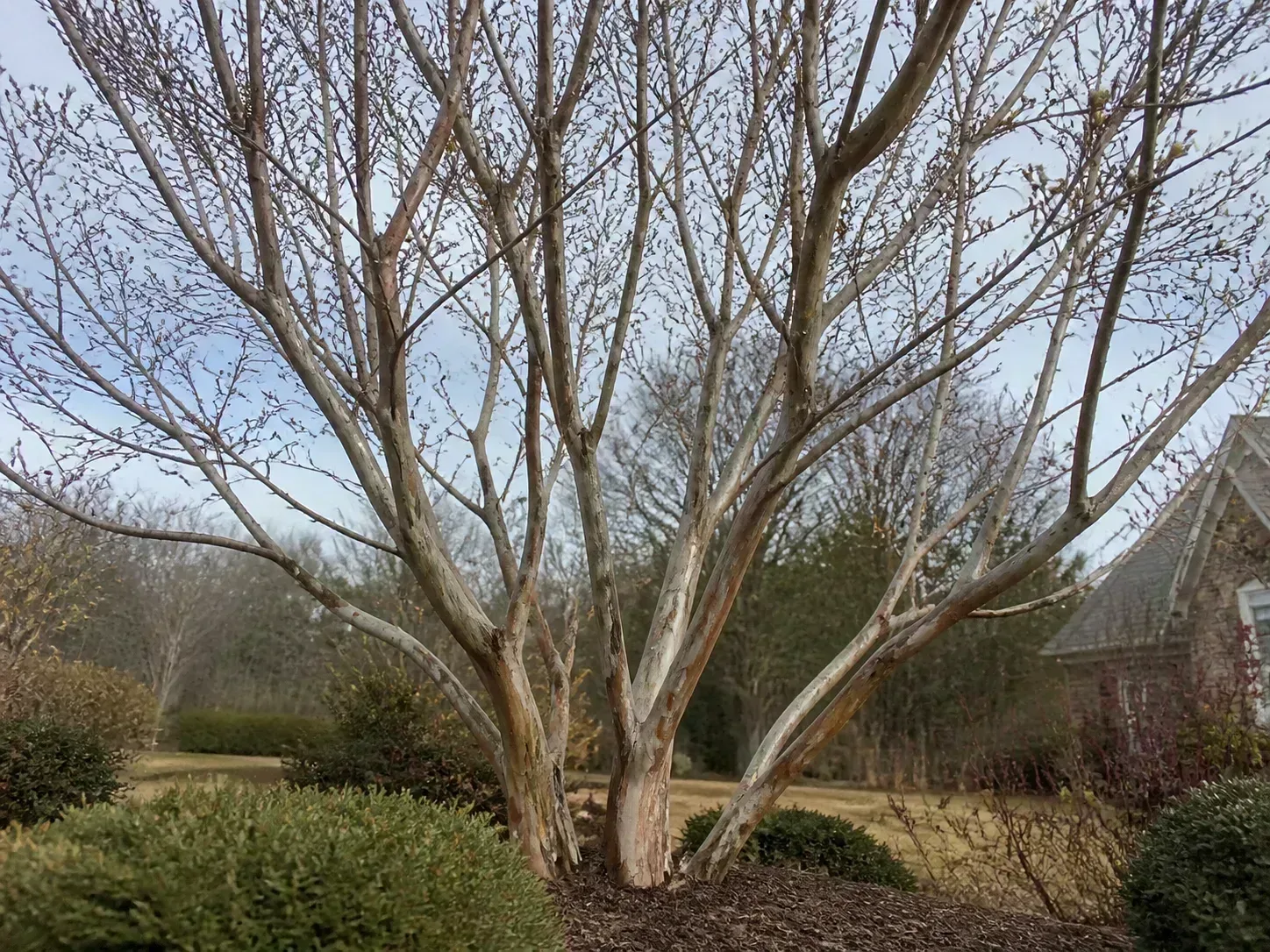
Selective pruning preserves the tree’s natural framework and current-season flowering wood; topping every trunk to the same height does neither.
What to Cut and What to Leave
Prune for a reason you can name: a dead branch, a crossing or rubbing branch, a sucker at the base, a low branch that conflicts with the intended tree form, or a branch that is genuinely out of bounds. Use clean cuts just outside the branch collar, and remove an entire unwanted branch rather than leaving a long stub. If you cannot identify the structural problem, wait and observe rather than making a cosmetic cut in the middle of the growing season.
Do not confuse spent seedheads with a problem. UGA notes that the seedheads are attractive and naturally fall as new spring growth pushes; removing them is optional. After a flowering flush fades, light heading-back of spent flower stems may stimulate another flush on some cultivars, but a second bloom is not guaranteed, especially for cultivars that begin flowering late in the season.
If you pruned after the tree had already leafed out, the likely fix is patience. Keep the plant well watered during prolonged dry weather, do not pile on nitrogen to force replacement shoots, and allow the new growth to mature. It may flower later than normal or not at all that year, but the pruning mistake does not need to become a second mistake.
3. Too Much Nitrogen, Not Enough Balanced Growth
The classic overfed crepe myrtle has lush, dark-green leaves and long, soft shoots but few flower clusters. Nitrogen favors vegetative growth. A tree can receive too much without you fertilizing it directly if lawn fertilizer is spread beneath the canopy, runoff enters the root zone, or a rich bed is fed on the same schedule as vegetables.
The answer is usually not a high-phosphorus “bloom booster.” UGA’s fertilizing guidance recommends a complete general-purpose fertilizer when feeding is actually warranted and cautions that over-fertilization causes excess growth and reduced flowering. A soil test is a better basis for correcting a real deficiency than a product label promising more flowers.
Read the Plant Before You Fertilize
Use the plant’s vigor as the first filter:
- Lush and racing: stop routine feeding, check direct sun, and keep lawn fertilizer away from the root zone. More nitrogen will not solve this pattern.
- Weak and pale: inspect drainage, compacted soil, root flare, drought history, and root competition first. Test the soil before adding nutrients.
- Steady, healthy, and simply late: confirm the cultivar and weather before changing the feeding plan. A healthy late-blooming tree may need time, not stimulation.
If the tree is newly planted, avoid turning establishment stress into fertilizer stress. New roots need oxygen, moisture, and time to colonize surrounding soil; a heavy feed cannot repair buried roots or a waterlogged planting hole.
4. Drought, Poor Drainage, or Weak Roots
Crape myrtles become drought tolerant after establishment, but drought tolerance is not the same as immunity from drought-related bloom loss. UGA Extension reports that flowering improves when established plants are watered during dry periods that occur in the flowering season. Severe dryness can stop new shoot growth, delay buds, or shorten a flower display.
The opposite extreme is just as important. Roots in constantly wet, compacted soil have less oxygen and may grow weakly or develop root rot. NC State describes the plant as preferring moist, well-drained soil and notes that established plants tolerate occasional wet or dry conditions; that is a reason to improve the root zone, not permission to keep it saturated.
Watering a New Plant vs. an Established Tree
For a newly planted crepe myrtle, water thoroughly at planting and keep the root ball from swinging between dry dust and saturation while roots establish. UGA’s guidance calls for thorough watering at planting and weekly watering without rain during the first two months. Adjust for soil, rainfall, heat, container size, and local restrictions rather than treating a calendar as a substitute for checking the soil.
For an established tree, water deeply during a prolonged dry spell, then let the surface drain rather than giving a daily splash. A hose left to trickle at the root zone or a slow soaker that wets the soil deeply is more useful than a few minutes of surface sprinkling. Check the root zone several inches down, and water the area beneath the canopy rather than only the trunk.
Apply a 2- to 3-inch mulch layer over the root zone to slow evaporation and buffer temperature, but keep it several inches away from the trunks and do not bury the root flare. UGA recommends a broader mulched area when possible; the practical boundary is a flat donut, not a wet mulch volcano pressed against bark.
5. Pests, Disease, Cold, or Simply Late Timing
Pests and disease can reduce flowering, but they are not the best first explanation for every flowerless tree. Look for visible evidence: sticky honeydew or a black sooty coating after aphid or bark-scale feeding, white powder on young leaves or buds, spotted leaves that yellow and drop, distorted shoots, or dieback after a freeze.
UGA lists aphids, powdery mildew, Cercospora leaf spot, sooty mold, and root rots among the relevant crape myrtle problems. Powdery mildew can coat and distort flower buds so they fail to open; Cercospora leaf spot can cause premature defoliation later in the season; sooty mold is a surface growth on insect honeydew rather than the original pest. NC State also identifies aphids, scales, flea beetles, leaf spots, and powdery mildew as problems to watch.
Start with identification and cultural correction: improve sun and airflow, avoid excess nitrogen, remove badly damaged wood when appropriate, and choose resistant cultivars when replacing a chronically susceptible plant. If you use a pesticide or fungicide, follow the current product label for the crop, timing, protective equipment, and pollinator precautions. Do not spray a mystery symptom simply because the plant has no flowers.
Winter damage and late freezes deserve their own check. Near the colder edge of a cultivar’s range, top growth can die back while the roots survive. A late freeze can kill the first flush of shoots and force the plant to rebuild, which shifts flowering later or eliminates it for the season. Wait until living and dead wood are clear, then cut dead tissue back to healthy wood; do not prune healthy branches just because the canopy is late.
Finally, compare the tree with the same cultivar in the same region, not with an unrelated tree across the street. Cultivar genetics, plant age, winter injury, and cool spring weather can move bloom timing by weeks. A fully leafed-out tree with healthy new shoots may simply be a late starter.
No Buds vs. Buds That Fail to Open
The difference is diagnostic:
- No buds at all: start with sun, late pruning, excess nitrogen, and whether the plant made enough new growth.
- Buds formed but stay closed: inspect for drought, powdery mildew, insect feeding, freeze damage, and unusual weather.
- Flowers arrive later than neighbors: check cultivar timing, spring temperatures, and recent pruning before treating anything.
This small distinction prevents a common error: treating a timing problem as a nutrient deficiency or treating mildew as if it were a watering problem.
A Recovery Plan for This Season
When a crepe myrtle is not blooming, make one pass through this sequence before you change several variables at once:
- Measure direct sun. If the canopy gets less than six hours, solve the site problem before buying fertilizer.
- Record the last pruning date and cuts. If spring growth had started, expect a delayed or reduced bloom after late cutting.
- Read the growth. Lush and soft suggests nitrogen or shade; weak and sparse suggests roots, water, drainage, cold, or a soil issue.
- Check moisture below the surface. Correct drought with a deep soak and correct saturation by improving drainage and pausing irrigation.
- Inspect buds, leaf undersides, bark, and trunk base. Look for aphids, scale, honeydew, mildew, spots, dieback, mulch against bark, or a buried root flare.
- Set a seasonal expectation. A young, moved, late-pruned, or freeze-damaged tree may need a full growing season to rebuild its flowering framework.
If You Pruned Late
Do not “balance” a late cut by removing more branches. Keep the new shoots that are forming, thin only genuinely damaged or dangerously crossing growth, and move structural pruning to the next dormant season. The tree may produce a smaller late display, but forcing it with high nitrogen creates soft growth that is more vulnerable to cold and pests.
If You Have Lush Leaves but No Flowers
Start with direct sun and fertilizer history. Stop routine high-nitrogen feeding, look for lawn fertilizer in the root zone, and check whether shade increased after nearby trees leafed out. If the site is sunny and the foliage remains excessively vigorous, a soil test can confirm whether nutrition is actually out of balance; a phosphorus product is not a diagnosis.
If the Tree Is Young or Cold-Damaged
Give a young or recently moved tree a stable root zone: keep the root flare visible, water deeply during establishment and drought, maintain a thin mulch-free ring around the trunks, and avoid severe pruning. If a freeze killed the first shoots, wait for new growth to show the living framework. Healthy replacement growth is the recovery signal; flowers may follow later or next season.
How to Prune for Structure Without Topping
The best pruning plan begins before the tree is planted: choose a cultivar whose mature height and spread fit the site. UGA lists cultivars from under 3 feet to more than 20 feet, so a dwarf or semi-dwarf plant is often a better answer for a small bed than repeatedly cutting a vigorous tree to fit.
For an established tree, remove basal suckers, dead or damaged branches, and branches that cross or rub. If you are training a tree form, gradually raise the canopy by removing selected lower branches while preserving three to five well-spaced main trunks. Do this in the dormant season and avoid turning every branch into a stub.
Selective pruning improves structure, airflow, and sightlines. It does not create flowers by itself. Flowering comes from the plant’s ability to produce healthy current-season shoots, which is why site, water, roots, and restrained nutrition matter more than the number of cuts.
Choose Cultivar and Placement for Reliable Bloom
Cultivar choice is a bloom-management decision, not just a color preference. NC State’s plant profile lists dwarf, semi-dwarf, medium, and large selections with different bloom periods and disease resistance. UGA’s cultivar table likewise shows a wide range of mature sizes and resistance levels, including mildew- and leaf-spot-resistant selections.
Before planting or replacing a flowerless tree, confirm four things on the nursery tag or with a local extension office: mature size, expected bloom timing, disease resistance, and cold hardiness for your site. A cultivar that outgrows the bed will be pruned too often; one at the edge of its cold range may rebuild leaves but flower unreliably after winter; one in too much shade will underperform regardless of its color.
Give the plant open sky, well-drained soil, room for its natural canopy, and a root zone that is not dominated by lawn fertilizer or large competing trees. Those decisions do more for reliable summer flowers than a yearly search for a stronger bloom booster.
Conclusion
When a crepe myrtle is not blooming, begin with the plant’s growth pattern—not the fertilizer aisle. Count direct-sun hours, check when it was pruned, decide whether the foliage is lush or weak, inspect the root zone, and look closely at buds and young shoots for pests, disease, or freeze damage.
The most reliable formula is simple: full sun, healthy current-season growth, deep watering during establishment and prolonged drought, moderate nutrition, selective dormant pruning, and a cultivar that fits the site. A flowerless tree may recover this season, bloom late, or need next season to rebuild; the right fix is the one that corrects the cause without adding a second stress.



