How to Grow and Care for Leyland Cypress
Learn how to grow and care for Leyland cypress: site, spacing, watering, pruning, propagation, winter protection, and disease warning signs.
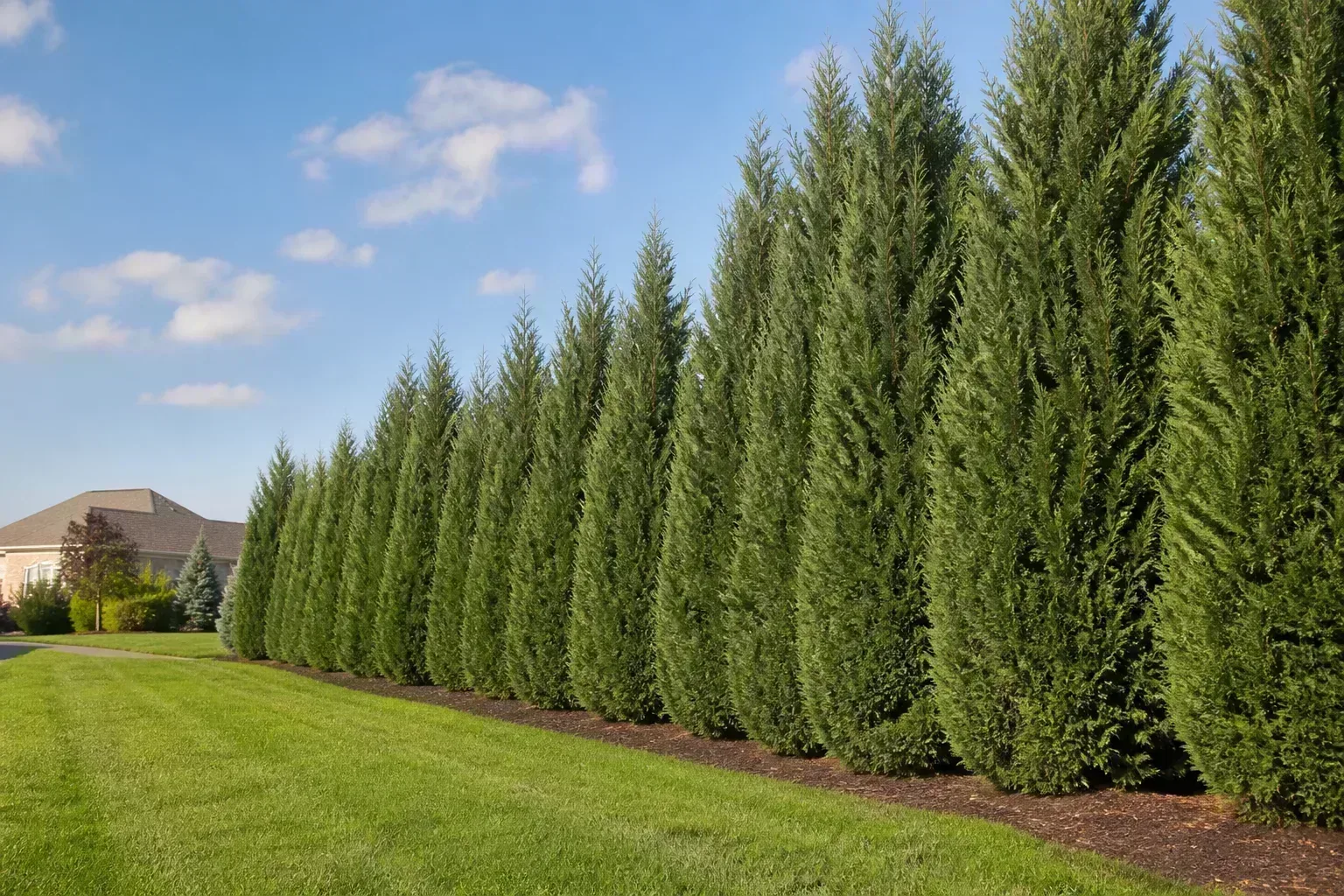
Leyland cypress is appealing for one simple reason: it can become a tall, dense evergreen screen quickly. It is also a tree that punishes casual planting. A row that looks modest at the nursery can become a 60- to 70-foot wall with shallow roots, difficult pruning access, and serious disease risk if the site stays wet or the plants are stressed.
The right approach is to treat Leyland cypress as a managed tree, not a disposable hedge plant. Choose the location by its mature footprint, give new roots deep and consistent moisture without waterlogging them, shape the plants while they are young, and investigate browning before reaching for a spray. That sequence prevents more problems than any fertilizer or pesticide can fix.
The Short Answer: Treat Leyland Cypress as a Managed Tree
Give Leyland cypress full sun to light partial shade, moist but well-drained soil, room for air to move around the foliage, and regular pruning from an early age. It is adaptable to clay, loam, sand, acidic soil, or alkaline soil when excess water can drain, but dense saturated soil is a major root-rot warning.
The tree is best suited to gardeners who need a tall screen and can maintain it every year. If your planting strip is narrow, your yard is exposed to strong wind, or you want an evergreen that can be ignored for a decade, selecting a smaller or slower plant will usually produce a better result even if privacy takes longer.
Leyland Cypress at a Glance
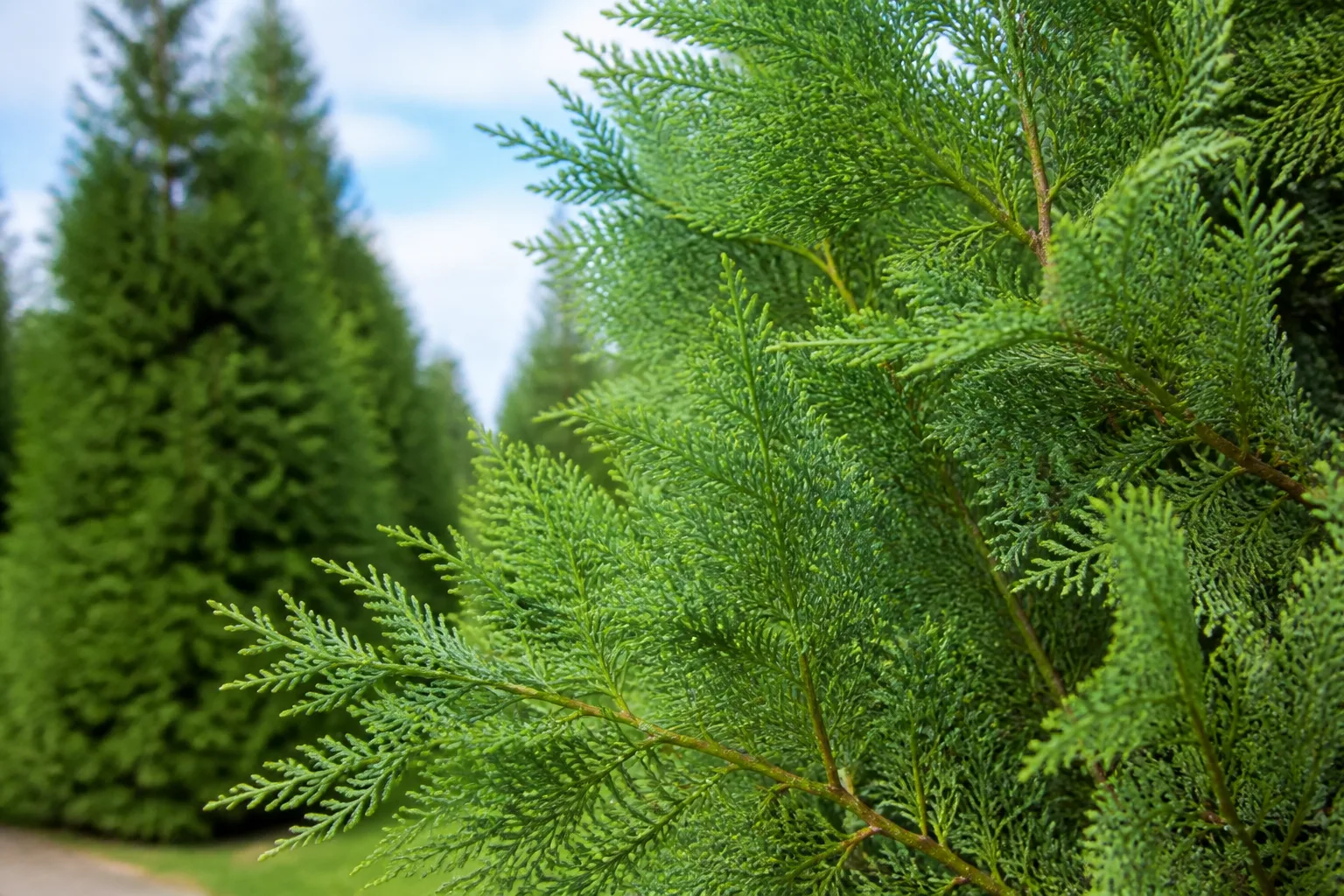
Leyland cypress is a hybrid of Monterey cypress and Nootka cypress. Plant references use several scientific combinations for it, including Cuprocyparis leylandii and × Hesperotropsis leylandii, so compare the common name, botanical name, cultivar, and mature size on the nursery label rather than rejecting a plant because its genus differs. The NC State Plant Toolbox profile and Oregon State University landscape profile illustrate why both names appear in horticultural references.
| Feature | Practical expectation |
|---|---|
| Growth rate | About 2–4 feet of height per year in favorable conditions, especially while young; actual growth depends on water, soil, climate, and stress |
| Mature size | Commonly about 60–70 feet tall and 10–15 feet wide |
| Light | Full sun is best; partial shade is tolerated, but dense shade thins growth |
| Soil | Moist, fertile, and well drained; avoid persistent saturation |
| Hardiness | Commonly listed for USDA zones 6–10; zone 5 is a marginal, site-dependent trial |
| Best use | Large-property privacy screen, windbreak, or managed evergreen hedge |
| Main liabilities | Fast growth, shallow roots, wind and wet-soil risk, bagworms, cankers, and root rot |
The annual growth figure is a planning range, not a promise. A newly planted tree may spend its first season producing roots, while a tree in compacted soil may grow slowly and still be unhealthy. Conversely, a well-watered young tree can outgrow a small yard before the owner realizes that pruning must begin.
Decide Whether It Fits Before You Plant
Walk the proposed screen line with a tape measure before you visit a nursery. Measure the distance to fences, buildings, driveways, overhead wires, septic areas, property lines, and places where a ladder or hedge trimmer must stand. Privacy is a sight-line problem, so there is rarely a good reason to plant a tree where its future width blocks the very access you need to keep it healthy.
Leyland cypress can also become top-heavy in strong wind because its root system is relatively shallow. Saturated soil makes that problem worse by reducing the roots’ grip. The UGA Cooperative Extension discussion of Leyland cypress emphasizes that planting too close together or too close to structures can create long-term trouble, even when the young trees look perfectly spaced.
Check the mature footprint, not the nursery pot
The common mistake is to buy a row of inexpensive, waist-high plants and plan the landscape around their current size. Instead, draw each tree as a circle about 10 to 15 feet across, then ask whether you can still reach both sides for pruning and inspection. The trunks also need enough separation from the fence that branches will not be forced into a permanently damp, shaded wall.
For a tall screen, overhead clearance matters as much as width. Do not place a tree under utility wires or against a roofline and assume annual topping will keep it there. If you need a screen only 8 or 10 feet tall, choose a plant that naturally stays close to that height; trying to hold a vigorous conifer at a fraction of its natural size creates repeated wounds and bare interior wood.
Know when another evergreen is the safer choice
Skip Leyland cypress or pause for a local assessment when the site is one of these:
- A wet hollow or heavy clay basin: improve drainage or choose a plant adapted to wet ground. Leyland cypress should not sit in saturated soil.
- A narrow foundation bed: the mature width and root competition will eventually overpower the space.
- A high-wind exposure: a mixed, permeable windbreak or a sturdier species may be a better fit than a dense row of tall, shallow-rooted hybrids.
- A low-maintenance garden: fast growth means frequent side pruning, inspection, and removal of dead limbs.
- A region with recurring canker or root-rot problems: ask a local extension office or certified arborist about alternatives before planting many trees at once.
A slower screen may be the more economical choice when you count years of trimming, replacement plants, and storm cleanup. Leyland cypress is useful when its speed solves a real problem and the site gives you enough room to manage the consequences.
Pick a Site That Drains and Gets Light
Aim for six or more hours of direct sun if possible. Leyland cypress tolerates some partial shade, but dense shade encourages thin, weak growth and leaves the interior more likely to shed foliage. A site with morning sun and afternoon shade can work in a hot climate if the soil drains and the canopy still receives adequate light.
Test drainage before planting a row. Dig a hole roughly 12 inches deep, fill it with water, let it drain, and fill it again. If water remains pooled for a long period after the second filling or the planting area regularly puddles after rain, solve the drainage problem first by changing the grade, using a raised planting area, or choosing a species suited to wetter conditions. Do not bury the root ball in a pocket of amended soil that holds more water than the surrounding clay.
Leyland cypress accepts a broad pH range and does not need a special acidic bed. The important combination is fertile soil that holds enough moisture for roots but has air-filled pore space after rainfall. Keep lawn irrigation from repeatedly soaking the trunk area, and avoid planting where downspouts discharge.
Plant Leyland Cypress Without Burying Its Problems
Plant in spring or early fall when the soil can be worked and the tree is not under extreme heat or drought stress. Water the container before planting, slide the root ball out without pulling on the trunk, and inspect for circling roots. Gently loosen a tight outer layer so roots can move into the surrounding soil, but do not shred the root ball.
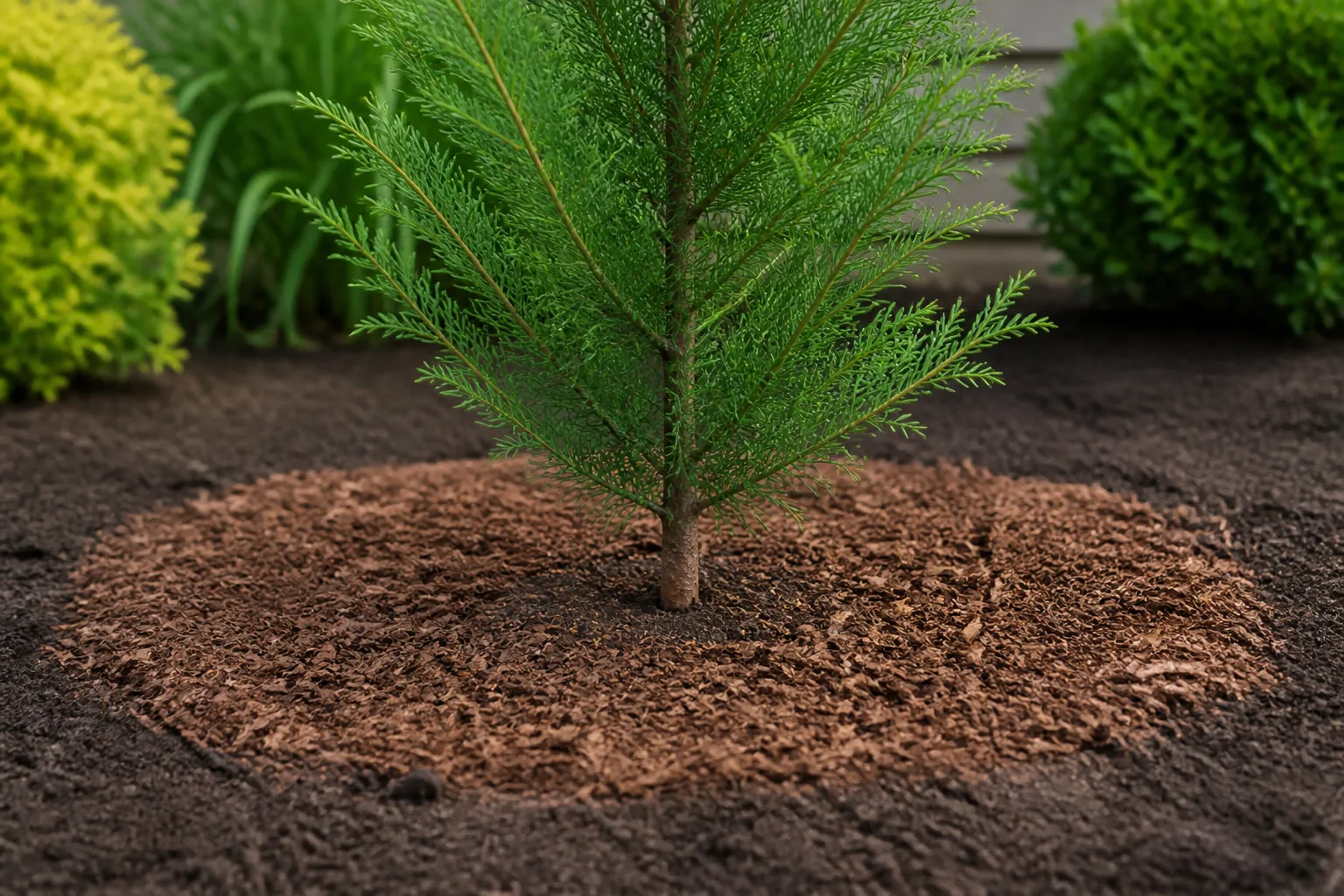
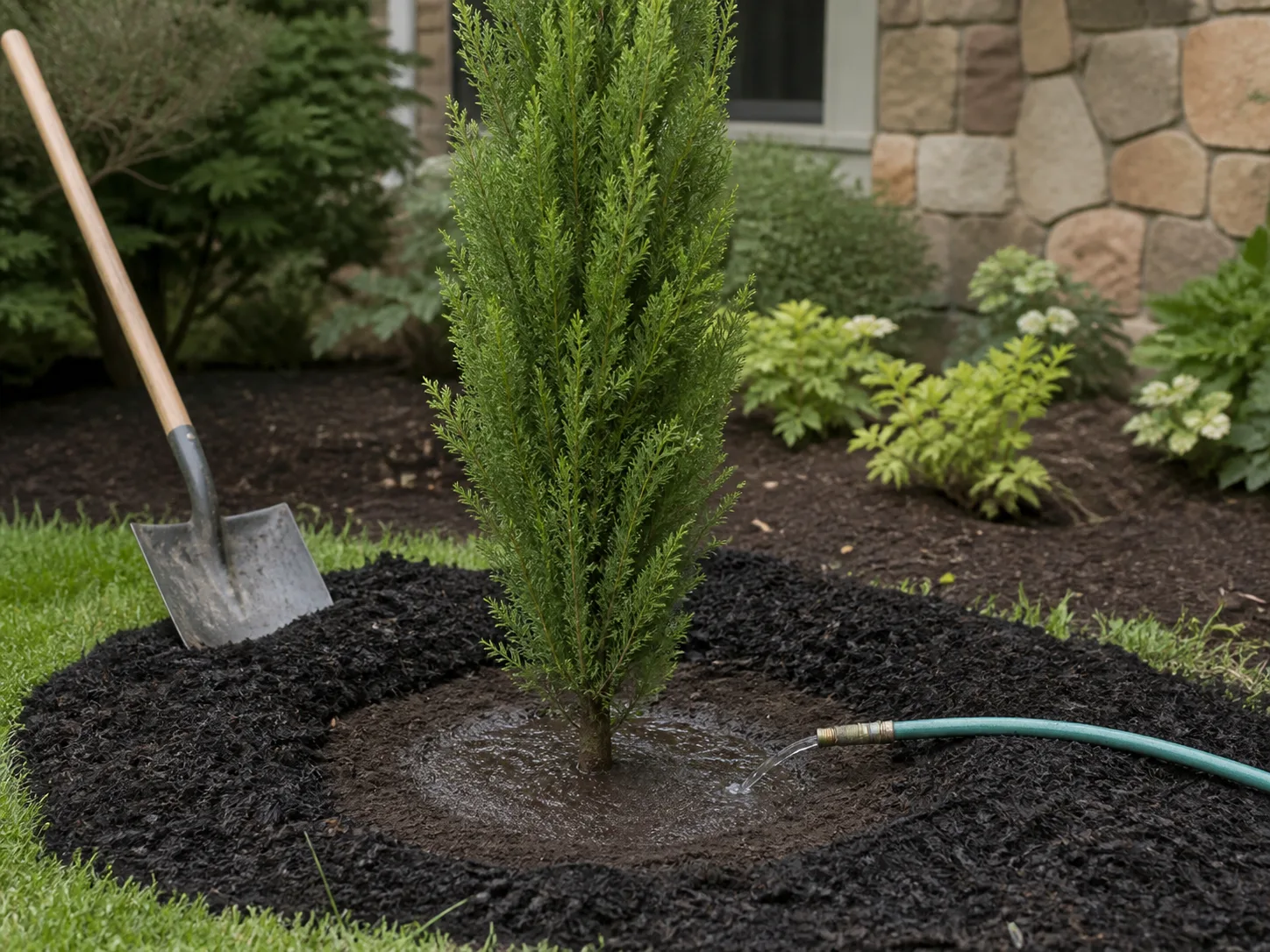
Dig a hole two to three times wider than the root ball and no deeper than its height. Set the tree so the root flare is level with or slightly above the surrounding soil; a trunk that disappears into the planting hole is planted too deeply. Backfill with the excavated soil unless a soil test or site condition gives you a specific reason to amend it, then water slowly enough to settle air pockets without washing soil against the trunk.
Create a broad, shallow mulch ring about 2 to 3 inches deep, leaving several inches clear around the trunk. Mulch should moderate soil temperature and reduce competition, not become a wet collar that holds moisture against bark. A drip line or soaker hose is preferable to frequent sprinkling over the canopy because wet foliage dries slowly and the root zone receives less consistent moisture.
Space a screen for airflow and future access
Use the nursery tag’s mature width as the starting point, not a universal hedge formula. As a conservative baseline, keep Leyland cypress trunks at least 10 feet apart and far enough from fences, buildings, and other trees that you can prune and inspect both sides. A closer row may close sooner, but it also creates faster crowding, less airflow, and a more difficult disease and pruning problem.
Mark the center points with stakes before you dig. Stand at the end of the row and look along the future screen from the same eye height as the view you want to block. This simple check often reveals that a staggered or offset row, a shorter section, or one strategically placed tree will solve the sight line with fewer plants.
Water the Root Zone, Not the Foliage
For the first few months after spring or summer planting, check the root ball and surrounding soil frequently. Water deeply when the surface begins to dry, then allow excess water to drain; the goal is a moist root zone, not permanently muddy soil. Hot weather, sandy soil, wind, and a small root ball increase the frequency needed, while rain and heavy clay reduce it.
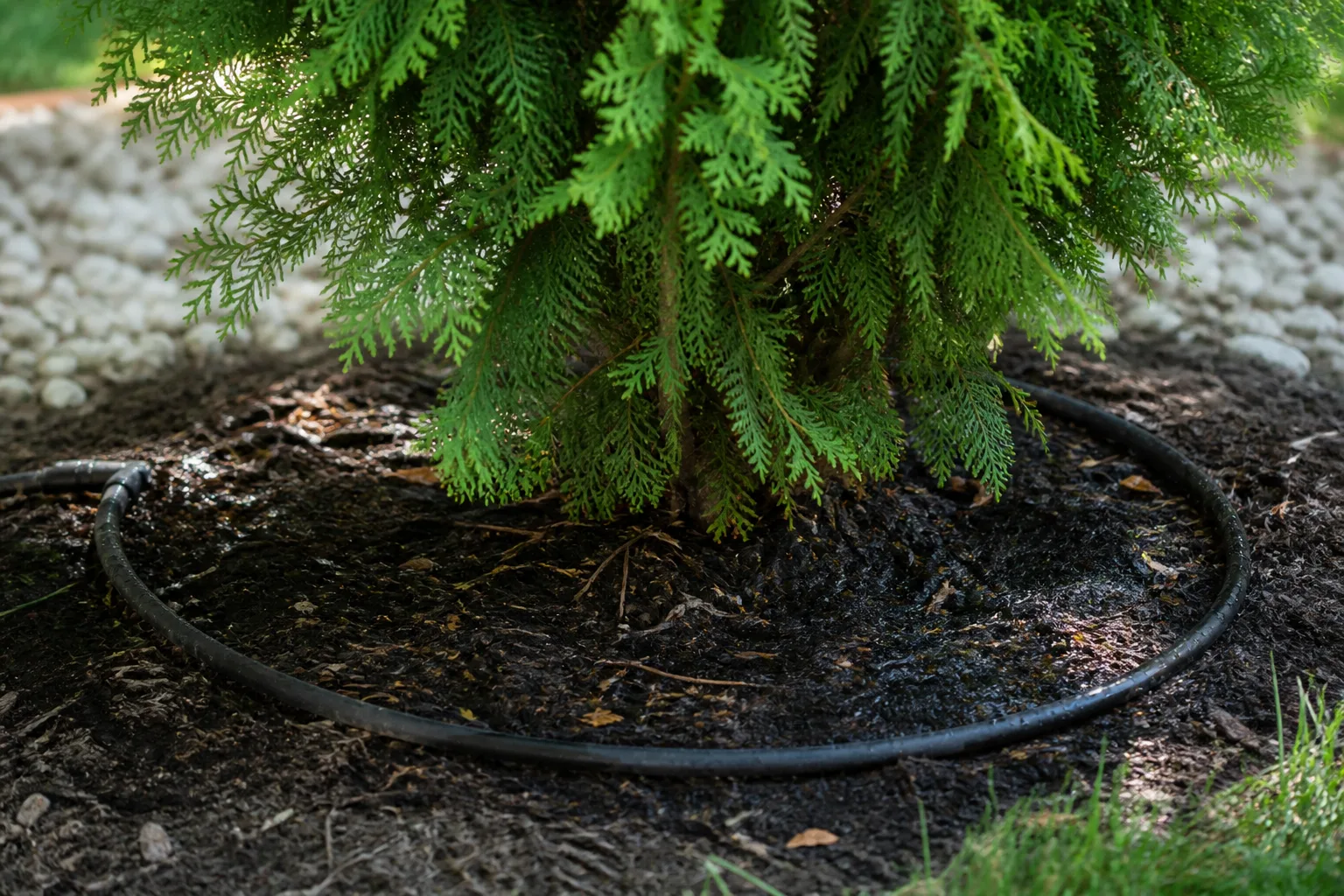
One practical estimate used in the local care material is roughly 1 gallon per week for each foot of tree height, adjusted for rainfall and site conditions. Treat that as a starting point rather than a prescription. Split the volume into slower, thorough applications during active growth if the soil cannot absorb it at once, and check several inches down before repeating the schedule.
Direct water to the ground under the branches, extending outward as roots establish. Sprinklers that wet the foliage may look efficient but can leave the root ball dry and the canopy damp. Once established, a Leyland cypress usually needs supplemental water mainly during prolonged dry spells, unusual heat, or root competition; stop automatic irrigation during wet periods.
Winter changes the calculation. Cold, wet soil is especially dangerous for a tree prone to root rot, so reduce watering after growth slows and water only when the ground is unfrozen and genuinely dry. Newly planted trees still need enough moisture going into winter to avoid desiccation, but “keep it wet” is not a winter-care rule.
Feed Lightly and Mulch Correctly
Start with a soil test if the tree is pale, weak, or growing poorly. Poor drainage, root damage, shade, and drought can look like a fertilizer deficiency, and extra nitrogen will not repair those causes. If the soil test and growth pattern support feeding, apply a general-purpose fertilizer in early spring, before the main flush of new growth, following the product label and spreading it around the drip line rather than against the trunk.
Avoid heavy late-season feeding. It can push soft new growth when the tree should be hardening for winter and can encourage a flush that is more vulnerable to stress. A consistent mulch ring, adequate water during establishment, and protection from lawn competition usually do more for a young Leyland cypress than repeated applications of fertilizer.
Prune Early to Keep Privacy Manageable
Pruning is not an optional finishing touch for Leyland cypress; it is the size-control system. Inspect the central leader soon after planting and remove competing leaders while they are small if you want a single-trunk tree. If you are building a hedge, you can keep multiple stems, but decide that form deliberately rather than allowing weak, crowded leaders to develop by accident.
Begin side pruning while the plants are young and repeat it during active growth. A hedge may need as many as three light shaping sessions in a growing season, depending on climate and the height you are maintaining. Make small cuts that preserve green foliage. Cutting deeply into old brown wood often leaves a gap that the tree cannot refill.
The safest long-term height limit is chosen before planting. Once a Leyland cypress has reached the roofline or grown beyond safe ladder height, hard topping is a poor rescue: it creates an unnatural crown, exposes bare branches, and leaves large wounds. If height must be reduced, use selective reduction to suitable lateral branches with clean tools, and hire an arborist for a large or storm-damaged tree.
Keep the hedge full from bottom to top
Shape the hedge slightly wider at the base than at the top. The sloped sides let sunlight reach lower branches and prevent the top from shading out the bottom. A perfectly vertical or top-heavy hedge tends to become dense above and thin below, which is difficult to reverse once the inner wood is bare.
Prune on a dry day when possible, remove dead or crossing branches first, and disinfect tools between visibly diseased cuts. Brown individual limbs should not be sheared into the hedge and forgotten; dieback can be an early sign of canker, so inspect the bark for sunken lesions, resin, or a sharp transition between healthy and dead tissue.
Choose a Cultivar—and Be Careful with Containers
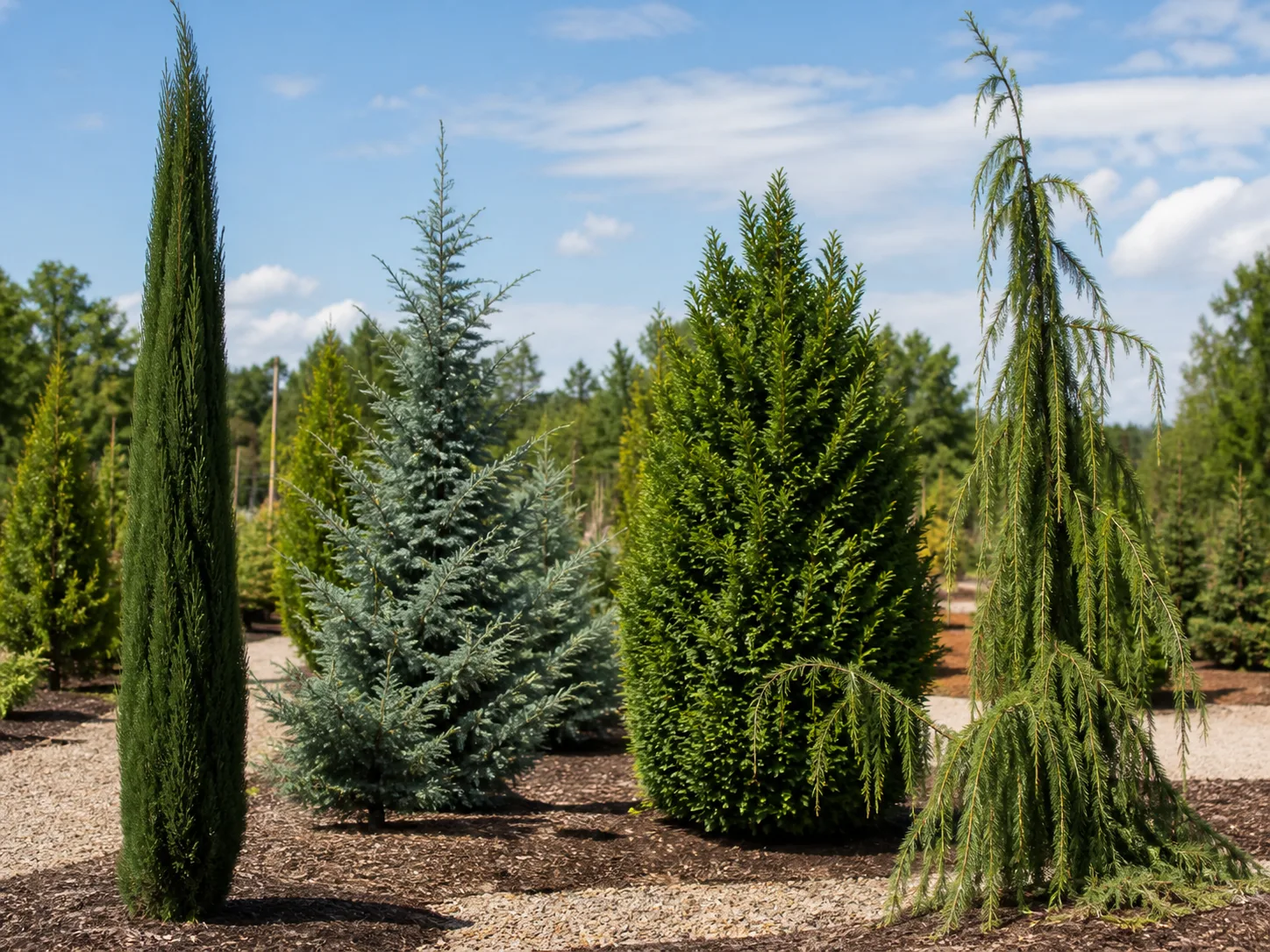
Cultivar names are useful only when they change the decision. ‘Leighton Green’ has deep green foliage and a relatively coarse appearance; ‘Silver Dust’ adds white-variegated markings; and ‘Naylor’s Blue’ is valued for blue-gray foliage but still becomes a large tree. ‘Castlewellan’ has a more conical form and can show golden tones in winter, while ‘Robinson’s Gold’ is a golden selection.
‘Emerald Isle’ is often marketed as a more manageable bright-green form, reaching about 25 feet in the local source material. That is smaller than a standard Leyland cypress, not a shrub that belongs beneath a window. Read the cultivar’s actual mature dimensions and verify that the nursery is selling the named selection, not a seedling with an uncertain final form.
Container culture is possible but demanding because the tree grows quickly and develops a substantial root system. Use a wide, heavy container with drainage holes and a well-draining potting mix. Instead of moving to a larger pot forever, a container-grown tree may need root pruning and fresh mix each year, but that becomes laborious once the plant is several feet tall.
As a living Christmas tree, a potted Leyland cypress is best treated as a short-term holiday guest. Keep it indoors for no more than about 7 to 10 days, keep the mix moist but not soggy, and move it back outdoors gradually. An abrupt transition from a warm, dry room to freezing weather can damage it, and a tree that has outgrown its container is not a good candidate for repeated indoor use.
Propagate Leyland Cypress from Cuttings
Seed is unreliable for preserving a Leyland cypress because the plant is a hybrid; fertile seed may not produce a plant that resembles the parent. Cuttings are the practical way to clone a desirable tree, although rooting takes patience and the new plant should not be rushed into the landscape.
Take 6- to 8-inch semi-softwood cuttings in late winter or early spring from a healthy tree, using sterilized pruners. Choose stems with firmer brown wood at the base and fresh green growth at the tip. Remove foliage from the lower portion, dip the base in rooting hormone, and insert it into a porous medium such as three parts perlite to one part peat moss.
Keep the cuttings warm, humid, and out of harsh direct sun. The medium should remain evenly moist, not waterlogged; a clear cover or humidity enclosure can help, but provide enough ventilation to prevent persistent condensation and rot. Rooting may take roughly 6 to 10 weeks. Once roots have formed, pot the cutting into a gallon container and grow it on for about 6 to 9 months before planting outdoors in a favorable season.
Label each cutting with the parent tree and date. That small habit prevents you from confusing a variegated or golden selection with an ordinary green seedling later. Discard cuttings with soft, dark bases or spreading mold rather than trying to save a contaminated batch.
Prepare Young Trees for Winter, Snow, and Wind
Water the root zone thoroughly before the ground freezes if autumn has been dry, then refresh the mulch ring without piling it against the trunk. A young tree in an exposed site may benefit from a loose burlap wind screen or an A-frame shelter that reduces wind and snow load. Do not wrap foliage tightly in plastic or create a sealed pocket around the canopy.
Heavy snow can bend or split dense branches, particularly when the tree has been allowed to grow tall without a strong structure. Pruning for a compact, balanced form through midsummer helps reduce winter weight, but do not perform severe late-season cuts that stimulate tender growth. If ice or wind breaks a major limb, keep people away from the hazard zone and call a qualified arborist rather than climbing into the tree.
Leyland cypress is commonly listed for zones 6–10. Gardeners in zone 5 sometimes protect young plants with mulch and shelter, but that is a marginal experiment rather than a reliable hardiness guarantee. A site with winter wind, frozen wet soil, or repeated ice loading may be unsuitable even if the map says the zone is technically close.
Troubleshoot Browning and Dieback in Order
Brown foliage is a symptom, not a diagnosis. Start with the pattern, then inspect the soil and branches before pruning or treating. Ask these questions:
- Is the browning mostly inside the canopy? Dense evergreen growth can shade older interior sprays, which may die and drop without indicating a fatal disease. Remove a small amount to improve light and airflow, but do not hollow out the tree.
- Is one side brown after a cold, windy winter? One-sided browning on a young or exposed plant suggests winter burn or desiccation. Protect future winters with adequate pre-freeze watering, mulch, and a loose wind screen; dead foliage will not green up, so wait for new growth before judging recovery.
- Is the soil wet while branches continue to die back? Persistent wetness plus progressive decline raises concern for root rot. Stop unnecessary irrigation, improve drainage if possible, and have an arborist or local extension diagnostician assess a valuable tree.
- Are individual branches dying with sunken bark, resin, or lesions? Canker is more likely. Prune affected limbs well below the damaged tissue into apparently healthy wood, sterilizing tools between cuts, and watch for new lesions.
- Are there bags, webbing, stippling, or fine pale foliage? Bagworms can strip foliage quickly, while spider mites may cause stippling and decline in hot, dry conditions. Identify the pest before choosing a control and follow the product label and local rules.
If the browning advances despite corrected watering and removal of clearly affected limbs, do not keep adding fertilizer or rotating home remedies. Cankers caused by fungi such as Seiridium and Botryosphaeria and root rots associated with Phytophthora or Armillaria may be incurable once established. Removal may be the safest option when the tree is declining near a house, path, road, or property line.
Separate pests from diseases before you treat
Bagworms are easiest to manage when you spot and hand-pick their protective bags before the larvae mature and spread through the canopy. Inspect the whole row, not just the first brown branch, because one infested tree can become a reservoir for its neighbors. Spider mites are more likely during hot, dry stress; first improve the plant’s water situation and confirm the pest with a close inspection rather than spraying every brown needle.
Do not assume every dead branch is a pest problem. Canker often begins as localized branch dieback, while root rot can cause a broader decline from the lower or interior canopy when roots remain wet. Clemson Cooperative Extension’s Leyland cypress guidance and the NC State reference both support treating the tree’s drainage, spacing, and stress level as part of disease prevention—not as afterthoughts once the canopy is brown.
The foliage and trimmings should also be kept away from children and pets. The local plant profile flags Leyland cypress as toxic, so do not let animals chew clippings; contact a veterinarian or poison service promptly if a pet or person has ingested plant material and develops symptoms.
Conclusion
Leyland cypress can make an effective privacy screen, but its speed is a maintenance commitment. Give it sun, drainage, deep establishment watering, generous spacing, and pruning that starts while the tree is young. Choose a cultivar by its mature dimensions, not its nursery label, and do not use a container or holiday-tree plan to postpone the question of where the plant will ultimately live.
When foliage browns, read the pattern before you react. Correct drought or winter exposure when those are the likely causes, remove and monitor clearly diseased wood, and get professional help when a large tree is declining or becoming a hazard. If the site cannot accommodate a 60-foot evergreen or regularly stays wet, the best Leyland cypress care decision may be choosing a different tree before you plant.



