The 6 Best Rat Traps for Fast Rodent Control
Compare six tested rat traps—snap, covered, live-capture, and outdoor bait stations—and learn CDC-backed placement, baiting, and cleanup so rats stay gone.
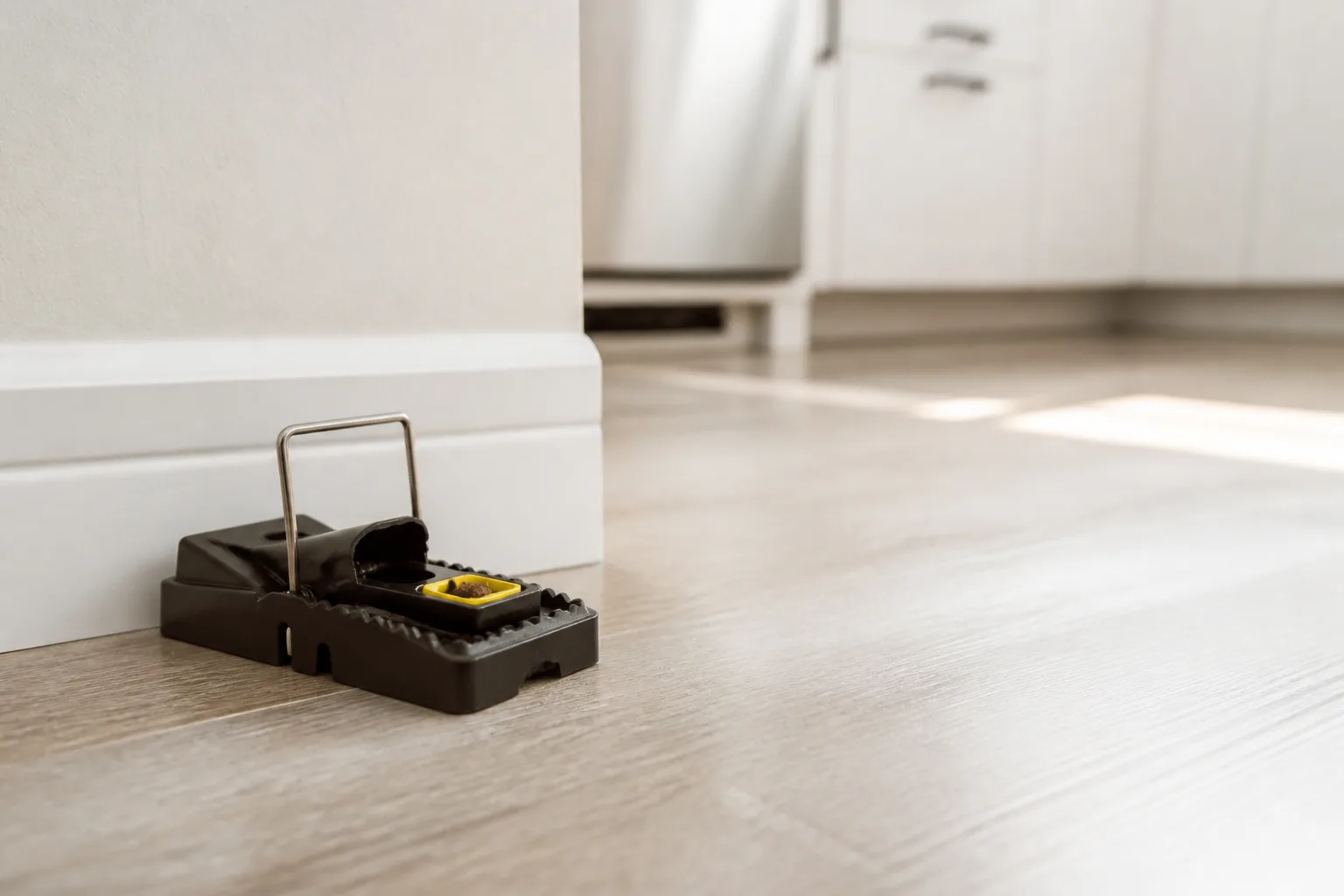
A rat in the wall is not a hardware problem until you know what kind of rat, where it travels, and whether your trap matches its size. Buy the wrong trap—mouse-sized jaws on a Norway rat, or a live cage where relocation is illegal—and you will blame the bait when the real failure was sizing or placement. The six picks below cover the scenarios homeowners actually face: a single snap under the sink, a dozen budget traps for a garage runway, a covered trap when you cannot stand the sight, live capture when ethics demand it (and local law allows), and a locked outdoor bait station when rats keep raiding compost at the garden edge.
Before you open a checkout tab, read the trap-type comparison and CDC-backed setup rules. The product list means more once you know how many traps, where the T goes against the baseboard, and when pre-baiting beats a hair-trigger snap.
Quick Pick: Match the Trap to Your Situation
One or two rats indoors, you want fast lethal control: Tomcat Rat Snap Trap — plastic body, removable bait cup, safer set mechanism than classic wood.
Widespread activity, tight budget, you can handle wood snaps carefully: Victor Easy-Set Wood Snap Rat Trap (12-pack) — exterminator-grade spring in bulk.
Small rat or large mouse, no-kill preference, legal release nearby: Iiwey Humane 12-Inch Mouse Trap — enclosed tube; verify local relocation rules first.
You want lethal snap without seeing the catch: Tratper Tunnel Dual-Entry Rat & Mouse Trap — covered dual-entry snap.
Large Norway rats outdoors or in a shed, live capture: Kensizer Medium Humane Live Trap — cage size for adult rats; heavy trigger misses mice.
Persistent outdoor population near compost, pet-safe locked poison access: Tomcat Rockscape Bait Station — tamper-resistant; use only after trapping fails and follow EPA label rules.
If you are not sure rats are the culprit, start with signs of rats in the garden or indoor droppings ID before spending on a full trap kit.
Rat Trap Types Compared (Before You Buy)
Rat traps are not interchangeable. Snap traps kill instantly when sized correctly. Live traps contain for relocation—where legal. Bait stations deliver rodenticide in a locked box. The CDC recommends traditional snap traps first to reduce populations around the home and reserves poison or bait stations for infestations that persist after trapping, using EPA-registered products only.
Snap Traps
Snap traps remain the default for a reason: when the trap matches the rodent, death is immediate and you know exactly where the body is. Rat-sized snaps have wider jaws and stronger springs than mouse traps—a mouse trap may wound a rat without killing it, which is worse for everyone. A practical sizing rule: if the trap jaw span is under about four inches or labeled “mouse,” do not use it for confirmed rats. Norway rats often need the wider plastic platforms sold explicitly as rat traps; roof rats may fit smaller jaws but still outpower mouse-grade springs.
Modern plastic snaps (Tomcat, covered tunnels) add bait cups you fill while the trap is unarmed and bars you set without placing fingers in the strike zone. Classic Victor wood traps cost less per unit and hit hard, but testers consistently report near-miss finger snaps during setup. For garages and crawlspaces, many pros deploy both: plastic snaps in occupied rooms where fingers and pets roam, and wood snaps in low-traffic utility zones where cost per trap matters.
Best for: Kitchen runways, garages, attics with confirmed rat travel along walls. Skip when: Toddlers or curious pets can reach floor-level traps without enclosed covers.
Catch-and-Release Live Traps
Live cage and tube traps appeal when you prefer not to kill, but they shift the problem to transport, release distance, and legality. The California Department of Fish and Wildlife notes that relocating wildlife without proper authorization is restricted in many jurisdictions—dropping a rat at the park edge may be illegal and can spread disease to new areas. Live traps also require daily checks; a stressed rat in a box for 48 hours is not humane. The CDC specifically advises against live traps for home rodent control because frightened rodents may urinate, increasing exposure to hantavirus and leptospirosis (CDC rodent control overview).
Best for: Single-animal situations where local law permits release on your own rural property, or when local ordinances ban certain rodenticides. Skip when: You cannot check traps twice daily or legally release off-site.
Bait Stations and Rodenticides
Bait stations are not traps—they are locked boxes that hold poison blocks rats eat and die from, often away from the station. They make sense for outdoor, persistent populations when snap trapping has failed, because the station reduces pet and child access compared with loose bait. Downsides: rats may die in walls or burrows (odor), non-target animals can be harmed if stations are tampered with or if poisoned rats are eaten, and death is not instant. The EPA lists rodenticides as a step after sanitation and trapping, not the first move indoors.
Best for: Fenced yards, compost areas, outbuildings—after exclusion and trapping attempts. Skip when: You cannot secure stations against pets or wildlife, or you need immediate confirmation of each kill indoors.
Why We Skip Glue Traps
Sticky glue boards show up in every hardware aisle, and they look effortless. We left them off this list on purpose. The CDC advises do not use glue traps and live traps because they scare rodents, causing urination that raises disease risk. Good Housekeeping’s pest lab likewise excludes glue traps as inhumane and surprisingly ineffective—rats and mice can pull free or die slowly over days. Several countries and U.S. jurisdictions restrict or ban glue traps for animal-welfare reasons. If a snap feels too violent, a covered snap or professional service beats a glue board that leaves a live rat tearing skin for hours.
How to Set Rat Traps That Actually Catch
Hardware is half the job. Placement, pre-baiting, and trap count determine whether you catch tonight or feed a trap-shy rat for a month.
Pre-Baiting for Trap-Shy Rats
Rats fear new objects (neophobia). The CDC recommends pre-baiting: bait traps without setting them until rats eat confidently. That may take two to five days for cautious Norway rats; house mice often trigger sooner. Once bait disappears overnight, set the same traps in the same spots—moving them resets suspicion. If a rat has a “near-trap experience” without capture, it may avoid that location entirely; swap trap type or position rather than repeating the same failed setup.
Wear gloves when handling traps and bait so human scent does not advertise danger. Eugene’s municipal rat guidance emphasizes removing food and shelter before relying on traps alone (City of Eugene).
Best Baits and Placement Rules
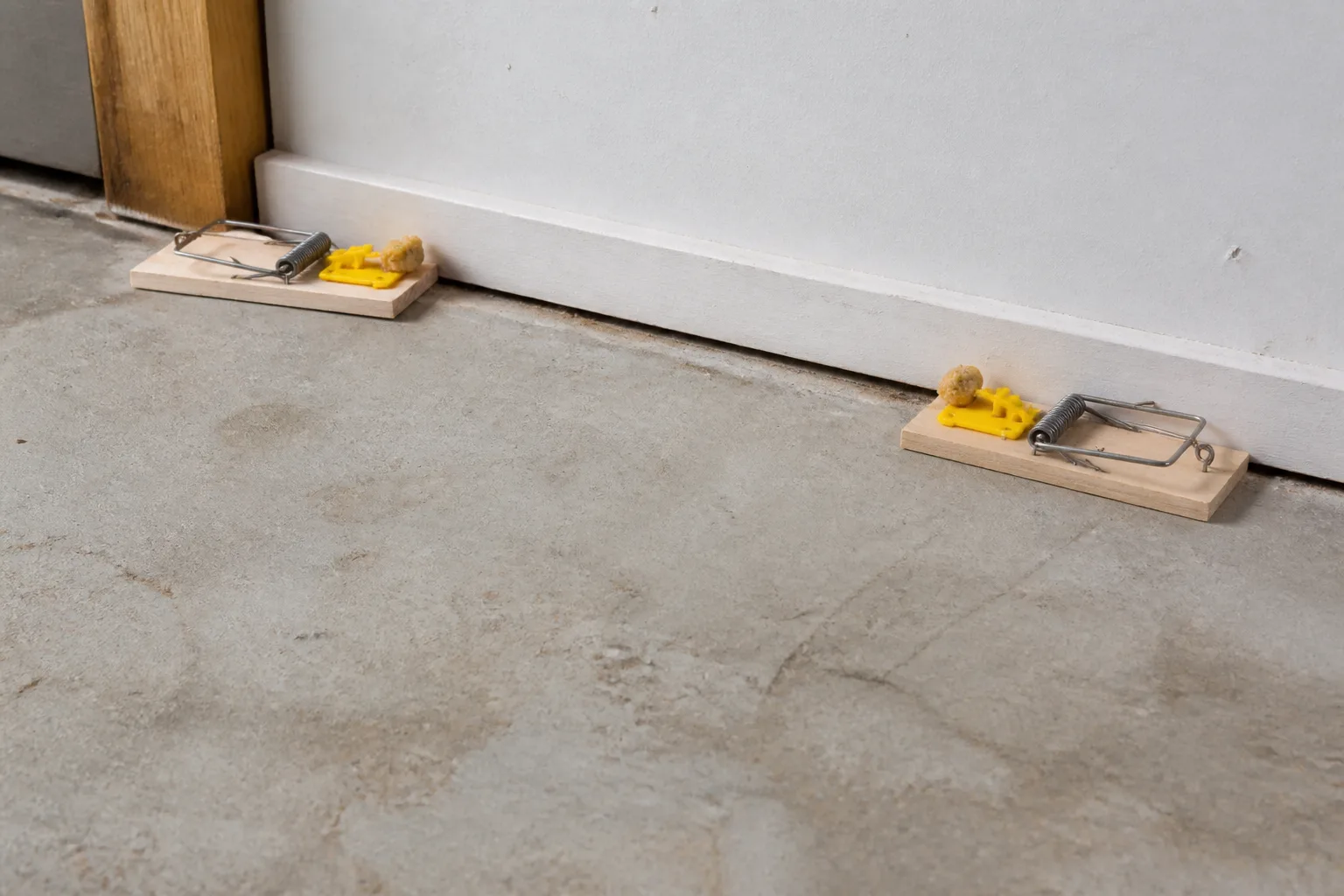
The CDC lists chunky peanut butter or mutton fat as effective snap-trap baits—sticky enough that rats must work the trigger. Tie a small nut or cotton ball into peanut butter so they cannot lick the plate clean without pressure. Avoid oversized baits that let rats feed from the side.
Placement rules that matter more than brand:
- Form a T with the wall: trap perpendicular, baited end against the wall where whiskers brush the baseboard (CDC trap-up).
- Set on runways—along walls, behind appliances, attic joists, garage perimeters—not open floor centers.
- Use rat traps for rats, mouse traps only for confirmed small mice; jaw size must match.
- Deploy 6–12 traps for moderate indoor activity, 15–20 feet apart along the same runway, not one lonely trap in the room center.
- Check daily; reset until no new droppings for a week (CDC).
- Keep all baits and traps out of reach of children and pets; poison baits require label compliance.
The 6 Best Rat Traps
Each pick below states who it is for, where it fails, and how we tested it—with toy rodents for snap sensitivity and real-world placement in kitchens, garages, and garden edges.
Best Overall: Tomcat Rat Snap Trap
Tomcat’s plastic rat snap is the trap we would buy for a first-time homeowner dealing with one or two rats along a kitchen or laundry runway. The removable bait cup lets you load chunky peanut butter while the trap is unarmed, which eliminates the finger-in-spring dance that makes wood Victor traps intimidating. A rear set bar closes the jaws with foot or hand pressure away from the strike zone, and the interlocking teeth held a test rat surrogate without bounce-out.
After a year under a kitchen sink, our tester reported no accidental trips from vibration when grabbing cleaning supplies—sensitivity is high for rats but not for light taps. Resetting and rebaiting takes under a minute. We also tapped around the armed trap with a ruler to simulate floor vibration; it did not fire until the trigger plate itself was pressed, which matters in busy kitchens where appliances rumble. The trade-off is visibility: a dead rat sits in the open unless you slide the whole trap into a bag for disposal. Price runs higher than wood per unit, but one reusable trap often beats buying disposables you fear to reset.
Trap type: Snap | Dimensions: 8.63 x 3 x 5 in. | Best for: Indoor lethal control, first-time trappers, under-sink and appliance runways.
Best Budget: Victor Easy-Set Wood Snap Rat Trap
When droppings show up in multiple zones—garage, shed, crawlspace—you need volume. Victor’s 12-pack wood rat snaps deliver exterminator-familiar mechanics at roughly a dollar per trap. The extended trigger plate and dual sensitivity settings help with finicky feeders, and the spring hits hard enough for adult Norway rats when baited correctly.
Setup is the weakness. Testers nearly caught fingers pulling the kill bar back; bait with a ruler or use the pre-scented pedal and add a pea of peanut butter after arming if you are nervous. These traps excel at disposable deployment: catch, bag, and replace in filthy crawlspaces where you do not want to wash blood off reusable plastic. Not ideal around toddlers unless placed inside locked cabinets or paired with covered tunnel designs.
Trap type: Snap | Dimensions: 1.4 x 4 x 10.2 in. | Best for: Large infestations, outbuildings, budget bulk trapping.
Best Catch-and-Release: Iiwey Humane 12-Inch Mouse Trap
The Iiwey tube trap is a black enclosed runway with a tipping door—no exposed spring, minimal finger risk, easy visual check through the mesh. It worked for small rats and mice along baseboards where pets might investigate an open snap. Bait loads in a rear cup; the door locks securely when shaken.
Limitations are real. The 12-inch chamber is tight for large Norway rats, and relocating wildlife may be illegal in your state—California restricts unauthorized relocation (CDFW). Outdoors, you may catch chipmunks or songbirds by mistake. Check traps at least daily, and if release is not legal, this category is the wrong tool—choose a covered snap instead.
Trap type: Live capture | Dimensions: 4 x 12 x 5 in. | Best for: Small rodent no-kill preference indoors, pet-safe lethal alternative when relocation is legal.
Best Covered: Tratper Tunnel Dual-Entry Rat & Mouse Trap
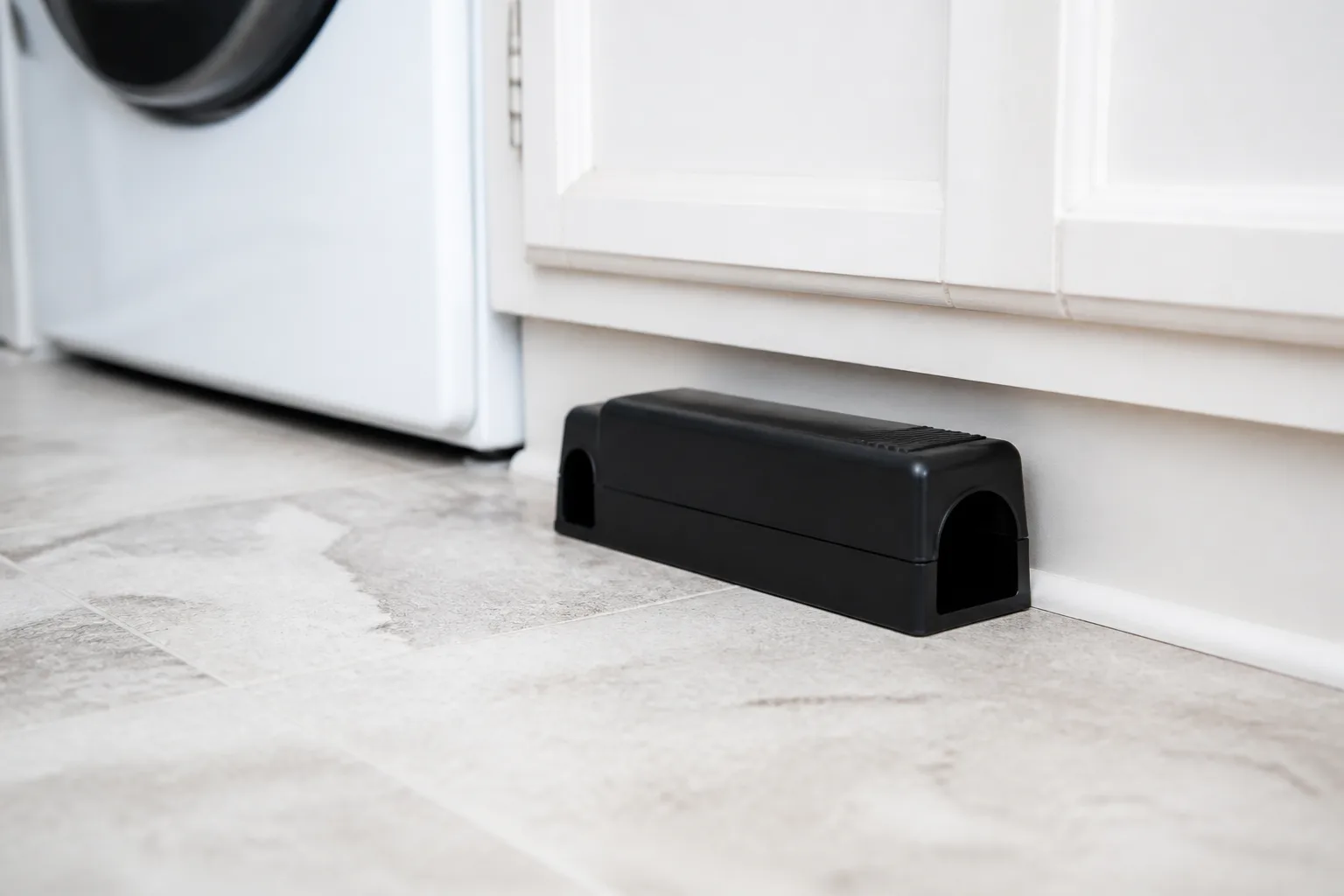
If open snaps gross you out or you worry about fingers and paws, the Tratper tunnel hides a full-power snap inside a dual-entry plastic shell. Rats enter from either end; the enclosed kill bar stays away from curious hands. Setup mirrors Tomcat’s ease—bait cup underneath, close the lid to arm—and our tester noted strong trigger tension with no false fires from light vibration.
Cleanup is the cost: you must open the tunnel to remove the body and wash bait residue after each catch, which is unpleasant but still less contact than bare wood. For occasional indoor rats, one unit is enough; for heavy infestations, buy multiple tunnels or pair with budget Victor snaps in low-traffic zones.
Trap type: Enclosed snap | Dimensions: 6 x 5 x 8 in. | Best for: Squeamish handlers, homes with older children, discreet kitchen placement.
Best Large: Kensizer Medium Humane Live Trap
Kensizer’s medium cage targets adult rats and squirrels in sheds, barns, and garden edges where a tube trap would be too small. The one-step auto-lock door and bait pedal setup take under a minute; the galvanized frame survives weather better than plastic tubes. Our long-term tester had one clever rat steal bait without tripping—a reminder to secure bait with wire or use sticky peanut butter on the pedal.
The heavy pedal misses house mice and small juveniles. There is no carry handle; wear gloves and lift from the base. Same legal and welfare caveats as any live trap apply—check daily, release only where permitted, or choose lethal control if relocation is banned.
Trap type: Live cage | Dimensions: 7.4 x 13.54 x 11.22 in. | Best for: Large rats outdoors, recurring shed invaders, wildlife-sized capture.
Best for Outdoors: Tomcat Rockscape Bait Station
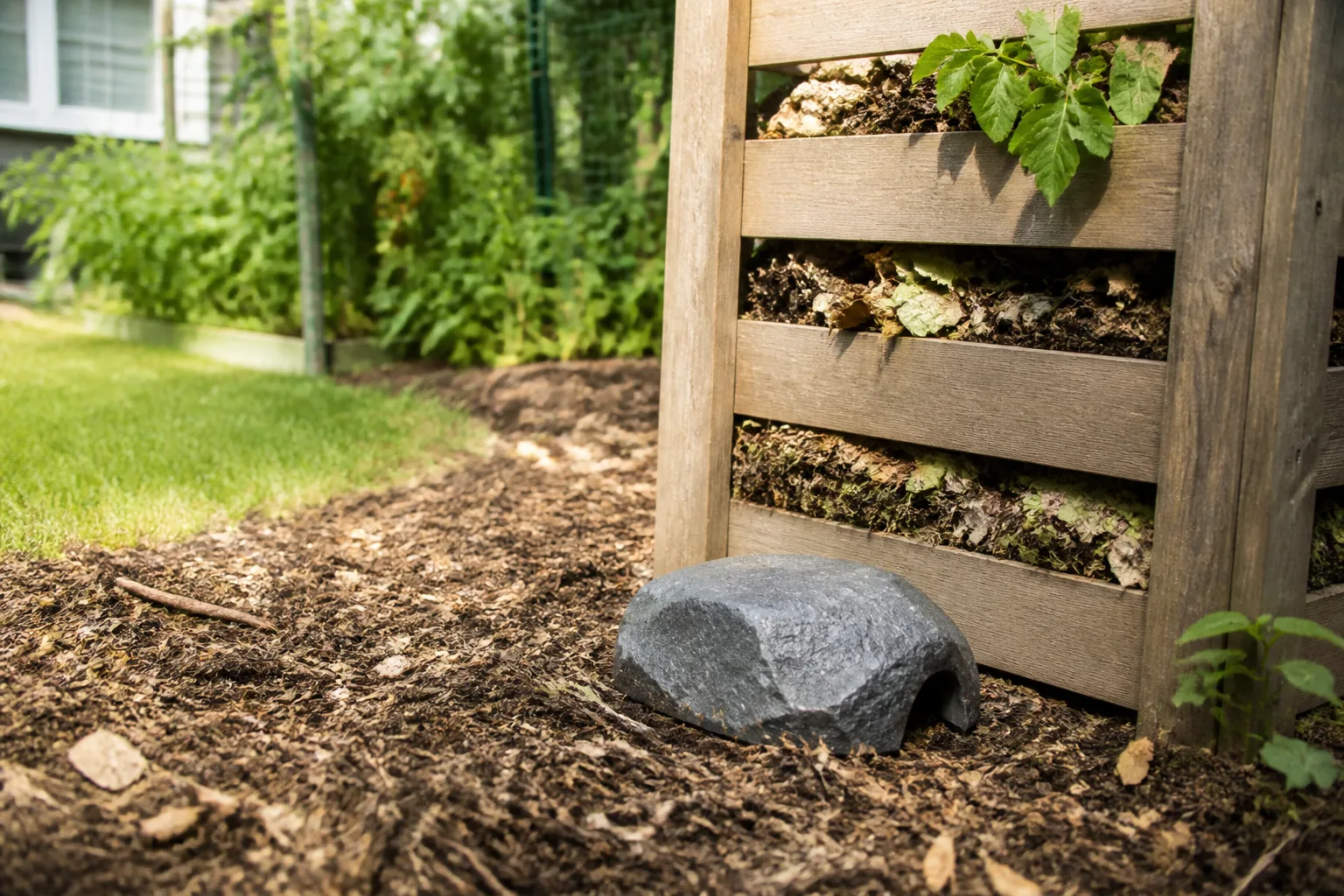
Outdoor rats that ignore snaps near compost often need secured rodenticide in a tamper-resistant station. Tomcat’s Rockscape mimics a landscape rock, holds bait blocks inside a keyed lid, and limits entry to rodent-sized openings—reducing—but not eliminating—risk to dogs if stations are anchored and locked per label.
This is not instant: rats eat, leave, and die elsewhere, sometimes in burrows you cannot reach. You must hunt and remove carcasses to limit secondary poisoning if predators eat dead rats. Use only EPA-registered bait and only after trapping and sanitation fail (EPA rodenticides). Anchor stations near compost and garden rat activity away from chicken feed and pet bowls.
Trap type: Bait station (rodenticide) | Dimensions: 6.13 x 13 x 11.5 in. | Best for: Persistent outdoor infestations, fenced yards, after snap-trap failure.
Safe Disposal and Cleanup After a Catch
Never sweep dry droppings—that aerosolizes pathogens. The CDC clean-up protocol: ventilate the space for at least thirty minutes, spray urine and droppings with a commercial disinfectant or 1 part bleach to 10 parts water, wait five minutes, then pick up with a paper towel while wearing rubber or nitrile gloves. Dead rats go into a plastic bag, then a second bag, then an outdoor sealed trash bin (CDC clean-up guidance). Disinfect the trap itself if you plan to reuse it; many homeowners prefer a fresh wood snap in filthy crawlspaces rather than scrubbing blood from springs.
Wash gloves before removal, then wash hands with soap and water—even if you never touched the carcass directly. Reset or replace traps in the same runway until a week passes with no new signs. If you used a live trap, disinfect the chamber before rebaiting; rats mark territory with urine that warns the next visitor away.
When to Call a Professional Exterminator
Call a licensed pest control operator when fresh droppings, gnaw marks, or scratching continue after two weeks of correct trap density and pre-baiting; when you hear activity in walls you cannot access; when rats appear in multi-unit buildings where sealing is not solely your job; or when disease risk is elevated (pregnant occupants, immunocompromised family members, hantavirus-endemic regions). Professionals can combine exclusion, commercial bait stations, and monitoring cameras—worth the fee when DIY trapping becomes whack-a-mole. Document trap counts and dates so you know when DIY has objectively failed.
Conclusion
The Tomcat Rat Snap Trap is our default for fast indoor control with minimal finger risk; Victor’s 12-pack scales bulk trapping on a budget; Tratper’s tunnel covers the snap for squeamish households; Iiwey and Kensizer serve no-kill preferences only where daily checks and legal release make sense; and Tomcat Rockscape belongs outdoors when locked bait stations beat repeated snap misses near compost. None of them work in the middle of the room. Pre-bait along walls, match trap size to the rodent, skip glue boards, and escalate to pros or EPA-registered bait only when trapping and sealing stop new signs for a full week.