How to Get Rid of Mice in Walls: 5 Easy Methods
Mice in walls? Follow a practical five-step plan to confirm activity, trap along routes, seal entry points, remove attractants, and prevent returns.
Scratching in a wall is unsettling, but the sound alone does not identify the animal. Mice, rats, squirrels, birds, insects, pipes, and heating equipment can all create noises in a wall or ceiling. Before you cut drywall or scatter a repellent, look for a second sign: fresh droppings, gnaw marks, shredded nesting material, a musky odor, or food damage near the suspected route.
If the evidence points to house mice, the most reliable approach is a sequence rather than a single trick. Trap the mice that are already inside, remove the food and shelter keeping them there, seal the openings that let more enter, clean contamination safely, and monitor long enough to catch the last active animal.
The short version: trap first, seal second
For a small, accessible household problem, start with mouse-size snap traps along the wall routes where signs are fresh. At the same time, put pantry goods and pet food in hard-sided containers, remove water sources, and note exterior gaps. Once trapping is underway and activity begins to fall, close the outside entry points with gnaw-resistant materials; do not blindly seal a visibly active animal into a wall void.
Use this order:
- Confirm activity. Check the baseboards, cabinets, attic, crawl space, garage, and the outside foundation rather than assuming every nighttime sound is a mouse.
- Trap the mice inside. Use enough mouse-size snap traps to cover active routes, with the baited end against the wall and the traps protected from children and pets.
- Remove easy food and water. Seal dry goods, put pet bowls away overnight, clean spills, repair leaks, and secure garbage and compost.
- Exclude new mice. Seal holes and utility gaps about 1/4 inch and larger with metal, hardware cloth, steel wool held in place, caulk, or another appropriate repair.
- Monitor and escalate. Keep checking traps and signs for at least a week after the last capture. If activity continues in an inaccessible wall, duct, or ceiling, use a qualified pest professional.
This sequence follows the same practical logic used in public-health guidance: sanitation reduces support, exclusion stops new entry, and population reduction removes the mice already using the building. The Illinois Department of Public Health describes sanitation, mouse-proof construction, and trapping or baiting as separate parts of control—not interchangeable substitutes.
Confirm the wall noise before treating it
Mice are commonly active after dark, but hearing movement at night is not proof of mice. Listen for where the sound starts and stops, then inspect the nearest room, cabinet, baseboard, pipe chase, attic, crawl space, or garage for physical evidence. Fresh signs matter more than one old dropping because they show where the animal is using the building now.
The most useful clues are small dark droppings, new gnawing on food packaging or soft materials, shredded paper or insulation, a stale musky odor, grease marks along a route, and holes around utilities. A pet pawing at one section of wall can be a clue, but it is not a species diagnosis. The New York State Department of Health also recommends checking for nests and tracks in storage areas rather than relying on a sighting; a light dusting of unscented talc can reveal movement overnight without requiring you to open a wall. (New York State Department of Health)
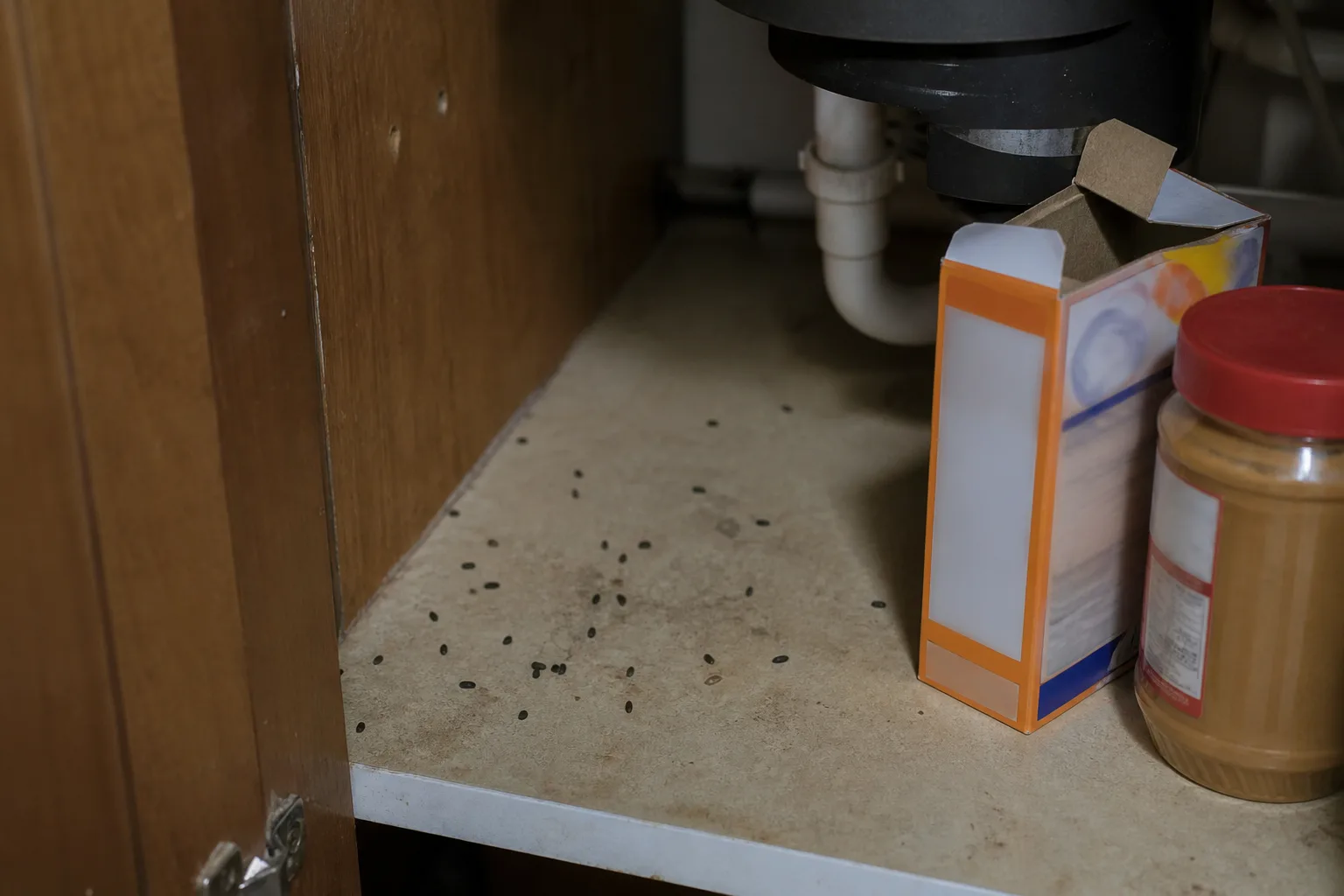
If you find droppings in several rooms, repeated daytime sightings, large droppings, a strong odor, or damage to electrical wiring, widen the inspection. You may be dealing with rats or a larger building problem, and the safest response may be professional identification before you choose a trap or bait.
Mice vs. rats, squirrels, birds, and plumbing
House mice are small, agile, and able to use narrow gaps. Illinois public-health guidance says an adult mouse can slip through a crack slightly larger than 1/4 inch—roughly the width of a pencil. Rats require larger traps and can behave differently around new objects, so do not guess at the species if the evidence is ambiguous.
Use the pattern of signs to narrow the possibilities. Fast, light scurrying along a baseboard with tiny droppings points more toward mice; heavier thumps, gnawing at a roofline, or movement in the attic can point toward a larger animal. Fluttering or pecking suggests a bird, while a steady click, drip, or vibration that changes when a faucet, fan, or furnace runs suggests plumbing or mechanical equipment. Stop and investigate before placing traps if the wall may contain a protected animal, a nest, or a live electrical hazard.
1. Put mouse-size snap traps on active routes
Snap traps are the best first removal tool for a small indoor mouse problem because they let you locate the catch and dispose of the carcass instead of leaving a poisoned animal to die inside a wall. The CDC recommends traditional snap traps around the home, keeping traps and bait away from children and pets, and continuing until there are no new signs of rodents.
Do not use a rat trap for a suspected mouse or a tiny mouse trap for a rat. Choose a sturdy mouse-size model, read its setting instructions, and use a small amount of bait that the mouse cannot simply carry away. A dab of peanut butter is a common option, but the food that is being nibbled in your home can be a better test bait.
Set traps at walls, not in the middle of a room
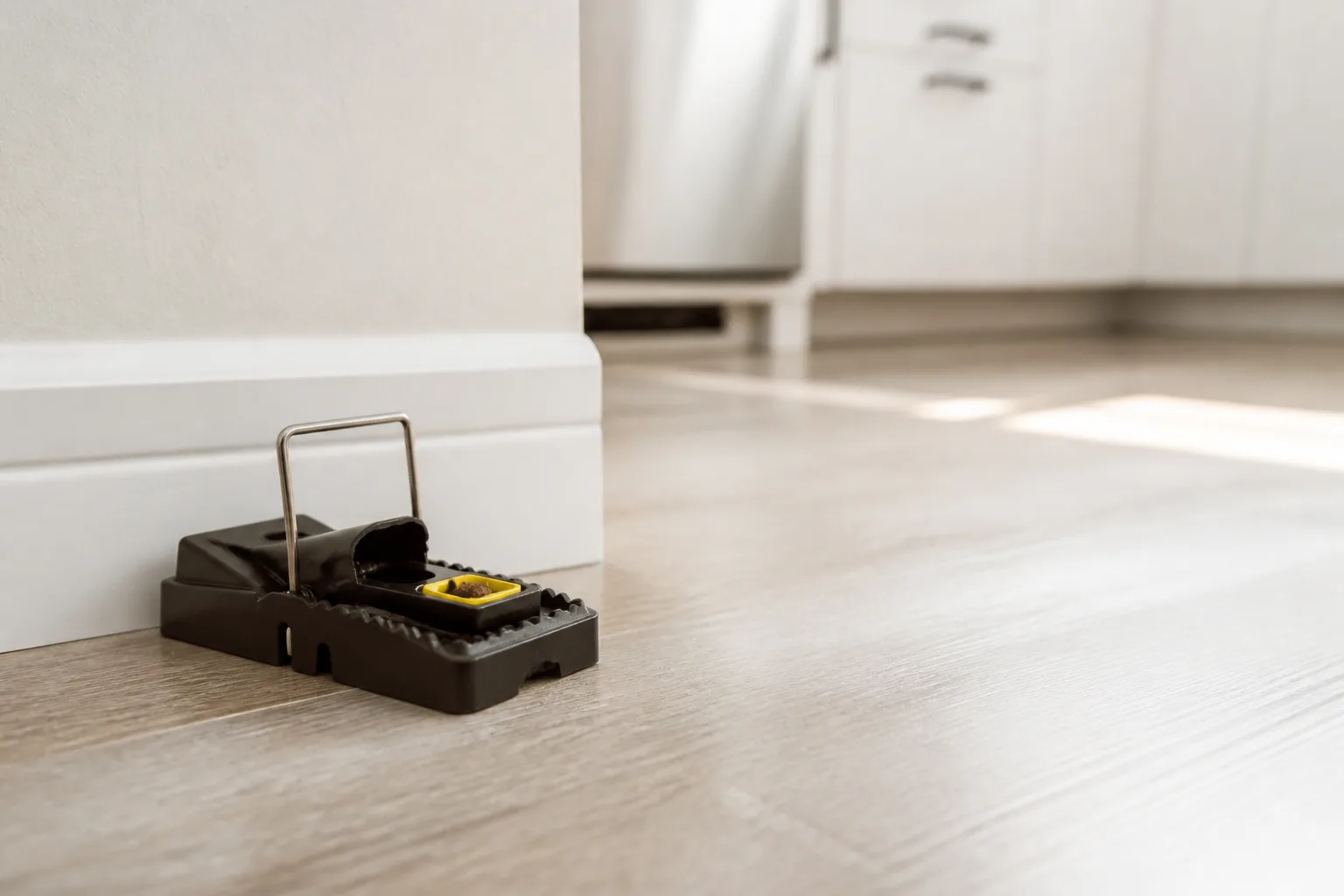
Mice usually follow edges, protected gaps, and objects rather than crossing a large open floor. Place the trap on the floor against a baseboard, behind an appliance, beside a cabinet toe-kick, in a dark corner, or near fresh evidence. The baited end should touch the wall so the trap forms a T with the wall; this puts the trigger across the route instead of asking the mouse to walk into open space. (CDC guidance on trapping rodents)
Cover the likely route with multiple traps rather than placing one trap in the room and hoping for luck. New York guidance suggests spacing traps roughly 6 to 10 feet apart along suspected routes, while Illinois guidance emphasizes using enough traps and keeping them close to evidence. For a single cabinet or wall section, two traps near the freshest sign may be more useful than six scattered through unrelated rooms.
Put traps where you can inspect them every day. A trap hidden behind a refrigerator is useful only if you can reach it safely and remove a catch promptly. If children, dogs, cats, or wildlife can reach the location, use a secure protective enclosure designed for that trap or move it to a closed area; never assume a shelf makes a loaded trap safe.
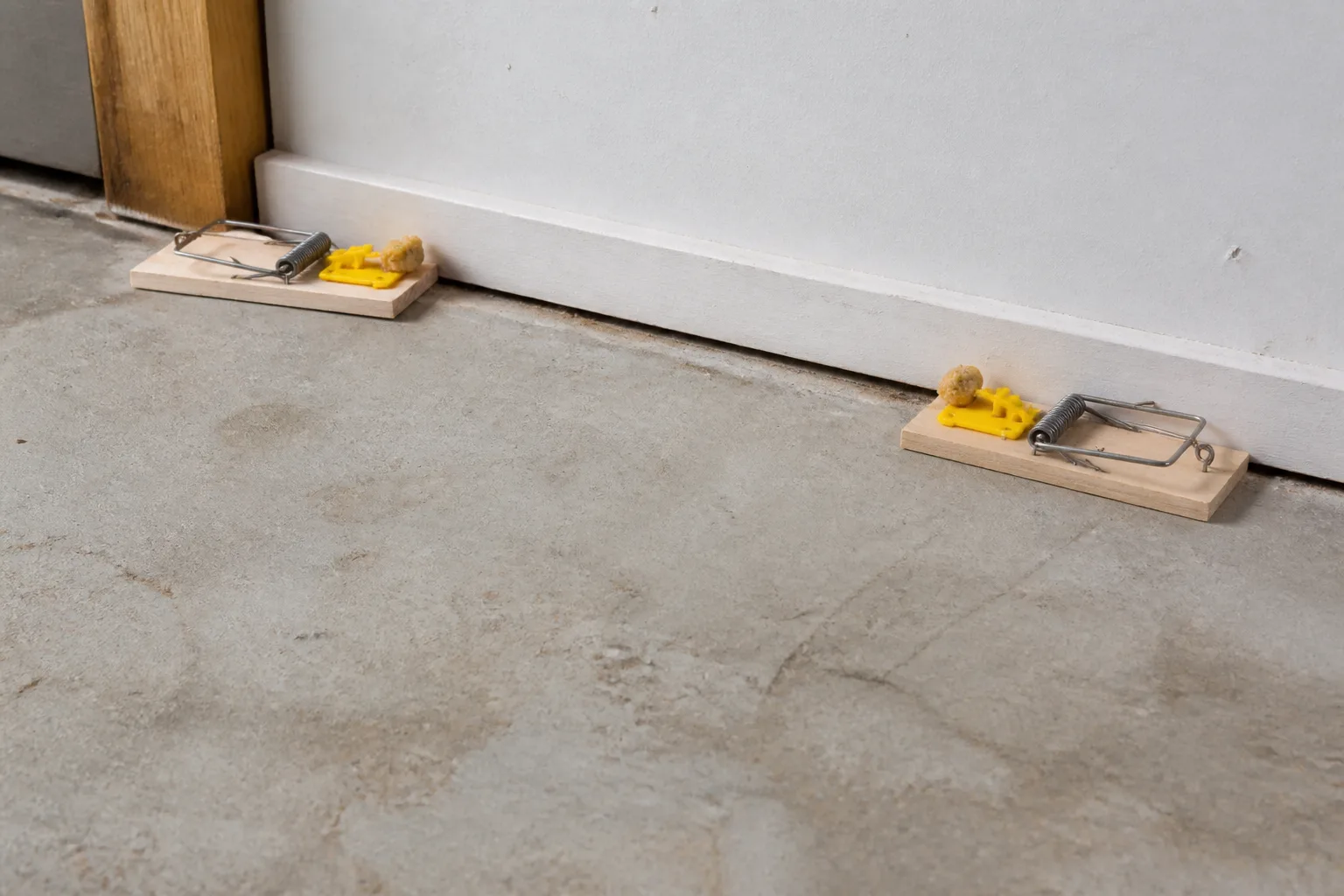
Check traps daily and dispose of any dead mouse using the wet-cleaning method below. If a trap is dragged, damaged, or triggered without a catch, replace it and look for a larger rodent or a placement problem rather than putting your fingers near the mechanism.
If traps are untouched, change the setup
An untouched trap does not prove that no mouse is present. It may be outside the active route, too exposed, too strongly scented with bait, or placed where the mouse can reach food without crossing the trigger. Move it closer to fresh droppings, gnawing, or the edge of a cabinet and reduce competing food at the same time.
House mice are often less cautious than rats, so you generally do not need a long prebaiting ritual. If the suspected animal is a rat or repeatedly avoids new objects, leave a baited trap unset for a short period only when the manufacturer’s instructions and the setting remain safe. Once bait is taken, set it and resume daily checks. If there are new signs after several days of well-placed traps, stop adding random traps and reassess the species, route, and size of the infestation.
Skip glue boards and live-catch traps for this wall problem. The CDC advises against both because frightened rodents may urinate, increasing contamination and exposure risk; a snap trap that can be checked and cleaned is the more controllable choice for indoor removal.
2. Remove food and water that keep mice indoors
Sanitation will not push every mouse out of a building by itself, but it changes the odds in favor of your traps. House mice can nibble small amounts repeatedly, so a few crumbs under an appliance, an open cereal bag, a pet bowl left overnight, or a leaking pipe can keep them returning to the same wall route.
Store grains, cereal, nuts, seeds, pet food, and treats in thick plastic, glass, or metal containers with tight lids. Cardboard boxes and thin bags are storage labels, not mouse barriers. Wipe crumbs under the stove and refrigerator, clean food-preparation surfaces, empty indoor garbage regularly, and put pet food and water away after use if a mouse problem is active. The CDC’s sealing guidance specifically calls out spills, pet food, bowls, and garbage as sources to control.
Look for water that is easy to miss: a sweating pipe, a slow leak under a sink, condensation around a water heater, a dripping hose connection, or a dish that stays full overnight. House mice do not need a large open water source every day, but removing reliable moisture still makes the space less supportive. Fix the leak rather than scattering absorbent material where it can become nesting material.
Compost and bird feeding can shift the problem toward the house even when the kitchen is clean. Gardening Know How recommends keeping compost away from bird feeders and pet-food bowls and avoiding meat, dairy, oils, and heavily seasoned leftovers that act as rodent attractants; its compost-pest guidance is useful when the outdoor source is the missing part of the puzzle. BHG’s beginner compost guide likewise lists meat, dairy, fats, oils, and pet waste among materials to avoid in a home compost system. (Better Homes & Gardens compost guidance)

Do not remove all food from a room and assume the mice are gone. Sanitation supports trapping; it does not replace trapping when there are already droppings, nests, or active wall sounds.
3. Seal gaps after trapping is underway
Exclusion is what keeps the next mouse from entering, but timing matters. If scratching is active inside an inaccessible wall and you close the only exit without a trapping plan, the animal may die in the cavity, chew a new route, or move deeper into the building. Start traps first when you can reach the likely interior routes, then seal exterior openings as the evidence of activity falls.
Mice can fit through a gap about 1/4 inch wide, so inspect more carefully than a quick walk-around allows. Use a flashlight in daylight and look for rub marks, gnawing, droppings, disturbed insulation, and light visible around a closed door or vent. The CDC’s home-sealing checklist includes indoor and outdoor utility penetrations, windows, doors, vents, floor-to-wall joints, and openings around electrical, plumbing, gas, and sewer lines.
Inspect the four places mice use most
Start outside because a small opening at the foundation can lead to activity in a wall, cabinet, attic, or crawl space. Check these zones:
- Utilities: Look around pipes, cable, wiring, conduit, hose bibs, air-conditioning lines, and dryer or floor vents.
- Doors and windows: Inspect weather stripping, thresholds, screens, garage-door sweeps, and corners where trim meets masonry.
- Ventilation and roof transitions: Check attic and crawl-space vents, soffits, siding gaps, roof-to-gutter transitions, and chimney or flue screens.
- Foundation and wall joints: Examine cracks, weep holes, crawl-space access panels, and the joint between foundation, siding, and ground.
Do not seal a vent that the building needs for safe operation, block a dryer exhaust, or close an opening before identifying what it serves. Use an appropriate metal screen or hardware cloth that preserves airflow and keeps mesh edges secure.
Choose gnaw-resistant repair materials
For small gaps, pack steel wool or copper mesh tightly and secure it with a suitable sealant or caulk. For larger openings, use 1/4-inch hardware cloth, sheet metal, metal flashing, or cement as the substrate and fasten it so the mouse cannot pull out the edge. The Connecticut Department of Energy and Environmental Protection’s rodent-management guidance also recommends metal, concrete, or 1/4-inch hardware cloth around foundations, pipes, utilities, drains, and vents.
Foam alone is not a durable mouse barrier. Some products are useful as a way to hold mesh in place, but soft foam, wood, rubber, plastic sheeting, and loose caulk are easy targets for gnawing. Wear thick gloves when handling abrasive steel wool, and do not reach into an unknown cavity where wiring or a trapped animal may be present.
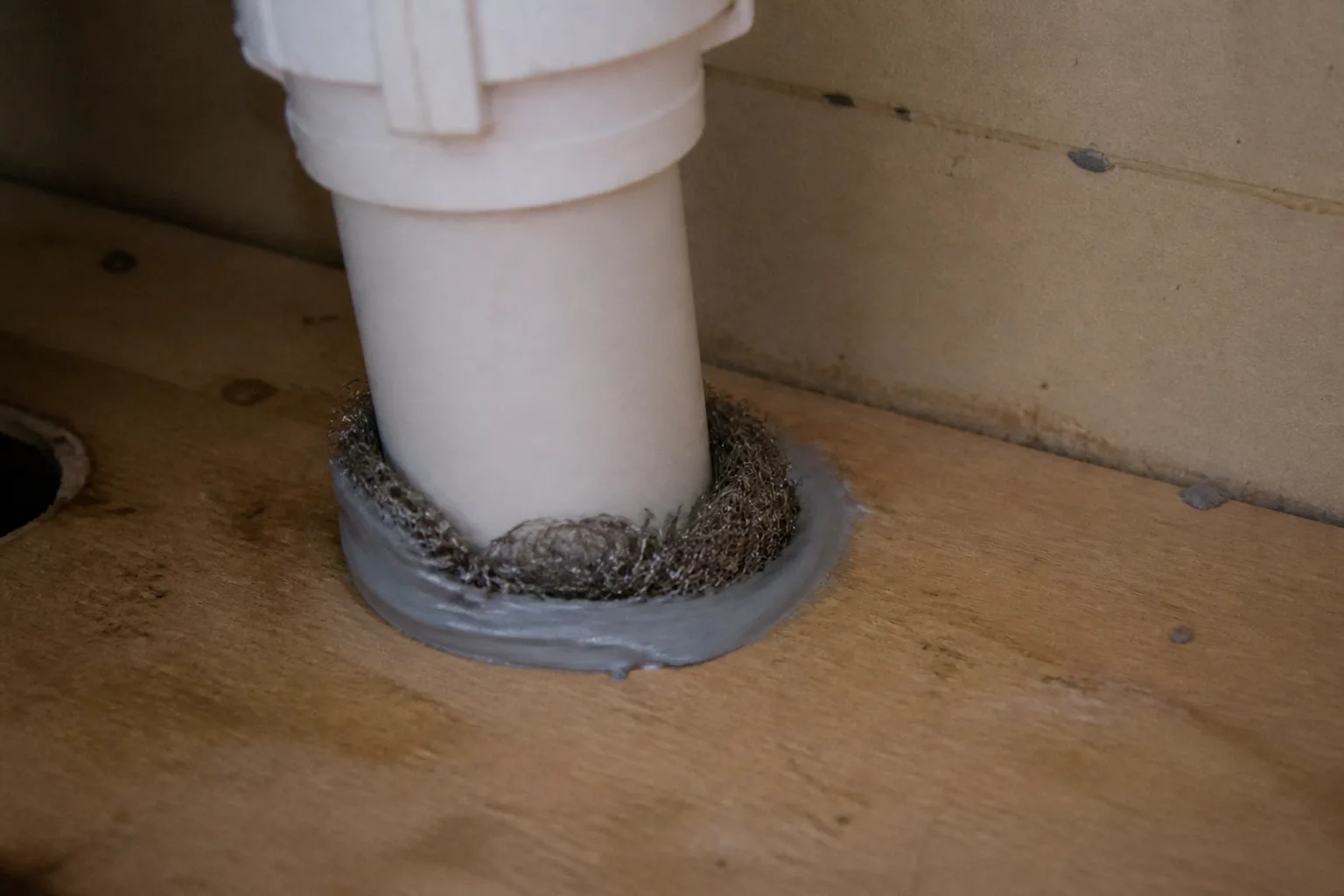
Seal in stages when you have several openings. Close the obvious exterior routes first, then recheck the interior for fresh signs. A repair is successful when the gap stays closed and new evidence stops—not merely when the patch looks tidy on installation day.
4. Remove outdoor shelter and nesting opportunities
The area around a house can supply a mouse with cover, nesting material, and a short route to the foundation. Clear leaf piles, dense weeds, trash, loose lumber, unused pots, bags of soil, and clutter stored directly against the building. Move firewood and construction materials away from walls and raise them where practical so the inspection strip stays visible.
Trim dense vegetation that touches siding, vents, or rooflines, but do not strip a whole garden simply because you heard a sound indoors. Focus on the protected corridors that meet the house: vines under siding, brush around foundation vents, groundcover hiding a hole, or a shed, deck, or compost bin pressed against the wall. You are reducing shelter and improving visibility, not trying to create a sterile yard.
Birdseed, fallen fruit, and open compost are common missing links. The BBC Gardeners’ World Magazine’s rodent-prevention advice recommends securing food waste, reducing spilled birdseed, clearing ground-level clutter, and fortifying shed or decking gaps. (Gardeners’ World guidance on outdoor rodent attractants) Those measures are written for rats, but the same food-and-cover pattern is a sensible reason to move a feeder or compost bin farther from the house when mice keep appearing near the foundation.
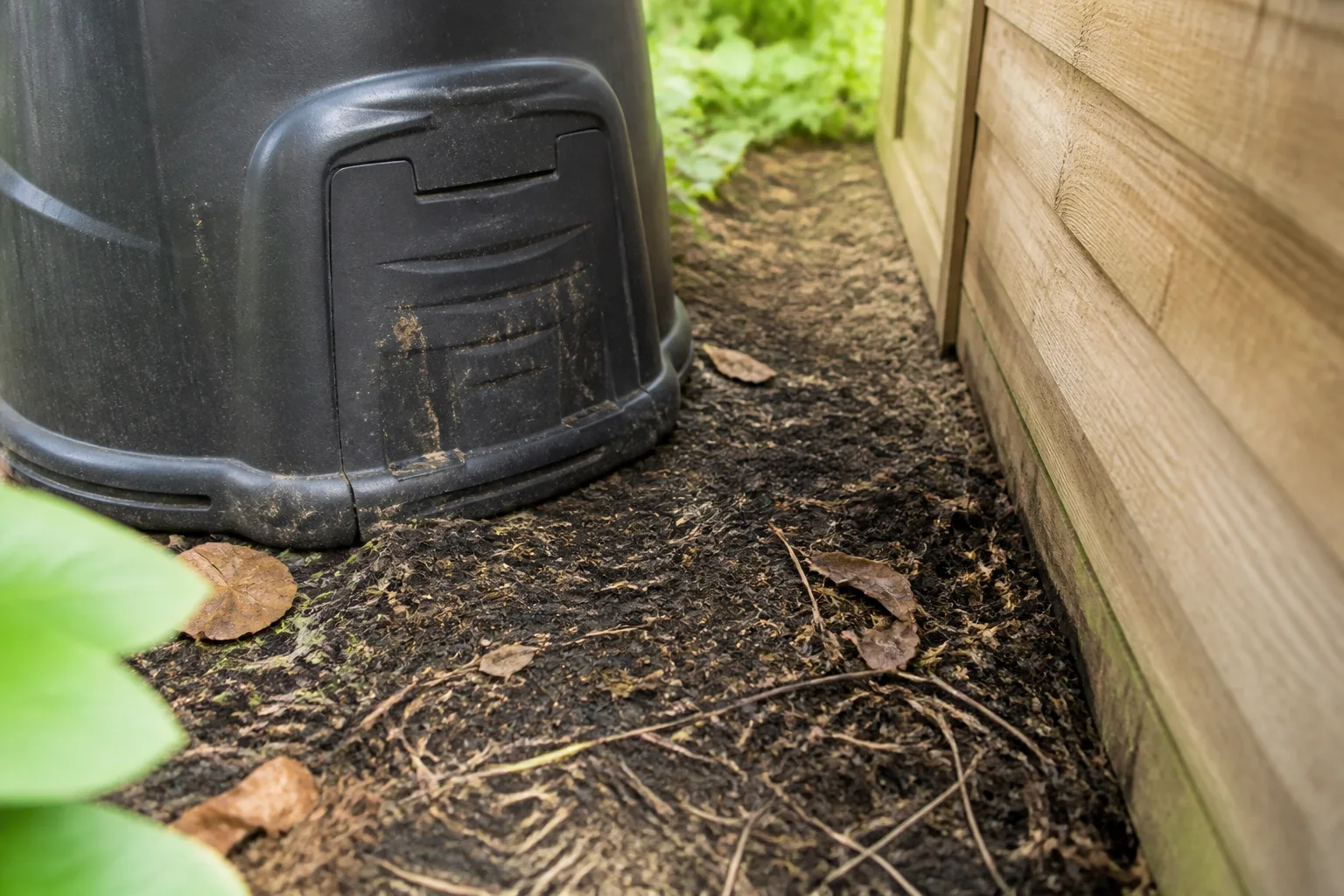
Clean the underside of a grill, secure garbage lids, harvest ripe fruit, and remove spilled seed below feeders. If you keep a compost bin, use a closed, well-managed system with a secure lid and a base or mesh that prevents digging. These changes will not catch a mouse already in the wall, but they can stop the next wave from treating your home as the nearest dry shelter.
5. Treat scents and ultrasonic devices as limited backups
Peppermint, cinnamon, vinegar, ammonia, and other strong odors are often presented as mouse solutions. At most, a scent may make a small spot less attractive for a short period; it does not remove a nest, close an entry hole, or stop a mouse from returning to food. Never use a strong household chemical in a wall cavity, and never mix cleaners.
Ultrasonic plug-in devices are not a dependable fix for wall mice either. The Illinois Department of Public Health says ultrasonic sounds have limited use because they are directional, lose intensity with distance, do not penetrate well behind objects, and mice become accustomed to repeated sounds. (Illinois mouse-control guidance)
If you use a scent after trapping and exclusion, treat it as an optional aftercare cue, not a control method. Keep it away from children, pets, food-preparation surfaces, and ventilation equipment, and stop if it causes irritation. The useful work is still happening at the trap, the pantry, the exterior gap, and the monitoring log.
Clean droppings, nests, and dead mice without stirring dust
Rodent waste is a hygiene issue, not ordinary household dust. Sweeping or vacuuming dry droppings, urine, or nesting material can put contaminated particles into the air. The CDC advises wetting the material with a household disinfectant or a fresh bleach solution, allowing the contact time on the label, wiping it up, and washing your hands after removing gloves. (CDC cleanup guidance)
For a small, visible amount of contamination:
- Put on rubber or plastic gloves and keep children and pets out of the area.
- Ventilate an unused room or outbuilding before cleaning when practical; leave the area during the initial airing period recommended by the CDC.
- Spray droppings, urine, nesting material, a dead mouse, and the surrounding surface until thoroughly wet. Let the disinfectant sit for the product’s label time.
- Wipe with paper towels instead of sweeping or vacuuming. Place the waste and disposable materials in a plastic bag, tie it closed, and double-bag it before placing it in a covered trash container.
- If reusing a snap trap, disinfect it according to the manufacturer’s directions and the CDC’s cleanup steps. Wash gloved hands before removing the gloves, then wash bare hands with soap and water.
Do not open a wall just to search for a smell or a suspected carcass. If a poisoned mouse dies inside, the odor can persist and the location may be inaccessible; that is one reason trapping is preferable indoors. For heavy contamination, exposed insulation, or an HVAC duct, pause and call a professional rather than improvising.
Know when poison, wall opening, or a professional is safer
Indoor rodenticide is not a shortcut for wall activity. A poisoned mouse may die in the wall or ceiling where you cannot retrieve it, and rodenticide can harm children, pets, and wildlife if it is misplaced or carried outside. The CDC recommends snap traps for routine control and says poison or bait stations should be reserved for infestations that persist, using EPA-registered products and the label instructions.
If bait is considered at all, use only a product legally labeled for the location and target animal, follow every label precaution, and use a tamper-resistant station where the label requires one. Do not use homemade mixtures, unlabeled pellets, or bait scattered loose in a wall. In a home with curious children or pets, a professional plan is usually safer than trying to improvise a hidden bait placement.
Opening drywall is also not automatically the fastest path. Cutting into a wall can strike wiring or plumbing, release contaminated insulation, create a repair bill, and still fail to reveal the route the mice use. A pest professional can inspect the structure, distinguish mice from rats or wildlife, identify an entry route, and coordinate trapping and exclusion when the activity cannot be reached from a safe floor or cabinet position.
Call for help immediately if…
- you see or suspect rats, squirrels, bats, birds, or another animal rather than a house mouse;
- scratching is inside heating or cooling ducts, a sealed ceiling, or a wall you cannot safely access;
- you find chewed electrical wiring, damaged gas or water lines, or a strong burning smell;
- droppings, nesting material, or odor are present across several rooms or in a heavy accumulation;
- someone in the home is pregnant, immunocompromised, very young, or otherwise at higher risk from rodent exposure;
- traps produce no result but fresh signs continue after several days of correct placement; or
- the building is a rental, condominium, or multi-unit property where the source may be outside your unit.
For ducts and heavy infestations, use a company that can explain its exclusion, trapping, cleanup, and follow-up plan. The CDC specifically directs people to professional help when rodents have entered areas that cannot be reached to clean.
Monitor for a full week and prevent a return
The day after a catch is not the day to declare victory. Reset or replace traps, inspect the same routes, and record fresh droppings, gnawing, or sounds. The CDC advises continuing to trap until there are no new signs; a full week with no captures and no new evidence is a practical stopping point for a small indoor problem, provided the entry points have also been repaired.
Use a simple check once a week after the active problem ends. Walk the foundation and garage, test door sweeps, look around utility penetrations, check attic and crawl-space vents, empty water that collects outside, and inspect compost, bird-feeder spill, garbage, and pet-food storage. Recheck after storms, renovation work, a new garage door, or any landscaping change that hides the foundation.
If a fresh dropping appears, do not jump straight to poison or essential oils. Photograph the location, wet-clean it safely, inspect the nearest route and opening, and put a correctly oriented snap trap there. A short written record—date, room, sign, trap result, and repair—helps you tell a single stray entry from a recurring structural problem.
Conclusion
To get rid of mice in walls, start with evidence and a route, not a smell. Use mouse-size snap traps where the animals travel, remove food and water that keep them nearby, seal 1/4-inch gaps with gnaw-resistant materials after trapping is underway, and reduce outdoor shelter around the building.
Skip loose poison, glue and live traps, ultrasonic promises, and homemade remedies that leave the entry point untouched. Clean droppings and carcasses by wet methods, keep traps and bait away from children and pets, and bring in a professional when the activity is inside an inaccessible wall, duct, ceiling, or wiring chase. The goal is not just a quiet night—it is a building that no longer offers an easy route, meal, and nest.