Cinnamon for Fungus Gnats: Evidence and Better Fixes
Cinnamon may affect fungi, but it is not a proven fungus gnat treatment. Confirm the pest, adjust watering safely, and target soil larvae with Bti or nematodes.
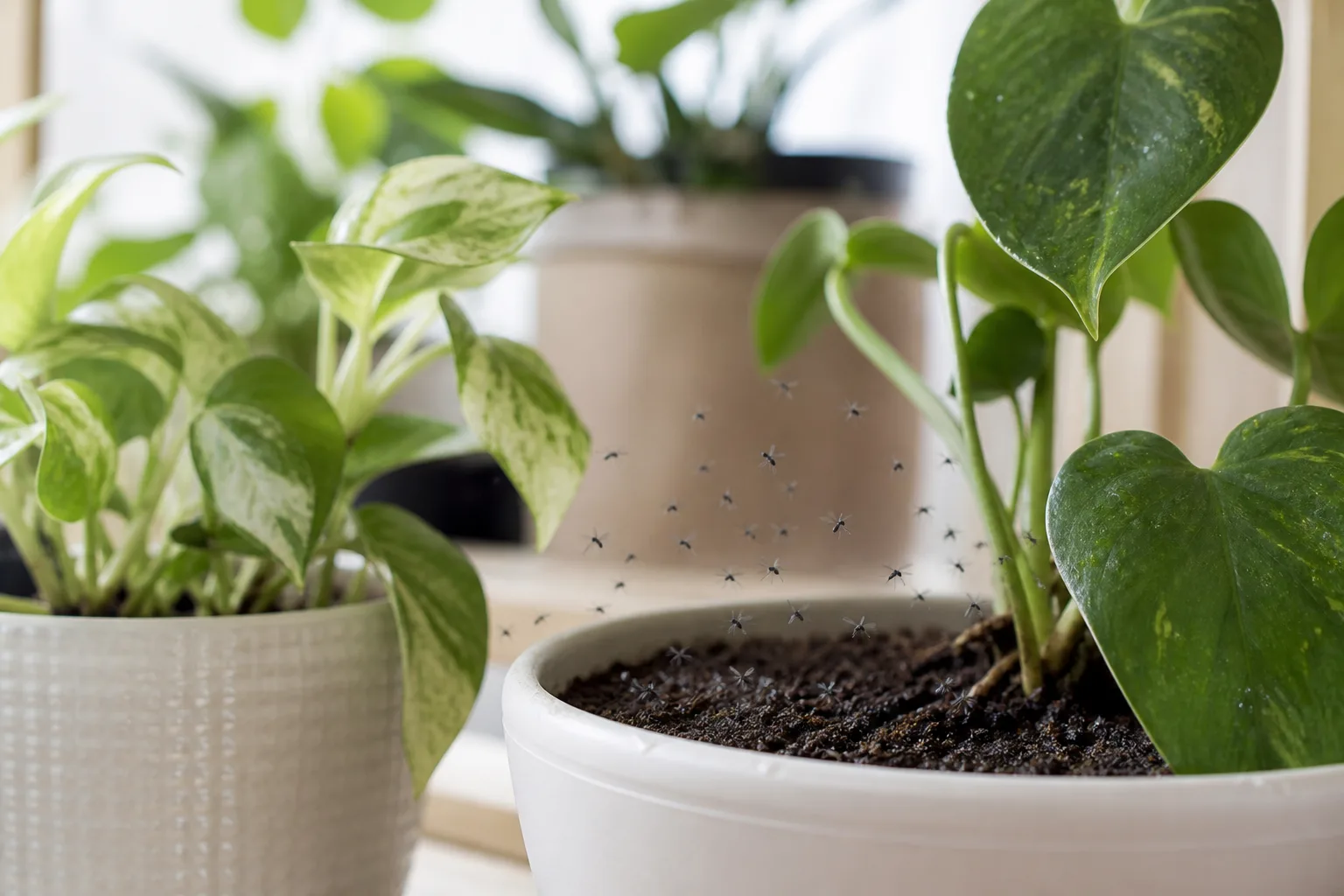
Does cinnamon kill fungus gnats?
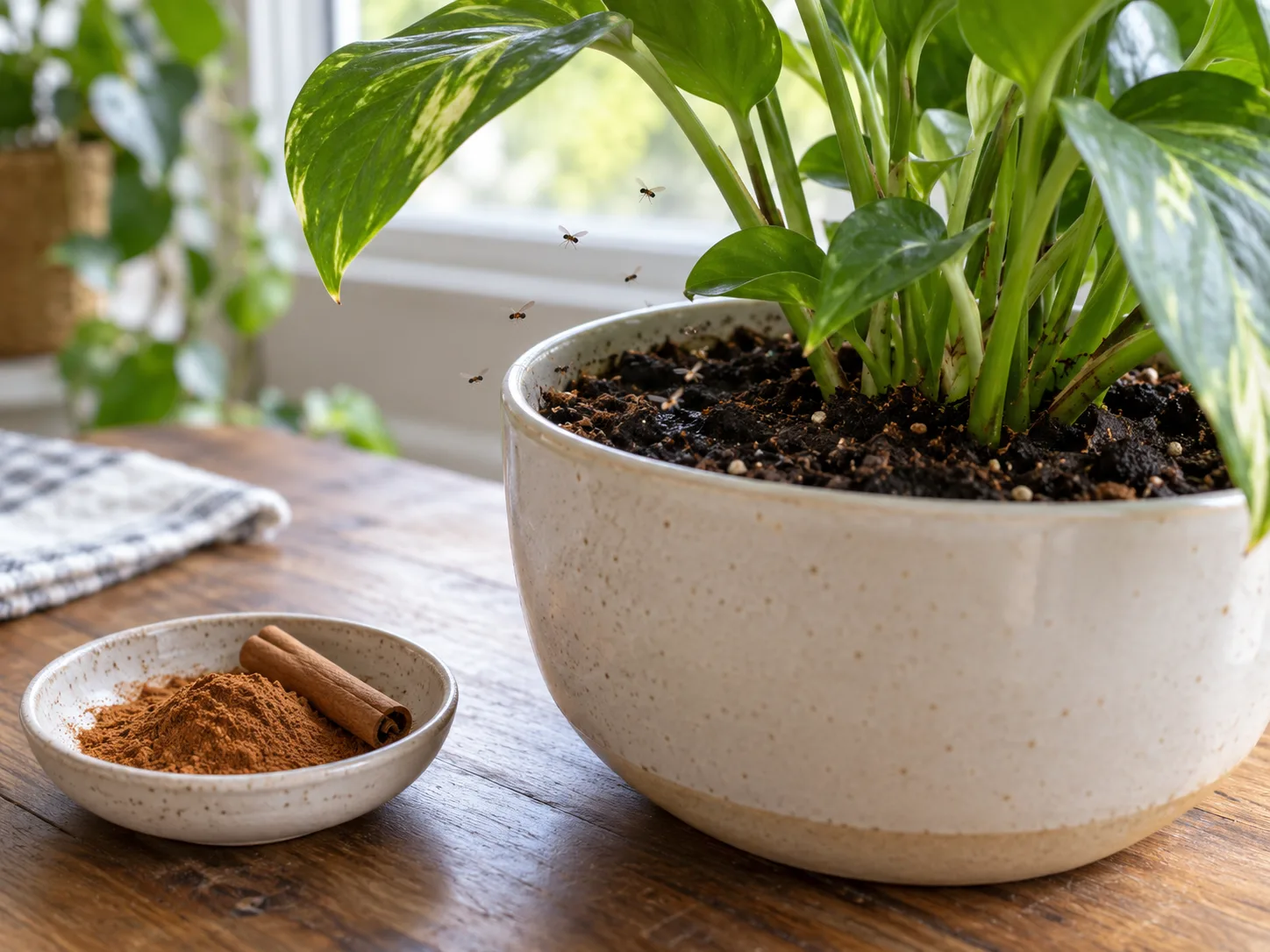
Sprinkling cinnamon on potting soil is not a proven way to kill or control fungus gnats. Cinnamon contains compounds that can inhibit some fungi in particular laboratory or crop-treatment studies, but that is different from showing that pantry cinnamon kills fungus gnat eggs or larvae in a houseplant pot. The fungus gnat is an insect; the moist, organic soil habitat supports its young whether or not a dusting of spice changes the visible surface mold.
If you already added cinnamon, you do not need to panic or scrape out every grain. Just do not count it as treatment. Confirm that the insects are fungus gnats, adjust the soil conditions in a way the plant can tolerate, and use a method that reaches the life stage you are trying to control.
Why cinnamon’s antifungal reputation does not prove insect control
Cinnamon bark and its essential oils contain active compounds such as cinnamaldehyde, and researchers have studied cinnamon oils, extracts, and powders against particular crop pathogens. A review in Molecules summarizes examples of cinnamon preparations affecting fungi such as Botrytis and Fusarium. Those studies use defined materials, concentrations, and exposure conditions; they do not establish that a casual sprinkle of grocery-store powder will control insects in the uneven, living environment of potting mix.
The distinction matters because “antifungal” describes an effect on some fungi, not a general pesticide effect. A substance can discourage a particular fungus and still leave a gnat’s eggs, larvae, and pupae untouched. Cinnamon products also vary by species, processing, and composition, so the amount of an active compound in a kitchen jar is not a standardized soil-treatment dose.
Soil mold and fungus gnat larvae are different problems
Fungus gnat larvae feed mainly on fungi and decomposing organic matter in moist growing media, and larger populations can also damage fine roots. Removing or reducing visible mold alone does not remove all the food or habitat in the pot, and an apparently clean soil surface does not prove that larvae are gone. University guidance from UC IPM and University of Wisconsin–Madison Extension focuses on moisture management, monitoring, and controls directed at the immature insect stages.
Surface mold is often a sign that organic material has stayed damp, not a diagnosis of a fungus gnat infestation. If you see mold but no small flies or larvae, improve airflow around the pot and review watering and drainage; do not assume that either cinnamon or an insect treatment is needed.
Confirm that the flies are fungus gnats
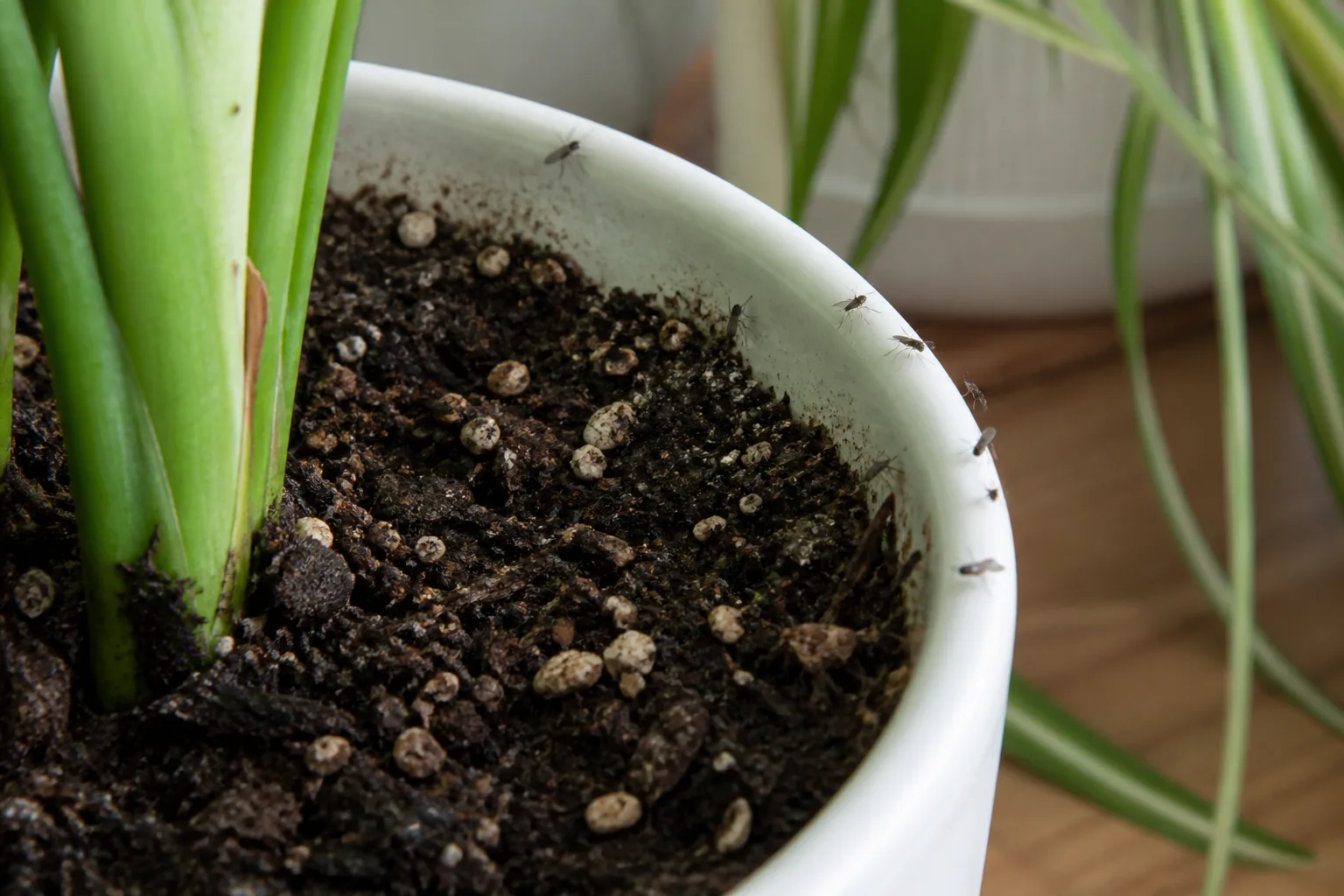
Before treating the pot, check where the insects gather. Fungus gnats are small, dark, mosquito-like flies with long legs and antennae; they tend to hover weakly near houseplants, rest on pot rims, or appear around windows close to plants. Adults do not bite, and a few adults are usually a nuisance rather than a sign that a healthy mature plant is in immediate danger.
Other small flies point to other sources. Fruit flies are usually associated with ripening fruit or food scraps, while drain flies are fuzzy and often rest near sinks or drains. If a yellow card beside one pot catches many of the same dark flies over several days, that is useful evidence that the pot is involved, though the card alone cannot identify every species with certainty.
Check the adults and test the soil for larvae
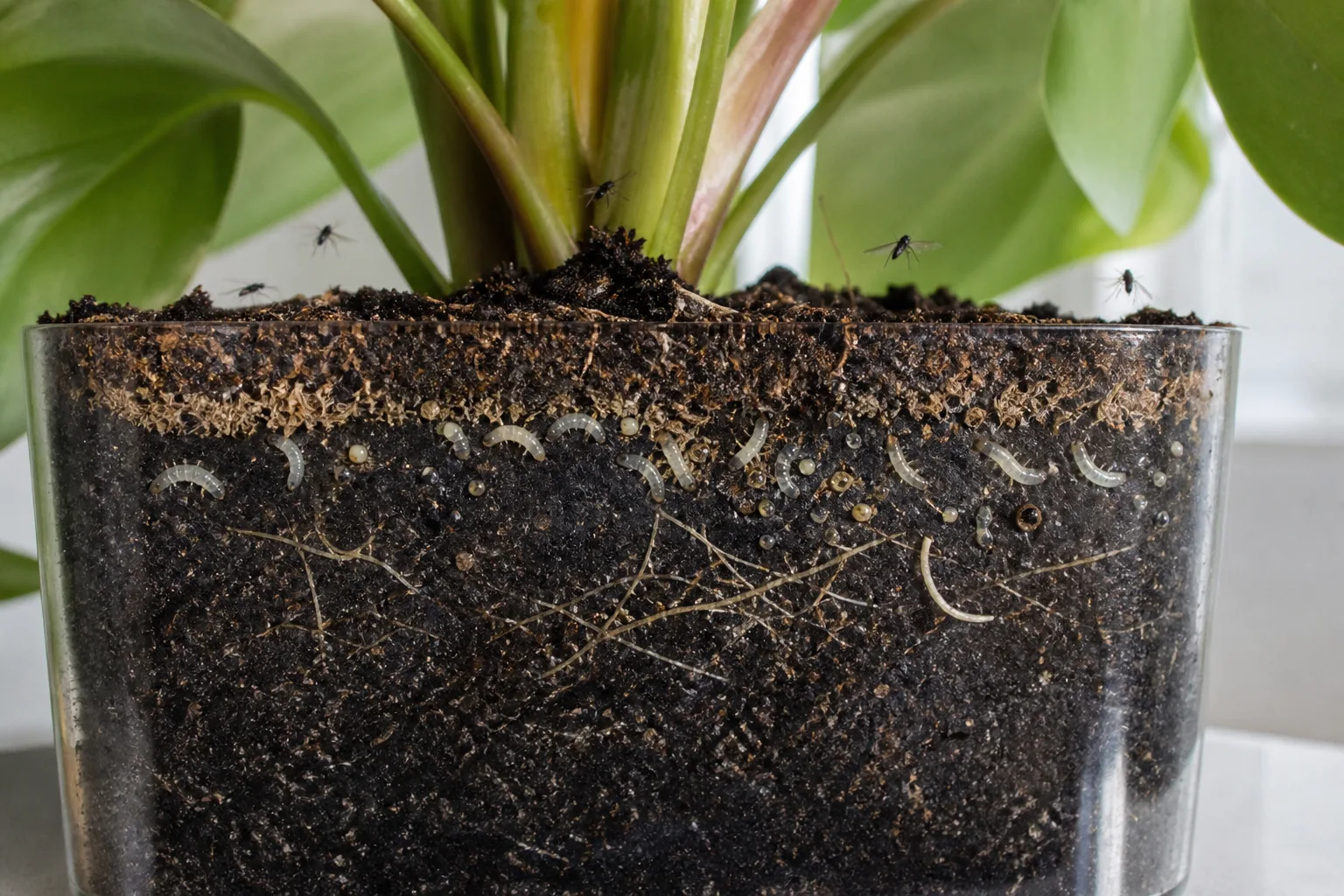
Adult fungus gnats are commonly about one-eighth inch long. The larvae are pale, translucent, wormlike, and have a shiny black head; they live in the upper part of moist growing media. You may not need to dig through the root ball to confirm them.
Wisconsin Extension recommends laying a small slice of raw potato cut-side down on the soil and checking the underside after three or four days; larvae may gather there to feed. Remove and discard the slice afterward.
Use a potato check when the diagnosis is uncertain or when you want to know whether adults on a trap correspond to larvae in a specific pot. It is a monitoring tool, not a cure. A positive check tells you to treat the soil stage; a negative check from one pot or one short test does not rule out a low-level infestation elsewhere in a collection.
Why gnats can keep emerging after you dust the soil
Fungus gnats pass through egg, larval, pupal, and adult stages, and indoor pots can contain several stages at once. At favorable temperatures, a generation may take roughly three to four weeks; eggs can hatch within days, larvae feed in the soil, and new adults continue to appear while earlier stages mature. Colorado State University Extension and Wisconsin Extension describe this overlapping cycle, which explains why one surface treatment or a few days without seeing flies can give a false sense of success.
This also explains why adults are visible while the main breeding site remains hidden. A fly spray may kill an adult in the room but leave the larvae in the pot.
A barrier may make the surface less inviting for egg laying, yet not reach eggs or larvae already below it. The reliable approach is to combine a habitat change with adult monitoring and, when needed, a larval treatment over the time required for the remaining stages to emerge.
A practical fungus gnat plan that targets the whole problem
Start with the pots nearest the adults. Check drainage holes, cachepots, and saucers for standing water; remove dead leaves and decaying plant debris from the soil surface. If several plants share a shelf, monitor them all for a week so you do not treat only the pot where the adults happen to be easiest to see.
Step 1: Reduce excess moisture without stressing the plant
Fungus gnats favor moist, organic growing media, so correcting chronic wetness is often the most useful first move. Let the surface layer dry between waterings when the plant’s care needs allow it, and water according to the plant and pot rather than a fixed weekly calendar. Check that the container has drainage and empty its saucer after watering; old, broken-down mix may hold water much longer than it did when fresh.
Do not respond by leaving every houseplant bone-dry. Ferns, fittonia, peace lilies, seedlings, and other moisture-dependent plants can suffer if their root zone dries completely.
For those plants, reduce the time the surface stays wet, improve drainage or air movement, and consider bottom watering if it suits the pot and plant. The aim is a less favorable surface and fewer persistently saturated pockets, not drought stress.
Step 2: Trap adults and track the trend
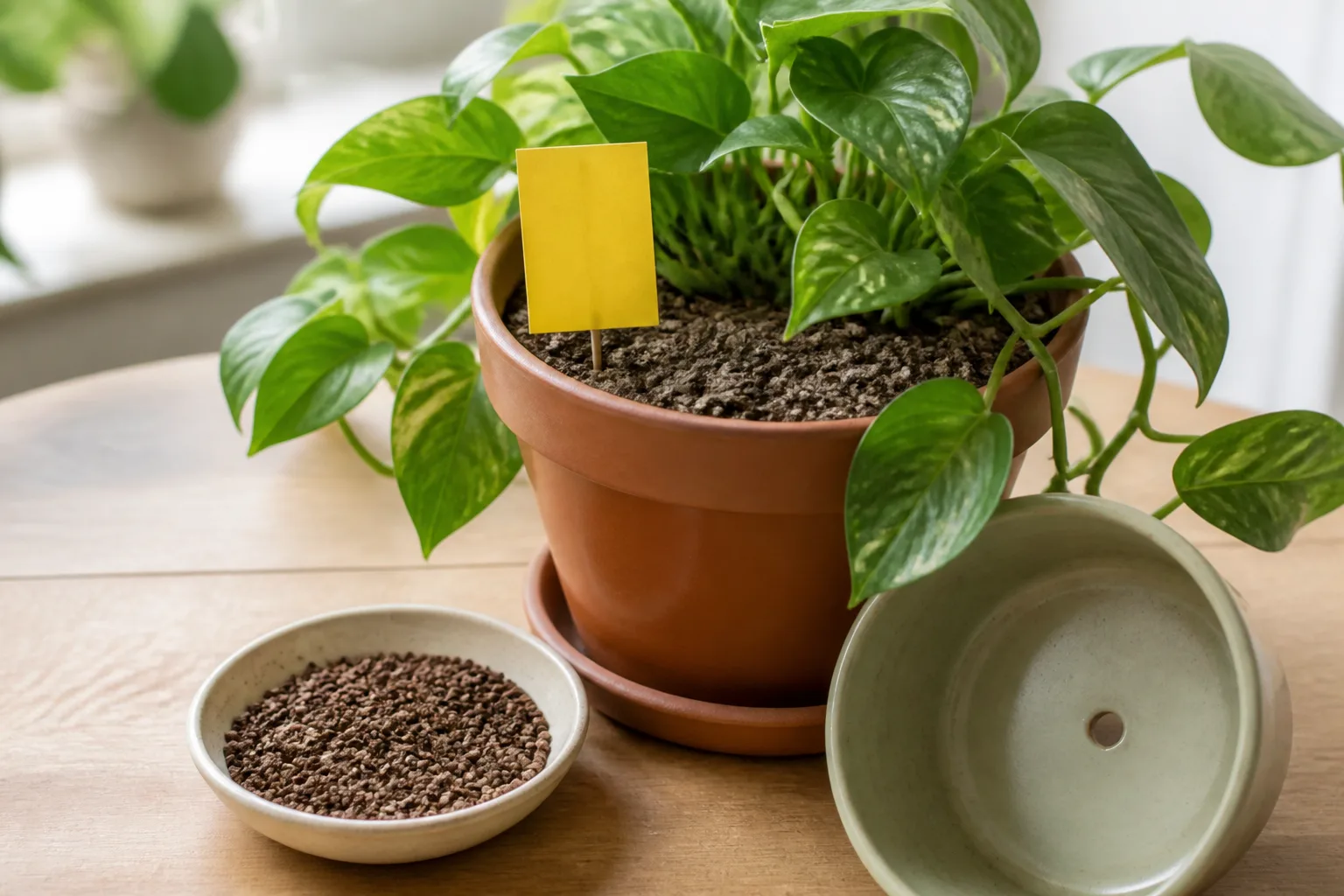
Place yellow sticky cards near the foliage or just above the soil of affected pots. They catch adults and can show whether activity is declining, but they do not reach eggs, larvae, or pupae in the mix. Epic Gardening and Family Handyman describe sticky cards as one part of a broader approach; extension guidance likewise treats them as monitoring and adult suppression rather than a stand-alone soil cure.
Check the card every few days and replace it when it fills or loses tack. Keep a simple count or compare fresh cards over the same interval: that is more useful than guessing from occasional flies in the room. Fewer captures alongside no larvae on a potato check is better evidence of progress than one trap that happened to catch several adults on its first day.
Step 3: Treat larvae with an appropriate biological control
For an active infestation that persists despite better watering, use a product or beneficial organism intended for fungus gnat larvae. Bti, short for Bacillus thuringiensis subsp. israelensis, is a bacterium used against susceptible fly larvae; it does not kill flying adults and generally needs repeat applications as new larvae hatch. Wisconsin Extension describes repeated Bti treatments spaced several days apart, while UC IPM notes that indoor media may need repeated applications because Bti does not persist there.
Products and labels differ. Choose one whose label specifically allows the intended use on houseplants or fungus gnats, mix and apply it exactly as the label directs, and follow its reapplication interval. A product sold for mosquito larvae is not automatically labeled for every indoor plant use, and a foliage spray or a different Bt subspecies is not interchangeable with a soil treatment for fungus gnat larvae.
Beneficial nematodes, especially Steinernema feltiae, are another option when you can obtain fresh, properly stored stock and follow supplier directions. They are living organisms, need suitable moist conditions to move through the medium, and are applied as a drench; do not let the treated soil dry immediately afterward if the product instructions say to keep it moist. UC IPM and Colorado State Extension identify this species as a biological control for larvae. It is more targeted than trying to repel adults with a scent, but it still requires correct timing and application.
When a soil cover or fresh potting mix helps
A thin layer of coarse sand or fine gravel can help keep the soil surface drier and less attractive for egg laying. Wisconsin Extension recommends a half-inch to one-inch layer as part of a moisture-management plan. Treat it as a barrier and prevention aid: it will not reliably kill larvae already in the pot, and it is not a reason to water an unsuitable plant less than it needs.
Repotting is more disruptive, so save it for a pot with badly degraded, persistently waterlogged mix, poor drainage, severe ongoing infestation, or a plant showing root trouble that warrants inspection. If you repot, discard the infested medium, clean the container, use fresh potting mix, and then keep monitoring; repotting does not protect the new mix from adults laying eggs later. For a healthy plant with a small number of gnats, adjusting the watering and treating the larvae is usually a gentler first choice.
Why vinegar, essential oils, and quick sprays often disappoint
Vinegar traps are designed around flies attracted to fermenting or sweet bait and are much less useful for fungus gnats breeding in soil. If a vinegar bowl catches an occasional adult, that does not establish that the pot’s larvae are controlled. A sticky card beside the plant gives a clearer count of flying adults, while a soil test or larval treatment addresses the source.
Essential oils and pantry spices are not interchangeable with labeled pesticides or tested biological controls. Cinnamon’s antifungal research does not show that powder or oil repels fungus gnats, and a strong scent is not proof that an insect will avoid laying eggs. Avoid pouring concentrated oils onto soil or leaves; if you consider any pesticide or plant treatment, read its label and test only as directed for the plant and setting.
Treat household peroxide recipes as uncertain rather than as a guaranteed cure: the extension guidance here centers moisture management, adult monitoring, Bti, and nematodes instead of a standard peroxide schedule. Spraying at adults in the air does not reach larvae in the pot; UC IPM advises that insecticides are rarely warranted around homes and that any product used must be labeled for the intended houseplant use. Follow its directions and keep it away from children and pets as the label requires.
Prevent fungus gnats from returning
Quarantine new plants away from the collection and watch for adults or larvae before moving them onto a shared shelf. Inspect the top of the mix and drainage holes, and avoid bringing a plant home if the soil is already waterlogged or adults are flying around it. When you bring outdoor pots back inside, check them first because they may have acquired gnats during the growing season.
Store opened potting mix in a closed container and keep saucers, cachepots, and plant shelves free of standing water and decomposing leaves. Recheck plants after watering changes, especially in cooler or darker months when growth slows and pots can remain damp longer. Prevention is less about keeping soil sterile than matching watering to the plant, maintaining drainage, and noticing a small population before it spreads.
How long control takes and what progress looks like
Do not judge a treatment by the next morning’s adult count. Existing pupae can still emerge, and traps can catch adults that were already flying before you changed the soil conditions. Keep the moisture adjustment and adult monitoring in place for at least one full life-cycle window—often several weeks indoors—and repeat a biological treatment only as its label or supplier directs.
Progress means fewer adults on fresh sticky cards, no larvae on repeat potato checks, and a pot that is no longer staying wet for long stretches. If catches remain steady after several weeks, recheck whether the flies are actually coming from that plant, whether another pot or damp organic material nearby is breeding them, and whether your treatment reached the soil rather than only the room. Persistent wilt or root decline calls for checking root health and watering, not assuming the gnats are the only cause.
Conclusion
Cinnamon is not a dependable fungus gnat treatment. Its antifungal reputation comes from studies of particular cinnamon compounds and fungi, not proof that kitchen powder kills insect eggs or larvae in a houseplant pot.
Confirm the pest, correct excess moisture without drying sensitive plants, use sticky cards to monitor adults, and target larvae with an appropriately labeled Bti product or a suitable beneficial nematode when needed. That sequence gives you a way to judge progress and prevent the next generation instead of relying on a spice dusting that has not been shown to break the cycle.