Do You Need to Cover Shrubs in Winter? What to Know
Do you need to cover shrubs in winter? Learn which plants need protection, when to use burlap, and when water, mulch, or a windbreak is better.
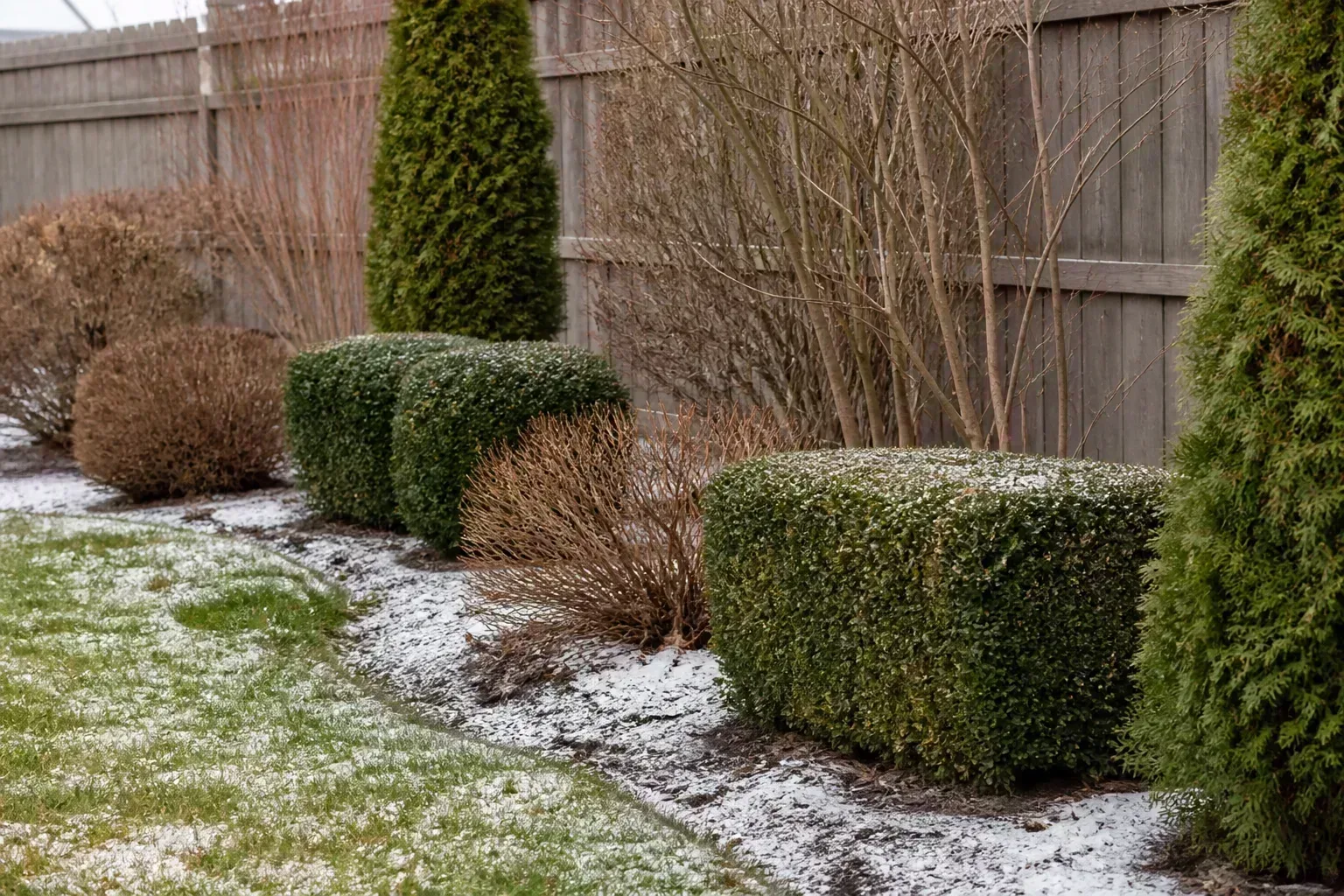
Most established shrubs that are hardy for your climate do not need to be wrapped for winter. Cover one because it is young, newly planted, marginally hardy, evergreen in an exposed site, vulnerable to salt or browsing, or growing in a container—not simply because the forecast says winter is coming.
The best protection is usually the smallest intervention that addresses the actual risk. A deep drink before the ground freezes, a layer of mulch over the root zone, or a burlap windbreak may help more than enclosing the whole plant. The University of Georgia Extension describes the same principle: cold damage is only one part of the problem, while wind, water loss, salt, sun, and containers can change the decision.
Quick answer: most established hardy shrubs do not need a full cover
Start with four questions: Is the shrub rated for your local winter? Is it established in the ground? Is it deciduous or evergreen? What threat are you trying to prevent? If the answer is “hardy, mature, deciduous, and sheltered,” leave it uncovered and focus on normal fall watering, a clear root zone, and occasional storm checks.
Covering is more justified when a shrub is in its first winter, was planted late, sits on the windward side of a building, regularly browns on its exposed side, or is only just hardy for the site. A full cover is also reasonable for a valuable specimen during a short, unusually severe cold snap, but it should be temporary and breathable.
No cover can make a tender plant fully hardy. It can slow wind, shade foliage from winter sun, reduce salt spray, keep snow from catching branches, or create a calmer pocket of air. If the shrub is fundamentally unsuited to the climate, replacement with a better-adapted plant is more dependable than repeating the same emergency wrap every year.
The winter problems a cover can and cannot solve
“Winter damage” is not one problem. The right response depends on whether the plant is losing water, breaking under weight, being eaten, suffering salt spray, or experiencing a freeze that exceeds its tolerance.
Windburn and winter desiccation
Evergreen foliage can continue losing water when the ground is frozen and roots cannot replace it. Dry wind and bright sun increase that imbalance, which is why broadleaf evergreens such as rhododendrons and boxwoods can emerge with brown leaves even when the temperature never killed the entire plant. Gardener’s Supply explains this as winterburn: foliage transpires through winter while frozen soil limits the water supply.
A breathable windbreak on the windy or sunny side often solves more than a tight bag over the plant. Use stakes and burlap or canvas to intercept the wind while leaving room for air movement. Covering every side may be useful for a short cold event, but it is not automatically better for a shrub that needs light and ventilation.
Snow, ice, and road salt
Snow is not always the enemy. A steady layer can insulate soil and provide moisture, while a sudden load of wet snow can bend or split branches. A wrap can keep snow from packing into a narrow evergreen, but it cannot safely carry a heavy ice shell.
Road salt is a different problem again. Shrubs beside a street, driveway, or sidewalk may be injured by salty spray on the road-facing side even if the winter temperature is within the plant’s hardiness range. A loose burlap screen, snow fence, or other barrier between the pavement and the foliage is more targeted than sealing the plant in plastic.
Browsing by deer, rabbits, and rodents
A fabric cover can reduce browsing by deer and rabbits, but a plant cover is not the same as a rodent barrier. University of Wisconsin Extension recommends quarter-inch hardware cloth for vulnerable shrubs and notes that chicken wire openings may be large enough for mice and voles to pass through. The barrier should sit slightly away from the stems, meet the ground closely, and be secured so animals cannot simply tunnel under it.
Choose the barrier by the animal. Deer require height and a broad enclosure; rabbits need a lower fence with small openings; mice and voles need small mesh that reaches the soil line. If the shrub is safe from animals but not from wind, a tall cage may add work without solving the main problem.
Decide by plant, age, and exposure
The same species can need different care in two yards. A mature boxwood in a sheltered courtyard is not equivalent to a newly planted boxwood on an exposed corner, and a dormant deciduous shrub is not equivalent to an evergreen that keeps exchanging water through winter.
Mature hardy deciduous shrubs
Deciduous shrubs that lose their leaves and are hardy for the region usually need no full cover. Their dormant buds and woody stems are adapted to the local winter, and wrapping them can create a place for moisture, pests, and snow to collect.
Give these shrubs a thorough watering while the soil is still workable if fall has been dry. Once the ground is frozen, apply a moderate mulch layer over the root zone, keeping it away from the crown and stems. After a wet snowfall, inspect from a distance and remove only the snow that is bending branches dangerously.
Hydrangeas, forsythias, lilacs, viburnums, and native deciduous shrubs often fall into this “protect the roots, then monitor” group, though cultivar hardiness and local exposure still matter. Do not infer that every shrub with bare branches needs a blanket; leafless stems are often the plant’s normal winter state.
Young, newly planted, or marginally hardy shrubs
The first winter is the exception that deserves attention. A new shrub may not yet have a broad root system in the surrounding soil, and a late-season planting may enter cold weather before it has settled. A shrub near the bottom edge of its hardiness range also has less margin for an abrupt freeze, exposed wind, or a freeze-thaw cycle.
Start with the root zone rather than the canopy. Water deeply before the soil freezes, then insulate the soil with mulch. If the site is windy or the plant has tender evergreen foliage, add a windbreak or a loose cover supported by stakes so the fabric does not press against the branches.
The goal is not to keep the shrub warm all winter. The goal is to reduce rapid swings, drying air, and physical damage while the roots and stems complete their transition into dormancy. Gardener’s Supply recommends extra fall care for young and newly planted shrubs while noting that mature, regionally hardy plants generally need less intervention.
Broadleaf evergreens and needled evergreens
Evergreens deserve a closer look because their needles or leaves remain exposed. Rhododendron, azalea, mountain laurel, holly, boxwood, arborvitae, hemlock, juniper, and yew can all have different levels of winter vulnerability depending on species, cultivar, age, soil moisture, and exposure.
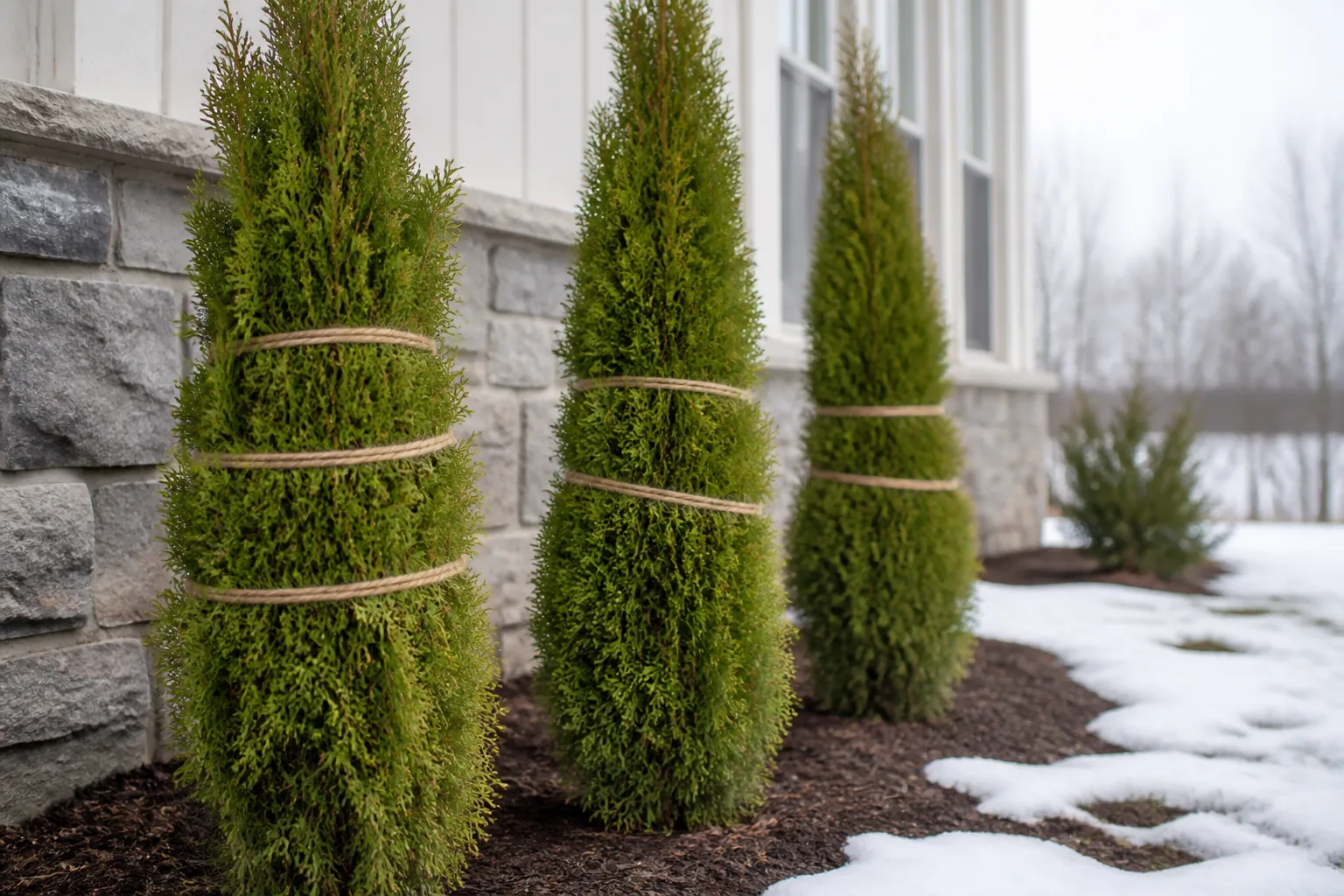
Broadleaf evergreens on the sunny or windy side of a property are frequent candidates for a screen. Newly planted needled evergreens may also benefit from loose tying before a snowstorm and a breathable windbreak during the most exposed part of winter. Birds & Blooms’ horticultural guidance specifically calls out broadleaf evergreens, hemlocks, less hardy new evergreens, and shrubs exposed to drying wind and winter sun.
Do not cover a healthy evergreen automatically just because it is green. Check whether the plant is actually exposed, whether it has shown winterburn before, and whether watering and a windbreak address the risk more cleanly. A cover is a tool for a vulnerable situation, not a requirement for every evergreen.
Container-grown shrubs
The roots of a shrub in a container are surrounded by a relatively small volume of soil and are more exposed to air temperature than roots in the ground. A plant that is hardy in the landscape may not be hardy in an above-ground pot through the same winter.
The first choice is a sheltered, unheated garage, shed, greenhouse, or protected structure that keeps the plant cold enough to remain dormant without exposing the root ball to repeated deep freezes. If the container must stay outside, group pots in a protected location, insulate the container itself, and protect the canopy only as the plant and forecast require.
Do not bring a dormant outdoor shrub into a warm living room without a plan. Warmth can break dormancy at the wrong time, reduce light, and create a watering problem. Container shrubs need protection for the root ball as well as the stems; a cover over the top alone leaves the most vulnerable part exposed.
Choose the protection that matches the threat
Before buying a shrub jacket, name the problem in one sentence: “I am protecting this plant from frozen roots,” “I am blocking drying wind,” “I am keeping salt off the foliage,” or “I am excluding rabbits.” That sentence makes the material choice much easier.
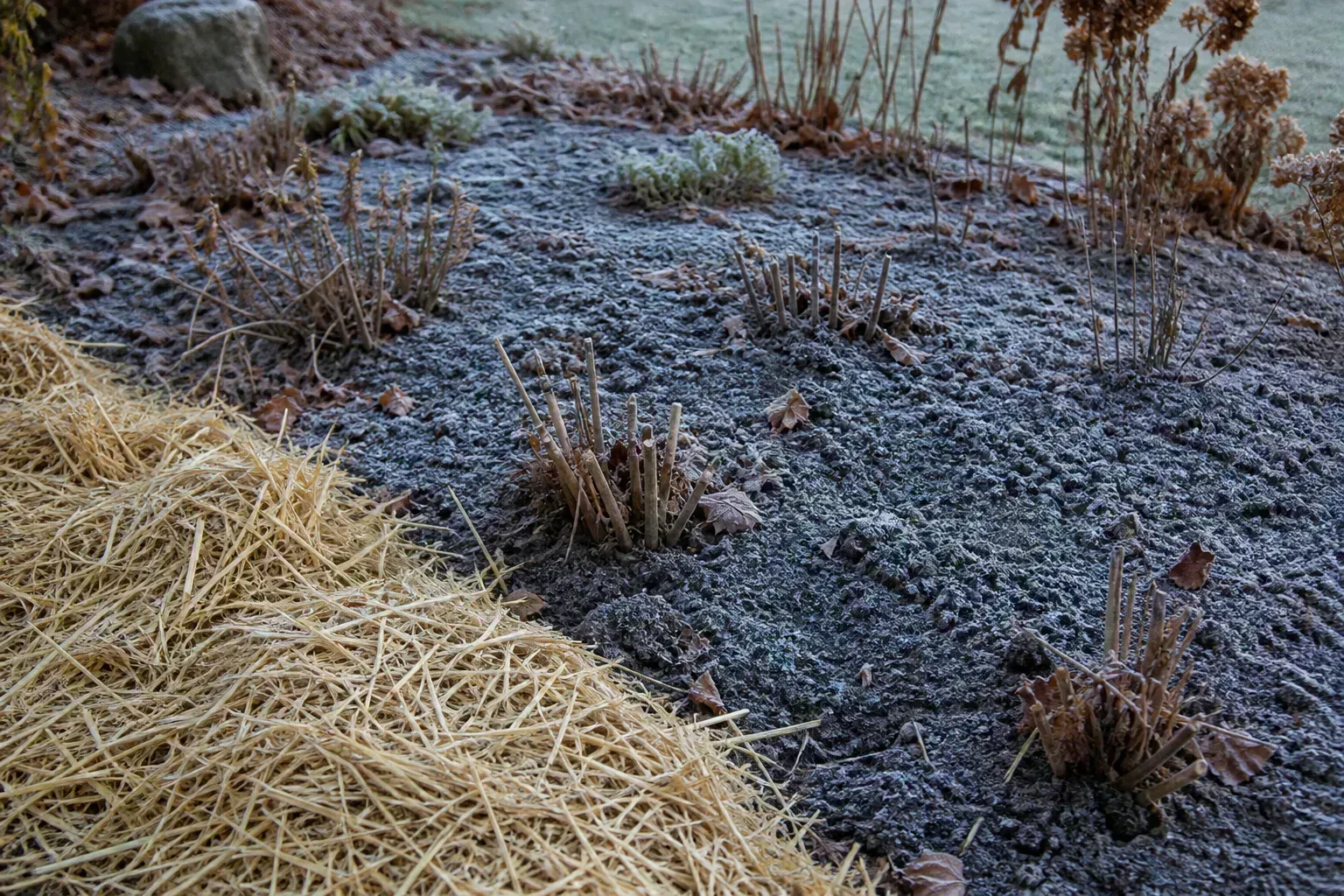
Root-zone protection: water and mulch
Water shrubs deeply during a dry fall and continue checking soil moisture until the ground freezes. Watering several hours before a forecast freeze can help when the soil is dry, but do not water into frozen ground or leave the site saturated. Southern Living Plants recommends deep irrigation after light frosts and notes that evergreens may still need occasional water during dry winter periods when the soil is not frozen.
Apply about 3 to 4 inches of bark, shredded leaves, pine straw, or another suitable mulch over the root zone after the ground has cooled or frozen. Keep the mulch a few inches away from trunks and stems so the base stays ventilated and rodents are not given a damp, protected hiding place. Mulch moderates soil temperature and moisture; it does not protect the exposed foliage from wind.
Windbreaks and shade screens
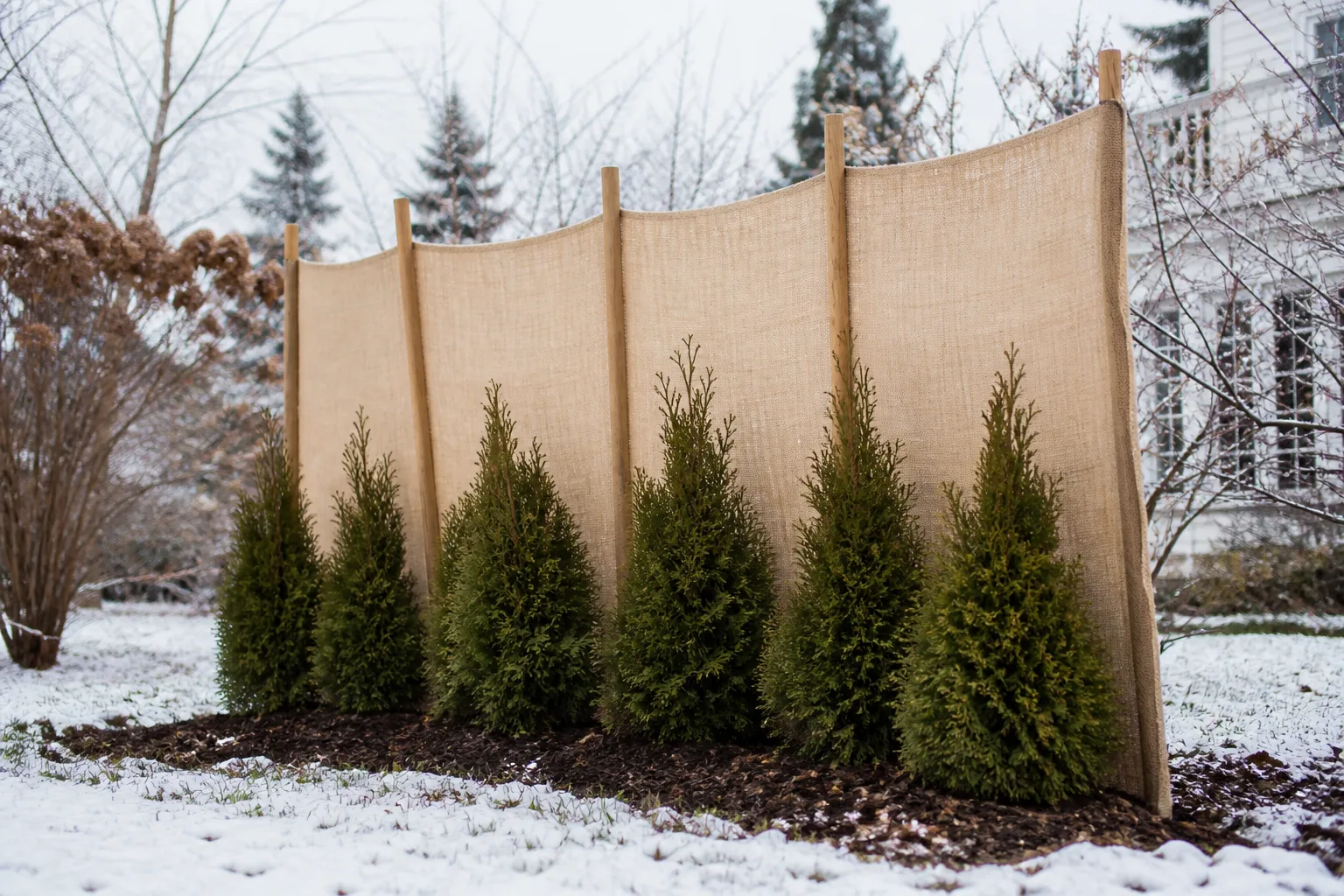
A windbreak is often the best answer for a shrub that is hardy but planted in an unforgiving location. Install stakes on the side facing the strongest wind or winter sun and attach burlap, canvas, or landscape fabric so the barrier blocks the blast without collapsing onto the plant.
Do not treat a windbreak like an opaque box that must surround the shrub on every side. Leave space for ventilation and inspect after storms. A screen can also reduce salt spray from a road and shade the foliage during sharp temperature changes, especially on the south or west side of an exposed planting.
Burlap or breathable shrub covers
Burlap and purpose-made shrub covers are useful when a plant needs temporary protection from wind, salt spray, browsing, or a short freeze. Choose a cover large enough to reach near the ground without crushing branches, and secure it with stakes or twine rather than cinching it tightly around the stems.
Plastic is a poor default for an outdoor shrub. It can trap moisture against foliage, heat rapidly in daytime sun, and create sharp temperature swings. If a temporary emergency sheet is the only option for a brief freeze, keep it off the foliage with a frame and remove it as soon as the event passes; use a breathable cover for longer protection.
Check the plant during mild weather. If the fabric is wet inside, rubbing branches, or collecting snow, correct the setup rather than assuming more layers are safer. Savvy Gardening’s practical guidance also recommends drying reusable covers before storing them, which prevents a damp roll from becoming a moldy one.
Wildlife barriers need different mesh
For deer, build a barrier they cannot reach over or push through; a short fabric wrap is only useful if the shrub is small and the cover is secure. For rabbits, use a lower fence with narrow openings and extend it to the soil. For mice and voles, use quarter-inch hardware cloth in a cylinder around the plant, fastened at the seam and secured at ground level.
Leave a small gap between metal mesh and the stems so rubbing does not injure bark. In the Wisconsin Extension demonstration, the bottom edge is secured closely to the soil, and a little soil or bark can help close a tunneling gap. Wear thick gloves and eye protection when cutting hardware cloth because the cut edges are sharp.
How to cover a shrub without causing new damage
Covering is a setup task, not a single motion. Water first if the soil is dry and still workable, remove dead or broken material only if it is safe and appropriate, and check that the shrub is not carrying a pest or disease problem that the cover would conceal.
For a temporary freeze, place stakes around the plant and drape a breathable sheet, frost cloth, or burlap over the frame. Extend the material close to the ground so it can hold some of the warmth radiating from the soil, but leave the fabric loose enough that branches are not bent and air can move.
For a winter windbreak, cover only the windward or sunny side when that is enough. For snow-prone upright evergreens, loosely tie branches together from the base upward before the storm so they catch less snow, then remove the tie when the threat has passed. Do not use wire or tight cord that can cut into stems as they move.
Label or photograph the setup if you have several shrubs. That small step helps you remember which barriers protect foliage, which protect roots, and which are there only for animals, so you do not leave every material in place until spring.
Timing: when to cover and when to remove it
Do the preparation before the damaging event, not after the branches are already bent or the foliage is brown. Finish fall watering while the soil can absorb it, apply root mulch after the season’s growth has slowed, and install a windbreak before the first forecast that combines dry wind, bright sun, and freezing temperatures.
There is no universal calendar date for covering. Use local weather, plant dormancy, and the shrub’s exposure. A temporary sheet or blanket can go on for a single hard freeze and come off after temperatures moderate; a burlap screen can remain longer if it is dry, loose, and ventilated.
Remove covers when the danger that required them has passed and spring growth is beginning. Open or remove fabric during mild daytime weather if the plant is warming inside it, and check that branches have not rubbed or broken. Take down wildlife cages when browsing pressure falls and alternative food becomes available, while keeping a barrier longer if local conditions still show active damage.
What to do after snow, ice, or a cold snap
Inspect the shrub from the ground first. If light, loose snow is bending branches, gently brush it off with a broom or your arm using an upward motion; do not yank individual branches downward. Birds & Blooms advises against shaking snow or ice because the movement can break already stressed wood.
Leave a coating of ice alone unless a trained professional is handling a dangerous situation. Ice is bonded to branches, and trying to knock it off can cause more damage than the storm. Keep people away from large broken limbs over paths, roofs, or driveways and arrange professional help when the work is beyond safe reach.
After a freeze, do not prune every brown tip immediately. Some foliage may recover, and live buds may be hidden under damaged growth. Wait until the extent of dieback is clear, then scratch-test small stems or look for swelling buds and make clean cuts only where tissue is clearly dead or broken.
If damage appears on the road-facing side, suspect salt spray; if it is on the sunny or windy side, suspect winterburn or sunscald; if bark is chewed at the base, suspect rodents or rabbits. Matching the pattern to the cause tells you what to change next winter instead of simply adding a larger cover.
Conclusion: protect the shrub, not your routine
You usually do not need to cover a mature, hardy shrub just because winter is cold. Cover or screen the plants with a specific vulnerability—young roots, marginal hardiness, evergreen foliage, exposed wind, salt spray, heavy snow, containers, or wildlife—and start with water, mulch, shelter, or a barrier when those options solve the problem more directly.
Use breathable material, keep it loose, support it so it does not rub, inspect it during mild weather, and remove it when the reason for protection ends. That approach gives shrubs useful winter help without turning a normal seasonal change into a full-yard wrapping project.