Do Wasps Die in Winter? What Happens to Wasps
Most social wasps die in winter, but new queens survive in sheltered spots. Learn how to read activity, respond safely, and prevent spring nests.
The short answer: most workers die, but queens survive
Yes, most social wasps die as winter arrives, but “wasps die in winter” is only half the answer. In a typical temperate-climate colony, the workers, males, and the old queen do not make it to spring. A small number of newly mated queens leave the season’s colony, find sheltered places, and wait out the cold before starting new colonies when conditions improve.
That distinction explains two observations that seem contradictory: the papery nest outside can be empty while a single wasp appears indoors in January, and a mild spell can bring a dormant queen out of hiding without reviving the old colony. The queen is not keeping last year’s nest alive; she is surviving separately so the next generation can begin elsewhere.
There is no dependable universal temperature at which every wasp dies. Species, latitude, shelter, the length of a cold snap, and whether an insect is inside a protected wall void all matter. University extension guidance describes the usual pattern as a one-season colony with overwintering queens, while noting that some mild climates can support longer survival in unusual circumstances. (UC Integrated Pest Management and Penn State Extension)
What winter does to a wasp colony
A social-wasp nest is a seasonal workplace, not a permanent apartment. During warm months, the queen lays eggs while workers gather protein for larvae, collect sugary food for adults, maintain the nest, and defend the entrance. As days shorten and food becomes less available, colony growth slows, reproduction changes, and the nest’s social system begins to wind down.
Workers and the old queen reach the end of the season
Workers are built for the active season. They forage, feed larvae, defend the nest, and regulate the colony, but they are not the individuals selected to overwinter. Males also have a short seasonal role: they mate with future queens and do not become the next spring’s workforce.
The old queen generally dies with the colony rather than retreating to reuse the nest. This is why a large nest that was buzzing in late summer can look completely still after sustained cold. The nest may remain attached to a soffit or tree for months, but the paper structure itself is not evidence that live wasps are inside.
Cold weather is only part of the seasonal story. Falling temperatures reduce flight and slow feeding, while the loss of flowers, prey, and sugary food removes the energy that supports a large colony. In late summer and fall, yellowjackets may seem more noticeable around drinks, ripe fruit, garbage, or pet food because their foraging changes as the colony matures. (UC IPM)
Mated queens carry the next generation through winter
Near the end of the season, a colony produces reproductive queens and males. After mating, the new queens leave the nest and select protected places where they can remain inactive through the coldest part of the year. In spring, a surviving queen emerges, feeds, chooses a nest site, and begins the first cells of a new colony.
This is overwintering, not colony hibernation in the sense of the entire nest sleeping together. The queen is usually alone. She is not storing a supply of honey or preserving a paper nest with a group of workers; she is conserving energy in a protected crevice until weather and food make activity possible again.
The difference matters when you find an old nest. Removing a dead nest does not remove every future wasp from the property, because next season’s queen may be somewhere completely different. It can still be useful to repair the opening or sheltered spot that made the location attractive, but only after you are confident no live colony is using it.
Not every “wasp” follows exactly the same winter script
“Wasp” covers many species with different nesting habits. Solitary mud daubers, social paper wasps, yellowjackets, bald-faced hornets, and true hornets do not all create the same level of risk or respond to winter in exactly the same way. Treat the life-cycle answer as a useful pattern, then read the insect’s behavior and nest location before choosing a response.
Paper wasps, bald-faced hornets, and aerial nests
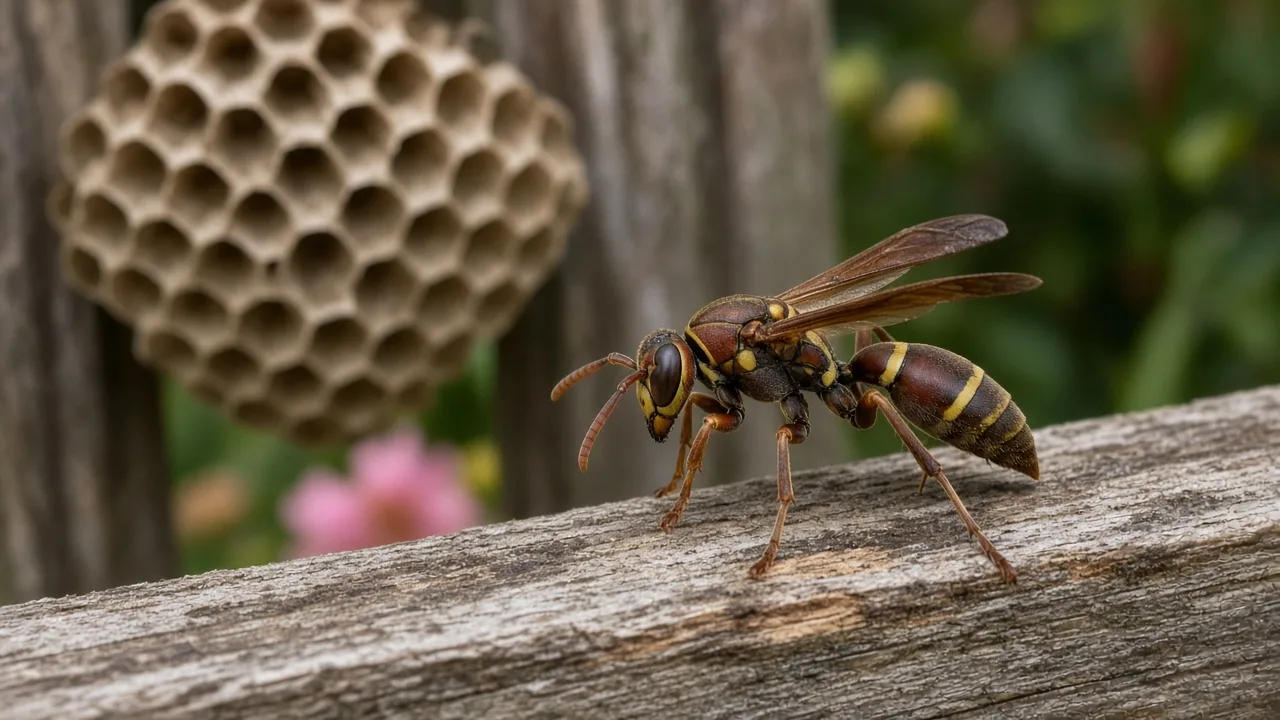
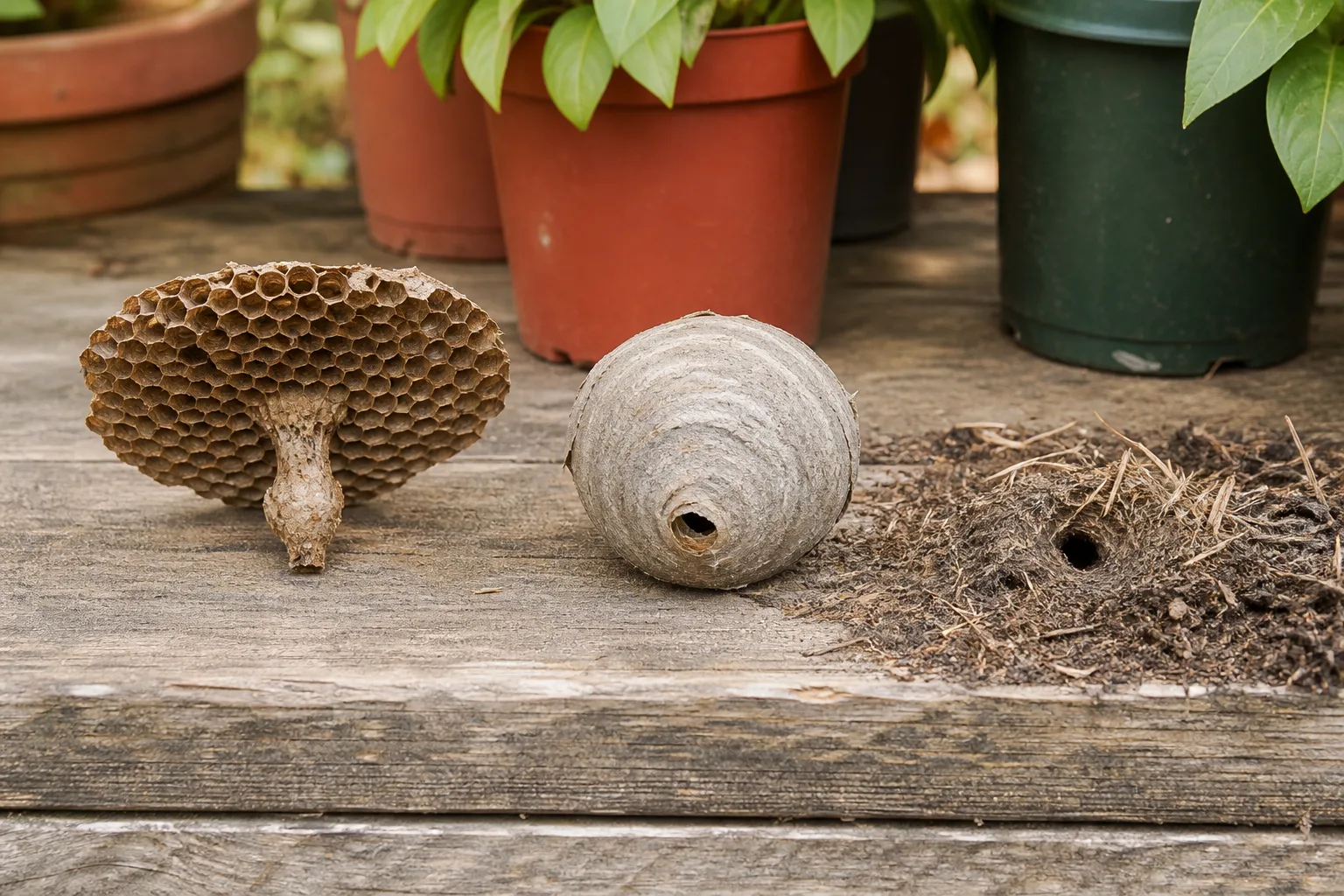
Paper wasps often build open-comb nests beneath eaves, porch ceilings, railings, overhangs, or other protected surfaces. Bald-faced hornets build enclosed paper nests, often in trees or on buildings, and can defend them strongly when disturbed. Both kinds usually have annual colonies in colder regions, so the adults in the nest die off as winter progresses.
An old, weathered aerial nest with no traffic is usually a low-priority object. A nest attached above a doorway is still worth removing or addressing once it is inactive, because its location can make a new founding queen’s choice more likely next spring. Do not assume that a nest’s exposed position makes it safe to knock down while temperatures are merely cool; a warm afternoon can activate insects, and a hidden part of the colony may not be visible from the ground.
Paper wasps are also common indoor overwintering visitors. The University of Minnesota Extension notes that paper-wasp queens can enter homes while looking for overwintering sites, and that the occupants of old nests do not survive freezing temperatures or reuse the nest. (University of Minnesota Extension)
Yellowjackets and mild-winter exceptions
Yellowjackets often nest in the ground, in rodent burrows, under landscape edges, or inside wall and ceiling cavities. Their nests can be much harder to inspect than an open paper-wasp comb, and some colonies become large enough that a disturbance at the entrance triggers a defensive response even in cool weather.
In most regions, the colony is annual and the new queen is the winter survivor. In very mild climates, however, some yellowjacket colonies may persist longer than expected. UC IPM specifically notes that multi-year survival can occur in very mild winters and in some coastal areas, so a winter sighting in a warm region deserves more caution than a single sluggish insect in a cold-climate home.
Solitary wasps are another reason not to treat every nest as a yellowjacket emergency. Mud daubers build hard mud cells and generally do not defend their nests the way social wasps defend colonies. If you cannot identify the insect or the nest, use distance and behavior as your first safety tools rather than guessing from color alone.
Where a winter-surviving queen hides
The best winter shelter is not necessarily the warmest place. A queen needs protection from wind, repeated freezing and thawing, excess moisture, and predators. She may use a narrow natural crevice that stays relatively stable rather than an exposed sunny surface that warms quickly and cools just as quickly.
Outdoor shelters that buffer cold and moisture
Common outdoor shelters include loose bark, cracks in logs, leaf litter, dense plant debris, soil near a protected foundation, rock gaps, hollow stems, and undisturbed corners of sheds or garages. The exact choice varies by species and region. A queen does not need a visible nest to be present, and finding one sheltered insect does not tell you where every other queen is hiding.
Avoid turning winter cleanup into a blind search for queens. Raking, moving wood, cutting dense ornamental grasses, or opening a shed can disturb overwintering insects as well as spiders, beetles, and other beneficial wildlife. Wear gloves and closed shoes for ordinary yard work, lift debris with a tool when possible, and pause if you see a concentrated group of insects rather than continuing to investigate with your hands.
The ecological side is easy to miss in a pest-control conversation. Adult wasps visit flowers for nectar, and many species hunt caterpillars, aphids, flies, and other insects for their larvae. Penn State Extension describes social wasps as both potential pollinators and important predators, while also warning that nest defense makes the insects a different management problem when a colony occupies a doorway, wall, or play area. (Penn State Extension)
Why wasps sometimes end up inside homes
Homes offer the kind of narrow, protected void a queen may be seeking: gaps around siding, soffits, window trim, vents, attic edges, chimney flashing, or wall penetrations. A wasp can enter during fall and remain hidden until a warm sunny day or indoor heat makes it active enough to crawl toward a window.
Indoor sightings do not always mean a nest is inside the living space. A queen may be sheltering in the wall or attic, or she may have entered through a small crack and become trapped between the glass and screen. On the other hand, several wasps appearing from the same vent, light fixture, ceiling seam, or wall opening are evidence that the building itself needs attention.
How to read winter wasp activity
The most useful winter question is not “Is the wasp alive?” It is “What pattern of activity is this?” A lone insect on a windowsill, a nest with no traffic, and a steady stream from one hole are three different situations with three different levels of risk.
One slow wasp near a sunny window
A single sluggish wasp near a window or bright wall is consistent with a queen that has been warmed out of inactivity or is trying to reach light after emerging from a sheltered spot. Do not pick it up, swat it, or assume that cold air makes it harmless. A lethargic insect can still sting if pressed against skin, trapped in clothing, or grabbed.
Close the room to children and pets, keep your face and hands away, and give the insect a clear route to an exterior door or window only if you can do so without getting close. If it is moving slowly on a flat surface, a jar-and-cardboard capture can work for someone comfortable with the distance and control involved. If the insect is active, you are allergic, or the room cannot be safely isolated, stop trying to catch it and use a qualified pest professional.
Do not fog or spray the entire room for one winter visitor. Indoor insecticides can create unnecessary exposure, stain surfaces, or kill an insect without addressing the crack that allowed it inside. A photo from a safe distance can help an extension office or professional identify whether the insect is likely a paper wasp, yellowjacket, hornet, or a harmless look-alike.
Repeated sightings or traffic at one opening
Several wasps over multiple days deserve more attention, especially if they appear from the same location. A steady flight path through a soffit, vent, wall seam, ceiling light, or attic opening suggests a nearby nest or cavity, not a series of unrelated queens. A warm spell can make hidden insects active, and indoor heat can keep a protected colony operating longer than outdoor conditions would suggest.
Repeated activity also changes the risk calculation. A nest in a quiet shed may be tolerable for a short time; a nest beside a bedroom, kitchen, front door, child’s play area, or pet run is more likely to be disturbed. Watch from a safe distance, note the entry point and time of day, and keep people away rather than probing the opening to “see what is inside.”
Never seal the visible hole while wasps may still be using it. Penn State Extension warns that wasps can excavate a new route, and a new route inside a home is a worse outcome than the original exterior entry. The correct sequence is to identify and treat the colony safely when necessary, remove or clean the nest material if the structure requires it, and then repair the entry point.
What to do if you find a wasp indoors
Start with the lowest-risk action: create space. Move children and pets out of the room, close interior doors, and avoid sudden movements, swatting, or crushing the insect. If the wasp is flying, do not chase it around the room; that increases the chance of trapping it against your body or losing track of where it lands.
If it settles and you can work from the side without leaning over it, place a clear container over the insect, slide stiff paper or thin cardboard underneath, and cap the container before carrying it outside. Release it away from doors, windows, play areas, and outdoor eating spaces. If the insect becomes fast or defensive, abandon the capture attempt; a professional response is cheaper than a sting reaction or a hidden colony disturbed by accident.
If the insect is on a curtain, high wall, light fixture, or ceiling, do not climb a ladder while trying to manage a stinging insect. Do not use a vacuum unless you have no safer option and understand that the insect may remain alive inside; a vacuum also does nothing to find the entry point. Repeated indoor wasps, visible wall traffic, or wasps emerging from a fixture should be handled as a building-entry problem, not a one-insect problem.
Anyone with a known sting allergy should not attempt removal or nest treatment. After a sting, wash the area with soap and water and use a cold compress for ordinary local discomfort; seek urgent medical care for trouble breathing or swallowing, widespread hives, severe swelling, vomiting, dizziness, or other signs of a serious reaction. Penn State Extension’s current guidance also stresses that wasp stings can be repeated and that protective behavior matters more than trying to prove how cold or slow the insect is. (Penn State Extension stinging-insect guidance)
What to do with an old nest and how to prevent a repeat
An old paper nest with no insect traffic is usually not a live winter colony, and social wasps generally do not move back into the same nest the following year. Ask Extension explains that old nests deteriorate on their own and that next season’s queens overwinter separately, then build new nests after spring activity begins. (Ask Extension)
That does not mean every winter nest should be knocked down immediately. A nest hidden in a wall, attic, roofline, or high tree is not a sensible do-it-yourself target just because the calendar says winter. An exposed, clearly inactive paper nest in an empty shed can usually wait for a calm, dry day when you can keep your body away from the nest and work from the ground; a nest over a door or in a cavity should be assessed more cautiously.
Seal and repair only after the nest is inactive
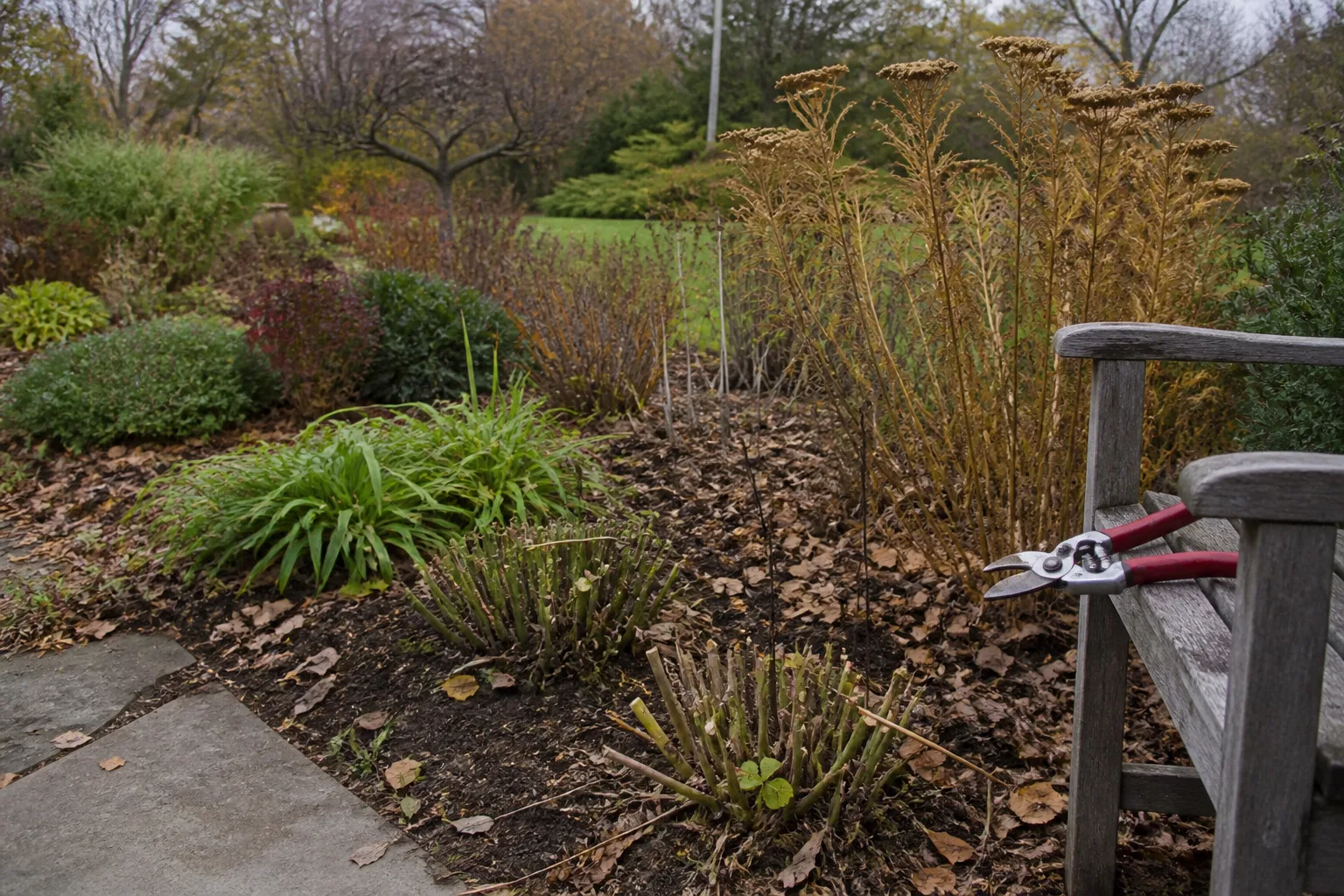
Winter is a good repair window after you have confirmed that wasp traffic has stopped. Repair loose soffits, torn screens, gaps around utility lines, damaged vent covers, and cracks where siding meets trim. Use a durable exterior repair appropriate to the material, and do not simply pack an active entrance with foam, caulk, dirt, or insulation.
The goal is not to make the house airtight in one afternoon. Work around the building methodically, and remember that blocking an exit can force insects into a room or a different void. If wasps are already emerging indoors, treat the entry and colony as a single problem; repairing only the outside hole can trap insects or redirect them into the living space.
Remove food, water, and easy shelter before spring
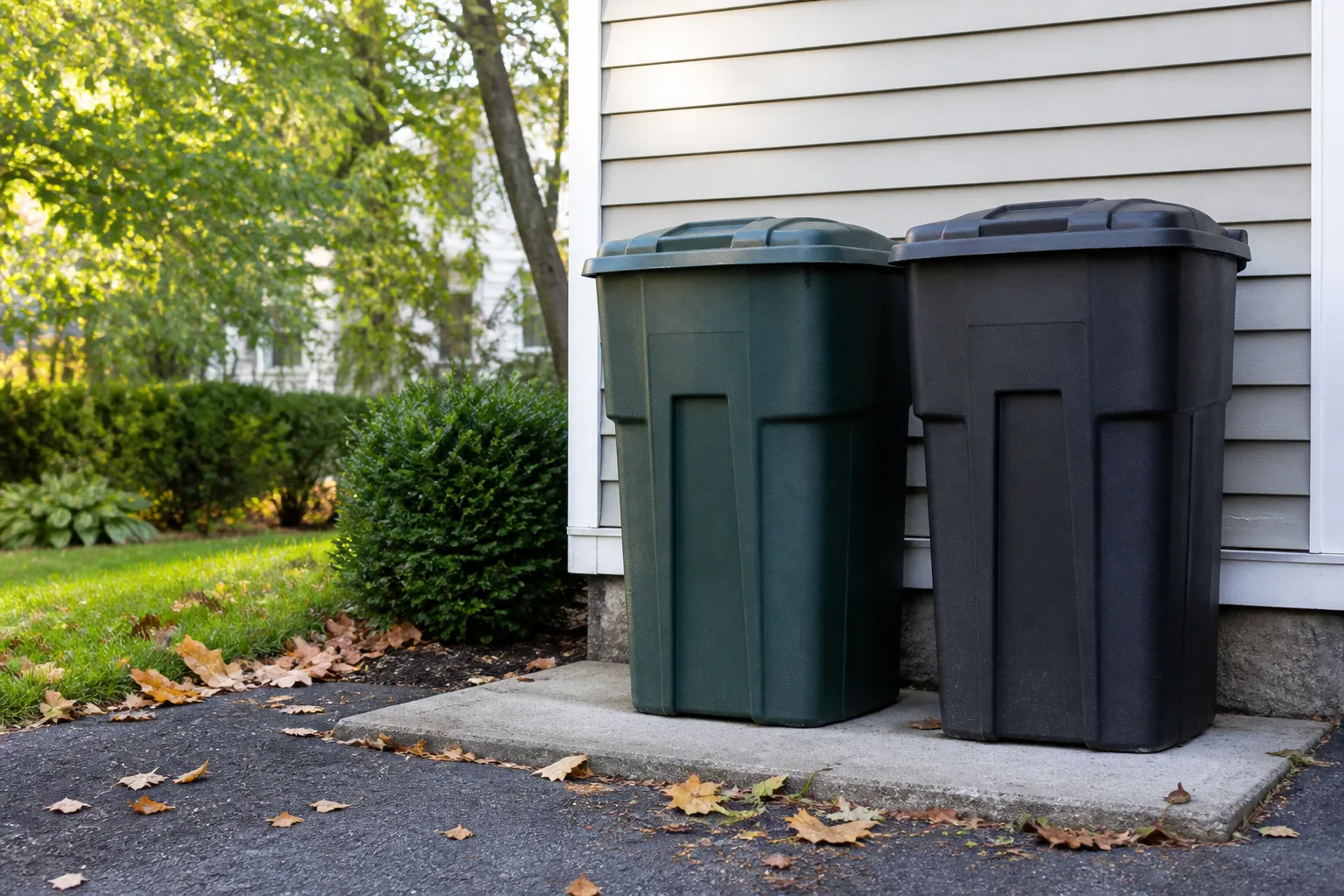
Prevention works best when it removes several small advantages at once. Keep garbage and compost lids tight, rinse sticky recycling, clean spilled drinks, pick up fallen fruit, and keep pet food indoors rather than relying on a scent repellent. Gardening Know How’s spring prevention guidance highlights sugary drinks, fallen fruit, meat, and insect prey as common reasons wasps continue to visit outdoor living areas. (Gardening Know How)
Fix dripping outdoor taps, leaking irrigation, clogged gutters, and puddles beside patios or walls. Do not eliminate every source of water or every flowering plant; instead, move avoidable attractants away from doors and seating, keep food covered, and place pollinator-friendly plantings where people are less likely to brush against foraging insects.
Reduce easy nesting opportunities by clearing clutter under porches and sheds, trimming vegetation away from vents, and repairing gaps before spring scouts begin inspecting the property. Be skeptical of guaranteed “wasp-repelling” plants, essential oils, or decoy nests. Penn State Extension notes that there is no clear evidence that decoy nests prevent social wasps from nesting, and UC IPM emphasizes that sanitation, distance, and careful nest management are more dependable than a single gimmick.
When a winter wasp problem needs a professional
Call a licensed pest professional when wasps are emerging from a wall, ceiling, attic, vent, or other structural cavity; when there is a large or concealed nest; when the nest is beside a door or high-traffic path; or when children, pets, or someone with a sting allergy cannot be kept away. Professional help is also the right choice if you cannot identify the insect and the response would require opening a wall, climbing, digging, or applying pesticide near people, pets, water, or edible plants.
Do not burn a nest, pour gasoline or another fuel into a ground nest, flood a wall, or improvise a pesticide mixture. These methods can injure people, contaminate soil or water, damage a building, and provoke insects without reaching the colony. If a pesticide is used, the product label—not a social-media recipe—controls the legal site, target pest, application method, protective equipment, storage, and re-entry instructions.
Professional does not automatically mean “eradicate every wasp.” A quiet nest far from daily activity may be left alone until the colony completes its natural cycle, while a hidden colony in a wall may require prompt treatment and removal of nest material. UC IPM recommends protecting social wasps when they are away from human and animal activity, but it also recognizes that yellowjacket colonies near homes and food areas can require a managed response. (UC IPM social-wasp management)
Conclusion
Most wasps do die in winter, but the colony’s new queens are the important exception. Workers, males, and the old queen usually die as the annual colony ends; mated queens survive alone in protected outdoor or structural shelters and emerge when spring provides enough warmth and food to start again.
Use the pattern of activity to decide what to do. One slow wasp near a bright window calls for distance and a careful, optional capture. A steady stream from one opening, a nest in a wall, or a nest beside people calls for isolation and professional assessment. An old, inactive nest can usually wait, and repairs, sanitation, and reduced shelter are most useful after the colony has truly gone quiet.