How to Get Rid of Ground Bees Safely (8 Steps)
Get rid of ground bees safely with eight pollinator-conscious steps, including nest identification, lawn repairs, bed barriers, and escalation signs.
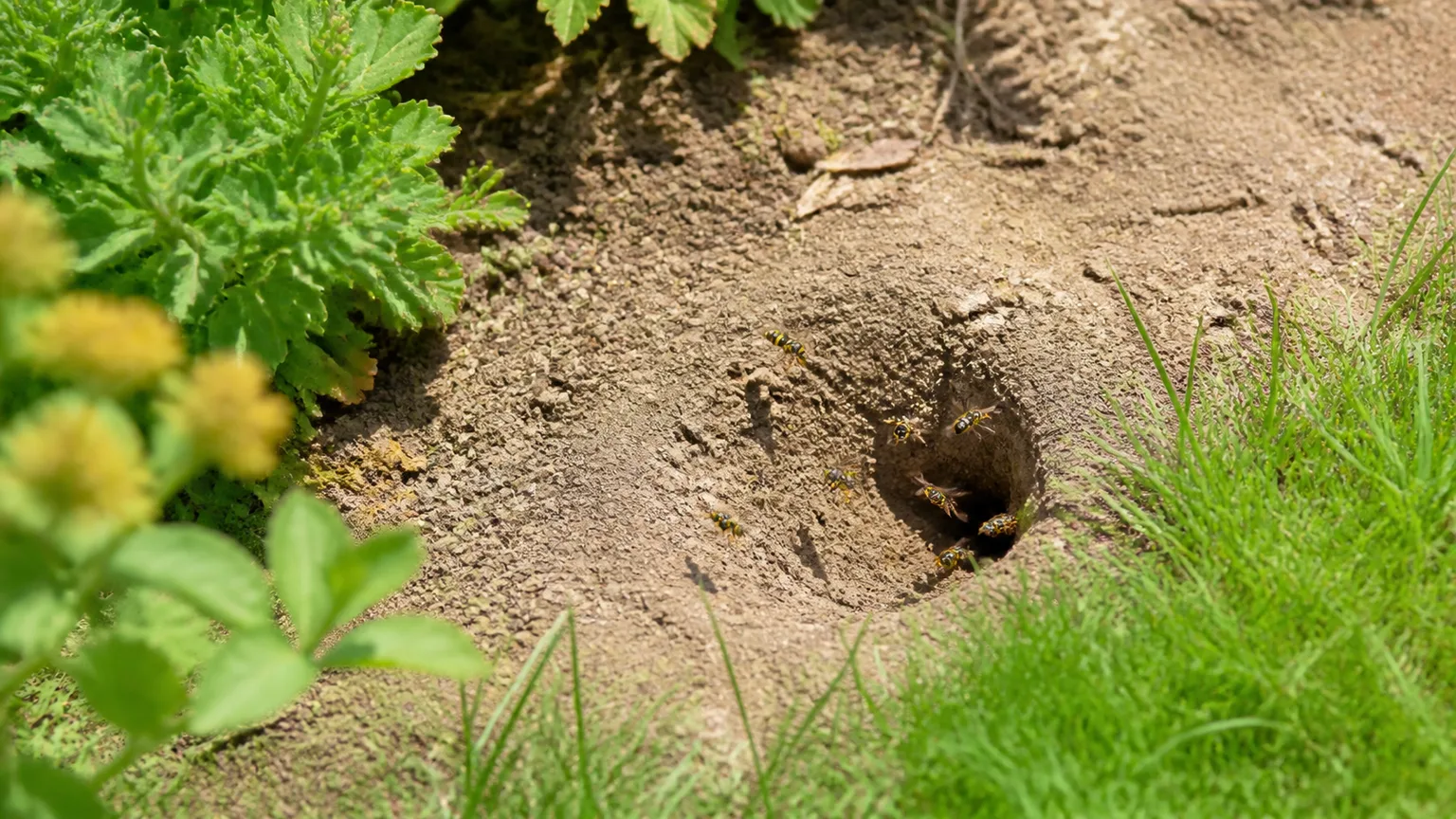
If small bees are hovering over holes in your lawn, do not start by pouring something into the ground. First decide whether you are looking at a solitary ground-nesting bee, a social bumble bee, or a yellowjacket nest that only gets called “ground bees.” Those insects require different responses, and the wrong one can turn a manageable yard problem into a sting hazard or contaminate soil that supports plants and beneficial insects.
For most solitary ground bees, the safest solution is to protect the active patch temporarily and make the site less attractive for future nesting after the adults finish. If the insects are aggressive, the entrance is beside a doorway or play area, or anyone in the household has a serious sting allergy, skip do-it-yourself removal and call a qualified local professional.
First Decide Whether Removal Is Needed
For the biology and pollinator context behind this decision, see NC State Extension’s ground-nesting bee overview.
For the biology and pollinator context behind this decision, see NC State Extension’s ground-nesting bee overview.
“Ground bees” is a broad yard term, not one species. About 70 percent of bee species are estimated to nest underground, and many of those are solitary: one female digs and provisions her own nest rather than defending a large colony. NC State Extension describes these bees as important pollinators that may gather in conspicuous aggregations even though the individual nests are separate.
That distinction matters because a patch of dozens or hundreds of entrance holes can look alarming while creating little direct risk when left alone. A bee that flies low over the soil is not automatically attacking you. The better first question is, are people or pets likely to step on, mow over, or block the entrances? If not, a short period of avoidance may solve the problem with no nest treatment at all.
Think of the location as a risk multiplier. A loose aggregation at the far edge of a sunny lawn is a very different management problem from a nest in the only route to the mailbox. The insects may be identical, but the second location justifies stronger exclusion or professional help because accidental contact is much more likely.
You also do not need a perfect species identification to make the first decision. You need enough information to separate a quiet, dispersed aggregation from a defensive, concentrated colony. Stay back, note how many entrances share the same small patch, and pay attention to whether the insects continue normal flight or repeatedly veer toward you.
Removal or stronger intervention becomes reasonable when the nest is in a narrow path, beside a frequently used door, under play equipment, or in a place where mowing cannot be avoided. It is also reasonable to seek help when the insects are repeatedly striking people, emerging from one large hidden cavity, or impossible to identify from a safe distance.
Identify the Insect Before You Act
Watch from several feet away on a warm, calm day. Do not kneel beside a hole, poke it with a stick, pour water into it, or catch an insect just to get a closer look. A phone photo taken from a safe distance can help a local extension office or licensed professional identify the visitor without putting you in the nest’s flight path.
Signs of a Solitary Ground-Nesting Bee
NC State’s current identification guide shows why the same lawn can host different ground-nesting genera with different adult activity periods.
NC State’s current identification guide shows why the same lawn can host different ground-nesting genera with different adult activity periods.
Solitary ground bees commonly leave small, round entrance holes with loose excavated soil or a low mound around the opening. You may see one bee enter and leave each hole, or many bees flying just above a patch of bare or thinly vegetated soil. Some species build in aggregations, so a dense patch does not necessarily mean one giant hive below the lawn.
The soil pattern is a clue, not proof. Ants may leave similar openings, and rodents can create larger openings with more obvious runways or disturbed soil. A hole that appears suddenly after rain, a void under a foundation, or a nest with insects entering one hidden cavity deserves a different assessment than a scattering of neat, shallow mounds in thin grass.
The bees vary widely in size and appearance. Mining bees may be small and dark or reddish, sweat bees can be tiny and metallic, and digger bees may look more like small bumble bees. NC State’s current ground-bee guide notes that activity varies by genus: some mining bees peak in early spring, while other ground-nesting groups fly later in the year.
Most solitary bees are not looking for a fight. They are focused on mating, collecting pollen, or provisioning brood cells, and they generally have no colony to defend. That is a reason to give them space—not a guarantee that every insect around a ground entrance is harmless.
Red Flags for Yellowjackets or Bumble Bees
For a practical comparison between native bees and social wasps, Savvy Gardening’s paper-wasp guide is useful background—but local identification still matters.
For a practical comparison between native bees and social wasps, Savvy Gardening’s paper-wasp guide is useful background—but local identification still matters.
Treat the site as higher risk if you see many wasp-like insects using one concealed opening, repeated defensive flights toward you, or activity that becomes more intense when the ground is disturbed. Yellowjackets are wasps, not bees; ground-dwelling species can use an old rodent burrow as a social nest and defend it. The distinction is important because social wasps can sting repeatedly and may respond quickly to mowing, digging, or blocking the entrance.
Bumble bees can also nest in the ground, often in an abandoned rodent cavity or another pre-existing space. A large, fuzzy bee moving in and out of one entrance is not the same situation as dozens of tiny mining-bee holes spread through a sunny lawn. Do not rely on color alone: body shape, nest architecture, number of insects using one opening, and their response to disturbance are more useful clues.
If you cannot tell whether the nest contains solitary bees, bumble bees, or yellowjackets, do not treat it as a simple lawn repair. Keep people away and ask an extension insect-identification service or a licensed pest professional for an assessment.
Make the Area Safe Today
You can reduce sting risk without touching the nest. The goal is to stop accidental contact while you gather information and decide whether the activity is temporary.
Mark Off the Nesting Area
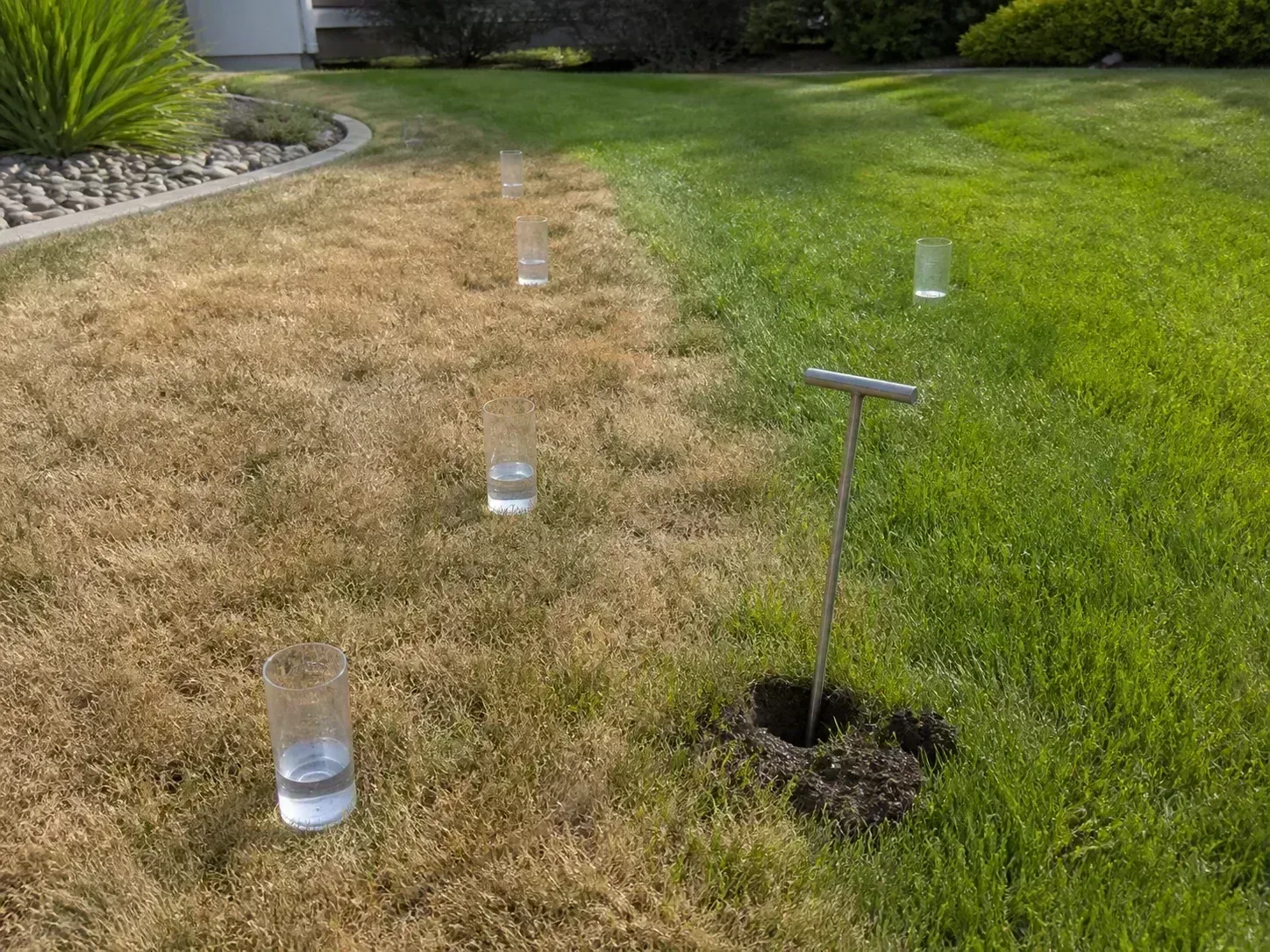
Use a temporary visual barrier well outside the active patch: a few garden stakes with bright flagging, a low fence panel, or patio furniture positioned so people naturally walk around it. Keep the barrier away from the entrances and do not press objects onto the soil. The barrier is for people and pets, not a way to seal the bees underground.
Reroute children, dogs, and lawn games before anyone starts work. If the patch borders a path, close the route and create a different approach with stepping stones or a temporary walkway. A simple change in traffic often solves the immediate problem while protecting the nest from foot pressure.
Pause Mowing and Cover Skin
Do not mow, edge, aerate, dig, or use a string trimmer over an active nest. Machinery is a vibration and contact risk, and it can also destroy the shallow soil entrances that females are using. Mow the rest of the lawn only when you can keep a wide buffer around the marked area.
When you must work nearby, wear closed shoes, socks, long pants, and a shirt that covers your arms. Avoid sudden swatting and do not put your hands into holes, rock piles, brush, or old animal burrows. These precautions are for the people in the yard; they are not a claim that every ground bee is aggressive.
Eight Safer Steps to Get Rid of Ground Bees
Use the steps below in order. The first step tells you whether time and exclusion are enough; the middle steps change the lawn or bed conditions; the final step is for a true hazard that cannot be managed by distance.
1. Observe the Activity Window
The NC State Extension account of ground-nesting bees documents activity from late winter into fall for different groups, which is why observation is more reliable than a fixed removal date.
The NC State Extension account of ground-nesting bees documents activity from late winter into fall for different groups, which is why observation is more reliable than a fixed removal date.
Record when the bees are active, how many entrances are in use, and whether the insects ignore you or investigate you. Check from a distance on several warm days rather than assuming that the first busy afternoon represents the whole season. NC State Extension documents ground-nesting activity across multiple genera and months, so a universal “they will be gone by” date is not reliable.
Many solitary bees have a short adult provisioning period. After females finish stocking brood cells, adults may disappear while immature bees remain underground. That means the visible activity can end without the nest being empty, and it is a poor reason to dig, till, or flood the area.
The practical decision rule is simple: if the patch is away from traffic and the insects are non-defensive, protect it and wait. If it is in a conflict zone, use the following habitat and traffic changes after you have identified the risk.
Keep a short note in your phone with the date, weather, approximate number of active entrances, and the location relative to paths or play areas. This prevents a common mistake: treating a single dramatic afternoon as proof of a permanent infestation. It also gives an extension specialist useful context if the activity continues or changes.
2. Reseed Bare Lawn
Repair bare or thin lawn areas once you can work without disturbing active entrances. Ground-nesting bees often choose exposed soil with sparse vegetation, and a healthy turf cover makes digging less convenient. Rake only as much as needed, match the seed to your local season and turf type, and keep people off the repair while it establishes.
Do not spread seed directly over an active nest as a reason to walk into the patch. The timing matters more than the seed brand. If the area is repeatedly bare because of shade, runoff, pet traffic, or compacted soil, fix that cause or the same nesting conditions may return beside the new grass.
3. Maintain Turf Without Flooding the Nest
Keep the surrounding lawn healthy enough to avoid a cycle of drought, thinning, and exposed soil, but do not use irrigation as a weapon. A long soak aimed at a nest can damage soil structure, wash contaminants into the yard, and harm non-target insects or plant roots. It also does not solve the identification problem if the insects are yellowjackets in a deeper cavity.
Water according to the needs of your turf, rainfall, soil, and local restrictions. Repair broken sprinkler coverage, reduce runoff on slopes, and avoid mowing so short that grass cannot shade the soil. These changes make the lawn more resilient; they are not a license to saturate a marked nest.
If you use fertilizer or a lawn pesticide for an unrelated problem, follow the product label and keep it away from flowering weeds and active pollinators whenever the label permits. A dense lawn is not worth creating a second hazard through careless chemical use. For a persistent bare spot, a soil test, shade-tolerant seed, erosion repair, or a planted border may solve more than repeated watering.
4. Mulch and Plant Ornamental Beds
Creating a covered bed does not mean eliminating every patch of nesting habitat. Savvy Gardening’s pollinator guidance recommends leaving some bare ground in a low-traffic part of a pollinator-friendly yard while using flowering plants to provide forage.
Creating a covered bed does not mean eliminating every patch of nesting habitat. Savvy Gardening’s pollinator guidance recommends leaving some bare ground in a low-traffic part of a pollinator-friendly yard while using flowering plants to provide forage.
In ornamental beds, replace broad exposed patches with an appropriate mulch layer and living plants after the active nesting period. Mulch reduces the amount of open soil available for new burrows, while layered plantings can stabilize the surface and make the bed more useful than a bare, frequently disturbed strip.
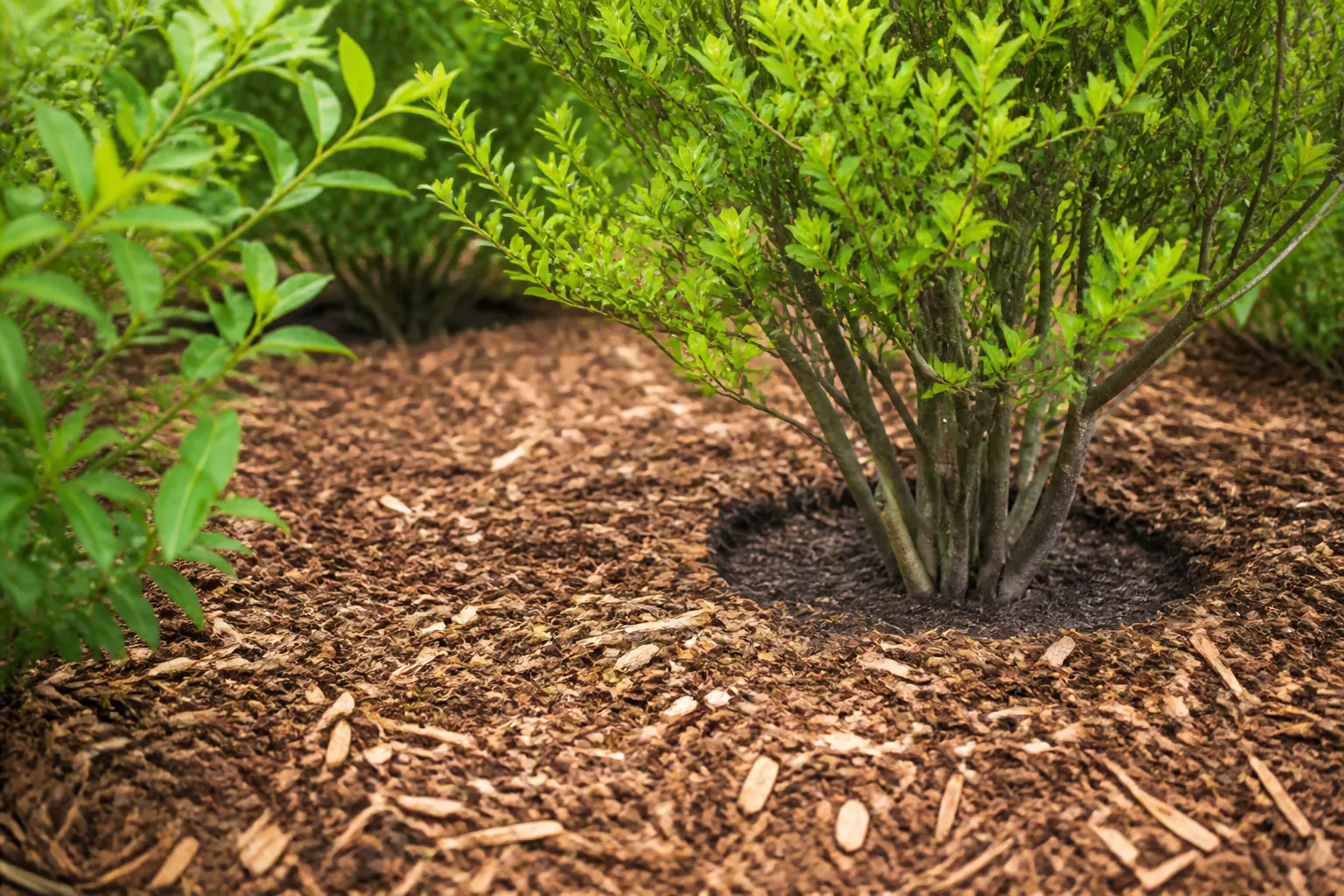
Keep mulch off plant crowns and trunks, and do not bury an active entrance. Thick, wet mulch piled against stems can create separate plant-health problems, so use enough to cover the bed without forming a volcano around each plant. If you want to support native bees elsewhere, reserve a low-traffic patch of bare, well-drained soil instead of trying to eliminate every open patch in the yard.
5. Use Landscape Fabric Selectively
Landscape fabric can be a reasonable barrier in a shrub bed or narrow strip that must remain covered, but it is not a universal answer. Install it only after you know the active nest is no longer being used, and cut generous openings around plants so roots, stems, and future maintenance are not trapped. Cover the fabric with a compatible mulch if the bed design calls for it.
Do not staple fabric across a live aggregation or drape it over an entrance while bees are coming and going. That can trap insects, complicate later identification, and create a reason for someone to approach the nest. Fabric also will not fix a bare lawn caused by compaction or poor irrigation; use it where a bed barrier genuinely fits the landscape.
Consider living cover or a well-designed hardscape where those options suit the bed better. Fabric can become exposed at the edges, collect weeds in the mulch above it, and make later planting awkward. Its best use here is a targeted surface barrier in a defined bed—not a shortcut for every hole in a yard.
6. Redirect Foot Traffic With a Design Change
If the nest is beside a path, solve the conflict at the path rather than attacking the soil. Move the route, add a stepping-stone line through a safer part of the bed, or use a low border that keeps feet and paws away from the entrances. This is especially useful when the activity is seasonal and the yard only needs a temporary detour.
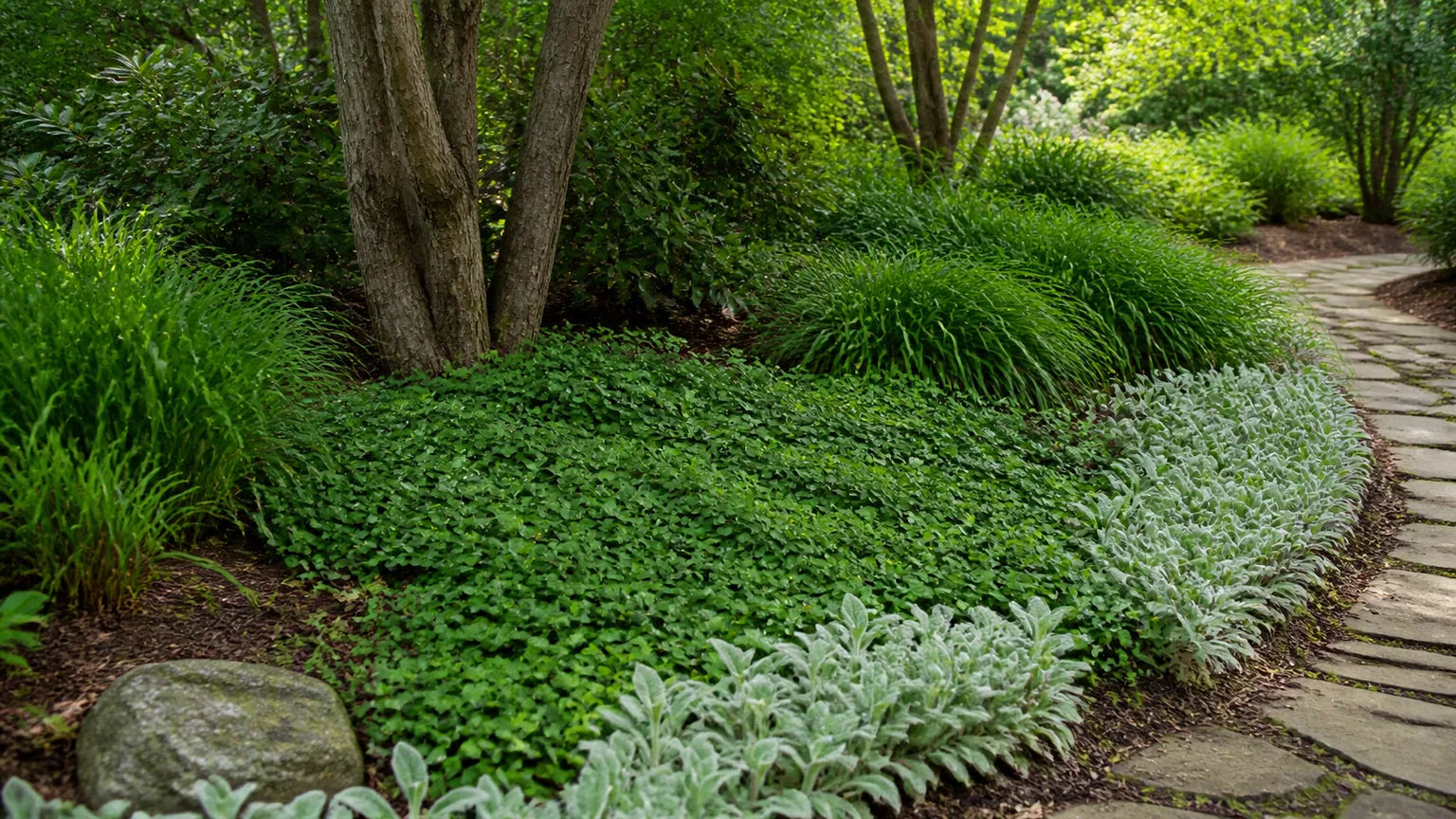
For a permanent redesign, combine durable groundcover or turf with a clearly defined walkway. Do not plant directly into an active aggregation just to cover it. Wait until the adults are no longer using the entrances, then prepare the site in a way that will not leave a fresh, bare strip beside the new path.
7. Cover or Disturb the Site Only After Activity Stops
Once you have observed no entrance use during several suitable warm, calm checks, inspect from the edge before doing any repair. The absence of bees on one cool or rainy morning proves very little. Look for the pattern of use over time, and if the site is important or unusual, ask an extension specialist before excavating.
Only then should you rake loose soil, repair turf, mulch a bed, or place a permanent surface over the area. Ground-nesting bees can spend their immature stages below ground, and digging can destroy developing brood even when no adult is visible. The safest long-term removal is often habitat conversion after the flight period, not a liquid poured into a live tunnel.
8. Use Professional, Label-Based Treatment for a True Hazard
The University of Georgia Cooperative Extension publication on urban ground-nesting bees explains how soil, compaction, floral resources, and urban design shape nesting habitat.
The University of Georgia Cooperative Extension publication on urban ground-nesting bees explains how soil, compaction, floral resources, and urban design shape nesting habitat.
If the nest is an active yellowjacket colony, a defensive bumble-bee nest in a high-traffic location, or a solitary-bee aggregation that cannot be avoided, call a licensed local professional. Ask the person to identify the insect, explain whether treatment is actually needed, and describe what product or non-chemical method they plan to use. Any pesticide use should be legal for that site and follow its label; “natural” is not the same as harmless.
Do not choose a contractor solely because they promise instant extermination. A good assessment should account for children, pets, allergic household members, nearby edible plants, drainage, and whether the nest can be left alone until activity ends. If relocation is realistic for the species and location, ask about that option; if not, the professional should still protect people and limit non-target exposure.
Before work begins, ask what insect they believe is present, how they reached that conclusion, and what will happen to the treated area afterward. A responsible provider should be willing to explain the product’s label directions, re-entry precautions, and non-target protections in plain language. If the answer is simply “all ground bees are pests,” get a second opinion.
What Not to Pour, Sprinkle, or Spray
Before using any liquid or dust, read NC State Extension’s warning about harmful attempts to destroy ground-bee nests and consider the soil and non-target consequences.
Before using any liquid or dust, read NC State Extension’s warning about harmful attempts to destroy ground-bee nests and consider the soil and non-target consequences.
Skip boiling water, soapy water, gasoline, vinegar mixtures, essential oils, cinnamon, and unlabelled insecticidal dusts as first-line treatments. Some may be repeated online as “natural” deterrents, but a strong smell or a household liquid is not a reliable identification-based control, and pouring liquids into soil can injure roots, earthworms, and other insects or move residues toward drains and groundwater.
The bigger problem is that these shortcuts do not tell you what is underground. A solitary bee tunnel, a bumble-bee cavity, and a yellowjacket colony are not interchangeable targets. NC State Extension specifically warns that environmentally toxic attempts to destroy ground-bee nests can poison soil and groundwater while killing beneficial pollinators that pose little threat when left undisturbed.
Do not stomp on entrances, plug holes with rocks while bees are active, or pour a product into a hole because the adults appear to have disappeared for a few hours. Do not use a pesticide off-label, mix products, or treat a flowering lawn without considering pollinators. If chemical control is justified, let a licensed professional choose and apply a product according to the current label and local requirements.
When to Call a Bee or Pest Professional
Get professional help before attempting removal when anyone in the home has a history of anaphylaxis, when the nest is beside a door or essential walkway, or when children and pets cannot reliably avoid it. Also call when insects chase or repeatedly strike people, when one entrance produces heavy traffic, or when you suspect yellowjackets rather than solitary bees.
For a mild, isolated aggregation away from traffic, a local Cooperative Extension office or insect-identification clinic may be the best first contact. For an inaccessible cavity, a nest inside a wall or structure, or a social stinging insect, use a licensed pest professional who can assess the site without sending you into the flight path.
For basic sting first aid and emergency warning signs, use MedlinePlus guidance on insect bites and stings.
For basic sting first aid and emergency warning signs, use MedlinePlus guidance on insect bites and stings.
If someone is stung, move away from the nest first. Wash the area with soap and water, use a wrapped cold pack for short intervals, and follow that person’s existing allergy plan. MedlinePlus advises urgent emergency care for trouble breathing, wheezing, throat tightness, difficulty swallowing, faintness, or swelling of the face or mouth; call emergency services and use prescribed epinephrine if the person has it.
Conclusion
The safest way to get rid of ground bees is to match the response to the insect and the location. Identify from a distance, mark off an active patch, stop mowing over it, and give a non-defensive solitary aggregation time to complete its short above-ground phase. Then reseed bare lawn, cover ornamental-bed soil, redesign the traffic route, or use a selective barrier after activity stops.
If the insects are yellowjackets, defensive bumble bees, or an unavoidable hazard for someone with a serious allergy, do not experiment with boiling water, cinnamon, or pesticide dust. Hand the identification and treatment decision to a qualified professional, and keep the yard safe while they do it.