How to Deadhead Roses at the Bud Eye
Learn how to deadhead roses at the bud eye: choose the right leaf set, cut cleanly, protect young plants, and know when to leave rose hips.
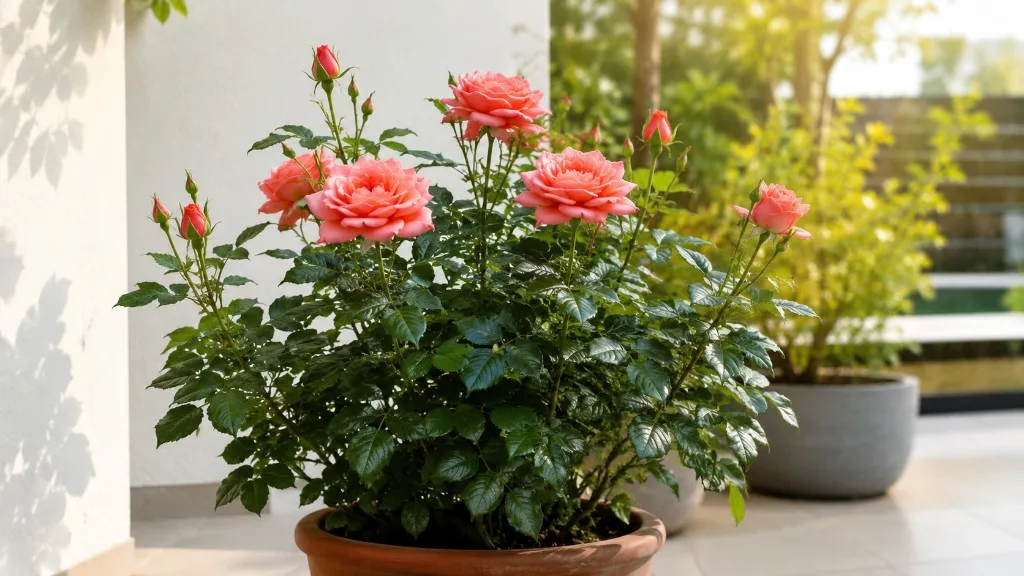
The safest default for how to deadhead roses is simple: remove the faded flower, follow its stem down to a healthy bud eye, and cut just above that bud. On an established repeat-flowering bush, the bud is often beside a strong five-leaflet leaf set. The leaf count is a helpful landmark, not a command to strip away every leaf above it.
The right cut depends on more than the brown bloom in front of you. A floribunda cluster, a first-year rose, a climbing rose, and a once-flowering rambler all need slightly different treatment. The Royal Horticultural Society notes that many roses repeat into autumn and benefit from deadheading, while some should be left to form hips later in the season. RHS rose-growing guide is a useful reminder that the plant’s flowering habit should decide your timing.
The short answer: cut above the right bud, not just the flower
When a rose has finished blooming, do not merely pull off the petals. Remove the spent flower head and a short section of stem, making a clean cut about one-quarter inch above a healthy bud eye. Leave the bud, the leaf below it, and enough green foliage for the plant to keep making energy.
For a vigorous, established bush rose, choose a bud that points away from the center of the plant. A new shoot from that bud is more likely to grow into open space instead of crossing the middle and crowding the canopy. The Cooperative Extension answer on Ask Extension gives the practical five-leaflet target; in the garden, combine that target with the bud’s direction and the stem’s strength.
Make the cut with a slight angle away from the bud. The angle can help water run off the cut surface, but the more important decisions are choosing living tissue, avoiding the bud itself, and not removing more foliage than the plant can replace. If the stem is thin, the plant is stressed, or the rose is young, stop higher rather than forcing a textbook five-leaflet cut.
First identify what kind of rose you have
The same deadheading rule does not fit every rose. Before you cut into a long stem, watch how the plant flowers and how it grows. A rose that produces new flushes all summer can use deadheading to return to flower production; a rose that flowers once may be finished for the year and preparing fruit or next year’s flower wood.
Repeat-flowering bush roses
Hybrid teas and grandifloras usually carry large individual flowers on long stems. They respond well to a deliberate cut back to a sturdy, outward-facing bud, especially when the upper stem is thin enough that the next flower would flop. A deeper cut can take longer to return to bloom, but it often gives the replacement shoot better support.
Floribundas produce sprays of flowers that open at different times. Remove one brown flower while the neighboring buds are still opening, then remove the whole finished spray when the cluster is done. Modern shrub and landscape roses often need an even lighter hand: remove conspicuous old clusters and awkward tips, but do not turn a naturally rounded shrub into a row of bare stubs.
Climbers, ramblers, and once-flowering roses
The easiest visual clue is flowering time. RHS climbing-rose guidance explains that climbing roses commonly repeat through summer and into autumn, while ramblers usually produce one main display around early summer. That difference matters because a repeat-flowering climber can be cleaned up during the season, whereas a once-flowering rambler may be carrying future flowers on the stems you are tempted to shorten.
On a climber, the flowering growth is usually a side shoot, or lateral, coming from a permanent framework cane. Deadhead the lateral and preserve the main cane. Do not treat a supported climber like a hybrid tea bush by cutting its long framework back to a low five-leaflet leaf.
If you cannot identify an inherited or unlabeled rose, make the smallest useful cut: remove the old flower head and avoid deep summer pruning into a long cane. A little untidiness is easier to correct than a missing cane that would have carried next year’s flowers.
Self-cleaning and hip-producing roses
Some landscape roses shed their petals and continue flowering without regular deadheading. If yours stays tidy and keeps making buds, the job is optional. Remove a few unattractive heads for appearance, but do not spend an hour chasing every petal through a thorny shrub that is already performing well.
Other roses are worth leaving alone because the spent flowers develop into rose hips. Hips add autumn and winter color and can feed birds. The RHS recommends stopping deadheading hip-bearing roses in mid-summer so the fruit has time to form. You can compromise by removing the worst-looking heads while leaving selected flowers to fruit.
What deadheading removes—and what it cannot change
Deadheading removes a flower before the plant invests further in its fruit. On a repeat-flowering rose, that can keep the plant moving toward another flush instead of allowing every faded bloom to become a hip. It also removes soggy petals and old flower tissue that make the shrub look untidy.
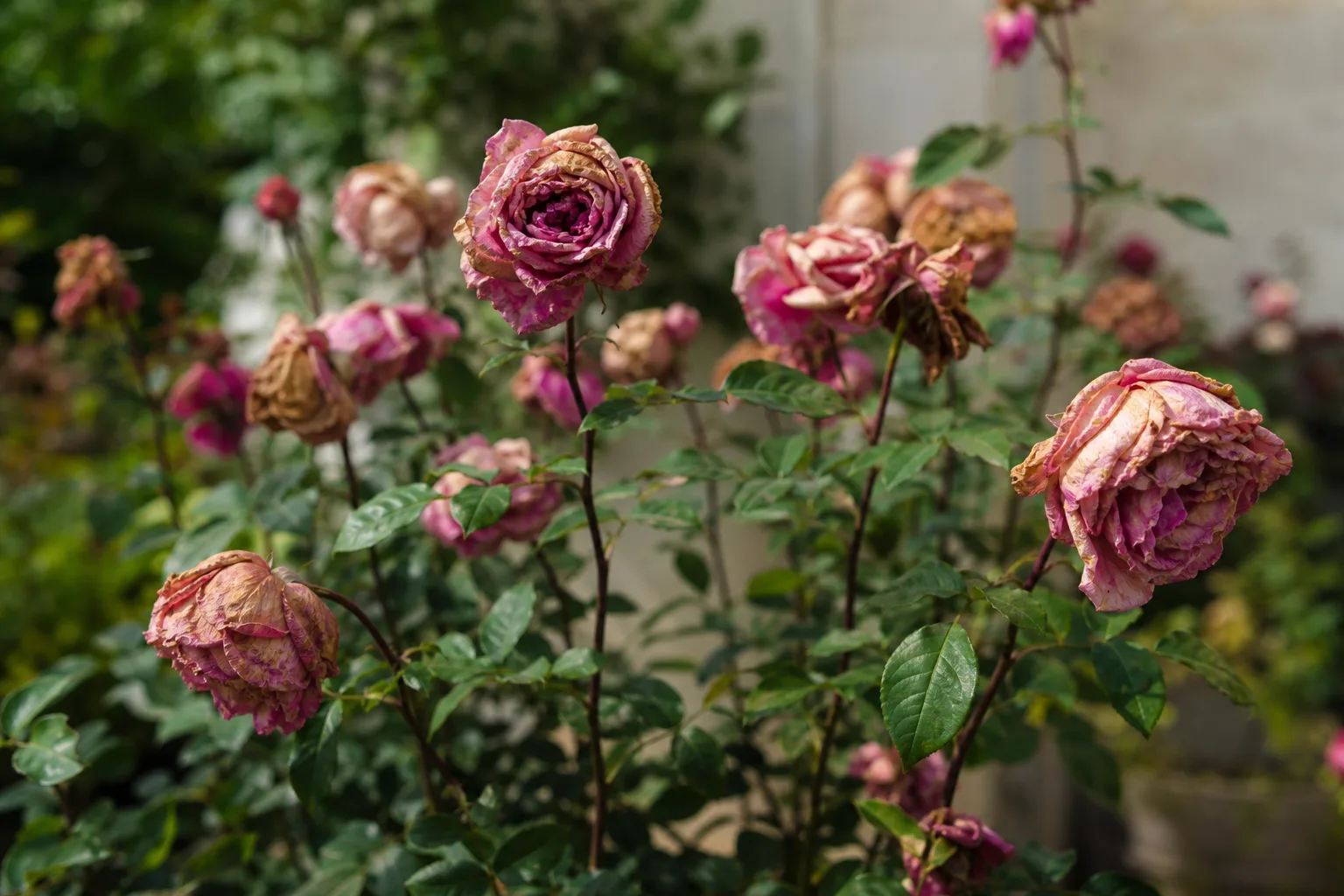
It is not a fertility treatment, a cure for disease, or a substitute for dormant pruning. Deadheading cannot make a once-flowering rambler bloom again in the same season, repair a bud damaged by heat, or restore leaves already lost to black spot. If new flowers fail despite timely cuts, inspect light, root-zone moisture, pests, and foliage health before cutting lower.
There is also a real trade-off. A deeper cut can encourage a stronger replacement stem but may delay the next flower and removes more leaves. A light cut keeps the plant leafy and may return to bloom sooner, but the new stem may be thin or poorly placed. Choose the result you need rather than treating “more stem removed” as better gardening.
See the cut before you make it
Stand back and trace the entire flower stem with your eyes. First find the spent bloom, then move downward past any weak leaf sets until you see healthy green wood, a firm bud, and a direction that makes sense for the shape of the plant. The target is not simply the first leaf you encounter.
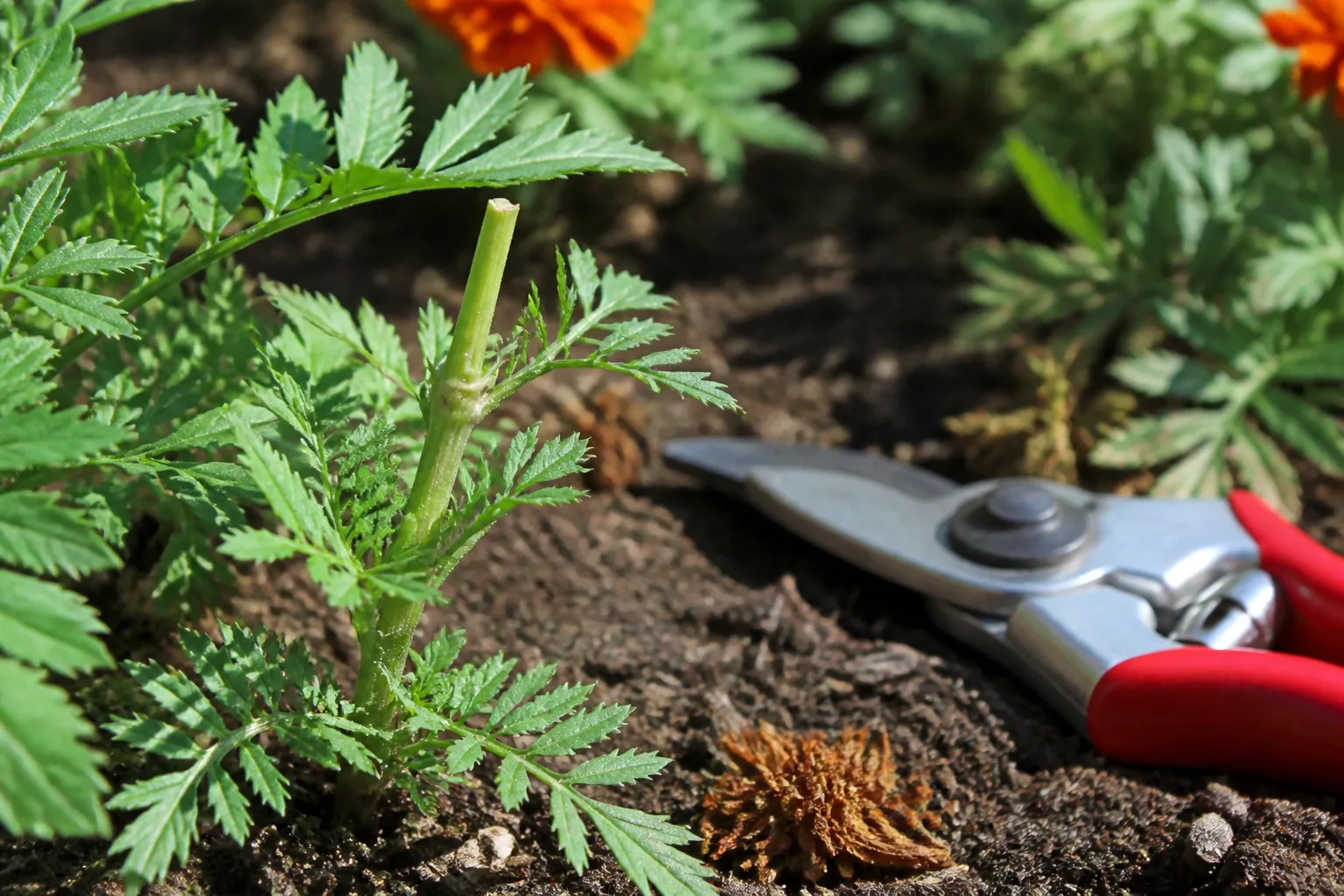
Bud eye, leaf set, and the five-leaflet landmark
A bud eye is the small dormant bud at a leaf axil, where a leaf joins the stem. It may look like a slight swelling or a tiny pointed mark. This is the point that can produce the next shoot, so the cut belongs just above it rather than flush against it or several inches above it.
A five-leaflet leaf set is a useful sign of stronger growth on many established bush roses. Look for the bud immediately above or beside that leaf set, then choose the outward-facing bud if there is more than one. The familiar rule is therefore better expressed as: cut about one-quarter inch above a strong, outward-facing bud associated with a substantial leaf set.
The five-leaflet rule is not a botanical guarantee. Some stems have seven leaflets, some healthy shoots have three, and some varieties do not present a perfect pattern. The David Austin Roses deadheading guide likewise follows the flower stem down to a strong five-leaflet leaf while recognizing that the first upper leaves may have only three leaflets.
When a three-leaflet cut is safer
Choose a lighter cut above a healthy three-leaflet leaf when the rose is newly planted, recently transplanted, heat-stressed, drought-stressed, or still building its root system. Young plants need their leaves; removing several leaf sets to reach a lower five-leaflet leaf can slow establishment more than it improves the next bloom.
The same caution applies after severe pest or disease damage. Remove the finished flower and keep as much healthy foliage as possible. Once the rose is growing strongly, you can return to a deeper cut on suitable stems. A healthy bud and intact leaves matter more than making every stem match its neighbors.
The tools and hygiene that make a clean cut
Use sharp bypass pruners or narrow secateurs that slice through the stem instead of crushing it. Wear gloves that protect your fingers and, for thorny climbers, your wrists and forearms. Keep a small bucket nearby so spent flowers and damaged leaves do not remain tangled in the canopy.
Before cutting, wipe away sap and debris from the blades. On a dry, healthy plant, routine deadheading does not require theatrical sterilizing after every flower. Do clean the blades when moving from a visibly diseased rose to a healthy one or when cutting black-spotted foliage, cankers, or other suspect tissue. This is a practical disease-hygiene precaution, not a reason to handle a harmless bloom as if it were laboratory material.
Make one firm cut rather than sawing back and forth. Leave a short stub above the bud; a cut that is flush against the bud can injure it, while a long stub may die back. Collect diseased leaves and suspicious trimmings rather than leaving them beneath the plant, and avoid working through wet foliage when disease is already active.
How to deadhead an established bush rose
For a healthy, established repeat-flowering bush, use this sequence:
- Wait until the flower is clearly fading: petals loosen, droop, brown, or begin to fall.
- Follow the flower stem downward past weak or inward-facing growth.
- Find a healthy bud eye that points into open space, usually beside a strong five-leaflet leaf set.
- Cut about one-quarter inch above the bud with a clean, slightly angled cut.
- Leave the healthy leaves below the cut and collect the flower head.
Pause after each stem and look at the plant’s silhouette. If the cut leaves a bare, awkward stub or removes a large amount of foliage from a weak plant, you have probably gone too far. The goal is to remove finished flowering wood while giving the next shoot a sensible place to grow.
One spent flower on a long stem
For a single bloom on a hybrid tea or grandiflora, the first small leaf set below the flower may be weak. Trace down until the stem is sturdy enough to support a new flower and the bud faces outward. This deeper cut can be useful when the old flower was large and the upper stem is thin.
There is no need to make every cut equally deep. Use a lighter cut when the rose is young, the weather is hot, or the plant has plenty of well-positioned shoots already. Use the stronger-stem option on a vigorous established plant when a spindly flowering stem would produce another floppy bloom.
A finished cluster or floribunda spray
Clusters need two passes. While some buds are still fresh, snip only the faded individual flowers close to their small flower stems. Do not remove the unopened buds that are still contributing to the display.
After the entire spray has finished, trace the cluster’s main stem to a strong leaf and bud. Remove the old spray with one clean cut rather than leaving a thicket of tiny, equal-length stubs. This is especially useful for floribundas, whose many small stems can make a shrub look ragged if each faded bloom is handled as a separate pruning project.
How to deadhead a young, stressed, or newly planted rose
Newly planted roses need time to balance their roots and shoots. Remove the old flower, but make the least disruptive cut that leaves healthy foliage. The uppermost sound three-leaflet leaf may be a better stopping point than the first five-leaflet set several inches lower.
Do the same for a rose recovering from drought, transplant shock, severe heat, or heavy leaf loss. Restore steady moisture at the root zone, protect the soil with a suitable mulch gap around the canes, and wait for new growth before attempting a deeper shaping cut. Deadheading should reduce a finished flower, not create a second stress event.
If the plant is weak enough that every cut removes a large proportion of its green leaves, remove only the spent head and leave structural decisions for a better growth period. A slightly untidy plant with leaves is in a stronger position than a perfectly shaped plant with no capacity to replace what was removed.
Deadheading climbing roses without cutting the framework
Treat a climbing rose as a two-level plant. The main framework canes create the permanent structure on the support; flowering laterals are the shorter side shoots that carry blooms. During the flowering season, cut back spent laterals to a healthy bud or leaf joint and leave the framework in place.
For a vigorous repeat-flowering climber, this keeps the plant tidy and directs new growth without sacrificing the stems that fill the trellis. The RHS climbing-rose advice recommends deadheading during the flowering season and later shortening flowered side shoots as part of routine pruning, while reserving major framework work for late autumn or winter.
Ramblers require more restraint. Because many flower once on older wood, do not cut long canes deeply in summer just because they look untidy after flowering. Remove the obvious spent heads if you want, then wait until you can identify the plant’s pruning window and growth habit.
How often to deadhead and when to stop
Check repeat-flowering roses about once a week during the main bloom period. In hot weather, petals may drop quickly; in cool or wet weather, a bloom can remain presentable longer. You do not have to remove every spent flower on a fixed day. Prioritize soggy heads, finished clusters, and flowers that are already beginning to form hips.
The best moment is after the flower has clearly finished but before a large hip has developed. If a rose produces the hips you want, leave selected flowers. If your goal is another flush, remove more of the fading blooms while the plant is still actively growing.
Ease off or stop when your local season is moving toward frost and dormancy. A late, heavy cut can encourage tender growth when the plant should be slowing down. There is no universal calendar date: use your area’s frost risk, the rose’s flowering habit, and whether you want hips. This seasonal principle aligns with Epic Gardening’s rose-deadheading guidance, which recommends stopping in late summer and allowing several weeks for hips and dormancy when appropriate.
Troubleshooting: deadheading is not the real problem
Deadheading helps flowers that have naturally finished. It does not explain every brown or missing bloom. If the plant produces new buds that dry before opening, look for another pattern: crispy edges after heat, a dry root zone, sticky clusters of aphids, fine stippling from mites, gray-brown flower balling after wet weather, or black spots and yellowing on leaves.
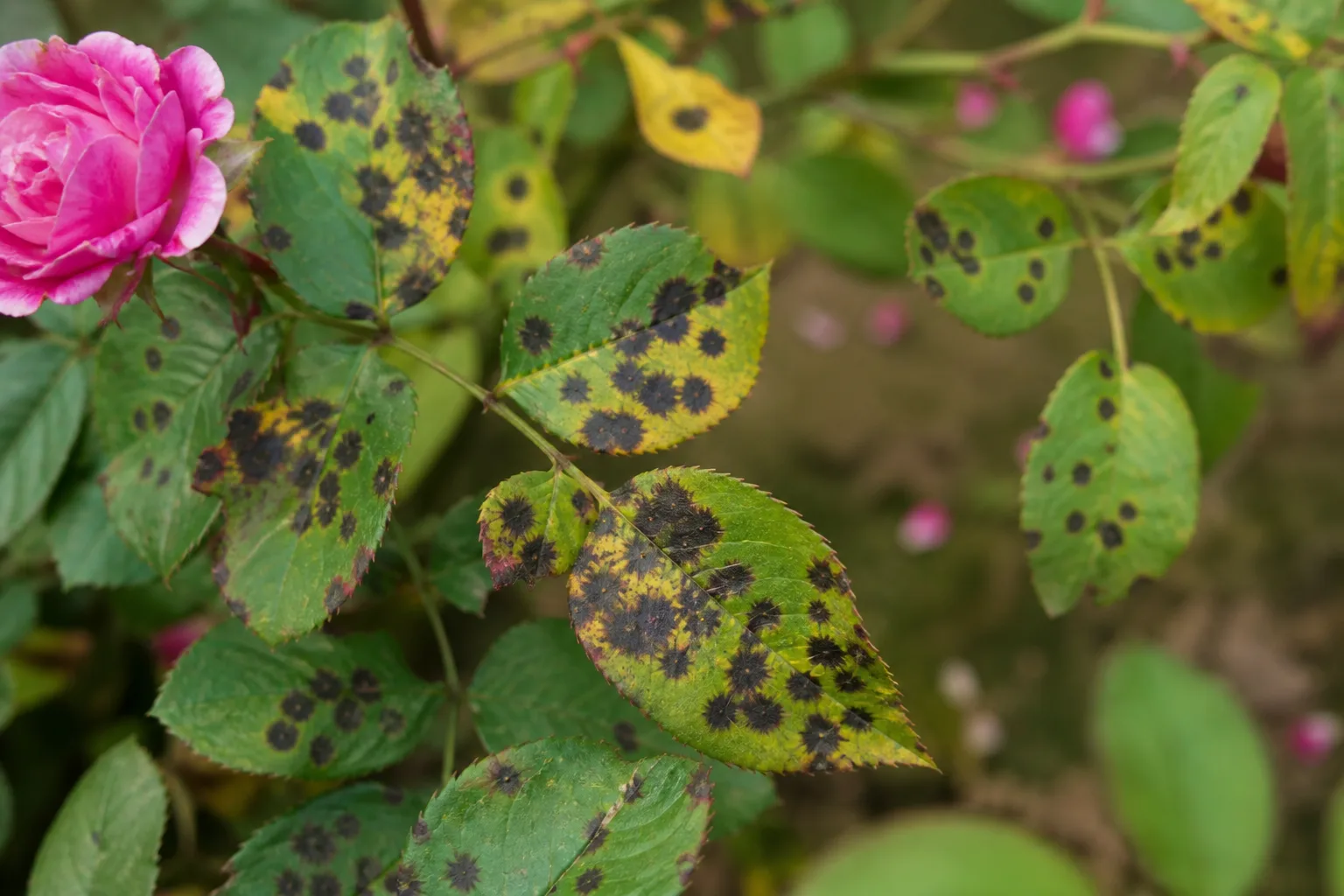
Water slowly at the soil line during dry periods and avoid repeatedly wetting the foliage. Check that the rose receives enough sun and that crowded growth has not reduced airflow. Remove affected material when you can identify it, clean tools between suspect plants, and use a diagnosis-specific treatment plan rather than cutting deeper simply because flowers look poor.
Deadheading also cannot make an inherently once-flowering rose repeat. If the plant blooms once and then develops attractive hips, that may be its successful life cycle, not a maintenance failure. If a self-cleaning rose keeps flowering and drops its petals cleanly, the most helpful action may be to leave it alone.
Conclusion
Deadhead an established repeat-flowering bush rose by following the spent bloom to a healthy, outward-facing bud eye and cutting about one-quarter inch above it. A strong five-leaflet leaf set is a reliable landmark, but the bud’s direction, the stem’s strength, and the amount of healthy foliage you can retain matter more than the number five by itself.
Use a lighter cut on young or stressed plants, handle a finished floribunda spray as a cluster, and cut the flowering laterals—not the framework canes—on repeat-flowering climbers. Once-flowering ramblers, hip-producing roses, and self-cleaning landscape roses may need little or no routine deadheading.
Make clean cuts, collect diseased debris, and stop when your local season is turning toward frost or when you want hips to form. Done with that context, deadheading is a small, precise adjustment that supports another flush without asking the rose to rebuild more foliage and structure than it can spare.