Vanilla Strawberry Hydrangea Care Guide
Learn Vanilla Strawberry hydrangea care: choose the right light, water deeply, prune in late winter, and keep its color-changing blooms strong.
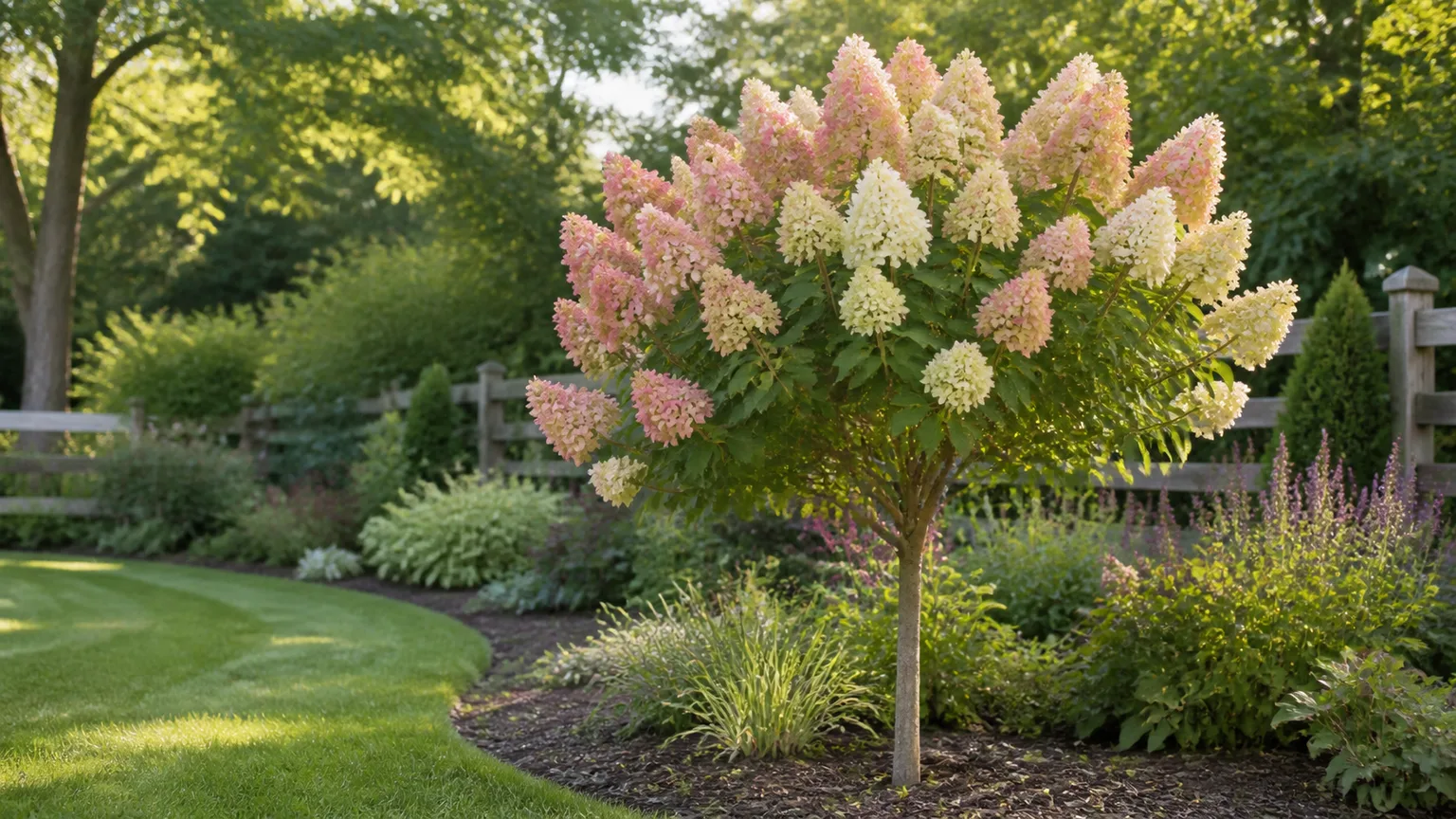
Vanilla Strawberry™ hydrangea (Hydrangea paniculata ‘Renhy’) is a deciduous panicle hydrangea that changes as the season advances: flowers open creamy white, move through pink, and mature to strawberry-red or burgundy before fading brown. The plant is not supposed to show one uniform color at once. New flower heads keep opening while older heads darken, so a healthy shrub often looks deliberately two- or three-toned.
The care rule that matters most is simple: treat it like a new-wood panicle hydrangea, not like a blue or pink bigleaf hydrangea. Give it bright light, steady moisture with real drainage, enough room for its mature width, and dormant-season pruning. The cultivar’s patent record describes the same white-to-pink-to-red progression, flowering on new growth, and the way heavy mature panicles make stems become supple and cascading.
What Makes This Panicle Hydrangea Different
The name on the plant tag is worth checking. Vanilla Strawberry is the trade name for the cultivar ‘Renhy’; it is not a separate species and it is not the same as every hydrangea sold with “strawberry” in the name. It belongs to H. paniculata, a group that generally flowers on shoots produced during the current growing season.
That identity explains three common surprises. First, the flowers are cone-shaped rather than round mopheads. Second, the pink and red tones are part of age and temperature-driven development, not a soil-pH switch. Third, the stems may arch under the weight of mature flower heads even when the shrub is well watered.
The Missouri Botanical Garden’s cultivar entry lists a typical mature size of about 6 to 8 feet tall and 4 to 5 feet wide. Individual plants vary with cultivar source, climate, pruning, and whether you buy a multi-stem shrub or a trained tree form, so use the plant label and the space around it as the final check.
Quick Care Snapshot
| Need | Practical target |
|---|---|
| Light | Full sun to part shade; aim for about 6 or more hours of direct light for the strongest flowering |
| Soil | Rich, consistently moist, and well drained; avoid standing water |
| Water | Use about 1 inch per week as a starting point, then adjust for heat, wind, soil, and establishment |
| Feeding | Compost annually; use a light slow-release feed in spring only if growth or a soil test justifies it |
| Pruning | Late winter to early spring, before strong new growth; remove dead, weak, and crossing wood first |
| Bloom habit | New wood; flowers typically begin in mid-summer and can persist into early fall |
| Mature size | Roughly 6–8 feet tall and 4–5 feet wide in many gardens |
| Hardiness | Common listings range from about USDA Zone 3 or 4 through Zone 8; protect plants at the cold edge and use the local label or extension advice |
This is a planning table, not a rigid schedule. A shrub in sandy soil beside a hot driveway will use water differently from one in deep loam with afternoon shade. The Cornell Woody Plants Database describes the cultivar as tolerant of consistently moist, well-drained soil with occasional dry periods and records a broad light range, while Oregon State University emphasizes sun to part shade, rich moist soil, and new-wood flowering for the species.
Choose a Location That Supports Color and Strong Stems
Place this hydrangea where you can reach the root zone with a hose and where the plant will not be squeezed between a wall, lawn sprinkler, and another shrub. It works as a specimen, a flowering border plant, a mass planting, or a cut-flower source, but every use depends on leaving enough room for the mature canopy to breathe.
Sun in Cool and Hot Climates
In a cool or mild summer climate, full sun is usually the best starting site. More direct light supports more shoots and flower heads, and it helps the stems build enough strength to carry those heads later in the season. Morning sun with a little afternoon shade is a better compromise in regions where summer afternoons are intensely hot or the soil dries quickly.
Do not interpret “sun tolerant” as “drought proof.” A full-sun plant may need more frequent deep watering during heat waves, especially in its first two growing seasons. If the leaves wilt only during the hottest part of the day but recover by evening and the soil is moist, add temporary afternoon shade or improve the root-zone mulch before automatically watering again.
Mature Size and Spacing
Plan for at least the plant’s mature width rather than the size of the nursery pot. A 4- to 5-foot spread means the center of a shrub usually belongs about 2 to 2½ feet from a path or neighboring plant, with more room if the site is humid, the cultivar runs large, or you want to walk behind it for pruning.
Crowding creates two problems at once: it increases competition for water and reduces the airflow that helps leaves and flower heads dry after rain. Keep turf and thirsty annuals from forming a dense ring at the base, and avoid placing the shrub where roof runoff or a downspout keeps the soil wet.
Planting Vanilla Strawberry Hydrangea Without Stalling Growth
Plant in early spring after the ground is workable or in fall while the soil is still warm. Spring gives a plant in a cold region more time to establish before winter; fall is especially useful in hot climates because roots can grow during milder weather before the next summer.
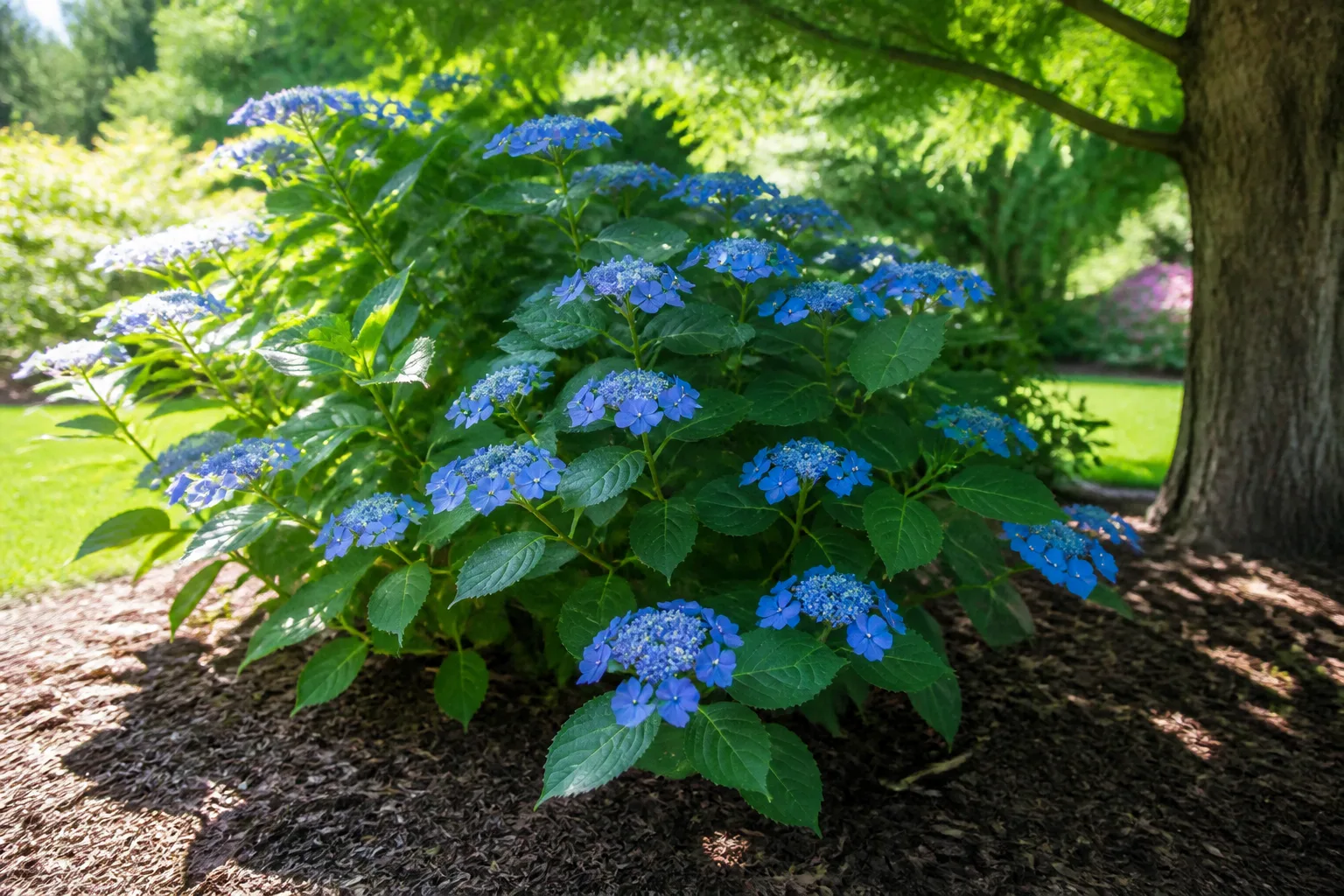
Dig a hole no deeper than the root ball and roughly two to three times as wide. Set the top of the root ball level with the surrounding soil, or just slightly proud in heavy clay, then backfill with the soil you removed. A broad area of improved soil is safer than a small pocket of soft compost surrounded by compacted ground that drains at a different rate.
Water slowly until the entire root ball and surrounding soil are wet. Add about 2 to 3 inches of organic mulch over the root zone, keeping it a few inches away from the stems and crown. For the first season, check the soil by hand below the mulch several times a week; a newly planted shrub cannot yet reach the deeper moisture that an established root system can.
Avoid planting a dry, root-bound nursery plant and then trying to compensate with shallow daily sprinkling. Soak the root ball thoroughly, let excess water drain, and then adjust the interval based on soil moisture. If the plant is carrying a lot of flowers at planting time, remove only damaged flowers; do not combine transplanting with a hard structural prune.
Watering for Steady Growth
Use about 1 inch of water per week as a starting point during ordinary growing weather, including rainfall. Deliver it in one or two slow, deep applications rather than a little every day so water reaches the wider root zone and the surface can dry slightly between irrigations.
The number matters less than the soil check. Push a finger or narrow trowel 2 to 3 inches below the mulch near the edge of the canopy. If that layer is dry and there has been little rain, water slowly; if it is cool and damp, wait. Newly planted shrubs, sandy soil, windy sites, full-sun exposures, and containers can need more frequent attention.
Water at the soil line with a soaker hose or drip line when possible. Wet foliage is not automatically a disease, but repeatedly keeping leaves and flower heads wet overnight creates a friendlier environment for leaf spots and mildew. During a heat wave, water early in the day and inspect the plant again in the afternoon rather than trying to fix every temporary midday droop with extra irrigation.
Standing water is the opposite failure. If the shrub stays wilted in wet soil, the problem may be oxygen-starved roots rather than thirst. Improve drainage, redirect runoff, or raise the bed; watering more often will not repair a saturated root zone.
Soil, Mulch, and Drainage
Vanilla Strawberry hydrangea is adaptable about soil texture, but it is not adaptable about prolonged saturation. Aim for soil that holds moisture and organic matter while allowing excess water to move away. The Cornell record gives the cultivar a tolerable pH range of about 5.0 to 8.0 and pairs it with consistently moist, well-drained conditions.
Work finished compost into a broad planting area when soil is poor or compacted. Do not fill the hole with a different, fluffy medium and leave the surrounding clay untouched; that can create a bowl where water collects around the root ball. If drainage is seriously poor, fix the site with a raised bed or a different planting position before installing the shrub.
Mulch is a moisture buffer, not a cure-all. Keep a 2- to 3-inch layer over the root zone, refresh it as it decomposes, and leave a bare gap around the base. Mulch reduces evaporation and temperature swings, which is especially helpful in full sun, but it cannot make a wet low spot drain or replace deep irrigation in a drought.
Do not add garden lime or aluminum sulfate to chase blue flowers. Unlike many bigleaf hydrangeas, this panicle cultivar’s white-to-pink-to-red cycle is a cultivar trait, so changing pH is unlikely to deliver the color change you want and may create a new nutrient imbalance. Test soil when you have a real soil problem; do not amend on flower color alone.
Fertilizing Without Sacrificing Flowers
Start with the soil and the plant’s growth. A healthy, established shrub in reasonably fertile soil may need nothing beyond an annual compost top-dressing. Gardening Know How’s cultivar notes likewise recommend compost or a slow-release spring feed when the site needs more fertility. If growth is weak or a soil test shows a deficiency, use a light, slow-release fertilizer in spring as new growth begins and follow the product label rather than doubling the dose.
Heavy nitrogen can make the plant produce long, soft shoots and lots of leaves while flower production lags. It can also increase the size and weight of the canopy without improving stem strength. Keep lawn fertilizer from washing into the hydrangea bed, and do not feed a drought-stressed, freshly transplanted, or diseased shrub until the underlying stress is corrected.
Stop routine feeding by midsummer or late July, particularly in a cold-winter region. Late nitrogen can encourage tender growth when the plant should be hardening off. If the shrub is already large and green but has few flowers, more fertilizer is usually the wrong first move; review light, pruning time, water, and last year’s weather instead.
Pruning for Strong Stems and Big Panicles
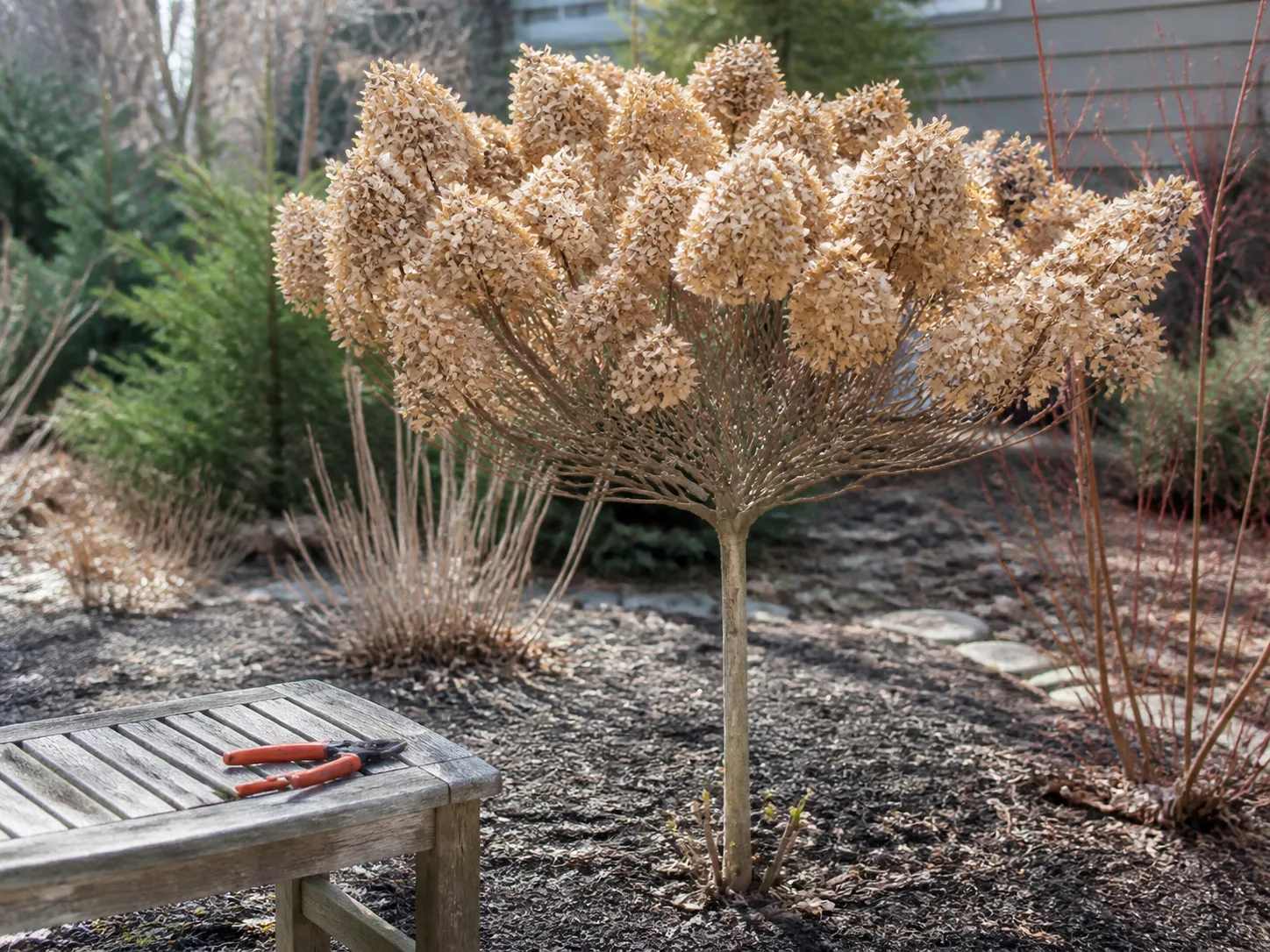
Panicle hydrangeas flower on new wood, so a dormant-season cut is usually safe for this cultivar. The best general window is late winter to early spring, after the worst extreme cold has passed but before strong new growth starts. The Missouri Botanical Garden describes the species as flowering on current-season growth and recommends late-winter to early-spring pruning.
That timing gives you a useful choice. Light pruning keeps more flowering shoots and a looser, more natural shrub. Thinning to roughly 5 to 10 primary shoots can produce larger panicles, but it also reduces the number of flower heads and can make each remaining head heavier. Choose the structure you want instead of pruning hard by habit every year.
Do not shear the top into a flat hedge. Heading every branch at the same height creates a crowded outer shell, weak regrowth, and a canopy that may flop when the flower heads mature. Remove whole stems or shorten a branch just above a strong outward-facing bud so new growth does not point into the center.
A Late-Winter Pruning Sequence
Use sharp bypass pruners for pencil-thick stems, loppers for larger wood, and a pruning saw only when needed. The practical sequence is:
- Remove stems that are clearly dead, broken, diseased, or rubbing. If you are unsure whether a stem is alive, scratch a small patch of bark and wait until buds begin to swell rather than removing it on a guess.
- Take out weak shoots and branches growing toward the center. Keep well-spaced stems that point outward and can support flowers without leaning into one another.
- Reduce the overall height or width only as much as the site requires. For moderate control, remove up to about one-third of the previous season’s growth instead of cutting every stem to the same low height.
- If you want larger flower heads, selectively retain a smaller framework of strong primary shoots. Expect fewer heads and more weight on each one, so this is not always the best choice for an unsupported shrub.
- Step back and inspect the plant from several angles. A rounded, open framework is more useful than a perfectly geometric shape.
Remove prunings from the bed if they show disease, and disinfect tools between visibly diseased plants. Home for the Harvest’s pruning guide also recommends starting with dead, damaged, and crossing wood before shaping, which keeps the job focused on structure rather than arbitrary height. For a detailed type-by-type calendar, see our guide to when to prune hydrangeas; for this cultivar, the new-wood rule is the key.
Deadheading and Winter Interest
Deadheading is optional. If you want a tidier shrub, remove a spent flower head with a short stem during the growing season, or wait and remove old heads during the late-winter structural prune. The smallest cut that achieves the look is safest.
The papery brown heads can remain through winter and provide shape when the leaves are gone. In regions with heavy, wet snow, remove the largest old heads in late fall or early winter so snow does not add unnecessary leverage to the branches. This is a weather-management choice, not a requirement for next year’s flowers.
Bloom Color, Timing, and What Is Normal
The first flower heads usually appear in mid-summer, but the exact start and finish depend on latitude, spring temperatures, pruning, plant age, and growing conditions. A head can open creamy white, blush pink after roughly a couple of weeks, and deepen to red or burgundy before fading tan or brown. The cultivar patent records the red phase lasting about three to four weeks under the conditions tested, but color duration varies in real gardens.
Do not expect every head to turn red on the same day. A fresh white head beside an older red head is part of the appeal, and a cooler night pattern or a change in weather can affect how strongly the mature color develops. The flower color is not a reliable signal that soil is too acidic or too alkaline.
The shrub may also change posture during bloom. Early in the season, stems can look upright; as panicles enlarge and mature, some branches naturally arch. This is the cultivar’s weight-bearing behavior, not automatically a sign of weak roots or poor care.
Troubleshooting Vanilla Strawberry Hydrangea
Troubleshoot in the order the plant experiences stress: check soil moisture and drainage, then light, pruning history, fertility, and symptoms. Avoid changing several variables at once. A hydrangea that is overwatered, overfertilized, and moved into harsher sun at the same time becomes much harder to diagnose.
Brown Blooms and Drooping Panicles
If flower heads turn papery brown after spending several weeks in the red phase, the bloom is probably finishing normally. Leave it for winter interest or remove it for appearance; extra fertilizer or a color-changing product will not restore a finished flower.
Early browning with crisp leaves, limp stems, or rapidly drying soil points more toward heat or inconsistent watering. Deeply soak the root zone, add or refresh mulch, and provide afternoon shade in an extreme site. If leaves stay limp while the soil is wet, stop adding water and investigate drainage instead.
If only the flower branches arch while leaves remain firm and green, the likely cause is flower weight. A more open dormant-season framework, moderate stem thinning, or a simple shrub support can help next season. Avoid a severe annual cut solely to force stiff stems; that can reduce the number of flowers and still leave the remaining heads heavy.
Few or No Flowers
Start with last year’s pruning date. Cutting healthy stems in late spring or summer removes the new shoots that would have carried flowers, even though the plant may respond with vigorous foliage. The next checks are inadequate light, drought during establishment or bud development, nitrogen-rich runoff, and winter damage to young wood.
A recently planted shrub can spend its first season building roots rather than producing a full display. Keep it watered, mulched, and lightly maintained instead of trying to force a bloom with extra feed. If it grows well but remains flowerless for more than one season, compare the site against the care snapshot and consider a local extension diagnosis.
Leaf Spots, Mildew, Aphids, and Mites
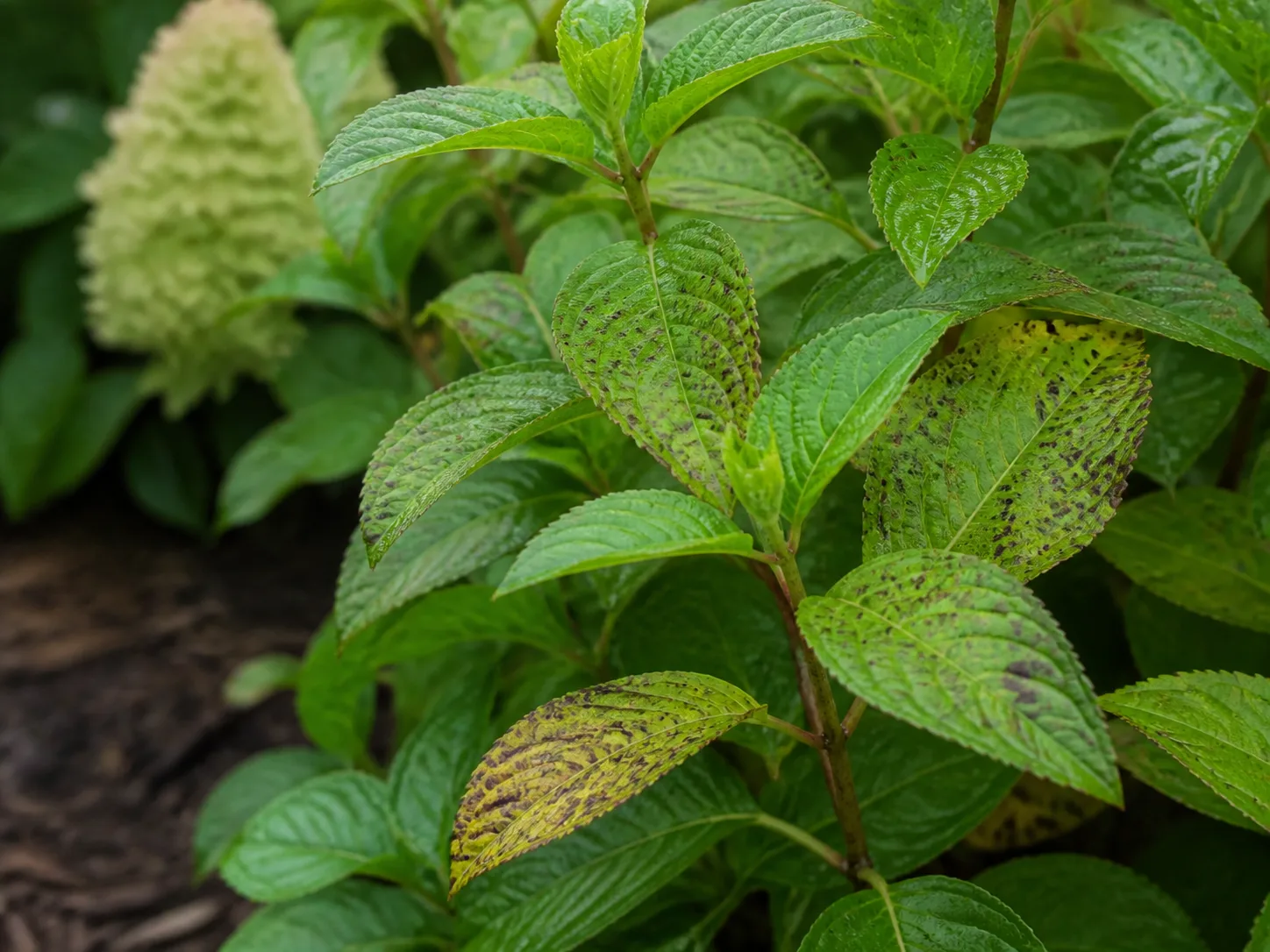
The species can be susceptible to leaf spot, rust, mildew, bacterial wilt, and occasional aphids or mites. The Missouri Botanical Garden’s species profile lists those problems, but a symptom name alone does not identify the cause.
Begin with the cultural fixes: thin crowded growth, water at the soil line, remove fallen diseased leaves, and avoid keeping the canopy wet overnight. Inspect leaf undersides and tender tips for aphids or mites; look for stippling, webbing, sticky residue, or distorted new growth rather than spraying every blemish.
If symptoms spread, photograph the whole plant and a close leaf, note recent weather and watering, and use a local extension or nursery diagnostic service. Any pesticide or fungicide should be selected for the confirmed problem and applied only according to its current label. A broad, unneeded spray can harm beneficial insects and still miss the actual cause.
Container, Winter, and Propagation Notes
Container growing: A large pot with several drainage holes can work for a young Vanilla Strawberry hydrangea, especially in a patio or deck setting. Use a quality potting mix rather than garden soil, expect the container to dry faster than an in-ground bed, and monitor moisture closely during hot weather. As roots fill the container, repot into a larger frost-resistant pot or root-prune and refresh the mix during dormancy; a container is a way to manage the plant, not a guarantee that it will stay small.
Winter care: Panicle hydrangeas are among the hardier hydrangea types, but a newly planted shrub and a plant at the colder edge of its rating deserve more attention. Water thoroughly before the ground freezes if autumn has been dry, keep mulch over the root zone without touching the stems, and remove snow that loads a narrow tree-form canopy. Containers are more exposed than roots in the ground, so move them to a sheltered location or insulate the pot before severe freezes.
Propagation and plant rights: The patent record describes ‘Renhy’ as having been reproduced by softwood cuttings and lists the U.S. plant patent as active with an anticipated expiration of June 28, 2027, at the time of this guide’s 2026 research. That does not mean a trademark alone controls every cutting, but it does mean you should not assume that rooting and sharing or selling this named cultivar is unrestricted. Buy a licensed plant with a cultivar tag, and check the current patent, license, and local rules before propagating.
The patent also records the flowers as sterile under the conditions tested, so seed is not a dependable way to reproduce the named cultivar. Even when a hydrangea produces seed, seedlings are not a reliable copy of the parent. If you want this exact color cycle and habit, a correctly labeled nursery plant is the honest starting point.
Conclusion
Vanilla Strawberry hydrangea rewards a steady routine rather than a complicated one. Give it bright light suited to your climate, open soil that stays moist without staying wet, room for a 6- to 8-foot shrub, and deep watering while it establishes. Feed lightly only when the plant needs it, and prune in late winter or early spring because its flowers form on new wood.
Expect the display to evolve: white heads can sit beside pink and red heads, mature branches can arch under flower weight, and brown papery blooms can be a normal finish rather than a crisis. When the plant struggles, check water and drainage first, then revisit light, pruning timing, and fertilizer. Those decisions do more for long-term flowers than changing soil pH or cutting the shrub harder.