How to Grow and Care for Madagascar Palms Indoors or Out
Grow a Madagascar palm indoors or outdoors with practical advice on light, soil, watering, winter care, repotting, propagation, flowering and spine safety.
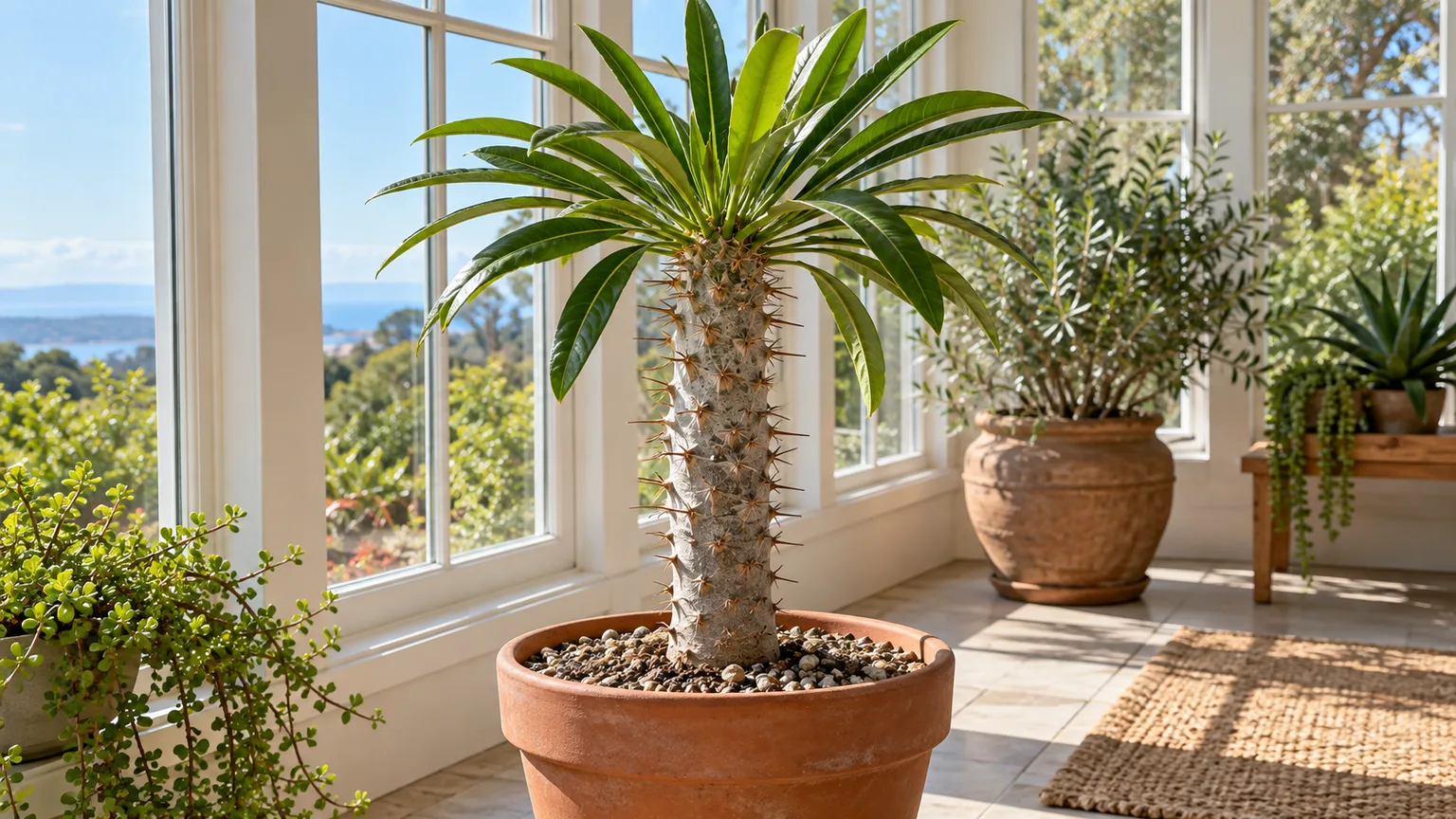
The Madagascar palm (Pachypodium lamerei) needs strong light, a gritty root zone, and watering that slows when growth slows. Its swollen trunk stores water, so treating it like a thirsty tropical palm is the quickest route to trouble. This spiny succulent can grow indoors in a very bright room, spend warm months on a sunny patio, or live outdoors year-round where winters are reliably frost-free.
The other two decisions matter just as much: whether you can give a tall, top-heavy plant enough space, and how you will handle it without touching the spines or sap. The guidance below is built around those practical choices rather than a calendar that assumes every home and climate is the same.
Quick care snapshot
| Need | Practical starting point |
|---|---|
| Light | Several hours of direct sun; brightest available window indoors |
| Water | Soak the mix when the root zone is dry in active growth; reduce sharply in cool or leafless periods |
| Soil | Coarse cactus or succulent mix in a pot with an open drainage hole |
| Temperature | Warm, frost-protected conditions; use a container where winters get cold |
| Feeding | Optional, diluted, low-nitrogen fertilizer only during active growth |
| Mature size | RHS lists 2.5–4 m (about 8–13 ft) high and 1.5–2.5 m wide, with 10–20 years to maturity |
These are starting points, not a fixed schedule. Pot size, sun, indoor temperature, season, and the actual drying speed of the mix change how often you water. A firm trunk and dry soil usually call for patience; a softening base deserves prompt inspection.
Know the plant before choosing a spot
“Madagascar palm” is a common name, not a botanical description. Pachypodium lamerei belongs to the dogbane family, Apocynaceae; it is a succulent shrub or small tree with a thick, water-storing stem, not a true palm. Its narrow leaves cluster near the growing tip, while stiff spines form in rows along the trunk. The plant’s structure is why it can look like a miniature palm and still need succulent care.
The swollen stem is an adaptation to dry periods in the plant’s native western Madagascar habitat. It stores water, and the green stem can continue photosynthesis after leaves fall. Oxford University’s Plants 400 profile describes stem-based CAM photosynthesis: the plant takes in carbon dioxide at night and uses it during the day, when its stomata remain closed to limit water loss Oxford University Plants 400. That helps explain why a leafless plant may still be alive, but it does not make wet, cold soil safe.
This distinction also helps prevent a common mismatch: high humidity, frequent drinks, and shade may suit some tropical foliage plants, but they are poor default conditions for this sun-loving stem succulent. Think bright, warm, and well-drained; then adjust water to the season and observed growth.
Choose a growing setup: indoors, in a container, or in the ground
Decide first whether your winter climate can keep the plant free from frost. Its height and spines matter, too: an indoor specimen needs a bright window and a stable footprint, while an outdoor specimen needs room away from paths, doors, and places where people or pets brush past it. The RHS lists the plant as a full-sun succulent shrub or small tree, reaching several metres and taking 10–20 years to mature Royal Horticultural Society.
Landscape planting suits frost-free climates
In a warm, frost-free garden, plant it where water drains away promptly after rain. Avoid a low spot that stays wet, a lawn edge that receives regular sprinklers, or an exposed route where a spiny trunk can injure someone. Give the mature plant space rather than planning around the size of a young nursery specimen; its canopy and trunk can become substantial over time.
If your site gets occasional cold snaps, a pot is safer than planting in the ground. A protective cover may reduce brief cold exposure, but it cannot make a cold, saturated root zone a reliable home for a tender succulent. Choose the planting method around the coldest part of your local winter, not the hottest week of summer.
Container growing keeps the plant portable
A pot makes it possible to grow the plant outdoors for the bright season and bring it under cover before cold weather. It also lets you control drainage. The trade-off is that a tall trunk can become top-heavy: use a heavy pot with drainage holes, set it on a level surface, and leave room to move it without passing the spines close to people.
Indoors, choose the brightest location you have, usually near an unobstructed south- or west-facing window in the Northern Hemisphere. A sunroom or greenhouse is better than a dim corner several feet from a window. If moving a plant outside for summer, acclimate it gradually: start in bright shade, add a little direct morning sun every few days, and build up over a week or two. A sudden jump from indoor light to strong outdoor sun can scorch leaves and mark the trunk.
Give it strong, gradually acclimated sun
Bright light is a basic requirement, not an optional boost. Outdoors, a sunny site is the simplest fit. Indoors, use the brightest window available and keep the crown close enough to the glass to receive direct light without pressing foliage against a hot pane. Rotate a potted plant a quarter turn periodically if its crown or trunk leans toward the window.
Watch the new growth rather than judging light by whether the plant is still alive. Long, weak, tilted growth or a sparse crown suggests the plant is reaching for more light. If it has been in low light, do not correct that problem by placing it straight into all-day afternoon sun; acclimation prevents a second stress on top of the first. Brown, bleached patches that appear soon after a move outdoors are more consistent with sun scorch than with a watering problem.
A grow light can supplement a dim room, but it cannot fully replace a sunny window for a large, mature plant unless it is bright enough and positioned close enough to cover the crown. If no available location can provide several hours of strong light, expect slower, less compact growth and fewer chances of flowering.
Water deeply, then let the mix dry
Use the state of the whole root zone, not the date on a reminder, to decide when to water. When the plant is growing and the mix has dried substantially, water slowly until it runs from the drainage hole; then empty the saucer or cachepot. This wets the roots evenly without leaving the pot standing in runoff. Horticulturist Marzena Rewers makes the same seasonal distinction in her Madagascar palm care guide: bright light and active growth support more water, while a cool, leafless plant needs much less Horticulturist Marzena Rewers. Treat that as a decision rule, not a universal interval; a warm, sunny specimen can keep growing after another plant has gone quiet.
To check a large pot, push a clean wooden skewer several inches into the mix or feel below the surface with a finger. The top crust can dry while the center remains damp, especially in cool rooms or a pot much larger than the root ball. If the mix still feels cool or sticks to the skewer, wait. If it is dry through most of the root zone and the plant is warm and actively growing, water fully rather than giving frequent small sips.
Spring and summer: increase water with active growth
As days lengthen and new leaves appear, the plant uses more water. Water when the mix has dried through most of its depth, then let it drain completely. How many days that takes depends on pot material, root mass, airflow, sun, and indoor temperature; a small terracotta pot on a warm sunny patio can dry much faster than a large plastic pot in a cool room.
If rain waters an outdoor plant, count that as a watering. Do not add another drink just because the surface looks dusty. Frequent light watering can leave the lower mix persistently wet while never thoroughly wetting the full root ball. A thorough soak followed by a real dry-down is easier to assess and suits the plant’s water-storing stem.
Autumn and winter: taper down and watch the trunk
When days shorten, temperatures cool, or the plant sheds much of its crown, reduce watering. In a cool room with a leafless or nearly leafless plant, the mix may take a long time to dry and the plant may need very little water. If the trunk remains firm, it can wait. Do not keep the summer routine simply because the calendar says a particular number of weeks has passed.
If the trunk becomes distinctly wrinkled and the mix is bone-dry, the plant may be using its stored water. First check that the room is not cold and that the pot drains; then give a modest drink and let the root zone dry again. Do not “rescue” a shriveled plant by repeatedly soaking cold soil. A soft or collapsing trunk base is a different warning sign and calls for a root and drainage check, not more water.
Choose fast-draining soil and a stable pot
The mix should wet when watered, then shed excess water and regain air around the roots. A commercial cactus or succulent mix is a workable base. If it stays damp for days in your home, blend in coarse pumice or perlite to make it airier; avoid fine sand, which can fill pore spaces and make a container mix denser rather than grittier. A useful test is to water the mix in an empty pot and see whether it drains freely instead of forming a slow, compacted mass.
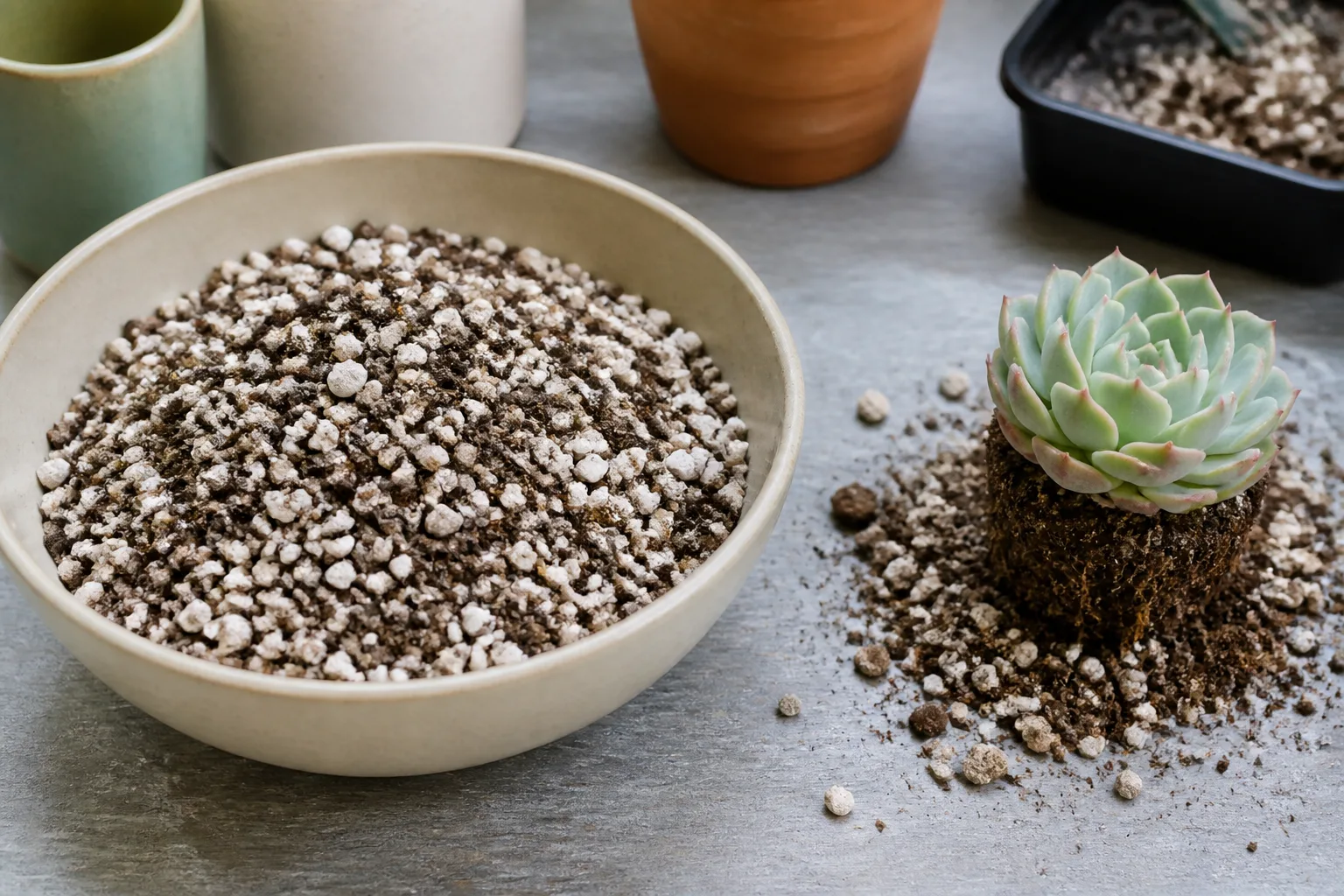
Use a pot with an unobstructed drainage hole. Choose a size that fits the root ball with modest room for growth, rather than a deep oversized container whose unused soil stays wet. A heavy terracotta or ceramic pot can steady a tall specimen and help the mix dry; plastic holds moisture longer and may need a coarser mix or longer intervals between waterings. Whatever the material, never leave water pooled in an outer pot or saucer.
Outdoors, improve the planting site itself if it holds water after rain. Adding a gritty material to a small planting hole in heavy soil does not reliably fix poor drainage around the wider root zone; a raised, freely draining bed or a container may be a better choice.
Keep it warm and interpret leaf drop
Protect the plant from frost and prolonged cold. In a region with chilly winters, move a container to a bright, sheltered place before cold weather arrives rather than waiting for the first frost warning. Keep it away from cold drafts and wet windowsills. The RHS classifies the plant as a greenhouse/conservatory subject in its UK profile and recommends keeping it dry outside the late-spring-to-early-autumn growing period Royal Horticultural Society. That is a useful reminder that temperature and moisture should be managed together.
Leaf loss is not a diagnosis by itself. The University of Arkansas Cooperative Extension notes that P. lamerei may keep its leaves unless drought-stressed, while leaf behavior varies among other species in the genus University of Arkansas Cooperative Extension. A few old lower leaves yellowing is different from a whole crown collapsing. If leaf loss happens as light and temperature decline, check whether the trunk is still firm and the mix is dry; if it happens in warm weather, investigate water, light, and roots instead of assuming dormancy.
A green, firm, leafless stem can still be functioning. The stem’s ability to photosynthesize after leaf fall is documented for the genus Oxford University Plants 400. Keep the plant in bright light and avoid heavy watering until new growth and warmth return. If the stem is soft, darkening, or deteriorating from the base, treat that as possible rot rather than an ordinary seasonal reset.
Feed lightly only while it is growing
Fertilizer is optional if the plant is healthy and growing slowly. During active spring and summer growth, apply a low-nitrogen liquid fertilizer at a diluted rate, roughly one-quarter to one-half of the label strength, about once a month. The RHS gives a similar seasonal window and interval for low-nitrogen feed under glass Royal Horticultural Society. A conservative dose is safer than pushing rapid, soft growth on a plant valued for a sturdy trunk.
Do not feed dry roots, a leafless plant that is not growing, or a plant already stressed by cold, rot, or a recent move. Stop as growth slows in late summer or autumn. The University of Arkansas grower notes that excess nutrition can make pachypodiums stretch and lose their compact form University of Arkansas Cooperative Extension. If you are unsure whether it needs feeding, prioritize light, drainage, and a stable watering rhythm first.
Repot with a plan for the spines
Repot only when there is a reason: roots crowd the drainage holes, the mix has broken down and stays wet, or the plant has become unstable in its current container. A calendar alone is not a reason to disturb a slow-growing succulent. Spring, as new growth resumes, is usually a forgiving time because warmth and light are improving. Move up only one modest pot size and keep the trunk at its previous soil line.
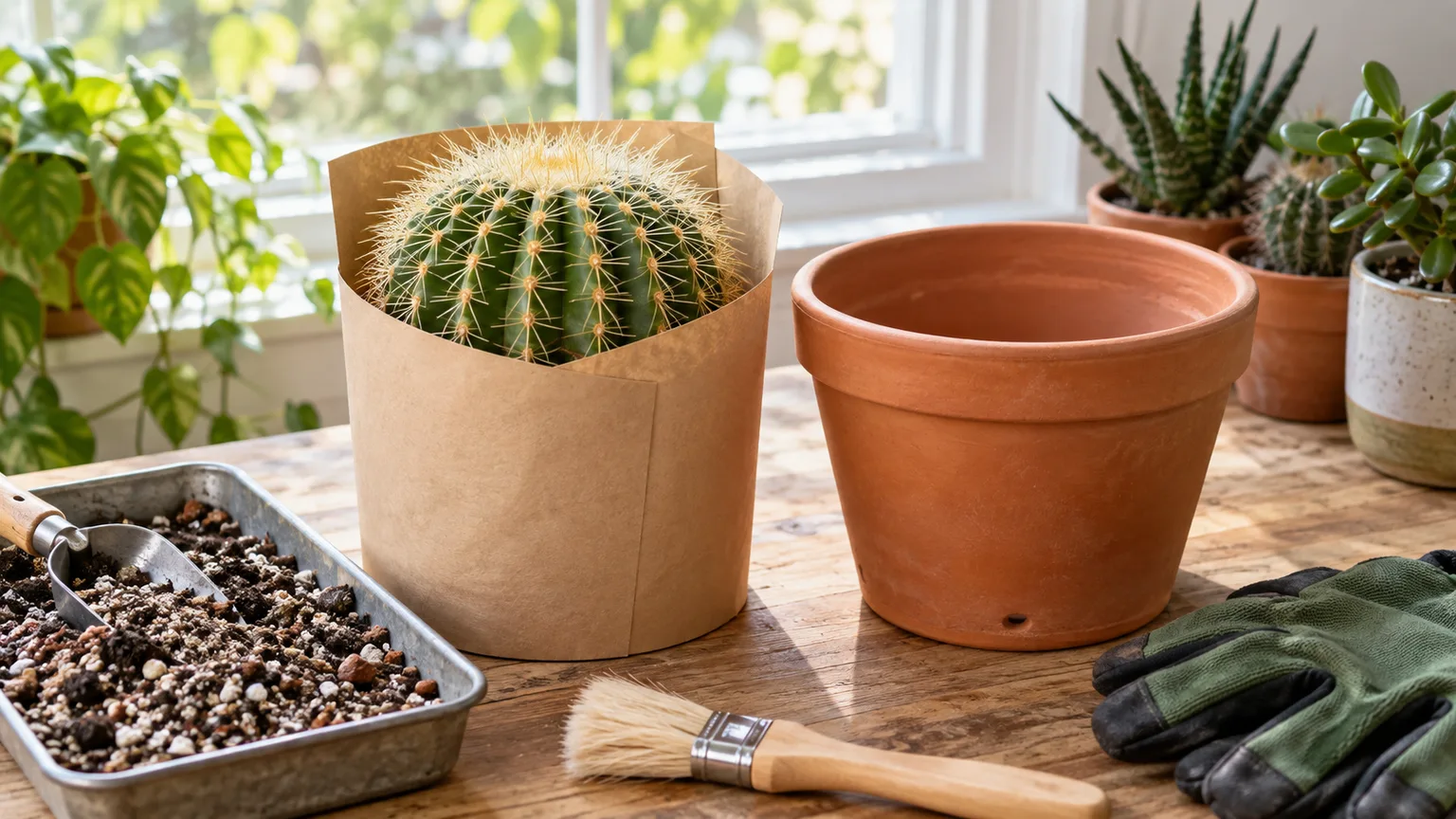
Before starting, clear the route to the new pot, prepare fresh dry mix, wear long sleeves and sturdy puncture-resistant gloves, and protect the trunk with folded cardboard or a thick layer of newspaper. The spines are long, sharp, and arranged in groups along the stem, so do not grip the plant bare-handed or rely on thin gardening gloves. Have another person steady the pot if the specimen is tall, but agree on where to hold it before lifting.
Slide out the root ball without pulling on the crown. Remove loose old mix and look for roots that are dark, hollow, or mushy; firm roots are preferable. Trim only damaged roots with a clean tool, settle the plant at its former depth, and firm the mix enough to keep the trunk upright. If roots were cut or bruised, give those wounds time to dry before the next watering. Do not leave a freshly repotted plant in cold shade or soak it while injured roots are healing.
Prune only for a clear reason
The plant does not need routine shaping. Its natural form is a single spiny trunk crowned with leaves, and the RHS lists no pruning as necessary Royal Horticultural Society. If a branch is dead or damaged, or you have a considered reason to shorten the plant, make the cut during warm active growth with a clean, sharp blade and full spine protection. Keep the milky sap away from skin, eyes, clothing, children, and pets.
Topping a healthy trunk is not a reliable way to keep a specimen small. It can change the silhouette permanently and may cause shoots to form near the cut, but branching is not guaranteed. If the plant no longer fits the room or is becoming unsafe to move, relocating it or choosing a smaller specimen is often a better solution than a drastic cut. A cut section can sometimes be used for propagation, but a cutting will not necessarily develop the same stout, swollen base as a seed-grown plant.
Propagate from seed for a stout trunk; try cuttings for branches
Choose seed if you want a plant that develops the characteristic trunk from the start. The species produces paired dry fruits with small, wind-dispersed seeds Oxford University Plants 400. Collect seed only from a mature plant after the pods dry; enclose the pods before they split if you want to keep the seeds from blowing away. Sow fresh seed in a clean, fast-draining medium, lightly covered, and keep it warm and evenly moist but not waterlogged. The RHS recommends 19–24°C (66–75°F) for seed propagation Royal Horticultural Society. Germination can be uneven, so keep the tray in bright filtered light and ventilate any cover to limit mold.
Stem-tip cuttings are an option when a plant already has a branch or offset, but they are not a shortcut to a miniature version of the original. The University of Arkansas grower cautions that cuttings from slender branches do not form the same caudiform base that makes a seed-grown specimen distinctive University of Arkansas Cooperative Extension. A cutting can still be useful if your goal is to preserve a branch or make another plant, but expect a different shape and slower establishment. Succulents Box’s practical care guide also favors fresh seed as the more dependable route and cautions that cuttings are less predictable Succulents Box care guide.
For a cutting, work in late spring or early summer when warmth supports rooting. Protect yourself from the spines and sap, cut a healthy tip with a sterile knife, then leave the cutting in a dry, airy spot until the cut end is dry and callused. Set it in a small pot of gritty mix, support it upright, and keep it warm in bright indirect light. Keep the mix only slightly moist and let it dry between light waterings; a constantly wet cutting is likely to rot before roots develop. Rooting may take weeks or longer, and the plant may be slow to show obvious new growth. Avoid tugging on it repeatedly to check.
What to expect from flowers
Mature Madagascar palms can produce clusters of white, tubular flowers with yellow throats at the tip of the trunk. The RHS lists flowers around 10 cm across and estimates 10–20 years to maturity Royal Horticultural Society. That is a long-term possibility, not a deadline: age, strong light, warmth, and steady health all matter, and a houseplant may never flower indoors.
To give a mature plant its best chance, provide the brightest light you can, avoid a high-nitrogen feeding routine, and let the seasonal growth cycle proceed without trying to force it with extra water. A summer outdoors in suitable warm weather can provide stronger light than a typical room, but acclimate it gradually and bring it under cover before cold nights. Do not damage the growing tip or repeatedly prune the plant in hopes of triggering flowers.
If a plant blooms and sets seed, collect the pods before they dry and split if you intend to sow them. Flowering is a reward for a well-suited environment, not proof that you have found a special fertilizer or a watering trick.
Diagnose problems by season and trunk firmness
Start with timing, soil moisture, and the trunk—not one leaf in isolation. Check whether the plant is in active growth, whether the root zone is wet or dry, and whether the trunk is firm all the way to its base. This order helps separate a seasonal adjustment from root trouble.
| What you see | First checks | Practical next step |
|---|---|---|
| A few older lower leaves yellow | Season, recent change in light, overall firmness | Remove only fully dry leaves; keep the crown bright and avoid extra watering unless the root zone is dry |
| Many leaves drop in cool weather | Night temperature, cold drafts, wet mix | Protect from cold, reduce watering, and monitor the firm stem for new growth |
| Leaves drop in warm, bright weather | Root-zone dryness, recent move, root condition | If dry through the pot, water fully; if wet or sour-smelling, inspect drainage and roots |
| Trunk base feels soft or dark | Wet soil, blocked drainage, root condition | Stop routine watering; unpot promptly to check for rot and remove only mushy tissue with a sterile tool |
| Trunk looks wrinkled but stays firm | Dry mix, warmth, time since last full watering | If the mix is fully dry and temperatures are warm, water once and reassess before watering again |
| Growth leans or stretches | Direction and strength of available light | Move toward brighter light gradually; rotate the pot over time rather than making a sudden exposure change |
| Aphids appear around flower buds | Inspect the crown and nearby plants | Isolate a potted plant and remove aphids carefully; avoid reaching bare-handed between spines |
RHS describes the species as relatively disease-resistant and notes aphids as a vulnerability while flowering Royal Horticultural Society. For a spiny specimen, inspection is easier and safer before a heavy infestation forms. If the trunk is soft at the base, do not wait for more leaves to yellow; rot can advance while the crown still looks partly healthy.
Handle spines and sap safely
Treat moving, pruning, repotting, and propagation as protected-handling jobs. Wear thick puncture-resistant gloves, long sleeves, and eye protection; use a cardboard collar or padded grip to guide the trunk without squeezing it. Keep the plant away from narrow walkways and from children or pets that might brush against or chew it. The sharp spines can puncture even when the plant looks dry and still.
When a stem is cut or damaged, it can release milky sap Oxford University Plants 400. A peer-reviewed study found potent toxicity in extracts from multiple species of Pachypodium, but that laboratory work does not establish the dose or effects of every household exposure to P. lamerei sap PubMed study. Because the exact risk of contact or ingestion is not settled by that study, avoid skin and eye contact and treat chewing or ingestion as potentially serious. Wash exposed skin promptly; for eye exposure, ingestion, or a puncture wound that causes concern, contact a medical professional or local poison service. Clean tools after cutting and keep sap-contaminated waste out of reach.
Conclusion
Give a Madagascar palm the brightest practical location, a fast-draining mix, and a container or garden site that suits your winter climate. Water thoroughly only after the root zone dries during active growth, then reduce sharply when cool weather or leaf loss slows the plant. Check trunk firmness before deciding whether yellowing is seasonal or a sign of wet-root damage.
Plan for its mature height and spines before placing it, and wear protection before any hands-on work. With light, drainage, and seasonal restraint in place, this is a slow-growing, architectural succulent that can live for years without constant attention.