How to Make an Orchid Grow a New Flower Spike Again
Learn how to make an orchid grow a new flower spike with practical steps for light, watering, feeding, cool nights, old stems, and common reblooming problems.
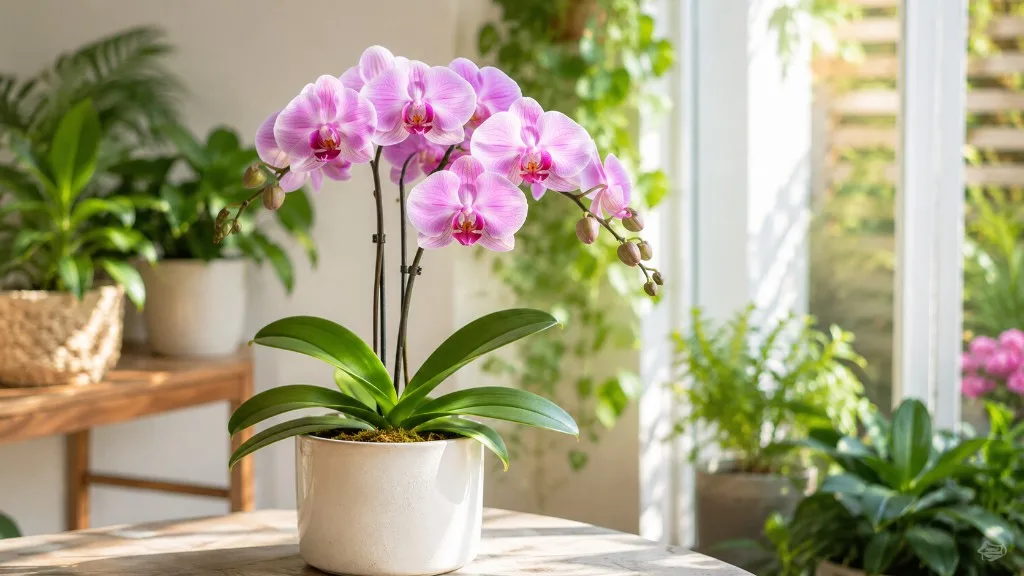
A bare flower stem does not mean your orchid is dead. Most grocery-store orchids are Phalaenopsis, or moth orchids, and a healthy plant can flower again after its first display fades. The key is to keep the leaves and roots strong, then give the right kind of orchid the seasonal cues it uses to start another spike.
You cannot make every orchid bloom on command, and “orchid” is a broad group with different flowering habits. The steps below focus on the common large-flowered Phalaenopsis hybrid; if your plant has a label naming another genus, use its specific seasonal cycle instead of copying a temperature recipe.
First, Check Whether Your Orchid Can Rebloom
Start with the plant, not the old flower stem. A rebloom is more likely when the orchid has several firm leaves, active green or silvery roots, and no signs that the potting medium has stayed wet long enough to damage the roots. A plant that is limp, losing leaves rapidly, or sitting in decomposed, waterlogged moss needs recovery before it can support another flush of flowers.
A Phalaenopsis also needs to be mature enough to flower. A small seedling or a recently divided plant may spend its energy on leaves and roots for a season or more; a store-bought orchid that has already bloomed is usually mature, but that does not mean it has the reserves to bloom again immediately. The American Orchid Society’s review of Phalaenopsis flowering identifies plant maturity, stored energy, and a functional root system as part of the flowering equation, alongside environmental cues.
The first flowers may have been triggered under tightly managed nursery conditions. After bringing the orchid home, it may need months of steady growth before the next natural spike, so treat the interval as a care cycle rather than a failed deadline. Keep the plant if its leaves and roots remain healthy; a dormant-looking flower stem is only one part of the orchid.
What Triggers a New Phalaenopsis Spike
Flowering depends on two things working together: the plant must be ready, and its environment must signal that it is time to reproduce. For many large-flowered Phalaenopsis hybrids, the important seasonal signal is a period of cooler nights after warm, bright growth. The American Orchid Society’s 2025 review explains that these hybrids are strongly temperature-responsive, while some novelty Phalaenopsis flower in warmer conditions when they receive sufficient light.
That variation is why blanket advice such as “all orchids need a cold room” or “feed only in summer” can mislead. Some orchids initiate spikes in response to changing day and night temperatures; others use different cues or can flower at different times of year. The American Orchid Society’s Phalaenopsis bloom guide details these differences.
Even within Phalaenopsis, breeding has produced plants with different habits. Large, round-flowered hybrids are common in shops and tend to respond to cooler nights, while some novelty types with star-shaped flowers can produce spikes in warmer conditions when light is sufficient. If your orchid repeatedly stays leafy through winter despite good health, it may be a different flowering type—or it may simply be waiting for a later seasonal window.
For a common moth orchid, aim to create conditions in which a healthy plant can recognize the change of season, not a dramatic shock. Strong light during the growing period builds reserves, while a modest, sustained difference between daytime and nighttime temperatures helps a mature plant shift from leaf-and-root growth toward flower development. Neither fertilizer nor a pruning cut substitutes for those signals.
Set the Plant Up for a Strong Bloom Cycle
Give the orchid a stable routine after flowering. It does not need to be starved, kept bone dry, or put into complete dormancy; its leaves continue to make and store energy that the next spike will use. Work through the basics below before trying to cool the plant.
Give It Bright, Filtered Light
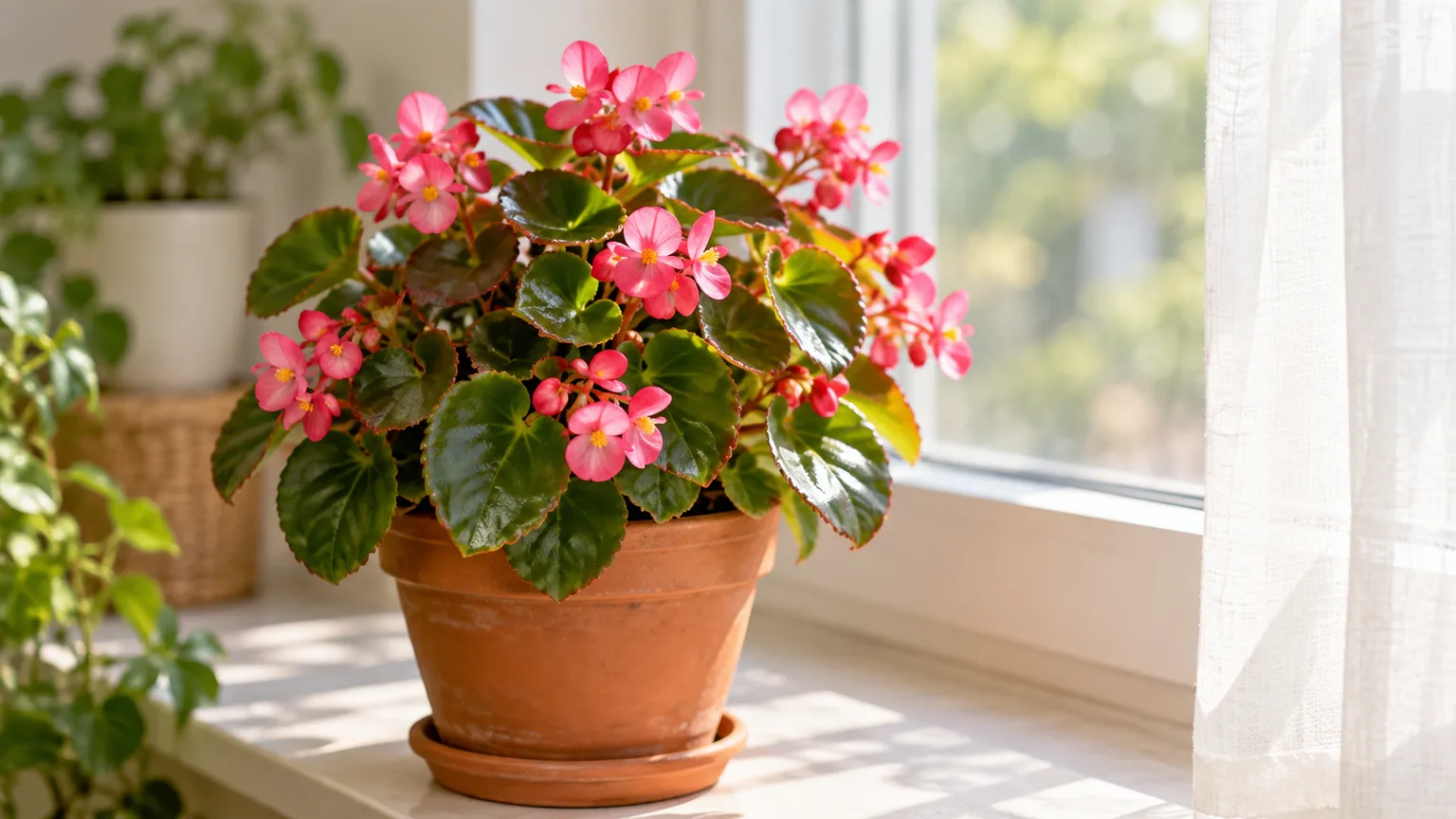
Place a Phalaenopsis where it receives bright light without scorching midday or afternoon sun. An east-facing window often works well; a sheer curtain or a position set back from a bright south- or west-facing window can soften stronger rays. If the room is dim, add a plant light on a regular timer rather than compensating with more fertilizer.
Leaf color is a useful but imperfect clue. Very dark green leaves can mean the plant is growing in low light, while a yellow or red cast may signal too much direct sun or stress; cultivar color and room conditions affect appearance, so consider the whole plant rather than diagnosing by color alone. The American Orchid Society recommends bright-window conditions for Phalaenopsis, and UConn Extension likewise advises bright but indirect light.
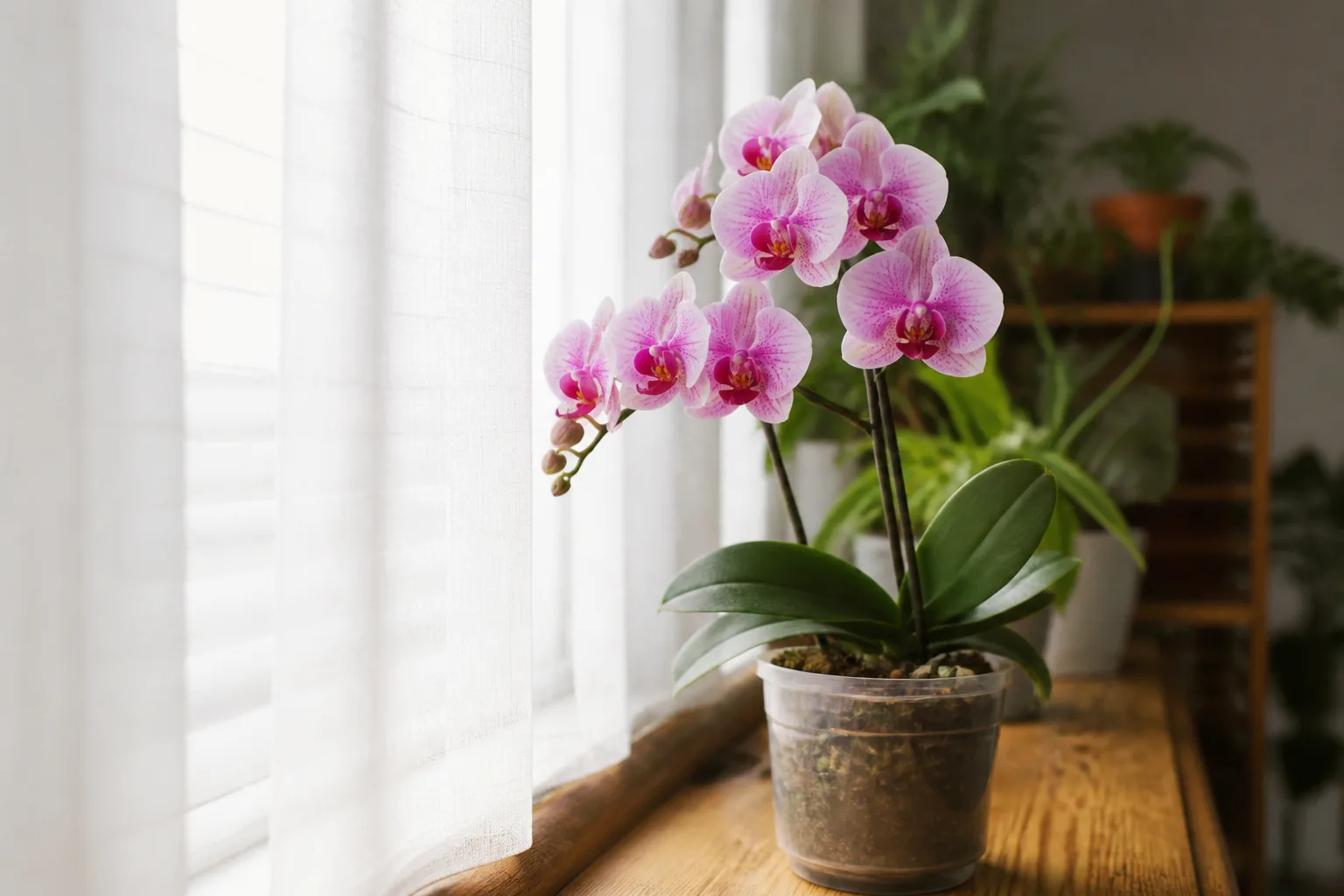
If you use a grow light, keep it at the manufacturer’s recommended distance and run it consistently through the growing period. A plant can maintain leaves in weak light yet fail to gather enough energy for flowering, which is why moving it to a brighter but still protected spot is often a better first adjustment than changing fertilizer. Avoid letting a leaf touch hot glass or placing the plant in a window where direct summer sun heats the leaves.
Water by Root Color and Potting Mix
Do not reduce water just because the orchid has stopped flowering. Water thoroughly when the potting mix is approaching dryness and the exposed roots have turned silvery rather than green, then let the water drain completely. In a clear pot, root color helps you see hydration; in an opaque pot, use the weight of the pot and the feel of the medium near its center.
A loose bark mix may dry quickly, while tightly packed sphagnum moss can stay wet for much longer. Pot size, room temperature, airflow, and season all change how often watering is needed, so a fixed weekly schedule is only a starting point. The American Orchid Society culture sheet advises thorough watering followed by a near-dry interval, with timing adjusted to growing conditions.
Water in the morning when possible and keep water from pooling in the crown, the point where the leaves meet. Never leave the inner pot standing in water after soaking; a decorative cachepot should be emptied. The goal is a cycle of moisture and air around the roots, not a prolonged dry spell or a permanently wet pot.
Feed Gently While It Is Growing
A dilute, complete orchid fertilizer can support new leaves and roots during active growth, but stronger doses do not force a spike. Follow the label and use a weaker solution if you fertilize frequently; reduce feeding when growth slows in cool, dim conditions. If you use rainwater, reverse-osmosis water, or distilled water, choose a complete fertilizer because those sources contain few minerals.
Avoid adding extra fertilizer “for blooms” when the plant has not formed a spike. The American Orchid Society notes that Phalaenopsis growers use different fertilizer strengths and schedules depending on warmth, humidity, medium, and water quality, so there is no single year-round formula for every home. Periodically water with plain water to rinse salts from the mix, especially if you notice crusting around the pot or brown root tips.
Protect the Crown and Root System
Roots need oxygen as well as water. If the medium has broken down into a dense, sour-smelling mass, or most roots are brown, mushy, or hollow, repot after flowering into a snug container with fresh orchid medium and good drainage. Do not move a healthy orchid into a much larger pot just to “give it room”; an oversized volume of wet medium can take too long to dry.
The crown should stay open and dry, and leaves need gentle air movement. Higher humidity can help in a dry room, but misting the foliage is not a substitute for root watering and can leave water trapped between leaves. Keep the plant away from a cold draft, a heater, or a strong air-conditioning vent, where sudden changes can stress leaves and developing buds.
Use a Safe Cool-Night Cue
For many large-flowered Phalaenopsis hybrids, a spell of cooler nights in fall is the clearest trigger for a new flower spike. The American Orchid Society’s culture sheet notes that several weeks of autumn nights around 55°F can initiate spikes; its 2025 article describes large-flowered hybrids responding to night temperatures roughly 15–20°F below daytime temperatures. These are useful guideposts, not an order to expose every orchid to cold.
In an ordinary home, start with a modest temperature change: daytime temperatures in the 70s°F and nights around 60–65°F for a few weeks can provide a cooler-night cue without placing the plant in a chilly, unheated space. A healthy, mature plant may need a longer or shorter period, and some hybrids will not spike until the season changes more noticeably. Do not let leaves touch cold window glass, and do not put the pot outside if nights may drop below the mid-50s°F.
Use a small thermometer near the leaves to check what the plant actually experiences. A thermostat across the room may not reflect a chilly windowsill or a warm shelf above a radiator. Avoid abrupt temperature swings, cold rain, and repeated relocation; consistent nights that are cooler than days are more useful than a single cold snap.
The first sign is a visible spike, not an instant flush of flowers. The American Orchid Society notes that many Phalaenopsis hybrids show a spike after roughly three or four weeks of cooling, while smaller plants or some hybrids can take longer. Keep the cue moderate and give the plant enough time to respond before changing its location again.
Shorter fall days and cooler nights often arrive together, so the signal is seasonal rather than a precise calendar date. UConn Extension also describes fall nights near 55°F as a flower-bud cue, while the American Orchid Society’s spiking guidance notes that warm nights or insufficient light can delay spikes. Orchid grower Mary Gerritsen describes using a bright room by a window that naturally warms during the day and cools at night, a practical household version of the same cue; the spot still needs protection from cold drafts (Gardenista interview). When you see a new spike emerging, return the orchid to its normal comfortable growing conditions instead of continuing to cool it.
What to Do With the Old Flower Spike
Decide based on the type of orchid, the stem’s condition, and how strong the plant is. Pruning does not cause a new basal spike by itself; it only determines whether the plant keeps an old stem that may branch or directs its resources toward new growth. Use clean, sharp scissors, and avoid cutting into leaves, roots, or pseudobulbs.
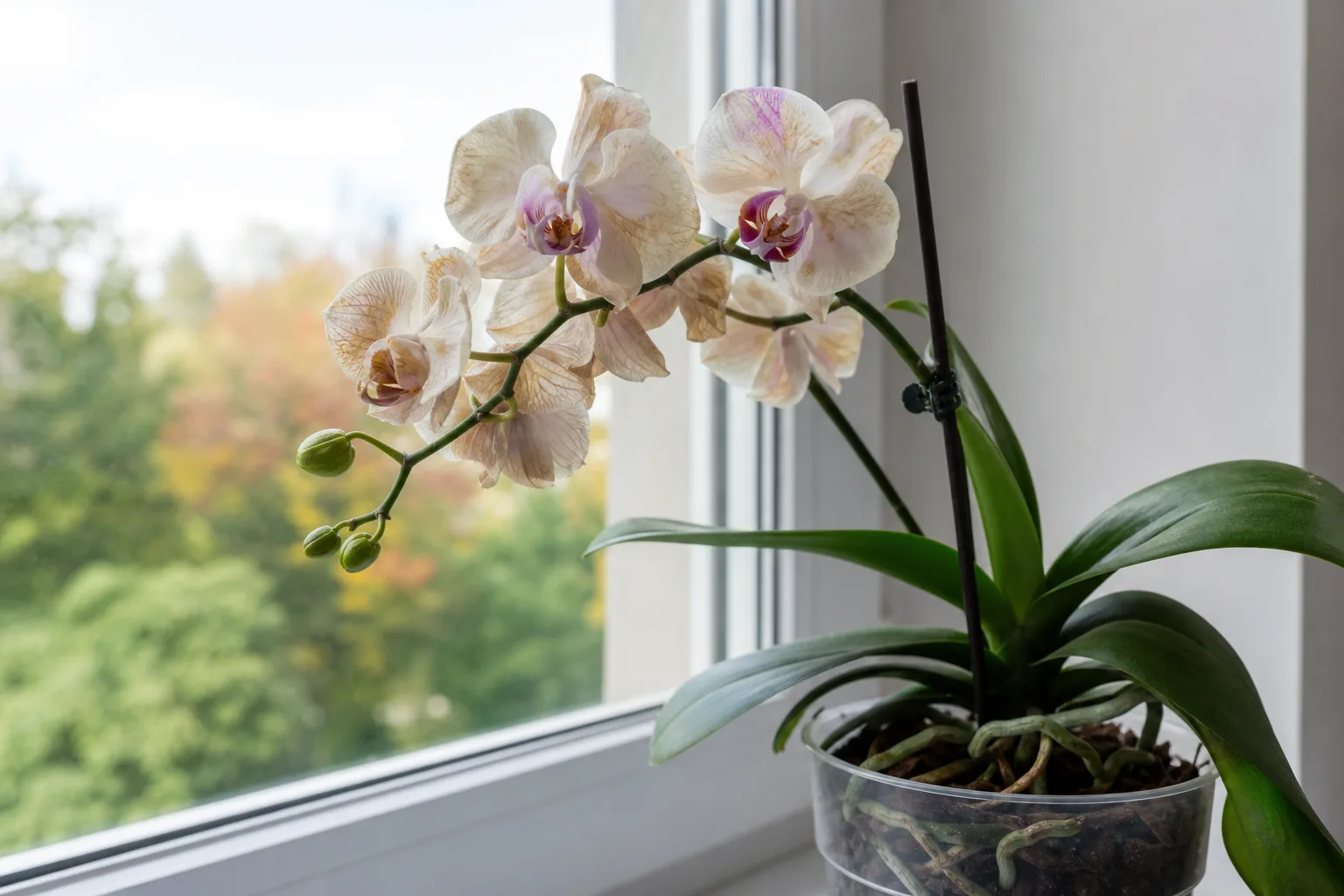
Keep a Green Spike Only if You Want a Side Branch
A robust, large-flowered Phalaenopsis with a fully green spike may produce a secondary branch from an unused node. If you want to try for quicker flowers, the American Orchid Society’s pruning guide recommends cutting just above an unused node, often the second one below the spent flowers. The trade-off is that flowers on a side branch are often fewer or smaller, and another bloom can tax a plant that is already weak.
If your main goal is a strong new flowering cycle, you can instead remove the old green spike near its base once the flowers have finished. That lets the plant put its effort into roots, leaves, and a later basal spike rather than carrying an extra branch. Experienced growers may choose either option; the deciding factor is whether your plant is vigorous enough to support a smaller, earlier rebloom.
Do not apply Phalaenopsis advice to every orchid. The American Orchid Society notes that some novelty Phalaenopsis can bloom repeatedly from a green spike, while most orchid genera flower once per spike and should have a spent stem removed only after it dries. If the label names another genus, check its flower-spike habit first.
Remove a Yellow or Brown Spike at the Base
When a spike turns yellow, tan, or brown and dries down, it is no longer a good candidate for a side branch. Cut it near where it emerges from the plant, leaving the leaves and crown untouched. A spike that is only partly yellow can be trimmed below the dead portion if there are healthy unused nodes, but do not keep cutting higher and higher in search of a bud.
Wipe the blades with rubbing alcohol before cutting and between plants. Make one clean cut rather than crushing or sawing through the stem. If the plant is recovering from root problems, remove the old stem and spend the next several months rebuilding healthy growth before expecting another flower spike.
How to Recognize a Flower Spike Early
A new Phalaenopsis flower spike usually emerges from the stem at the base of a leaf and starts with a flattened, mitten- or “little fist”-shaped tip. A new root also starts near the base, but its tip is round and glossy, often green or reddish, and the root soon points down or outward. These shapes are easiest to compare when the growth is small, so give it a few days before handling or staking it.
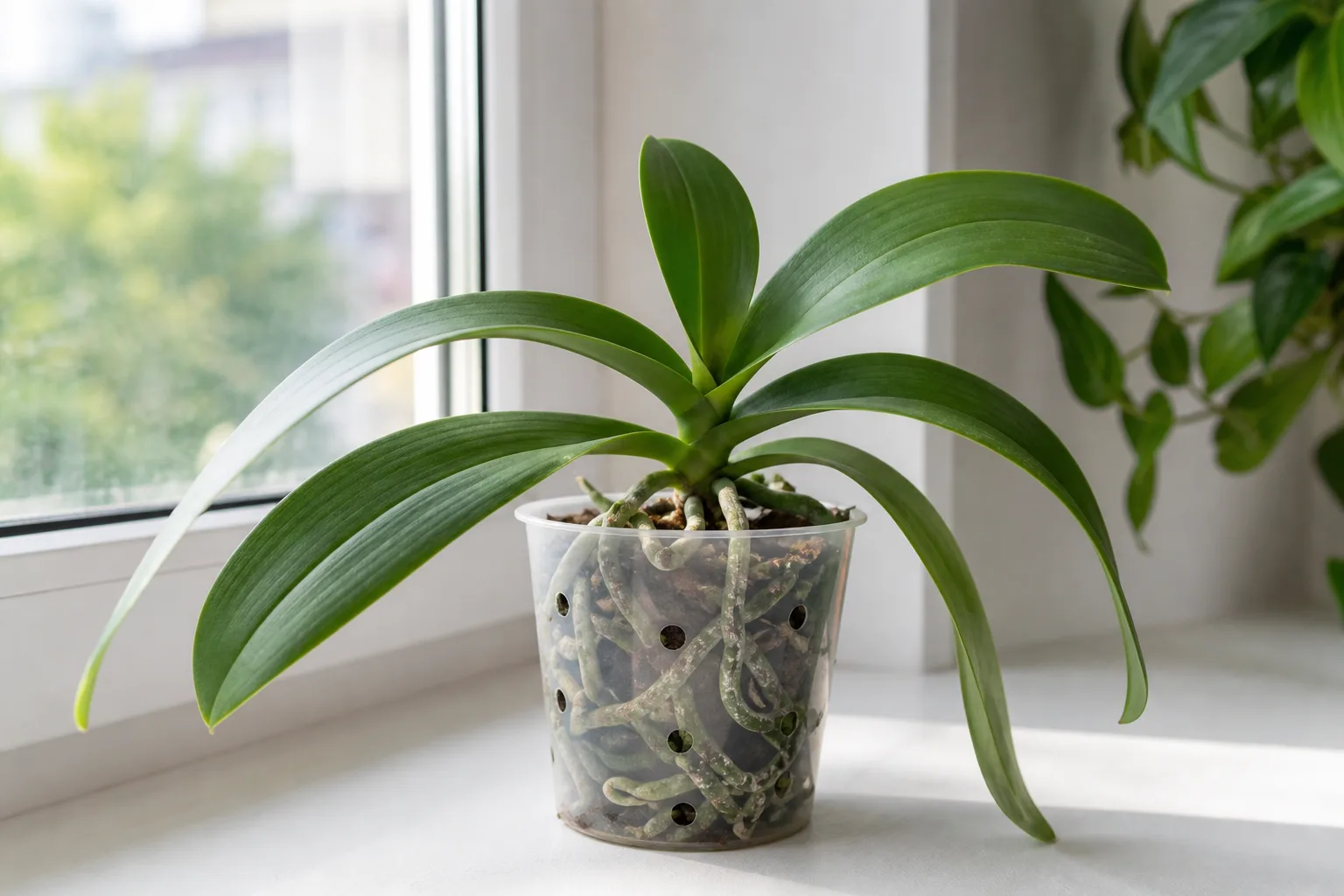
If you are unsure, do not pinch, bend, or cut the growth to test it. Let it lengthen naturally: the spike develops small bracts along a flatter stem, while a root stays cylindrical and develops a silvery velamen coating when dry. A root is not a failed spike; it is useful evidence that the orchid is growing and can help support future flowering.
Care for the Spike as It Grows
Once the spike is visible, keep the orchid in bright, filtered light and return it to its usual warm conditions. Water by the roots and medium as before, and continue light feeding only if the plant is actively growing. The new stem may take several weeks to become obvious, and buds can take additional weeks or months to size up and open; hybrid and home conditions make the timetable variable.
Let the spike grow a few inches before adding a stake, then secure it loosely with a soft clip. Avoid bending the tender tip sharply, because a growing point can break. Turning the pot as the spike develops may make it curve toward the light, so keep its orientation stable if you want a straighter stem.
When buds form, keep the plant away from cold drafts, ripening fruit, heating vents, and abrupt changes in light or temperature. Do not move it repeatedly to showcase the flowers; a short-term display is fine, but return it to stable growing conditions. Bud drop can follow stress, so a calm environment matters more once buds are developing than during the earlier period when you are trying to provide a seasonal cue.
No New Spike? Troubleshoot These Causes
Check the most likely bottlenecks in order instead of changing everything at once. Ask whether the orchid is mature and healthy enough, whether it receives enough light during its growing season, and whether nights actually cool in fall. If any answer is no, correct that condition and give the plant time to respond.
| What you see | Likely bottleneck | First adjustment |
|---|---|---|
| Several healthy leaves but no spike for one cycle | Not enough seasonal light or temperature change | Improve filtered light and track day/night temperatures for a few weeks |
| Very dark leaves and no flowering | Light may be too low | Move closer to a bright window or add a grow light gradually |
| Limp leaves with brown or mushy roots | Root damage or waterlogged medium | Fix drainage and root health before attempting a cool-night cue |
| A new root but no spike | Active vegetative growth; this can be normal | Keep conditions steady and wait for the next suitable season |
| Buds appear, then shrivel | Drafts, sudden temperature swings, or root stress | Stabilize placement, watering, and temperature |
The Orchid Is Still Recovering or Not Mature
A newly purchased orchid may have spent its energy producing the display you bought it for. After the flowers fade, it may grow leaves or roots first; that is productive recovery, not failure. Keep care steady, repot only when the medium or roots need it, and do not stimulate an already stressed plant with extra fertilizer or colder conditions.
If the plant is small, has only a few mature leaves, or has a small root system, it may not yet have enough reserves to carry a long flower stem. A damaged root system also makes it harder to take up water and nutrients. Let the roots recover in airy, appropriately watered medium; the next spike is more likely once you see stable leaves and active roots.
Light or Night Temperatures Are Holding It Back
If the leaves are very dark and the plant is far from a window, improve light before trying to cool it. A bright east-facing window or a filtered south- or west-facing window is often a practical starting point; increase exposure gradually so the leaves do not scorch. Flowering can remain weak even when a plant looks green and alive if it has grown in dim light for most of the year.
If light is adequate, measure nighttime temperature where the plant sits. A warm home with nights close to daytime temperatures may never provide the seasonal difference that a standard large-flowered Phalaenopsis needs, while a cold window can become too chilly. Shift the plant to a spot that is cooler at night but still protected, then wait several weeks before deciding whether the change helped.
Conclusion
To encourage a new orchid flower spike, first make sure the plant is a mature, healthy Phalaenopsis; give it bright filtered light, healthy roots, and consistent moisture; then provide a safe period of cooler fall nights if its hybrid responds to that cue. Choose whether to keep a green old stem for a possible side branch or remove it for a cleaner recovery cycle, and cut fully dead spikes at the base. If no spike appears right away, use the leaves, roots, light, and thermometer as evidence, adjust one condition, and give the plant time to grow.