How to Plant Zinnia Seeds for Reliable Summer Blooms
Plant zinnia seeds after frost in warm, well-drained soil. Learn seed depth, spacing, indoor starts, watering, thinning, and how to avoid root-bound plants.
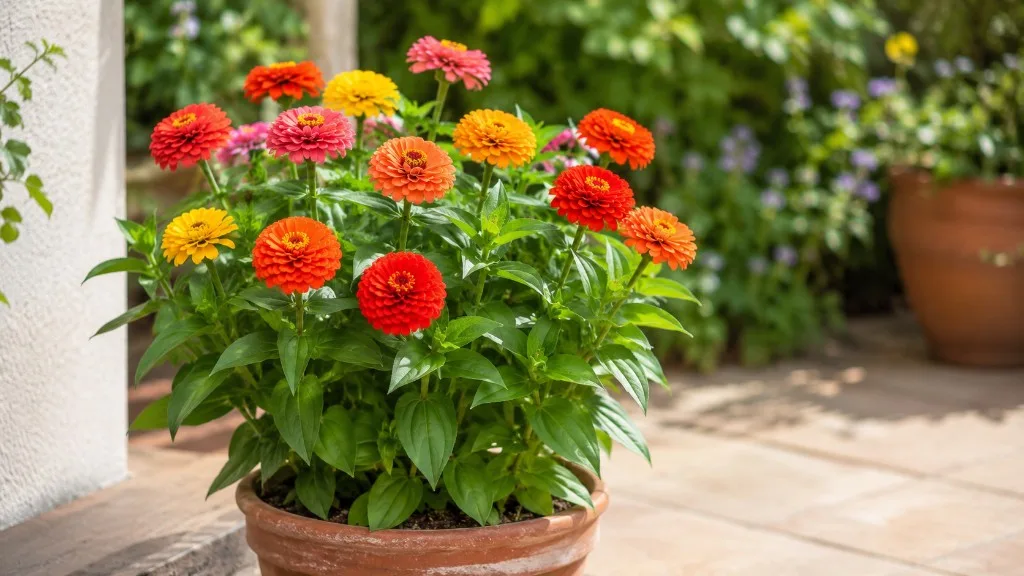
The quick answer: wait for warmth, sow shallowly, and thin
Plant zinnia seeds outdoors after frost danger has passed and the soil has warmed; a temperature near 70°F is a practical target for quick germination. Sow about 1/4 inch deep in a sunny, well-drained spot, keep the seed zone evenly moist, and thin seedlings to the spacing on the packet once you can identify the strongest plants. In a short season, start them indoors only four to six weeks before the last expected frost so they do not outgrow their pots before planting day. (Savvy Gardening) (Gardeners’ Path)
Direct sowing is usually the simplest method because zinnias establish where they will grow and avoid transplant stress. Indoor sowing helps when summer arrives late or you want flowers sooner, but starting too early can backfire: seedlings grow quickly and dislike rough root handling.
Choose the sowing route that fits your season
Start with the warm growing time your garden has, not the number of weeks you wish you had. If frost comes early and soil warms quickly, sowing into the final bed is reliable and needs little equipment. If frost arrives late, summers are short, or you want a bed to fill sooner, a short indoor start gives the plants a few weeks of growth before outdoor conditions settle.
Direct sowing or a short indoor start?
Direct sow when you can wait until frost risk has passed and still have enough season for the cultivar to mature. This is the better default for many gardens: zinnia seeds are easy to handle, the plants grow quickly, and they do not have to recover from a move. It also avoids the common indoor problem of seedlings stretching toward weak window light or sitting in cramped cells while the garden is still cold.
Choose indoor sowing when the season is tight, but plan the transplant date before sowing. Start a small number in individual cells or pots, then move them outdoors while they are young and compact. An indoor start buys time under lights; it does not make a frost-tender plant safe to put in cold ground.
Time planting by frost, soil warmth, and bloom deadline
Zinnias are warm-season annuals that can be damaged by frost and slow down in cold, wet ground. For outdoor sowing, wait until local frost danger has passed and the bed is no longer cold and saturated. Many practical growing guides use about 70°F as a warm-soil benchmark, but steady warmth, drainage, and the forecast matter more than one reading taken on one afternoon. (Savvy Gardening) (RHS)
“Plant in May” is not useful for every gardener. A northern garden may still have chilly nights in May, while a mild region may have warm soil much earlier. Use the average last-frost date as a planning estimate, then wait for the actual weather and soil to cooperate. The Royal Horticultural Society’s late-spring and early-summer timing is written for British conditions; elsewhere, use its underlying advice—sow in warmth and keep tender plants out of frost—rather than copying its months. (RHS)
Check the packet’s “days to maturity” before making a late sowing. Count backward from your typical first fall frost and leave a buffer for cool spells; a cultivar that needs about 70 days is unlikely to make a full show if only six frost-free weeks remain. Choose a faster, compact variety, buy a young plant, or save that packet for next season rather than expecting a late sowing to produce a mature cutting patch.
Choose seed and site for the garden you want
A seed packet is a planting plan, not just a color label. Check the cultivar’s mature height and width, time to flower, disease notes, and whether it is open-pollinated or an F1 hybrid. Tall Zinnia elegans types suit cutting rows and back borders; compact or narrow-leaf types fit pots, edging, and tighter beds. If you want saved seed to resemble its parent, open-pollinated varieties are the more predictable choice; seed saved from an F1 hybrid may not come true.
Match cultivar size to sun, soil, and space
Give the bed full sun for most of the day and soil that drains after rain. Zinnias tolerate a range of ordinary garden soils, but a low spot that stays waterlogged is a poor seedbed: small seeds need moisture to sprout, not a saturated, airless layer that can rot them. Loosen compacted soil when it is not wet and add finished compost when the bed needs better structure; fertilizer is not a substitute for drainage or sunlight. (NC State Extension) (Colorado State University Extension)
Plan final spacing before making a furrow. Seed packets give a range because dwarf edging varieties and tall branching cut flowers do not need the same room. Wider spacing improves airflow and makes flowers easier to reach; tighter spacing can make a cutting bed look full but may trap humidity around the leaves. When unsure, use the packet’s wider recommendation and fill gaps with another sowing later rather than crowding every seedling now. (Wisconsin Horticulture) (Gardeners’ Path)
How to direct-sow zinnia seeds outdoors
Direct sowing keeps the roots in place and works wherever the frost-free season is long enough. You need seed, a rake or trowel, gentle water, and a label. Special seed-starting gadgets and fertilizer are optional; a prepared bed and steady moisture matter more.
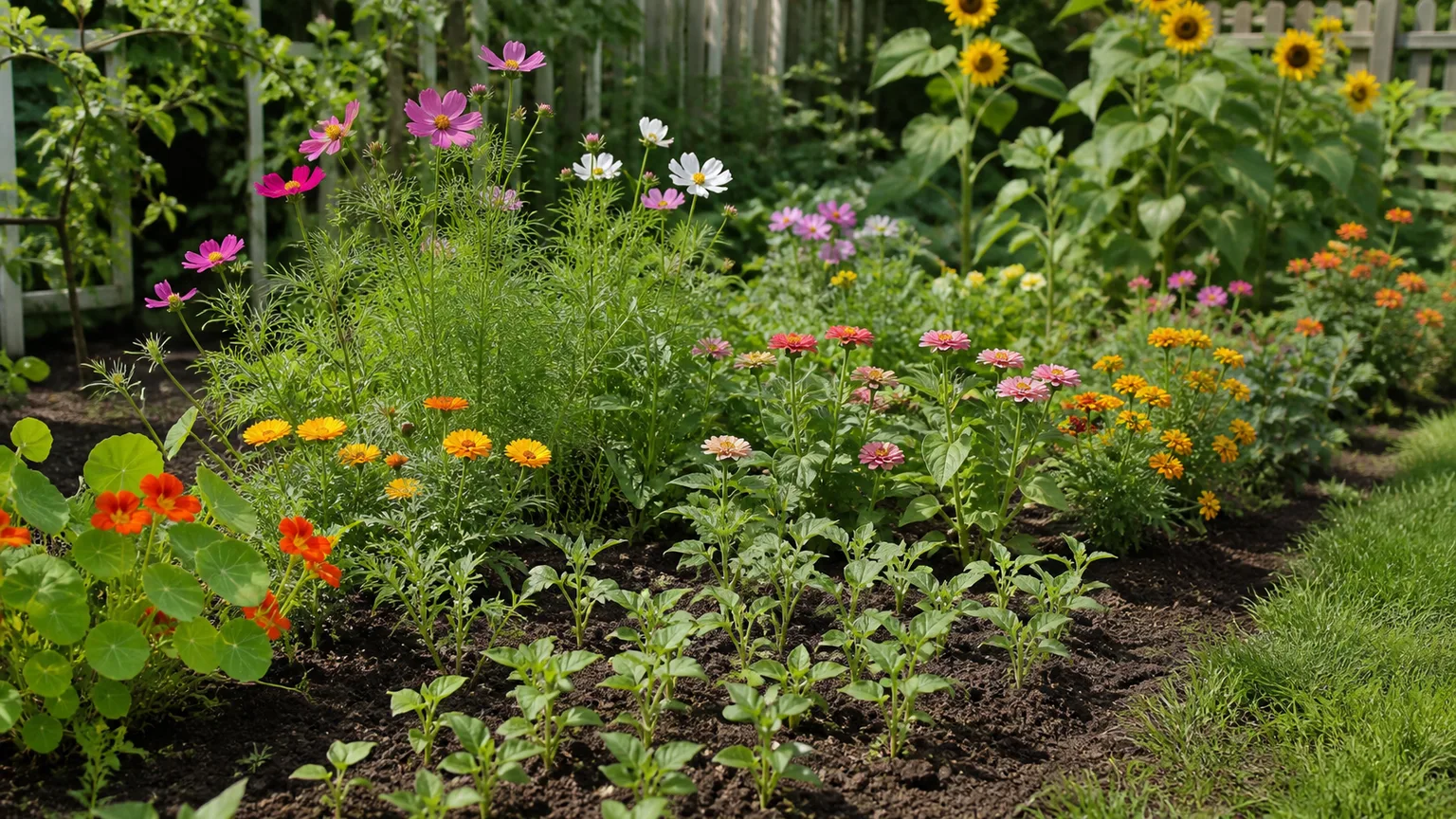
Prepare and water a fine seedbed
Remove weeds before sowing because they are hardest to distinguish from flower seedlings when both are tiny. Rake the top few inches until level and crumb-free enough for seed to rest against soil instead of disappearing into a large crack. If the bed is dry, water it first and let excess drain. A pre-moistened seedbed is easier to sow than one that turns to mud when you water over newly placed seed.
Use a shallow row for a cutting patch or mark planting stations for a border. Leave room for the mature plant, not only the seedling you see today. Label each row with the variety and sowing date; this is helpful if you are also trying to identify young weeds or compare colors.
Sow shallowly, cover lightly, and label
Place seeds roughly 1/4 inch deep and brush a thin layer of fine soil over them. Follow the packet if that cultivar specifies a different depth. Seeds left at the surface can dry after a sunny or windy day, while seeds buried too deeply may use up their stored energy before reaching the light. For an even row, sow individual seeds a few inches apart and thin later, or place two seeds at a station if germination has been unreliable. Avoid dropping a dense pinch into one spot. (Gardeners’ Path)
Water with a fine spray or a gentle stream directed at the soil. A hard hose jet can uncover or wash away shallow seed. Check the surface daily in warm weather until emergence: it should stay lightly moist, not soggy. If rain is forecast, skip watering by habit; if the surface crusts or dries, moisten it gently instead of flooding the row.
Thin seedlings to their final spacing
Do not leave every sprout in place simply because it germinated. Once seedlings develop their first true leaves—the leaves that appear after the initial seed leaves—choose the strongest ones and thin according to the cultivar’s mature size and packet guidance. Compact varieties may be set closer; tall zinnias need more room. Wider spacing also helps air move through the bed in humid weather. (Gardeners’ Path) (Wisconsin Horticulture)
If seedlings are small, you can lift an extra one with a spoon and replant it only if the roots stay intact. Once plants are larger or their roots are tangled, snip extras at soil level with clean scissors instead of pulling; pulling can loosen the roots of the seedling you mean to keep. Thin early, before crowded plants stretch or form a damp canopy.
How to start zinnia seeds indoors
Indoor sowing is a scheduling tool for gardeners with a short warm season, not a reason to start zinnias as early as possible. Use fresh seed and clean cells or small pots with drainage holes, filled with lightweight seed-starting mix. Moisten the mix before filling so it is evenly damp but not dripping; that makes it easier to keep seeds at a consistent depth.
Use small cells and a short schedule
Sow one or two seeds in each cell about 1/4 inch deep, cover lightly, and water gently. If both germinate, snip the weaker seedling at the mix line instead of pulling its roots through the one you are keeping. An individual cell reduces root disturbance, but peat pots are not essential; any container with drainage can work if you can remove the root ball without tugging on the stem.
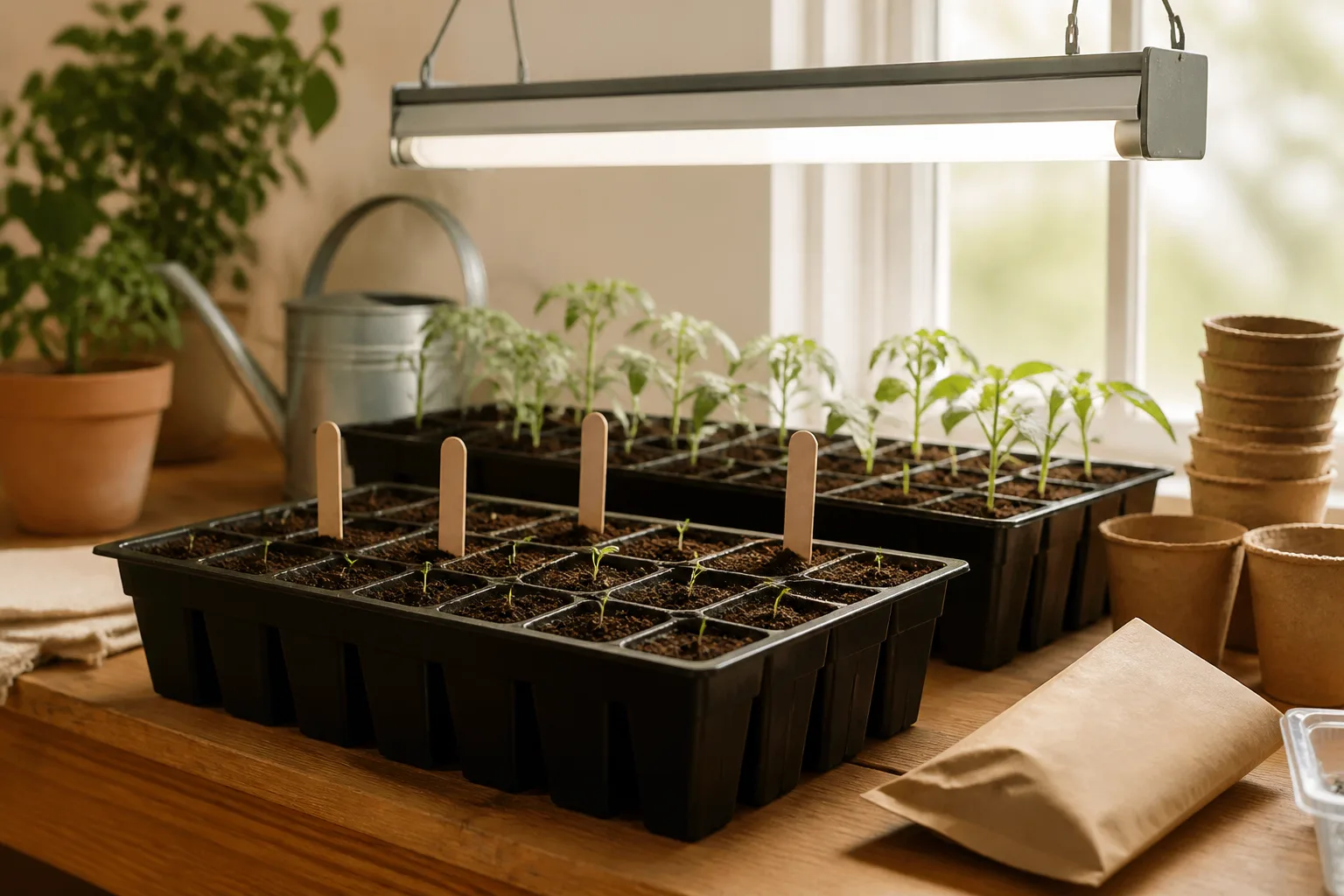
Keep the mix warm and evenly moist until seeds emerge, then remove any humidity cover and give the seedlings strong light. A dim windowsill often produces thin stems that lean; a bright grow light kept close to the canopy is usually easier to manage. Keep cells moist as they grow, but do not leave them standing in water. Colorado State Extension cautions that starting annuals too early can leave them crowded and spindly before they can safely go outdoors. For zinnias, four to six weeks before the expected last frost is usually plenty. (Colorado State University Extension) (Savvy Gardening)
Harden off and transplant without stalling plants
Indoor seedlings have not experienced direct sun, wind, or outdoor temperature swings. Acclimate them for about a week: begin in a sheltered bright-shade spot for a short period, then gradually lengthen their time outside and introduce more sun and breeze over several days. Bring them in or protect them if frost or an abrupt cold spell threatens. Hardening off reduces shock; it does not make a tender annual frost-proof. (Colorado State University Extension) (RHS)
Transplant on a mild day into a prepared, watered bed after frost danger has passed. Water each cell first, then slide out the root ball while supporting the mix rather than gripping the stem. Set the seedling at its original depth, firm soil lightly around it, and water at the base. Keep the root zone evenly moist while it establishes, then shift to deeper watering as it puts on new growth.
Grow zinnias from seed in containers
You can sow directly into a patio pot, which avoids transplanting and makes it easy to move the plants for sun. Choose a container with drainage holes and enough volume for the cultivar’s mature size; compact varieties are less likely to flop or dry out quickly than a tall cutting type in a small pot. Use potting mix rather than dense garden soil, which can compact in a container.
Sow at the same shallow depth as in a bed, then thin to the number of plants the pot can support. A large planter may hold several compact zinnias; a small pot may be best with one. Pots warm quickly, which can help germination, but they also dry faster. Check the mix daily in hot, windy weather and water when the surface begins to dry. Do not leave the container sitting in a full saucer.
Troubleshoot slow or uneven germination
If nothing appears, do not immediately dig up the row. Zinnia seed often sprouts within about a week in warm, moist soil, but a cool spell can stretch that window. Wait roughly 10 to 14 days before deciding a sowing has failed, while keeping the surface lightly moist rather than continually soaked. (Gardeners’ Path) (Savvy Gardening)
Then check likely causes in order: Was the soil still cold? Did the seedbed dry after sowing? Did heavy watering expose or bury the seed? Was the packet old or stored somewhere hot and damp? Correct the cause before reseeding. If just a few stations failed, fill the gaps rather than disturbing healthy seedlings.
If sprouts collapse at the soil line, excess moisture, poor airflow, or contaminated mix can contribute to damping off. Remove collapsed seedlings and make sure trays drain freely. If plants are tall, pale, and leaning indoors, increase light instead of feeding them. Cold wet ground, excess depth, and inconsistent moisture are more common problems than a lack of soaking or a specialized germination treatment. (RHS) (Colorado State University Extension)
Extend the bloom window with succession sowing
One sowing can flower for a long stretch, especially if you cut blooms or remove fading ones, but the first plants may slow later in summer. To spread the display, sow a short row about two to three weeks after the first planting, then decide whether another batch fits your remaining season. Succession is most useful for cutting gardens and large beds where fresh plants can replace older ones. (Savvy Gardening)
Use the cultivar’s days to maturity and your usual first-frost date before starting another batch. A late sowing that cannot flower before cold weather may add foliage but will not deliver the fresh bloom crop you want. Keep later seedlings labeled and avoid crowding them against older plants; if space is limited, remove tired plants before sowing the next row.
Conclusion
Plant zinnia seeds after frost risk has passed, when the soil is warm, then sow shallowly in sun and keep the seed zone lightly moist until seedlings emerge. Direct sowing is the simplest route when the season is long enough; a short indoor start helps in cooler or shorter seasons if seedlings get strong light and move outside young with their roots intact.
Let the packet set final depth, spacing, and maturity expectations for your cultivar. Thin crowded seedlings early, wait for a warm planting window, and sow another batch only when there is enough frost-free time left for it to flower. Those decisions matter more than soaking seeds, buying special pots, or following a calendar date that does not match your garden.



