How to Harvest Chamomile and Know It's Ready to Pick
Learn how to harvest chamomile at peak bloom, read the flower-head signs, pick without pulling up the plant, and dry and store the flowers safely.
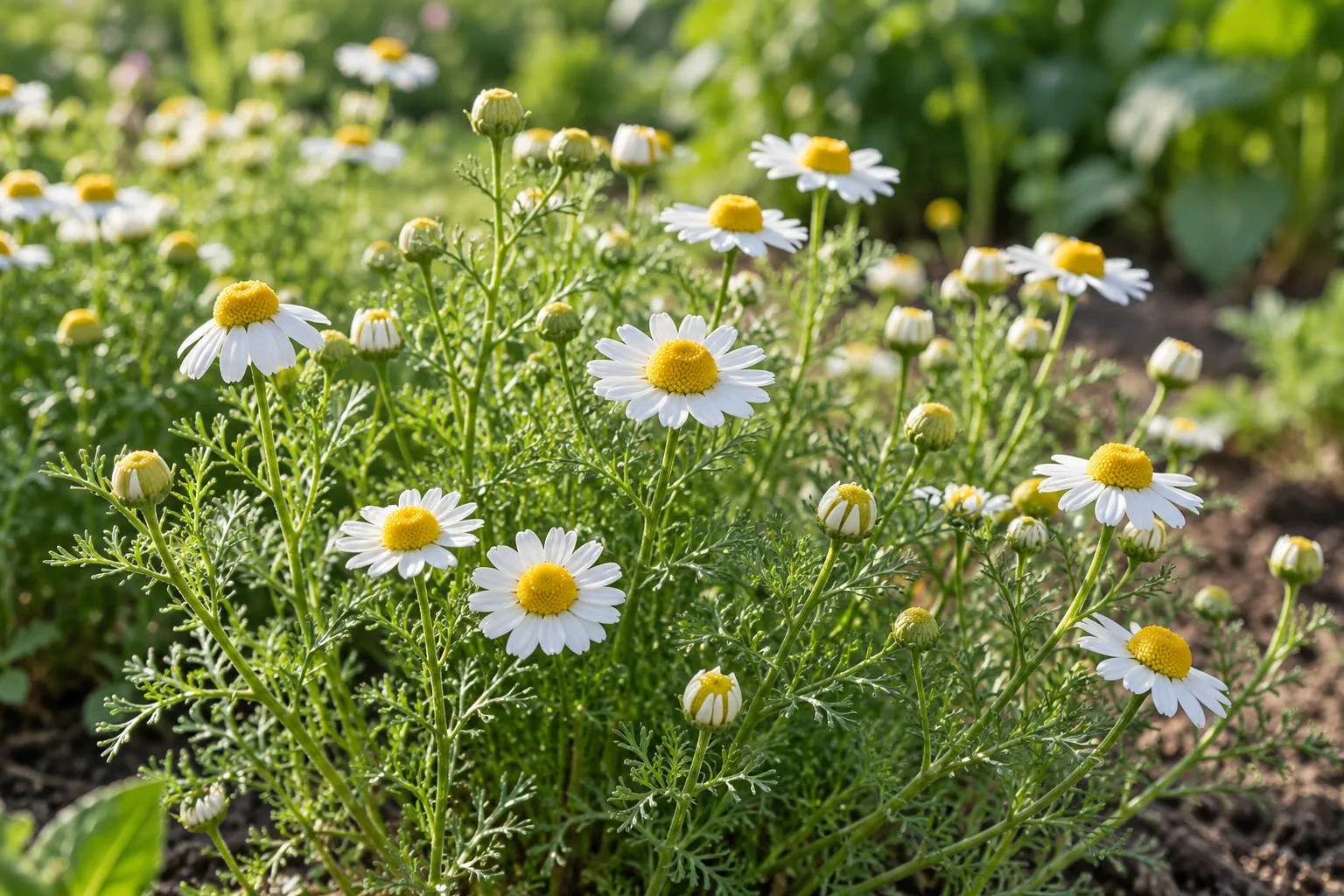
The quick answer: pick fully open, fresh flower heads
Harvest chamomile when the flower head is near full bloom: the white petals have opened and sit almost flat around a well-developed yellow center, but they have not curled far backward or begun to brown. Pick on a dry day after dew has evaporated, remove the flower heads just below their bases, and leave the foliage and some blooms on the plant.
The best time is a stage, not a date on the calendar. Chamomile opens flowers over a stretch of weeks, and individual heads on the same plant can be at different stages. Make several light passes through the patch instead of stripping every stem at once.
Which chamomile can you harvest?
The main chamomiles grown for herbal use are German chamomile (Matricaria chamomilla, also sold under the name Matricaria recutita) and Roman chamomile (Chamaemelum nobile). Both have daisy-like flowers, and their flower heads can be harvested, but they differ in growth habit and flavor. German chamomile is an annual that grows upright and readily self-seeds; Roman chamomile is a low-growing perennial ground cover and is often more bitter. The University of Wisconsin–Madison Extension profile describes German chamomile as one of the common tea species and says to harvest its flowers near full bloom.
If you bought seeds or a labeled plant, use the name on the packet to guide your expectations. A low mat may be Roman chamomile; a taller, branching plant with finely divided leaves is more likely German chamomile. In either case, the flower head—not a leafy stem bundle—is the useful harvest for a simple chamomile infusion.
Do not put an unidentified roadside daisy into a cup because it looks close enough. Pineapple weed (Matricaria discoidea) is a relative that lacks the white ray petals, and other daisy-family plants can be difficult to tell apart without more than a casual glance. The Wisconsin Extension profile notes that some look-alikes in Anthemis can be poisonous. If you cannot confidently identify a plant, leave it unharvested for food.
Signs a chamomile flower is ready to pick
A ready head looks open and fresh rather than tightly closed or tired. The white ray petals have unfolded and spread outward, while the central yellow disk is active and filled with open florets. You may also notice the sweet, apple-like scent associated with German chamomile, but aroma alone cannot confirm plant identity or readiness.
Plantura offers a more specific visual cue: the tiny yellow tubular florets in the center should be open, with about two-thirds of them flowering. In practice, you do not need to count them. Look for a center that is visibly developed rather than green and closed, and petals that have opened but still look fresh. The Plantura harvesting guide and Epic Gardening’s harvest guide both describe picking around this open, near-full-bloom stage.
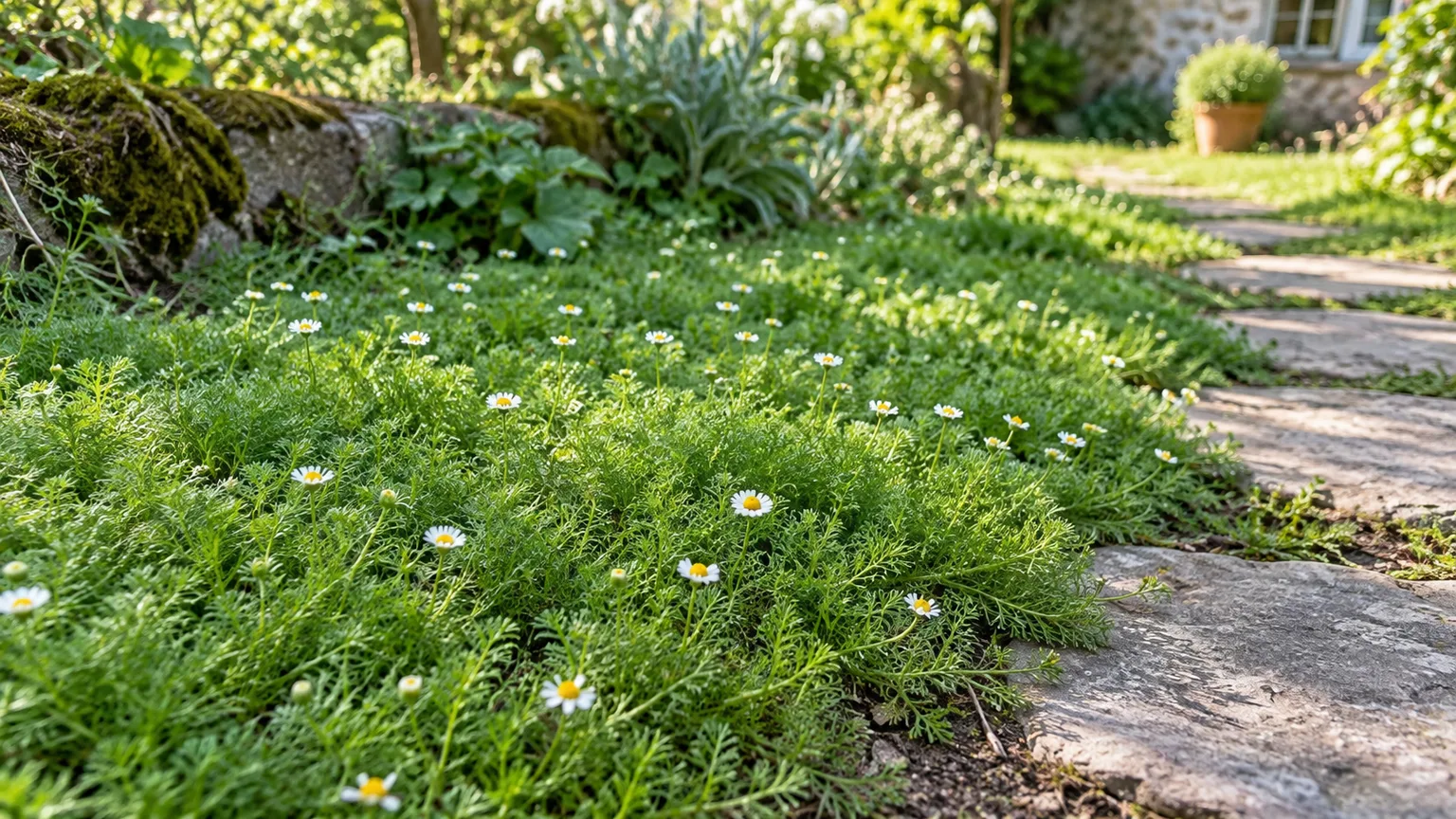
Look for open petals and an active yellow center
For most home gardeners, the useful target is just after the petals have finished opening, while they are still level or only beginning to tilt down. A flower can be picked if a few petals have started to angle away from the center; that small change does not mean you missed the window. What matters is that the head is still full, clean, and aromatic rather than dry and collapsing.
This stage balances size, ease of picking, and freshness. Closed buds are small and have not reached full bloom. At the other end, the yellow center becomes taller and more prominent as the white petals turn sharply backward; that head is moving toward seed, so harvest it only if it is still sound and you want to use it promptly.
Skip buds and heads that are going to seed
Do not harvest every head that looks white. A tight bud has little flower material, and a brown or brittle head has already passed its best point for a fresh harvest. Heads with black spots, mushy tissue, visible mold, or heavy insect damage should be left out of a tea batch.
The University of Wisconsin–Madison Extension notes that spent flowers form yellowish-brown seeds and that German chamomile readily self-seeds if flower heads are left on the plant. That gives you a clear choice: pick heads that are fresh and open for drying, or deliberately leave a few sound heads to mature for seed. Do not confuse the seed-saving stage with the best stage for a clean, mild flower harvest.
Choose a dry window, not just a time on the clock
Pick after surface dew has dried and before the flower heads have been baked by intense heat. Sources vary on the exact hour: Epic Gardening advises a morning harvest after dew is gone, while Plantura recommends a sunny midday harvest when the flowers are fully open. The shared conditions are more useful than a fixed clock rule: choose a dry window, avoid wet flowers, and do not leave cut blooms sitting in heat.
In a hot climate, late morning after dew dries may be the safer quality window. In a cool or cloudy climate, wait until the heads are dry even if that happens closer to midday. If it rained overnight or the patch is still wet from irrigation, postpone picking; fresh wet material takes longer to dry and is easier to bruise or pack together.
If you need to rinse visibly dusty or soiled flowers, use cool clean water gently and spread the heads out immediately so surface moisture can evaporate. Advice differs on washing: Plantura and Roots and Refuge recommend leaving clean, unsprayed flowers unwashed, while the University of Maine Cooperative Extension’s herb-preserving guidance recommends washing and patting herbs dry before preservation. For a clean patch, inspect and sort the heads without rinsing; if they are visibly dusty or soiled, a gentle rinse is reasonable, but do not dry a wet pile. If you do not know whether the plant was treated with a product that is unsuitable for edible flowers, do not use it for tea; rinsing cannot resolve an unknown treatment history.
Gather a few simple tools
For a small bed or a pot, you need clean fingers or small sharp snips and a shallow basket or tray. A basket keeps the flower heads from being crushed under their own weight. Avoid a deep bag where freshly picked blooms can heat up or become compressed before you get them indoors.
If you use scissors, clean the blades before starting and make a clean cut just behind each flower head. You are not pruning the plant back to the soil, so long-handled hedge shears are unnecessary. A small container you can carry beside the plant also helps you separate good open heads from spent or damaged ones as you work.
How to harvest individual flower heads
Harvest one flower head at a time and hold the stem steady so you do not tug the shallow-rooted plant. Pinch or snip immediately below the flower base, leaving most of the leafy stem in place. The Wisconsin Extension profile likewise describes snipping the inflorescence from the stem.
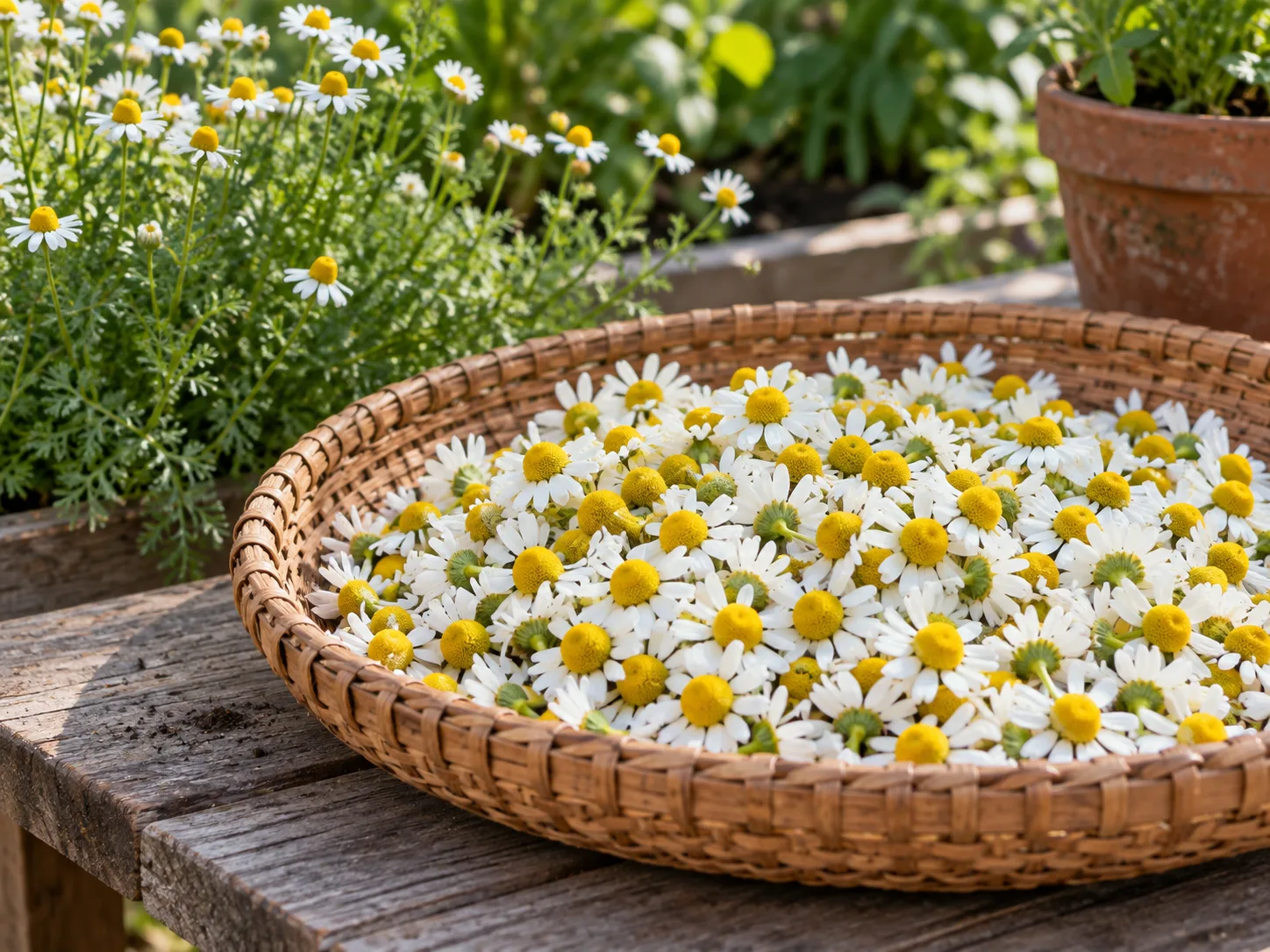
Pinch or snip a small patch
On a few plants, slide your thumb and forefinger just beneath the flower head and snap it off with a small upward motion while your other hand steadies the stem. If the head resists, use snips instead of pulling harder. The aim is to remove the bloom cleanly, not to bend the branch or uproot the plant.
Drop each head into a basket rather than holding a tight handful. Keep the basket out of direct sun while you finish picking, especially if the patch is large or the weather is hot. When you are done, sort through the flowers and discard leaves, stems, insects, and heads that are past their prime.
Use a picking comb only on a dense stand
A handheld berry or flower comb can speed up a mature, dense patch, and gardeners who grow large quantities sometimes use one to comb ripe heads from the stems. It is less selective than hand-picking, though. It may collect buds, foliage, or late flowers along with the ready heads, so it is a poor choice for a small plant or an uneven patch.
Use a comb only when most flowers are at a similar stage and you can sort the harvest afterward. Hold the stems gently and make a light pass over the top growth; do not rake down into the crown. The experienced growers at Roots and Refuge describe both pinching individual flowers and using a rake-style harvest for larger amounts, which is a practical distinction: hand work gives control; a comb trades some selectivity for speed.
Keep the plant flowering and leave some seed
Chamomile does not bloom all at once. Revisit the plant every few days while it is producing fresh heads, and pick only the ones that have reached the open stage. This gives the rest time to develop and avoids the common mistake of waiting for an entire plant to look uniformly ready.
Removing spent flower heads can keep German chamomile from putting all its energy into seed and may extend its flowering period, but it cannot guarantee another flush. The University of Wisconsin–Madison Extension reports that German chamomile can continue flowering until seed ripens or frost arrives if it is deadheaded. Weather, plant health, and how much foliage remains still matter, so treat a later flush as possible rather than promised.
Leave a portion of blooms for pollinators and seed. Bees and other insects visit the flower heads, and mature German chamomile seed can help the annual reseed. You do not need to leave every blossom: set aside a few healthy heads in an out-of-the-way patch, stop harvesting them, and wait until they turn dry and yellow-brown before collecting the seed. Roman chamomile is perennial, so its return depends on the living plant as well as any seed it produces.
Use fresh flowers or prepare them for drying
Freshly picked flower heads can be used promptly, but they are delicate and do not keep like dried flowers. If you plan to make a fresh infusion, pick only the number of heads you expect to use and keep them cool and clean until brewing. Remove bits of stem and foliage so the cup contains the flower heads rather than a pile of bitter leaves.
For a pantry supply, begin drying the same day if possible. First inspect the harvest for insects, damaged heads, and plant debris. If you washed the flowers, let them drain and spread them out until no water is visible on the petals or center; excess moisture adds time and raises the chance that flowers will soften before they dry.
Dry chamomile with air movement and patience
The goal is not simply to make the petals feel crisp. The thick yellow center can hold moisture after the delicate white petals have dried, so check the whole head before sealing it away. Penn State Extension explains that successful herb drying depends on heat, low humidity, and air movement; flowers need to be dry enough to avoid mold in storage.
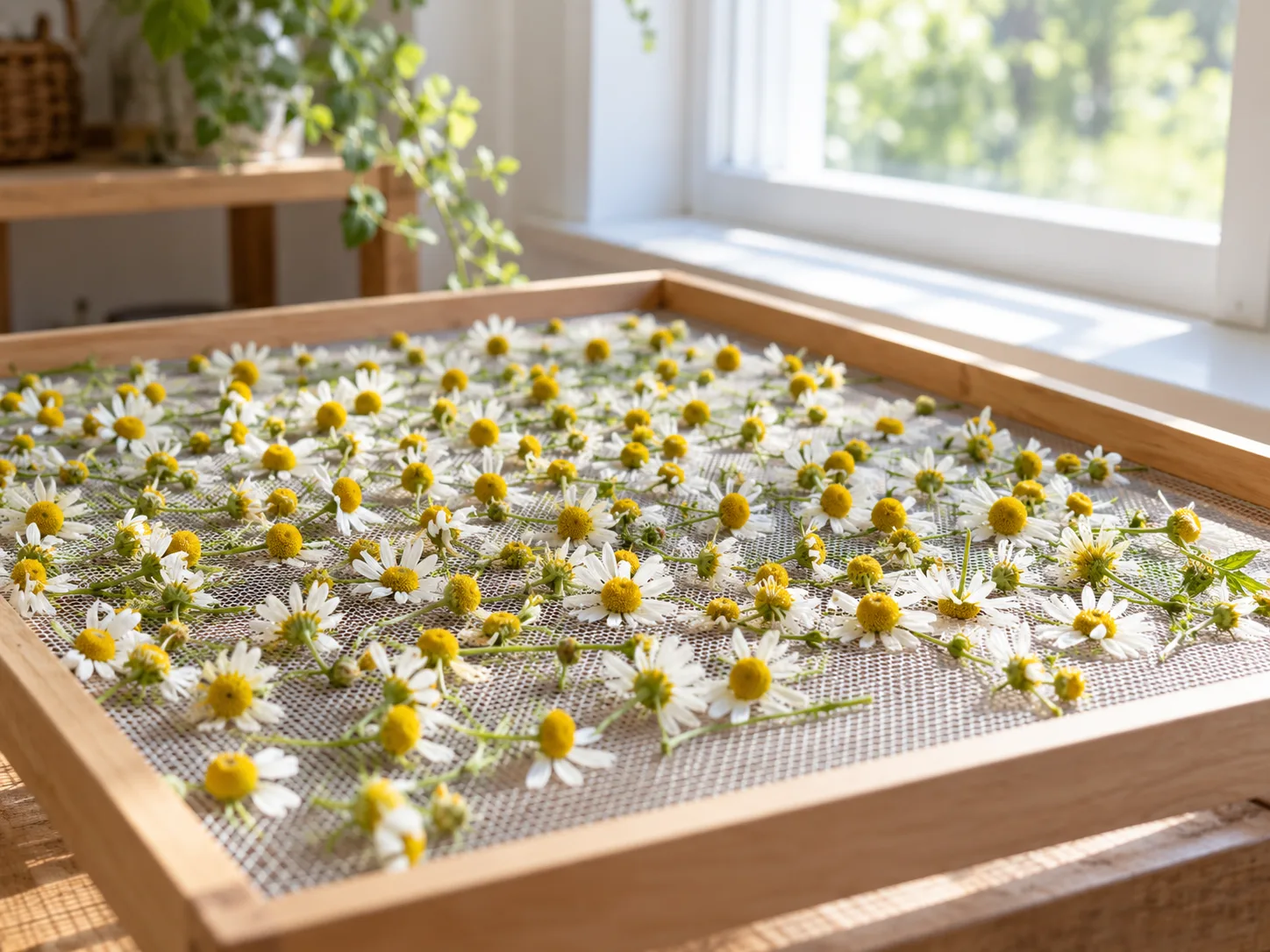
Air-dry in a thin layer
Spread the heads in a single layer on a clean fine-mesh screen, drying rack, or paper-lined tray. Give them space rather than piling them into a bowl. Choose a dry, well-ventilated place out of direct sunlight; stir or turn the flowers once a day if the screen blocks airflow on one side, and remove any head that develops a musty smell or visible mold.
Drying may take several days or longer, depending on how humid the room is, how wet the flowers were, and how thickly you spread them. Do not use two weeks as a deadline: room conditions matter more than the calendar. The Penn State Extension herb-drying guide recommends low humidity and good airflow and explains why sun-drying is not reliable in a humid climate; Plantura also recommends a dry, dark room for chamomile. Some growers use direct sun in dry weather, but indoors or in shade is the safer default if your climate is humid or unpredictable.
Use a dehydrator on its lowest setting
A food dehydrator is useful when the air is humid or you want to dry a small harvest more quickly. Arrange clean flower heads in one layer without overlap and use a low herb setting; Penn State Extension gives a general range of 95–110°F (35–43°C) for herbs. Start checking early because small heads dry faster than thick stems, and follow your machine’s manual rather than assuming every model runs at the same temperature.
The flowers are ready when the petals and the central disk both feel crisp and the head crumbles easily under gentle pressure. Let them cool fully before closing the jar. If the center still feels cool, rubbery, or damp, return the flowers to the screen or dehydrator instead of storing them half-dry.
Store and check dried chamomile
Once the heads are dry and cool, store them in a clean airtight jar or tin in a cool, dark, dry cupboard. Keep the flowers whole if you can; crushing them just before use helps preserve their aroma. Label the container with the plant name and harvest date, especially if you grow both Roman and German chamomile.
Check the jar after the first day. If you see condensation or the flowers have softened, spread the batch out again and dry it more thoroughly before resealing. If any flowers smell musty or show mold, discard those flowers rather than brewing them; do not rely on a fresh smell from the rest of the jar to prove the affected material is safe. Penn State Extension says most dried herbs keep well for up to a year, but chamomile flavor fades with time, so use the flowers while their aroma is still clear.
Common harvest and drying mistakes
Picking too early gives you small, underdeveloped heads; waiting until every petal has folded back leaves more flowers past their best. A fast daily check solves both problems: choose fully open heads with a sound yellow center, and let the buds and selected seed heads stay on the plant.
The other frequent failure is rushing the drying stage. Wet flowers, a thick pile, a humid cupboard, or a warm sunny windowsill can leave the center damp even when the petals feel dry. Use a shallow layer and moving air, and verify that each flower head—not just its white petals—is brittle before sealing it.
Finally, harvest only from a plant you can identify and whose growing history you trust. Chamomile is in the daisy family, and names such as German, Roman, wild, and pineapple weed can make plant labels confusing. If the species or treatment history is uncertain, keep it out of food and get an identification from a reliable local horticulture source before harvesting again.
Conclusion
Pick chamomile when the petals are open and nearly flat, the yellow center is active, and the head still looks fresh. Choose a dry part of the day, pinch or snip each flower head without pulling the plant, then dry the blooms in a thin layer with good airflow until the centers are crisp.
Return for new flowers as they mature, leave a few for pollinators or seed, and store only fully dry heads in an airtight container. Those few checks make the difference between a basket of sweet-smelling flowers and a batch that turns damp or stale in storage.



