25 Side Yard Ideas for Narrow Outdoor Spaces
Make a narrow side yard useful with 25 practical ideas for paths, privacy, lighting, planting, seating, play, drainage, and hidden equipment.
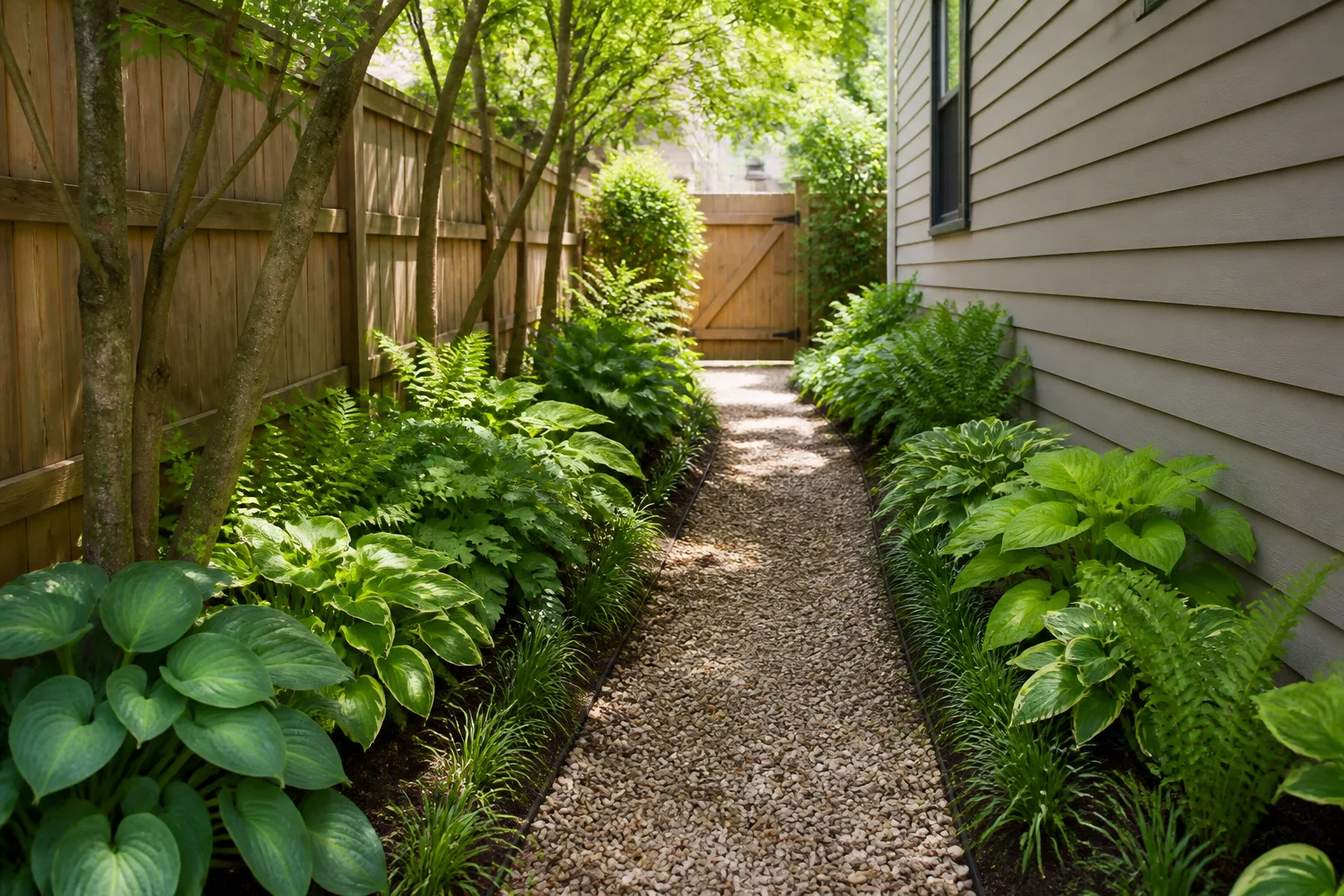
A side yard is rarely just leftover land. It is usually a route to the backyard, a view from a kitchen window, a narrow strip beside the driveway, or the only place where a condenser, trash bins, and downspout all have to coexist. That mix of practical and visual jobs is why side-yard projects can go wrong when they begin with a pretty material instead of a clear purpose.
The best side yard ideas start by deciding what the space must do. A slim passage may need a durable walkway and a gate; a wider strip may become a shaded patio, a productive garden, or a private outdoor room. Use the audit and decision rules below before choosing plants, gravel, furniture, or a fence, then borrow the ideas that fit your actual constraints.
Start with a side-yard audit
Walk the space at three different times of day and after a hard rain. Notice where people naturally walk, where water arrives and leaves, how much sun reaches the ground, and which views you want to open or soften. Take a photo from an upstairs window if you have one; the overhead view often reveals whether a proposed curve, bed, or patio will make the side yard feel generous or crowded.
Treat the side yard as a small site with its own microclimate. The wall may radiate heat, a fence may create deep shade, a roof edge may dump water in one spot, and a narrow corridor may dry slowly because air movement is limited. EPA WaterSense guidance likewise recommends considering use, climate, sun and shade, soil, and maintenance together when planning a landscape, rather than selecting plants or materials in isolation. EPA WaterSense landscaping guidance is a useful reference for that whole-site approach.
Measure the route and protect access
Measure the tightest point, not the widest part of the yard. A main route used for people, wheelbarrows, bins, or equipment should generally be at least about 3 feet wide, and it may need more width for two people, mobility devices, a turn, or planting that spills into the path. A tucked-away path used occasionally can be narrower, but do not count on a 20-inch strip working like a service route.
Reserve the walking width before adding beds or furniture. Mark the proposed edges with a hose, rope, or stakes, then walk the route carrying a watering can and pushing whatever you regularly move through the space. Gardeningetc’s cached path-design guidance makes the same practical distinction: occasional intimate paths can be narrower, while high-footfall routes need a more generous and durable surface. Its path-design guide also warns against placing a narrow path hard against a solid boundary, where overgrown plants and fence edges make navigation more difficult.
Pay special attention to gates and doors. A gate that opens into the only comfortable walking line will make every trip awkward, while a gate that swings into a planting bed may crush the plants. If a side door, hose bib, electrical panel, garbage-bin route, or basement window needs regular access, draw that clearance on the plan and treat it as permanently occupied space.
Track sun, water, utilities, and equipment
Record whether the ground gets morning, midday, or late-afternoon sun. A side yard can be bright at the top and deeply shaded at the bottom, so “part shade” is not a precise enough description for every planting decision. Watch for reflected heat from masonry, winter shade from evergreen trees, and summer shade from deciduous canopies.
Then follow water. Look for a downspout outlet, a low point, soil that stays shiny, wash lines, moss, or gravel that has migrated after rain. Mark underground utilities before digging, confirm local rules for fences and structures, and keep any excavation or water feature away from the foundation unless the drainage plan has been checked. Planting more densely will not solve water entering a basement or runoff eroding a path.
Finally, locate fixed equipment. An air-conditioner condenser needs airflow and service access, not a living wall pressed against it. Trash bins need enough room to roll out, hose reels need a place to unwind, and a grill needs safe separation from combustible walls and overhanging vegetation. These constraints are not design failures; they are the brief.
Choose one primary job before adding features
Pick one main job and one supporting job. For example, the primary job might be “move people from the front gate to the backyard,” with “make the route feel private” as the supporting job. In a wider side yard, the primary job could be “create a two-chair patio,” with “screen the utility equipment” as the secondary job.
This rule prevents the most common side-yard mistake: trying to fit a patio, play area, dense border, storage shed, and full-width path into a strip that can comfortably support only one or two of them. If circulation is the non-negotiable job, keep the center clear and put planting or screening at the edge. If the destination is the point, create a small widening or courtyard rather than squeezing furniture along a through-route.
Use the house and fence as design partners. A side yard feels intentional when the gate, paving, wall color, fence material, and planting repeat one or two cues from the architecture. It feels improvised when every surface introduces a different color, pattern, or material. The goal is not to make the side yard expensive; it is to make the limited space legible.
25 side yard ideas at a glance
The table is a menu, not a checklist. Choose ideas that support the job you identified, and read the caution before you commit.
| Idea | Best when | Watch out for |
|---|---|---|
| 1. A straight service path | You need fast access between front and back | A direct route needs stable, slip-resistant footing |
| 2. Stepping stones in gravel | You want drainage with a defined walking line | Stones wobble if the base is not prepared |
| 3. Contrasting pavers and gravel | You want a simple design feature | Too many colors make a narrow strip look busy |
| 4. A gently curved path | The side yard is wide enough to bend | Keep curves generous so bins and wheelbarrows can pass |
| 5. A planted path edge | You want softness beside hardscape | Allow for mature spill and seasonal dieback |
| 6. Low path lights | You use the route after dark | Shield glare and avoid placing lights where they become trip hazards |
| 7. String lights on a fence | You want atmosphere in a wider side yard | Use outdoor-rated equipment and keep cords orderly |
| 8. A gate with an arbor | You want the entrance to feel like a room | The structure must not reduce gate clearance |
| 9. A gate matched to the house | Architecture is visible from the street | Match proportions and hardware, not just paint color |
| 10. A slatted privacy screen | You need screening without a solid wall | Check wind load and preserve light for plants |
| 11. A trellis with a climber | You want vertical greenery in a narrow bed | The support must carry the mature vine, not just the starter pot |
| 12. Columnar or narrow shrubs | You need year-round structure | Check mature width; “narrow” is relative |
| 13. A layered shade border | The space is bright enough for foliage but not lawn | Do not plant a dense hedge over utility access |
| 14. Raised garden beds | You want herbs or vegetables close to the house | Leave a service aisle and solve roof runoff first |
| 15. Pots for seasonal color | The soil is poor or the layout may change | Containers dry faster and still need drainage holes |
| 16. A separate AC screen | The condenser is visible from a window or path | Never box in the unit or block the service side |
| 17. A small rain-garden planting | Runoff arrives in a safe, defined low spot | Test infiltration and keep water away from the foundation |
| 18. A fountain or birdbath courtyard | You have room for a pause, not just passage | Water features need cleaning and a stable, level base |
| 19. A side-yard patio | The strip is wide enough for circulation around seating | Furniture can quickly consume the route |
| 20. A grill and serving niche | The side yard is near the kitchen and well ventilated | Keep heat, smoke, and fuel storage safely managed |
| 21. A narrow picnic or bench zone | You want outdoor dining without a large patio | A custom-size table may be better than forcing a standard one |
| 22. A bocce lane | The yard is long, sunny, and drains well | Balls need a defined boundary and a safe stopping zone |
| 23. A short putting strip | You want a low-profile game feature | It is less useful if the corridor is also a busy route |
| 24. A chicken-coop corner | Local rules and daily care make it realistic | Plan hygiene, shade, predator protection, and feed access |
| 25. Artificial turf with a stone border | Grass fails from shade or repeated traffic | It needs a well-built base and can increase heat and runoff |
Make the walkway the backbone
In many side yards, the walkway is the feature that earns its space every day. Start with the route from the gate or driveway to the backyard, decide whether it needs a straight line, and only then add edge planting, lighting, or a destination at the end. A path that is comfortable in wet weather will make the whole side yard feel more finished than a decorative object that blocks it.
Choose gravel, pavers, or a blended surface
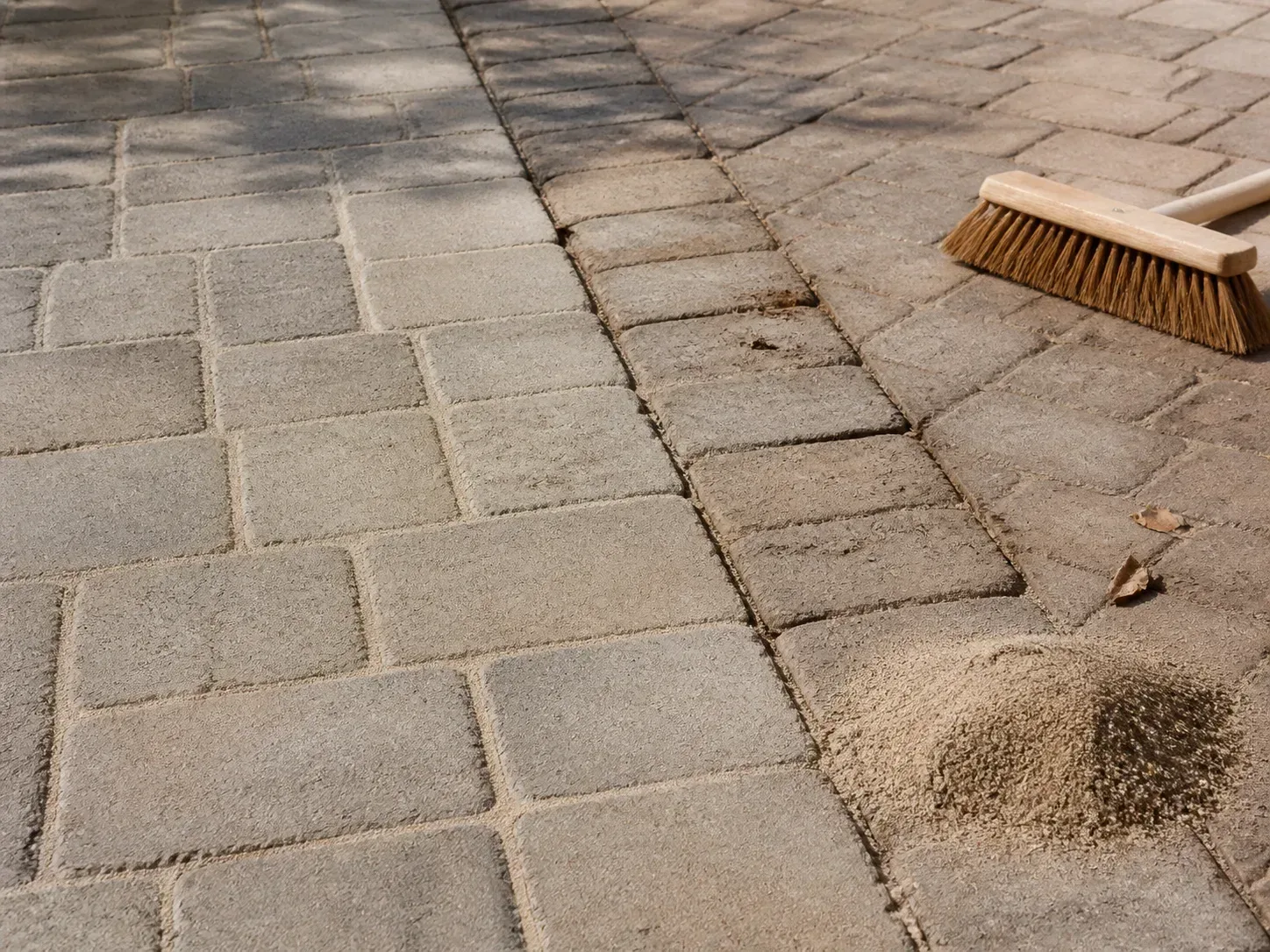
Gravel is forgiving, relatively quick to install, and useful where you want some water to move through the surface. It needs an edge, a compacted base suited to the site, and occasional raking. Without containment, stones migrate into planting beds, lawn, and door thresholds; without a firm base, wheels and feet churn the surface.
Pavers or slabs give a more stable route for frequent traffic, carts, and anyone who finds loose stone difficult to navigate. They require careful preparation, level transitions, and joints that will need sweeping or weeding. A blended design—large stepping stones set into gravel, or a paver center with a gravel margin—can balance stability with a lighter visual footprint.
Keep the material palette disciplined. Two complementary materials usually give you enough contrast to make the path visible without turning the side yard into a sample board. On a slope or in a climate with freeze-thaw cycles, prioritize a properly prepared base and a slip-resistant surface over a particularly delicate pattern.
Drainage still needs a plan. Fairfax County’s cached soil-and-water guidance recommends covering heavily used exposed-soil paths with mulch or gravel, using edging to keep material in place, and leaving a way for water to escape from low spots rather than trapping it in the path. The drainage guidance is especially helpful when a side path also carries runoff.
Use curves, contrast, and a focal point deliberately
A straight path is often the correct choice when the side yard connects two doors or a front gate to the backyard. Make it attractive with a consistent edge, repeated planting, or a gate that acts as a visual destination instead of forcing a curve into a corridor that is too narrow.
Use a curve only where it improves the experience. In a wider strip, a gentle bend can slow the eye, reveal a fountain or bench, and make the yard feel less like a service alley. In a tight strip, a wiggly line steals usable width and makes it harder to move bins, ladders, or a mower.
Contrast can do the same work with less excavation. Pale pavers against dark gravel, warm brick beside green planting, or a simple metal edge against a wood fence can define the route. Repeat the strongest color once at the gate or end of the path, then stop; a narrow yard benefits from a visual full stop rather than a collection of competing accents.
Build privacy upward without closing in the space
Side-yard privacy is usually a vertical problem. A solid, full-height wall can provide screening, but it may also make a narrow space feel like a tunnel. A fence, open metal panel, slatted screen, trellis, or arbor can block a view while allowing light and air to reach the planting below.
Pair a fence, gate, arbor, or trellis with planting
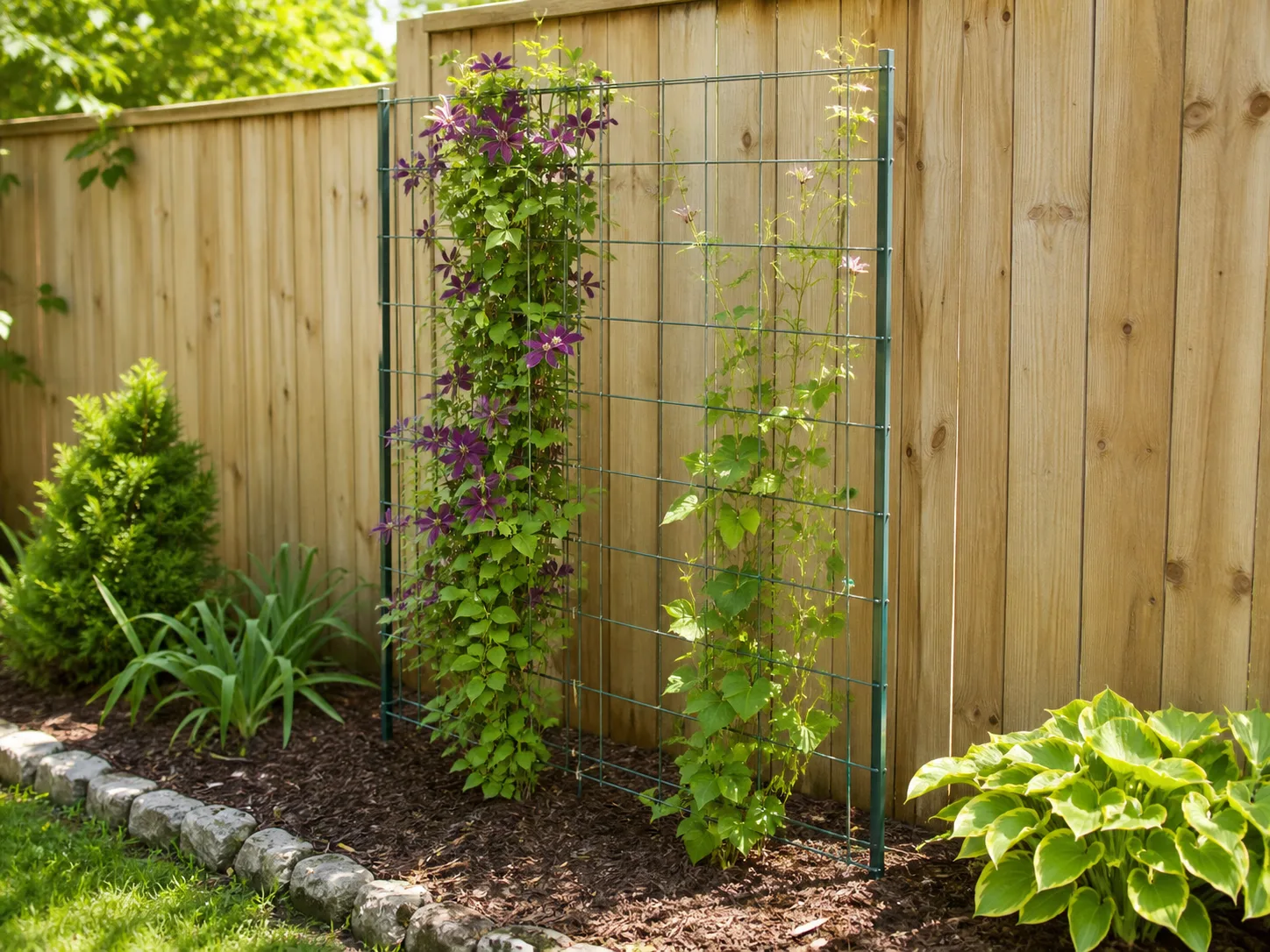
Begin with the sightline you want to interrupt. If the view is only a few feet above the fence, a screen may be enough; if upper-story windows look down, a low border will not create privacy. Use a gate or arbor to frame the entrance, but keep the structure in scale with the house and maintain the clear opening needed for people and equipment.
Choose a support for the mature climber. A vigorous vine can add shade and flowers, but it can also load a light trellis, enter gutters, or cling to siding. Train it where you can prune and inspect it, and keep the base from swallowing the walking edge. The cached Gardeningetc path guidance notes that a path needs extra allowance when planting spills over its edges; that is easy to forget when a young vine looks harmless.
A gate can be decorative, secure, or both. A short garden gate reads as an invitation, while a solid door-like gate creates stronger privacy and security. Match the gate’s rhythm to the home—vertical slats for a clean modern facade, painted wood for a cottage feel, or simple metal where you want the boundary to recede—then let one arbor, pot, or climbing plant provide the welcome.
Turn a wider side yard into a destination
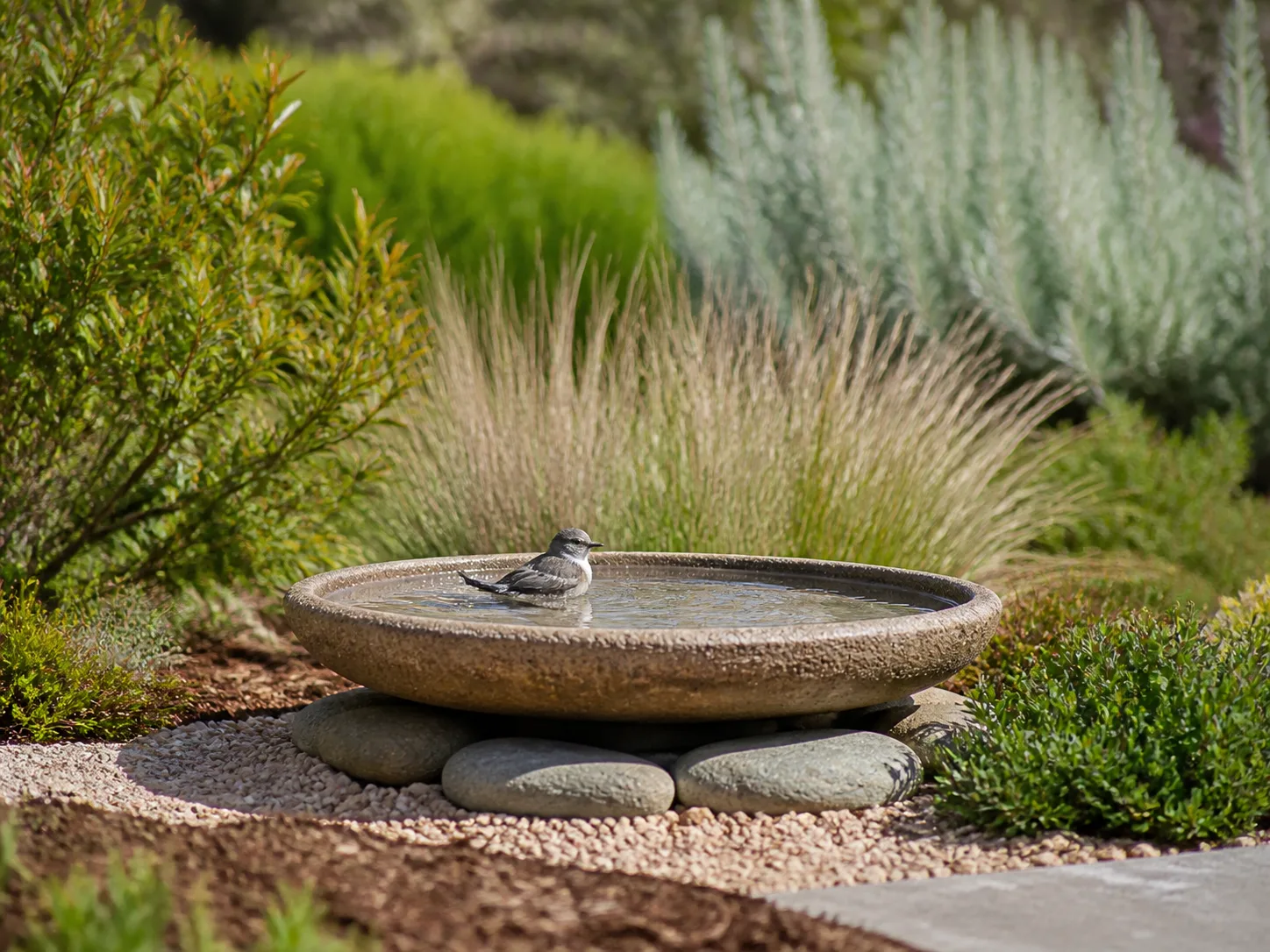
If the side yard is wide enough to move around furniture, stop treating it as a corridor. A small widening can become a courtyard with two chairs, a birdbath, a fountain, or a pot grouping. The trick is to create the destination beside the route, not directly across it.
Add a patio, grill, picnic spot, or small courtyard
A side patio works particularly well when the space is enclosed by a fence or wall and close to a kitchen or side door. Use a small, stable surface and furniture that can tuck in rather than a deep sectional. Leave a comfortable passage around the seating, and check where rainwater will run off the new surface before you set the first slab.
A grill or outdoor bar can turn a broad side yard into a useful serving station, but heat and ventilation are more important than decoration. Keep the grill away from combustible siding, fences, dry planting, and low branches, and preserve access for fuel, cleaning, and repairs. If the side yard is narrow, a freestanding grill may be safer and more flexible than a built-in counter that permanently consumes the route.
A picnic table or bench can fit when it runs with the length of the yard. Measure the table, the seated person, and the walking clearance as one rectangle. If a standard table leaves no way to pass, a narrow bench, fold-down surface, or custom-size table will make the space more usable than squeezing in a full dining set.
For a water feature, choose the quietest point you can see from a window or seating area. A fountain needs a level base, a nearby power or solar plan, and regular cleaning; a birdbath needs a place where birds have some visibility and nearby cover without a dense ambush point for cats. In either case, make sure splash and overflow do not turn the walkway into a slick surface.
Make room for play, food, or backyard projects
Long side yards can support a bocce lane or short putting strip when the ground is reasonably level, the drainage is reliable, and the feature does not share the main route. Add low side boundaries so balls stay contained, and keep shrubs soft enough to cushion an occasional miss. A putting strip needs a useful width and a clear end; a tiny decorative strip beside a busy gate will not get much play.
Raised beds are a good use of a sunny side yard near the kitchen, especially when the existing soil is compacted or contaminated. Set the bed where you can reach every side, leave an aisle wide enough for a hose and harvest basket, and prevent roof runoff from washing into it. EPA guidance recommends grouping plants with similar watering needs into hydrozones; that principle applies to a side-yard edible bed as much as to a larger landscape.
A chicken coop can work in a side yard, but it is a working installation, not a piece of decor. Check local ordinances, neighbors, shade, drainage, predator protection, cleaning access, feed storage, and the route for carrying bedding. If those practical needs do not fit, a raised bed, potting bench, or vertical herb garden will make better use of the same space.
Plant the awkward parts, including the AC corner
Planting softens a side yard, hides hard edges, and gives you something to see from inside the house. It also takes up space quickly, so design the planting bed from mature dimensions rather than the size of the nursery pot. A bed that looks sparse on installation day may be exactly right after two seasons.
Match plants to light, moisture, and mature size
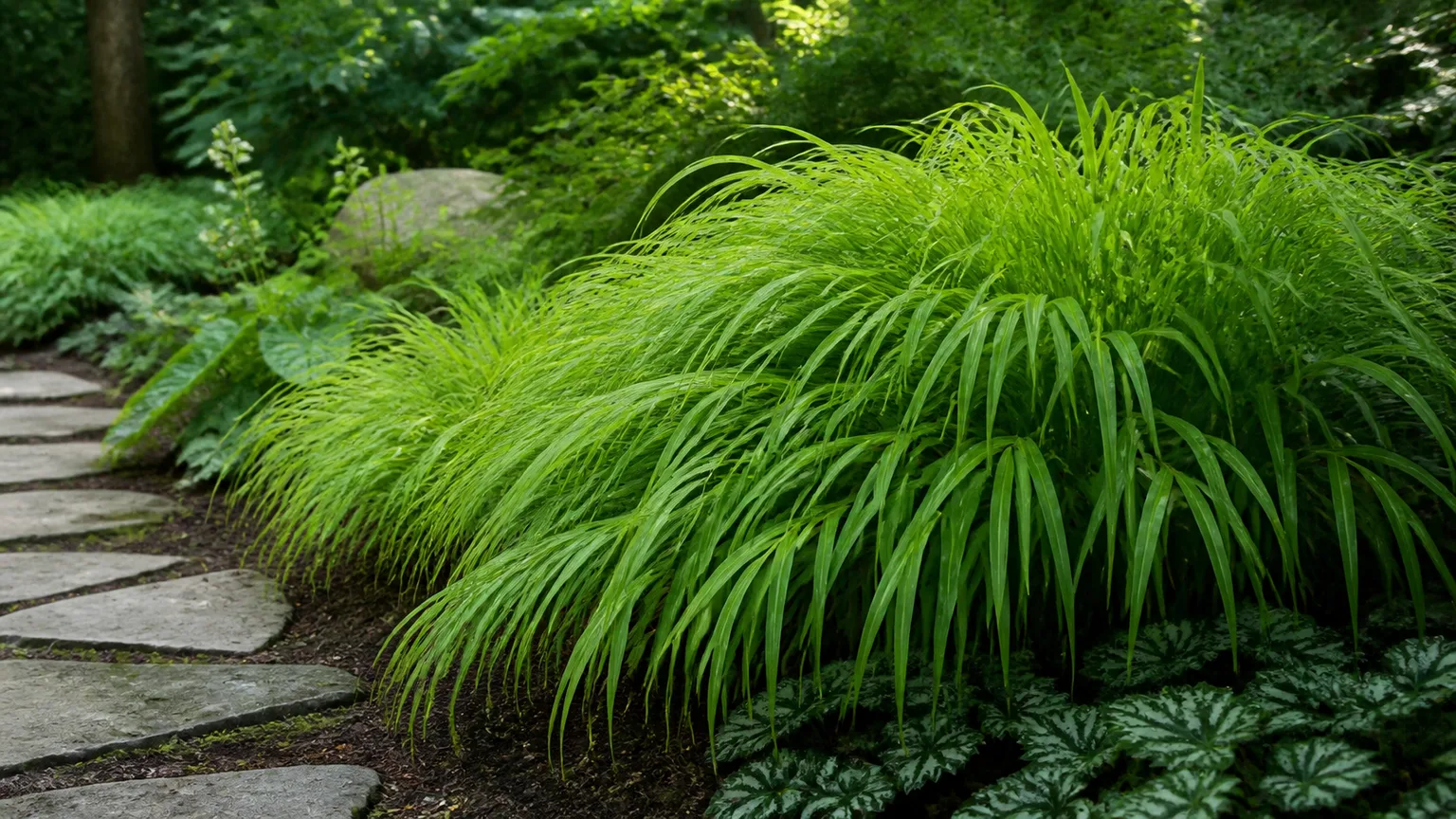
For deep shade, use foliage for texture and movement rather than expecting a lawn to stay dense. Ferns, shade-tolerant grasses, hostas, and other regionally appropriate plants can create a layered edge, but each choice still needs the right moisture and mature spread. In partial shade, add flowering plants that can handle the available light, then repeat a few forms so the narrow bed reads as a composition instead of a random collection.
For a sunny strip, use a small number of upright or columnar plants to draw the eye upward without putting broad shrubs in the walking line. Tall plants can make a wood or masonry boundary feel greener, while lower clumps and gravel keep the base open. Avoid placing thorny, brittle, or aggressively spreading plants beside the route unless you are prepared to prune and contain them.
Treat the condenser as a service zone first. Keep the manufacturer’s required clearance around the unit, leave room for a technician to work, and do not place mulch, leaves, or dense foliage where they can clog the coil. A separate slatted screen or open fence panel can hide the view while preserving airflow; a hedge pressed against the equipment creates a maintenance problem and may shorten the unit’s comfortable working life.
The same logic applies to downspouts, electrical panels, hose bibs, meters, and basement windows. Screen them from the main sightline with a movable pot, an open trellis, or a carefully located shrub, but keep the access path obvious. A useful screen disappears visually while remaining easy to remove or prune.
Light the route without glare
Lighting can change a side yard from a forgotten passage into a safe, welcoming connection. Use it to reveal the walking surface, gate, steps, and changes in level first; mood lighting comes after visibility. Path lights, wall-mounted fixtures, or low-voltage lights can be combined, but each should have a job.

Place lights so they do not shine directly into a bedroom, kitchen, neighbor’s window, or the eyes of someone walking toward the house. Shielded fixtures and staggered placement usually feel calmer than a line of bright lamps. Keep solar fixtures where they receive enough sun, and use outdoor-rated wiring, connections, and fixtures for any system tied to electricity.
String lights work best in the wider, more social part of the side yard, especially when a fence or arbor provides a strong attachment point. They are not a substitute for lighting a step or uneven path. Check the cable route, keep it away from sharp edges, and do not let decorative bulbs become the first thing a person sees when trying to find their footing.
Solve drainage and maintenance before decorating
Side-yard drainage problems often come from a small number of sources: roof water, a high neighboring grade, compacted construction soil, an impermeable path, or a low point with nowhere to release water. Iowa Stormwater’s cached soil-restoration guidance explains how construction compaction can restrict root growth and reduce infiltration, while Fairfax County guidance separates protecting bare soil from redirecting concentrated runoff. Those distinctions matter because adding mulch or plants may protect the surface without fixing the water source.
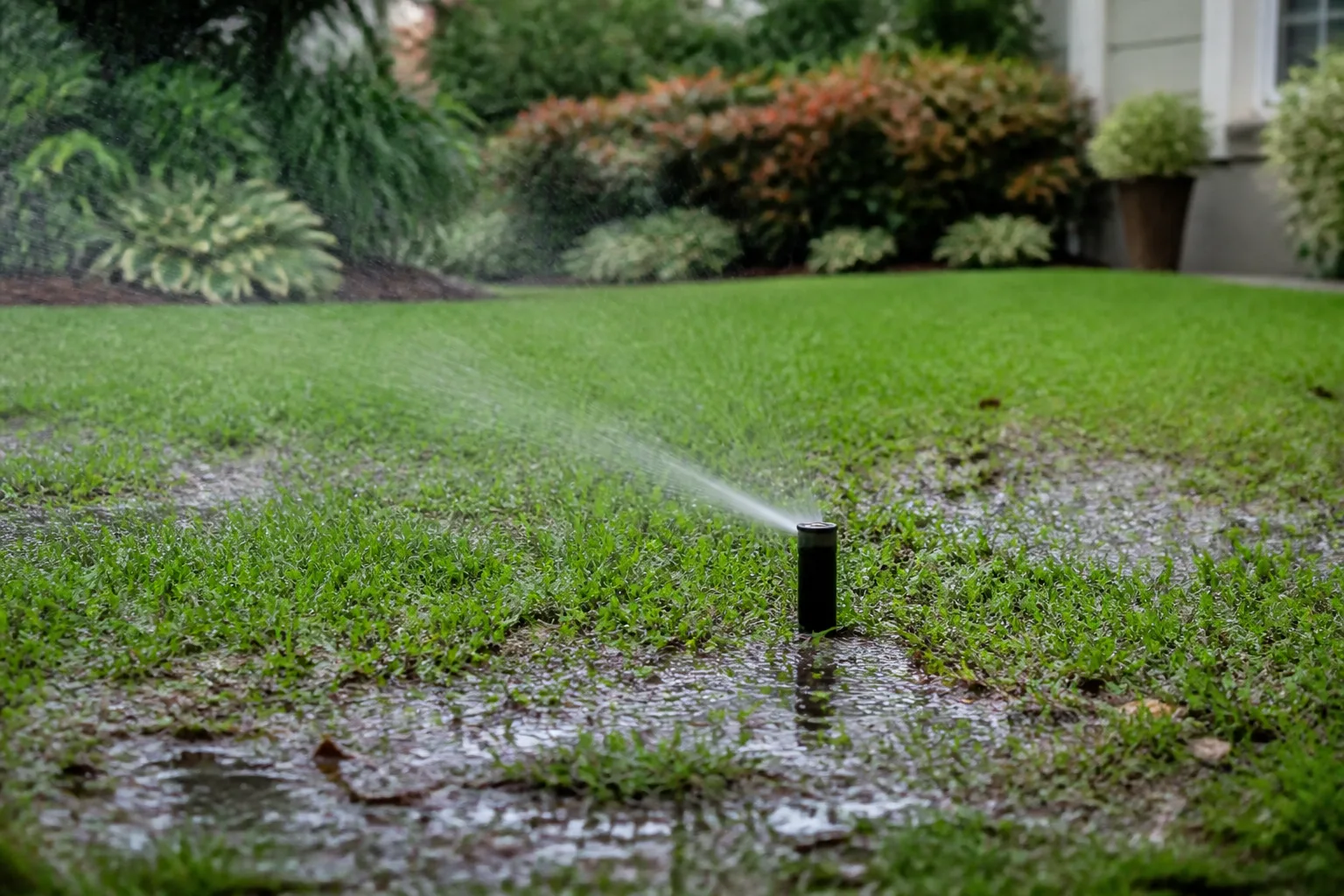
Start with a hose or rain observation, not a dramatic excavation. Find where water enters, where it pools, and whether the soil accepts water after the surface dries. If the issue is a downspout, extend or redirect the discharge in a code-compliant way; if the issue is slope or erosion, consider a swale, a properly designed drain, or a professional assessment rather than hoping a new plant bed will hold everything.
Permeable gravel, open-jointed pavers, and planted beds can reduce the amount of hard surface, but they cannot overcome every soil problem. A rain-garden-like planting belongs in a suitable, safe low spot with tested infiltration and enough distance from the foundation. If water remains for long periods, the yard smells sour, walls stay damp, or runoff is moving soil, pause the makeover and solve the site condition first.
Artificial turf is a specific trade-off, not a universal drainage fix. It can keep a shady, high-traffic strip visually consistent where natural grass fails, but it needs a well-prepared base, edge restraint, cleaning plan, and a route for water to leave. In hot sun it can become uncomfortable, and a sealed or poorly graded installation may move the runoff problem to the next low point.
Maintenance access deserves the same attention as drainage. Leave room to sweep pavers, rake gravel, prune the fence line, clean a fountain, pull weeds, service the condenser, and reach the gate latch. A side yard is successful when its maintenance jobs are possible without stepping into a bed or dragging tools through furniture.
Phase the project on a realistic budget
Do the work in this order:
- Mark the permanent constraints. Measure the route, gates, doors, utilities, equipment, foundation, and mature sightlines.
- Fix water and grade. Redirect concentrated runoff, address erosion, and build a stable base before installing finish materials.
- Install the backbone. Lay the walkway or define the patio footprint, then test it with real traffic.
- Add structure. Put in the gate, fence panel, trellis, arbor, edging, or screen that determines the space’s proportions.
- Plant by zone. Match light, moisture, spread, and maintenance access; group plants with similar water needs.
- Finish with lighting and objects. Add path lights, seating, pots, a birdbath, or art only after you know the route still works.
This sequence also makes small budgets easier to manage. Gravel and reused pavers may solve access now, while a permanent patio or custom gate can wait. A few large, well-placed plants and one repeated material cue often make a stronger impression than many small purchases that have to be moved when the path or drainage plan changes.
Conclusion
The best side yard is not the one with the most features. It is the one that makes a narrow, awkward space feel purposeful: a clear path where you need to move, privacy where you need to pause, plants suited to the light, and enough clearance for the equipment and maintenance jobs that keep the house running.
Start by measuring the tightest point and watching the water. Choose one primary use, build the route or destination around it, then add vertical structure, planting, lighting, and personality in that order. When every element earns its footprint, even a side yard that once felt like dead space can become one of the most useful parts of the property.