Best Mouse Traps: 6 Picks That Work
Compare six mouse traps—snap, electronic, humane, and outdoor bait stations—and learn CDC-backed placement, baiting, and cleanup so mice stay gone.
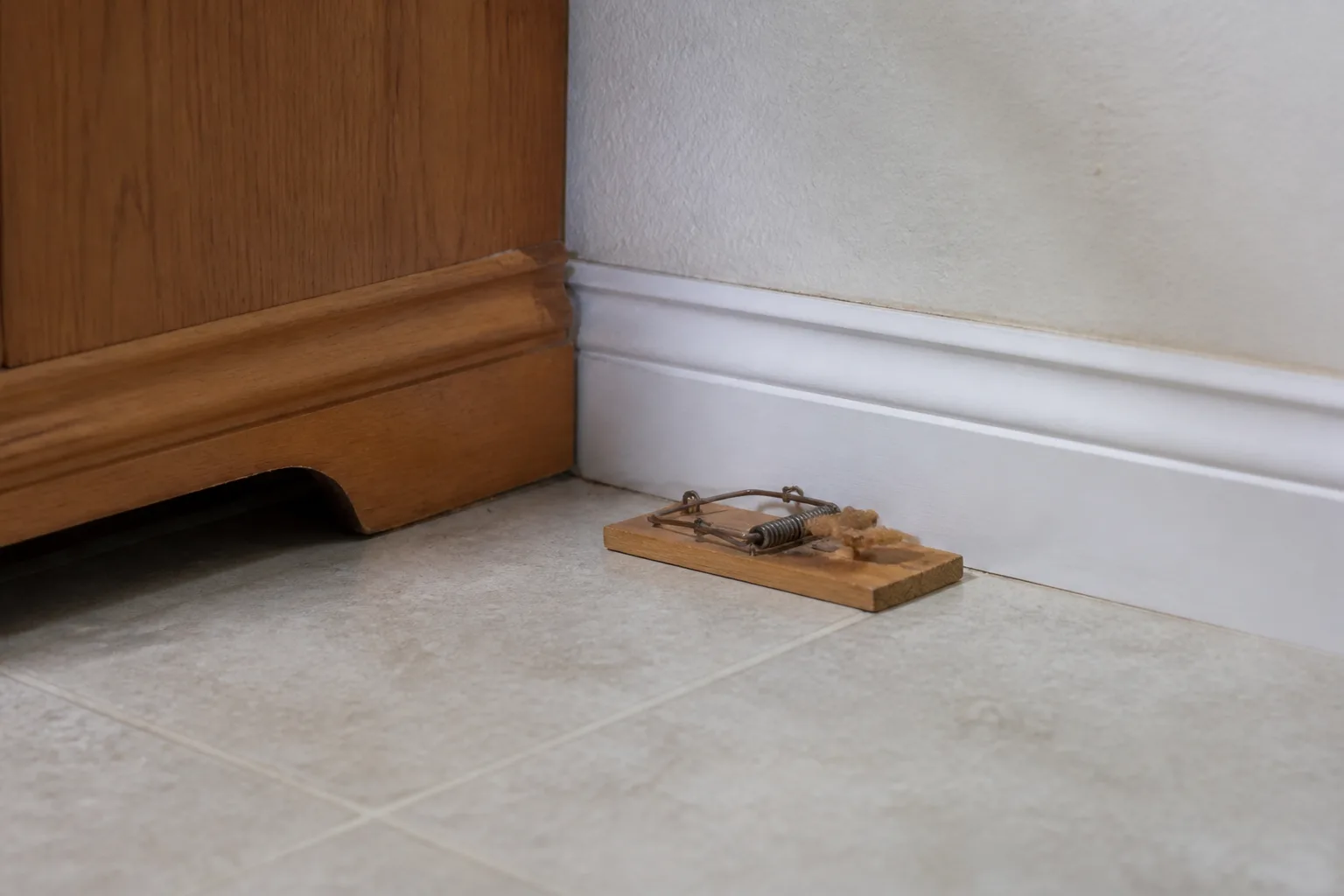
A mouse in the kitchen is not a shopping problem until you know where it travels, how many are present, and whether your trap matches the job. Buy a cage trap when you needed a dozen snaps along the baseboard, or arm a sensitive snap where a toddler plays, and you will blame the bait when the real failure was placement or trap type. The six picks below cover what homeowners actually face: one fast snap under the sink, a bank of budget wood traps for a garage runway, a no-touch electric tunnel when you cannot stomach visible catches, live capture when ethics demand it (and local law allows), and a locked outdoor bait station when mice keep breeding at the compost pile.
Before you checkout, read the trap-type comparison and CDC-backed setup rules. The product list means more once you know how many traps, where the T goes against the baseboard, and when pre-baiting beats a hair-trigger snap.
Quick Pick: Match the Trap to Your Situation
One or two mice indoors, fast lethal control, fingers safe during setup: Tomcat Press ‘N Set Mouse Trap — press-to-set plastic snap with grab tab for disposal.
You want lethal control without seeing or touching the body: Victor Electronic Mouse Trap — enclosed electrocution chamber with indicator light; batteries required.
No-kill preference, legal same-day release nearby, mice or small rodents: Kensizer Medium Humane Live Trap — cage with auto-close door; verify relocation rules first.
Mice steal bait from standard snaps, you need hair-trigger sensitivity: Victor M393 Power-Kill Mouse Trap — expanded trigger plate; keep out of reach of kids and pets.
Widespread activity, tight budget, you can handle wood snaps carefully: Victor Easy Set Mouse Trap (multi-pack) — classic wood snap; exterminator staple at low cost per trap.
Persistent outdoor mice near compost, sheds, or foundation gaps after trapping fails: Tomcat Rockscape Bait Station — tamper-resistant locked box with rodenticide blocks; outdoor only per label.
If you are not sure mice are the culprit, compare droppings size and travel lanes before buying a full kit. Mouse droppings are about ¼ inch long with pointed ends; rat droppings are ½ inch or larger. A mouse trap on a rat runway wastes nights and may injure without killing.
Mouse Trap Types Compared (Before You Buy)
Mouse traps are not interchangeable. Snap traps kill instantly when triggered correctly. Electronic traps deliver the same outcome inside a tunnel. Live traps contain for relocation—where legal. Bait stations deliver rodenticide in a locked box. The CDC recommends traditional snap traps first to reduce populations and reserves poison or bait stations for infestations that persist after trapping, using EPA-registered products only.
Snap Traps
Snap traps remain the default for small indoor populations: death is immediate, you know where the body is, and you avoid spreading poison through the food chain. Classic wood mouse traps (Victor Easy Set style) cost the least per unit and hit hard, but testers consistently report finger near-misses during setup—the bar must sit just under the bait pedal with tension high enough to hold but low enough that a mouse’s weight trips it.
Modern plastic press-to-set traps (Tomcat Press ‘N Set) add a rear lever so fingers stay outside the strike zone. Expanded-trigger snaps (Victor M393 Power-Kill) catch bait thieves that lift food from the side of a narrow pedal. University of Nebraska Extension notes traps with expanded triggers have higher capture rates than narrow triggers on the same runway (UNL G1105).
Best for: Kitchen runways, garages, pantries with confirmed mouse travel along walls. Skip when: Toddlers or curious pets can reach floor-level traps without supervision—use enclosed electrics or traps inside locked cabinets/voids instead.
Electronic Traps
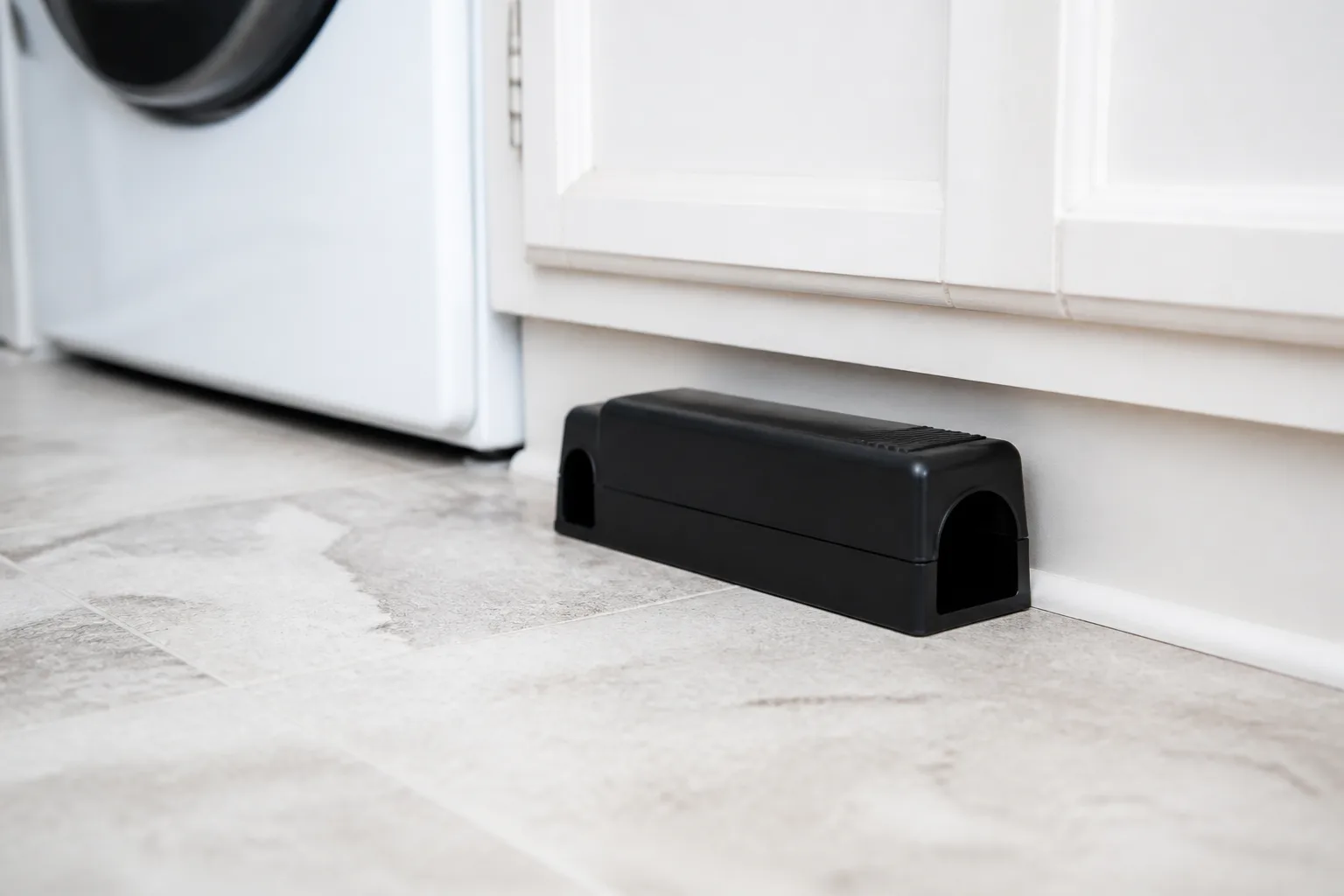
Battery-powered electrocution traps (Victor Electronic Mouse Trap and similar) lure mice into a tunnel, then deliver a high-voltage shock. Advantages: no exposed snap mechanism, indicator light when a kill registers, and tilt-to-dump disposal without touching the rodent. Tradeoffs: higher unit cost, batteries not always included, indoor use only, and you must check and empty frequently—dead mice in a closed box still create odor if ignored.
UC IPM lists electrocution traps as effective when enough devices are placed on active runways, comparable to snaps for timeliness (UC IPM house mouse). They do not replace exclusion or sanitation; they replace visible snap anxiety for homeowners who will otherwise under-trap.
Catch-and-Release Live Traps
Humane cage traps lure mice through an open door onto a trigger pedal; the door drops shut. They do not kill, which appeals to renters and wildlife-conscious households. Reality check: small mice may not weigh enough to trip medium cage triggers; large cages catch squirrels and chipmunks outdoors by accident; and relocation is restricted or illegal in many areas—including much of California, where moving nuisance wildlife without authorization can violate state rules (California DFW Living with Wildlife).
UC IPM is blunt: relocation is ineffective—house mice removed even half a mile can navigate back—and released mice face aggression, predation, or exposure (UC IPM house mouse). If you cannot verify legal, same-day release within guidelines, use a lethal snap or hire a licensed operator instead of a live trap that becomes a slow-death box.
Bait Stations and Rodenticides
Tamper-resistant bait stations hold rodenticide blocks or pellets behind a locked lid so pets and children cannot access poison, while mice enter through small holes. They are primarily outdoor tools or last-resort indoor options when trapping and exclusion fail. Rodenticides do not kill instantly—mice may die in wall voids, causing odor, or leave the structure and die where scavengers can ingest poisoned tissue.
California residential products currently include acute toxins such as bromethalin and cholecalciferol in ready-to-use stations (UC IPM house mouse). UC IPM notes evidence that bromethalin can pass through the food chain when predators eat poisoned mice. All rodenticides are toxic to people, pets, and wildlife—follow label directions and never scatter loose bait in living spaces (EPA rodenticides).
Best for: Outdoor mice breeding near compost, wood piles, or foundation gaps after snaps and sealing fail. Skip when: You have not yet trapped aggressively, sealed ¼-inch gaps, or removed food sources indoors.
How to Place Mouse Traps Where Mice Actually Run
Mice do not wander the middle of the floor like cartoon characters. House mice travel along walls within roughly 30 feet of nest sites, often at night, using the same runways repeatedly (UC IPM house mouse). Droppings, fresh gnaw marks, greasy rub marks along baseboards, and a faint musky odor mark those lanes—not the open kitchen tile.
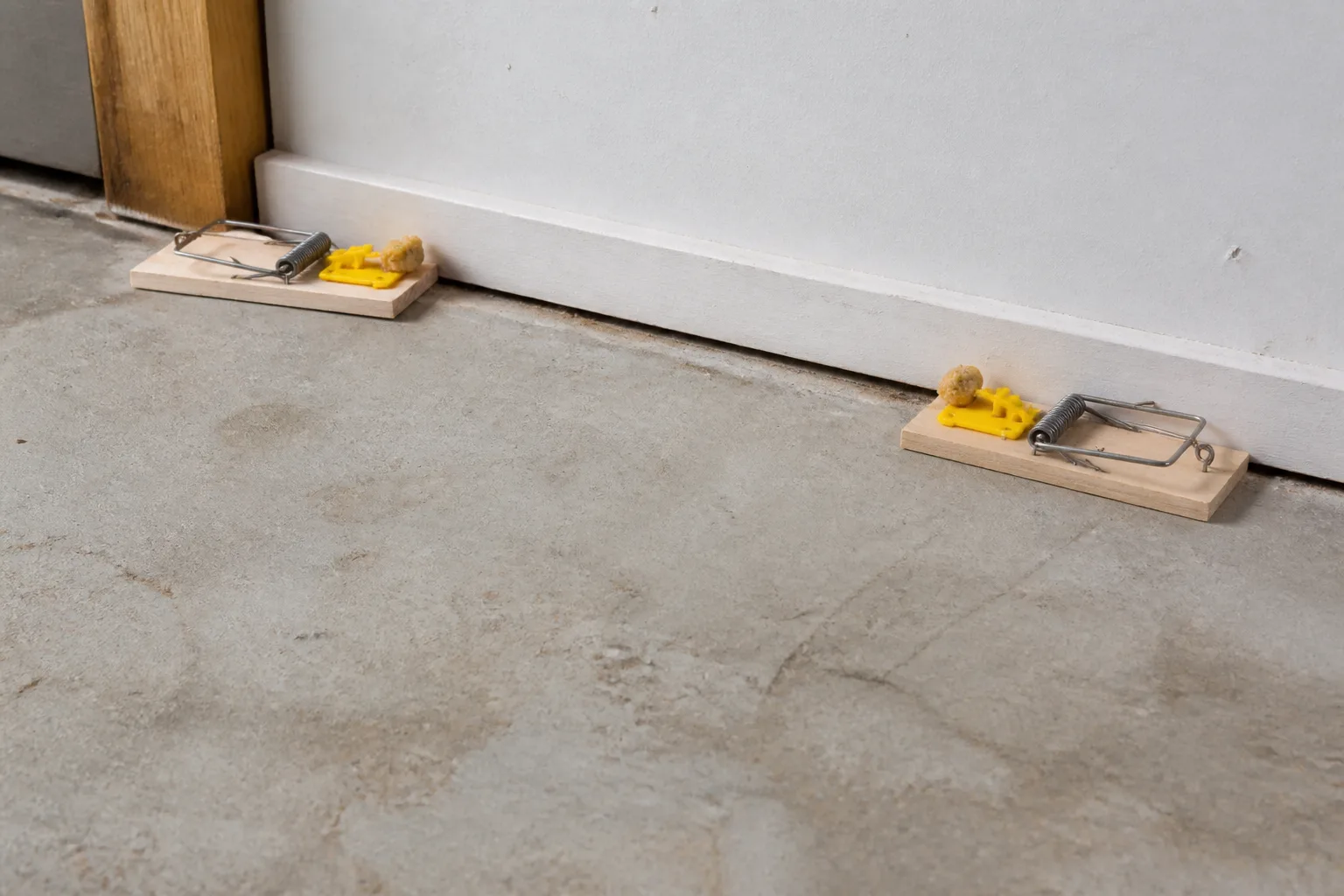
The CDC instructs placing traps perpendicular to the wall so the baited end forms a T against the baseboard, with the trigger side closest to the wall. Mice running the edge hit the trigger instead of circling around an parallel trap. In a corner where two walls meet, two traps back-to-back (each trap’s bait end against its wall) cover both directions.
Set traps behind appliances only when you can check them daily—dead mice behind a fridge become a sanitation problem fast. Avoid placing exposed snaps in pet feeding zones or child play areas; use enclosed electrics or traps inside cabinets mice access but toddlers cannot.
How Many Traps to Set
Under-trapping is the most common DIY failure. Nebraska Extension suggests about two dozen properly placed snap traps can control a new mouse infestation in a 1,500 square foot structure—not one trap per room centered on the floor (UNL G1105). For moderate indoor activity, think six to twelve traps on the same runways rather than a single device in each room.
Space traps along paths where you see fresh droppings or gnaw marks, roughly every 5–10 feet on a heavy runway—not 20 feet apart unless activity is light. Check traps every morning when mice are most active before dawn (UNL G1105). Keep trapping until no new droppings appear for at least one week after the last catch. If catches stop but signs continue, add traps or move locations—do not assume victory.
Research also shows female house mice avoid traps that caught dominant males; rotating in clean or new traps during a long campaign improves capture of both sexes (UNL G1105).
Best Baits for Mouse Traps

Chunky peanut butter is the standard bait because it is sticky and forces mice to press the trigger plate instead of stealing from the side. Tie a small nut, oat, or cotton wad into the peanut butter so the mouse must tug. The CDC also lists mutton fat as effective; in modern kitchens, nut butter, bacon grease (solidified), or seeds work when peanut allergies are a concern.
The best bait is often food the mice already eat in your home—crumbs from the pantry brand they raided, pet kibble fragments, or birdseed if the garage is the problem (UC IPM house mouse). Mice are neophobic—they sample tiny amounts of new foods. Pre-bait unset traps for two to five nights until bait is eaten overnight, then arm traps in the same spots. Skipping pre-baiting is why many homeowners swear mice “steal bait without getting caught.”
Add bait before arming sensitive snaps; cheese on an already-set Victor Easy Set can trip the trap in your hand. Use pea-sized portions—more bait does not improve kill rate and can let mice feed without triggering.
Best Overall Snap Trap: Tomcat Press ‘N Set
Tomcat Press ‘N Set Mouse Trap wins for homeowners who want fast kills without finger risk. A rear press-to-set lever keeps hands outside the strike zone while you arm the trap. The bait cup accepts peanut butter, cheese, or Tomcat gel attractant without needing to touch the trigger plate first.
In practical use, the trigger is highly sensitive—toy-mice and light tapping tests show it fires on slight pressure, which is what you want on a runway where mice nibble cautiously. Tradeoff: do not bump it while cleaning nearby counters. Sensitivity beats bait theft.
Pros: Safe setup, easy baiting, strong spring, budget-friendly two-pack pricing, reusable if you clean it—or disposable if you prefer not to handle bodies. Cons: Peanut butter residue is messy on reuse; cheese is easier to scrape off. Type: Plastic snap | Size: about 1 × 6 × 4.5 inches.
Best for: First-time trappers, kitchens with nightly activity, anyone who pinched fingers on wood traps before.
Best Electronic Trap: Victor Electronic Mouse Trap
Victor Electronic Mouse Trap (M250S class) encloses the kill inside a tunnel chamber. Mice enter for bait; the trap delivers an instant electrocution shock and lights an indicator when a kill registers. Disposal is tilt-and-dump into a bag—no touching fur.
Pros: No exposed snap, no pinched fingers, concealed body, high success rate when baited and placed correctly on walls. Cons: Batteries usually not included; indoor use only; unit cost higher than wood snaps; must check frequently; reset can fail if weight remains on the bait pedal. Type: Electronic kill chamber | Power: batteries.
Best for: Squeamish homeowners who will under-deploy snaps; apartments where visible traps feel unacceptable; kitchens where you want a no-view kill but still want lethal control.
Best Catch-and-Release: Kensizer Medium Humane Live Trap
Kensizer Medium Humane Live Trap is a sturdy wire cage with an auto-close door. Setup takes under a minute: slide the door lock up, place the compression bar in the trigger hole, bait the pedal, and wait. The door stays open until a mouse steps on the pedal.
Pros: Reusable, solid construction, three size options (small/medium/large), no poison, no snap exposure for kids. Cons: Medium size may not trip on very small mice; no carry handle—you hold the cage exterior near the trapped animal; outdoor use risks catching squirrels or chipmunks; relocation legality varies. Type: Live cage | Size: about 7.4 × 13.5 × 11.2 inches (medium).
Best for: Renters forbidden from lethal traps, wildlife-conscious households with confirmed legal release sites, catching larger rodents humanely when snap sizing is uncertain.
Not for: Fast population reduction indoors—live traps catch slowly and require daily monitoring. Trapped animals suffer heat, dehydration, and stress if left unchecked. Follow AVMA euthanasia guidelines if release is not legal or practical.
Best Sensitive Snap: Victor M393 Power-Kill
Victor M393 Power-Kill Mouse Trap targets the bait thief problem. An expanded trigger pedal catches mice that try to feed from the side of a narrow trigger. Setup is push-down-bar simple—faster than classic wood tension—but the trap is so sensitive that tapping nearby surfaces can fire it.
Pros: Quick to set, extremely sensitive, strong spring, affordable multi-packs at many retailers. Cons: False triggers if bumped; must stay out of reach of children and pets; tricky reset if bait weight remains on the pedal. Type: Plastic snap with expanded trigger | Size: about 3.8 × 2.25 × 1.9 inches.
Best for: Runways where standard snaps show licked-clean bait without catches; garages and utility zones away from foot traffic.
Best Budget Snap: Victor Easy Set Mouse Trap
Victor Easy Set Mouse Trap is the classic wood snap pest operators still deploy in bulk. A metal bar and pedal deliver a hard kill at under a few dollars per trap in multi-packs. Exterminators use these because cost per runway matters when you need twelve devices tonight.
Pros: Cheap, disposable, proven kill force, widely available, fits tight behind appliances. Cons: Tricky setup—bar must sit just under the bait pedal; instructions confuse even experienced users; strong spring can flip the trap when triggered; pets can set off unbaited traps if left in reach. Type: Wood snap | Size: about 1 × 4.2 × 6.25 inches.
Best for: Large infestations, crawlspaces, garages, backup traps once you learn the setup motion.
Setup tip: Bait first, then set. Add cheese or peanut butter before tensioning the bar. Place in low-traffic voids—corners of crawlspaces, behind garage shelving—not behind living-room furniture where a dog nose can trip it.
Best Outdoor Option: Tomcat Rockscape Bait Station
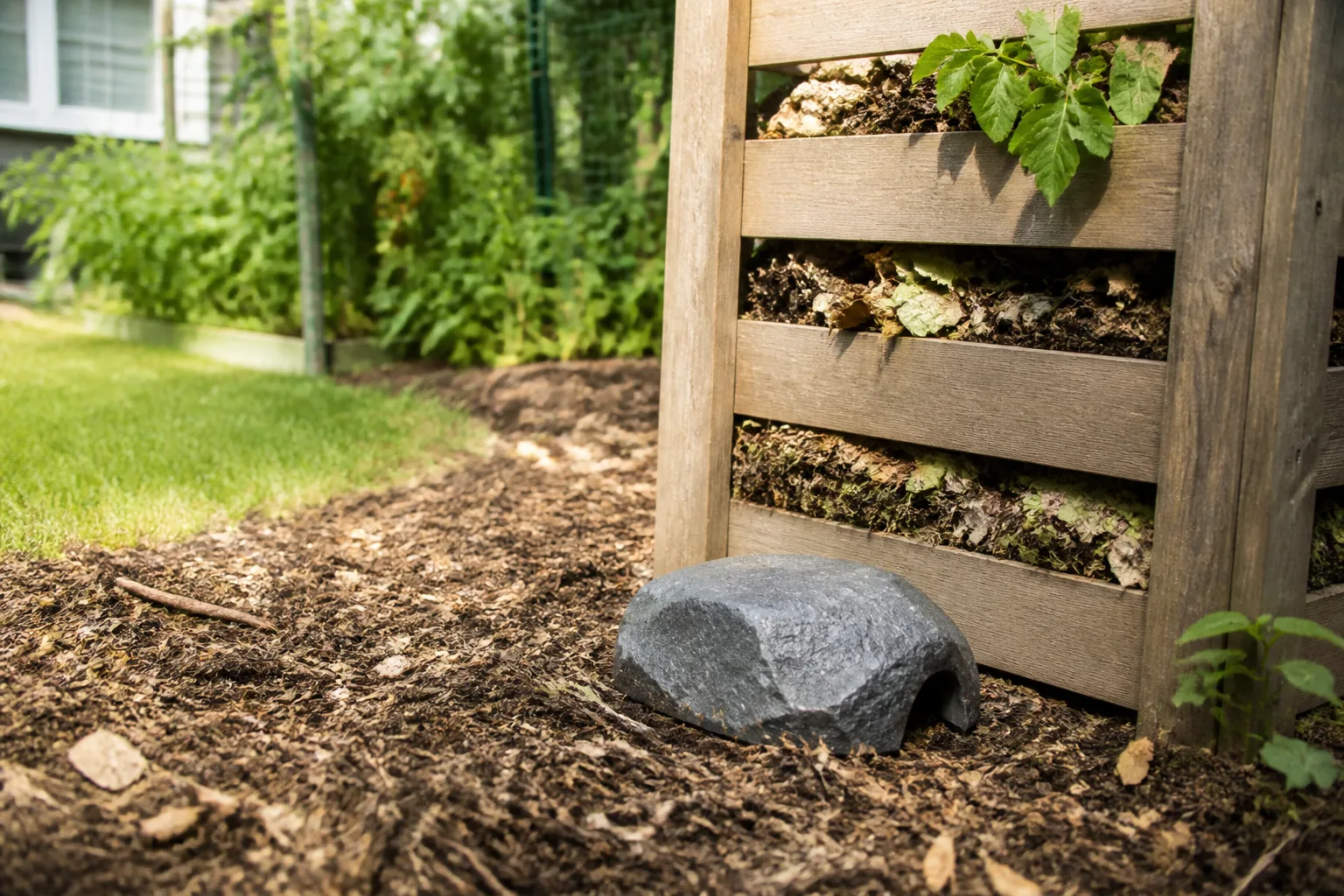
Tomcat Rockscape Bait Station is a locked, rock-shaped outdoor bait box that blends into landscape better than gray utility boxes pest companies leave behind. It ships with rodenticide blocks (often bromethalin-based refills available) and uses a key lock to block tampering.
Pros: Weather-resistant shell, tamper-resistant design, reusable housing, discrete appearance near patios and foundation plantings. Cons: Poison does not kill instantly—mice may die in walls, under decks, or off-property; secondary poisoning risk for predators; not a first-step indoor tool; must refresh blocks when eaten; illegal or unsafe if placed where label forbids.
Best for: Outdoor mice breeding near compost, wood piles, or shed gaps after indoor trapping, sanitation, and sealing ¼-inch entry points (CDC seal-up) have not stopped activity.
Pair outdoor stations with snap traps along interior runways so you are not only poisoning while mice still nest inside.
Traps and Glue Boards to Skip
Glue boards (sticky traps) catch mice on adhesive sheets like flypaper. UC IPM lists them as an alternative, but notes adults often avoid glue, capturing mostly juveniles, and trapped rodents may not die quickly—creating welfare problems with few humane disposal options (UC IPM house mouse). The CDC advises against glue traps for rats because panicked animals urinate, increasing disease exposure (CDC trap-up)—the same logic applies to mice indoors.
Glue traps are banned or restricted in multiple countries and increasingly excluded from responsible product roundups. Ultrasonic electronic repellent devices also show poor field efficacy per UC IPM—save money for traps and steel wool.
DIY baking soda baits and peppermint-only repellent strategies rarely clear breeding populations; see structured IPM guidance if someone in your household suggests pantry poison instead of traps.
When to Call a Pest Professional
Call a licensed pest operator when:
- Multiple rooms show fresh droppings despite two weeks of correct trapping and baiting.
- You hear heavy scratching or see large droppings—rats may need rat-sized traps, not mouse traps.
- Smell of dead rodents inside walls suggests prior poison use without access for removal.
- Hantavirus-risk settings (rural cabins, heavy rodent debris) where cleanup requires specialized protocols (CDC clean-up).
- Tenant/landlord disputes or food-service regulations require documented control.
Professionals bring inspection, exclusion materials, trap density, and legal rodenticide tools DIY kits cannot match. They are not failure—they are the right tool when time, disease risk, or reproduction rate outpaces weekend trapping.
Conclusion
The best mouse trap is the one matched to your runway, ethics, and infestation scale—not the highest affiliate commission. For most kitchens, Tomcat Press ‘N Set or a bank of Victor Easy Set wood snaps on CDC perpendicular placement clears small populations fastest. Choose Victor Electronic when concealment matters, Kensizer live traps only with legal release, Victor M393 when bait thieves beat your current snaps, and Tomcat Rockscape stations outdoors when trapping and sealing are not enough.
Trap density beats trap brand: a dozen well-placed devices, pre-baited unset nights, and daily checks outperform one perfect trap in the room center. Pair every trap campaign with sealed ¼-inch gaps, sealed pantry storage, and safe droppings cleanup—otherwise new mice replace catches within days. When activity spans rooms or species are uncertain, skip the hardware loop and book a pro. The goal is not a body count; it is no fresh droppings for a full week and closed entry points so you stop setting traps altogether.



