Best Time to Plant Grass Seed in Spring by Zone
Spring grass seed timing depends on zone, grass type, and soil at 2 inches. See when to seed, when to wait for fall, and how to read the weather window.
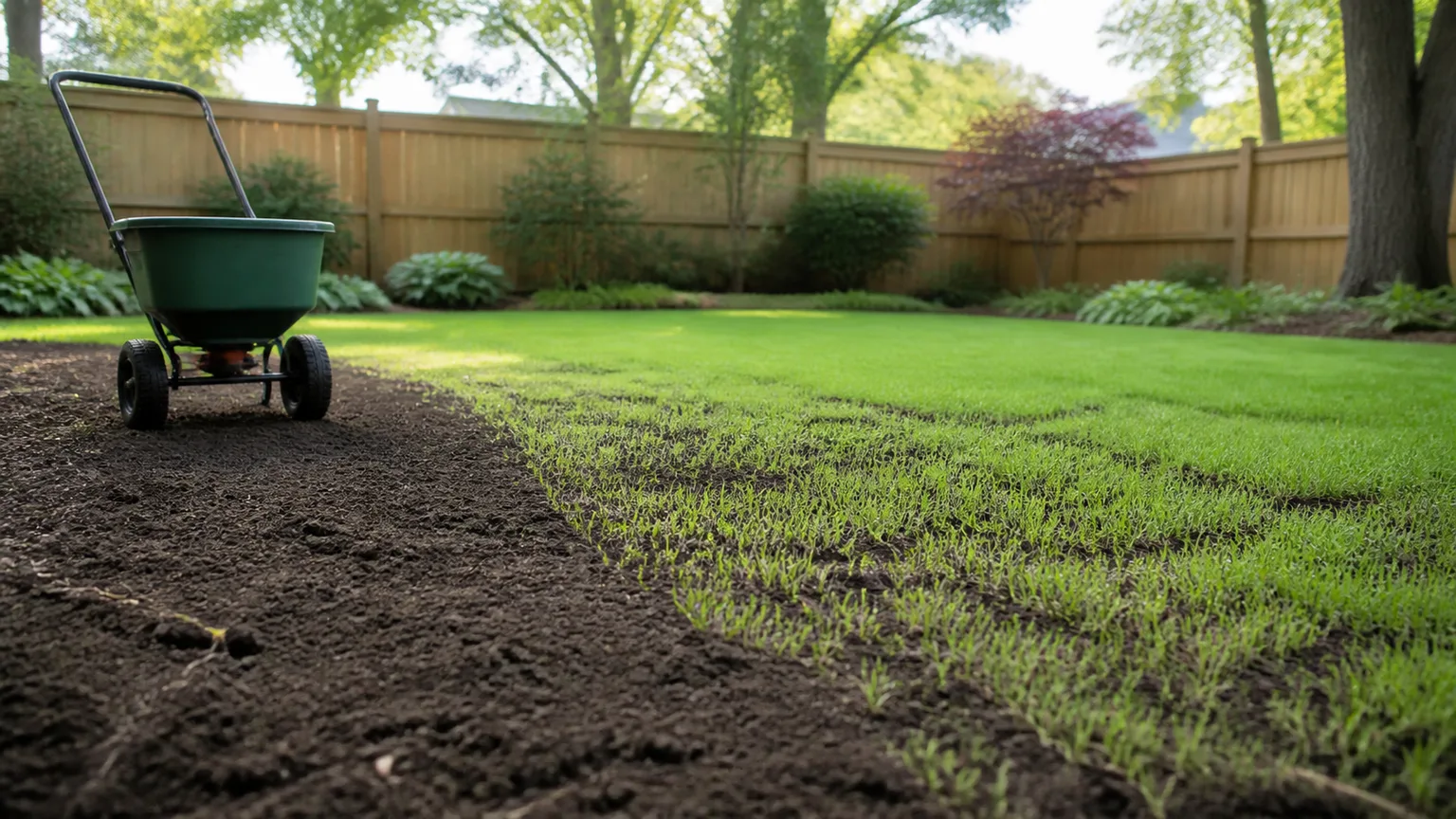
“Plant in April” is useless advice if your soil is still 42°F at two inches and you are spreading Kentucky bluegrass in zone 5. The best time to plant grass seed in spring is the first stretch when soil temperature, grass species, and your local frost window line up—and that date shifts by USDA zone, elevation, and whether you are seeding cool-season turf in Minneapolis or bermudagrass in Atlanta.
Spring is the second-best season for most cool-season lawns and the primary window for warm-season establishment in the South. The job is not guessing a month on the calendar. It is reading soil heat, picking the right species for your zone, and finishing establishment before summer stress—or crabgrass pre-emergent—wipes out your work.
Why Spring Timing Depends on Grass Type, Not Just Your Zip Code
Grass seed does not share one spring calendar. Cool-season grasses—Kentucky bluegrass, tall fescue, fine fescue, perennial ryegrass—germinate in cool soil and grow strongest in spring and fall. Warm-season grasses—bermudagrass, zoysiagrass, centipedegrass, St. Augustinegrass—need warm soil and long hot days; they go dormant or brown in winter across much of their range.
Plant the wrong category and timing will not save you. Tall fescue sown in a Phoenix summer cooks. Bermudagrass sown in a Michigan April sits idle until July, if it ever establishes. Before you check the calendar, confirm which side of the cool-season vs warm-season divide your lawn belongs on. Our best grasses for shade guide helps if tree cover is driving species choice.
Cool-Season Grasses: Kentucky Bluegrass, Fescue, and Ryegrass
Cool-season turf is the default from the Upper Midwest through New England, the Pacific Northwest, and the cooler half of the transition zone. These species want soil roughly 50°F to 65°F at seeding depth for reliable germination, with air temperatures often in the 60°F to 75°F range during establishment. UMass Extension places ideal air temperatures for cool-season establishment around 60°F to 75°F, with growth slowing outside that band.
Perennial ryegrass is the sprinter—often up in five to ten days when soil cooperates. Tall fescue and Kentucky bluegrass blends typically need seven to twenty-one days. That speed difference matters in spring: you are racing summer heat, and slow-germinating bluegrass needs an earlier start than a ryegrass-heavy patch mix.
Warm-Season Grasses: Bermuda, Zoysia, and Centipede
Warm-season lawns dominate the Southeast, Gulf Coast, and the warmest parts of the Southwest. They establish when soil holds 65°F to 75°F and nights stay warm. Daily highs near 80°F are a practical signal that bermudagrass and zoysia are ready to sprout. Seeding too early in a cool spring wastes seed; the same seed sown in late spring or early summer roots fast when heat is consistent.
In the Deep South, warm-season seeding often lands from late April through June, depending on latitude. In the upper warm-season belt—zone 8 edges, parts of the Carolinas and Tennessee—wait until soil actually hits the 65°F mark, not just the first 75°F afternoon that tricks you in March.
The Soil-Temperature Rule That Beats Any Calendar Date
Calendar dates are starting guesses. Soil temperature at one to two inches is the go/no-go signal extension turf programs use. Seed lying on cold ground does not germinate; it waits, washes away in rain, or gets eaten by birds. Seed in soil that warms quickly can green up in a week—then get hammered by a late frost if you jumped the gun.
For cool-season grasses, aim for soil 50°F to 65°F before you spread seed on a new lawn or major renovation. Many growers use 55°F as the minimum for tall fescue and bluegrass blends. For warm-season grasses, wait until soil reaches 65°F to 75°F and stays there.
Penn State Extension notes that in Pennsylvania, optimum turf seeding windows are mid/late spring and late summer/early fall, and that seed will not germinate once soils become too cold in late fall—while summer seedings face heat, drought, and disease pressure. The same logic applies everywhere: seed into the temperature band your species likes, not into a month you saw on a bag label.
How to Measure Soil Temperature the Right Way
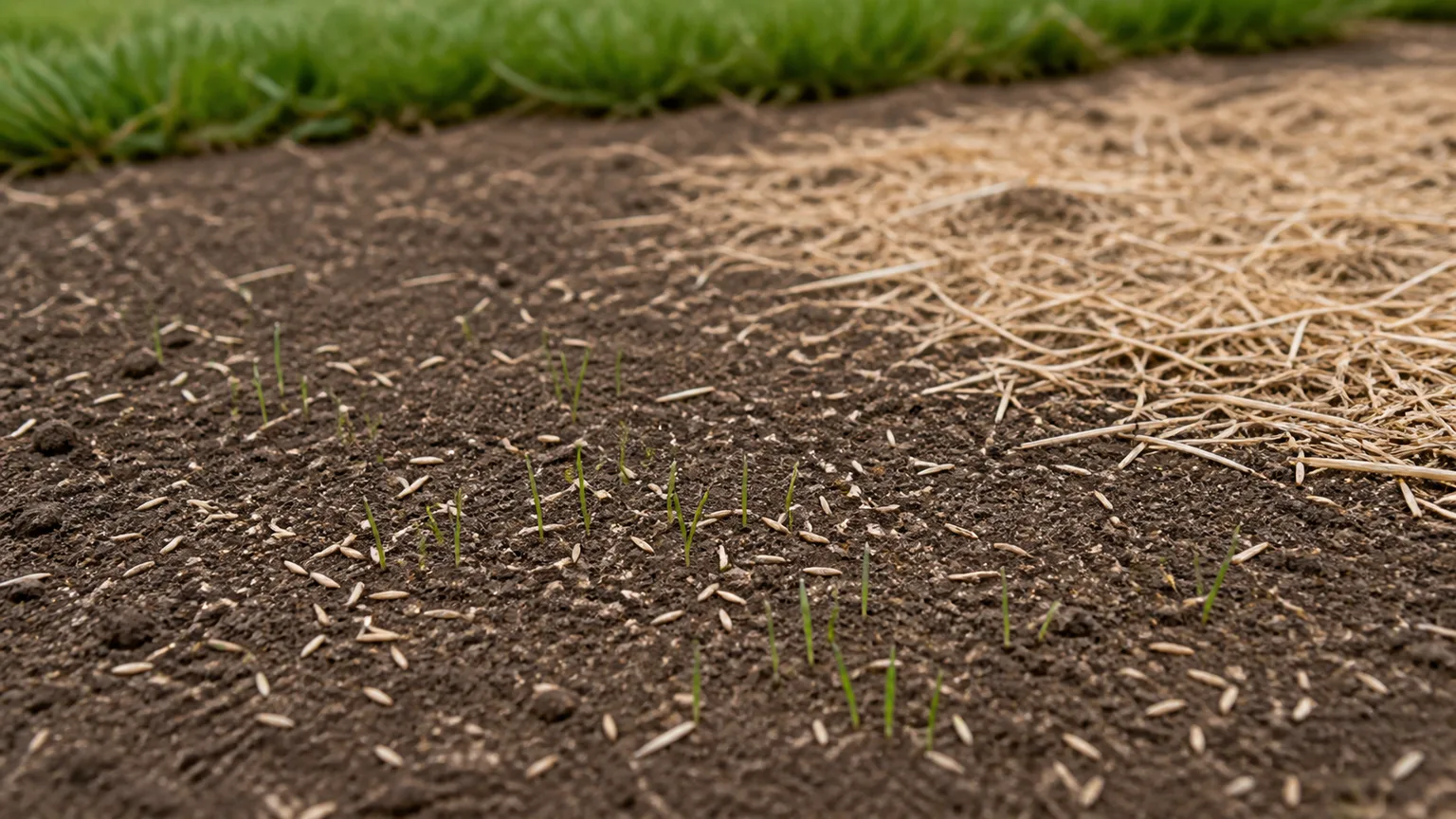
Buy a simple soil thermometer—probe style or digital with a metal stem. Push it two inches deep in the area you plan to seed, not on a south-facing brick edge that lies to you. Read in the early morning before sun warms the surface. Take readings in three spots: sunny strip, shaded strip, and the actual bare patch.
Seed when the two-inch reading holds at or above your target for three to five consecutive days, not after one warm afternoon. Microclimates matter: a north-side lawn behind the house can lag the parkway by two weeks. If you only own one lawn, seed the warmest zone first when you are borderline.
Air Temperature vs Soil Temperature
A week of 65°F afternoons does not guarantee 55°F soil if nights drop to freezing or the ground is saturated from snowmelt. Conversely, soil can warm faster than you expect on a south slope after rain. Watch both: soil thermometer for the planting decision, and the seven-day forecast for frost, heavy rain, and heat spikes after germination.
Spring Grass Seeding Windows by USDA Hardiness Zone
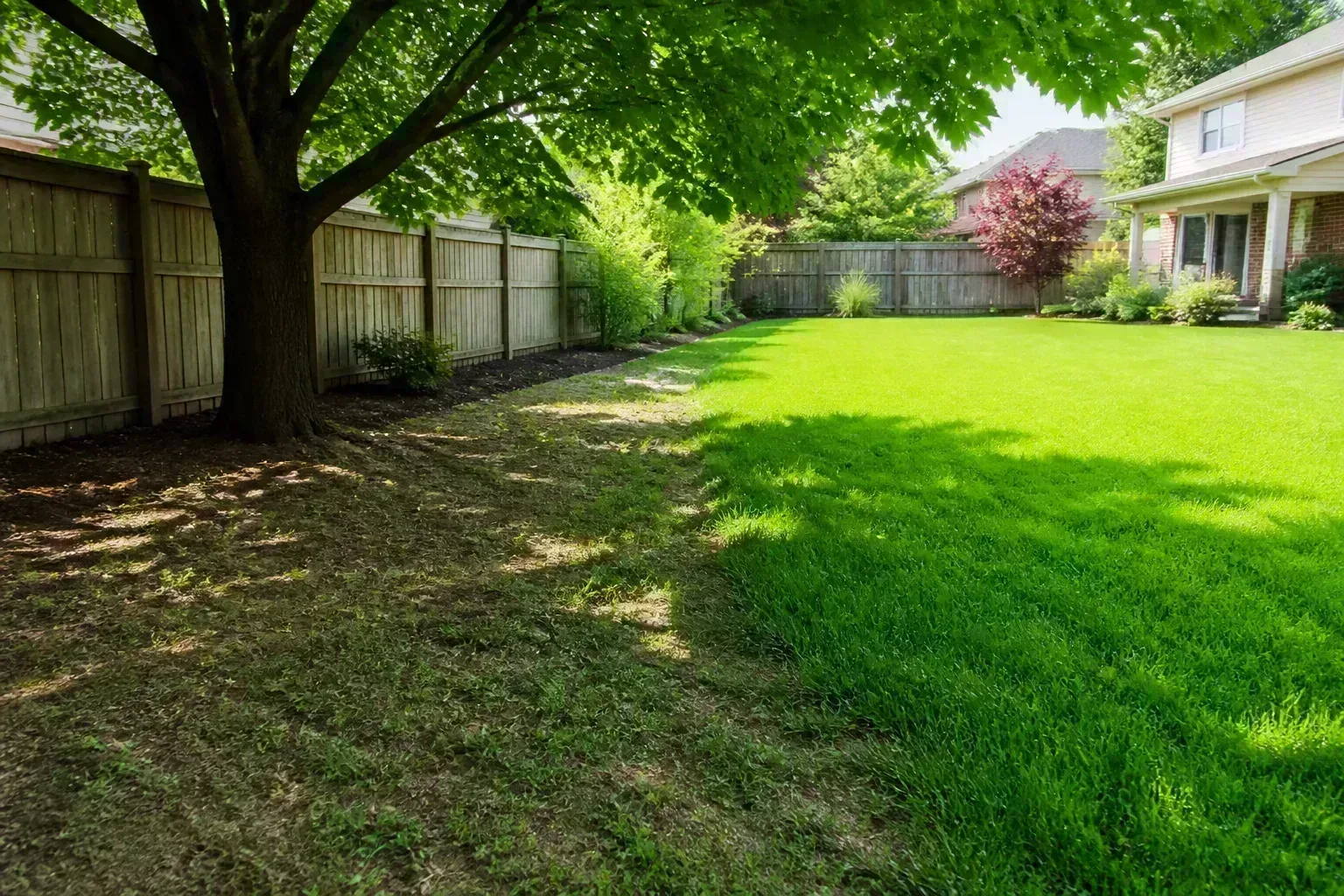
The table below translates extension timing into USDA hardiness zones. Elevation, lake effect, and urban heat islands can shift you a week or two—always confirm with your thermometer. These are cool-season spring windows unless noted for warm-season turf.
| Zone | Typical cool-season spring window | Warm-season spring window | Key caveat |
|---|---|---|---|
| 3–4 | Late April – late May | Not recommended | Short summer runway; prefer fall |
| 5 | Mid-April – mid-May | Rare; use sod/plugs | Finish before June heat |
| 6 | Early April – late May | Late May – June (south edge) | Pre-emergent timing critical |
| 7 | Mid-March – early May | Late April – June | Species split by lawn type |
| 8 | Early March – April (cool); warm-season dominates | April – June | Cool-season spring is backup only in coastal South |
| 9–10 | Minimal cool-season spring | March – June (desert: late spring) | Heat and irrigation drive success |
Zones 3–4: Northern Tier and High-Elevation Yards
In zones 3 and 4—northern Minnesota, Maine, high Rockies, Adirondacks—soil often stays cold well into April. Cool-season seeding typically starts late April when two-inch soil holds 50°F to 55°F for several days and hard freezes are unlikely. Mountain towns where snow lingers in shade may slide to early May.
Your establishment runway is short. Cool-season seedlings need roughly five to six weeks of mild weather before summer stress. If you are past late May and soil just warmed, skip spring renovation and plan late-summer seeding instead. Fall remains the better choice in these zones when you have the option.
Zones 5–6: Midwest, Northeast, and Mid-Atlantic North
This is classic cool-season country: Pennsylvania, Ohio, southern New England, Iowa, northern Illinois. Mid-April is the familiar target when soil hits 55°F, matching what many regional guides suggest once daily temperatures reach the 60°F range consistently. Zone 6 yards in southern Pennsylvania or southern Ohio may seed early to mid-April; zone 5 inland may wait until late April.
Work backward from summer: if your area sees sustained 85°F days by mid-June, finish major spring seeding by early to mid-May. Patch overseeding of small bare spots can go slightly later if you can irrigate daily. See our early-spring slit-seeding guide if broadcast seed failed on thin turf.
Zone 7: The Transition Zone Sweet Spot—and Its Traps
Zone 7 stretches from New Jersey through Virginia, Tennessee, and Oklahoma—where cool-season and warm-season lawns both exist. Northern zone 7 (New Jersey, Maryland piedmont) still favors tall fescue and bluegrass; spring seeding can start mid-March to early April when soil warms. Southern zone 7 (central North Carolina, Arkansas) may already be choosing bermudagrass or zoysia for full-sun yards.
Tall fescue is the most widely grown cool-season species in North Carolina’s transition climate, tolerating heat better than bluegrass but still behaving as cool-season turf. Do not sow fescue in August heat and expect spring miracles—match species to the lawn you actually have. If neighbors grow dormant brown bermuda all winter, you are not a Kentucky bluegrass yard.
Zones 8–9: Southeast and Gulf Coast Warm-Season Lawns
Across most of zone 8 and 9, warm-season grass is the default for sunny lawns. Cool-season rye overseeds happen in fall for winter color, but permanent establishment is bermuda, zoysia, centipede, or St. Augustine. Plant warm-season seed when soil reaches 65°F to 75°F—often April through June, with earlier starts along the Gulf and later in the Carolinas piedmont.
Cool-season spring seeding in zone 8 is limited to shaded or mountain pockets—western North Carolina, northern Georgia hills—where tall fescue persists. Those yards follow zone 6 to 7 timing: March to April, before humidity and heat favor crabgrass over fescue.
Zones 9–10: Southwest Desert and Low-Desert Timing
Low-desert lawns (Phoenix, Las Vegas, inland Southern California) run on warm-season species irrigated through extreme heat. Spring seeding windows are late March through May when soil warms and you can commit to daily irrigation. Summer seeding is possible with water but brutal on seedlings; spring is preferred when supply is reliable.
Cool-season grass in the desert is usually a winter overseed (rye), not a spring permanent lawn. If you are trying to establish tall fescue in zone 10 sun, reconsider species before you reconsider the calendar.
Weather Signals That Confirm—or Cancel—Your Planting Week
Soil temperature opens the window. Weather closes or confirms it.
Rain: Light, steady rain after seeding helps germination. A forecast three-inch gully-washer right after you spread seed on a slope will relocate your lawn into the storm drain. If heavy rain is coming, wait for the next dry stretch or use erosion netting on banks. Our guide on whether grass seed survives heavy rain walks through what to do after storms.
Frost: Cool-season seedlings that have emerged can be set back by a hard late frost. Wait until your area’s last frost date is near and the ten-day forecast looks stable—not just one warm week in March.
Heat: A sudden late-May heat wave hits young cool-season seedlings harder than mature turf. If the forecast shows several days above 85°F right after you plan to seed, and it is already late spring, fall may be safer.
Wind: Dry, windy weeks dry seedbeds in hours. If you cannot irrigate twice daily, postpone until you can—or choose a week with calmer weather.
Spring vs Fall: When Waiting Until Autumn Is the Smarter Move
For cool-season lawns, late summer to early fall is usually the best establishment season, not spring. Penn State Extension states that late summer to early fall is usually the best time to establish a new lawn from seed because of reduced weed competition and two cool growing seasons before the first serious summer heat. Spring works when fall is impossible, but you accept more crabgrass pressure and a shorter runway.
Choose spring seeding when you missed last fall, have an event deadline, or are repairing small bare patches you can babysit with a hose. Choose fall seeding when you are renovating more than a third of the lawn, fighting heavy crabgrass, or seeding slow-germinating Kentucky bluegrass on a budget. Our fall overseeding value guide compares return on effort.
Warm-season lawns are the mirror image: late spring through early summer is prime; fall seeding is often too late for roots before dormancy in northern parts of their range.
The Pre-Emergent Herbicide Conflict Most Spring Seeders Miss
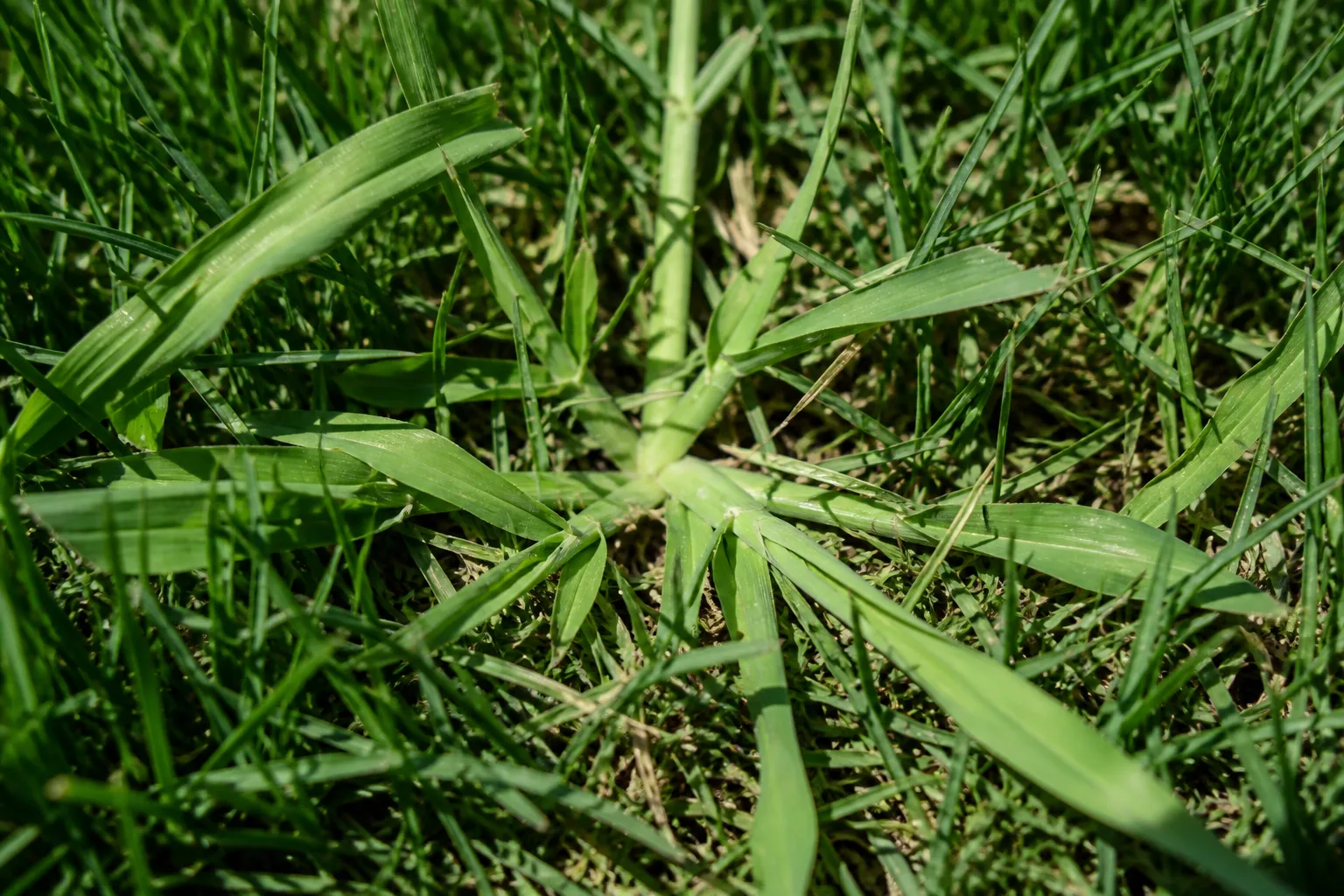
Nothing kills a spring seeding plan like crabgrass preventer already on the lawn. Standard pre-emergent herbicides—products with prodiamine, dithiopyr, or pendimethalin—block crabgrass and turfgrass seed from germinating. Most spring lawn guides gloss over this conflict; it deserves a full stop.
If you applied pre-emergent this spring, do not expect new seed to sprout unless the product label explicitly allows seeding within a narrow window (some “starter fertilizer + crabgrass preventer” combos are seed-safe only for certain species and timeframes—read the label literally). Penn State Extension suggests pre-emergent dates from mid-March to mid-May depending on Pennsylvania region—the same weeks many homeowners want to seed.
Your options: skip pre-emergent in a seeding year and hand-pull crabgrass while seedlings establish; use a labeled seed-safe product if one fits your grass type; or wait until late summer when the pre-emergent barrier has broken down and seed in fall instead. See when to apply pre-emergent herbicide for timing that does not torpedo your renovation.
Overseeding Bare Spots vs Starting a New Lawn in Spring
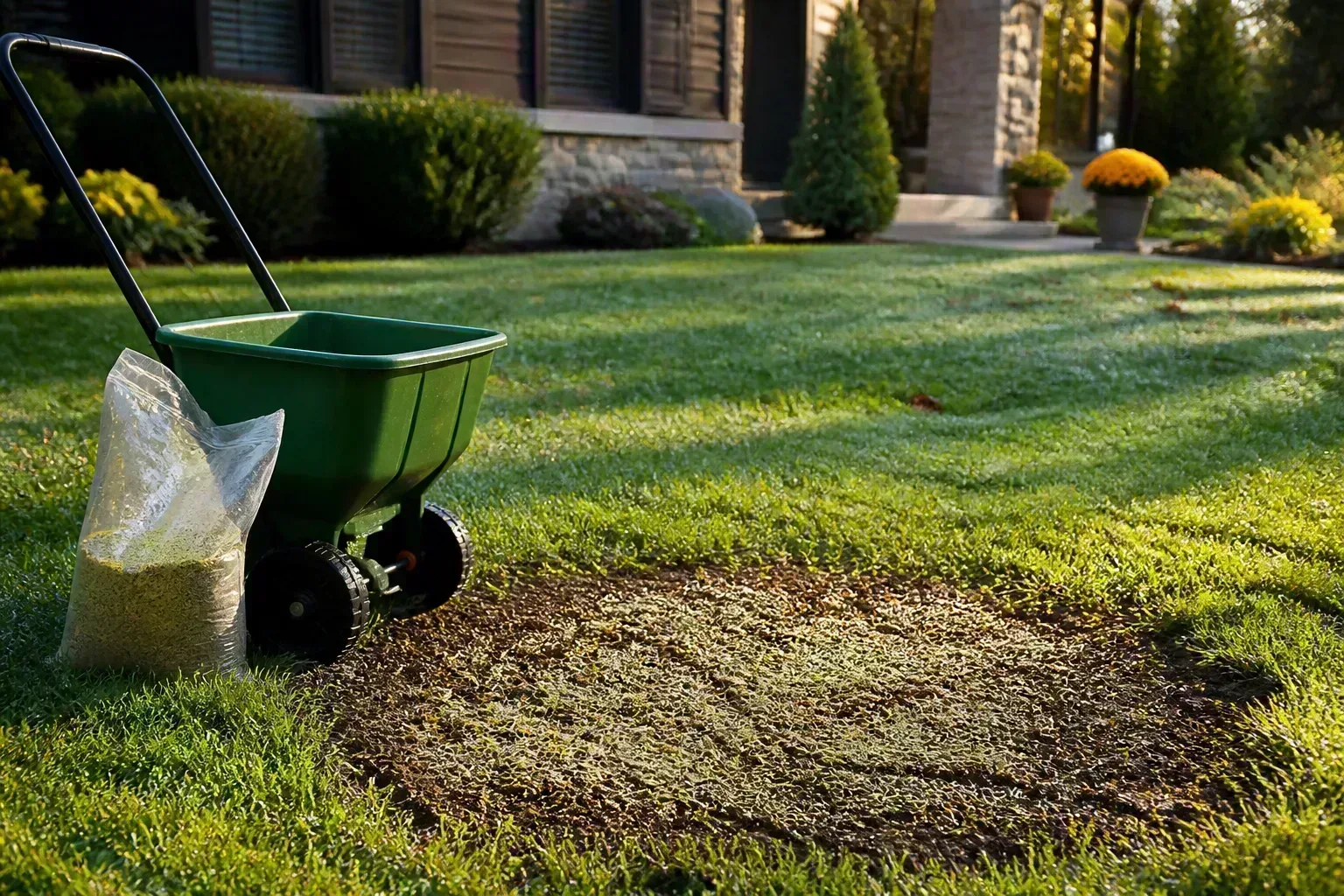
Overseeding—filling thin turf or fist-size bare patches—can run slightly later than full renovation because less area needs perfect seed-to-soil contact. Penn State Extension notes overseeding into thin turf can be done in late winter, spring, or early fall, with seed contact as the critical factor. Spring patch repair in zone 6 often works through mid-May if you rake bare spots to soil, seed, and water daily.
New lawn establishment from bare soil demands more runway: prep, grade, seed, irrigate, and mow before heat and weeds overwhelm seedlings. Start on the early side of your zone window. Follow our how to plant grass seed steps for prep depth, seed rates, and starter fertilizer—timing is only half the job.
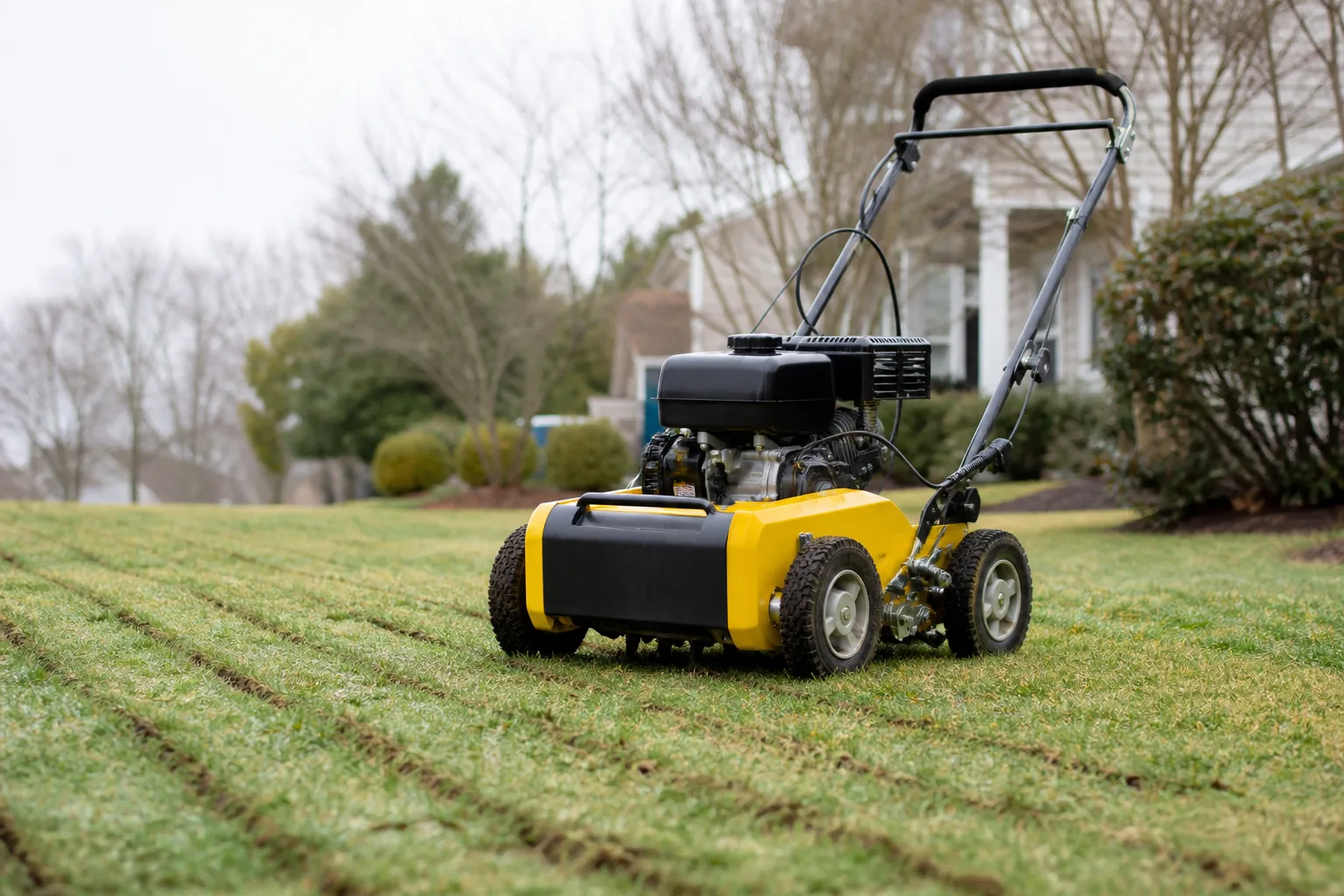
Throwing seed on hard-packed bare spots without scratching soil is not overseeding; it is bird food. Aerate, rake, or slit-seed so seed reaches soil. Protect from birds with light mulch or netting per our keep birds from eating grass seed guide.
A Five-Minute Decision Checklist for This Week
Run this list before you open the spreader:
- Species confirmed: Cool-season or warm-season matches your zone and sun?
- Soil thermometer: Two-inch reading at or above 50°F (cool) or 65°F (warm) for three-plus days?
- Frost check: Last frost near and ten-day forecast stable?
- Pre-emergent history: None applied this spring—or only seed-safe products per label?
- Summer runway: At least five to six weeks before sustained 85°F days for cool-season?
- Rain forecast: No gully-washers; you can irrigate if dry?
- Prep ready: Soil loosened, weeds controlled, right seed bag for sun/shade?
If any answer is no, fix the blocker or wait. A bag of seed costs less than a wasted April weekend.
Common Spring Seeding Mistakes—and What to Do Instead
Planting on calendar autopilot. Mid-April means nothing if soil is 45°F. Buy a thermometer; use it.
Ignoring grass type. Cool-season seed in a bermuda yard fills nothing permanent. Renovate with the species that will survive your summers.
Pre-emergent then seed. The most common self-inflicted failure. Plan herbicide and seeding on opposite seasons or use labeled exceptions.
Seeding too late for cool-season. Past your zone’s May cutoff, seedlings meet summer as toddlers. Wait for late August.
Wrong watering rhythm. Spring seed needs moist—not flooded—soil through germination. Light once-a-day misting beats one drowning that floats seed. Our how often to water new grass seed guide covers the phases.
Skipping soil test. pH and phosphorus matter before you spread. Lime in fall or early spring per test results, not guesswork.
Expecting instant lawn. Germination is week one; establishment is weeks more. How long grass seed takes to grow sets realistic expectations before you seed.
Conclusion
The best time to plant grass seed in spring is not a single month—it is the first window when your species’ soil-temperature range, your USDA zone’s frost and heat calendar, and your herbicide history all clear you to spread seed. Cool-season lawns in zones 5 and 6 typically seed from mid-April into May once soil holds 55°F; warm-season lawns in zones 8 and 9 wait for 65°F soil in late spring; transition-zone yards must pick a species before they pick a date.
Measure soil at two inches, confirm the forecast, and finish establishment before summer stress—or skip spring and seed in fall when cool-season renovation is the job. Get those three decisions right and the calendar takes care of itself.



