Does Grass Seed Germinate After Heavy Rain?
Heavy rain after seeding does not always kill grass seed. Learn when rain helps germination, when washout or rot ruins the job, and how to fix bare spots.
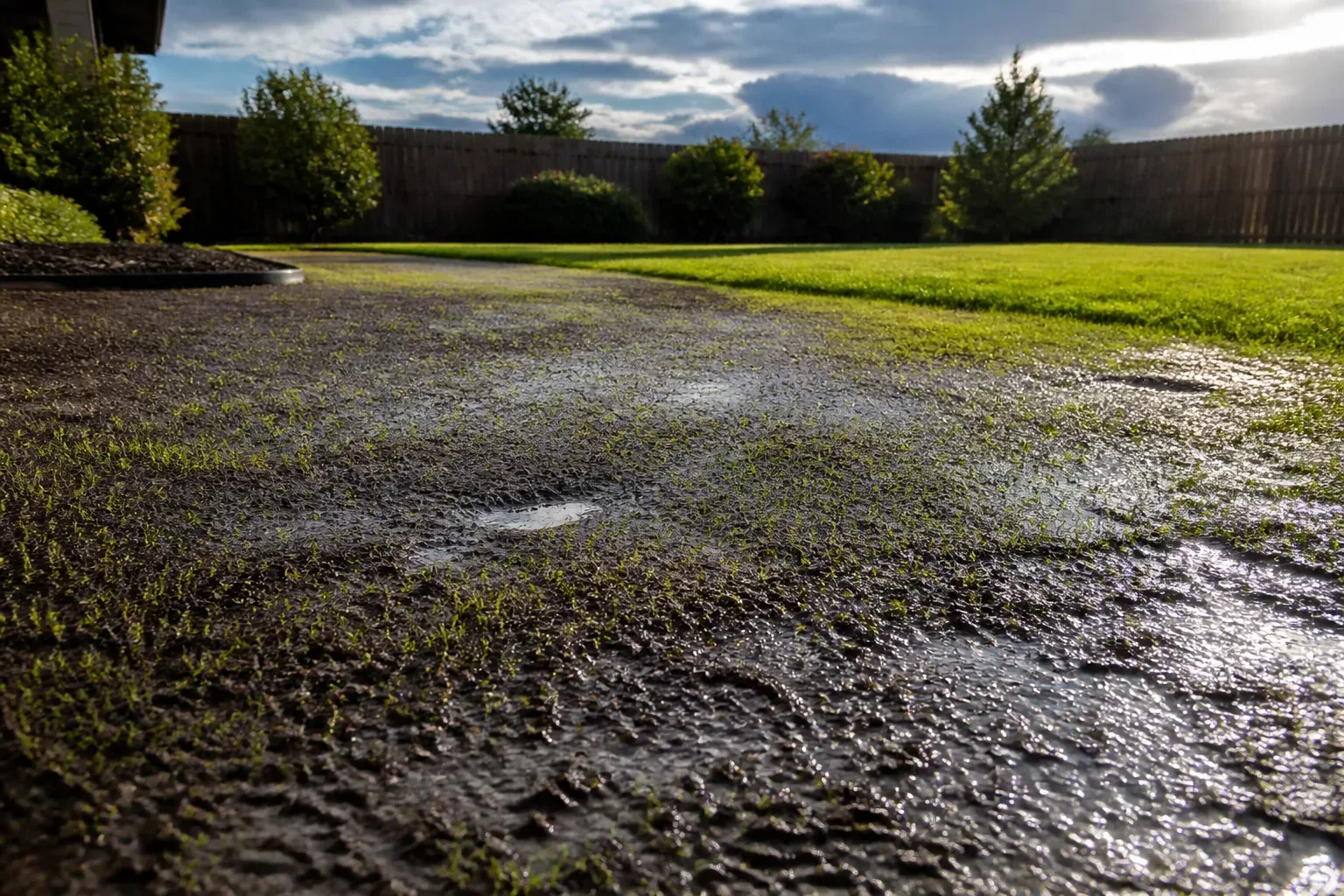
A storm right after you spread grass seed is one of the most stressful moments in lawn care. You picture bags of seed sliding downhill, puddles swallowing the row, and weeks of watering wasted. Sometimes that picture is accurate. Other times the rain did exactly what you would have done with a hose—settled seed into the soil and kept the seedbed evenly moist.
Grass seed can germinate after heavy rain when the seed stayed near its intended depth, the soil drains, and oxygen is still available in the seed zone. It often fails when runoff moves unanchored seed, standing water keeps the soil saturated, or a drying crust locks sprouts beneath a hard lid. The useful question is not how many inches fell. It is what the storm did to your seedbed.
The Short Answer: Rain Helps Until Seed Moves or Soil Drowns
Moisture is the switch that starts grass germination. Seeds need water to rehydrate, activate enzymes, and push a root and shoot into the soil. A light to moderate rain that soaks the top half-inch without pooling is usually helpful, especially on a properly prepared seedbed with good seed-to-soil contact.
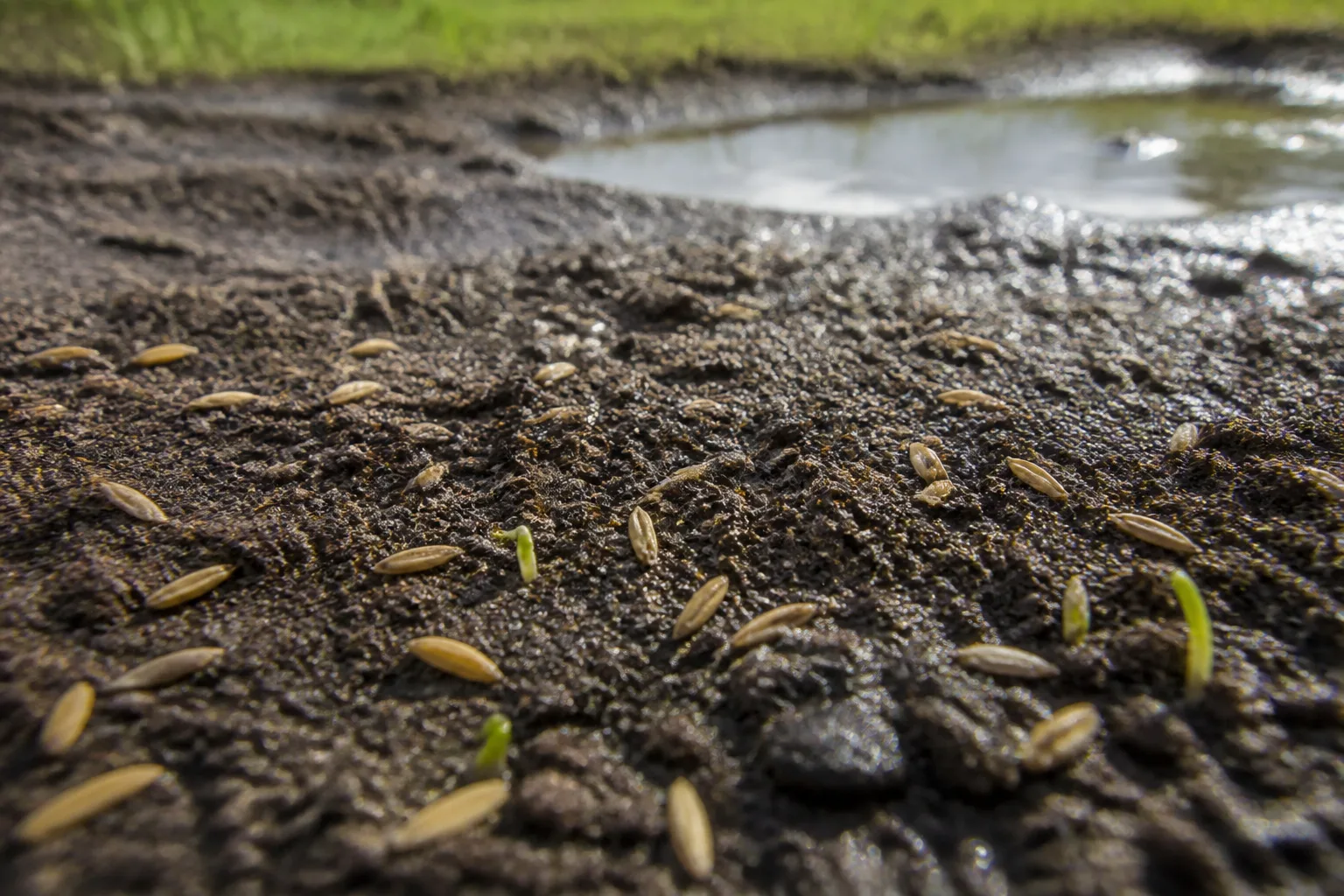
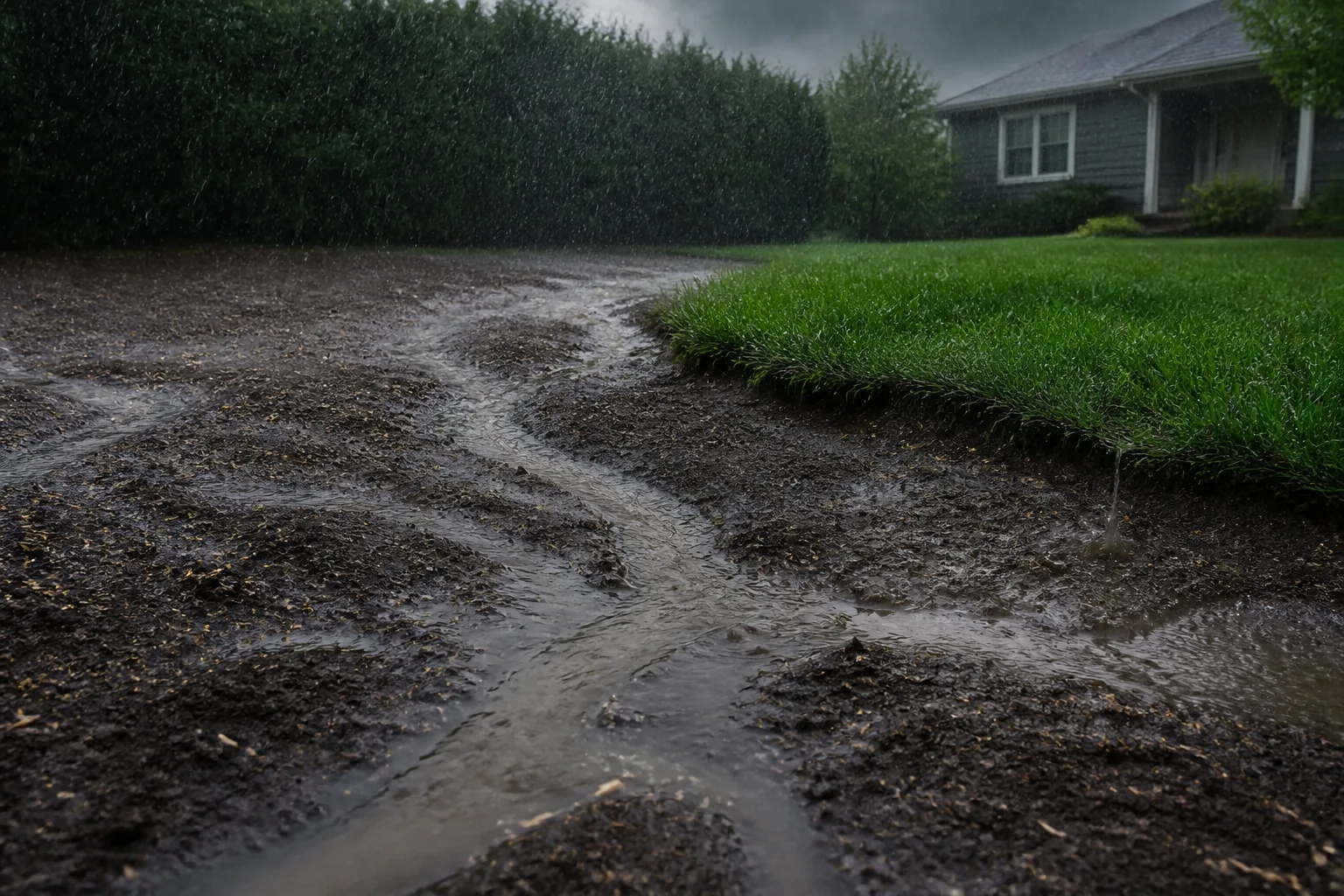
Heavy rain changes the math. Ungerminated seed sitting on or just below the surface has no roots to hold it in place. On slopes, in gutters, and along drainage paths, water can float and carry seed into low spots, leaving bare upper ground and thick clumps below. Even on flat lawns, a hard downpour can rearrange seed enough to create patchy establishment.
Saturation is the second failure mode. Grass seed needs moisture, but it also needs oxygen in the soil pores around the seed. When water stays standing or the seed zone remains muddy for days, seeds can rot or fail to progress even if they never moved. Homes & Gardens’ guidance on grass seed not germinating notes that seed left in water too long can rot, and success depends heavily on how well the surrounding soil drains.
So yes, grass seed can germinate after heavy rain—but only if the storm did not wash it away, bury it too deeply, or keep it drowning. Your first job after the weather clears is a quick inspection, not an automatic trip back to the garden center.
Why Unrooted Grass Seed Is So Vulnerable to Storms
Until roots anchor into the soil, grass seed behaves more like grit on a countertop than like a plant. Most lawn seeding and overseeding leaves a large share of seed at or very near the surface, which is correct for turfgrass establishment. That shallow placement is ideal for germination in calm weather and terrible insurance against a gully-washer.
The NC State Extension guide to establishing a new lawn emphasizes light covering, firming the soil, and mulching when erosion may be an issue—because seed without contact and protection is easily lost. During the typical 5–30 day germination window for common lawn grasses, much of that time is spent as exposed or lightly buried seed waiting for stable moisture and suitable soil temperature. For timing by species, see our guide on how long grass seed takes to grow.
Floating Seed and Runoff on Slopes
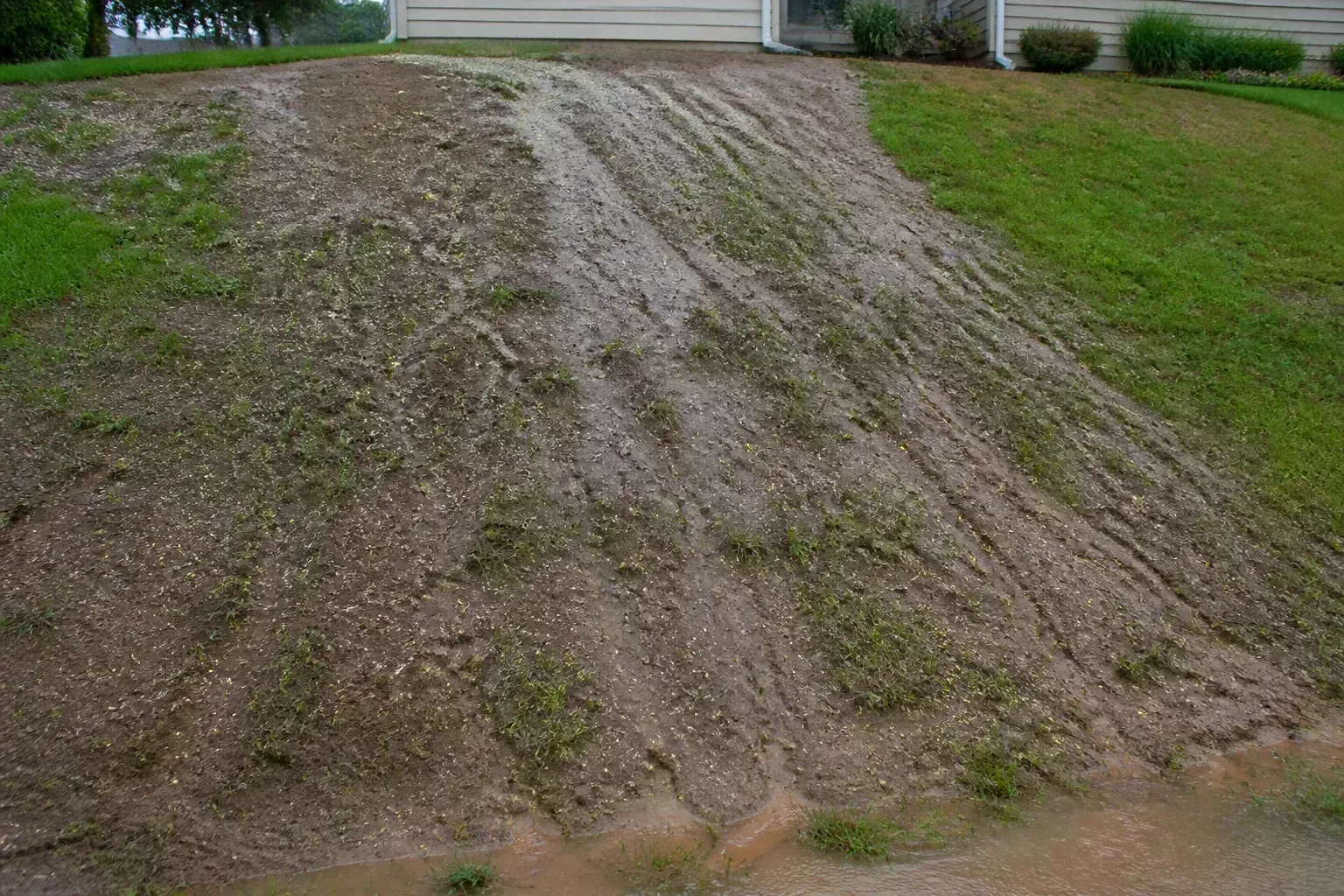
Grass seed is small, smooth, and buoyant enough to move with sheet flow across a lawn. On even a modest grade, heavy rain creates miniature rivers that preferentially strip seed from the top of a slope and deposit it wherever water slows—along sidewalks, at downspout outlets, in swales, and at the base of hills.
The visual result is classic: bare soil uphill, a green or seed-heavy band downhill. If your yard drains toward the street or a patio, check those collection points first. LawnLove’s grass-seed growth guide lists heavy rains among the weather factors that can wash seed away or contribute to rot—alongside drought, wind, and temperature extremes.
Drainage problems you already notice in storms—ponding, eroded channels, mulch washed into piles—are amplified when fresh seed is on the surface. Fixing grade and outlets is often a prerequisite to successful reseeding, not an optional upgrade.
Soil Crusting After a Hard Rain
Soil crusting is the hard, sealed surface that forms when raindrops break down soil aggregates and fine particles settle into a dense skin as the surface dries. The crust acts like a temporary lid. Sprouts that were close to emerging can expend their stored energy pushing against it and die underground. New seed applied on top of a crust may sit on a surface that sheds water instead of accepting it.
Crusting is most common on fine-textured, bare soil without mulch—exactly the look of a freshly prepared seedbed. If the lawn looks glazed or sounds hollow when you tap it with a rake tine, crusting is likely. Light scratching with a leaf rake, hand cultivator, or section of chain-link drag can break the crust before you decide whether reseeding is necessary.
Light Rain vs Heavy Rain: What Changes for Germination
Not all rain counts the same. What matters for your seed is intensity, duration, slope, soil texture, and whether seed was incorporated or left loose on the surface.
When a Gentle Shower Is the Best Free Watering
A steady light rain over an hour or two does three useful jobs at once. It wets the seed zone evenly without runoff, helps settle seed into small soil pores, and saves you from running the sprinkler four times a day during germination. If you were going to water lightly anyway, a gentle shower is often better than hand watering because it avoids puddles from misaimed hoses.
This is why seeding just ahead of a light-rain forecast can be smart timing—provided the soil is prepared, seed is lightly raked in, and you are not expecting a thunderstorm cell with intense rates. The goal is contact and consistent moisture, not a mud slide.
When a Downpour Becomes a Problem
Heavy rain becomes risky when any of these show up:
- Rate: Water runs off before it soaks in, carrying seed with it.
- Duration: Soil stays saturated and oxygen-poor in the seed zone.
- Timing: Seed was spread but not raked, rolled, or mulched on bare or sloped ground.
- Stage: Seedlings are still tiny and easily uprooted or buried by sediment.
A single intense storm can undo a perfect spread pattern. Two or three wet days afterward can keep disease pressure high on young turf. If your area also got hail or debris flow, treat that as physical damage on top of moisture stress.
Inspect Your Lawn After the Storm (Before You Panic)
Walk the seeded area when it is safe and you can see the surface—usually after standing water drains but before the soil bakes rock-hard. Compare high ground, low ground, edges, and the middle of the lawn. Bring a rake, your phone camera, and the seed label if you still have it.
Signs the Seed Washed Away or Redistributed
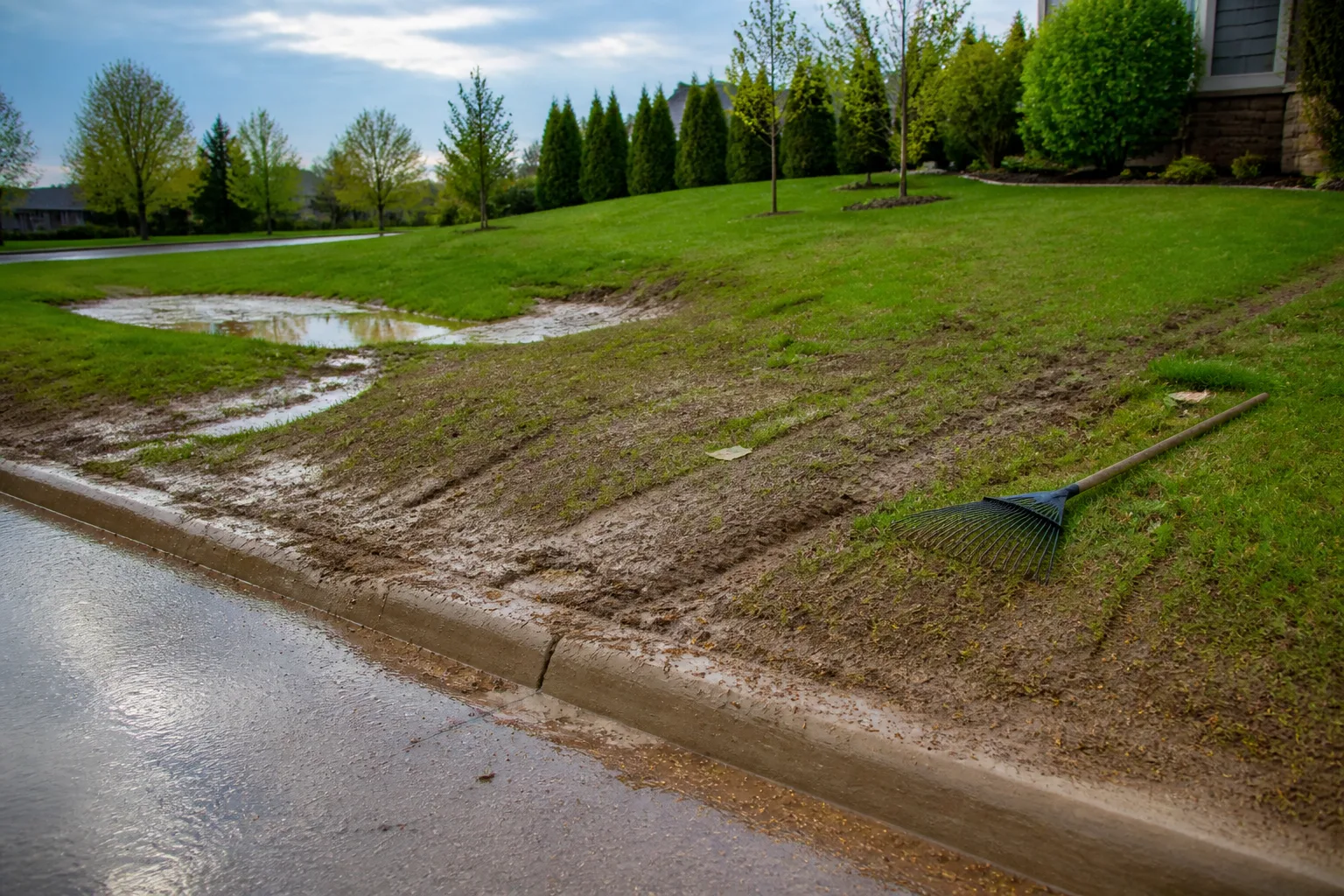
Treat these as strong evidence you will need spot seeding or a full redo in affected zones:
- Visible bare strips on slopes, ridges, or crown areas where you know seed went down.
- Seed or mud lines along curbs, patios, and downspout splash zones.
- New channels or rills cut through the seedbed.
- Thick seed or sediment piles in low spots, sometimes with no seed left uphill.
- Mulch or straw concentrated in one area and absent elsewhere.
- No germination progress in a zone that should have sprouted by now while neighboring areas green up—after you have ruled out shade and dry spots. Our why grass seed is not germinating guide can help separate washout from other causes.
If only part of the lawn shows these signs, plan a spot repair rather than reseeding the entire yard. Uniform problems across a flat, well-prepared bed are less common than partial washout unless the whole storm system stalled overhead.
What Heavy Rain Does at Different Germination Stages
The same storm hits ungerminated seed, sprouting seed, and young seedlings differently. Your response should match the stage.
Seed on the Surface That Has Not Sprouted Yet
This is the highest-risk stage for physical movement. Seed that has absorbed water but not yet anchored is still free to slide. If the seedbed stayed moist but intact, continue your normal light, frequent watering and wait for emergence on the species timeline—perennial ryegrass may show green in 5–10 days, tall fescue in 7–14, Kentucky bluegrass often 14–30 under suitable conditions.
If seed moved or crust formed, fix those problems before adding more seed on top. Covering a crust with fresh seed without breaking it often wastes the second application too.
Seedlings That Have Already Emerged
Short coleoptiles and first roots are tougher than bare seed but not tough. Fast runoff can uproot clumps, bury tiny shoots in sediment, or pound them flat. Ponding around new seedlings encourages damping-off and other seedling diseases—especially when nights stay warm and humid. NC State Extension notes that seedling diseases often follow prolonged wetness and that heavy mulch can contribute when applied too thickly.
If seedlings are up but thin after a storm, you may need only spot seeding in gaps once soil firms. If shoots were buried or sheared off across a zone, treat that area like a new seeding after prep. Avoid heavy foot traffic and mowing until the stand is taller and the soil passes a firmness test—similar to the post-rain rules in our guide on what not to do to grass after heavy rain.
Should You Reseed After a Washout?
Usually yes in the damaged zones, no as an immediate reflex everywhere. Reseeding is the right call when seed clearly left the prepared area, crusting killed emergence, or germination failed in patches while the rest of the lawn progresses. It is the wrong call when seed is still in place and simply needs more time—especially for slow species in cool soil.
Wait for Workable Soil Before You Sow Again
Do not spread fresh seed into mud or standing water. Saturated soil compacts under foot traffic, smears when you rake, and keeps new seed in oxygen-poor conditions that invite rot. Let the surface dry until:
- Footprints do not sink deeply.
- A rake loosens the top quarter-inch without pulling up smeared clods.
- Water no longer pools in the area after a light watering test.
That might take one dry day on sand or several on clay in shade. Patience here prevents a second failure. If the soil stays wet for days without rain, investigate drainage before you invest in more seed—our repair bare patch on lawn guide covers low spots and grade issues that storms expose.
How to Repair Bare Patches and Low Spots
Once the bed is workable:
- Remove debris and break crust lightly with a rake.
- Rough the soil so new seed contacts mineral soil, not a sealed skin.
- Level severe low spots if water pools there; otherwise seed will keep collecting in the same hollow.
- Spread seed at the label rate for patch repair—often half in one direction, half perpendicular, as NC State recommends for full seedings.
- Lightly rake or drag to cover seed, then roll lightly to firm.
- Mulch bare or sloped patches (see below).
- Water lightly and often to keep the seed zone moist until emergence, then transition gradually to deeper irrigation.
For fast visual cover in cool-season lawns, perennial ryegrass is a common patch choice because it germinates quickly. It is not a substitute for a full-sun permanent blend if your main lawn is Kentucky bluegrass or tall fescue—match the repair seed to the existing turf when possible, or use a blend that contains your dominant species so color and texture do not clash.
If germination was slow everywhere—not just washed zones—read grass seed taking too long to come in before you assume the storm was the only culprit.
Prevent Washout Before the Next Forecast
If rain is in the forecast, you can often keep seed in place by changing timing, incorporation, and cover—not by hoping the storm misses you.
Do not intentionally seed immediately ahead of a heavy thunderstorm on bare soil, steep slopes, or erosion-prone sites. If planting cannot wait, prioritize protection below. Light rain after proper prep is a different story and can be ideal.
Raking, Rolling, and Seed-to-Soil Contact
Seed scattered on top of loose soil is seed waiting to travel. After spreading, rake lightly so seed sits in the top quarter-inch of soil. Follow with a light roller or foot firming on small areas to improve contact without creating a compaction pan. NC State Extension recommends hand-raking to level, allowing moisture to settle the soil, rolling lightly before seeding, raking again to break surface crust before seed, and rolling once more after seeding.
On overseeded existing turf, a slice seeder or aggressive rake-through does this job better than broadcast seed alone. The more seed touches soil rather than thatch, the less rain can float it away.
Straw, Mulch, and Erosion Blankets on Slopes
On bare ground—especially slopes—mulch is cheap insurance. NC State advises mulching with weed-free straw, hay, or commercial mulch when erosion may be an issue or to conserve moisture, using about one bale per 1,000 square feet for warm-season turf and one to two bales for cool-season seedings, then stabilizing with rolling or watering. Applied evenly and lightly, straw often does not need removal.
The NC State Extension publication on mulch for erosion control states that mulch covering at least 85 percent of the soil surface helps prevent seeds from washing away, improves germination conditions, and slows runoff on slopes. Straw is economical on moderate slopes but needs tackifier or crimping on windy or steeper sites so it does not blow away before roots establish.
On steep or long slopes, erosion control blankets or hydromulch may be more reliable than loose straw alone. These are common on new construction lawns and hydroseeded yards for a reason: they hold seed and soil together through the first storms.
If you are seeding a slope before a rainy week, combine graded soil, incorporated seed, light straw, and temporary barriers that slow water at the top of the hill. Fixing drainage once beats re-buying seed every season.
Conclusion
Heavy rain does not automatically cancel your grass-seeding project. Light, steady rain often improves germination by settling seed and keeping the seedbed moist. Heavy rain threatens unrooted seed through washout, redistribution, crusting, and prolonged saturation—and the damage is usually visible if you inspect slopes, low spots, and edges instead of guessing from rainfall totals.
After a storm, walk the lawn, separate intact zones from washed or crusted ones, and wait for workable soil before reseeding. Incorporate seed, firm the bed, and mulch bare or sloped ground before the next front moves through. Match your expectations to the grass species on the label, protect young stands from traffic and mowing until they root, and treat recurring washout as a drainage and cover problem—not bad luck with seed. Get those pieces right, and the next rain is more likely to help your lawn than hollow it out.