How to Grow and Care for Blue-Eyed Grass
Grow blue-eyed grass in the right light and moist, well-drained soil. Learn planting, watering, division, seed starting, pruning, and troubleshooting.
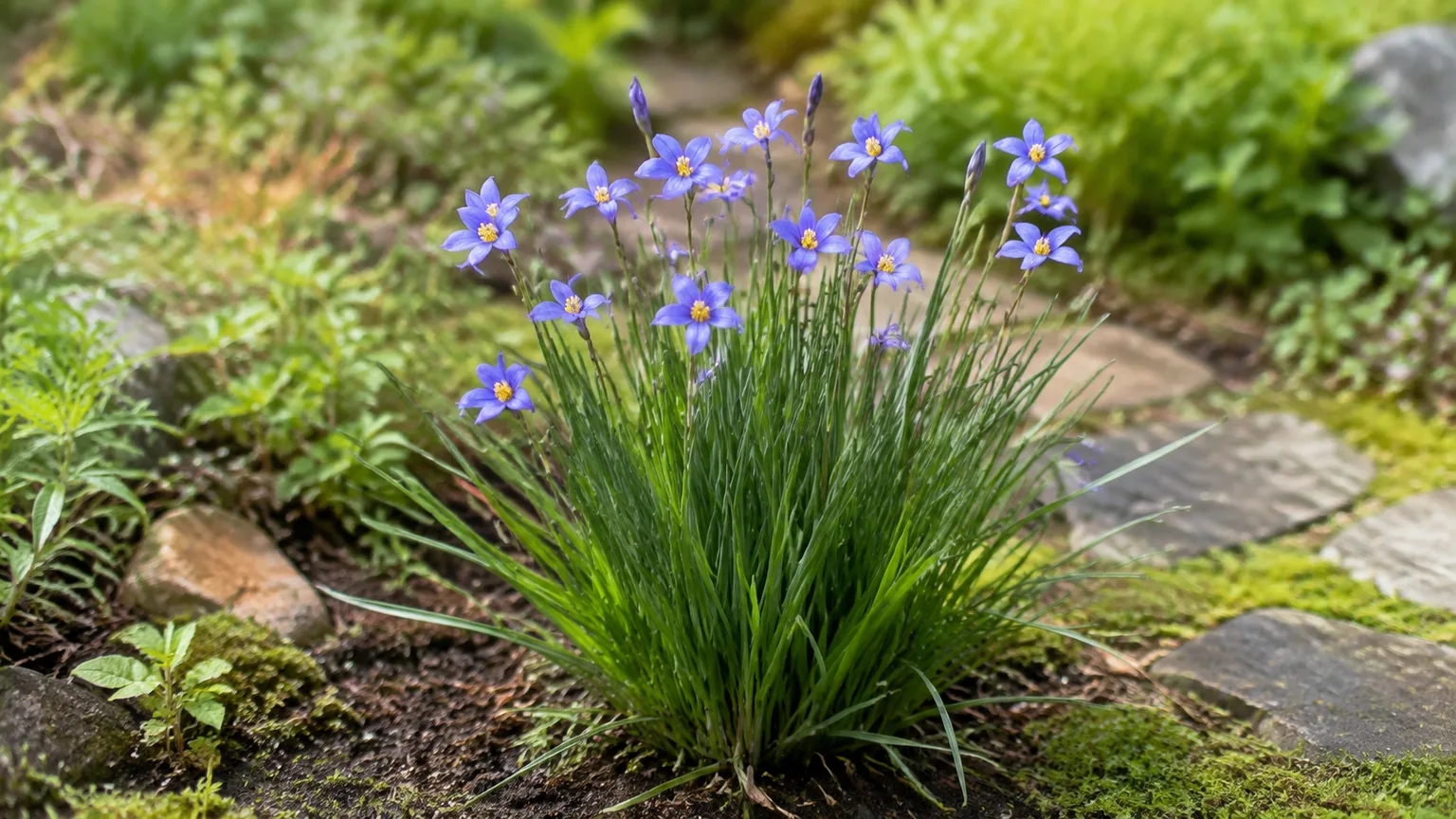
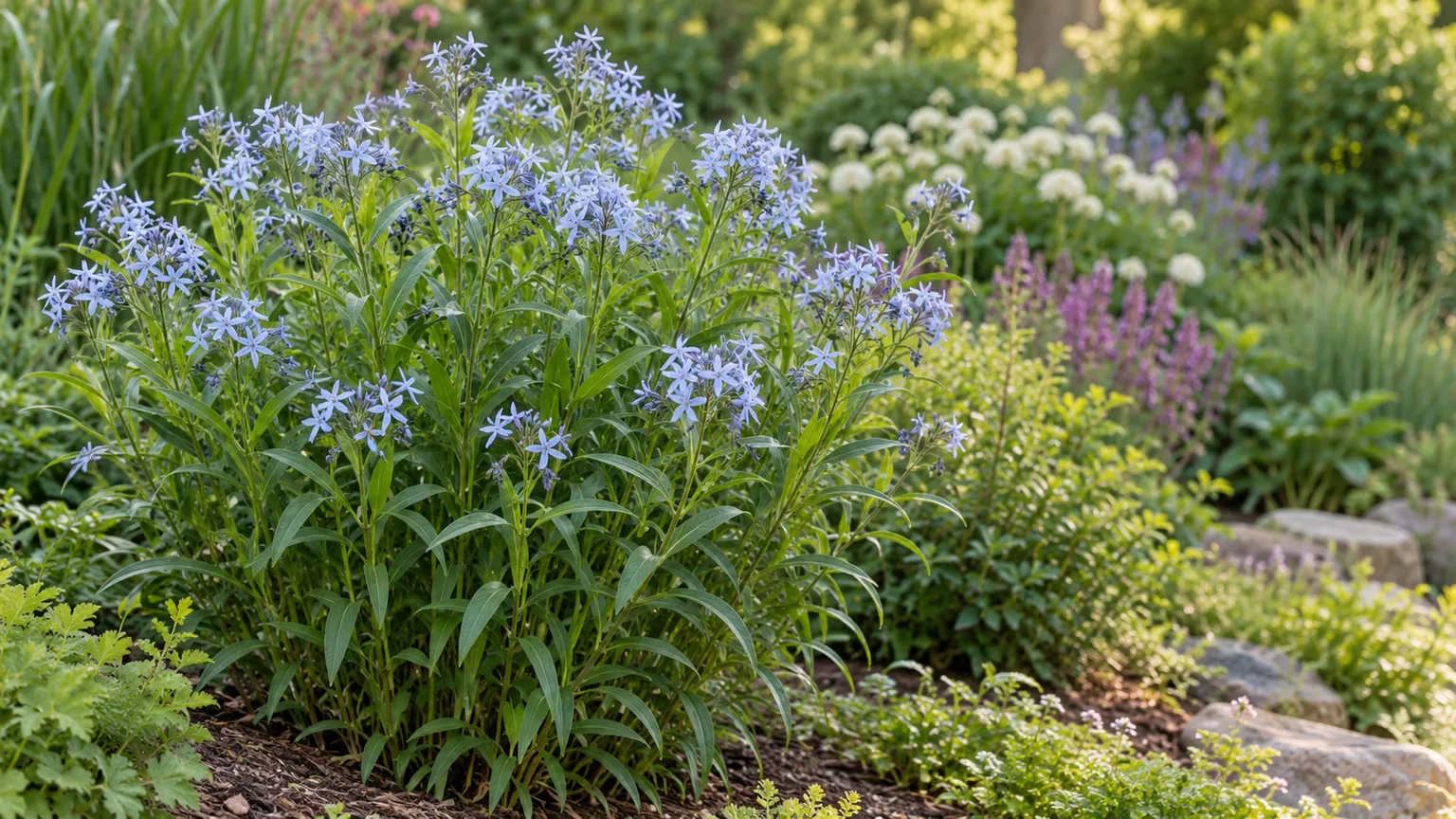
Blue-eyed grass (Sisyrinchium angustifolium) is a small native perennial that spends much of the year looking like a tidy tuft of grass, then sends up fine stems carrying violet-blue flowers with yellow centers. It is a good choice for a meadow edge, front-of-border planting, rock garden, path edge, or rain-garden margin—but only if the site stays moist without holding water around the crown.
The most useful way to care for it is to think like the plant’s habitat: give it light, seasonal moisture, and a root zone with oxygen. The plant does not need rich feeding or constant fussing. It needs the right place, careful establishment, and occasional decisions about whether you want a compact clump or a self-renewing patch.
What blue-eyed grass is—and what it is not
Blue-eyed grass is not a lawn grass. It belongs to the Iridaceae, or iris family, and grows from short rhizomes. Its narrow, linear leaves form a fan-like clump, while the flower stems are flat or angular and rise above the foliage. The name comes from the grasslike appearance and the bright yellow “eye” at the center of each blue to blue-violet flower.
The individual flowers are small—usually around half an inch across—but they make a strong impression when several plants bloom together. Flowers can open in the morning and close later in the day, especially in bright, warm conditions. That rhythm is normal, not a sign that the plant is wilting. The Florida Wildflower Foundation describes the mature seed capsules as darkening and wrinkling as they ripen, which gives you a useful cue if you want to collect seed rather than deadhead every flower.
Size varies with species, climate, and growing conditions. For S. angustifolium, North Carolina State Extension’s plant profile lists a dense clump roughly 18 to 24 inches tall and 6 to 12 inches wide, while other horticultural sources describe shorter garden plants. Use the nursery label and the local ecotype as your final guide; do not design a bed around one precise height.
Is blue-eyed grass right for your garden?
Blue-eyed grass earns its keep where a low plant can soften an edge without hiding taller companions. It offers fine texture before bloom, bright spring-to-early-summer color, and food for small pollinators and seed-eating birds. NC State lists uses that include meadows, walkways, slopes, woodland edges, borders, rock gardens, and rain gardens, and records attraction to bees.
It is less suitable for a bone-dry xeric bed, a deeply shaded foundation border, or a basin that stays saturated for days. It can tolerate some variation, but “moist” is not a synonym for “waterlogged,” and “partial shade” is not a promise of heavy flowering. If your site fails either the moisture or light test below, choose a different plant or fix the site before buying a larger group.
Choose a site by moisture and drainage
The ideal soil stays evenly moist during active growth but drains excess water after rain. A low meadow, swale shoulder, stream-bank edge, or rain-garden upper slope can work. The lowest point of a rain garden may not: water that infiltrates within a reasonable period is different from a planting pocket that remains a cold pond around the roots.
Test before planting. Dig a hole about 12 inches deep, fill it with water, let it drain, then fill it again and observe what happens. If the second fill disappears in a few hours, the site may be workable; if water remains for a day or more, plant blue-eyed grass higher, improve the bed’s drainage, or move it to the edge. This simple test tells you more than the word “rain garden” on a plant tag.
Soil texture can vary from sand to clay, but structure matters. Sand may need a modest amount of organic matter to hold moisture; clay may need a raised or loosened planting area rather than a small pocket of compost that creates a bathtub. The Florida Wildflower Foundation’s blue-eyed grass profile notes its adaptability to moist through moderately dry sandy or calcareous soils in Florida, but that regional observation should not be used to justify drought-prone planting everywhere.
Give it enough light to flower
Aim for full sun to light shade. NC State defines full sun as six or more hours of direct sunlight and lists partial shade as two to six hours. In the northern part of its range, a sunny bed usually produces denser foliage and more flowers. In hot southern sites, morning sun with some afternoon relief can prevent the soil from drying too abruptly, especially during the establishment season.
Watch the plant, not just the tree canopy. If foliage is green and upright but blooms are sparse, the site may be too shaded for the amount of moisture it receives. If leaves scorch while soil is dry by midday, add temporary shade during establishment or move the plant next season; do not compensate for a hot, exposed site with shallow daily watering forever.
Planting blue-eyed grass for a strong first season
Nursery-grown divisions or small potted plants are the most predictable starting point. Choose a clump with firm leaves, a living crown, and no sour smell or black, soft tissue at the soil line. A plant in flower is easy to identify, but a healthy nonflowering clump can transplant well if it is installed during a mild period and watered consistently.
In climates with hot summers, fall or winter planting gives roots time to establish before the hardest heat. The Florida Wildflower Foundation specifically cautions against transplanting blue-eyed grass in full summer heat. In colder regions, plant in spring once the soil is workable or in early fall with enough time for rooting before the ground freezes. If you plant in summer because that is when the nursery has stock, choose a cool morning, water the root ball first, and accept that bloom may wait.
Use this sequence:
- Clear competing grass and weeds from a circle at least twice the width of the root ball.
- Dig a hole slightly wider than the roots and no deeper than the container’s soil level.
- Set the crown at the same height it grew in the pot. Do not bury the fan of leaves or pack mulch against it.
- Backfill with the excavated soil. Add only a small amount of compost if the ground is genuinely poor; this is not a plant that needs a rich planting pocket.
- Water slowly until the root zone is thoroughly wet, then allow excess water to drain.
- Keep the area weed-free and evenly moist while new roots move into surrounding soil.
Space plants about 12 inches apart when you want separate clumps, or closer only when you are intentionally creating a faster mass and can monitor airflow. A young plant may look lost at that distance, but rhizomes and self-sown seedlings can fill the gaps. Dense immediate planting makes crown moisture harder to manage and can turn division into an annual chore.
Watering: moist soil, not a swamp
Water new plants whenever the upper inch of soil is beginning to dry, adjusting for soil texture, rainfall, wind, and temperature. Apply water at the soil line and soak deeply enough to wet the root ball and nearby soil. The goal is not a fixed number of small drinks; it is a repeating cycle of thorough wetting followed by modest drainage and gradual drying.
During spring bloom, consistent moisture supports flowering. A hot spell in a sandy bed may require water more often than a cool week in clay, so a calendar prescription is less useful than checking the soil. If the leaves are limp and the soil is dry several inches down, water deeply in the morning. If the leaves are limp while the ground is wet, adding water is the wrong first action.
Established plants can tolerate some summer dryness, and some regions report seasonal dormancy after bloom. That does not make blue-eyed grass a drought-tolerant lawn substitute. Let the plant slow down naturally in a climate where summer dormancy is normal, but protect a recently divided or newly planted clump from prolonged drought. A light layer of organic mulch can reduce evaporation; keep it a few inches away from the crown.
Soil, mulch, and fertilizer choices
Blue-eyed grass prefers average to poor soil that is moist yet well drained. NC State lists acidic through neutral conditions and good drainage with occasional dryness as compatible cultural conditions. A soil test is useful when the bed has a history of repeated amendments, lime applications, or unexplained nutrient problems; do not change pH simply because a plant profile mentions acidity. Plant Care Today’s cultivation notes also emphasize that the plant’s grasslike appearance does not mean it wants lawn-style feeding or treatment.
Skip routine high-nitrogen fertilizer. Rich soil and excess feeding can produce long, floppy foliage with fewer flowers—the opposite of what most gardeners want from this plant. If neighboring plants need compost, place it around those plants rather than building a deep, fertile mound under the blue-eyed grass. A thin surface application of finished compost in a tired bed is different from repeated fertilizer applications.
Mulch is optional, not a requirement. Use a thin layer to slow evaporation and suppress weeds, but maintain an open ring around the crown. Heavy mulch, wet leaf piles, and plant debris pressed against the base reduce airflow and keep the crown wet; the result can look like sudden collapse even though the original mistake happened weeks earlier.
How to keep the clump tidy and blooming
Blue-eyed grass is naturally low maintenance. Remove damaged foliage, keep tall weeds from shading the clump, and water during establishment or unusual drought. You do not need to shape it into a ball, and you do not need to cut every leaf after a flower fades.
Deadheading vs letting it seed
Deadhead when you want a cleaner edge, a longer-looking bloom display, or fewer volunteer seedlings. Snip spent flower stems just above the foliage with clean shears, taking care not to pull the crown. Deadheading is not a guaranteed bloom machine; it can make the plant look fresher, but light, moisture, age, and crowding matter more.
Leave selected flowers if you want natural renewal. Allowing capsules to mature can help a patch move into nearby gaps, while cutting the whole group after bloom prevents much of that spread. The best compromise for a mixed border is often to deadhead along the path and leave a few seed-bearing stems toward the back. That gives wildlife and seedlings some room without surrendering the entire bed to volunteers.
If you want a hard reset, shear the foliage after flowering has finished and seed decisions are complete. Do not cut back a newly planted clump in its first season merely because it is small, and do not remove all green leaves before the plant has had a chance to replenish its rhizomes.
Blue-eyed grass propagation: divide or grow from seed
Choose propagation by your goal. Division is faster and preserves the size and flower color of the parent clump. Seed is slower and less uniform but can produce many plants and encourages naturalized colonies. Individual clumps may be relatively short-lived, while rhizomes and seedlings keep a suitable patch going.
Division step by step
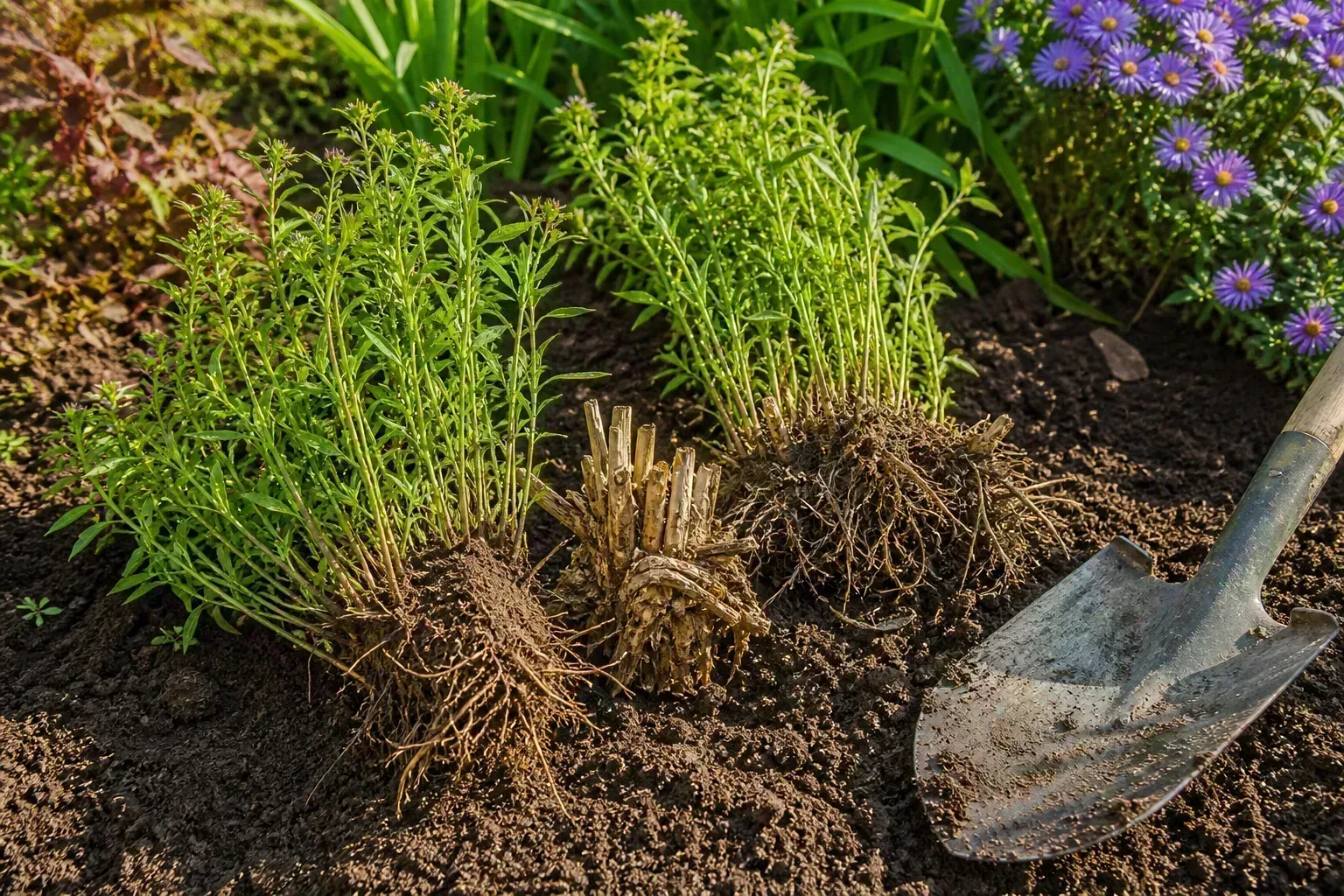
Divide in spring as new growth begins, or during another mild period when the plant is not under heat or drought stress. Water the clump the day before so the soil holds together, then lift it with a spade wide enough to get beneath the rhizomes.
Shake or rinse away enough soil to see the crown. Separate the clump gently into sections, making sure each division has several healthy shoots and attached roots or rhizome tissue. Discard soft, dark, or foul-smelling pieces rather than planting them in a new hole. Replant divisions immediately at the original depth, firm the soil, and water thoroughly.
Division every two or three years is a reasonable maintenance interval when the center thins, flowering decreases, or the clump begins to outgrow its place. It is not a deadline. A vigorous clump in a roomy bed may need less disturbance, while a crowded wet planting may need attention sooner. Gardenia’s plant profile similarly recommends spring division and a two- to three-year rhythm for maintaining vigor.
Growing blue-eyed grass from seed
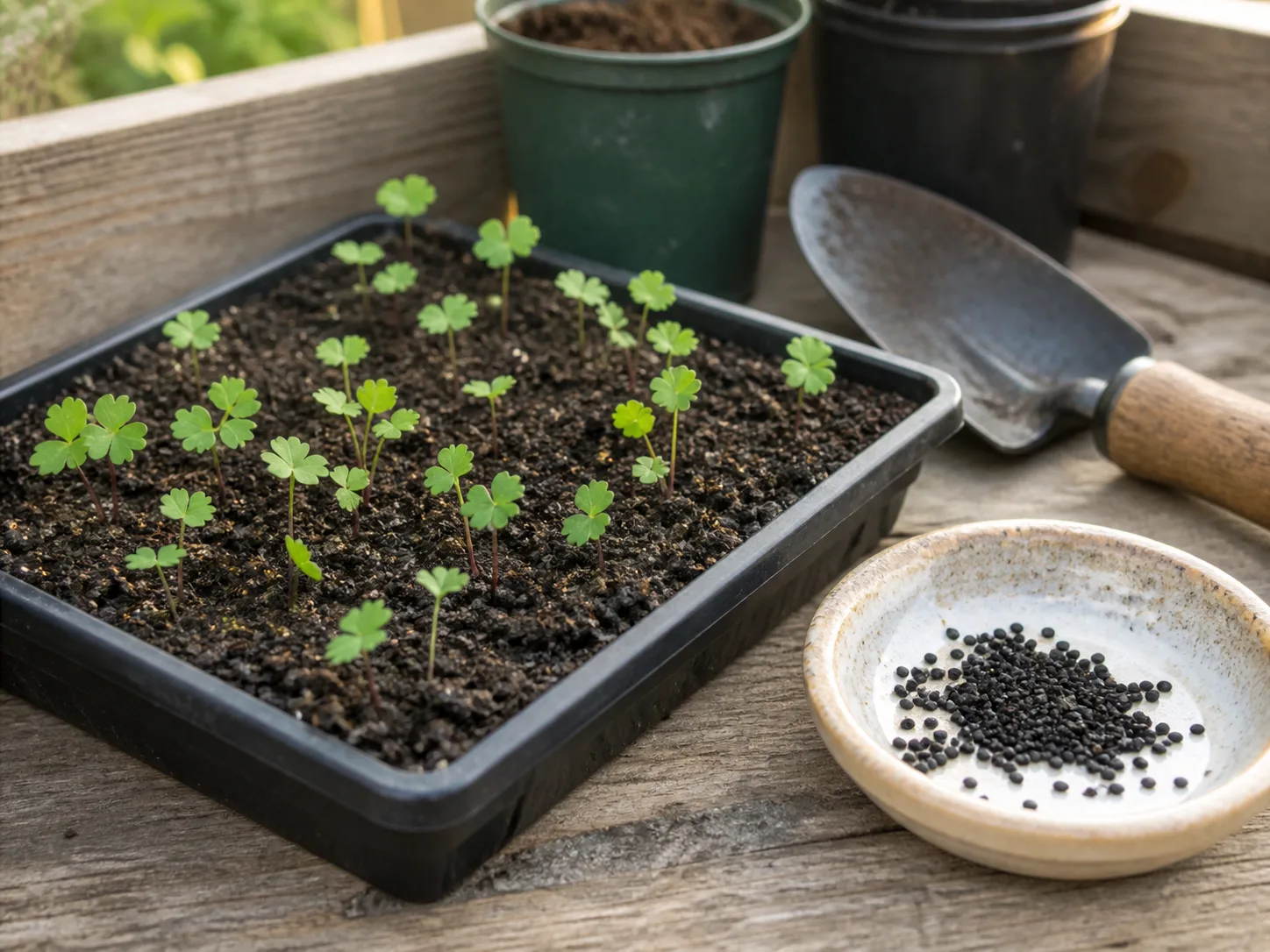
Seed requires more patience than a nursery plant. Plants may take two seasons to flower, and the result can vary in vigor, height, or bloom timing. For that reason, buy a plant when you need a reliable clump on a visible path edge; sow seed when you are building a meadow-like patch and can accept a slower, less uniform result.
Blue-eyed grass seed benefits from a cold, moist period before germination. You can sow it outdoors in fall so winter supplies that condition, or refrigerate the seed in a lightly moist medium for roughly six weeks before sowing indoors. Scatter or press the seed onto a moist, well-drained starting mix and cover it only lightly; keep the container bright and the surface evenly damp without leaving it waterlogged.
Once seedlings emerge, give them strong light and airflow. Thin crowded starts rather than compensating with fertilizer. Harden young plants gradually before moving them outdoors. If a packet gives different treatment or timing, follow the packet for that seed lot; wild-collected and commercially cleaned seed can behave differently.
Choosing a species or cultivar
The common name covers several Sisyrinchium species, so confirm the botanical name before you buy. S. angustifolium is the eastern narrowleaf species covered here. S. bellum is a western species better suited to some drier West Coast conditions, while S. mucronatum is a smaller needletip type with a different range and appearance. A plant that shares a common name may not share the same moisture or hardiness profile.
The cultivar ‘Lucerne’ is a notable selection of S. angustifolium with larger, more abundant flowers. NC State lists it as a cultivar, but the label still matters: local stock, soil, and climate determine how a named selection performs in your garden. If you want a uniform row, buy divisions from one source rather than mixing unidentified seedlings.
Hardiness labels are useful starting points, not promises. NC State’s profile lists zones 4a through 9b, while other sources give broader ranges or describe different species. Winter wet, snow cover, summer heat, local ecotype, and planting exposure can matter as much as the zone number. In a borderline climate, test a small group before converting an entire drainage feature.
Containers, rain gardens, and companion placement
Blue-eyed grass can grow in a container if the pot has drainage holes, the mix holds some moisture without becoming dense, and you are willing to check it more often than an in-ground clump. Choose a pot only modestly larger than the root mass. A huge pot stays wet for too long, while a small dark container in full summer sun can dry out before you notice.
For a rain garden, place it on the shoulder or upper bench unless you have verified that the lowest basin drains appropriately. For a rock garden, use a pocket that receives enough light and has a moisture buffer beneath the surface. For a border, set it near the front so the flowers can be seen; taller perennials can hide the fine stems once they finish blooming.
Pair it with plants that accept the same seasonal pattern rather than simply matching blue flowers. Native sedges, violets, golden Alexander, small ferns, and other regionally appropriate meadow-edge plants can create a layered planting, but keep enough space around the crown for airflow and division. Our wildflower gardening guide and native perennial guide can help you build a broader planting around the same habitat logic.
Troubleshooting common problems
Blue-eyed grass usually has few serious pest or disease problems when it is planted in the right place. Start with the root zone and the bed history before reaching for a spray. A symptom that appears after heavy rain is more likely to involve drainage or crown conditions than a sudden fertilizer deficiency.
Collapsed plants or a soft crown
If stems fall at the soil line and the base is soft, dark, or foul smelling, suspect crown or root rot. Pull back mulch and debris first. If the soil is saturated, stop watering and improve the site rather than adding a tonic. Lift the plant if necessary, trim away mushy tissue with clean tools, and replant only firm sections in a better-drained position. If the entire crown is soft, replacement is more realistic than repeated rescue.
If the plant is simply leaning while the crown and leaves remain firm, check crowding, shade, and recent heavy rain. A lush, overfertilized clump can flop without being diseased. Thin surrounding plants, improve light where possible, and divide after the growing season or in the next suitable spring.
Lanky foliage or few flowers
Check in this order: light, moisture, fertility, and crowding. Too much shade often produces green leaves but fewer flowers. Drought during bud formation can shorten or reduce bloom. Rich soil or repeated nitrogen feeding can push soft foliage, and an old crowded center may need division. Do not solve every bloom problem with fertilizer; for this plant, that can worsen the imbalance.
If flowers open briefly and close later, that is normal behavior. If the whole plant disappears after bloom in a hot, dry climate, it may be entering seasonal dormancy rather than dying. Mark the spot, keep nearby weeds from taking over, and reassess when the normal cool or wet season returns.
Conclusion
The reliable formula for blue-eyed grass is simple but specific: sun or light shade, moisture during active growth, drainage around the crown, lean soil, and restraint with mulch and fertilizer. Plant it where a small iris-family perennial can be seen up close, not where a lawn substitute is expected to fill a large dry area.
Choose nursery divisions for predictable establishment, seed for patient naturalizing, and spring division when an aging clump needs renewal. If the plant collapses, inspect the crown before watering again; if it is leafy but flowerless, start with light and crowding before feeding. Give the site the right conditions and blue-eyed grass can return as a fine-textured, pollinator-friendly accent year after year.