Epsom Salt for Mums: When It Actually Helps
Epsom salt can help mums only when magnesium is low. Learn how to test soil, avoid salt buildup, and fix the light, water, and timing issues that limit blooms.
The short answer: only if a mum is magnesium-deficient
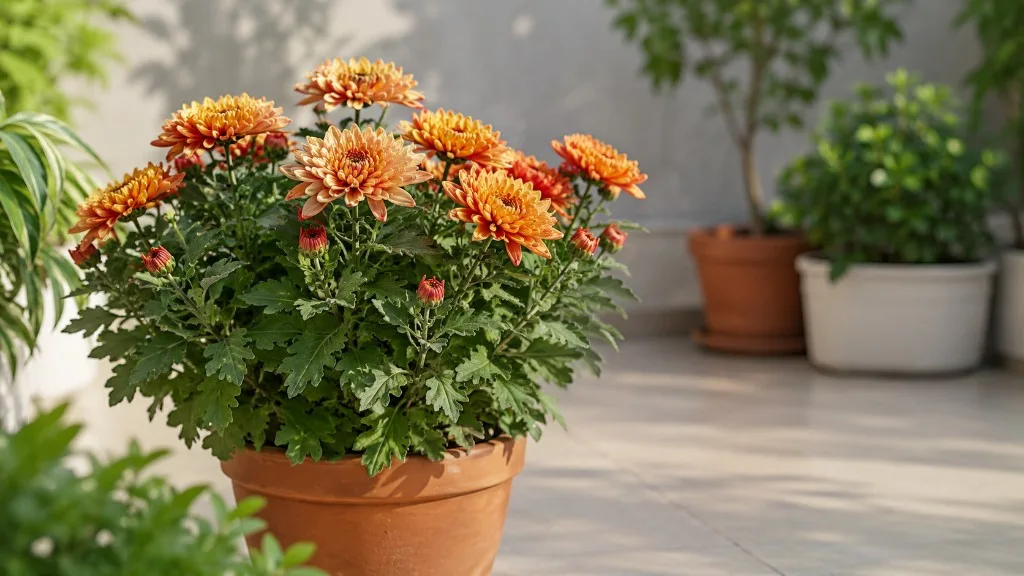
Epsom salt can help a mum bloom better only when the plant actually lacks magnesium or sulfur and the roots can use the added nutrients. It does not automatically create more flower buds, make a tired plant bushier, or rescue a chrysanthemum growing in shade, dry potting mix, standing water, or a container that has already accumulated fertilizer salts.
That distinction matters because fall mums are sold at the most visually persuasive moment: already full of color. When the display fades early, it is tempting to reach for a cheap white crystal and expect a quick reset. A better first move is to ask what is limiting the plant. If the foliage is green and the buds are forming, adding magnesium is unlikely to improve the show. If a soil test shows low magnesium, Epsom salt can be a targeted correction; if the test is adequate, it is simply another soluble salt in the root zone.
The practical order is simple: check the plant’s light and moisture, identify whether the mum is in a pot or bed, test the soil when a nutrient problem is plausible, and feed only the nutrient the evidence supports. That order prevents a bloom question from turning into a fertilizer-burn problem.
What Epsom salt gives a mum—and what it cannot give
Epsom salt is the common name for magnesium sulfate, a compound that supplies magnesium and sulfur when it dissolves. PubChem’s magnesium sulfate record identifies the compound; it is not the same thing as a complete plant food with nitrogen, phosphorus, and potassium. Those three primary nutrients are the numbers on a conventional N-P-K fertilizer label, while magnesium and sulfur are secondary nutrients that may or may not be needed in a particular soil.
Magnesium supports leaves, roots, and energy capture
Magnesium has a real job inside a plant. It is central to chlorophyll and helps plants capture and use light, so a genuine deficiency can reduce photosynthesis, growth, and the plant’s ability to support new tissue. A peer-reviewed systematic review and meta-analysis in Frontiers in Plant Science found that adequate magnesium improved growth and photosynthetic performance across the studies it analyzed, but that broad result should not be mistaken for proof that a routine Epsom-salt treatment makes every mum produce more flowers.
The distinction is between removing a nutritional bottleneck and adding a performance enhancer. If a mum is magnesium-starved, supplying magnesium can help it maintain healthier foliage and use light more effectively. If magnesium is already adequate, the same addition has no missing function to repair. More is not a higher setting on a bloom dial.
Mums can also look weak for reasons that have nothing to do with magnesium. A root ball that repeatedly dries out cannot take up nutrients reliably. A waterlogged pot loses oxygen around the roots. Compact soil restricts root growth. A plant placed under a porch may have enough fertilizer but not enough light to build the carbohydrate supply needed for vigorous growth and flowers. A late-season mum may simply be past the point when its cultivar can produce a long display before frost.
Epsom salt is not a complete flower fertilizer
Epsom salt contains no nitrogen, phosphorus, or potassium in the N-P-K sense. It cannot replace a complete fertilizer when a soil report shows that several nutrients are low, and it cannot supply the balanced nutrition a heavily grown container plant may need over a season. Calling it a “bloom booster” skips the most important question: which nutrient is missing?
This is why the Joe Gardener discussion with plant scientist Linda Chalker-Scott recommends treating Epsom salt as a soil-test-dependent material rather than a universal planting additive. It also explains a useful nuance: a plant can show poor magnesium uptake because of a broader calcium or potassium imbalance, in which case piling on more magnesium does not solve the underlying soil problem.
When Epsom salt is worth considering
Epsom salt moves from “skip it” to “possibly useful” when three conditions line up: the plant is actively growing, a reliable soil or tissue test indicates low magnesium or sulfur, and the application rate is appropriate for the specific growing situation. Sandy outdoor soil is a more plausible setting for leaching than a rich bed with a history of regular amendments. A small container with a long history of feeding is a different risk entirely: it may have excess soluble salts rather than a shortage.
Use the soil report as a decision document, not just a pass/fail result. Look for the measured magnesium level, pH, calcium, potassium, and any soluble-salt or electrical-conductivity reading the lab provides. Soil pH can affect whether nutrients remain available, and an imbalance among cations can make a nutrient appear unavailable even when the total amount in the soil is not low. NC State Extension’s soils and plant nutrients handbook specifically notes that Epsom salt can sometimes benefit sandy soils low in magnesium or sulfur, while recommending that gardeners base adjustments on a soil test.
Why leaf symptoms alone are not a diagnosis
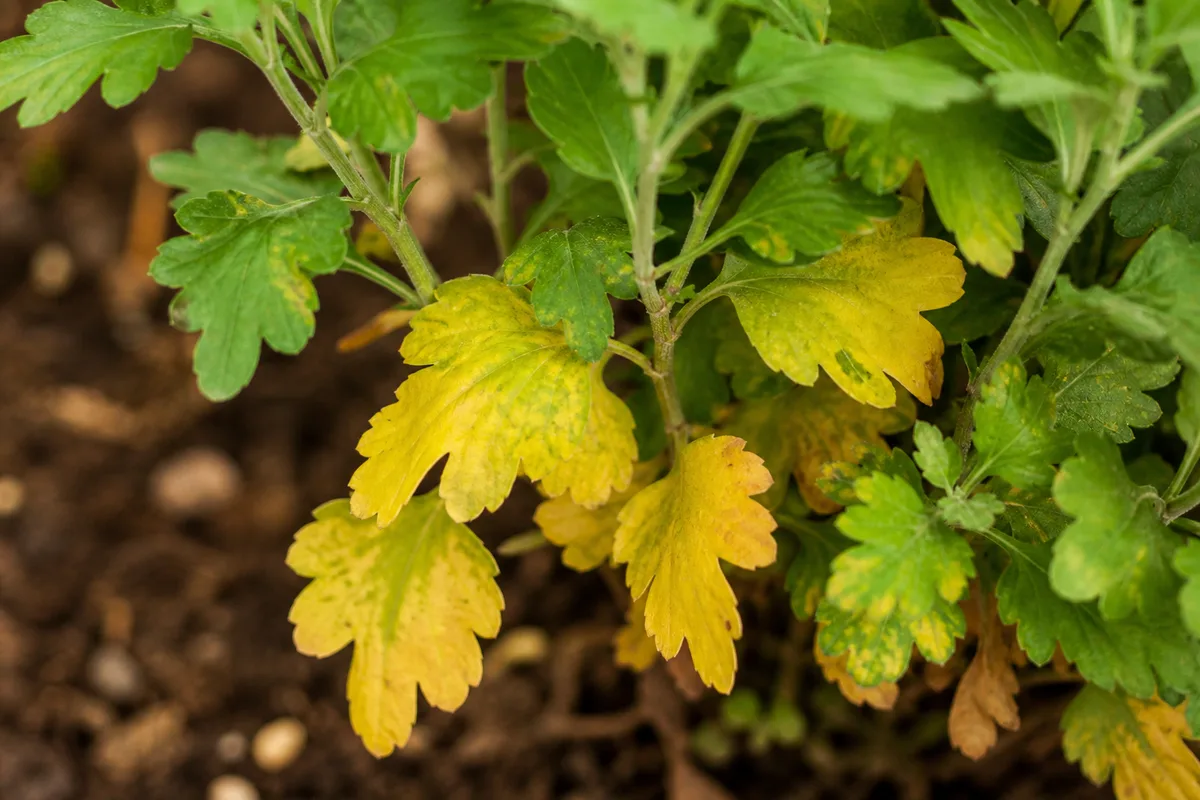
Magnesium deficiency often begins on older leaves because magnesium can move within the plant toward newer growth. The pattern may include yellow, bronze, or reddish tissue between veins while the veins remain greener, sometimes with curling or puckering at the margins. That pattern is worth recording, but it is not a permission slip to fertilize.
Yellow leaves on a mum can also follow overwatering, root damage, drought, cold stress, poor drainage, pest feeding, natural aging of shaded lower leaves, or a different nutrient problem. Pale new leaves suggest a different set of possibilities than yellow older leaves. A plant that is uniformly yellow and wet at the root ball needs a drainage check before a magnesium supplement. A plant with stippling, webbing, or distorted growth needs pest inspection. A mum that is green but budless needs a light, photoperiod, cultivar, and pruning review rather than an Epsom-salt guess.
Use symptoms to decide whether testing is worth the effort. Do not use symptoms to calculate a dose. NC State’s nutrient table lists older-leaf yellowing with green veins among magnesium-deficiency clues, but it also warns that excess magnesium can interfere with calcium uptake. That is exactly why a test and a broader root-zone check belong in the same decision.
How to test the soil before adding Epsom salt
A laboratory soil test is the fastest way to turn the question into a measurable one. Ask for a garden or ornamental-bed analysis that includes pH, magnesium, calcium, potassium, and sulfur if available. A test designed only for lawn maintenance may not give the same recommendations for a flower bed, so identify the crop as chrysanthemums or ornamental flowers when the lab asks for the intended use.
Take one representative sample from each growing situation
Do not combine a potted mum’s mix with the soil from an in-ground bed. Their histories are different, their root volumes are different, and the container may have received several rounds of fertilizer that the bed did not. Likewise, separate a sandy sunny border from a compost-rich bed and sample an area where the mum’s roots actually grow rather than grabbing soil from a walkway or a pile of fresh amendment.
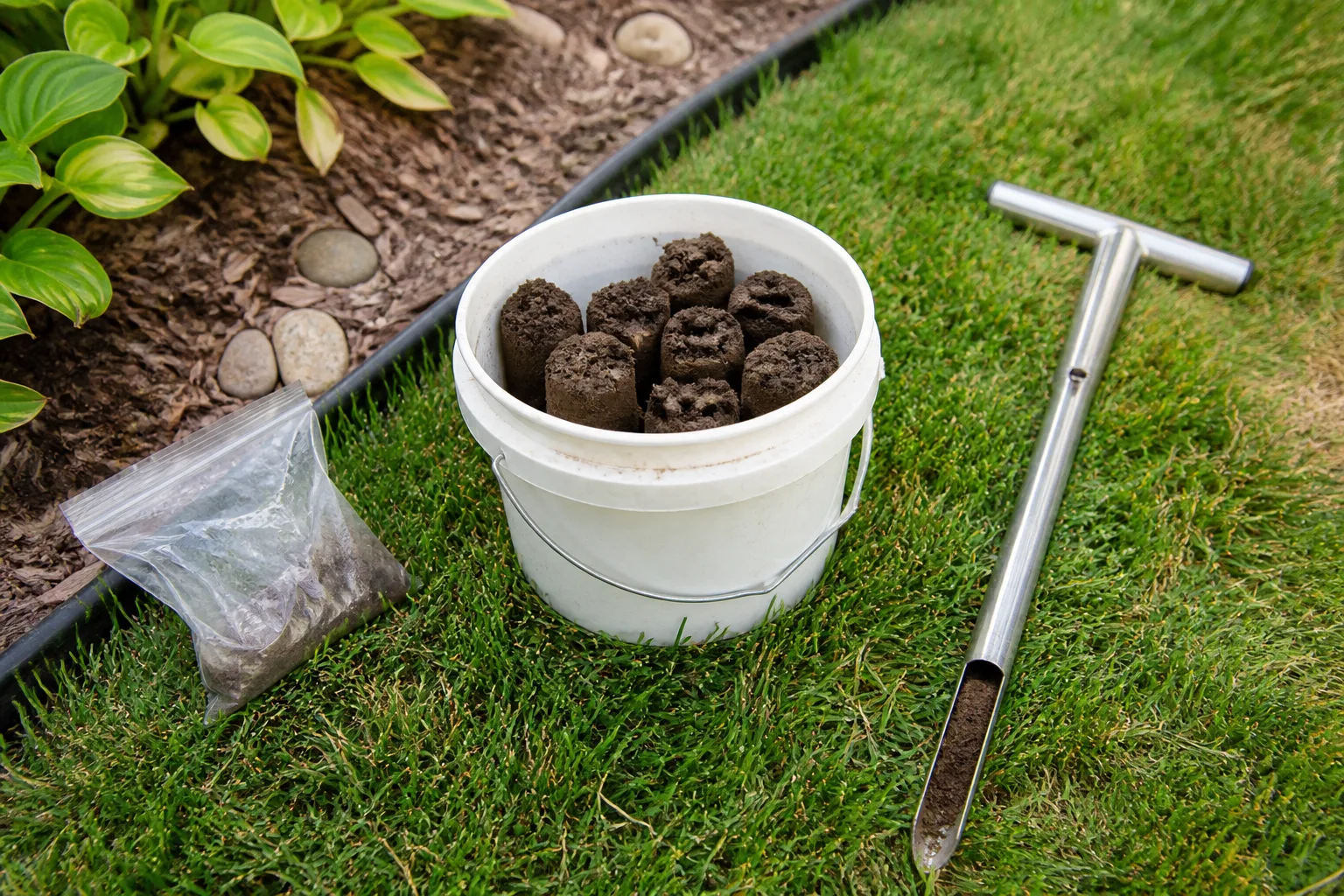
For an outdoor bed, use a clean plastic bucket and a clean stainless-steel trowel or spade. Take several thin slices or cores across the mum’s root zone, roughly 6 to 8 inches deep for a cultivated garden, and mix them into one composite sample. Penn State Extension’s soil-testing instructions recommend collecting from 8 to 10 random locations for a garden and submitting a mixed sample; Purdue Extension similarly emphasizes that the only way to know what fertilizer is needed is to test and to label the sample with the crop it will grow.
For a container mum, follow the chosen lab’s instructions for potting media. If the plant is disposable after the fall display, testing may not be worth the cost; correcting watering, drainage, and light is usually the better use of time. If you are keeping a hardy mum for another season, a media test can be helpful, especially when you see a white crust on the soil surface, repeated brown leaf margins, or a history of frequent feeding.
When the report arrives, read the recommendation rather than trying to convert a “low” category into a tablespoon by memory. A lab may recommend lime, dolomitic limestone, a complete fertilizer, or a specific magnesium source depending on pH and the other nutrients. If magnesium is adequate or high, do not add Epsom salt simply because the plant is flowering poorly. Correct the cause the report actually identifies.
How to use Epsom salt when a test supports it
If the soil report calls for magnesium sulfate, use the report’s rate first. If it names a different magnesium amendment, use that amendment instead of substituting a household product. The goal is to correct a measured shortage with the smallest effective addition, then reassess the plant and soil rather than repeating the treatment on a calendar.
Choose a gentle soil drench before a foliar spray
For a small home trial where an extension recommendation specifically permits Epsom salt and does not provide a different rate, NC State’s handbook lists 1 teaspoon per gallon of water up to twice a year for magnesium deficiency in foliage plants. That is a cautious reference for a deficiency correction, not a universal mums prescription and not a reason to treat every fall container.
Water the plant normally first if the root ball is dry. Then dissolve the measured amount completely in the stated volume, apply it evenly to the soil around the root zone rather than directly against the crown, and let excess water drain away. Do not pour concentrated crystals into one spot, and do not apply any soluble fertilizer to a wilted plant with bone-dry roots; salts can pull water away from already stressed tissue.
A soil drench is easier to control than a leaf spray because the target is the root zone and the dose can be measured by water volume. It is still possible to overapply, especially in a small pot. Mark the date and amount in your garden notes, wait to see whether new growth improves, and do not stack the treatment with a bloom booster, fish emulsion, and a complete fertilizer in the same week.
Foliar feeding can act quickly because leaves absorb some dissolved nutrients, but speed is not the same as safety or completeness. NC State Extension explains that foliar fertilizer can be absorbed rapidly but that improper application can burn plant tissue and only provides short-term fertilization. I would use a leaf spray only when the product label and a knowledgeable extension recommendation support it, in a weak labeled solution, on a cool dry morning, and never on heat-stressed or flowering foliage that must stay attractive.
Why dry sprinkling is a poor default
Dry crystals look tidy, but “slow release” is not a dependable description for a highly soluble salt. Rain or irrigation can dissolve the material quickly, wash sulfate down through sandy soil, and leave a concentrated pulse near the roots before it moves away. On a container surface, the same crystals may dissolve into a very small root volume and remain there.
Dry application also makes it easy to confuse a plant’s size with its actual nutrient need. A larger mum does not automatically need more magnesium; it may simply have more leaves, a larger pot, or a different cultivar. Dose by the soil report, label, and measured growing volume—not by how dramatic the flower mound looks.
Fix the bigger bloom limiters first
Many disappointing mum displays have no magnesium problem at all. The bloom set was already determined by the plant’s cultivar, purchase stage, pinching history, day length, light, and water management. Feeding cannot rewrite those decisions late in the season.
Give mums enough light, water, drainage, and dark
Start with light. N.C. Cooperative Extension recommends at least six hours of full sun and excellent drainage for fall mums. A porch that feels bright to you may still be too dim for a compact, flower-covered plant. Move a potted mum to the brightest practical location, but protect it from a reflected-heat pocket beside a hot wall or metal surface. For an in-ground plant, thin nearby growth rather than trying to compensate with fertilizer.
Water deeply enough to wet the root ball, then allow the top layer to begin drying before watering again. The correct interval depends on pot size, weather, wind, plant mass, and drainage holes. Container mums often dry faster than bedded mums, and a large root-bound plant can shed water from the edge of the pot while the center stays dry. Check the mix with a finger or lift the pot instead of following a fixed daily schedule.
Aim water at the soil, not over the flowers. Wet, aging blooms deteriorate faster, and a strong stream can knock open flowers from their stems. Good drainage is the other half of watering: a mum standing in a saucer of runoff is not “well watered.” Empty the saucer, keep the drainage holes open, and do not place a decorative pot where the inner container can sit in trapped water.
Night length matters too. Mums are short-day plants: they begin the flowering process as nights lengthen, and interrupted darkness can delay or reduce flowering. Gardening Know How’s practical bloom guidance notes that outdoor lights can interfere with the dark period. If a mum is under a porch light, beside a motion-activated lamp, or near a bright window at night, move it or shield it without reducing the daytime light it needs.
Get pinching, purchase timing, and cultivar right
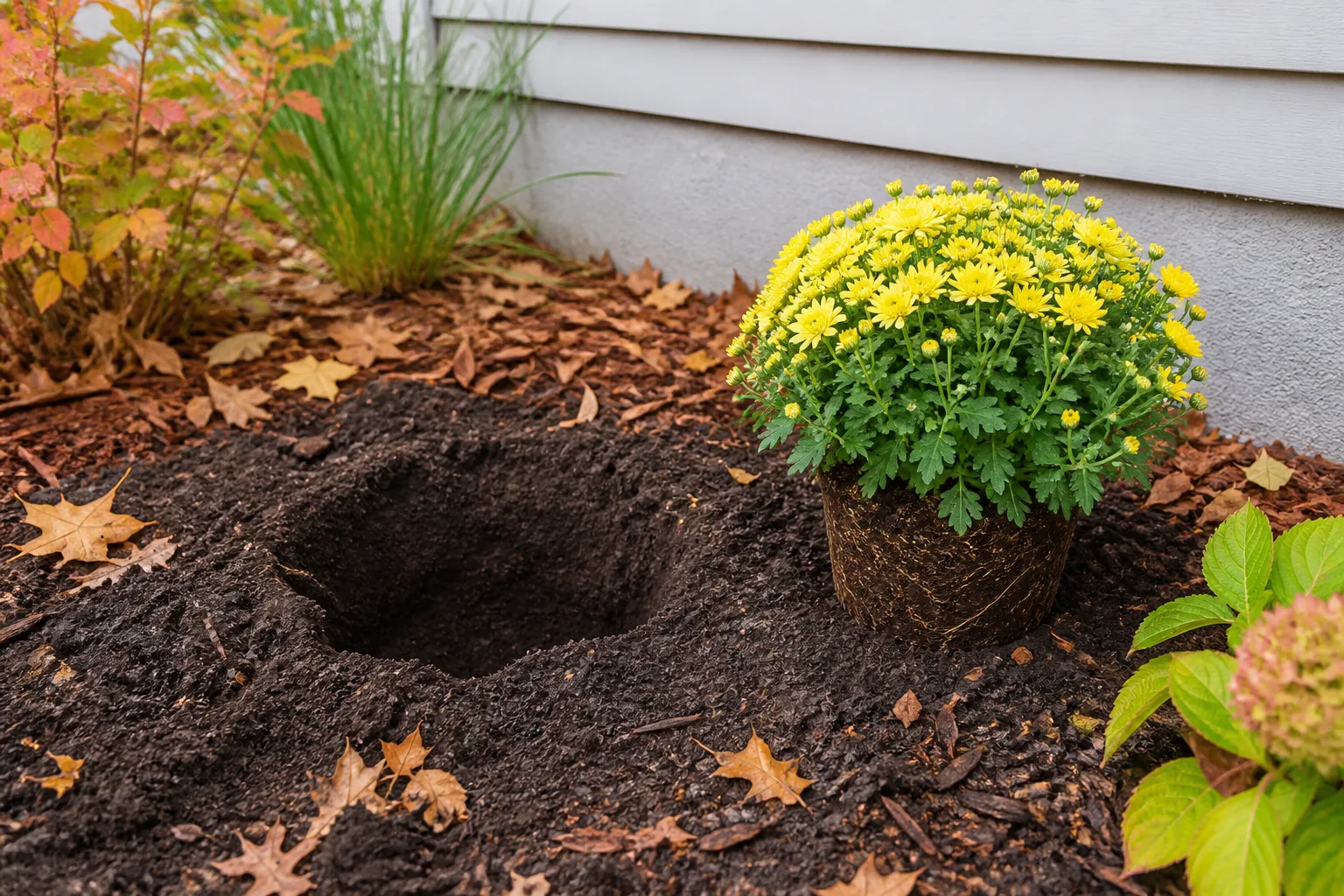
Pinching is a spring and early-summer job for mums you are growing for a fall display. When new stems are about 4 to 6 inches tall, remove the soft growing tips to force branching, then repeat at the interval recommended for your cultivar. Stop before flower buds form; N.C. Cooperative Extension advises continuing pinching only until early August, when buds begin to develop. Pinching after that point can remove the very shoots you hoped would flower.
If you buy a mum in autumn, choose a plant with a dense canopy and many tight buds when you want the longest display. A plant already in full bloom may be the right choice for an event this weekend, but it has already spent part of its natural flowering window. Gardening Know How describes four to eight weeks as a typical overall bloom period, with weather and cultivar changing the result. A tight-bud plant gives you more unopened flowers to enjoy; Epsom salt cannot return spent buds to the schedule.
Finally, distinguish a garden mum from a florist mum if you are planning for next year. Hardy garden types are more likely to overwinter when planted early enough and protected in a suitable climate; florist types are often selected for a greenhouse display and may not survive a cold, fluctuating winter outdoors. Utah State University Extension’s chrysanthemum guide explains the difference and notes that fall-planted mums need time for roots to establish. A late purchase can be a lovely seasonal annual even when it is not a realistic perennial investment.
Choose a complete fertilizer when the plant needs more than magnesium
Use a complete fertilizer when the soil test or plant history points to a broader nutrient need. Read the N-P-K numbers as percentages of nitrogen, phosphate, and potash, then check whether the label also guarantees magnesium and sulfur. A “bloom booster” with a high middle number is not automatically better: extra phosphorus can be wasteful or interfere with the uptake of other nutrients when the soil already contains enough.
For a spring-planted garden mum, a modest, labeled complete fertilizer during active growth can support the foliage and branching that carry fall flowers. For a fall-bought plant already covered in buds, light and steady moisture usually offer more return than a late heavy feed. NC State Extension advises that fertilizer timing should follow plant growth, soil-test results, and conditions such as light, water, temperature, pests, and nutrition; it also warns that excess or poorly timed nitrogen can delay flowering and create tender growth.
Organic products such as fish emulsion are not automatically safer just because they sound gentle. Their nutrient analysis still matters, and any soluble fertilizer can burn roots when overapplied to dry media. Choose one product, follow its label, apply only during active growth, and leave space between applications so you can tell whether the plant is responding. In a nutrient-adequate bed, compost used to improve soil structure and moisture management may be more useful than another bag of isolated minerals.
Container mums need a different salt strategy
A pot gives you control over light and drainage, but it also gives fertilizer salts fewer places to go. The same teaspoon that is dispersed through a broad bed can be concentrated in a small container, especially when the plant is watered with only a cup at a time or the drainage holes are blocked. This is why potted mums deserve more caution with Epsom salt than an established bed in a sandy site with a documented deficiency.
Use a pot with a drainage hole, keep the root ball evenly moist rather than cycling between bone dry and saturated, and let water run through the mix during a thorough watering. Empty the saucer or cover pot after drainage stops. If the soil surface develops a white crust, the leaf margins brown after repeated feeding, or the plant wilts even though the mix is wet, stop adding fertilizer and investigate soluble salts, roots, and drainage before applying magnesium.
Do not use a foliar Epsom-salt spray as a shortcut for a root-zone problem. Leaves may green temporarily while the roots remain damaged or the medium remains too salty. A container mum with no space for a soil test may be better served by fresh, well-draining media after its display ends, provided the plant is a hardy type worth keeping and the roots are healthy enough to recover.
What to do if you already used too much Epsom salt
First, stop all extra fertilizer and do not add lime, gypsum, compost tea, or another “balancing” product on top of the mistake. Remove visible dry crystals from the soil surface without scraping into roots. Check the drainage hole and make sure the pot can release water freely.
For a container with good drainage, water slowly with plain water until the root ball is thoroughly wetted and a generous amount drains from the bottom; discard the runoff and do not leave the pot standing in it. Repeat a plain-water flush at a normal watering interval only if the mix drains well. Flooding a poorly drained pot can replace a salt problem with root rot. For an in-ground bed, deep irrigation can reduce soluble salts only when the soil drains freely; do not create a saturated zone around the crown.
Watch the newest growth rather than expecting damaged leaves to turn green again. Trim only tissue that is fully brown or dead, keep the plant in suitable light, and hold fertilizer until it has resumed steady growth. If the mum continues to decline, a laboratory soil or media test can show whether salts, pH, or nutrient imbalance remains. NC State’s soil guidance describes high fertilizer salts as a cause of water-uptake problems and recommends reducing salts through deep irrigation only where that is appropriate.
Conclusion
Epsom salt is a conditional nutrient correction, not a reliable mum-bloom shortcut. It can help when a soil or tissue test shows that magnesium or sulfur is genuinely low, especially in a leachable sandy soil, but it cannot replace a complete fertilizer, correct poor light, repair damaged roots, restore a late pinching schedule, or extend flowers that were already open when you bought the plant.
For the best fall display, start with full sun, excellent drainage, consistent root-zone moisture, uninterrupted dark at night, and a mum with plenty of unopened buds. Feed only when the soil and plant evidence point to a need. If that evidence supports Epsom salt, measure a dilute, labeled application, keep it off dry roots and flowers, and reassess before repeating it. That small amount of restraint is what keeps a bloom experiment from becoming the next problem to diagnose.