9 Best Shade-Loving Lawn and Ornamental Grasses
Compare nine shade-tolerant lawn and ornamental grasses by light needs, zone, and maintenance—plus when to skip turf and use ground cover instead.
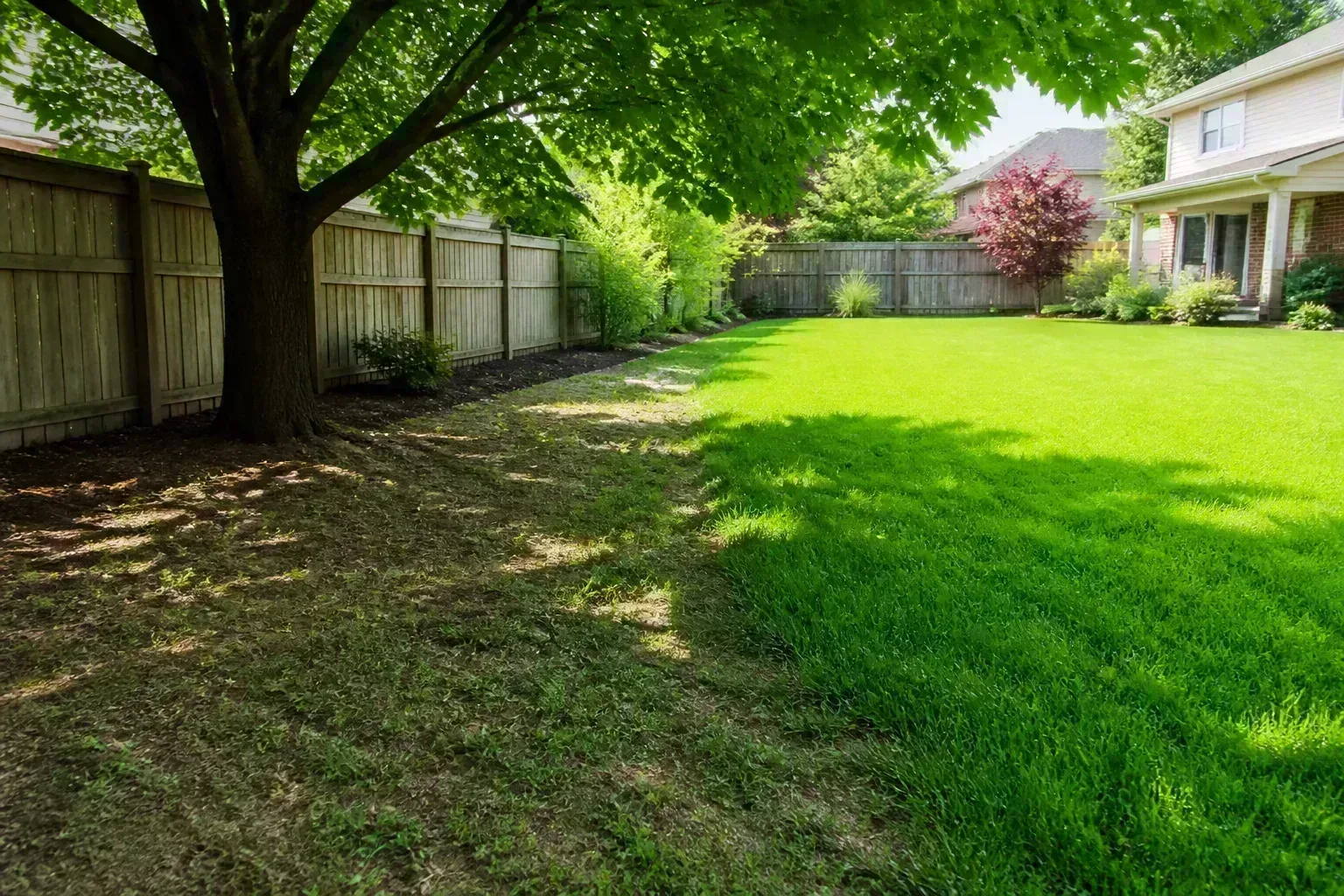
The strip under your maple, the north side of the garage, the corner where the fence and hedge meet—these spots collect foot traffic and expectations even when they collect almost no sun. Shade-loving grasses can work there, but only if you match species to measured light and accept that no turf stays thick in true heavy shade. The nine picks below split into cool-season lawn grasses, warm-season lawn grasses, and ornamental grasses (plus close look-alikes) for beds where mowing is not the goal.
Start by counting light, not by grabbing a bag labeled “shade mix.” NC State Extension notes that turfgrass struggles when an area gets less than about 50 percent open sunlight or fewer than four hours of direct sun per day. Below that threshold, even the best seed blend thins out—and ground cover or hardscape is the smarter call.
How Much Shade Is Too Much for a Lawn
Marketing language calls many grasses “shade tolerant.” Horticulture language is stricter. Partial shade—roughly four to six hours of direct sun, often morning or filtered afternoon light—can support modified turf programs. Dappled shade under open deciduous trees sits on the edge. Dense shade under low evergreens, tight tree groupings, or deep overhangs is a different category: turf will not persist there no matter how often you reseed.
Measure Sun Hours Before You Buy Seed
Walk the problem area on a clear summer day at 8 a.m., noon, and 4 p.m. Mark whether direct sun hits the soil—not just bright sky. Reflected light from a pale wall helps, but it does not replace a sun beam on the blades. Write the total hours on a stake. That number routes every decision below.
If you are redesigning the whole bed, our shade garden tips walk through dry vs damp shade and soil prep under trees—useful context whether you keep turf or switch to plantings.
When Dense Shade Means Ground Cover, Not Turf
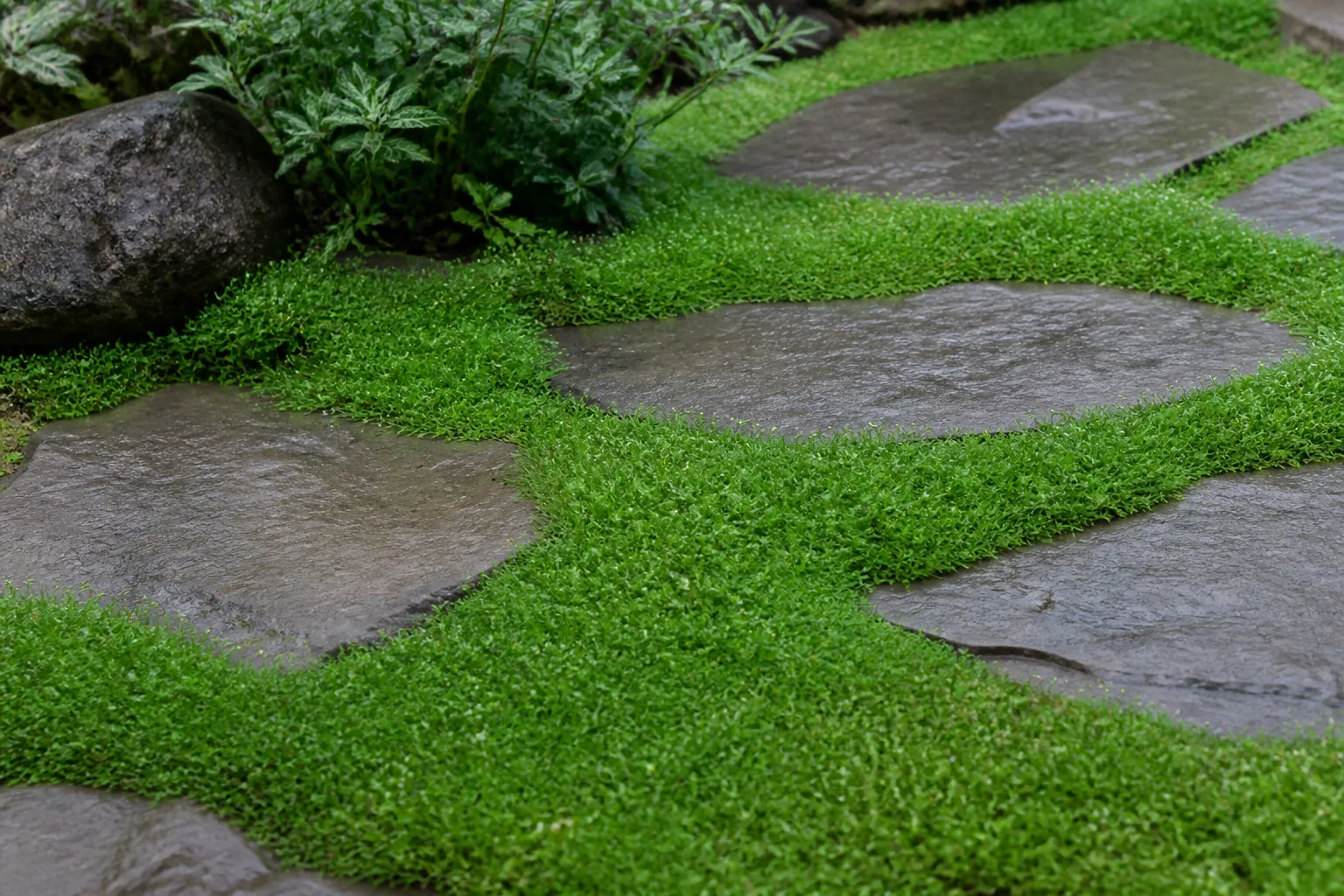
When you are under four hours of direct sun, stop fighting the lawn. NC State Extension recommends liriope, ajuga, pachysandra, English ivy, or mulch and stone instead of repeated seeding. A turf-free ring 2 to 4 feet around tree trunks also reduces root competition and mower damage. For larger shade yards, see no-grass backyard ideas for layouts that look intentional without a putting-green fantasy under oaks.
Why Grass Struggles Under Trees and North Walls
Three forces stack against shaded turf, and fixing only one rarely works. Light intensity drops as leaves intercept photosynthetically useful wavelengths, producing weaker, elongated plants with shallow roots. Tree roots in the upper soil profile outcompete grass for water and nutrients—often well beyond the drip line. Cool, humid air under canopies keeps leaf blades wet longer, which favors leaf spot, brown patch, and moss.
Penn State Extension lists the visible results: thinner shoot density, reduced wear tolerance, and higher disease pressure. Shade management is therefore a package deal—right species, raised mowing height, adjusted fertility, drainage, and sometimes canopy pruning—not a single product in a bag.
Cool-Season vs Warm-Season: Route Your Search First
Cool-season grasses (tall and fine fescues, perennial ryegrass, Kentucky bluegrass) grow actively in spring and fall in USDA zones roughly 3–7 and transitional zones. Warm-season grasses (St. Augustine, zoysia, centipedegrass, bermudagrass) peak in summer heat across zones 7–10, with St. Augustine and zoysia leading shade tolerance in that group.
Plant the climate-appropriate category first. Mixing cool- and warm-season lawns in one yard creates color and timing conflicts. If you are overseeding a thin cool-season lawn under trees, use a shade blend designed for your zone—not a warm-season plug in a fescue yard.
Best Cool-Season Lawn Grasses for Partial Shade
Cool-season shade-tolerant grasses center on fescues. Kentucky bluegrass alone needs more sun, but small percentages in a blend improve knit and recovery in light shade.
Tall Fescue
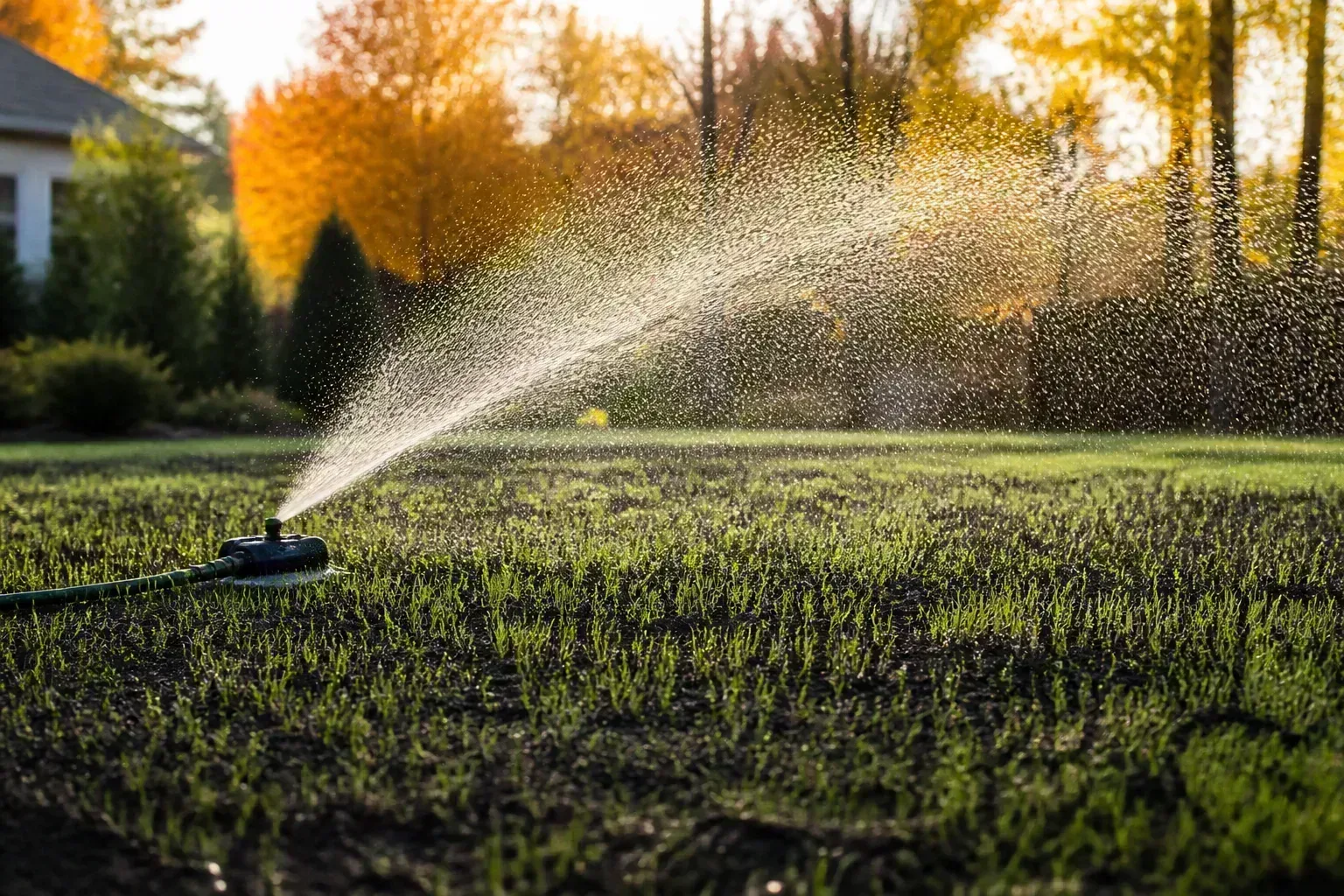
Tall fescue (Festuca arundinacea) is the workhorse for partial-shade lawns in cool and transitional climates. It tolerates heat better than fine fescues, handles moderate foot traffic, and establishes from seed in roughly 7 to 21 days under good moisture. Individual cultivars vary; buy labeled shade-tolerant or turf-type tall fescue rather than generic pasture seed.
NC State Extension recommends seeding tall fescue at about 6 pounds per 1,000 square feet in mixes, with mowing heights of 3 to 4 inches in shaded conditions—always toward the top of the range. The extra leaf area captures scarce light and feeds deeper roots. Tall fescue does not choke out every neighbor species, so it can be overseeded into existing turf where compatibility allows.
Fine Fescue Blends
Fine fescues—creeping red, chewings, hard, and sheep fescue—are the most shade-tolerant cool-season lawn grasses. Penn State Extension places them at the top of the shade-tolerance table, especially in medium to heavy partial shade with drier soils. They form a fine-textured, lower-input lawn with less nitrogen demand than tall fescue or ryegrass.
Trade-offs matter. Fine fescues tolerate drought better than constant wetness; soggy shade kills them faster than sun stress. They are not stadium turf—heavy soccer goals and daily dog racing will wear holes. For neglected shady strips, NC State’s 80 percent tall fescue, 10 percent Kentucky bluegrass, and 10 percent fine fescue blend (about 6 pounds per 1,000 square feet total) balances durability and shade performance in the Piedmont and similar regions.
Perennial Ryegrass as a Nurse Crop
Perennial ryegrass (Lolium perenne) germinates fast—often in 5 to 10 days—and holds soil while slower partners establish. Alone in heavy shade it thins within a season. Used at 10 to 20 percent of a fine-fescue-heavy mix, it provides quick green and erosion control while longer-lived fescues take over.
Do not let ryegrass dominate the bag. High ryegrass percentages look good for sixty days and disappoint by year two in low light. Fall seeding beats spring under trees because young seedlings face less leaf smothering once you commit to regular rake-ups.
Best Warm-Season Lawn Grasses for Partial Shade
In hot climates, cool-season overseeding is the wrong tool. Warm-season shade-tolerant grasses narrow quickly.
St. Augustine Grass
St. Augustine grass (Stenotaphrum secundatum) is the most shade-tolerant widely used warm-season lawn grass. It survives on roughly 3 to 4 hours of daily sun in many landscapes, spreads by stolons, and forms a coarse, carpet-like turf valued along the Gulf Coast and Southern California. It is usually planted as sod or plugs, not seed—budget and timing accordingly.
St. Augustine needs more water than zoysia and is sensitive to cold; it is not a Minnesota lawn. Chinch bugs and gray leaf spot show up more in stressed shade—keep mowing high (2.5 to 4 inches) and avoid overwatering that keeps blades wet overnight.
Zoysia Grass
Zoysia grass (Zoysia spp.) handles heat, drought, and moderate shade better than bermudagrass, but less than St. Augustine. Expect it to need 4 to 6 hours of sun for dense coverage. It is slow to establish—often one to two seasons from plugs or sprigs—but rewards patience with a tight, weed-resistant mat once filled in.
Fine-bladed zoysia cultivars (e.g., ‘Zeon’, ‘Emerald’) read more refined than coarse St. Augustine; choose based on sun hours first, aesthetics second. In marginal shade, St. Augustine wins; in full sun with occasional tree shadows, zoysia is often the better long-term bet.
Best Ornamental Grasses and Grass-Like Plants for Shade Beds
Where mowing fails—or you want texture under shrubs—ornamental grasses for shade and grass-like perennials outperform turf aesthetically with less inputs. These four cover the moisture and height range most shady beds need. For sun-loving ornamental options to pair nearby, see low-maintenance ornamental grasses.
Japanese Forest Grass (Hakonechloa)
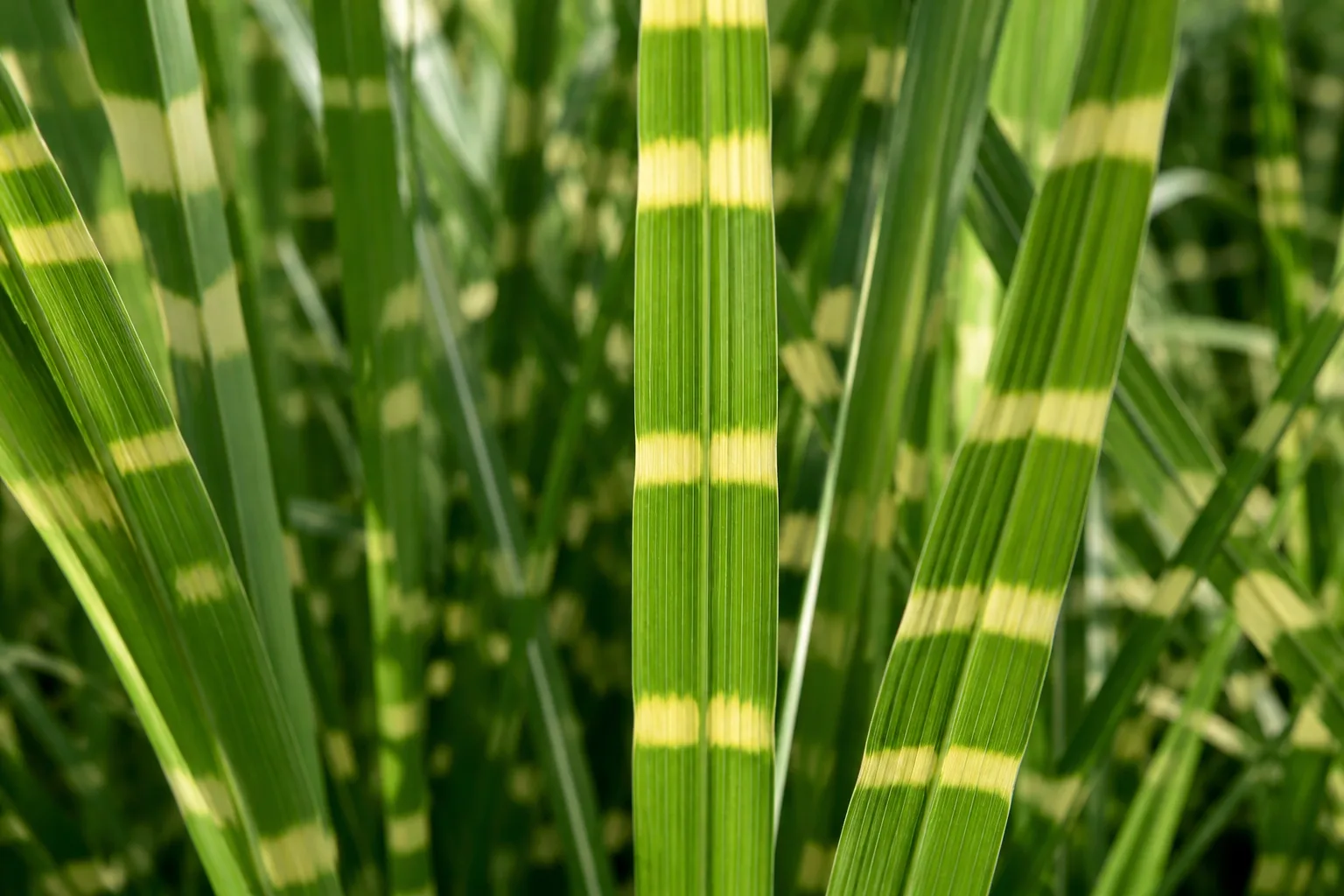
Japanese forest grass (Hakonechloa macra), including golden cultivars like ‘Aureola’, is the shade ornamental gardeners reach for first. Mounding clumps 12 to 18 inches tall arch in layered cascades; gold forms light up dark corners. It wants partial to full shade, consistent moisture, and well-drained soil—dry shade under thirsty maples browns the tips.
Hardy roughly zones 5–9. It is slow to size up; buy three pots for a visible drift rather than one lonely tuft. Combine with hostas and ferns in damp shade beds; avoid afternoon blast even if labeled shade tolerant.
Liriope
Liriope (Liriope muscari), often called lilyturf or border grass, is not a true grass but fills the same visual job: strappy evergreen leaves, purple flower spikes in late summer, and tolerance for dry shade once established. The Almanac liriope profile notes hardiness in zones 6–10 and use as edging, erosion control, and under-tree ground cover.
‘Big Blue’ and ‘Variegata’ are common cultivars. Spacing at 12 to 18 inches fills in within a season. Mow or shear liriope in late winter before new growth—easier than reseeding bare turf annually. NC State lists liriope among recommended alternatives when grass will not grow—take that seriously.
Sweet Flag (Acorus)
Sweet flag (Acorus calamus or A. gramineus) thrives in partial to full shade with moist to wet soil—think pond edges, rain-garden swales, and low spots that stay damp. Grassy upright leaves emit a citrus-spice scent when crushed; dwarf forms like ‘Ogon’ suit edging.
It spreads by rhizomes. Contain it near paving or combine with robust ferns where spread is welcome. Do not plant sweet flag in dry shade under eaves; it will crisp while liriope might survive. For pet yards, confirm species and consult current toxicity references before planting large drifts.
Blue Fescue
Blue fescue (Festuca glauca) is a cool-season ornamental clump with steel-blue foliage 8 to 12 inches tall. It tolerates light partial shade—morning sun or bright open shade—but loses color and density in deep shade or hot humid shade in the South.
Use it as a foil plant at border fronts, in rock gardens with good drainage, and alongside Japanese forest grass where contrast helps. It is short-lived in heavy clay; divide clumps every few years to renew vigor. Do not confuse it with tall turf fescue—completely different habit and use.
How to Grow Grass in Shade: Cultural Practices That Matter
Species choice is step one. These habits determine whether seed becomes lawn or mud.
Aerate Compacted Soil Under Canopies
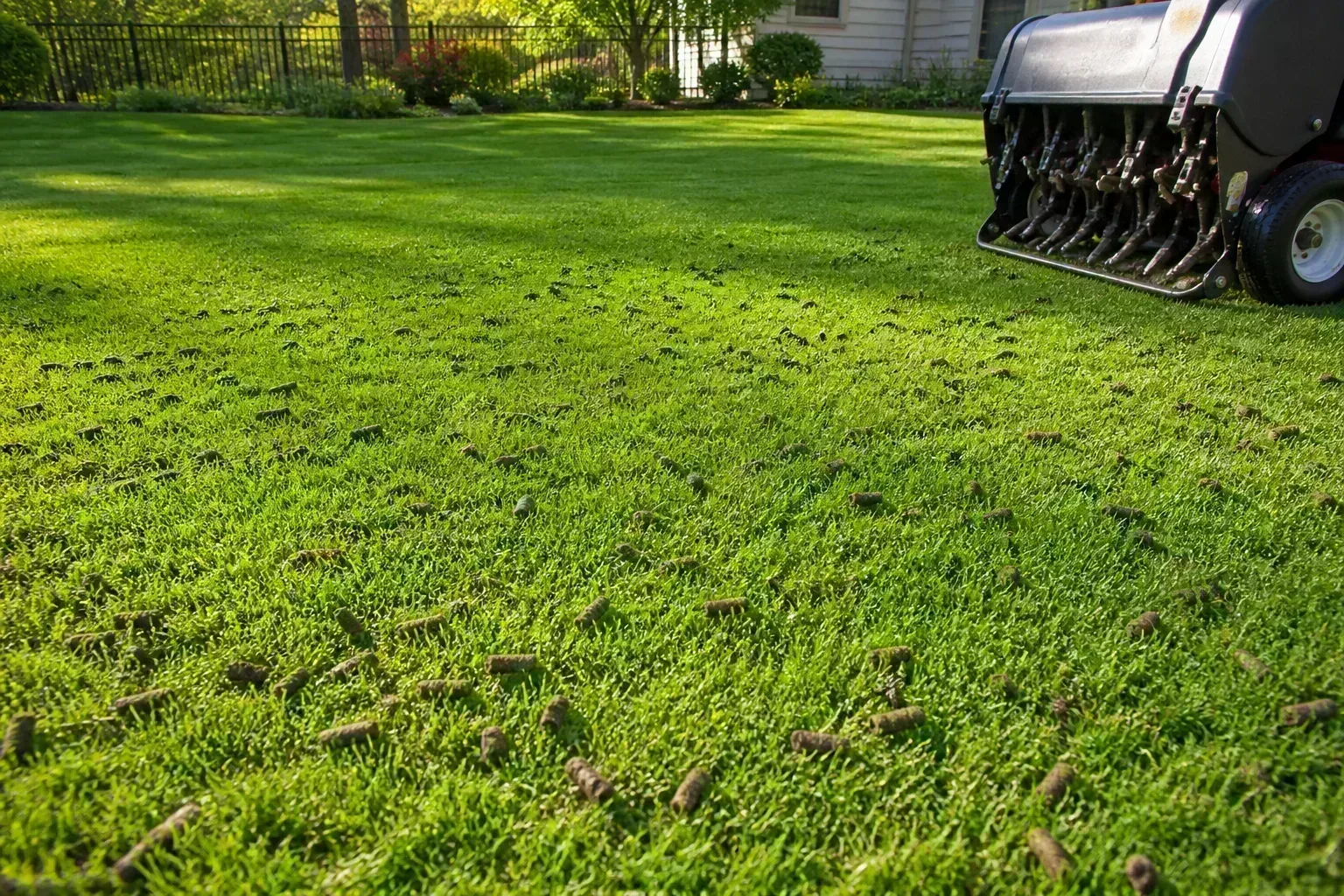
Foot traffic and tree roots compact soil, starving roots of air. Core aeration pulls plugs so water, oxygen, and fertilizer reach the profile. Fall is ideal for cool-season lawns; late spring to early summer suits warm-season turf. Shady high-traffic paths may need annual aeration; lighter areas every two to three years often suffice. Rent a core aerator rather than spiking shoes that compress sideways. Our guide on whether aeration creates a thicker lawn explains what aeration can and cannot fix.
Water Deeply but Less Often
Shaded soil dries slower than open lawn, yet tree roots still steal moisture. Water to about 1 inch per week including rain, delivered in one or two deep sessions rather than daily misting. Penn State Extension warns that frequent shallow irrigation grows shallow tree roots and fungal problems. Probe with a screwdriver: if it slides in easily six inches down after watering, you are on track.
Raise the Mowing Height and Trim Fertilizer
Mow shaded turf one inch higher than the sunny portion of the same species, never removing more than one-third of the blade at once. Tall leaves photosynthesize more per square foot of scarce light. Fertilize at the same timing as sun lawns but slightly lower nitrogen rates—excess push produces weak, disease-prone growth. Use a slow-release 3-1-2 or 4-1-2 turf fertilizer; soil tests prevent doubling up on tree fertilizers already feeding the canopy.
Prune Trees to Let More Light In
Selective pruning beats wishful thinking. Remove lower branches to 6 feet or higher on large trees where safe, thin inner crossing limbs, and clear understory brush to improve air movement. Never strip more than 25 to 30 percent of live crown in one year. If the spot stays dark after careful pruning, accept ground cover—pruning cannot manufacture four hours of sun where structure blocks the sky.
Rake leaves promptly in fall; mats block light and smother seedlings. Once established, mulching light leaf drop with a mower works; thick layers must go.
Quick-Pick Table: Light, Zone, and Best Use
| Grass / plant | Type | Minimum useful sun | Best zones (approx.) | Best use |
|---|---|---|---|---|
| Fine fescue blend | Cool lawn | 3–4+ hours partial | 3–7 | Low-input shady lawns, dry shade |
| Tall fescue | Cool lawn | 4–6 hours partial | 4–8 | Traffic-tolerant cool lawns |
| Perennial ryegrass | Cool lawn nurse | With fescues only | 3–7 | Fast establishment in mixes |
| St. Augustine | Warm lawn | 3–4+ hours | 8–10 | Southern shade lawns |
| Zoysia | Warm lawn | 4–6 hours | 7–10 | Dense warm lawns, moderate shade |
| Japanese forest grass | Ornamental | Bright shade | 5–9 | Accent mounds under trees |
| Liriope | Ground cover | Partial to full shade | 6–10 | Edging, under-tree mats |
| Sweet flag | Ornamental | Partial to full shade | 4–10 | Moist shade, rain gardens |
| Blue fescue | Ornamental | Light partial shade | 4–8 | Color accent, well-drained beds |
Conclusion
Shade-loving grasses split into two jobs: keepable lawn turf in partial sun, and ornamental or ground-cover grasses where mowing is optional or impossible. Measure your site honestly—four hours of direct sun is the practical turf floor for most species—and match cool-season fescues in the North, St. Augustine or zoysia in the warm South, and hakone grass, liriope, sweet flag, or blue fescue in beds. Aerate compacted soil, mow high, water deeply, fertilize modestly, and prune canopy shade where you can. When the numbers still fall short, swap failing turf for liriope or a designed shade planting rather than another bag of seed. That is not defeat; it is the fix that finally sticks.



