6 Best Indoor Garden Systems Compared
Compare six countertop hydroponic garden systems for herbs, lettuce, and small veggies. See capacity, running costs, grow lights, and which pick fits your space.
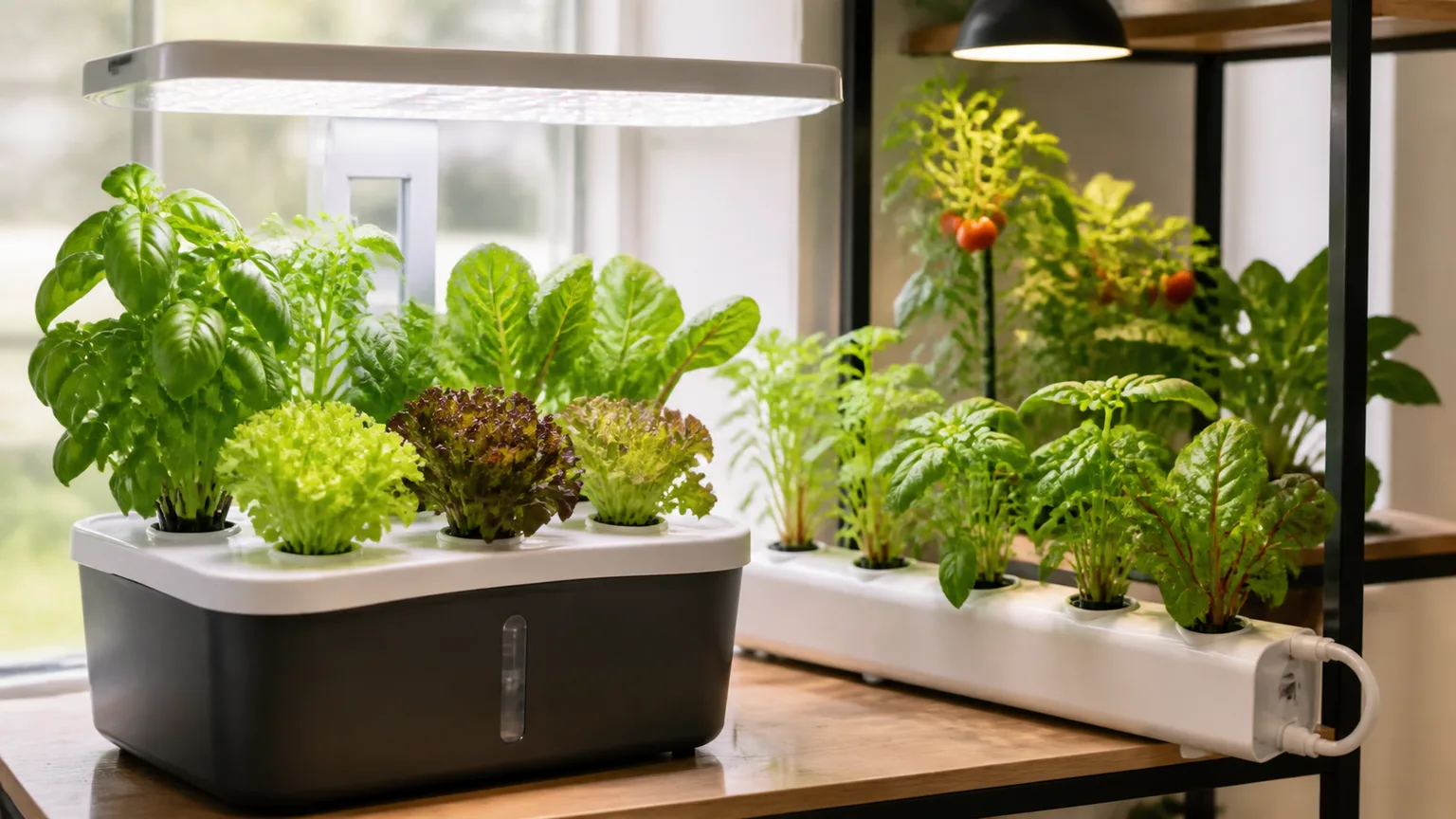
Fresh basil in January. A cut-and-come-again lettuce bowl when the backyard is frozen. That is the promise of a countertop indoor garden system—a self-contained unit with built-in grow lights, a water reservoir, and usually a pump that circulates nutrient solution to your plants’ roots. The hardware looks similar across brands. The differences that actually matter are how many plants fit, whether you are locked into proprietary seed pods, how bright the LEDs run at night, and whether the unit is sized for herb snipping or salad bowls.
The six best indoor garden systems for most home cooks are the AeroGarden Bounty Basic (best overall capacity), iDoo Hydroponics Growing System (best budget), AeroGarden Harvest Elite (best compact herb station), Rise Gardens Personal Garden (best app-controlled design), Click & Grow Smart Garden 3 (best tiny footprint), and Lettuce Grow Farmstand Nook (best high-volume greens). None of them replace a full outdoor plot. All of them can keep cooking herbs and salad greens alive through winter if you match crops to height limits and clean the tank between runs.
For species-level herb care after you buy hardware, pair this guide with best herbs to grow indoors, plants to grow hydroponically, and our grow lights complete guide when you need hang height and photoperiod detail beyond what a sealed garden unit provides.
Quick Picks at a Glance
| Use case | Best pick | Why it wins |
|---|---|---|
| Best overall | AeroGarden Bounty Basic | Nine pods, adjustable 30 W full-spectrum light to ~24 in., digital reminders |
| Best value | iDoo Hydroponics Growing System | Eight pods, accepts your own seeds, strong performance under ~$100 |
| Best for herbs | AeroGarden Harvest Elite | Six-pod stainless unit sized for a kitchen; reliable herb germination |
| Best design / smart features | Rise Gardens Personal Garden | App + Alexa control, eight pods, polished countertop look |
| Best for small spaces | Click & Grow Smart Garden 3 | ~5 in. wide; three pods; minimal counter commitment |
| Best for salad volume | Lettuce Grow Farmstand Nook | Twenty seedling slots; floor-standing tower for serious greens |
Skip a countertop system if you only want one rosemary plant in a sunny window, you cannot tolerate a purple-white LED cycle in a bedroom-adjacent kitchen, or you expect supermarket-scale tomato harvests from a nine-inch-wide base. In those cases, a pot, a saucer, and a dedicated grow panel often cost less and teach you more.
Do You Actually Need an Indoor Garden System?
An indoor garden system makes sense when you want repeatable harvests without building hydroponics from scratch. The unit handles light timing, water level prompts, and—on better models—nutrient reminders. That removes the guesswork that kills first-time indoor herb attempts: forgetting to water, placing pots in a north window, or using a decorative pot without drainage.
What These Systems Do Well—and Where They Fall Short
They excel at: fast-germinating herbs (basil, parsley, dill), loose-leaf lettuce and baby greens, dwarf or cherry tomato varieties bred for containers, and teaching kids where food comes from. Penn State Extension notes that indoor herbs need either six hours of direct sun or 14 to 16 hours under supplemental fluorescents or LEDs placed 6 to 12 inches above the foliage—exactly the photoperiod most sealed gardens run on a timer. (Penn State Extension)
They struggle with: tall fruiting crops that outgrow the light arm, crops that need pollination helpers unless you hand-pollinate flowers, and any plant whose mature height exceeds the manufacturer’s clearance. They also will not fix a room that stays below 55–60°F at night—basil in particular declines below about 50°F, which is why a drafty windowsill in January can still fail inside an expensive garden.
Realistic yield expectation: treat a six- to nine-pod countertop unit as a garnish and salad supplement, not a grocery replacement. A floor-standing Nook moves closer to “we eat salad twice a week from this tower,” but you pay in square footage and seedling refills.
How Countertop Garden Systems Work
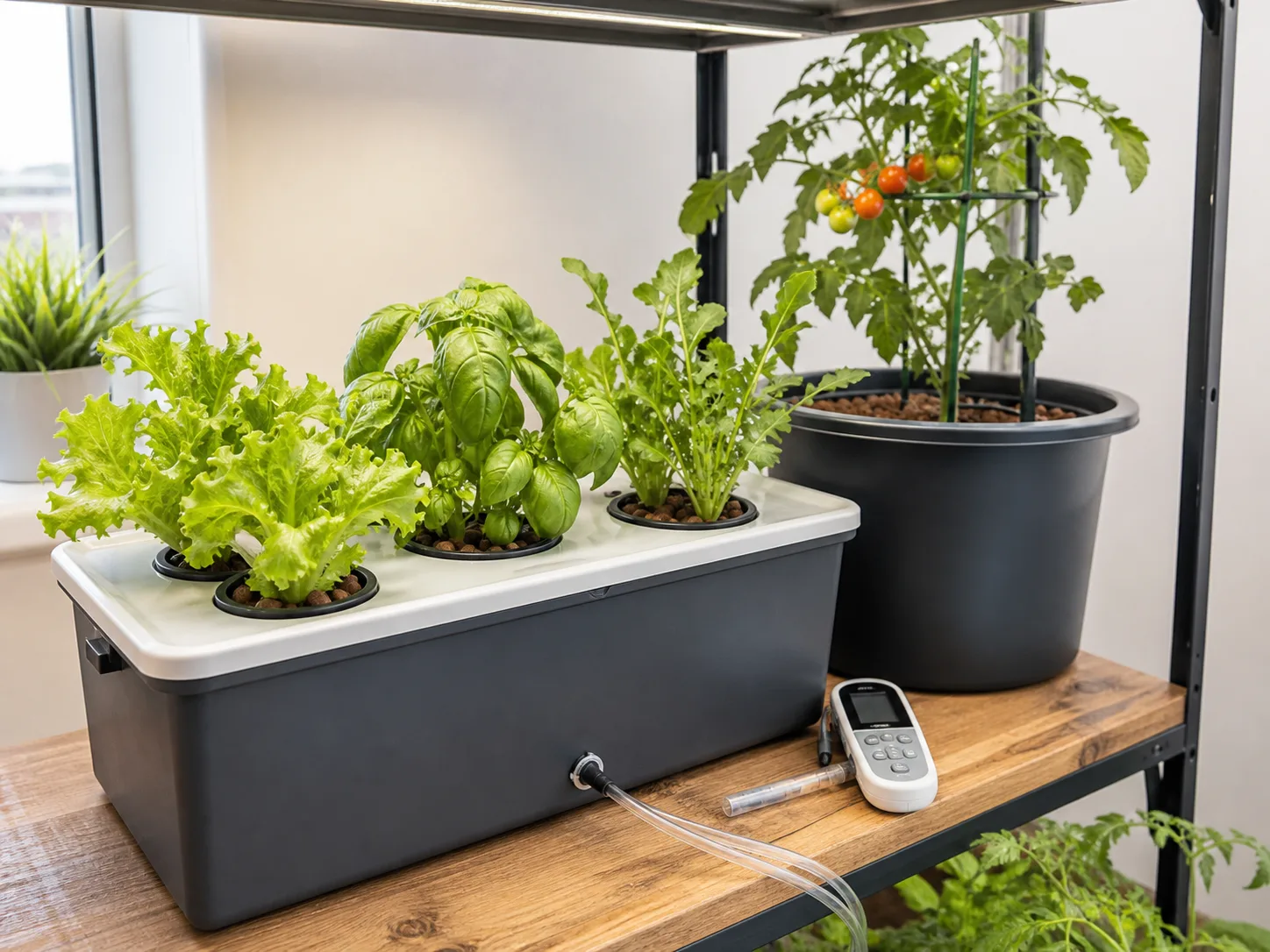
Every unit on this list is fundamentally a small hydroponic rig: roots sit in an inert medium or open port, a reservoir holds water plus dissolved minerals, and a pump (or passive wick) keeps roots moist and oxygenated. The Royal Horticultural Society explains that hydroponic roots still need air as well as water—stagnant, unaerated solution suffocates them—which is why reputable countertop systems circulate or aerate the tank. (RHS — Hydroponics)
Hydroponic vs Soil-Based Units
Hydroponic countertop gardens (AeroGarden, iDoo, Click & Grow, Rise, Lettuce Grow) dominate this category because they are cleaner on a kitchen counter and grow faster without soil gnats. Nutrients ship as liquid concentrates or pre-loaded pod sponges. You top off water every few days and add fertilizer on a schedule.
Soil-based stackable planters with a separate grow light—sometimes grouped in “indoor garden” roundups—use potting mix in tiers. They are cheaper and accept any seed, but they spill, dry unevenly, and rarely include automated watering. Epic Gardening’s hydroponics primer frames the trade clearly: without soil you must supply light, water, oxygen, and mineral nutrients deliberately; the payoff is speed and control when the system is designed well. (Epic Gardening)
For most readers comparing sealed kits, hydroponic wins on convenience. Soil stacks remain a niche pick for bright apartments that already have strong window light and tolerant succulents or strawberries.
What to Look For Before You Buy
Grow Lights, Timers, and Placement
Integrated full-spectrum LEDs are non-negotiable for food crops. A sunny window alone rarely delivers the daily light integral herbs need in winter; extension guidance consistently points to supplemental lighting for stocky, flavorful growth rather than leggy, pale leaves.
Before you buy, measure three things:
- Counter width and depth — include cord clearance.
- Overhead height — cabinet bottoms often block adjustable arms below 18–20 inches.
- Bedroom or office adjacency — most units run 14–16 hours on / 8–10 hours off. The light is bright. If your kitchen opens to a sleeping area, choose a model with a bedroom-friendly schedule or place the unit in a laundry room.
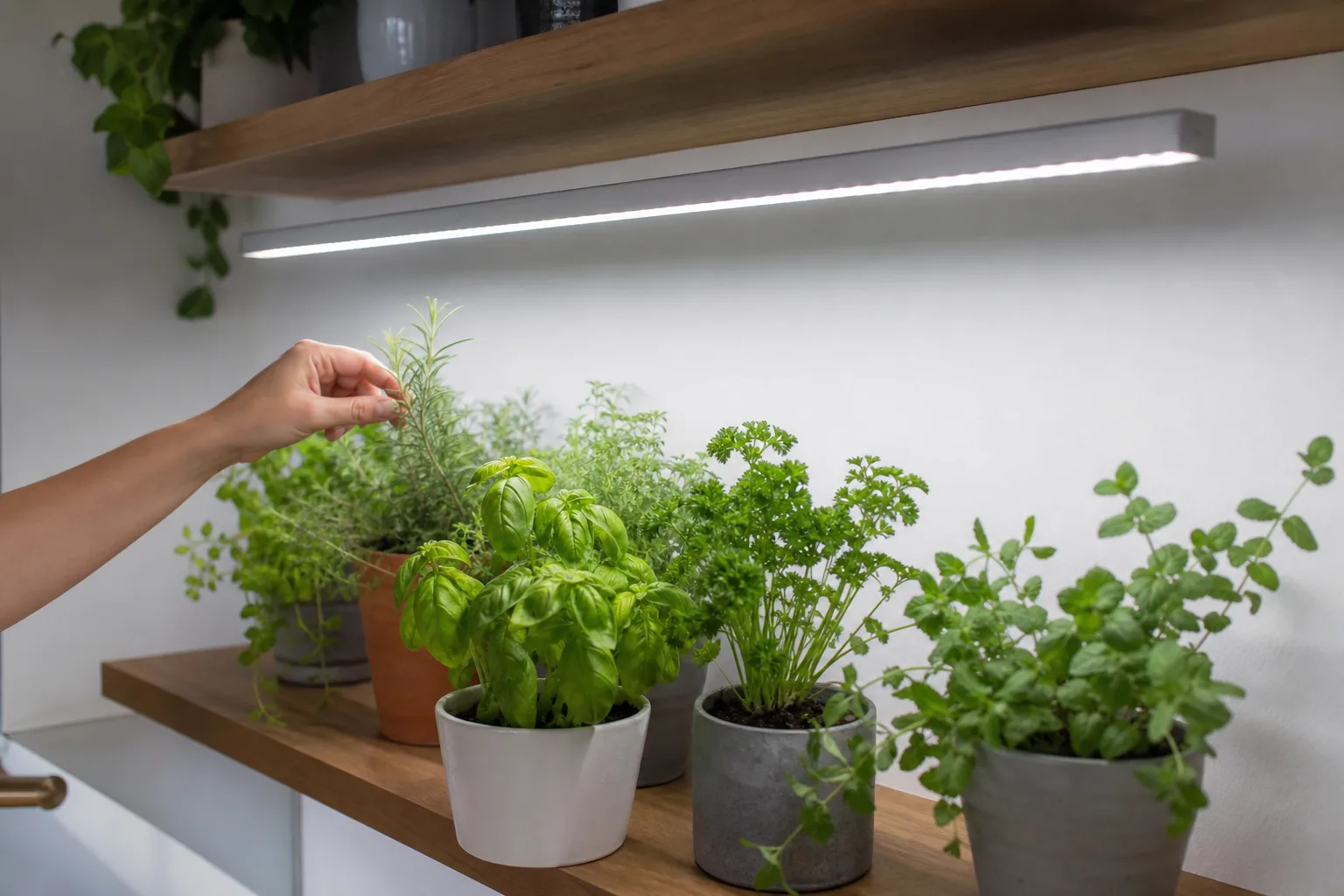
Our grow lights complete guide goes deeper on spectrum and distance. Inside a sealed garden, you mainly control photoperiod and crop height—not DIY hang height.
Running Costs and Proprietary Pods
Sticker price is only the entry fee. Budget for:
- Seed pod refills — proprietary AeroGarden, Click & Grow, Rise, and Lettuce Grow seedlings cost more per plant than a paper packet, but include grow medium and sometimes nutrients.
- Liquid nutrients — even “bring your own seed” systems like iDoo need hydro fertilizer after the starter bottle runs out.
- Electricity — typical 20–40 W LED gardens draw roughly 0.5–1.0 kWh per day when lights run 16 hours (about $2–$6 per month at average U.S. residential rates). Pumps add pennies.
Pod lock-in is the hidden long-term cost. AeroGarden and Click & Grow sell empty “grow anything” pods so you can use your own seed—budget for those if you chafe at herb multipacks. iDoo ships without pods; you supply sponges or buy generic hydroponic baskets. Rise and Lettuce Grow expect their own refills for easiest results.
Best Overall: AeroGarden Bounty Basic
The AeroGarden Bounty Basic is the reference countertop garden: nine planting sites, a 30-watt full-spectrum LED arm that adjusts to about 24 inches, a digital display for water and nutrient prompts, and a starter kit of mixed herbs. Seeds often germinate in two to four days when pods are fresh and room temperatures stay above 65°F.
Why it wins overall: capacity. Nine slots let you run basil, parsley, and thyme together while leaving room for a dwarf tomato or pepper in the “tall” positions marked on the deck. The reminder system reduces the two killers of hydroponic beginners—forgetting water and forgetting fertilizer—without requiring a phone app.
Trade-offs: you are in AeroGarden’s pod ecosystem unless you buy blank pods. The light is visibly bright during its on cycle. The footprint (~16.5 × 11.25 in.) is real counter real estate—you will not tuck this behind a coffee maker.
Best for: households that cook with fresh herbs several times a week and want one machine that can also trial cherry tomatoes or bush beans within height limits.
Best Value: iDoo Hydroponics Growing System
The iDoo 8-pod system lands near $80–$100 and performs above its price tier. It includes a pump, dual-mode grow light (vegetable vs fruit/flower spectrum toggle), and fertilizer—but no seeds, which is either a freedom or a hassle depending on your personality.
Why it wins on value: you are not subsidizing branded pod markup on day one. Any small-seeded herb or lettuce variety that matures under roughly 15 inches fits, provided you supply hydroponic grow sponges. During typical home use, germination and leaf color match more expensive units when water is topped off every two to three days.
Trade-offs: instructions can be confusing on first setup—watch a quick setup video before you panic over unused rubber plugs. The light timer is fixed at 16 hours on once plugged in; you cannot shift it without a smart plug. Build quality is plasticky compared with the Harvest Elite’s steel wrap.
Best for: first-time hydroponic cooks who already have seed packets or who want to experiment with cilantro and basil without a subscription mindset.
Best for Herbs: AeroGarden Harvest Elite
The AeroGarden Harvest Elite trims the Bounty down to six stainless-finished pods with a 20-watt LED hood. It is the unit you buy when the kitchen aesthetic matters and you mainly want basil, parsley, dill, thyme, and chives within arm’s reach of the stove.
Why it wins for herbs: size and reliability. Six slots mirror how people actually cook—two basils, a parsley, a thyme, a chive, and a wildcard. The digital panel still nags you (politely) about water and plant food. Germination times printed on each pod sleeve are usually accurate within a few days.
Trade-offs: no dimmer on the LEDs. Tall dill or cilantro will hit the hood faster than on the Bounty; harvest aggressively. You still buy AeroGarden pods for the path of least resistance.
Best for: herb-forward cooks with a 10 × 8 in. counter corner and no plans for tomatoes.
Best Design: Rise Gardens Personal Garden
Rise Gardens’ Personal Garden is the polished pick: furniture-grade casing, eight pods, a nursery tray for starting seedlings, and an app that controls lights, tracks nutrients, and even integrates with Alexa. Nutrient delivery is more advanced than simple liquid drops—helpful if you want guidance rather than memorizing dilution ratios.
Why it wins on design: it looks intentional on an open countertop island. The app lowers anxiety for beginners who want a checklist. Starter kits include a sensible herb-and-lettuce mix.
Trade-offs: fixed light height (~16 in.) limits towering crops. Rise pods are proprietary. At $300+, you pay a design and software premium over raw growth speed. The unit is wider than a Harvest Elite—measure first.
Best for: design-conscious homes that want smart-home integration and are committed to Rise’s refill ecosystem.
Best for Small Spaces: Click & Grow Smart Garden 3
The Click & Grow Smart Garden 3 is only about five inches wide and holds three pods—the minimum viable indoor garden. It uses pre-seeded plant cartridges with their own wicking medium and a 1.2-liter tank with a visible water window.
Why it wins in tight kitchens: it fits galley layouts, dorm desks, and bathroom-width counters where a nine-pod beast will not. Setup is literally add water, insert cartridges, plug in. The arm adjusts upward as plants grow, though the outer pod can receive slightly less light than the center on some units—rotate positions if you see uneven growth.
Trade-offs: three plants at a time, period. The reservoir is hard to scrub thoroughly—use diluted hydrogen peroxide between crops and keep an eye on biofilm. Cartridge pricing adds up if you eat basil daily.
Best for: studio apartments, office lunchrooms, and anyone who wants fresh garnish without dedicating half the counter.
Best for Salad Greens: Lettuce Grow Farmstand Nook
The Lettuce Grow Farmstand Nook is a different species: a floor-standing, 20-seedling hydroponic tower about 55 inches tall and 18 inches in diameter. It uses live seedlings shipped from Lettuce Grow—not dry seed pods—so you skip germination failure but pay more per plant.
Why it wins for lettuce: volume and vertical light distribution. Loose-leaf lettuce, arugula, bok choy, and herbs fill tiers that would require three countertop units to match. Seedlings often reach harvestable size in four to six weeks under consistent indoor temperatures (60–80°F). An app tracks growth stages and watering.
Trade-offs: $700+ and the footprint of a slim side table. Overkill if you only want occasional basil. Seedling shipments need prompt installation. It is not a countertop product—plan floor space, a waterproof mat, and clearance for the glow.
Best for: families who eat salad multiple times weekly and have floor space in a bright room or dedicated plant corner.
Indoor Garden System Comparison Table
| Model | Pods / slots | Max grow height | Light | App | Own seeds? | Typical price |
|---|---|---|---|---|---|---|
| AeroGarden Bounty Basic | 9 | ~24 in. | 30 W LED, adjustable | No (on-unit display) | With blank pods | $110–$180 |
| iDoo 8-pod | 8 | ~15 in. | Dual-mode LED, fixed timer | No | Yes (BYO sponges) | $80–$100 |
| AeroGarden Harvest Elite | 6 | ~17 in. | 20 W LED, adjustable | No | With blank pods | $125–$170 |
| Rise Personal Garden | 8 | ~16 in. fixed | Full-spectrum LED | Yes (+ Alexa) | Rise pods easiest | $300–$380 |
| Click & Grow Smart Garden 3 | 3 | ~12–19 in. | LED, 16/8 timer | Optional | Grow Anything cartridges | $95–$125 |
| Lettuce Grow Farmstand Nook | 20 seedlings | Tower ~55 in. | Integrated tower LEDs | Yes | Seedlings only | $700–$800 |
Crop cheat sheet: stay under each unit’s height ceiling. Good fits across most picks: basil, parsley, cilantro (harvest young), dill, chives, thyme, oregano, loose lettuce, arugula, pac choi. Proceed with caution: bush cherry tomatoes, peppers, edible flowers. Poor fits: cucumbers, pole beans, full-size tomatoes, zucchini.
Setup, Cleaning, and Long-Term Maintenance
First setup on any hydroponic countertop unit follows the same rhythm: rinse the bowl, insert pods or sponges, add water to the fill line, add nutrients per label, set the light schedule to match your household (many owners align “lights off” with sleeping hours), and wait for germination without peeling domes early.
Weekly care: top off water when the float or display says low; add nutrients only when prompted—over-fertilizing hydro herbs can dull flavor, similar to overfeeding soil pots. Trim herbs above a leaf node so plants bush instead of bolt. If cilantro flowers, it is telling you the room is too warm or the photoperiod too long—succession-sow a new pod.
Between crops: empty the tank, disassemble pump parts per manufacturer instructions, scrub with diluted white vinegar or hydrogen peroxide (never bleach on polycarbonate without confirming compatibility), rinse thoroughly, and let dry before replanting. The RHS advises refreshing hydroponic nutrient solution every two weeks or so in recirculating systems because mineral ratios drift as plants uptake nutrients; countertop gardens benefit from a full water change at every crop change even if the app does not demand it. (RHS — Hydroponics)
Failure modes to watch: brown roots smelling sour (root rot—change water, reduce temperature), green slime (algae—block light from open water, clean tank), silent pump after a dry run (may need replacement), and gnats if soil-based side systems share the same room—hydroponic units avoid most fungus-gnat breeding until algae appears.
Conclusion
The best indoor garden system is the one that matches your counter or floor space, your tolerance for proprietary pods, and the crops you actually eat. Buy the AeroGarden Bounty Basic if you want the most flexible nine-pod countertop station. Choose the iDoo if budget and seed freedom matter more than stainless finishes. Pick the Harvest Elite for everyday herbs, the Rise Personal Garden for app-guided polish, the Click & Grow 3 for the tiniest footprint, and the Lettuce Grow Nook only when you are ready to commit floor space to salad volume.
Whichever unit you choose, success still comes down to light duration, clean water, and realistic crop height—the same fundamentals Penn State and the RHS describe for any indoor or hydroponic garden. Start with herbs and lettuce, clean the tank between runs, and upgrade to a larger tower only after you are harvesting consistently. When you want deeper species care beyond the hardware, continue with best herbs to grow indoors and plants to grow hydroponically on LeafyPixels.



