9 Bulbs to Plant in November for Spring Color
Discover 9 bulbs to plant in November, from tulips and daffodils to snowdrops and alliums, plus timing, depth, drainage, and spring-care tips.
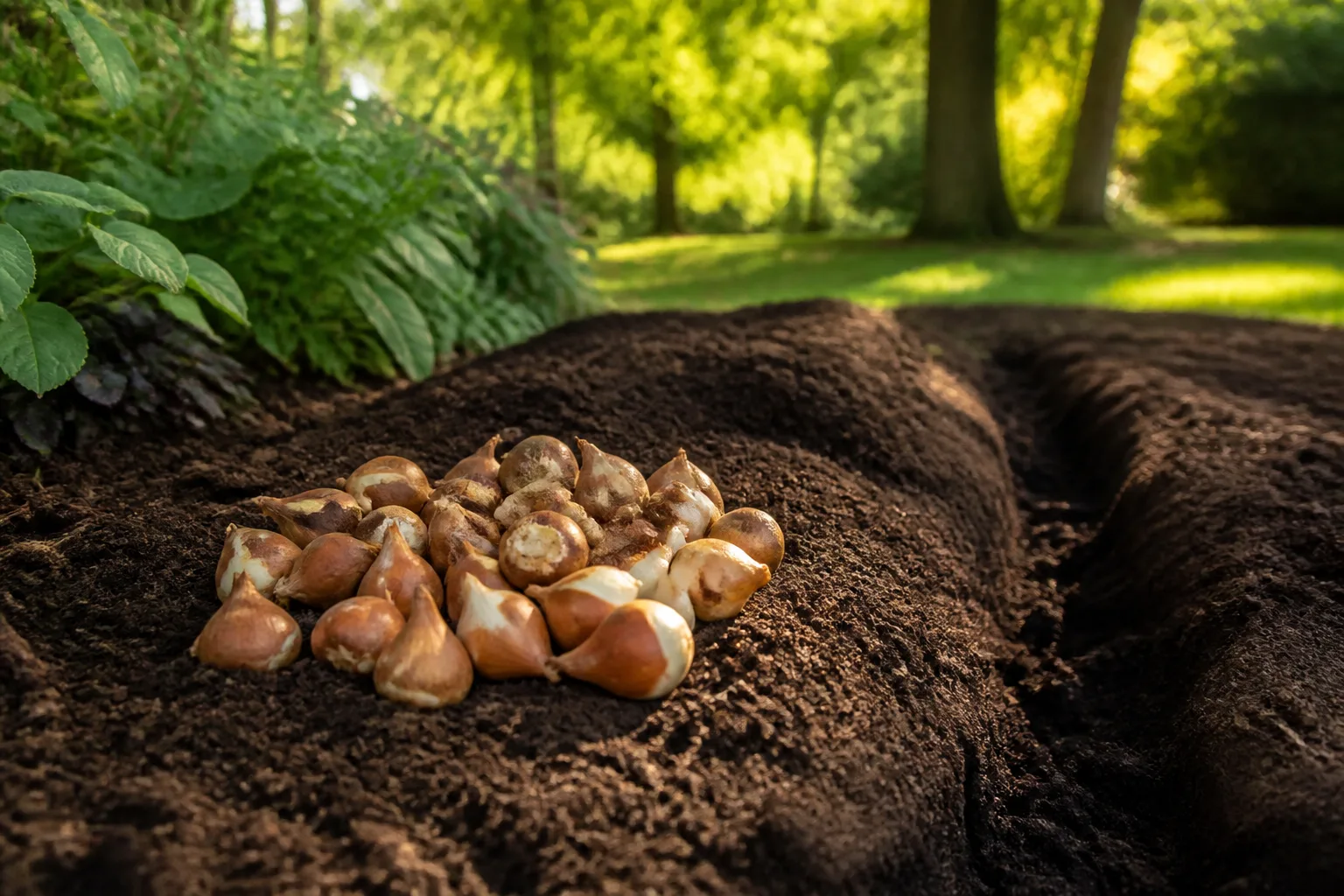
November can feel like the month when the garden is shutting down, but it is also a useful planting window for spring-flowering bulbs. The important qualifier is that November is a condition, not a guarantee: if the soil is workable, cool, and well drained, you can still tuck many bulbs into the ground; if it is frozen or saturated, wait for a better day rather than burying bulbs in mud.
The nine choices below cover the full spring arc—from snowdrops and winter aconites that can appear near the end of winter to tulips, alliums, and other flowers that carry the show into late spring. I have also separated bulbs that are especially well suited to November from those that prefer an earlier fall planting, so you can set realistic expectations for the first season.
The RHS guide to bulb planting lists autumn as the season for spring-flowering bulbs and specifically identifies November as a good month for tulips. Penn State Extension likewise recommends planting spring bulbs in cool fall weather before a hard frost, with excellent drainage as the key protection against rot.
| Bulb | Typical display | Best November use | Starting point |
|---|---|---|---|
| Tulip | Early to late spring | Bold beds and containers | Full sun; plant in cool soil |
| Daffodil | Early to late spring | Reliable perennial drifts | Sun or light shade; avoid standing water |
| Hyacinth | Early to mid-spring | Fragrant beds and pots | Sun to light shade; well-drained soil |
| Crocus | Late winter to early spring | Lawns, rock gardens, and edges | Clusters in sun or light shade |
| Allium | Late spring to early summer | Vertical punctuation and pollinator beds | Full sun; let surrounding plants hide leaves |
| Snowdrop | Late winter to early spring | Woodland edges and shade | Moist but draining soil; plant in clusters |
| Checkered lily | Mid to late spring | Damp meadow or cottage-garden pockets | Sun to light shade; do not let soil stay soggy |
| English bluebell | Mid to late spring | Informal woodland-style areas | Part shade; give it room to spread |
| Winter aconite | Late winter to early spring | Sunny or lightly shaded early color | Humus-rich, well-drained soil |
What November means for spring bulbs
Spring bulbs are not all on the same clock. They are dormant storage organs—true bulbs in the case of tulips and daffodils, and corms or other underground structures in some of the plants gardeners casually call bulbs. Many need a period of cool weather before they can flower, but the ideal planting window depends on the plant, your winter, and how quickly the ground freezes.
That is why a single rule such as “plant every bulb in November” is too broad. Tulips are commonly planted later in fall, while daffodils, crocuses, hyacinths, snowdrops, and winter aconites are often offered or recommended earlier. Still, an earlier-than-ideal date is not a reason to abandon firm bulbs in November: plant them promptly if the bed is workable, then accept that flowering may be less impressive in the first year.
Check soil, frost, and drainage before you dig
Use three checks. First, the soil should be cool and soft enough to dig without smearing into a dense, airless paste. Second, the ground should not be frozen solid. Third, rain should be able to move away from the planting depth; a low spot that holds water after every storm is a poor home for most spring bulbs.
Your average first-frost date can help with planning, but it is not a substitute for looking at the bed. A mild November may leave soil workable long after the calendar date recommended on a package, while an early cold snap may end the window sooner. In a warm-winter climate, the challenge is often keeping bulbs from sitting wet rather than protecting them from deep frost.
If your soil is heavy clay, improve the bed before planting by loosening a broad area and incorporating mature organic matter according to a soil test. Do not fill individual holes with a pocket of rich, moisture-holding compost; that can create a small bathtub around the bulb. Penn State Extension notes that bulbs prefer a soil pH around 6 to 7, but drainage and structure matter more than chasing a number without a test.
Match bulbs to the space you want to fill
Choose the site before you choose the quantity. Most spring bulbs flower best in sun, and bulbs under deciduous trees can take advantage of spring light before the canopy fills in. Shade-loving or woodland bulbs, such as snowdrops and English bluebells, are the exceptions; they need the cooler, softer conditions that a sunny, exposed bed may not provide.
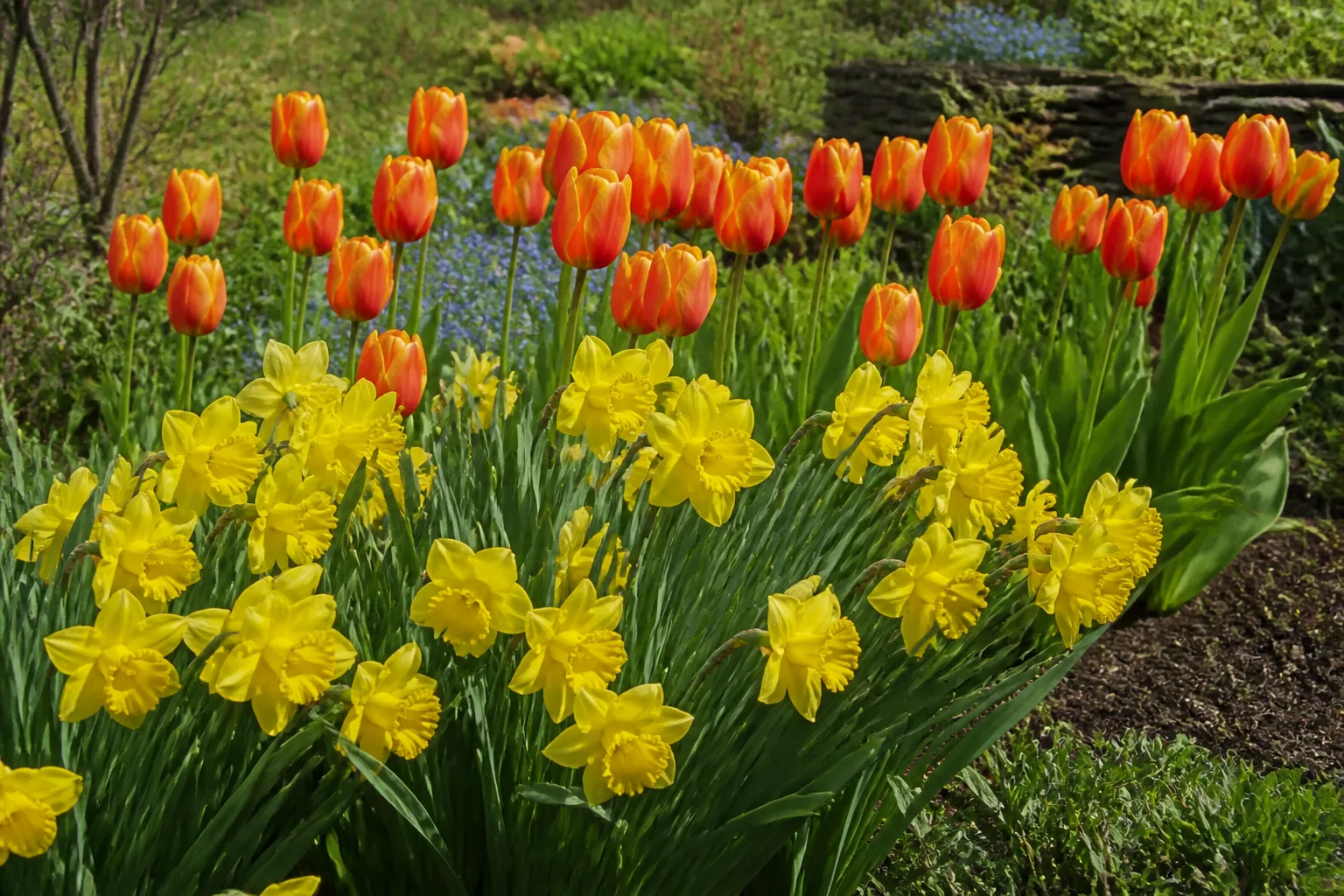
For the strongest visual effect, plant in groups or drifts, not a dotted line of single bulbs. RHS recommends groups of at least six for a better display, while Penn State Extension suggests keeping varieties and colors together so the planting reads as a deliberate wave. Put short crocuses and snowdrops near paths or the front of a bed, medium-height daffodils and hyacinths in the middle, and tall tulips or alliums where their flower heads can rise above later foliage.
Containers are useful when the soil is poor, drainage is difficult, or you want a movable spring focal point. Use pots with drainage holes, keep the mix open rather than waterlogged, and protect them from extreme temperature swings; bulbs in containers experience cold more quickly than bulbs insulated by garden soil.
Nine bulbs worth planting in November
1. Tulips
Tulips are the clearest November choice on this list. They are traditionally planted after the soil cools, and the RHS seasonal tulip guidance gives a broad September-to-December planting window, with the practical advice to plant soon after purchase so the bulbs do not deteriorate in storage.
Use tulips when you want color, shape, and height in a controlled spring display. Single early, double, lily-flowered, fringed, parrot, and viridiflora types can carry a bed from early to late spring, but they do not all return equally well. If repeat performance matters, choose perennializing or species tulips and give them sharp drainage; if you want a one-season color scheme in a pot, treat the bulbs as a seasonal display and replace them when needed.
Plant tulips pointed end up, typically at two to three times the bulb’s height, and keep them in a sunny site. Squirrels may dig in freshly worked beds, especially where bulbs are shallow or the soil is loose, so firm the surface gently and consider a temporary layer of mesh or a mulch that does not trap water.
2. Daffodils
Daffodils are the dependable backbone of a spring garden. The RHS daffodil growing guide describes them as long-lived, versatile bulbs that grow in containers, borders, and grass, with flower forms that can extend the season from early spring into May.
November is later than the ideal September planting window in many regions, but it is still worth planting sound daffodil bulbs if the ground is open. Pick firm, full bulbs without soft spots or mold, choose sun or light shade, and avoid a bed that stays wet. Smaller cultivars suit the front of a border or short grass; taller cultivars can sit among shrubs or perennials.
Daffodils are especially useful for naturalizing because a drift becomes more convincing as the bulbs settle and multiply. Plant several of one variety together rather than mixing a few unrelated bulbs at random, and leave the foliage alone after flowering so it can recharge the bulb for next year.
3. Hyacinths
Hyacinths earn a place in a November plan for their dense flower spikes and powerful fragrance. Their compact shape works well along a path, around a doorway, or in a pot where you will notice the scent, and their pink, purple, blue, white, and red cultivars make them easy to coordinate with tulips and daffodils.
They prefer full sun to light shade and well-drained soil. The RHS general bulb guide and extension guidance both emphasize drainage for fall-planted bulbs; a hyacinth in cold, saturated ground is more likely to rot than one in a slightly less fertile but airy bed.
Plant large hyacinth bulbs at the depth specified on the label, usually within the two-to-three-times-height rule. Wear gloves if your skin is sensitive when handling the bulbs, and keep the planting visually simple: a tight group of one color generally looks more intentional than a scattered handful.
4. Crocuses
Crocuses are small but valuable because they open the spring show early, sometimes before the lawn or border has properly woken up. Their purple, white, yellow, and striped flowers work in rock gardens, under deciduous trees, along paths, and in short grass where a cluster can look natural rather than fussy.
Most crocuses are corms, though gardeners group them with bulbs. They generally prefer sun to light shade and soil that drains quickly. Utah State University Extension recommends planting crocuses in large groupings because individual flowers disappear visually; that is good design advice as well as a practical use of small planting material.
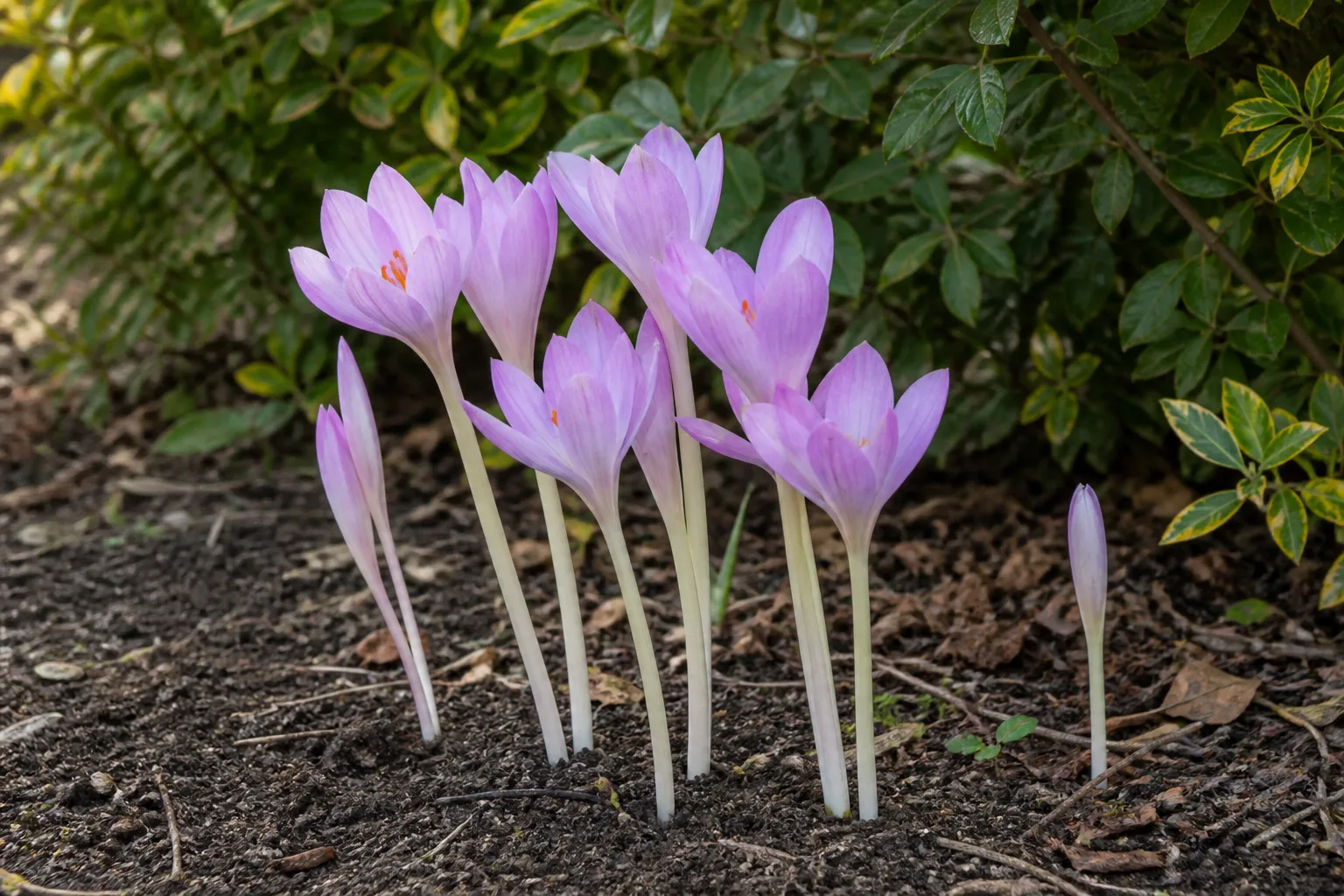
Crocus is one of the choices where November may be later than ideal in colder climates, so plant as soon as the soil allows. In grass, do not mow until the foliage has yellowed and begun to die back; the leaves are still feeding the corm even after the flowers fade.
5. Ornamental alliums
Ornamental alliums bring a different silhouette: round flower heads held above strappy leaves, often in purple, pink, white, or wine shades. Their late-spring to early-summer timing helps bridge the gap between classic spring bulbs and the first flush of summer perennials, and the dried heads can keep their shape after the flowers fade.
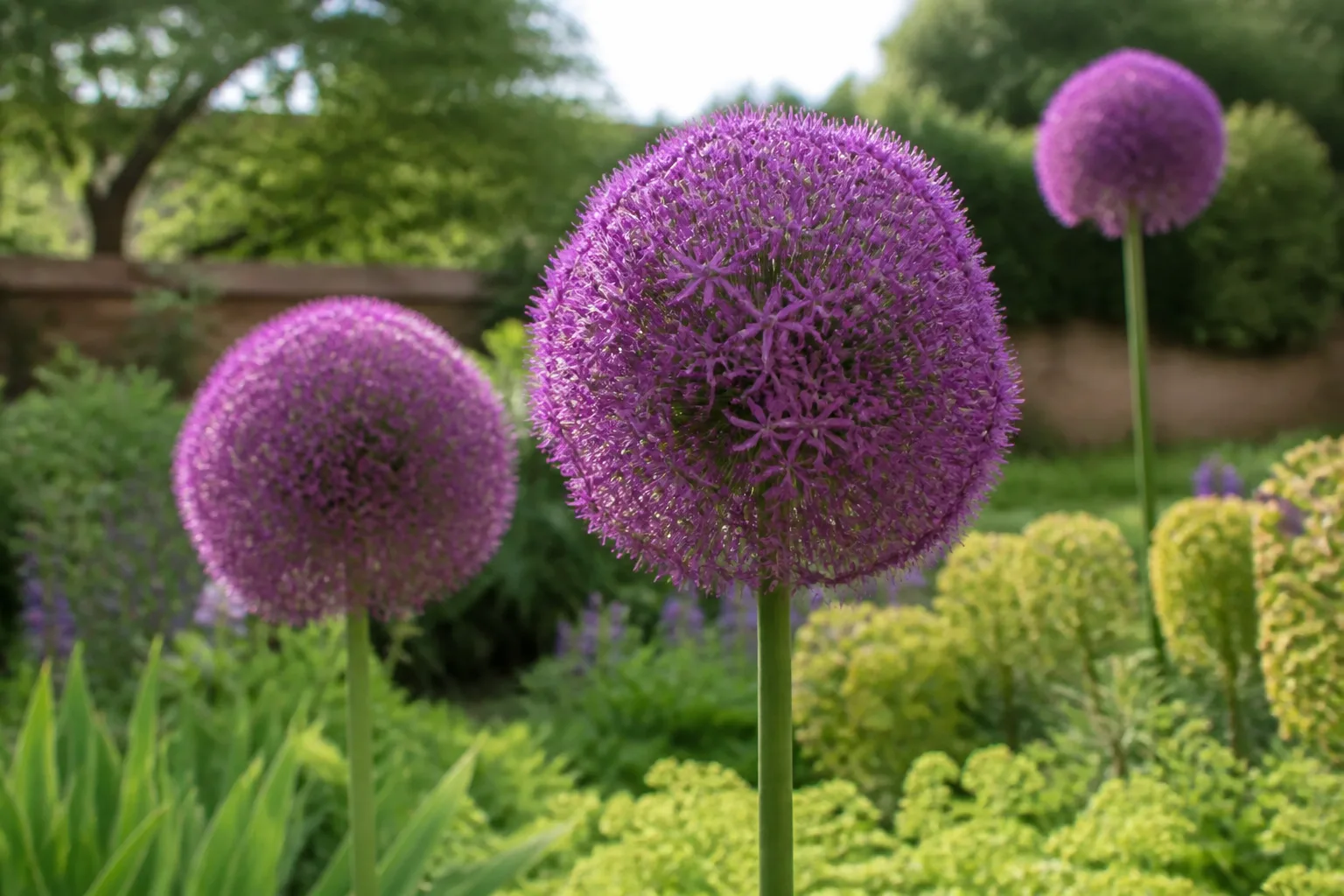
Give alliums full sun and soil that does not remain wet. The RHS planting guidance places hardy summer-flowering bulbs such as alliums in the earlier autumn window, so November is not the universal optimum; it is a reasonable last call when the bulbs are firm and your soil is still workable.
Plant them where neighboring perennials can hide the leaves as they yellow. A bed of low-growing plants in front of the stems makes the flower spheres feel taller and keeps the fading foliage from becoming the dominant view. Large alliums make good focal points in repeated groups, while smaller types can weave through a mixed border.
6. Snowdrops
Snowdrops are among the best plants for the moment when winter is not quite finished. Their small white flowers suit woodland edges, north-facing borders with bright filtered light, and areas beneath deciduous trees where the soil stays evenly moist but does not become a bog.
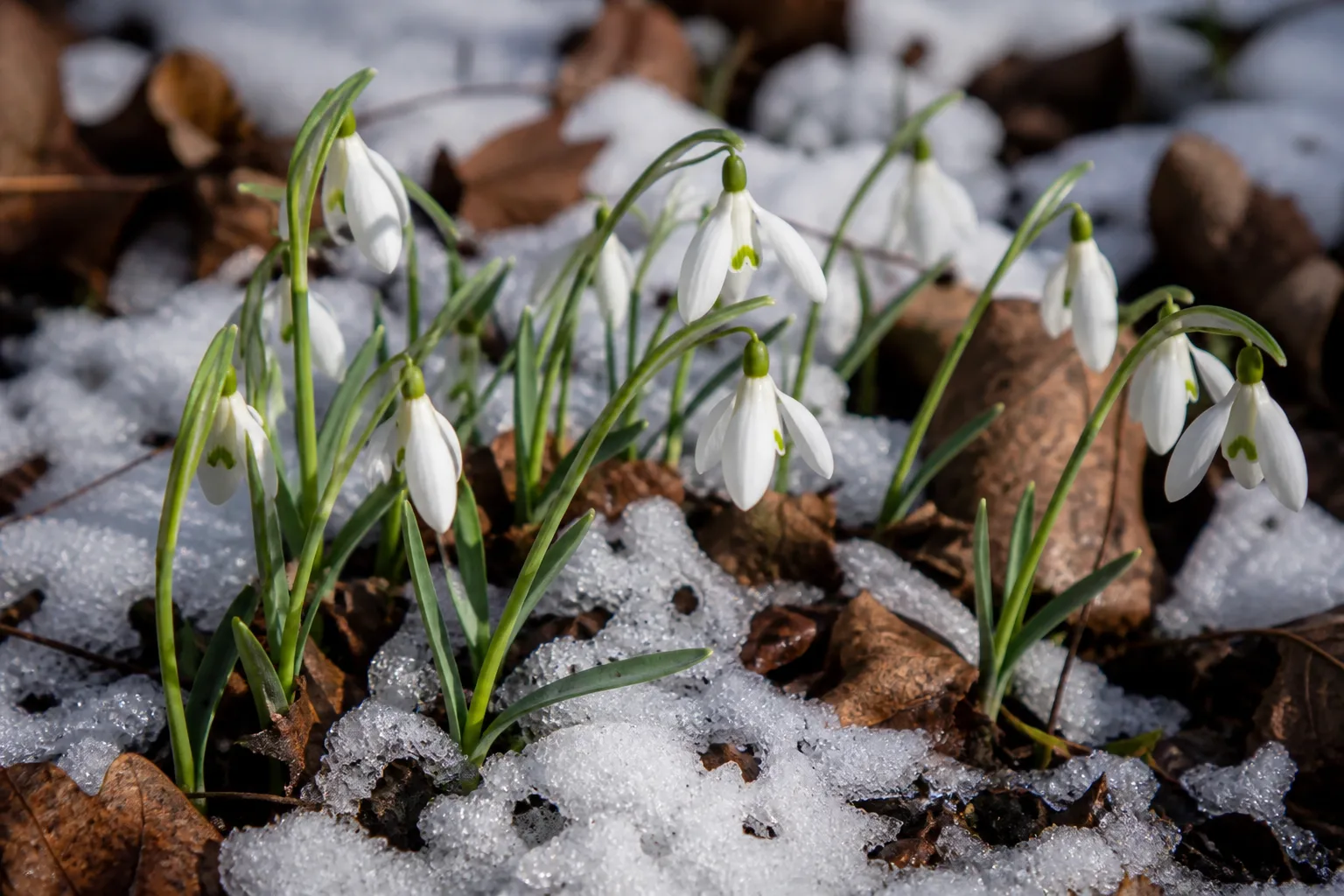
The catch is that dry snowdrop bulbs can be less forgiving than bulbs with thick protective tunics. The RHS notes that snowdrops are often best planted, moved, or divided in the green—after flowering, while the leaves remain—although dried bulbs can succeed. If you buy dry bulbs in November, choose plump, unshrivelled stock, plant immediately, and do not let the bed dry out completely after planting.
Plant snowdrops in loose clusters rather than a ruler-straight row. They are quiet plants at close range, but a repeated drift is easy to see from a window or path and gives the garden a natural woodland character.
7. Checkered lilies
Checkered lilies, especially snake’s-head fritillary (Fritillaria meleagris), add nodding bell-shaped flowers with a distinctive checkerboard pattern. They are a good choice when you want something less familiar than a tulip and have a border, meadow edge, or damp-but-draining pocket where their delicate stems can move naturally.
Penn State Extension specifically lists Fritillaria among lesser-known spring bulbs that can be planted in fall. They can take full sun to light shade, but the soil must not stay saturated. In heavy soil, a raised bed or container can be safer than forcing them into a low spot.
Let the planting look slightly informal. A handful tucked among low perennials or in a grass-like meadow area is more convincing than a formal line, and the muted purple, burgundy, yellow, or white tones can soften brighter daffodils nearby.
8. English bluebells
English bluebells create the classic blue haze of a spring woodland. Their arching stems and bell-shaped flowers are useful in a shady, informal area where a spreading colony is an asset rather than a maintenance problem.
Choose a site with part shade and humus-rich, well-drained soil. Bluebells are one of the plants the RHS identifies as better suited to planting or moving in the green, so dry bulbs planted in November deserve extra attention to quality and moisture. They may establish more slowly than potted or in-the-green plants.
Give them room and be deliberate about placement. A practical Glendoick guide to autumn bulbs recommends keeping bluebells in rough, marginal, or wooded areas if you do not want them spreading through the main border. At the edge of a woodland-style bed, under shrubs, or in a rough area, that same tendency is what produces the effect you bought it for.
9. Winter aconite
Winter aconite (Eranthis hyemalis) makes low, bright yellow flowers near the end of winter or the start of spring, often at a time when the garden is mostly brown. It is a small bulb-like plant with an outsized visual effect when several flowers appear together.
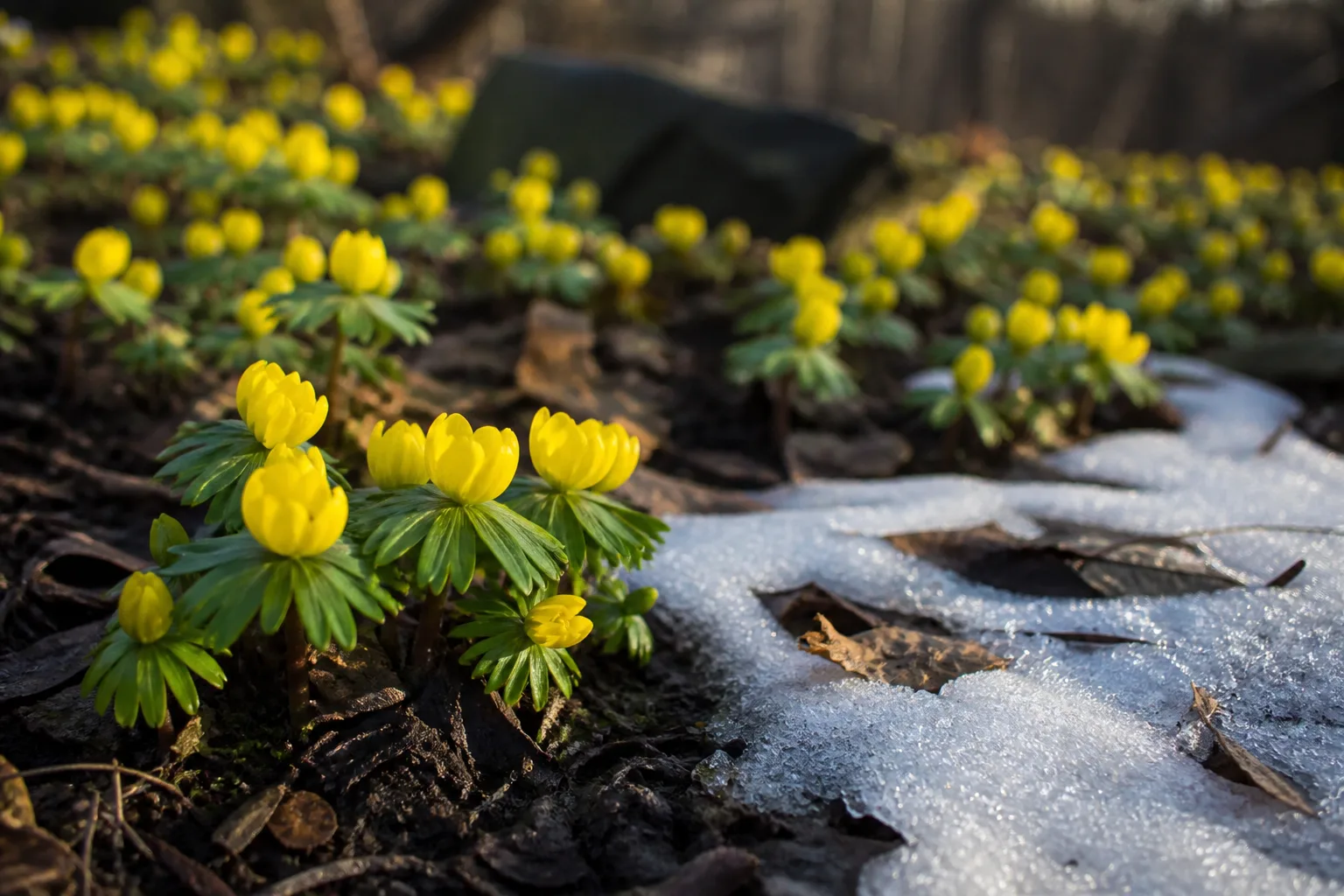
Give winter aconite sun to partial shade and soil that drains well but does not bake dry in summer. Like snowdrops and bluebells, it is often considered easier to establish in the green, yet dried material can work when it is fresh and planted promptly. A lightly shaded spot beneath deciduous trees can provide spring light before leaf-out and shelter later.
Use it at the front of a bed, beside a path, or in a naturalized drift where its short stature will not be hidden. Pair the yellow flowers with purple crocuses or white snowdrops for contrast, then let the foliage disappear naturally after the early display.
Plant them for a spring display
Buying good bulbs and putting them in the ground on the right day is only half the job. The planting method determines whether roots can develop, whether the bulb stays insulated through freeze-thaw cycles, and whether the display looks like a garden plan rather than a collection of isolated flowers.
Prepare the bed and choose healthy bulbs
Start with a site that will receive the light the bulb needs in spring, not necessarily the light it receives in summer. Under a deciduous tree, for example, a bulb may have full sun before the leaves open. Clear perennial weeds, loosen the bed broadly, and break up compacted soil without turning it into a fine dust that crusts after rain.
When shopping, favor bulbs that feel firm and heavy for their size. Reject bulbs with soft sections, deep cuts, strong mold, or a sour smell. Size matters because a larger, well-filled bulb generally has more stored energy for roots and flowers, but a large unhealthy bulb is still a poor purchase.
Lay the bulbs on the surface before digging every hole. This simple design step lets you adjust the spacing and see whether you have enough for a drift. Keep one cultivar or color together when you want a bold sweep, and reserve mixtures for informal areas where different heights and bloom dates can mingle without looking accidental.
Get depth, direction, and spacing right
The reliable starting rule is to plant most spring bulbs two to three times as deep as the bulb is tall, measured from the base of the bulb to the soil surface. A two-inch bulb therefore usually goes in about four to six inches deep, but the package instructions take priority when the variety has a specific requirement. Utah State University Extension gives the same two-to-three-times rule and notes that larger bulbs are commonly planted deeper than small ones.
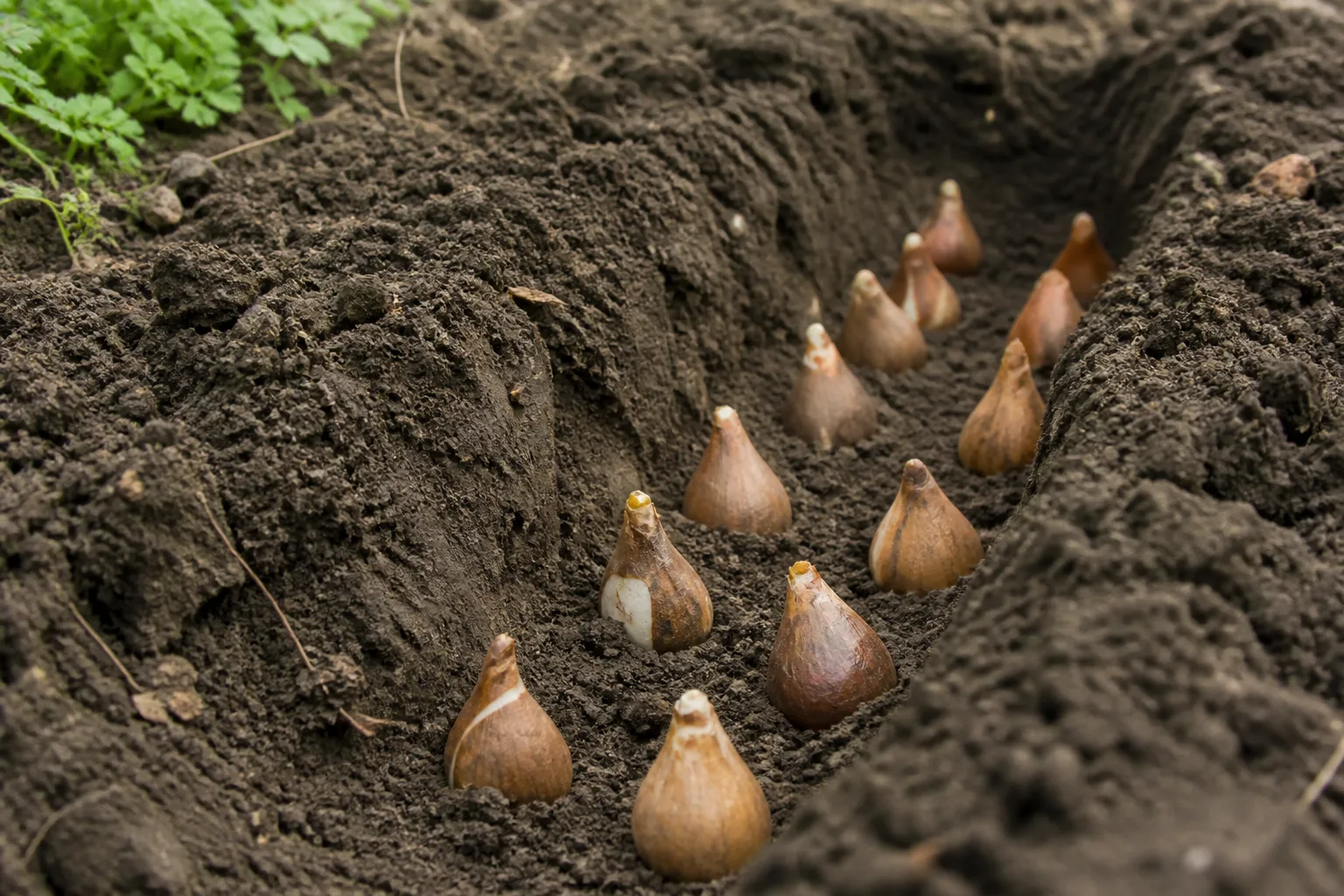
Set the pointed nose or emerging shoot upward and the flatter root plate downward. If you cannot tell which end is which, plant the bulb on its side; the shoot can usually redirect, though it may spend extra energy doing so. Do not push bulbs into hard soil with force, because compacted contact around the base can damage roots and slow drainage.
Space bulbs at least about twice their width apart in a bed, or closer in a temporary container display if you plan to move or replace them later. Leave enough room for the mature leaves, not just the flower heads. Crowding is not an immediate failure, but it increases competition and makes a long-term clump harder to divide.
Water once, mulch lightly, and let foliage work
If the soil is already moist, fall-planted bulbs may not need a heavy soaking. Otherwise, water after planting to settle the soil around the bulbs and remove large air pockets. After that, water only when the bed is genuinely drying; repeatedly wetting a cold bulb bed is a common route to rot.
A light layer of loose mulch can moderate freeze-thaw cycles and reduce soil heaving, especially in exposed beds. Keep mulch breathable and do not pile a thick, wet blanket directly over emerging shoots. In containers, place pots where excess water can drain freely and check them during dry winter spells, because rain does not always reach a sheltered pot.
When flowers finish in spring, remove spent blooms if you want to prevent seed formation, but leave the green foliage until it turns yellow and collapses naturally. The leaves are still making food for the bulb. Do not braid or tie them down, and do not mow a naturalized lawn planting until the foliage has had time to recharge the underground storage organ.
What to do if November planting is late
If the ground is still soft enough to dig, plant firm bulbs now rather than storing them for another season. Gardener’s Path’s guidance on late spring bulbs notes that bulbs planted late can still root when the soil is cool, and mulch can help reduce heaving from repeated freezing and thawing. The RHS similarly advises planting missed bulbs as soon as possible instead of leaving them to deteriorate in storage.
The outcome may be uneven. Some bulbs will root and flower normally, some will produce a shorter stem or fewer flowers in the first spring, and some may take a season to settle. That is not a reason to abandon the planting; it is a reason not to spend premium money on a guaranteed-looking display when the schedule is already late. If you need a full show for an event, combine the new bulbs with flowering potted bulbs in spring.
If the soil is frozen solid, do not chip through it and leave shallow bulbs in a rough, exposed hole. Keep firm bulbs cool, dry, and protected from rodents for the shortest practical time, then plant when the soil becomes workable. Do not store them in a warm room or sealed plastic, where moisture and heat accelerate deterioration.
Bulbs that send up a small shoot after an autumn warm spell are not automatically ruined. Leave them in place, cover the soil with a modest layer of loose mulch if a hard freeze is forecast, and avoid stimulating more growth with fertilizer. The leaves may suffer frost damage, but the underground bulb can still recover if drainage is good.
Conclusion: plan a sequence, not a single splash
The best bulbs to plant in November are the ones that fit both the season and your site. Choose tulips for a late-fall planting window and strong color, daffodils for dependable perennial drifts, hyacinths for scent, crocuses for the earliest sparks, alliums for the handoff to summer, and snowdrops, checkered lilies, English bluebells, and winter aconites when you want a more natural woodland or meadow character.
Before you buy, check the bulb’s preferred light, the soil’s drainage, and the time remaining before the ground freezes. Plant firm bulbs at the correct depth with the nose up, water only as needed, protect against heaving, and let the foliage finish its work after flowering. A few deliberate groups planted now can turn the quietest part of the year into a spring garden that unfolds week by week.