11 Bulbs to Plant in October for Spring Blooms
Discover 11 bulbs to plant in October, with timing, depth, spacing, sunlight, drainage, aftercare, and pet-safety notes for reliable spring flowers.
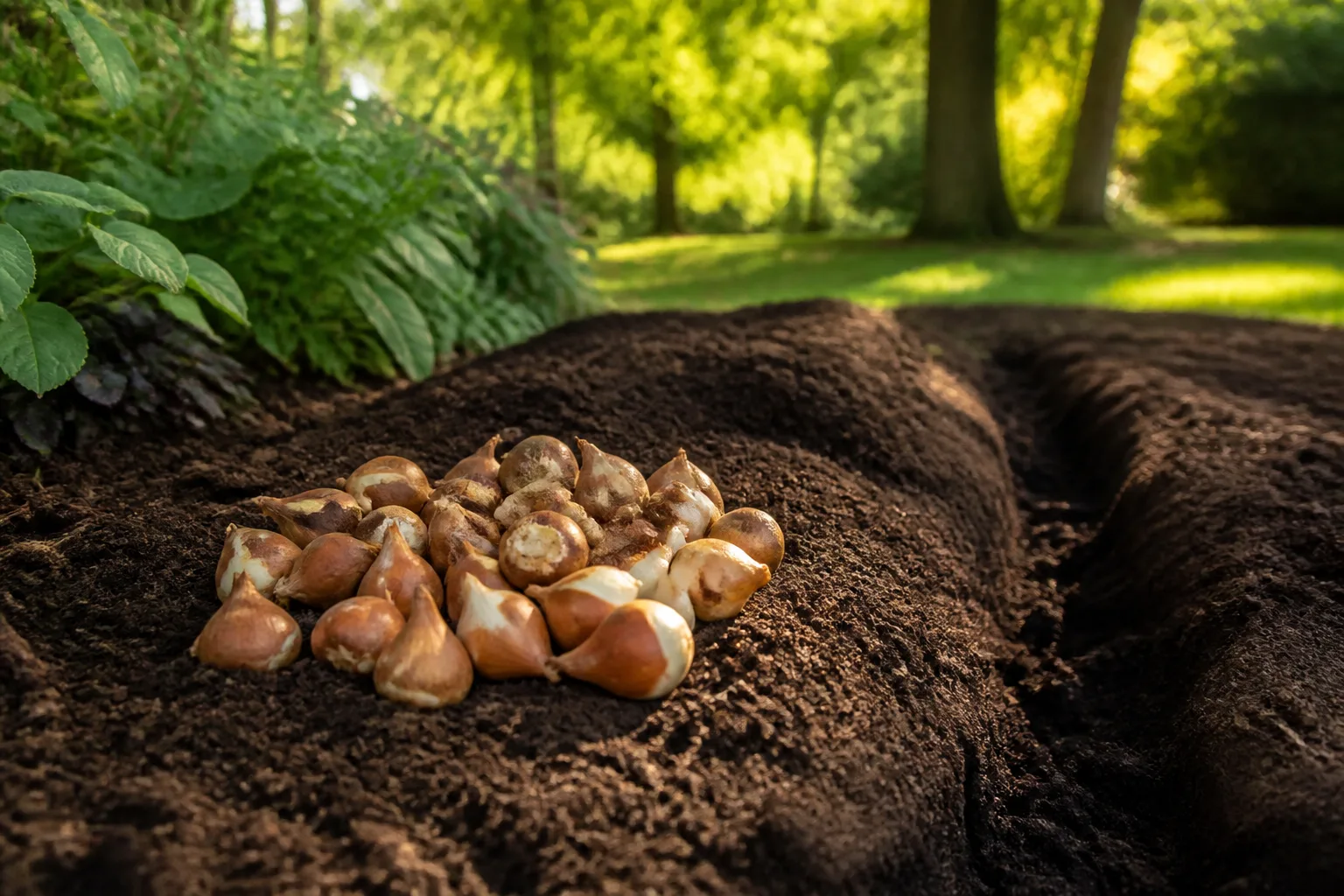
October is one of the best times to plant spring-flowering bulbs, but the useful rule is not “plant on October 1.” The better rule is to plant after summer heat has eased, while the soil is still workable, and early enough for roots to establish before the ground freezes for the season.
That distinction matters because October can mean very different conditions in different gardens. A gardener in a cold inland climate may need to finish daffodils and crocuses early in the month, while someone in a mild winter region can often plant tulips later. Your bulb label, local climate, soil drainage, and expected ground-freeze date matter more than the month name alone.
The list below includes 11 familiar choices, but it also explains which ones are dependable perennials, which are better treated as seasonal color, and which need special handling. Use it to build a spring display that starts early, overlaps in color, and does not collapse because a bulb sat in cold water all winter.
Why October works—but is not a universal deadline
Most hardy spring bulbs are planted in fall because they need a cool dormant period and time to make roots before spring growth begins. Penn State Extension describes spring-blooming bulbs as fall-planted plants that flower from early spring into early summer, while summer bulbs follow a different schedule and are often not winter-hardy in cold regions.
October is a convenient target across much of the United States, especially in USDA Zones 4 through 7, because the hottest soil has cooled and several weeks may remain before a lasting freeze. Colorado State University Extension identifies September and October as prime planting months in its region and warns that late, unrooted bulbs can be pushed out of the ground by winter freezing and thawing.
Use soil and frost cues instead of the calendar alone
Plant when the soil is cool enough for fall root growth but not frozen solid. A practical regional rule is to aim for roughly four to six weeks before your ground usually freezes permanently; in very cold areas, plant earlier, and in mild areas, plant later when the soil has cooled. Dutch Bulbs likewise emphasizes soil temperature and the time remaining before a permanent freeze rather than a fixed date.
If a light frost has already occurred, do not assume the season is over. A light frost on the surface is different from frozen soil several inches down. If you can still dig a proper hole, the bulb is firm, and the forecast leaves time for rooting, plant promptly. If the ground is frozen or saturated, do not force a planting job that will smear clay around the bulb and create an airless pocket.
Buy bulbs early for the best selection, but store any unplanted bulbs in a cool, dry, dark, ventilated place. Do not seal them in an airtight plastic bag, leave them in a hot garage, or store them beside ripening fruit. Inspect each bulb before planting: it should feel firm and full, without soft spots, active mold, or deep cuts.
Choose the planting site before you choose the bulb
Start with the light the bed receives in late winter and spring, not only the light it receives in October. Deciduous trees can be excellent neighbors because bare branches allow spring sun to reach bulbs before the canopy fills in. Penn State Extension recommends using site selection, soil characteristics, and depth together because the same bulb can perform very differently in a bright, well-drained bed and a shaded, soggy one.
For most of the list, choose full sun to light partial shade and soil that drains freely after rain. Bulbs do not need rich, constantly wet soil; they need oxygen around their roots. If a bed stays puddled for hours after a normal storm, fix the site, raise the bed, or use a container before you spend money on bulbs.
Test dense soil by digging a hole about 12 inches deep and filling it with water. Let it drain, fill it again, and watch the second fill. If water remains for a long time, improve the bed broadly with organic matter and better structure rather than creating a little pocket of loose soil around each bulb. A loose pocket surrounded by compacted clay can behave like a bowl and make rot worse.
Work compost into the planting area if the soil is poor, but do not bury bulbs in a layer of pure compost. Keep the soil crumbly enough for roots to move through, and avoid walking on the bed after it has been prepared. A soil test is worthwhile for a large, permanent bulb bed; Penn State Extension notes that many bulbs prefer a slightly acidic to neutral soil, around pH 6 to 7.
11 bulbs to plant in October
Use this list as a design menu rather than a demand to buy all 11. Combine early, middle, and late bloomers; repeat a few varieties in groups; and put tall stems behind low flowers. A drift of one kind usually looks more intentional than one bulb of every color scattered across a bed.
1. Daffodil
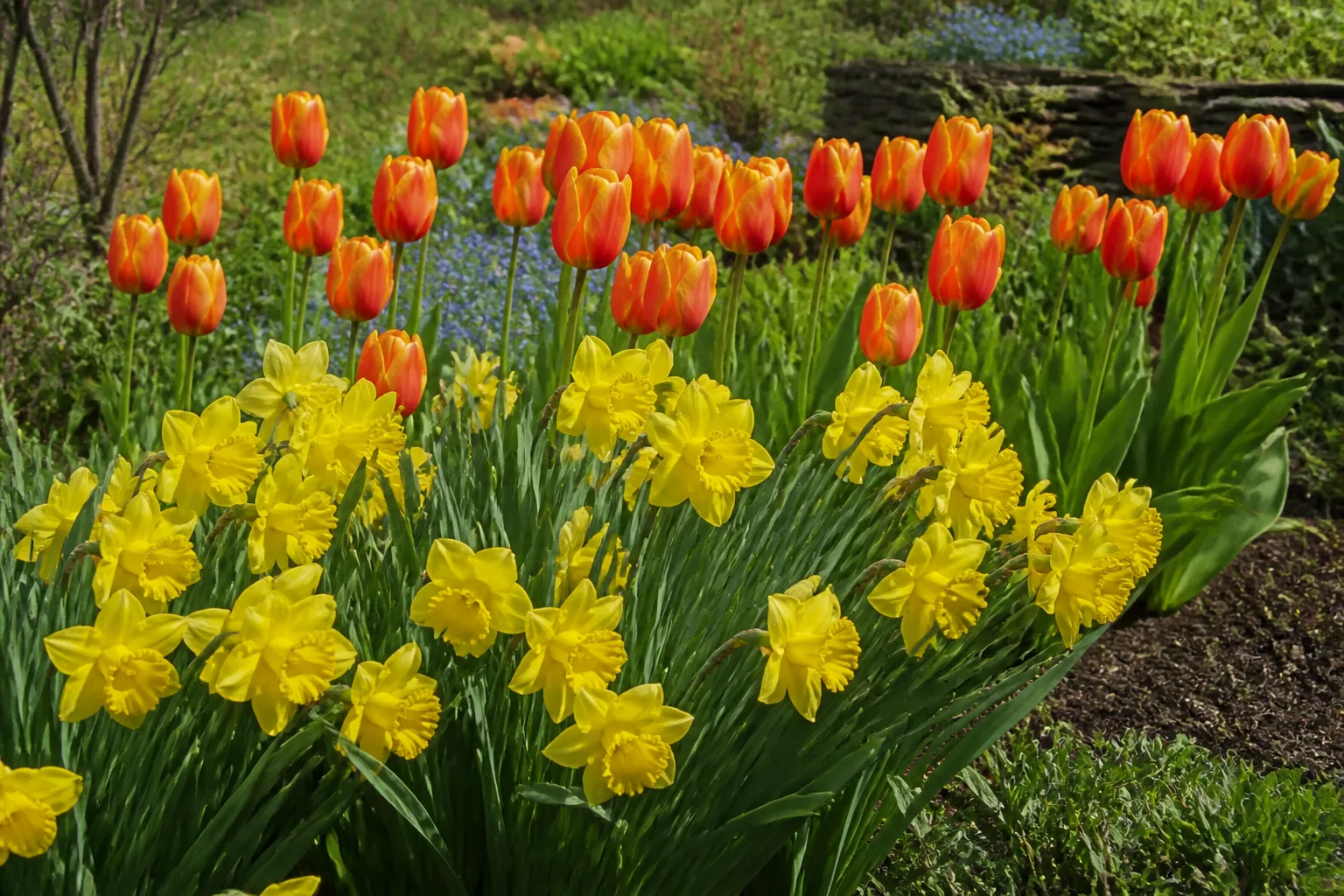
Daffodils (Narcissus spp.) are among the best choices for a low-maintenance spring bed. They bring early-to-mid-spring flowers in yellow, white, orange, and bicolors, and many types return and multiply when the site drains well and the foliage is allowed to mature. They are especially useful under deciduous trees or along a path where their foliage can stay in place after the flowers fade.
Plant large daffodil bulbs with the pointed end up at the package depth, commonly about 6 inches deep depending on bulb size and soil. Space them close enough to read as a group but far enough apart for offsets to develop. Daffodils tolerate more light shade than tulips, but too much shade usually means fewer flowers over time.
One important limitation is safety: daffodil bulbs are poisonous if eaten, and the bulbs contain the highest concentration of toxins. The ASPCA Animal Poison Control Center reports that ingestion can cause vomiting, diarrhea, and drooling, with more serious signs possible after a large amount is eaten. Label leftover bulbs and keep them away from children and pets.
2. Crocus
Spring crocuses are small corms that deliver some of the earliest purple, white, yellow, or striped flowers. Plant them in clusters rather than a rigid line, because a dozen small flowers read as a patch of color while three isolated blooms can disappear in a bed. They work well at the front of borders, in rock gardens, beneath deciduous shrubs, and in lawns that will not be mowed until the foliage has yellowed.
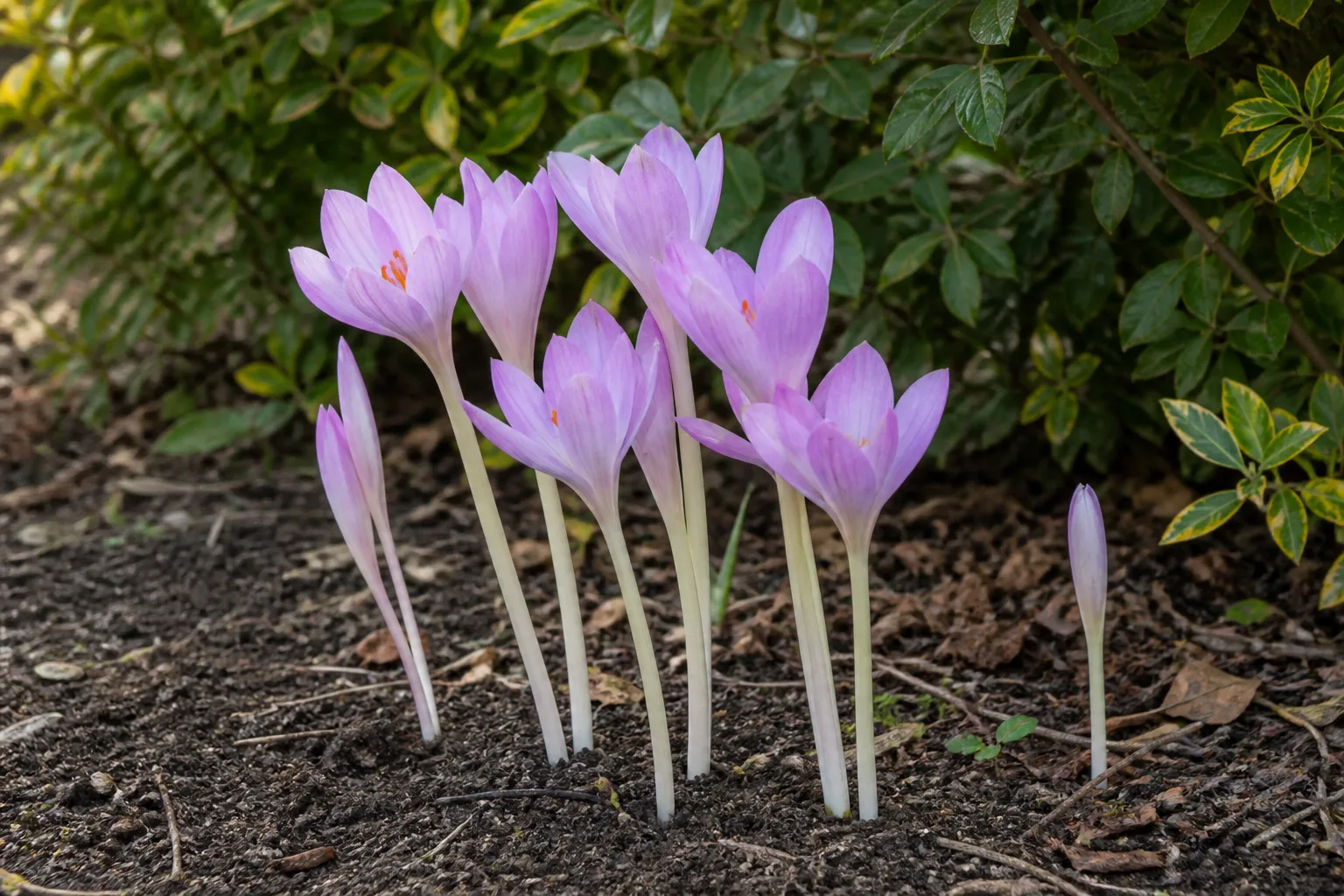
Plant spring crocus corms shallowly according to the package, usually only a few inches deep, and choose a sunny or lightly shaded site with sharp drainage. Do not confuse spring crocus (Crocus spp.) with autumn crocus (Colchicum autumnale), which is a different plant with a different planting season and a much more serious toxicity profile.
Spring crocus can cause gastrointestinal upset if pets eat it. The ASPCA Animal Poison Control Center distinguishes it from autumn crocus, which can cause severe vomiting and diarrhea and potentially serious organ and bone-marrow damage. Confirm the scientific name on the label before planting or allowing a child or pet near an unknown “crocus” bulb.
3. Hyacinth
Hyacinths are compact spring bulbs valued as much for fragrance as for their dense flower spikes. White, pink, blue, purple, and red varieties are effective beside a front door, along a walkway, or in a container where you can appreciate the scent at close range. Give them full sun or bright partial shade and soil that does not stay wet.
Plant the broad basal plate down and the pointed tip up, following the label depth; a typical large bulb goes several inches deep. Hyacinths can return, but repeat flowering may be less impressive than the first season, especially in warm climates or poorly drained sites. Treat them as a strong first-year display, then judge their performance before making the bed permanent.
Hyacinth bulbs are also a pet-safety concern. ASPCA guidance lists hyacinths as toxic to dogs and cats, with the bulbs especially concentrated and ingestion capable of causing vomiting, diarrhea, and drooling. Wear gloves if your skin reacts to bulb sap, and wash your hands after planting.
4. Crown imperial
Crown imperial (Fritillaria imperialis) is the choice for a tall, architectural accent rather than a low carpet of flowers. Its upright stems carry nodding red, orange, or yellow bells beneath a crown of leaves, often reaching the back of a spring border. It prefers full sun to light shade, fertile but well-drained soil, and room to be seen.
The bulb has a central hollow or stem scar that can collect water. Plant it on its side rather than perfectly upright so rain cannot sit in that opening. Use the depth and spacing on the label, and do not bury it in heavy, airless clay. A raised bed or sloped site is safer than a low pocket.
Crown imperial can have a strong musky odor, sometimes described as skunk-like. That is not a sign of rot, but a reason to place it away from a seating area or tight entry path. Its unusual shape and scent also make it a useful “one of these, not a dozen” plant for a mixed border.
5. Tulip
Tulips provide the broadest range of colors and forms on this list, from simple early cups to late peony-flowered and lily-flowered types. Plant them in groups of at least five or seven for visual weight, with shorter varieties at the front and tall varieties behind. Full sun, free-draining soil, and a position protected from strong wind produce straighter stems.
Plant tulip bulbs several inches deep, commonly two and a half to three times the bulb’s height, unless the supplier gives a different direction. Penn State Extension uses a two-inch tulip bulb planted about 5 to 6 inches deep as an example. In wet clay, planting slightly shallower than in sandy soil can reduce the time the bulb sits in saturated ground, but do not ignore the package guidance.
Tulips are often less reliable as long-term perennials than daffodils, especially in warm-winter climates. For a dependable return, choose perennializing varieties suited to your region, allow the foliage to die back naturally, and avoid watering the bed through a hot summer dormancy. If you want guaranteed annual impact, plant fresh bulbs each fall and treat the display as seasonal color.
6. Bluebell
Bluebells create a woodland effect under deciduous trees and in dappled shade. The familiar English bluebell has violet-blue, nodding flowers, while related species and hybrids may have different flower angles, leaf shapes, and spreading habits. The best setting is a cool, humus-rich bed that stays evenly moist in spring but does not remain waterlogged.
Plant bulbs or dry offsets according to the supplier’s instructions, often at a shallow-to-moderate depth, and place them in natural-looking clusters. Bluebells are not a good choice for a hot, exposed, dry bed. They are also not ideal for a tiny border where you need every plant to stay precisely within its original footprint.
Before buying, identify the species and check local guidance. Spanish bluebell and hybrids can spread aggressively in some regions and may cross with native bluebells. Choose a reputable source, do not dump unwanted bulbs in natural areas, and remove seed heads if local conservation guidance recommends it.
7. Anemone
Spring anemones, especially Anemone blanda, grow from small, irregular corms and make daisy-like flowers in blue, pink, purple, or white. They are excellent for softening the edge of a bulb bed, filling spaces beneath shrubs, or creating a low layer under taller tulips and daffodils. They prefer sun to light shade and soil that drains well but does not become bone-dry while they are rooting.
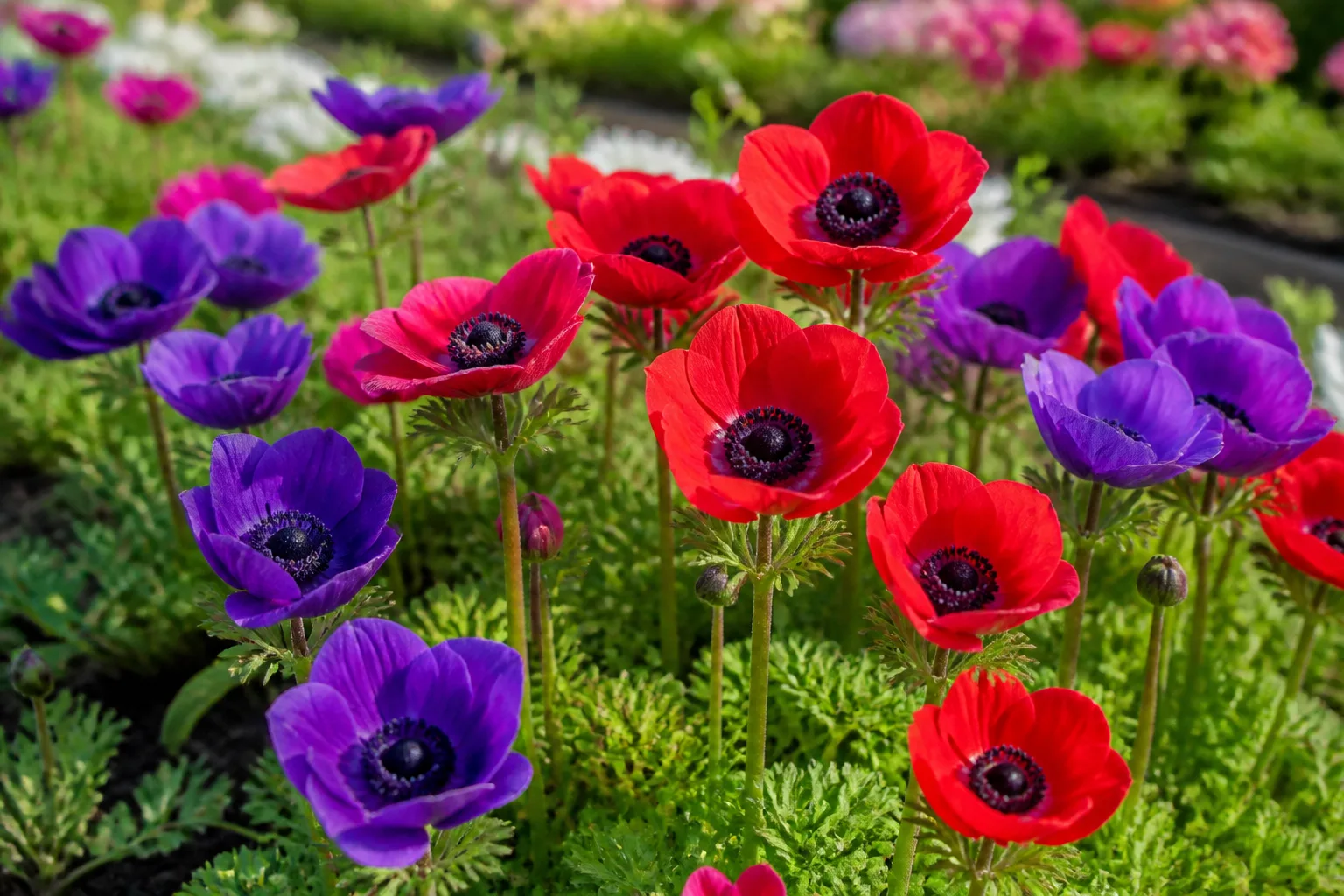
Dry anemone corms can be hard to orient, so do not spend too long searching for a perfect “top.” Soak them as directed on the package, plant them on their side if orientation is unclear, and cover them at the recommended shallow depth. Planting in a cluster gives a much fuller effect than spacing them like large bulbs.
Anemone timing varies by species and climate. Spring-flowering types are generally planted in fall, while fall-flowering types follow a different schedule. Read the botanical name and bloom season on the package rather than assuming every anemone sold in autumn belongs in the same hole.
8. Ranunculus
Ranunculus are technically tuberous roots, but gardeners buy and plant them with bulbs. Their many-petaled flowers resemble small peonies or roses and make excellent cut flowers in pink, red, orange, yellow, white, and purple. They do best with cool growing weather, bright sun, excellent drainage, and a climate where winter is mild enough for the corms to survive outdoors.
In Zones 7 through 11, October can be a useful planting month for ranunculus. In colder regions, plant them in spring after the worst freezes or grow them in containers that can be protected. This is one of the list’s most important climate exceptions: copying a warm-winter calendar into a cold garden often produces rotted corms rather than early flowers.
Soak and orient the corms according to the supplier’s instructions, usually with the claw-like points facing down, and keep the soil only lightly moist until active growth begins. Do not “help” them with frequent watering. Ranunculus are a good choice when you want a cut-flower patch, but they are not the most forgiving bulb for a wet or very cold garden.
9. Lily
True lilies (Lilium spp.) are summer-flowering perennials that are often planted in fall or spring, depending on species, local climate, and when the bulbs are available. They are not the same plants as daylilies, surprise lilies, or peace lilies. Choose a site with sun on the stems and cool shade over the roots if possible; low annual plants around the base can help with that balance.
Plant lily bulbs promptly after purchase because their fleshy scales dry out more readily than the papery tunics of tulips or daffodils. Use the label depth, which varies by lily type and bulb size, and provide excellent drainage. Tall lilies belong toward the middle or rear of a border, where their stems can rise above shorter spring flowers.
Lilies need a special pet warning. Many true lilies can cause life-threatening kidney injury in cats, and the ASPCA Animal Poison Control Center advises keeping dangerous lilies away from cats, including in gardens where pollen or plant pieces can be carried indoors. If you share your home with cats, omit true lilies or choose a plant confirmed safe by a veterinarian or animal-poison resource.
10. Iris
“Iris” covers several very different planting types. Bearded iris grow from rhizomes and are usually planted with the rhizome near the soil surface, while Dutch iris grow from bulbs and are planted deeper. Siberian iris are fibrous-rooted perennials. Check the botanical name and the package directions before applying a generic bulb rule.
Dutch iris bulbs can be planted in fall for late-spring or early-summer flowers in suitable climates. Bearded iris rhizomes should not be buried deeply; a buried rhizome is more likely to rot and flower poorly. In all cases, choose a sunny site and avoid compacted soil that stays wet through winter.
Irises are considered toxic to dogs and cats by ASPCA guidance, with ingestion associated with vomiting, diarrhea, and drooling and the underground parts posing particular concern. Mark the planting area while it is dormant so you do not dig through it later, and keep spare rhizomes or bulbs out of reach.
11. Snowdrop
Snowdrops (Galanthus spp.) are among the earliest flowers to appear, sometimes pushing through snow or frozen-looking leaf litter. Their white bells are small, so they look best in generous drifts under deciduous trees, along woodland paths, or near a window where you can see them in late winter. They prefer moisture-retentive but well-drained soil and light shade to sun before the tree canopy closes.
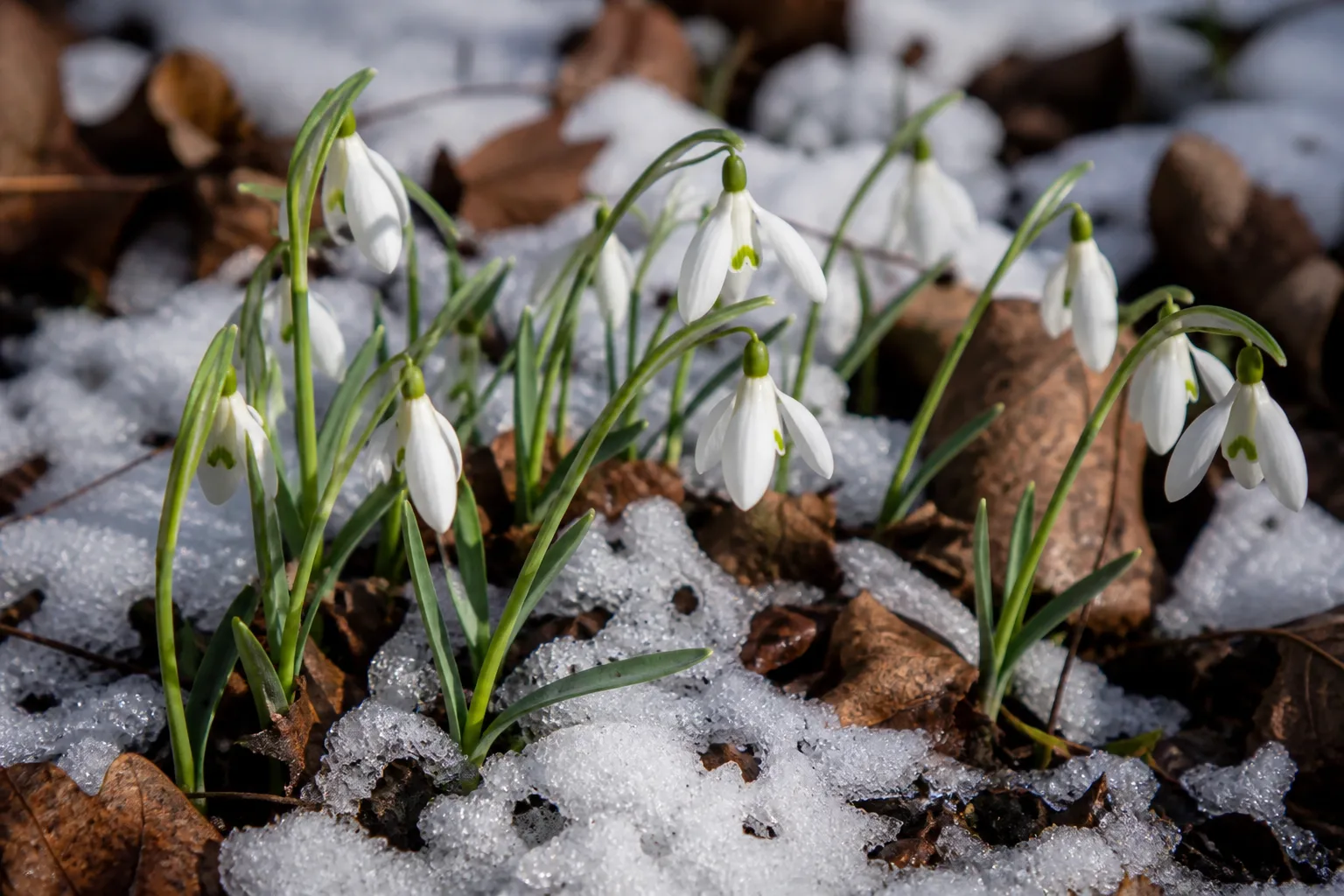
Plant snowdrops as soon as possible after purchase because they establish best when they do not dry out. Choose bulbs that are firm and not shriveled, and plant them in groups. Once established, clumps can be divided after flowering while the foliage is still green, but do not cut the leaves merely because the flowers have finished.
Snowdrops are poisonous if eaten. The risk is easy to overlook because the flowers look delicate, but the bulb is still a stored plant organ that should not be treated as edible. Keep children and pets away from stored bulbs, and use the same caution with mixed bags whose labels are unclear.
The planting method that protects roots and bulbs
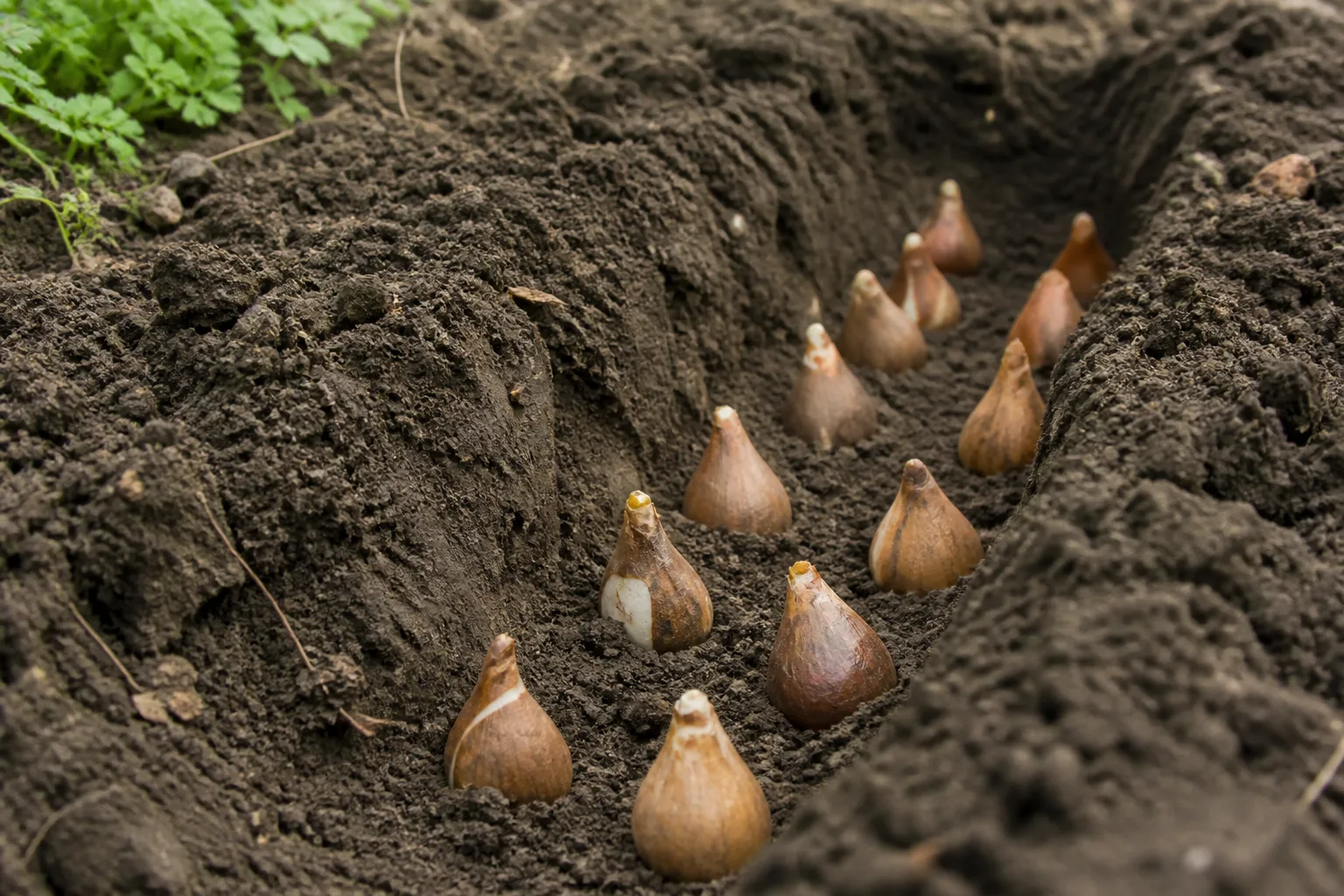
Planting depth is a guide, not a contest. Use the package instructions first; a useful general range for many hardy spring bulbs is about two and a half to four times the bulb’s height from the soil surface to the bulb’s shoulder or tip, depending on the species and soil. Oregon State University Extension gives the practical shortcut of planting about three times the bulb’s width, while Colorado State University Extension uses a height-based rule and notes that heavy soils may call for slightly shallower planting.
What to do on planting day and through winter
- Prepare the whole area. Remove weeds, loosen compacted soil to the required depth, and mix in finished compost if needed. Do not create a sharply different soil pocket around each bulb.
- Check each bulb. Discard soft, leaking, badly moldy, or deeply damaged bulbs. A little papery skin loss is usually less concerning than a soft basal plate.
- Measure the hole. Plant by the label, with the root or basal plate down and the growing tip up. If the shape is uncertain, follow the species-specific guidance rather than guessing.
- Space for the future. Small bulbs can be planted closer than large bulbs, but leave enough room for offsets and airflow. Groups look better than a checkerboard of single bulbs.
- Backfill gently. Replace soil without packing it hard. Water once thoroughly to settle soil around the roots, then let drainage determine the next watering.
- Label the bed. Write the cultivar, color, planting date, and location on a weatherproof marker. Dormant beds are surprisingly easy to forget.
After the ground begins to freeze, apply about 2 to 3 inches of loose mulch such as shredded leaves, clean straw, or fine bark. Mulch buffers rapid freezing and thawing and helps prevent shallow-rooted or newly planted bulbs from heaving. Do not bury emerging shoots under a dense, wet blanket in spring; rake back only what the shoots cannot easily penetrate.
Common October bulb mistakes, including pet-safety risks
Planting by date instead of conditions is the first mistake. October is early in one climate and late in another. Watch the soil, the forecast, and the time remaining before a lasting freeze.
Watering a dormant bed on a schedule is another. Give newly planted bulbs a thorough settling-in drink, then water only when the soil is drying and natural rainfall is insufficient. Repeatedly wet soil with no drainage is a rot recipe.
Cutting the foliage after the flowers fade reduces next year’s performance. Remove spent flowers if you want to stop seed production, but leave green leaves attached until they yellow and pull away easily. The foliage is still photosynthesizing and replenishing the underground storage organ.
Bending, braiding, or tying leaves does not make them finish faster. It can reduce the leaf area receiving light. If the fading foliage looks untidy, plant bulbs among later perennials that will hide it naturally.
Expecting every bulb to perennialize leads to disappointment. Daffodils, crocuses, snowdrops, and many bluebells can naturalize in the right site. Tulips, hyacinths, ranunculus, and some anemones may return less strongly depending on cultivar and climate. Decide whether you want permanent structure or one-season color before buying.
Ignoring rodents and pets can erase a planting overnight. Use physical protection where squirrels dig, avoid placing toxic bulbs beside a pet’s favorite digging route, label leftovers, and never store mixed bulbs in an unmarked bag. ASPCA guidance identifies tulips, hyacinths, irises, crocuses, and daffodils as capable of causing illness in dogs and cats, and warns that some bulb parts are especially concentrated. If a pet may have eaten a bulb, contact your veterinarian or an animal-poison service promptly rather than waiting for symptoms.
Conclusion
The best bulbs to plant in October are the ones that fit your winter, soil, light, and maintenance style. Choose daffodils, crocuses, snowdrops, and bluebells for early naturalizing color; use tulips and hyacinths for concentrated drama; add crown imperial, anemone, iris, lily, or ranunculus when their specific climate and soil needs match your site.
Prepare drainage before planting, follow each package’s depth, water once to settle the soil, mulch after freezing, and leave green foliage in place after flowering. That short sequence does more for a beautiful spring garden than buying the largest list of varieties. Plant a few intentional groups this October, record what succeeds, and expand the display with evidence from your own bed next fall.



