Which Plants Thrive in a Hydroponic Indoor Garden?
Choose 21 plants for a hydroponic indoor garden with practical system matches, light needs, pollination tips, harvest advice, and common mistakes.
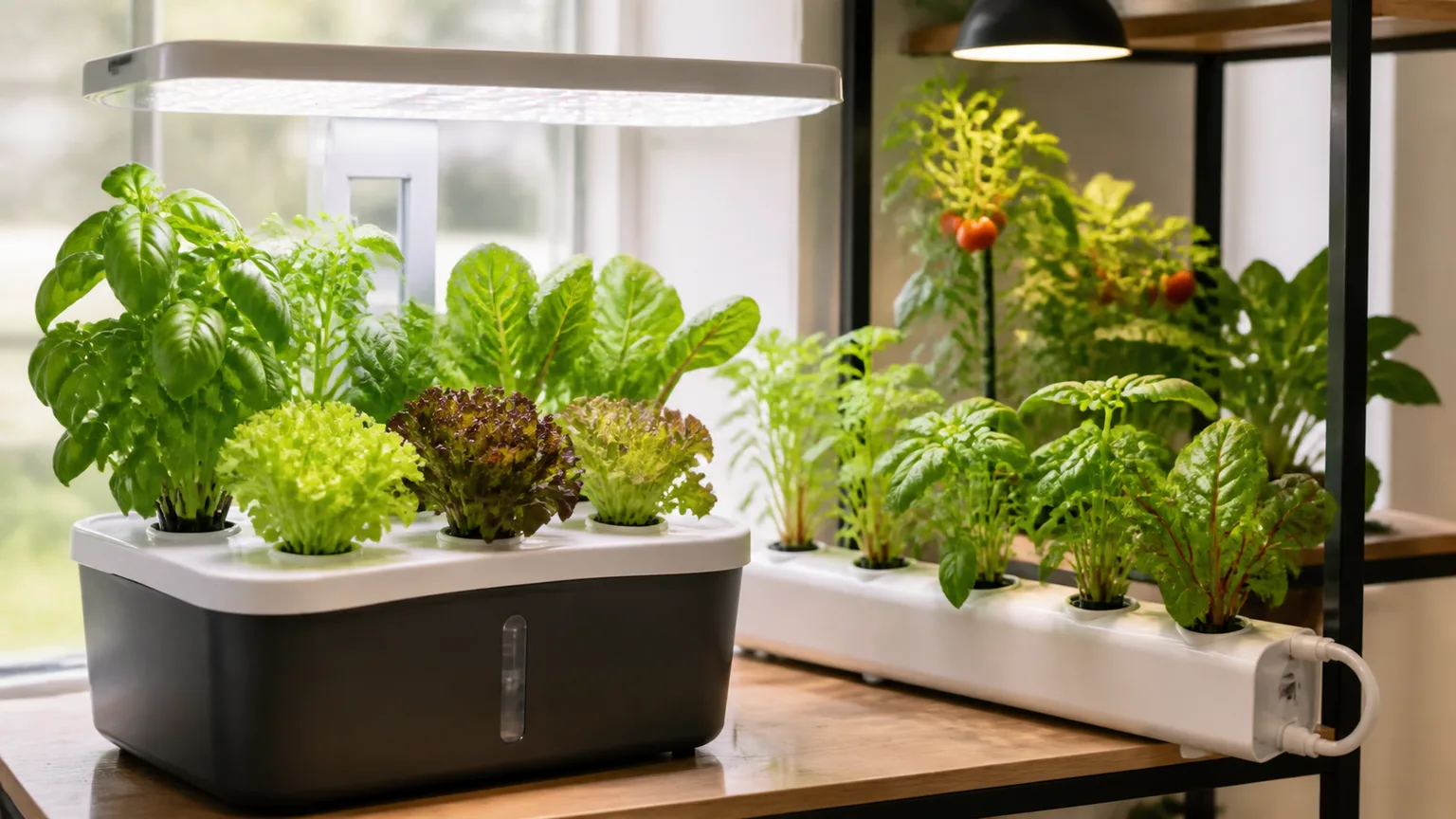
Hydroponics is simply plant growing without soil: the roots receive water and dissolved nutrients directly, sometimes with a soilless medium such as clay pebbles, coir, perlite, or rockwool to hold the plant in place. The RHS hydroponics guide describes the method as feeding plants with mineral nutrient salts dissolved in water, but that definition leaves out the decision that matters most at home: which crop fits your light, reservoir, root space, and willingness to monitor it?
Lettuce, arugula, basil, and other leafy crops are usually the most forgiving first choices. Tomatoes, cucumbers, peppers, eggplant, and strawberries can also produce indoors, but they need more intense light, more root volume, longer crop times, support, and sometimes hand pollination. The 21 plants below are all realistic hydroponic candidates, but they are not equally easy or equally suited to a small countertop kit.
Start with the crop, not the countertop kit
The common mistake is buying a system with empty planting sites and then trying to make every kind of plant share it. A short lettuce crop and a tall tomato do not have the same canopy, root volume, nutrient demand, or harvest schedule; placing them in the same tiny reservoir can make both plants harder to manage.
Hydroponics is attractive in apartments and other small spaces because circulating water, stacked sites, and artificial light can produce food where a bed of soil is not practical. The Library of Congress overview of hydroponics notes the space advantage of stackable beds and efficient lighting, but space efficiency does not remove the need for daily observation. A compact garden is still a controlled growing system, not a set-and-forget appliance.
How to sort crops by the help they need
Think of the list in four working groups. Leafy greens such as lettuce, spinach, kale, Swiss chard, and arugula are compact and harvested for leaves. Herbs such as basil, parsley, cilantro, dill, and mint are productive in small sites, although dill can become tall and cilantro can bolt quickly.
Fruiting crops—strawberries, tomatoes, peppers, eggplant, cucumbers, and beans—turn light into flowers and fruit, so they need more energy and a longer commitment. Roots and flowers occupy the middle ground: radishes need enough depth for the edible root, while marigolds, nasturtiums, petunias, and moss rose need light and pruning but are grown mainly for blooms rather than food.
| Crop group | Best starting level | Systems that usually fit | Main watch-out |
|---|---|---|---|
| Leafy greens | Beginner | Deep water culture, NFT, ebb and flow | Heat, crowding, and low light |
| Herbs | Beginner to intermediate | Water culture, wick, NFT, media-based drip | Bolting, tall growth, or aggressive roots |
| Strawberries | Intermediate | NFT, tower, or media-based drip | Crown depth and pollination |
| Fruiting vegetables | Intermediate to advanced | Media-based drip, ebb and flow, large DWC | Strong light, support, and crop duration |
| Radishes | Beginner to intermediate | Ebb and flow or deep media | Root depth and even moisture |
| Flowers | Beginner to intermediate | Water culture, wick, or ebb and flow | Canopy spread and light |
A simple first-garden mix
For a first harvest, fill most of a small system with lettuce, arugula, or spinach, then add one basil plant if the light can support it. If you want a third crop, choose parsley or Swiss chard rather than a tomato; you will learn reservoir testing, harvest timing, and root inspection without immediately adding a trellis and a pollination job.
Start a second reservoir for fruiting plants. A dwarf cherry tomato or compact pepper can be rewarding, but it should not be crowded beneath a low light intended for salad greens. The Oklahoma State University Extension hydroponics fact sheet emphasizes that system choice and nutrient management must be evaluated for the crop, and that higher cost and technical skill are real disadvantages compared with soil growing.
1. Lettuce is the safest first harvest
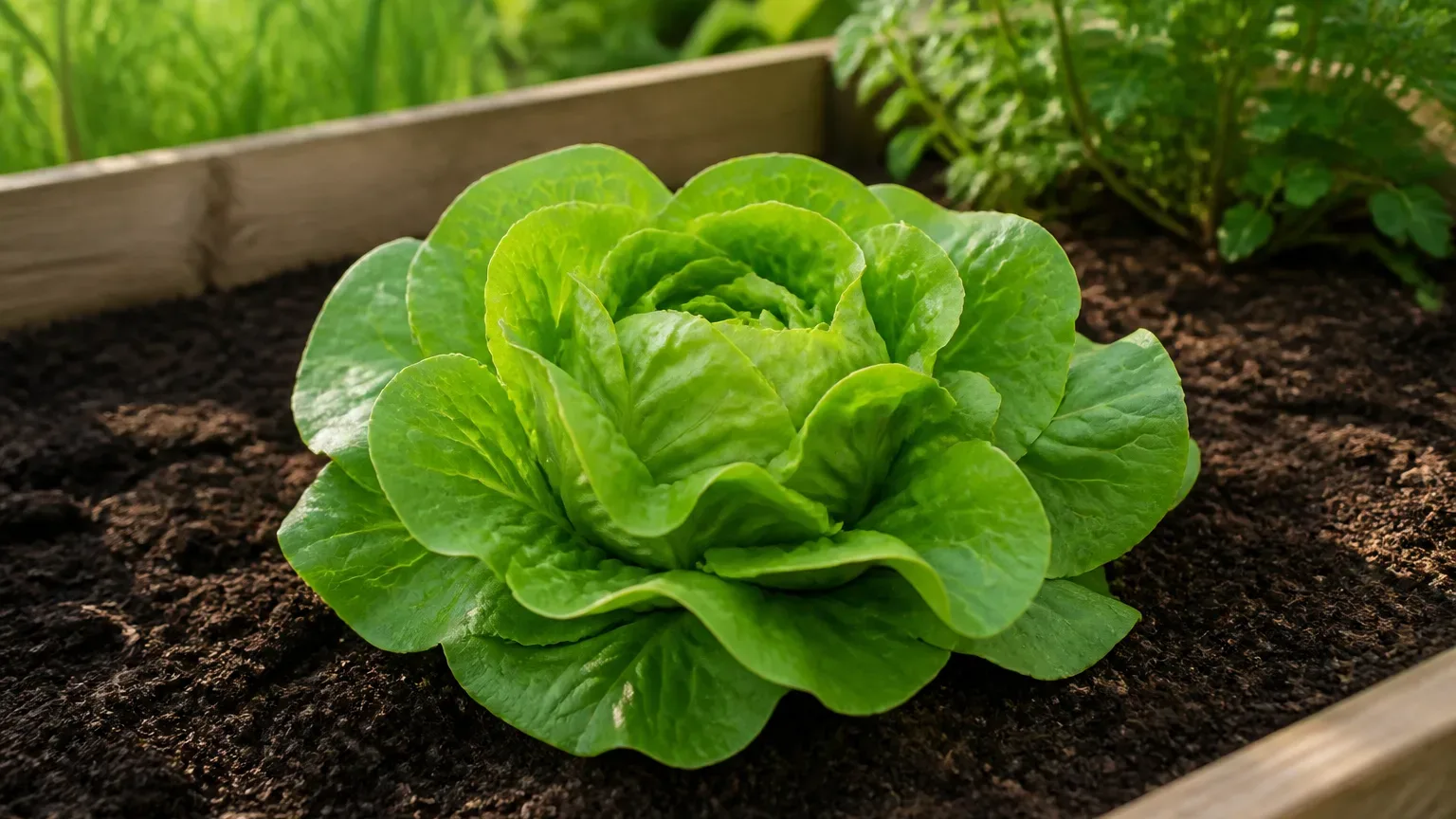
Lettuce is the classic beginner crop because its roots are shallow, the plant stays relatively compact, and you can harvest outer leaves instead of waiting for one perfect head. Loose-leaf, butterhead, Bibb, baby lettuce, and small romaine types all work; full-size heads simply need more spacing and a longer lighted growing period.
Use lettuce in deep water culture (DWC), nutrient film technique (NFT), or an ebb-and-flow tray with a clean, airy medium. Keep the roots oxygenated, the canopy cool, and the light close enough to prevent stretching without heating the leaves. For indoor lettuce, Epic Gardening’s lettuce guide recommends a consistent light routine, shallow starting media, and moving seedlings into net pots once roots emerge.
Harvest the outer leaves a little at a time so the center can keep growing, and sow another small batch before the first batch is finished. If the room or nutrient solution gets too warm, lettuce can bolt; once a flower stalk rises, the leaves often become more bitter and the crop is better replaced than rescued.
2. Spinach and 3. Kale
Spinach is a good hydroponic crop when you can keep the growing area cool. It grows quickly as baby leaves and suits DWC or NFT, but heat and long, intense light can push it toward bolting. Plant small batches rather than filling every site at once, because a staggered harvest gives you a steady supply and prevents one warm week from ending the entire crop.
Kale is more forgiving of cool conditions but less forgiving of cramped roots. Full-size kale can crowd a small indoor system, so choose dwarf types, harvest individual leaves early, or grow it as baby greens and microgreens. Give each plant enough space for airflow; a healthy kale plant that outgrows the light becomes a shade problem for every shorter plant beneath it.
Both crops can share a leafy-green reservoir if their light, temperature, and nutrient schedule are similar. Do not interpret “can grow hydroponically” as “belongs in every countertop unit”; kale is a strong example of a plant that is technically suitable but may be a poor fit for a small container.
4. Swiss chard and 5. Arugula
Swiss chard earns its place through cut-and-come-again harvests. The plant can keep producing new leaves while you remove the older outer ones, and colorful stems make it a useful edible accent in a visible indoor garden. Use a roomier site than you would for baby lettuce, and support the leaf canopy if the plant becomes top-heavy.
Arugula is compact, fast, and well suited to a small NFT or water-culture system. Cut the outer leaves while they are young, then replant at intervals rather than allowing one crowded group to mature all at once. Warm conditions make arugula increasingly peppery and can trigger flowering, so it belongs with other cool, quick greens rather than with a long-lived tomato crop.
This pair works well for a beginner who wants more flavor and texture than a lettuce-only garden provides. Chard supplies a longer-running plant; arugula supplies quick harvests that help you learn how fast your system actually grows.
6. Basil
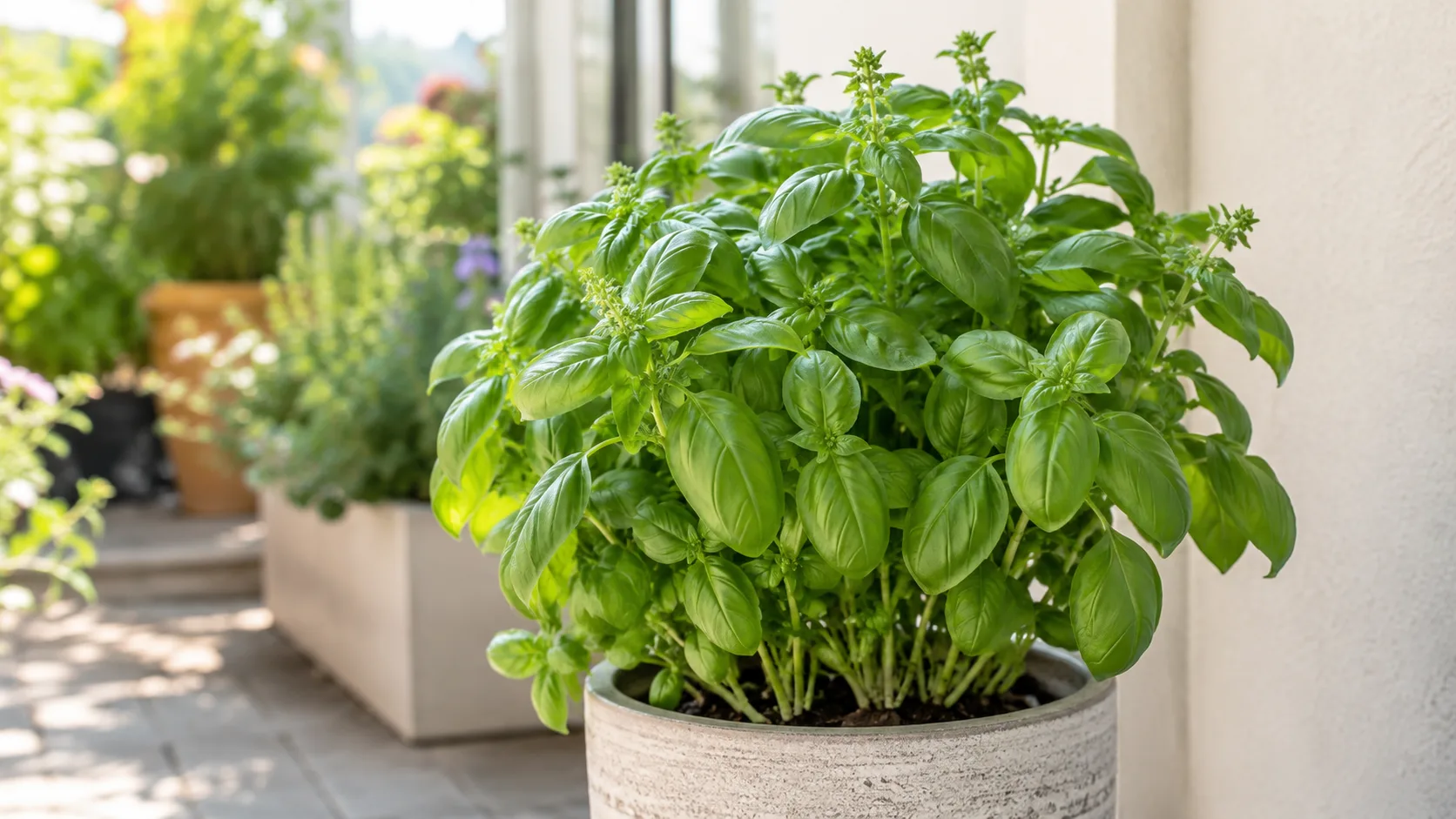
Basil is one of the best hydroponic herbs for a bright indoor garden. Genovese, Thai, lemon, and compact fine-leaf types can grow vigorously when their roots receive steady moisture and their leaves receive strong, consistent light. A Fine Gardening guide to basil describes basil as a bushy, tender annual with a productive leaf harvest and recommends pinching and harvesting to keep the plant full.
Use basil in DWC, NFT, or a media-based drip system, but leave room for the root mass and the widening canopy. Pinch just above a pair of leaves, harvest whole stem tips rather than stripping random leaves, and repeat the cut whenever the plant starts to stretch. If flower spikes appear, remove them when your goal is tender leaves; letting basil flower is fine when you want seeds or blooms, but leaf production usually becomes less of the plant’s focus.
Basil is also a practical propagation crop. A healthy cutting can root in water, giving you a way to replace an aging plant without buying another packet of seed, but move the cutting into a clean hydroponic site only after it has a useful root system. Keep mint separate from basil even though both are herbs; mint’s roots can fill a small site and crowd its neighbors.
7. Parsley, 8. Cilantro, 9. Dill, and 10. Mint
Parsley grows well hydroponically once established, but it is slow to start from seed. Use a pre-started seedling or begin plugs early, then harvest the outside stems at the base so the crown can continue producing. Flat-leaf parsley is especially useful for the kitchen, while curly parsley stays compact and ornamental.
Cilantro is quick to harvest but quick to finish. It tends to bolt rather than remain a permanent indoor herb, so sow or transplant a replacement every three to four weeks if you want an uninterrupted supply. Once it flowers, you can let it produce coriander seed, but it is no longer the same leafy harvest you planned for tacos, soups, or salads.
Dill is easy to grow but can become tall and floppy under a weak indoor light. Harvest the feathery tips regularly, provide enough vertical clearance, and keep it away from a short lettuce canopy. Mint roots readily from cuttings and grows quickly in water, making it an excellent starter plant, but dedicate a site to it and pinch often to keep the roots and stems from taking over.
The practical lesson from these four herbs is that “easy” can mean different things. Parsley is slow at the beginning, cilantro is short-lived, dill needs height, and mint needs containment; all four are workable when the system is chosen around the plant rather than the label on the kit. For harvest and propagation details, the GrowVeg guide to basil, cilantro, and parsley is a useful companion source.
11. Strawberries need a fruiting setup
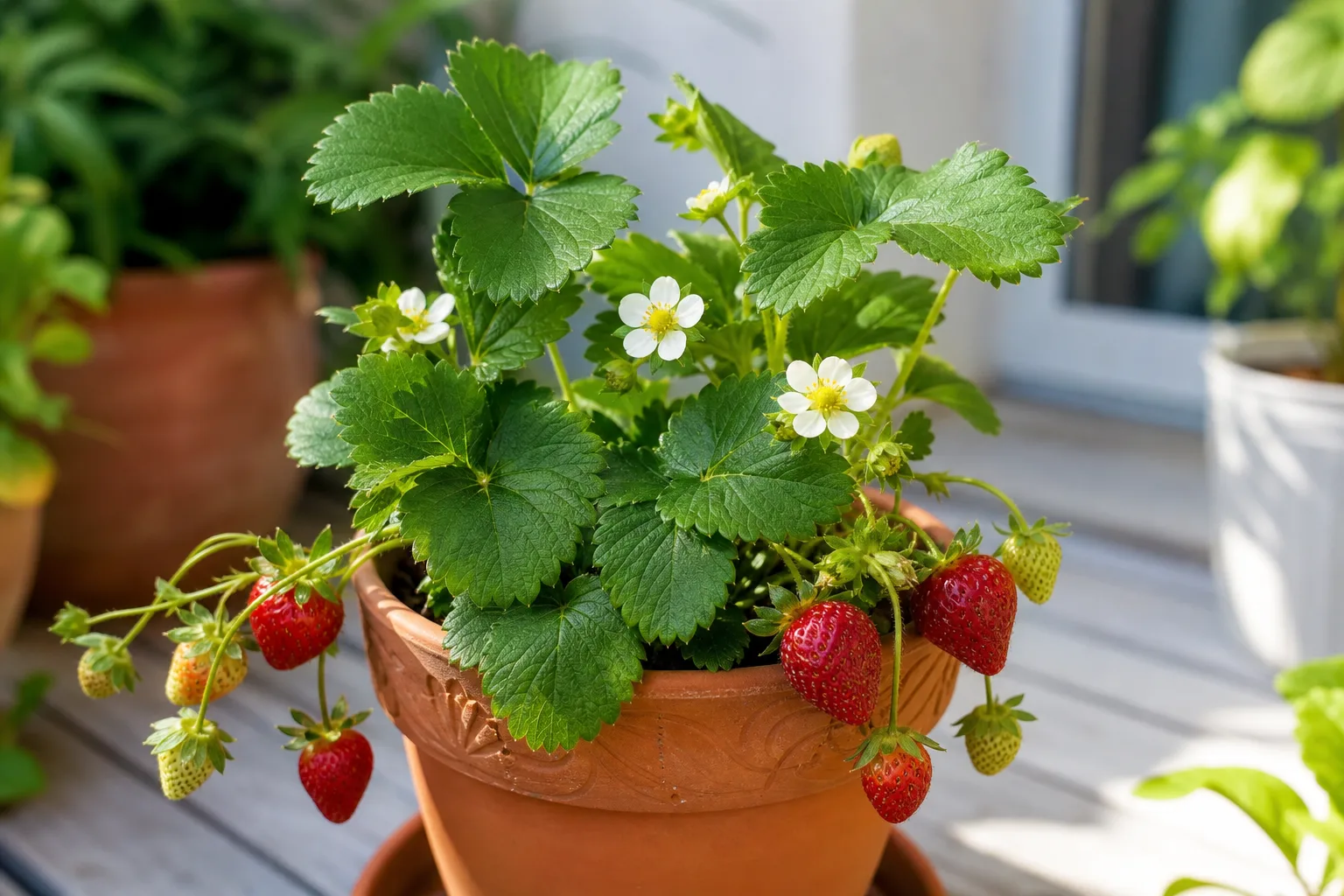
Strawberries can be grown hydroponically indoors, but they are not simply “lettuce with berries.” Use compact, day-neutral plants in an NFT channel, tower, or media-based drip system, and keep the crown—the junction between roots and leaves—above the wet zone. A crown buried in a constantly wet plug is more likely to decline than a crown held at the correct height with airy roots.
Give strawberries strong light, room for flowers and runners, and a way to reach each plant for inspection. Indoor flowers do not have visiting bees, so gently brush or tap open flowers to move pollen between their parts; fruit set is a separate job from keeping the leaves alive. Remove excess runners if the plant is fruiting, and do not expect a small decorative unit to support a large strawberry harvest without more light and root space.
Strawberries are a good second project after leafy greens because they teach you to manage a longer crop, pollination, and harvest hygiene. They are also a good reason to use a system that gives roots both moisture and air rather than leaving the entire crown and root zone submerged.
12. Tomatoes
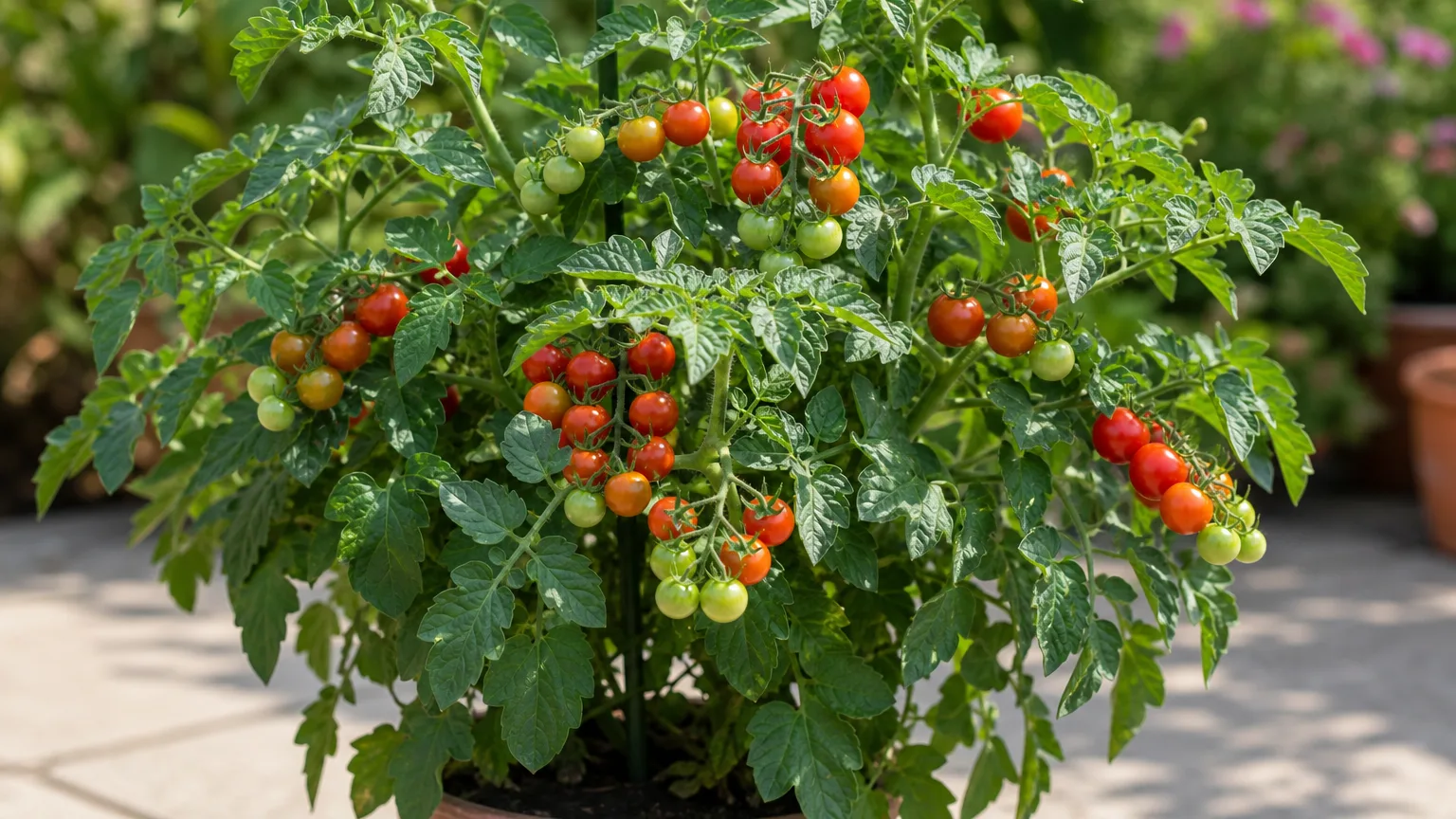
Tomatoes are productive hydroponically when you choose the variety and system carefully. For an indoor garden, start with a dwarf or determinate cherry tomato rather than a vigorous indeterminate variety; even a compact plant can become tall enough to outgrow a countertop light.
Use a large media-filled pot with drip irrigation, ebb and flow, or a large DWC reservoir with dependable aeration. Provide a trellis or cage before the plant needs it, prune only enough to keep the canopy open, and leave space around the plant for airflow. The RHS guide to growing crops with hydroponics includes tomatoes and other fruiting crops among hydroponic examples and explains that indoor or covered production often relies on controlled light, nutrients, and water.
Tomato flowers are self-fertile, but there is no wind or insect traffic in a quiet room. When flowers open, gently vibrate the stem or use a small brush, then watch for fruit set. Tomatoes also draw more water and nutrients as the canopy and fruit load increase, so a reservoir sized for six lettuce plants may be a poor match for one fruiting tomato.
13. Peppers and 14. Eggplant
Peppers are realistic indoor hydroponic crops when you select compact bell, snack, or chili varieties. They need strong light, a stable root zone, and support once fruit begins to pull the stems outward. Flowers are generally self-pollinating, but tapping the flowering branches or using a small brush can improve the odds of fruit set indoors.
Eggplant needs even more patience and room than a pepper. Choose a small bush type, give it a deep media-based site, and plan for a long crop rather than a quick countertop harvest. Its broad leaves can shade neighboring plants, and fruiting branches may need tying before the first heavy fruit develops.
Keep peppers and eggplant with tomatoes if they share a reservoir, light height, and support structure—not with low-growing greens under a fixed lamp. This group is worth growing when you enjoy the process and have a dedicated shelf; it is a poor first choice if your goal is a salad in the next few weeks.
15. Cucumbers and 16. Beans
Cucumbers can grow rapidly in a hydroponic system, especially compact bush or parthenocarpic varieties. Give them a trellis, strong light, and enough vertical clearance before the vines begin reaching across the room. If the variety requires pollination, transfer pollen from male flowers to female flowers by hand; parthenocarpic varieties are easier indoors because they can set fruit without that step.
Beans are more manageable when you choose bush beans rather than climbing types. They grow quickly and can produce a useful crop in a media-based drip or ebb-and-flow system, but even bush beans benefit from support once pods load the stems. Top or pinch a plant only when you understand its growth habit; repeated cutting is not a substitute for enough light and root volume.
Both crops can overwhelm a small unit. They are good choices for a vertical rack, grow tent, or larger shelf with a trellis, but they become frustrating when planted in a low countertop garden that was designed for herbs.
17. Radishes
Radishes are one of the few root crops that can make sense indoors because the edible root stays relatively small. Use a deep, airy medium in an ebb-and-flow or media-based system, and give the swollen root enough space to develop without pressing against a narrow channel or shallow plug.
Even moisture matters more than chasing a complicated nutrient recipe. Harvest when the root reaches the size you want rather than leaving it indefinitely; older radishes can become pithy or overly sharp. The leaves are edible, too, and give you an earlier harvest while the root is still sizing up.
Radishes demonstrate why “root vegetables do not work hydroponically” is too broad. Large carrots and potatoes need more depth and structural support, but a compact radish can fit when the system provides the right root space.
18. Marigolds
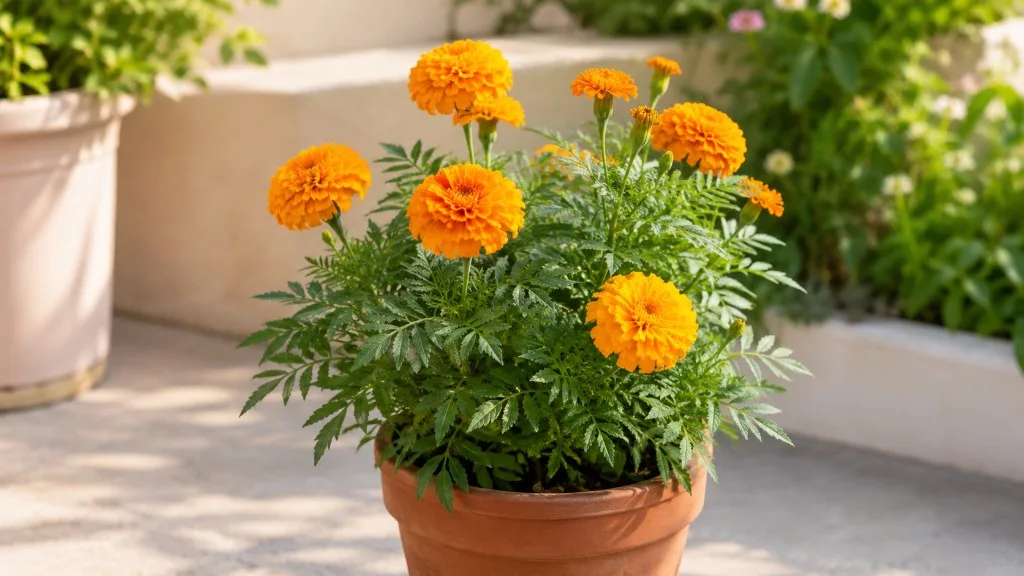
Choose compact French marigolds for an indoor hydroponic flower crop. They stay bushier than tall types and can grow in water culture or ebb and flow as long as the roots are oxygenated and the plant receives enough light for sturdy stems and repeated blooms.
Marigolds are useful in a mixed ornamental and edible garden because they bring color without the long vines of a cucumber or nasturtium. Give them their own site or leave a generous gap; a mature plant can still shade lettuce even when the variety is advertised as dwarf. Remove spent flowers if you want a tidier display and continued bloom.
Do not add marigolds to a food reservoir simply because the plants are small. Use clean seeds or starts, keep ornamental plants separate from edible harvest handling, and sanitize the site when switching crops.
19. Nasturtiums, 20. Petunias, and 21. Moss rose
Nasturtiums are vigorous, edible flowers that can grow hydroponically when you choose a compact or bush form. Their round leaves and trailing stems need pruning or a place to spill, and the flowers are useful as a peppery garnish only when grown from clean, appropriately handled plants. Do not let a trailing variety occupy the same light footprint as short greens.
Petunias are also possible, especially compact forms, but their sprawling habit makes them better for a separate ornamental site. Pinch young plants to encourage branching, remove spent blooms, and plan for a larger canopy than the seedling’s first few leaves suggest. Petunias are a display crop, so they are not a good use of a small food-focused system unless flowers are part of the reason you garden.
Moss rose, or portulaca, is low-growing and bright-flowering, but it is the least natural fit of these three for a constantly wet water-culture setup. Use a very airy media-based system with strong light and careful water management rather than a stagnant reservoir. If you are new to hydroponics, start with lettuce or basil; grow moss rose when you specifically want to experiment with a flowering plant that prefers a drier rhythm.
Match each plant to the right hydroponic system
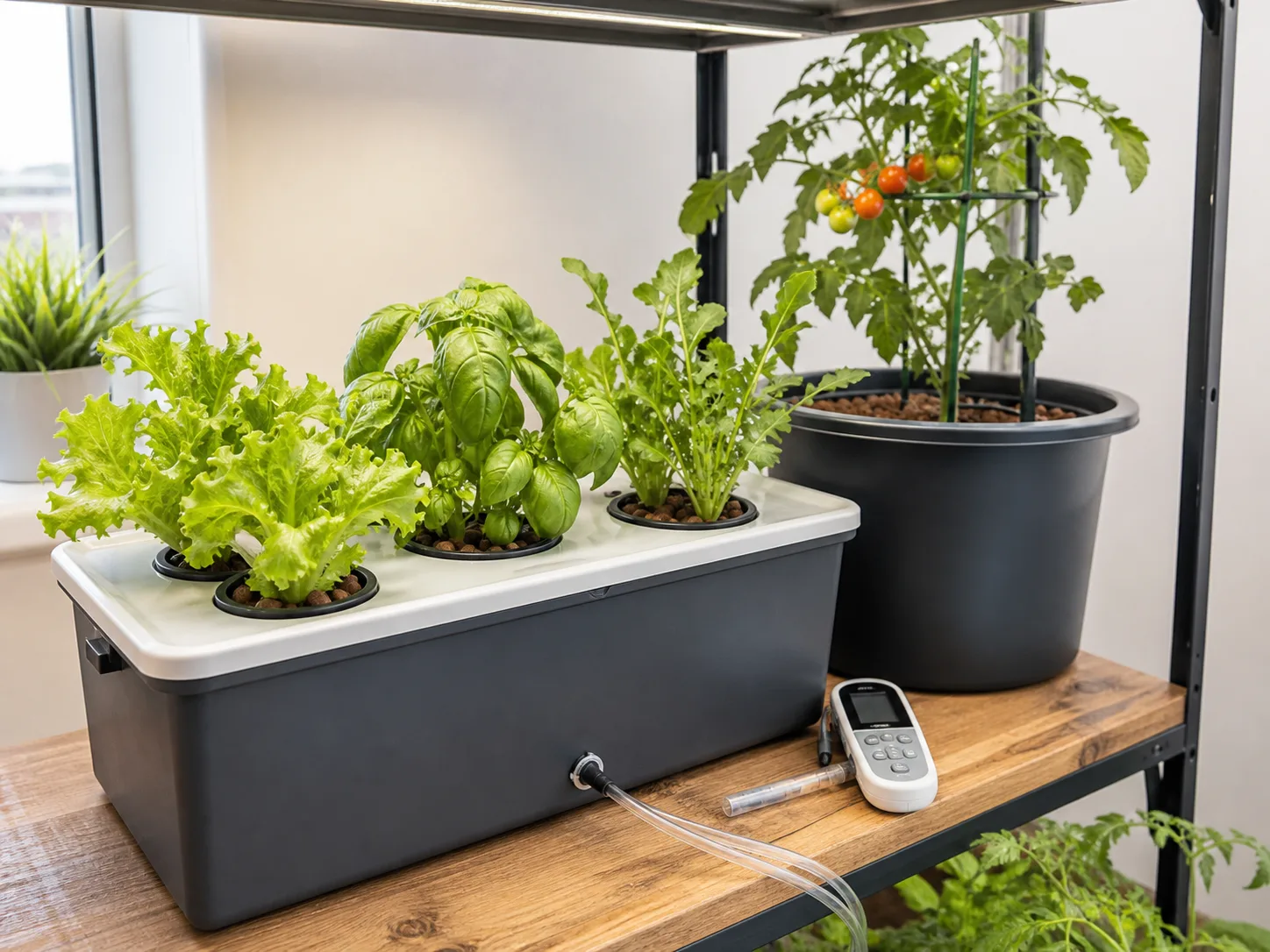
The system determines how often roots receive water and air, how much support the plant gets, and how badly a pump failure can hurt. Oklahoma State University Extension divides hydroponic systems into liquid and aggregate systems and describes DWC, ebb and flow, drip, NFT, and aeroponics as different ways to deliver nutrient solution. Its fact sheet also warns that some diseases can spread quickly through a shared system, which is why clean reservoirs and sensible crop grouping matter.
| System | Best use at home | Good matches from this list | What can go wrong |
|---|---|---|---|
| Deep water culture | A simple reservoir with an air stone | Lettuce, spinach, arugula, basil, mint | Low oxygen if the air pump stops; large plants outgrow the lid |
| NFT | A thin recirculating film over roots | Lettuce, arugula, herbs, strawberries | Roots dry quickly if flow stops or channels clog |
| Wick | Small passive setups with low-demand plants | Herbs, small flowers, seedlings | Poor support and weak delivery for heavy fruiting crops |
| Ebb and flow | Flooding and draining a media-filled tray | Chard, radishes, flowers, larger herbs | Timer, flood height, and drain problems affect the whole tray |
| Media-based drip | Targeted feed to a supported container | Tomatoes, peppers, eggplant, cucumbers, beans, strawberries | Dry pockets, clogged emitters, and salt buildup |
| Aeroponics | Roots suspended and misted on a tight cycle | Advanced experiments with many crops | A pump or nozzle failure can damage exposed roots quickly |
Manage light, roots, and nutrient solution as one system
Indoor hydroponics succeeds when the three controls agree. A strong light can drive fast growth, but it also increases water use and nutrient demand; a large fruiting canopy can need more root volume than the reservoir provides; and a perfect pH reading cannot rescue roots sitting in stagnant, warm water.
Use a timer and adjust the light height as plants grow. Seedlings and leafy greens commonly need a long, consistent light period, while fruiting crops need not only duration but enough intensity to flower and fill fruit. If stems stretch toward the lamp, leaves are small, or the canopy leans, treat that as a light and spacing problem before adding more fertilizer.
Root-zone oxygen is non-negotiable. The RHS explains that roots need air as well as moisture and nutrients, and that most plants decline in stagnant water; DWC therefore needs a working air pump and air stone, while NFT, drip, and ebb-and-flow systems need reliable circulation and drainage. Keep the reservoir covered from light to reduce algae, inspect roots when you top up, and do not ignore a pump that is running noisily or intermittently.
Nutrient solution is not just water with a splash of houseplant fertilizer. Use a complete hydroponic nutrient made for the crop, follow its mixing instructions, and measure after the solution is fully mixed. The RHS guidance notes that pH around 5.8–6.2 is commonly aimed for and that solution can become too concentrated as plants remove water; Oklahoma State University gives a broader general hydroponic pH range of 5.0–6.0 and an EC range of 1.5–3 dS/m. Those are not universal recipes for all 21 plants, so use them as context and follow the crop-specific nutrient label.
Check EC and pH consistently rather than reacting to one odd reading. If water evaporates or is taken up faster than nutrients, EC can rise; top up with appropriate water, retest, and avoid adding concentrate by guesswork. As a starting routine, refresh a small home reservoir about every two weeks, while still checking the product instructions and plant response between changes; both RHS and indoor lettuce guidance emphasize that periodic replacement is safer than endlessly topping up an aging solution.
Prevent the five failures that end indoor crops
1. The crop outgrows the light. A dwarf tomato, cucumber vine, or eggplant can become the tallest plant on the shelf and shade every green beneath it. Reserve fruiting crops for a tall rack or dedicated light, and choose baby-leaf kale or compact herbs when the ceiling is low.
2. Roots lose oxygen. A silent air pump, clogged NFT channel, blocked drip emitter, or poorly draining tray can damage roots before the leaves look dramatically different. Test the pump, check the water level, and make sure the roots have access to air rather than assuming “more water” is safer.
3. The reservoir drifts. A pH or EC meter is useful only when it is clean, calibrated, and used on a consistent schedule. Do not fix a changing number by pouring in large amounts of pH adjuster or nutrient concentrate; dilute or reset the solution when readings become unpredictable, and follow the product label.
4. Plants are crowded. Crowding traps humidity, reduces airflow, makes harvesting awkward, and lets one large root system steal space from a smaller plant. Leave unused sites empty when necessary, prune for access, and group crops with similar size and temperature rather than trying to fill every hole.
5. Fruiting plants never complete the job. Flowers need light, support, and pollination; flowers alone do not guarantee fruit. Choose self-fertile or parthenocarpic varieties where possible, hand-pollinate when needed, and start with one fruiting plant so you can learn its flowering rhythm before adding more.
Hydroponics also reduces soil weeds and some soil-related problems, but it does not eliminate plant disease or sanitation. The Oklahoma State University Extension article on home hydroponics describes the method as less forgiving when nutrients, water, or light are wrong. Wipe tools between plants, remove declining material, clean the reservoir between crops, and isolate a new plant rather than introducing an unknown root problem to a shared system.
Conclusion: choose the harvest you can repeat
The best plants for a hydroponic indoor garden are not the ones with the most impressive harvest photos; they are the ones that fit your actual light, root space, reservoir, and attention. Start with lettuce, arugula, basil, spinach, Swiss chard, parsley, or mint if you want quick feedback and repeated leaf harvests. Add radishes or a compact flower when you understand the system, then graduate to strawberries, tomatoes, peppers, eggplant, cucumbers, or beans with a dedicated light and support plan.
Plant fewer varieties than the kit can hold, group crops by growth habit, and write down pH, EC, reservoir changes, and harvest dates. That small record turns a countertop experiment into a garden you can improve—and makes your second crop much easier than your first.