How to Grow and Care for Glacier Pothos
Learn to identify Glacier pothos, protect its silver-green variegation, water without root rot, propagate node cuttings, and keep it safe from pets.
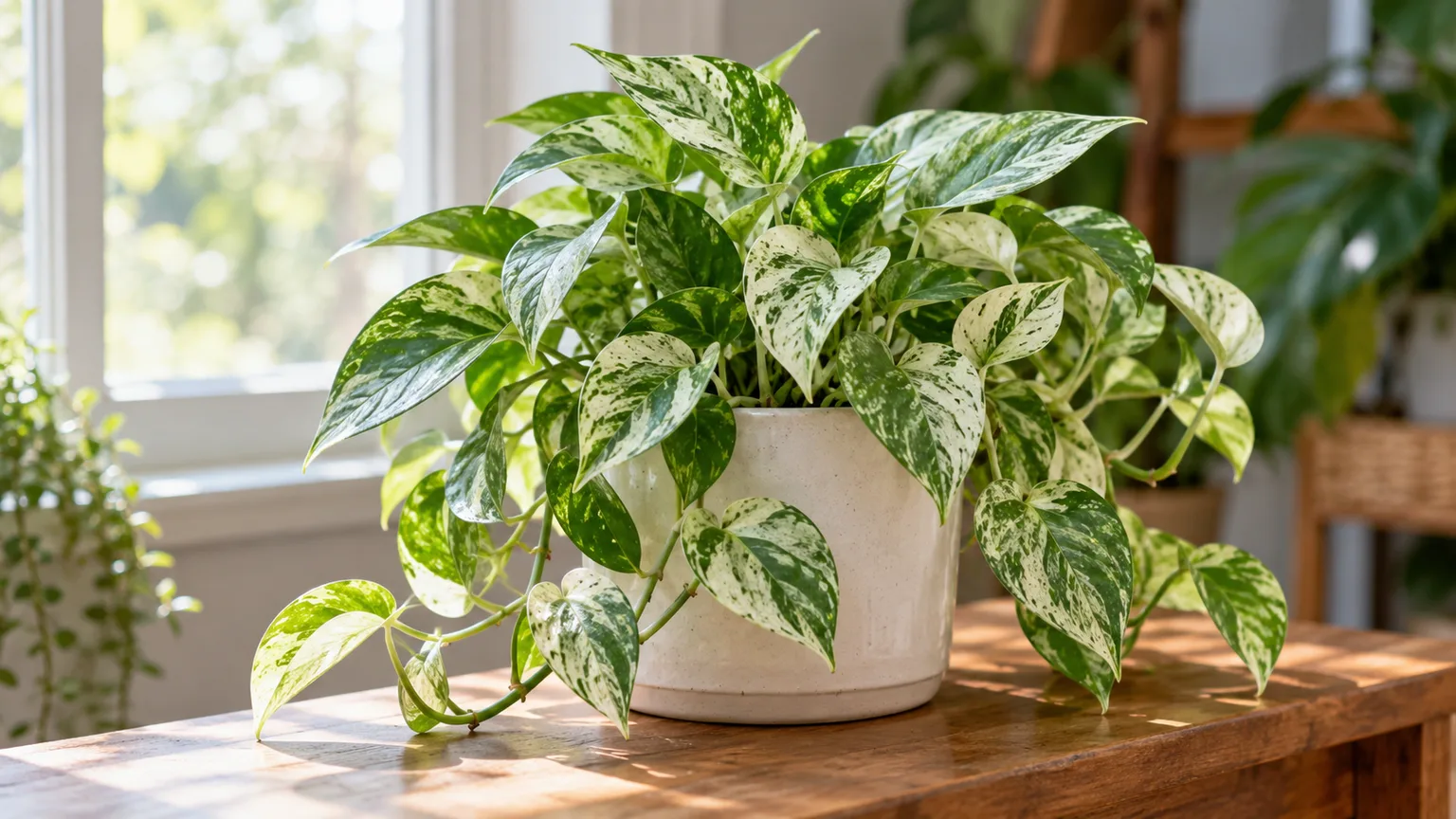
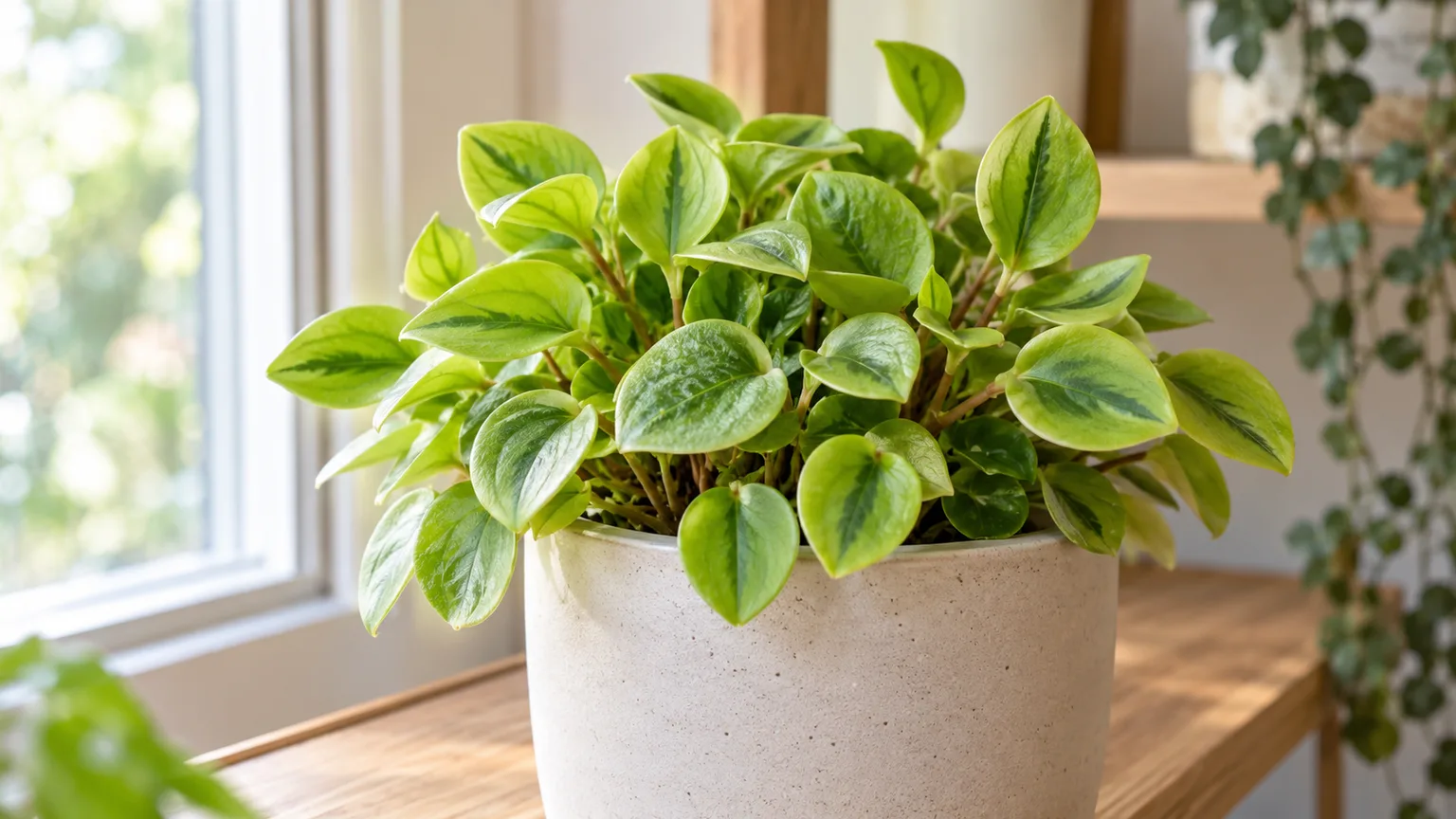
Glacier pothos is a compact, trailing vine prized for small leaves marked with silver-gray, green, and cream. It is often sold as Epipremnum aureum ‘Glacier’, a variegated pothos cultivar; it shares the forgiving nature of the species, but dim placement can dull the pattern that makes this selection distinctive. Give it bright, filtered light, let the potting mix partly dry between thorough waterings, and use a container that drains freely.
The practical rule is to judge the newest growth and the soil in the pot, not to follow a fixed weekly schedule. New leaves that stay patterned and stems that do not stretch suggest the light is working; a mix that dries slowly calls for less frequent watering, not more fertilizer. The care notes below are designed for indoor plants, where window exposure, pot size, and seasonal light change how quickly the roots use water.
Glacier Pothos at a Glance
| Need | Practical target |
|---|---|
| Botanical name | Commonly sold as Epipremnum aureum ‘Glacier’ |
| Habit | Compact trailing or climbing aroid vine |
| Light | Bright indirect or filtered light; avoid prolonged hot sun |
| Water | Wait until the top part of the mix dries, then water through and drain |
| Soil | Airy indoor potting mix with dependable drainage |
| Temperature | Warm, stable rooms; protect from cold drafts |
| Humidity | Average household air is usually adequate |
| Growth | Often slower than vigorous green pothos; expect cultivar-scale growth |
| Pet safety | Toxic to cats and dogs if chewed or swallowed |
If you remember only one care point, prioritize light. Glacier can persist in a dim room, but survival in low light is different from maintaining compact growth and crisp variegation; a brighter position also helps the pot dry at a healthier pace. The New York Botanical Garden notes that pothos prefer bright filtered light and can lose variegation in poorer light, while NC State Extension identifies low light and overwatering as common causes of decline in Epipremnum aureum (New York Botanical Garden pothos guide; NC State Extension plant profile).
How to Identify Glacier Pothos
Look for a relatively compact vine with smooth, small oval-to-heart-shaped leaves and irregular silver-gray, white, and green areas. The silvery mottling can look softer or more speckled than the high-contrast cream marbling on some other pothos, but leaf color shifts with light, age, and individual growth, so one leaf is rarely enough to identify a plant with certainty.
A nursery name is useful, but it is not a botanical guarantee: sellers sometimes group similar selections under broad labels such as “silver pothos” or “marble pothos.” If you are buying a plant, compare several new leaves and ask the seller how the clone is identified; for care, the main distinction is that Glacier is a true pothos in the Epipremnum aureum group, not satin pothos, which is Scindapsus pictus. Pothos leaves are typically smoother and glossier, while satin pothos has a matte, often velvety surface. NC State Extension describes E. aureum as a glossy, heart-leaved vine and lists several named cultivars, while the New York Botanical Garden separates satin pothos from true pothos by genus (NC State Extension; New York Botanical Garden).
Glacier, N’Joy, and Pearls and Jade are not interchangeable
N’Joy and Pearls and Jade are also Epipremnum aureum selections, so their basic indoor care overlaps with Glacier’s. In common retail descriptions, N’Joy is recognized by more clearly divided green and white patches; Pearls and Jade tends to combine gray-green leaves with cream or white flecks and streaks; Glacier is usually sold for a more silvery, mottled look on compact leaves. Cultivar naming is not consistent across every shop, and lighting can make a white area look cream, gray, or silver, so treat those patterns as clues rather than a definitive test.
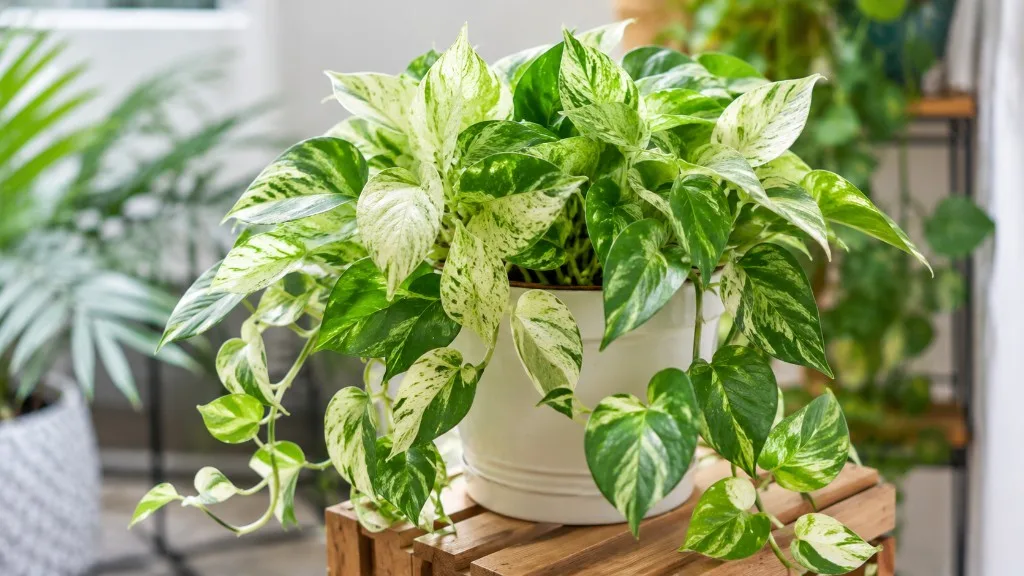
A photo of Marble Queen is a useful comparison point because its broader leaves often show extensive cream-and-green marbling; it is not a substitute for a verified Glacier specimen. Do not use a cultivar label to assume that every leaf should have the same amount of white, or to copy a watering schedule from a larger, faster-growing pothos. Epic Gardening’s cultivar profile for Pearls and Jade likewise notes that variegation and leaf size distinguish closely related pothos selections (Epic Gardening: Pearls and Jade pothos).
Light: Keep the Plant Bright, Not Sunburned
Place Glacier where it receives strong ambient daylight for much of the day without sitting in a hot, unfiltered afternoon beam. A bright east-facing window is a convenient starting point; a south- or west-facing window can also work if a sheer curtain, a little distance, or a neighboring building softens direct rays. Window direction alone cannot predict brightness, so check the actual leaves and the light pattern in your room.
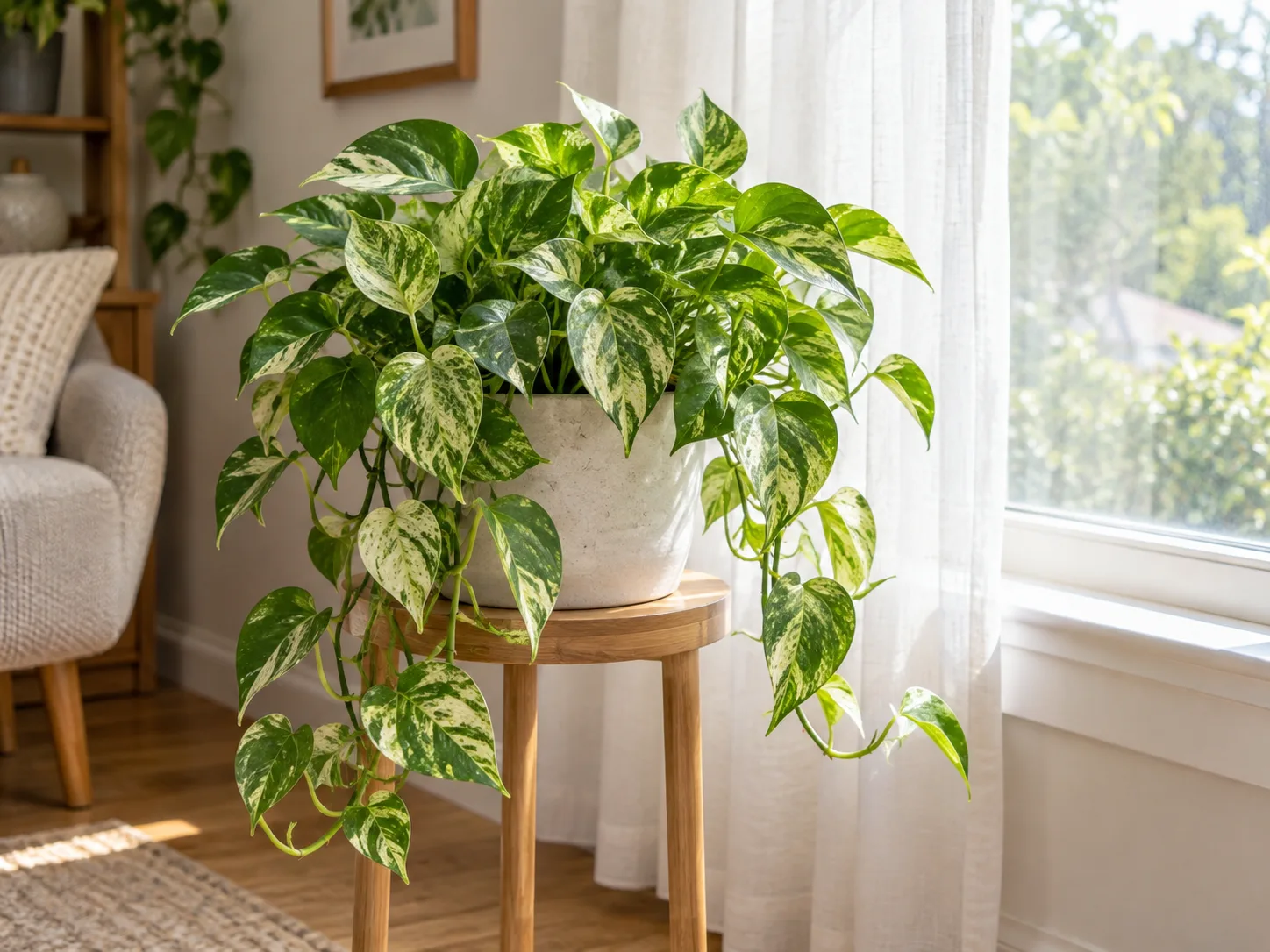
High-variegation foliage has less green tissue available to photosynthesize, so a Glacier in deep shade may stay alive while producing greener, smaller leaves and longer gaps between leaves. NC State Extension notes that low light can reduce variegation in pothos, and the New York Botanical Garden recommends filtered light for good foliage color. Bright indirect light does not mean darkness; it means the leaves can see a bright sky or illuminated room without prolonged scorching sun (NC State Extension; New York Botanical Garden).
Judge placement by the next few leaves, because existing foliage will not regain pattern or reverse sun damage. If new leaves emerge mostly green and stems stretch, move the plant closer to a bright window over several days; if pale sections develop crisp, bleached patches on the window-facing side, filter the sun or pull it back. Make one adjustment at a time and give new growth time to respond before changing the water or fertilizer routine as well. For a more detailed window-by-window placement approach, see the Glacier pothos light guide.
Water When the Mix Has Partly Dried
Water only after the top part of the mix has dried, then soak the root ball evenly until water flows from the drainage holes. Empty the saucer or cachepot after it drains; roots need both moisture and air, and leaving a pot standing in runoff keeps the lower mix saturated long after the surface feels dry. A schedule such as “every seven days” is only a reminder to check, not an instruction to water.
For a small pot, press a finger about an inch into the mix; for a larger container, check a little deeper or compare the pot’s weight after watering with its weight as it dries. If the surface is dry but the pot remains heavy or cool, wait and check again. In a warm, bright room, the plant may use water quickly; in winter, low light, cool rooms, dense mix, or a larger pot can keep the root zone wet much longer.
If you are unsure why leaves are yellowing, inspect the mix before watering again. Dry soil that has pulled away from the pot, a light container, and limp foliage suggest thirst; persistently wet soil, a heavy pot, sour smell, or soft stems point toward overwatering or poor drainage. NC State Extension advises allowing a well-drained medium to dry between waterings, and Gardening Know How also emphasizes matching watering to soil condition instead of leaving pothos in constantly wet mix (NC State Extension; Gardening Know How). The Glacier pothos watering guide covers dry-down checks in more detail.
Soil and Pot Choice: Prioritize Air Around the Roots
Use a regular indoor potting mix that holds some moisture but does not stay dense and soggy. If water runs through very slowly or the mix packs hard as it dries, blend in a coarse amendment such as perlite or fine orchid bark; if your home is very warm and the plant dries too quickly, keep more of the base potting mix rather than making the blend overly coarse. The right texture depends on how often the pot dries in your room, not on hitting a universal recipe.
The pot must have drainage holes. A decorative cachepot is fine if the nursery pot can be lifted out for watering and runoff can be poured away; a layer of gravel at the bottom does not replace an open drain hole. Choose a container just large enough for the root ball, since a much wider pot contains extra wet soil that roots have not reached yet.
Pothos tolerate ordinary potting mixes when they drain well, and waterlogged, poorly aerated soil is a more immediate problem than failing to meet a narrow pH target. New York Botanical Garden recommends a container that drains from the bottom, while Gardening Know How warns that soil that remains saturated can damage pothos roots (New York Botanical Garden; Gardening Know How). For a focused mix discussion, use the Glacier pothos soil guide.
Temperature and Humidity for a Stable Indoor Plant
A warm room with steady temperatures suits Glacier better than a drafty window ledge or a spot directly over a heater. The New York Botanical Garden gives a comfortable pothos range of roughly 65–80°F (18–27°C) and advises keeping the plant away from cold conditions; protect it from chilly glass in winter and from sudden blasts of air conditioning in summer (New York Botanical Garden). If you move it outdoors for warm weather, bring it back in before nights turn cool and acclimate it to brighter conditions gradually.
Average household humidity is usually enough when leaves stay firm and the plant is actively growing. A humidifier can help a room that becomes very dry from heating, but misting briefly wets the leaf surface without reliably changing room humidity for long; do not mist on a routine just because the plant is tropical. If tips brown, first check for dry soil, salt buildup, or direct sun before assuming that humidity is the sole cause.
Fertilize Lightly During Active Growth
A Glacier growing in fresh, decent potting mix does not need an immediate feeding. Once it is settled and making new leaves, use a balanced liquid houseplant fertilizer at a conservative dilution during spring and summer; follow the product label, and skip feeding when growth has slowed in a dim or cool winter room. More fertilizer cannot compensate for weak light, a soggy root ball, or a pot that is too large.
Published pothos schedules vary: NC State Extension recommends feeding every other month outside winter dormancy, while the New York Botanical Garden describes a more frequent half-strength regimen during active growth. For a slower, highly variegated plant in a home pot, start at the lower end and watch the plant rather than stacking extra feedings. A white crust on the mix, brown tips after fertilizing, or stalled growth despite wet soil are reasons to pause and flush the pot with clean water at the next appropriate watering, letting it drain completely (NC State Extension; New York Botanical Garden). See the Glacier pothos fertilizer guide if you want to fine-tune an active-growth routine.
Prune, Train, and Build a Fuller Pot
Pruning is optional; use it to remove a dead or damaged section, shorten a vine, or collect cuttings rather than to force fast growth. For a shaping cut, use clean snips just above a node on the parent stem, where a leaf joins the vine; a new shoot may emerge from a nearby node, but one cut does not guarantee two new branches. Because Glacier can grow more slowly than common green pothos, avoid removing a large share of healthy foliage at once.
To make a pot look fuller quickly, root several healthy cuttings and plant them back into the same container once they have a usable root system. A single long vine remains a single vine for much of its length, so returning rooted tips to the pot fills bare soil more predictably than repeatedly cutting the end and waiting for branching. You can let the stems trail from a shelf or guide them up a small support; pothos also climb naturally with aerial roots, and NC State Extension notes that supported vines can develop larger mature leaves under suitable conditions (NC State Extension). The Glacier pothos pruning guide has more on choosing a cut and managing reverted stems.
Propagate Glacier Pothos from Node-Bearing Cuttings
Use a healthy stem cutting with at least one node—the joint where a leaf and sometimes a small aerial root attach to the stem. A detached leaf without a node will not produce a new vine; for easier handling, take a section with two or three nodes and at least one healthy leaf, cutting just below the lowest node you want on the cutting. Remove leaves that would sit in water or soil, but keep the foliage above the rooting medium.
Put the cutting in a jar with one or two nodes submerged, or insert those nodes into lightly moist, airy potting mix. Keep it warm in bright indirect light and check it regularly; in water, replace cloudy water and refill as needed, while in mix keep it lightly moist rather than waterlogged. Roots may appear in a few weeks, but room temperature, light, and the condition of the parent vine affect timing, so do not pull a cutting out to inspect it every day.
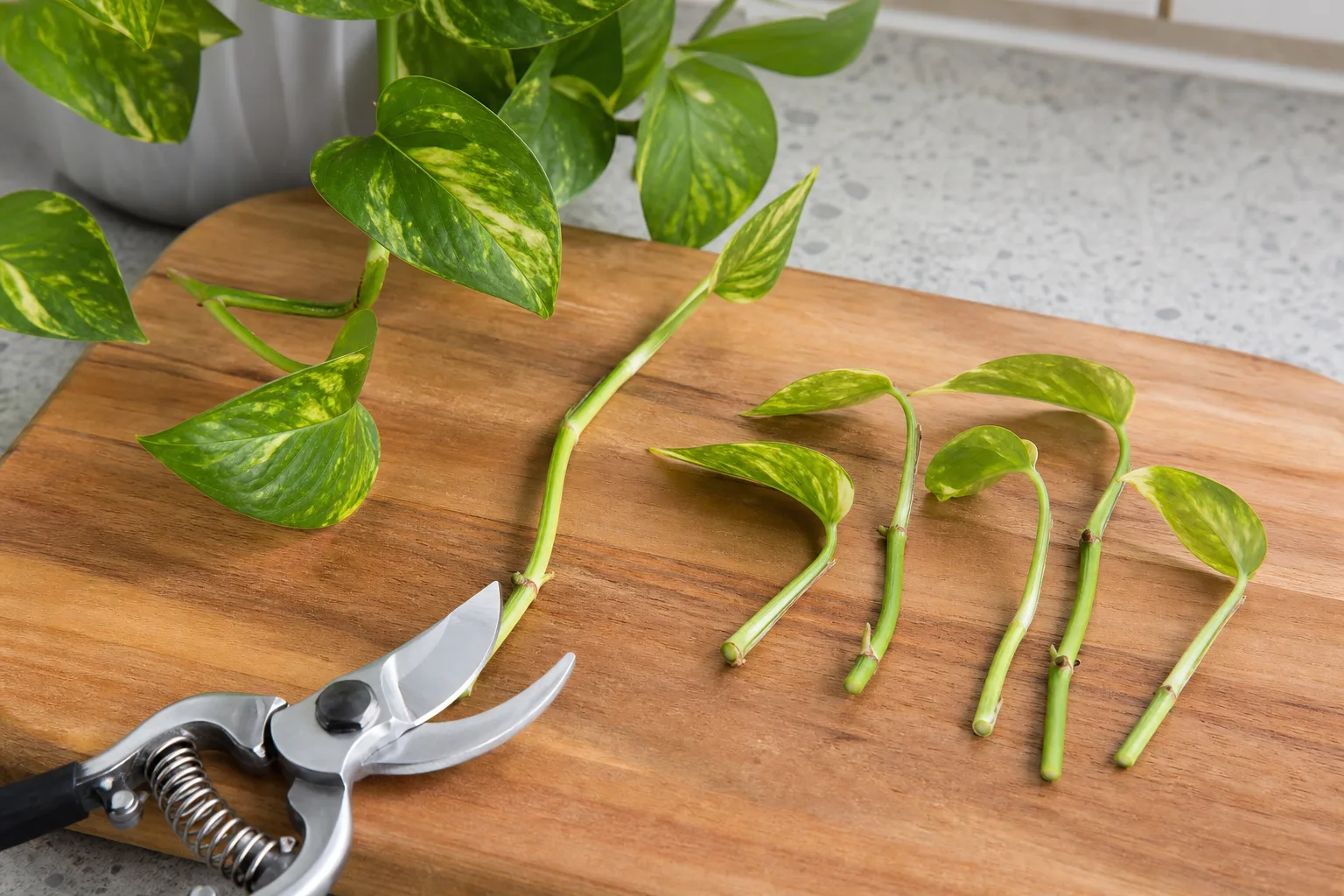
Move a water-rooted cutting into potting mix once several roots have formed and are long enough to anchor it; keep the mix evenly moist for the first short adjustment period, then return to the normal dry-down routine. If your goal is a fuller parent pot, root more than one cutting and plant them together after they are established. Gardening Know How recommends keeping nodes in the rooting medium and leaves out of the water, and Epic Gardening describes the same node-based approach for water propagation (Gardening Know How propagation guide; Epic Gardening water propagation guide). For a longer Glacier-specific method and transition plan, see the Glacier pothos propagation guide.
Water or soil: choose the route you can maintain
Water rooting makes it easy to see when roots form, but it adds a transition step if you ultimately want a potted plant. Change or refresh the water regularly, keep foliage above the waterline, and do not assume a cutting can stay in a jar indefinitely without nutrient management; if it will remain in water long-term, use a suitable liquid nutrient at the label’s conservative rate and watch for algae or odor.
Direct soil rooting avoids that transition and suits a grower who wants a plant in a pot from the start. Use a small container with drainage, keep the medium just moist around the node, and avoid a large pot that stays wet while the short cutting has few roots. Both methods can work; choose water for visibility and easy checks, or soil for a simpler route into long-term pot culture. Epic Gardening notes that pothos can remain in water with ongoing maintenance, while Gardening Know How describes both water and soil rooting as practical options (Epic Gardening; Gardening Know How).
Repot Only When Roots or Soil Tell You To
Repot when roots are densely circling the root ball, growing through drainage holes, or leaving the plant unable to take up water normally—not simply because a year has passed. If the plant is stable, do the work during active growth when possible; choose a pot only a little wider than the existing root mass and use fresh, airy mix. Water it in and let it drain, then avoid combining repotting with a heavy prune, major light move, and fertilizer dose on the same day.
A plant that has yellow leaves in a wet pot needs a diagnosis before it needs a larger container. If the mix smells sour or roots are soft, remove the plant and inspect the root ball; trim only dead, mushy tissue with clean snips and repot into a container sized to the remaining roots. If roots are firm and healthy but crowded, a modest size increase is enough. The Glacier pothos repotting guide explains when to move the plant and when to leave it alone.
Troubleshoot the Problems You’re Most Likely to See
One symptom rarely identifies a single cause. Check the pattern—where the damaged leaves sit, whether the soil is dry or wet, which side faces the window, and whether new leaves or older leaves are affected—before changing care.
Yellow leaves: check the root zone before changing care
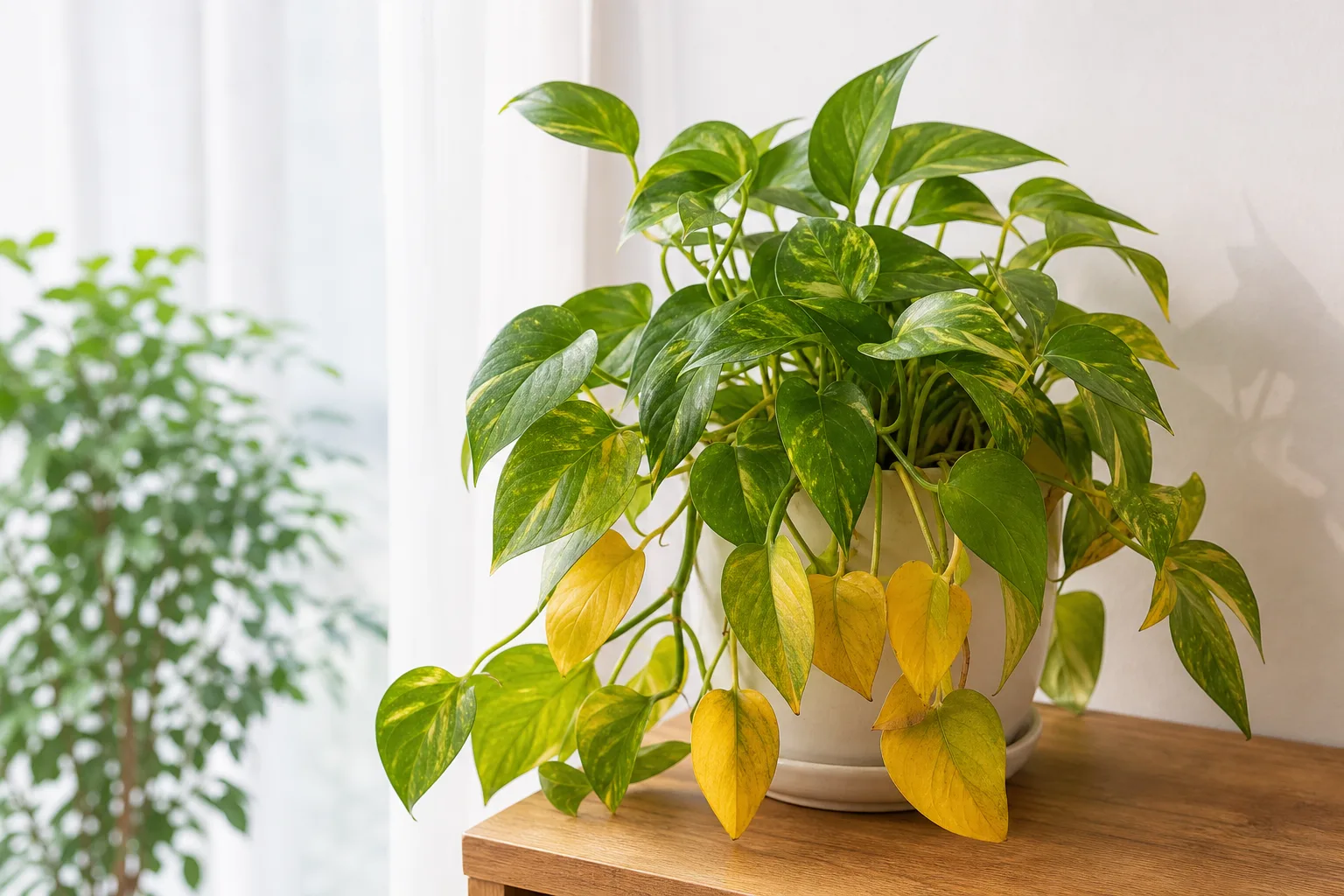
An occasional oldest leaf turning yellow can be normal as a vine sheds older foliage. Several yellow leaves at once deserve a root-zone check: a heavy pot and persistently wet mix suggest overwatering or poor drainage, while a very light pot and dry mix point toward underwatering. Low light can contribute to yellowing or leaf drop as growth slows, so note where the plant sits and whether the newest leaves have lost their pattern.
Do not respond to every yellow leaf with more water or fertilizer. First remove standing runoff, confirm that the pot drains, and let the upper mix dry before the next thorough watering; if the mix stays wet for many days, improve light or drainage and inspect roots only when there are stronger signs of rot. Leaves that have turned fully yellow will not green again, but preventing new yellow leaves is a useful sign that the underlying condition is improving. NC State Extension lists root rot and variegation loss among pothos problems, and the New York Botanical Garden connects yellowing and rotting stems with excessively wet soil (NC State Extension; New York Botanical Garden).
Brown edges and patches: find the boundary of the damage
A crisp patch on the window-facing side, especially on a pale leaf sector, is more consistent with sun scorch than a soft brown area near the base of a wet plant. Dry, crispy edges across several leaves can also follow a long dry spell or very dry room air; isolated spots may have other causes, including physical damage or pests. Look at whether damage is spreading and whether it affects one exposed side or the whole vine.
Move the plant out of hot direct sun if the damage is sharply localized, then keep the soil routine steady while new growth forms. If the pot is bone-dry and the leaves curl or soften, water thoroughly and allow full drainage; if the mix is wet and stems are soft, stop watering until you identify drainage or root problems. Trim only dead tissue or whole leaves that are mostly damaged, because pruning healthy green areas will not repair the underlying issue. For recurring brown tips, also check fertilizer residue and water quality before buying a humidifier.
Slow or leggy growth: correct light before fertilizer
Glacier is not expected to race along like a vigorous golden pothos, and winter growth can pause when light and warmth drop. But long gaps between small leaves, a bare lower vine, or new growth that turns mostly green are clues that the position may be too dim. Check that the plant receives bright filtered light across the day before adding fertilizer or repotting it.
If light is already strong and the plant still stalls, inspect the roots and potting mix: a compacted, waterlogged root ball can prevent new growth even when the leaves look intact. Correct one likely bottleneck at a time—improve light, adjust the next watering, or address poor drainage—then wait for new growth rather than expecting old stems to fill overnight. A slower cultivar and a recent move may need patience; fertilizer is useful only when the root system is healthy and active.
Pests and Pet Safety
Glacier can host common houseplant pests such as mealybugs, scale, thrips, and spider mites, especially when an infested plant is nearby. Check leaf undersides, leaf joints, and new growth during watering; sticky residue, fine webbing, cottony clusters, or fixed brown bumps deserve closer inspection. Isolate a suspect plant, remove a small number of visible pests by hand or with a damp cloth, and if you use an insecticidal product, follow its label for houseplants and test a small area first.
Keep the plant out of reach of cats and dogs. The ASPCA lists golden pothos (Epipremnum aureum) as toxic to both and identifies insoluble calcium oxalates as the toxic principle; chewing can cause oral irritation, drooling, vomiting, or difficulty swallowing (ASPCA plant profile). Glacier is a cultivar of the same species, so treat it with the same caution. If a pet chews it, contact a veterinarian or animal poison-control service promptly rather than waiting to see whether symptoms develop.
Conclusion
Glacier pothos is easiest to keep attractive when you treat it as a variegated plant first and a tough pothos second. Give it bright filtered light, water only after the mix has partly dried, and let the pot drain; then adjust care by watching new leaves and how long the root ball stays wet. Prune for shape, root node-bearing cuttings if you want a fuller pot, repot when the roots or mix call for it, and keep the vine away from pets that may chew it.